Saturday, 26 December 2020

On "The Mandalorian," "The Last Jedi," and other things regarding Star Wars

The Mandalorian Season 2 Episode 6 Recap: The Empire Strikes Back

Spoilers for The Mandalorian Season 2 Finale

I haven't written much about Star Wars on this blog, which is strange since like many people I have a lot thoughts about Star Wars. I do find it incredible that the most popular thing Disney has done with Star Wars is the Disney+ show, The Mandalorian. Though it also makes sense. The animated The Clone Wars became more well liked than the prequels and even redeemed them in many peoples' eyes. The Mandalorian has the same executive producer as The Clone Wars, Dave Filoni, who is seen as the heir apparent to George Lucas. And with the divisive reaction to Rian Johnson's The Last Jedi and further negative feelings towards J.J. Abrams' The Rise of Skywalker, The Mandalorian has the benefit of being outside what Disney has done with the Sequel Trilogy. It doesn't reactionary the way The Rise of Skywalker did, nor is it deconstructive like The Last Jedi. It's a show about a guy in cool armor and his cute baby. 

But in the season 2 finale, a major cameo and story turn caused many to rejoice and provoked cynicism in others. Luke Skywalker (a de-aged Mark Hamill) cut through Moff Gideon's (Giancarlo Esposito) Death Troopers before taking Baby Yoda-a.k.a Grogu- to train him in the ways of the force. Fans were happy to see the "real" Luke back after The Last Jedi showed us a broken Luke, no longer the hopeful young man of the original trilogy. Others felt Luke's appearance was a further rejection by Disney of  Johnson's objective in The Last Jedi, which was to deconstruct both the Star Wars mythology as well as the mythic hero archetype Luke came to embody.  

On a surface level Luke's appearance does feel like a retreat back in to nostalgia and providing people what they wanted in the sequel trilogy, i.e. Luke being a "badass." But as Alden Diaz, a user on Twitter, laid out in a thread, Luke in The Mandalorian does connect with Luke in The Last Jedi. I've posted a link to the 

Alden Diaz 🎙 on Twitter: "“Because I was Luke Skywalker. Jedi Master. A legend.” It honestly, truly blows my mind that some people don’t see (or don’t want to see) how #LukeSkywalker in #TheMandalorian connects so beautifully to Luke in #TheLastJedi. It adds immense emphasis to so much of what TLJ is. https://t.co/DYRvEpjTOt" / Twitter

I agree with Diaz, especially since in The Last Jedi Luke he got caught up in his own image: "I was Luke Skywalker, Jedi master." And in The Mandalorian, when he's chopping up those droids, with his cloak up, he is definitely playing in to the image of the mythic hero. Diaz says, 

"We are witnessing the man gain the mythical status & aura that make him feel invincible. It’s underlining his fall"

and that Luke's taking on Grogu after Ahsoko Tano refused underlines how Luke still believes the Jedi's old ways can work. 

I have to admit, in the moment, seeing Luke the way we remember him from Return of the Jedi really got me. While I'm not against the direction Johnson went with Luke in The Last Jedi I still want to see more of what happened in between the trilogies and what got him to that breaking point with Ben Solo. I'm also wondering where Grogu was during the events of the sequel trilogy. 

There's also the question of where the show goes from here. The relationship between Grogu and the titular Mandalorian, Din Djarin (Pedro Pascal), has been a huge factor in the show's popularity. People love that little green guy, including me, so I his absence will have to weigh on Din going forward.I assume the taking back of Mandalore will be the main arc going forward. And I guess Din and Bo- Katan (Katee Sackhoff) still have to fight for the Dark Saber.

And even before Season 3, we are getting The Book of Boba Fett in December 2021. It definitely feels like we've brought the Expanded Universe to live action. Before, anything specifically focused on Boba Fett would be a book or a comic. And Luke rebuilding the Jedi Order was also a ongoing thing in the old Expanded Universe.

So, what are your thoughts on The Mandalorian finale and the direction the series may be going in? Are you excited for a Boba Fett show? Comment below and let me know.   

Friday, 18 December 2020

"The life of men among men:" Reflections on "Reflections in a Golden Eye"

1967 was a taboo breaking year for Hollywood movies. Bonnie and Clyde, In the Heat of the Night, Guess Who's Coming to Dinner and The Graduate challenged the traditional portrayals of violence, sexuality and race in movies. Sidney Poitier slapped a racist white man and dated a white girl, Bonnie Parker and Clyde Barrow were shown brutally shot down, and college graduate Benjamin Braddock had an affair with an older married woman. As the 60s were leading in to the 70s, Hollywood was changing forever. 

John Huston's Reflections in a Golden Eye, while not as well received then (and even now) still belongs that company due to its portrayal of a suppressed gay man on an army base. This is Major Weldon Penderton (Marlon Brando), who has a fraught marriage to Lenora (Elizabeth Taylor). Lenora is being unknowingly stalked by a young soldier named Williams (Robert Forster in his film debut). Penderton begins to grow attracted to Williams, without knowing Williams' fascination with Lenora. Lenora is also having an affair with Lieutenant Colonel Morris Langdon (Brian Keith), whose wife Alison (Julie Harris) suffers from depression due to a miscarriage, staying inside with only her servant Anacleto (Zorro David) as a companion.

Many of Huston's films were adaptations of novels, short stories, or in the case of Key Largo, a play. Reflections in a Golden Eye came from the pen of Carson McCullers, author of The Heart is a Lonely Hunter (1940). Originally published in two parts in  Harpers' Bazaar and then as a novel,  Reflections in a Golden Eye was her follow up novel. Like William Faulkner McCullers' work is categorized as southern gothic. Huston's film exists in a heightened and unusual reality, which is accentuated by Huston's choice for the film to have a golden hue. After a week in theatres, Warner Bros. took the film and removed the golden hue, re-releasing  the film in a normal colour version. The new Warner Bros. blu ray contains both versions. Many of the film's images feel like they could come from a dream, a memory or something in between. 

Huston's films were often very masculine but also about the vulnerability underneath the bravado. Think of Humphrey Bogart in his most iconic roles under Huston's direction, Sam Spade in The Maltese Falcon (1941) and Fred C. Dobbs in The Treasure of the Sierra Madre (1948). Spade falls for the femme fatale who he has to send to prison. Dobbs becomes sick with greed. And while Brando and Bogart have differing acting styles they're similar in being unconventional leading men. Bogart lisped and had a hard, occasionally sinister look. Brando mumbled and lacked the polish of more traditional male actors at the time. And underneath both Bogart and Brando's swagger lied a sensitive nature.

Reflections in a Golden Eye finds Brando- as Penderton- struggling with the ideas of masculinity and  leadership. Pernderton questions his sexuality. He hates himself for his feelings, which undermines his ability to be a leader. As he says in his speech to his students, "Leadership must include a measure of inherent ability to control...uh...and direct self-confidence." Penderton knows he lacks these things despite his rank. He doesn't even have Lenora's respect. Penderton beats her beloved horse due to  being thrown off by it.  Lenora confronts Penderton at that night's party and hits him with a riding crop. Earlier in the film she taunts Penderton and strips naked in front of him. 

Penderton is almost like Othello if he was more interested in Michael Cassio than Desdemona. But unlike Shakespeare's play this is more a slow-burn to tragedy. The film does have what could be called a leisurely pace, examining the day-to-day lives of the people on the base and how they all interweave. The first line of McCullers' novel reads "An army post in peacetime is a dull place," which is accurate to the story's slow pace but also ironic given what happens by the film's end. I'll admit, I struggled with the film's pace and wish it had focused more on Brando and Taylor. I've talked quite a bit about Penderton but he kind of drifts in to the background during the film. 

Reflections In A Golden Eye (1967) - Firebird Is A Stallion - Turner  Classic Movies


While watching the film I responded more to the direction and atmosphere but Penderton and Brando's performance are the most substantial character stuff in the film. Taylor is having fun as Lenora; coming off her Oscar winning performance in Who's Afraid of Virginia Woolf?, she's playing a more voluptuous and lighter take on Martha. Harris, as in one of my favourite horror movies The Haunting (1963), is adept at portraying fragility without overly invoking pity. Forster gives a practically silent performance, making his voyeuristic nature even creepier.

While the reviews for the film, outside Roger Ebert and Pauline Kael, were mixed, Huston considered this one of his favourite among his films. Satisfaction is maybe all that matters when you're an artist. It's an off-beat in Huston's career, one I don't think is completely successful due to its pacing and sometimes thin characterization outside of Penderton. But it's worth seeing for its direction and unique look and feel, along with Brando and Taylor's performances.

Tuesday, 3 November 2020

The Essential Films: "Rebecca" (1940)


A Series of Writings on Films that I feel are essential for film lovers, coupled with films that are personal to me. Spoilers for those you haven't seen the film- as well as spoilers for the novel.


Rebecca marked a turning point in Alfred Hitchcock's career. It was his first film made in America and was the beginning of his working relationship with David O. Selznick. Selznick was a notoriously hands on producer and wanted a very faithful adaptation of Daphne Du Maurier's 1938 novel. Hitchcock had fashioned a strong visual identity as a director. This resulted in tension between the two, which could have led to a fractured and uneven film. However, the resulting film is an elegant meshing of  the two men's styles. It is at once a handsomely mounted old-school Hollywood film as well containing some genuine Hitchcockian flourishes. Its success, both critically and commercially, would allow Hitchcock to continue working in Hollywood, where he would direct several of his most revered films. 

Hitchcock had wished to buy the rights to Du Maurier's novel but deemed the price too high. He would end up directing another adaptation of a Du Maurier novel, Jamaica Inn (1939),  with which Du Maurier was displeased. Selznick would later buy the rights himself. When Hitchcock signed a contract with Selznick he was first slated to direct a film called The Titanic. When that project fell through he was assigned to direct Rebecca. The initial screenplay was written under Hitchcock's supervision by his assistant and screenwriter Joan Harrison, along with author Philip MacDonald. Selznick hated it, due to it veering too far from the novel. In a letter to Hitchcock Selznick said, "We bought Rebecca and we intend to make Rebecca." The final screenplay by Harrison and playwright Robert E. Sherwood was a much more faithful adaptation of the novel.

While on vacation in Monte Carlo the unnamed narrator (Joan Fontaine)- the paid companion of Mrs. Edythe Van Hopper (Florence Bates)- meets the wealthy widower Maxim de Winter (Laurence Olivier). As the  narrator and Maxim spend more time together they fall in love. When she and Van Hopper are to leave he surprises her with a marriage proposal. He brings her to his home estate of  Manderley, a world of wealth and privilege in which the narrator feels uncomfortable, largely due to the feeling of being compared to Maxim's beautiful and elegant first wife Rebecca, who died in a boating accident the year prior. The housekeeper Mrs. Danvers (Judith Anderson) takes a special disliking to the narrator, due to her close relationship with Rebecca.

Mrs. Danvers' introduction is one of the most Hitchcockian moments in the film. She glides in to the frame as the other servants are happily gathered to greet the new Mrs. de Winter. Her entrance in to the shot tells the audience she is the barrier between the narrator and true acceptance in to Manderley. Lyle R. Wheeler's production design for the film makes Manderley one of the great gothic locations in all of cinema. Hitchcock and cinematographer George Barnes (who won an Oscar for his work here) convey through the framing how the narrator is being overwhelmed by the mansion, both physically and emotionally.


Rebecca is a metaphorical ghost story. Rebecca's ghost never appears but her memory haunts the narrator and Maxim. Mrs. Danvers even wonders whether Rebecca's ghost comes back to Manderley and watches them. What makes the memory of Rebecca even more oppressive for both Maxim and the narrator is when her body is discovered after her boat is recovered. The body identified by Maxim was an unknown woman. Maxim knew this because he placed Rebecca's body in the cabin. Maxim never loved Rebecca and their happy marriage was just an act. As Maxim tells it, she was manipulative and cruel. After a confrontation between Rebecca and Maxim regarding her having a child with another lover, her cousin Jack Favell (George Sanders), she fell and struck her head. Maxim then sunk the boat by opening the seacocks. 

In the novel Maxim intentionally kills Rebecca by shooting her. It's ultimately discovered she had cancer, which gives her a motivation for suicide. Due to the Hays Code Maxim couldn't kill Rebecca and not be punished for his crime. I think if the had been able to retain this plot point it would've made the film's story even more powerful. But the message remains the same, which is Maxim cannot escape Rebecca even after she's dead. 

Fontaine and Olivier beautifully embody Du Maurier's lovers. While Maxim is older in the novel than Olivier was at the time of the film's production he expertly conveys Maxim's enchantment with the narrator as well as his bitterness towards Rebecca. Maxim is a man of contradictions, capable of warmth and coldness, condescension and respect towards his new bride.

And who wouldn't fall in love with Joan Fontaine? Fontaine effortlessly captures the narrator's purity as a person, as well as her awkwardness and lack of confidence. It's these qualities that attracts Maxim to her. She's not part of his world, not phony or privileged. She's real, which to Maxim Rebecca never was. When Maxim tells the narrator he never loved Rebecca, this finally breaks down the barrier between them. The narrator no longer has to feel inferior to Rebecca. 

My favourite moment from Fontaine is when she answers the phone on Rebecca's desk, telling the caller Mrs.de Winter has been dead for over a year. When she puts the phone down she realizes her mistake, cries "Oh, I mean...:" as she reaches for the phone with both hands. It's a very charming moment, while also accentuating the narrator's awkwardness, especially when Mrs. Danvers walks in. 

Anderson gives a positively spectral performance as Mrs. Danvers. Others have noted that she appears to glide rather than walk. This is because Hitchcock wanted the audience to see Mrs. Danvers from the narrator's perspective, feeling afraid she could appear at any moment. In one of the novel's and film's most famous scenes Mrs. Danvers finds the narrator in Rebecca's room and shows her around. Mrs. Danvers appears a woman possessed. She, more than anyone else, still has a passionate connection with Rebecca.  I'd argue Mrs. Danvers is more of an antagonist than an villain. Her story is actually quite sympathetic. She loved Rebecca, possibly romantically, and her death no doubt affected her deeply. Now Maxim is replacing her with a woman Mrs. Danvers views as inferior to Rebecca. Obviously she'd be upset. Her burning down of Manderley of the story represents her inability to live with the narrator taking Rebecca's place. But the narrator is not a replacement for Rebecca, rather she's her own person. She is able to stop comparing herself but Mrs. Danvers can't. 


Another tragedy of the story is Rebecca never gets a voice. The film is wise to now show flashbacks of Rebecca, keeping us in the perspective of the narrator, who's never seen Rebecca, can only imagine her. We only know Rebecca from what we're told; we're given two contrasting views of her. One is the beautiful, adored wife who everyone loved and whose death tormented Maxim. The other view, the one Maxim communicates to the narrator, is certainly not flattering: "She was incapable of love or tenderness or decency." But who really was Rebecca? Is it fair to assume she was some kind of monster as Maxim tells it? I don't believe so. Rebecca is a story about perception and the limits of one's knowledge of a human being. The narrator had one view of Maxim when marrying him, which turned out to be wrong. There is something quietly tragic about learning she had cancer and not wishing anyone else to know. In the book Du Maurier makes it clear Rebecca wanted Maxim to kill her so she wouldn't have to suffer from the cancer. 

Rebecca won the Best Picture Oscar- along with the aforementioned win for cinematographer Barnes- though Hitchcock lost Best Director to John Ford for The Grapes of Wrath. This may have solidified in Hitchcock's mind that Rebecca more of a Selznick film than a Hitchcock film. But there's still plenty of Hitchcock in this film, with its themes of romantic obsession, the limits of subjectivity, and fear of police/authority. And as I mentioned earlier the film allowed Hitchcock to continue working in Hollywood, where he grew as a artist, crafting sophisticated thrillers with provocative subtext. And  Rebecca is ultimately, for me, a story about a woman isn't alive to tell her story and another who is able to finally become the heroine of her own. 

Monday, 5 October 2020

On Multiverses and the Return of Jamie Foxx's Electro


This past week it was announced Jamie Foxx was in talks to reprise his role as Max Dillon/Electro in the next Spider-Man film starring Tom Holland. The question I have is whether Foxx will be playing the same Electro seen in  The Amazing Spider-Man 2- since Marvel Studios is establishing a multiverse via the Sam Raimi-directed Doctor Strange in the Multiverse of Madness- or if he'll be playing a completely different version of the character- similar to J.K. Simmons returning as an alternate J. Jonah Jameson in Spider-Man Far From Home (which I still haven't seen). Foxx posted on Instagram, teasing he won't be blue this time, implying this will be an Electro unique to the MCU.

TASM 2 wasn't a beloved film-though it does have its fans-and Foxx's take on Electro was compared to the Joel Schumacher Batman villains. By starting over with the character Marvel doesn't have to worry about bringing in that baggage. They can also give him a different character motivation that doesn't have to revolve around Spider-Man. The film can then focus on Spider-Man rather than the larger universe/multiverse.

I still believe a live action Spider-Verse movie could come to fruition. Tobey Maguire returning would have the nostalgic value Michael Keaton will bring to the upcoming Flash film with Ezra Miller. That film will also bring back Ben Affleck's Batman, making it somewhat of a Bat-Verse film. A Spider-Verse film could also give Andrew Garfield the send-off he never got due to the TASM series being cancelled.


The idea of a multiverse is the next stage in building upon the cinematic universes of DC and Marvel, albeit the DCEU is a more loose continuity than the MCU. Miller has already cameoed on the CW Network's Crisis on Infinite Earths crossover event. Said event established that all the previous versions of the DC universe are part of a larger multiverse. The problem, of bringing a multiverse to the big screen is the risk of these kinds of crossovers becoming too gimmicky, though in fairness gimmickry is ingrained in comic book storytelling. The further the movies go with this conceit the more convoluted and alienating it may get for general audiences who may not want to keep track of everything. By the 80s DC comics' continuity became so complicated they needed to fold in everything in to one universe. This was the basis for  the Crisis on Infinite Earths storyline.

As comic book movies become more like their source material audiences may yearn for the earlier films that didn't require as much homework. Comics can often feel very niche and if these movies still want to be the reigning blockbusters they'll have to keep their audiences engaged rather than confused. The idea of a cinematic universe was a gamble that paid off. The question of when the superhero movie bubble will burst- if ever- has long been pondered. The multiverse will be a test of how far this genre can go in replicating the weirder and convoluted aspects of its source material.

So, how do you feel about Jamie Foxx coming back as Electro? Were you a fan of the TASM series? And what are your thoughts about comic book multiverses being brought to the big screen? Comment and let me know.


Sunday, 30 August 2020

In a Lonely Place: Some brief thoughts on "Beast" (2017)


1280 × 720

Plot details for In a Lonely Place and Beast below


Michael Pearce's 2017 film  Beast struck me as a modern update of Nicholas Ray's noir 1950 classic In a Lonely Place, which starred Humphrey Bogart as Hollywood screenwriter Dixon Steele, a man suspected of murdering a young woman. He is given an alibi by his neighbour Laurel Gray (Gloria Grahame). Dixon and Steele fall love but his violent tendencies lead her to believe he may be guilty. At the end of the movie Dixon is revealed to be innocent, but it's too late for his and Laurel's relationship. The film states even if Dixon is innocent of murder he is still capable of terrible violence. 

Beast also involves a woman in love with a man suspected of murder. Moll (Jessie Buckley) is in her 20s but still lives with her mother. She meets Pascal (Johnny Flynn), who represents an escape from her current life but who may be behind the murders of several women. Moll tells the police she met Pascal night of her birthday, which was when one of the murders occurred. However, Moll suspects  Pascal may be guilty. This is a similar dynamic to In a Lonely Place but Beast inverts Ray's film by having Moll be an unreliable narrator, someone the audience begins to suspect is the murderer.

We learn Moll attacked one of her classmates in supposed self-defense but it's revealed it wasn't. I would argue Moll is the Dixon Steele of Beast rather than Pascal, who is sort of a red herring. The film is about the beast inside Moll.  What makes Buckley's performance marvelous is her ability to imbue Moll with ambiguity while allowing the audience to still sympathize with her.Writer/director Pearce  doesn't want Moll simply to be a caricature of mental illness. 

Beast finally is a film about losing control  to take control of one's life. Moll has to unleash the beast to become what she feels is the hero of her own story. Moll may be completely free at the film's finale, a weird sort of triumph. And Buckley is a triumph as well.  

Sunday, 12 July 2020

On Directors' Cuts and "Zack Snyder's Justice League"

Will We Ever See Zack Snyder's Cut of Justice League? | 411MANIA


The term "auteur theory" was first coined by American film critic Andrew Sarris in the 1960s though the idea of an filmmaker being an auteur originated with the French film critics of the magazine Cahiers du Cinema. The auteur theory believes the director is the author of a film and a director is an auteur if they have a distinguishable visual style and recurring themes throughout their work

I begin with the auteur theory because I believe the term "director's cut" reinforces the idea of director as author. A director's cut of a film suggests validity- this is the true version of the film and what was seen originally was a compromised version of a filmmaker's vision. And I do think that's true in many cases. Films have suffered from being cut down from their intended length and tampered with by studios. One of the best examples is Ridley Scott's Blade Runner. The 1982 theatrical cut had the studio imposed happy ending and Harrison Ford's voice-over narration. The 1992 director's cut and subsequent 2007 Final Cut enhanced the film's standing as a science fiction masterpiece. 

Then there are times where a true director's cut can't exist. For example, the restored version of Orson Welles' Touch of Evil. Welles had died before that version was released so it cannot be called a director's cut. However it is based on Welles' memo to Universal Studios and is the closest thing to Welles' vision for the film. And the Assembly Cut of Alien 3 didn't have David Fincher's involvement but is seen as an improvement over the theatrical release, closer to what Fincher was attempting with the film.

Peter Jackson and James Cameron don't like the label of Director's Cut because it implies dissatisfaction  with the theatrical release. They prefer "Special" or "Extended Edition." The Extended Edition of his Lord of the Rings Trilogy weren't intended by Jackson to replace the theatrical versions. They were for fans who wanted more of Middle-Earth. But there's also the several special editions of the original Star Wars Trilogy. George Lucas feels the special effects at the time of the original trilogy's production didn't allow him to fully realize the Star Wars universe on screen.

As I said earlier the term director's cut relates to the auteur theory. But, as with the auteur theory, it's important not to lose sight of the collaborative process of filmmaking. Many people's work is also compromised. One major case of this is Zack Snyder's Justice League. It was recently announced we are finally getting to see Zack Snyder's version of Justice League in 2021 when it premieres on HBO Max. In this case, this isn't a director's cut since the the theatrical cut was largely Joss Whedon's, with some footage from Snyder. What we have is a completely different film. And it feels like a game-changer. Warner Bros. smuggled in the Whedon--directed film under Snyder's name, hoping to get approval from critics and fans who reacted negatively to Batman v. Superman. The plan backfired when the film bombed and fans felt betrayed. The #Releasethesnydercut movement was born and led to Snyder's gaining the opportunity to show his original vision.

In the wake of the movement there's already been a push to release the late Joel Schumacher's supposed darker and longer cut of Batman Forever. And David Ayer's Suicide Squad may also finally being getting a director's cut as well. Ayer initially said the version released in theatres was his cut but the film received a extended cut on blu ray and he has recently been talking on Twitter about his original vision for the film and scenes which were cut. It's become a meme to say "#releasethe" whatever cut. Studios may engage with the directors they hire differently going forward. In the era of social media people are more aware of what goes on behind the scenes and directors have a platform to talk about their work. 

Now, I want to make clear I don't think studio involvement is always a bad thing. In the case of Howard Hawks' The Big Sleep (1946), the film was improved by additional scenes shot at the behest of producer Jack L. Warner. He encouraged by Lauren Bacall's agent Charles K. Feldman who believed Bacall's career would be over if she received the same negative reviews she did for Confidential Agent (1945), shot after The Big Sleep was released first due to its war-time subject. The additional scenes between her and Bogart, including a discussion about horses which is very sexual in its innuendo, helped make the film a classic.
  
I'm glad Snyder and everyone involved finally sees their work get its due. As a fan of Snyder's first two films in this story it's exciting to see a proper continuation of what he set up.      

So, are you excited for Snyder's Justice League? Do you believe it'll change anything in Hollywood? Comment and let me know.

Tuesday, 23 June 2020

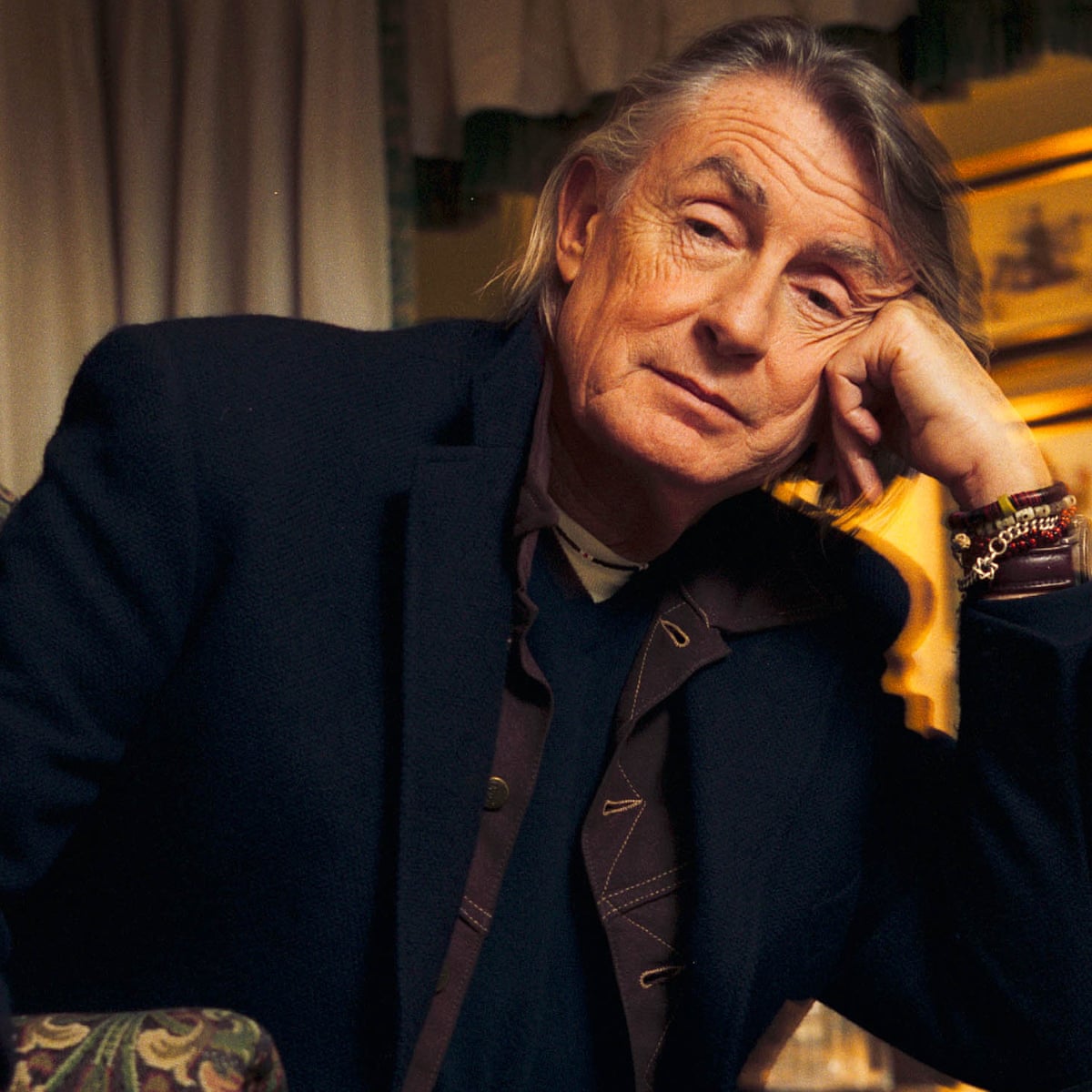
Joel Schumacher (1939-2020)


Joel Schumacher, Batman Forever and The Lost Boys director, dies ...

Joel Schumacher, the director of such films as The Lost Boys, Falling Down, and Flatliners, died yesterday at the age of 80. Schumacher had an eclectic career that began in the fashion industry, where he discovered his passion for filmmaking. His first foray in to movies was as a costume designer for films including Woody Allen's Sleeper (1973) and Interiors (1978). He wrote the screenplay for the film adaptation of the Broadway musical The Wiz (1978) before making his film debut with The Incredible Shrinking Woman (1981), starring Lily Tomlin.   

Schumacher would go on to the direct one of the seminal "Brat Pack" films, St. Elmo's Fire (1985), as well as the provocative Falling Down (1993), featuring one of Michael Douglas' best performances. But Schumacher's career was often overshadowed by his contribution to the Batman franchise. Warner Bros. decided to take the series in a lighter direction after Tim Burton's Batman Returns (1992) was criticized for being too dark and grotesque. Schumacher was brought on as director due to him directing several successful films for the studios. 

Batman Forever (1995) was a commercial success and a sequel was fast-tracked. Batman & Robin (1997) doubled down on the camp and is seen as one of the worst comic-book films ever made. I'll defend Batman Forever as having good elements, including Val Kilmer as Bruce Wayne/Batman and his relationship with Dick Grayson (Chris O'Donnell). It was the ideal Batman film for kids, the one I grew up with and for which I still have a soft spot.

Schumacher's name became synonymous with "campy superhero" films. However, looking at the rest of Schunacher's filmography, it is filled with films about racism, rage against society, snuff films, and the Vietnam War. Schumacher made mid-budget, adult-skewing dramas- the anti-thesis of superhero blockbuster culture, and films are increasingly hard to get made in Hollywood. And his Batman films are amongst the most directorially distinct of the sub-genre.  

Schumacher was also unique in that he was an openly gay man directing major Hollywood films, and his Batman films have been viewed through a Queer lens. His 1999 film Flawless also dealt with homosexuality and transgenderism. In the film Philip Seymour Hoffman plays a gay man helping the homophobic security guard played by Robert De Niro recover from a stroke.  

Schumacher also directed Phone Booth, a very good one-location thriller starring Colin Farrell as man held hostage in one of the last phone booths in New York City.

So, what's your favourite Joel Schumacher film? How do you feel about his Batman films? Comment and let me know.