Tuesday, 22 May 2012

Not Everything, Not Yet: Some Thoughts on the Ending of "The Dark Knight Rises"


The Dark Knight Rises is arguably the most anticipated movie of the summer. I think the anticipation for the film comes from the questions the film raises. Can the film become the box office hit The Dark Knight became? Can Tom Hardy deliver a performance that do justice to Heath Ledger's turn as the Joker? And can Christopher Nolan break the third movie curse that plagues the superher genre and deliver a film that doesn't feel anticlimatic next to the previous film? But I think the biggest question looming in people's minds is whether Nolan will make the decision to kill the Cape furtd Crusader.

It would certainly be a bold move- maybe the boldest in Superhero movie history- and after the ambition of The Dark Knight,  it would feel like Nolan was pushing things ever further for the Batman franchise and the Superhero genre as well. What started as rumblings through the grapevine has become a genuine goosebump inducing "Could it really happen." This theory has gained momentum because of the inclusion of Bane as the villain of the film, the man who broke Batman's back in the Knightfall storyline in the comics. There's also the moment in the latest trailer where Anne Hathaway's Catwoman tells Batman, "You don't owe these people anymore. You've given them everything," to which he replies, "Not everything, not yet," implying he'll have to sacrifice himself to save Gotham.  It seems that Nolan will include Bane's most iconic moment in the film since in the last two trailers we've seen Bruce Wayne with what appears to be a cane and also in a wheelchair. If any villain from Batman's Rogue Gallery could kill Batman, it'd probably be Bane. Though of course if Bane breaks Batman early on in the film, wouldn't it be overkill to have him kill Batman at the end. We may be looking at a Batman gets broken, gets better and then defeats Bane. This sounds a little too straightforward for the end of the trilogy and I hope it's not that conventional.

If Batman dies, I wonder how Nolan will make it satisfactory instead of awkward and disappointing. It's weird to think of Batman dying on screen- particularly since Bale's Batman has become the subject of parody over the last few years. You can almost see the College Humour spoof right now. If Batman was to die, it'd have to be in a way that also leads to Bane's death, which brings us back to the idea of self-sacrifce. People have discussed the possibility of someone taking up the mantle of Batman after Bruce Wayne dies. This would be a great thematic paradox to play on. In Batman Begins, Bruce Wayne tells Alfred that as a symbol he can never die- meaning that even if Bruce Wayne dies- the symbol of Batman can live on as another person. Though at the end of the film Rachel tells him that Bruce Wayne is the mask and Batman is the real face. Furthermore, in The Dark Knight we see men trying to be Batman but failing. The question is- can someone else be Batman- is he a symbol- or is Bruce Wayne Batman, still a symbol but one that's forever linked to Bruce Wayne. If the film ended with- say Joseph Gordon Levitt's John Blake becoming Batman, as many have theorized, it'd be a great ambiguous note to end the trilogy on.

I can't say for certain how exactly The Dark Knight Rises will end- and that's why I'm excited. However Nolan ends it though, I think he's done a bang up job with the Batman franchise. And remember...this isn't a car.

Sunday, 13 May 2012

Hitch, Marty and Chris: Vertigo and Its Spiritual Descendants


Warning: Spoilers for Vertigo, Shutter Island and Inception Follow

In 2010, Leonardo DiCaprio starred in two films that were linked not just by his presence but by their obsession with reality versus dreams, the deconstruction of professionalism through emotional turmoil, the way romantic desire can be twisted by the mind and...obsession. The two films were Martin Scorsese's Shutter Island and Christopher Nolan's Inception. While Comparing the two of them would be fascinating, I'd like to link them back to Alfred Hitchcock's 1958 film Vertigo. Shutter Island and Inception, arguably moreso than the other genres and films they refrence, contain significent thematic similarities to Hitchcock's film.

All three films are essentially mazes crafted by their respective directors, and also by characters in the films. for their protagonists to travel through, reaching an emotional chararis or realization about themeselves. The catch is the characters don't know they're in a maze or think they know what kind of maze they're in. In Vertigo former detective John 'Scottie" Ferguson (James Stewart) feels he understands what's happenng every step of the way At first, he believes that Gavin Elster (Tom Helmore) just has an active imagination, that his wife Madeline (Kim Novak) couldn't really be possessed by a sprit- but as he learns more about Madeline's great-grandmother Carlotta Valdes, he begins to believe there's something to Elster's story.

Vertigo_0131

What Scottie fails to understand is he's part of  Elster's plan to murder his real wife. The Madeline Scottie follows is just a decoy. Scottie sees what he believes to be Madeline committing suicide from jumpng of the top of a bell tower. What he actually sees is the dead body of the real Madeline Elster. With Scottie a witness, Elster gets away scott free.

Vertigo_0596

Scottie is also part of Hitchcock's maze, which ties the plot and the psychological aspects of the Scottie character together. Htchcock takes Scottie on a journey from a man emotionally detached but curious former detective to a man obsessively in love with Madeline, so in love that he makes over Judy (Novak again), the decoy Madeline, back in to Madeline. Hitchcock eventually leads Scottie to finally overcoming his acrophobia. Hitchcock also brings Scottie to a revelation about his obsessive love for Madeline: it can never be real because Madeline was never real, at least not the one he knew. By makng Judy over all he's done is, like Elster, strip away Judy's identity for a dream. Men, and I speak as one myself, sometimes cling to a fantasy woman rather than something tangiable in front of us. What's disturbing is in Scottie's case the fantasy woman and the real woman are the same. He comes to the realization about his obsession, it's too late to go back- and as Judy falls to her death, for real this time, Scottie loses the real woman he could not love. As Scottie is standing outside the bell tower, he's come out of the maze- what kind of man and what his future holds remains one of the great mysteries of film.

Vertigo_1187

In Vertigo, Scottie is a former detective, spendng most of the film outside of his profession while still taking part in it. In Martin Scorsese's Shutter Island, Teddy Daniels (Leonardo DiCaprio) is a former US Marshall who is a patient at Ashcliffe Hosptal for the Criminally Insane on Shutter Island. His real name is Andrew Laeddis and he went insane after killing his wife Dolores (Michelle Williams) who in turn had murdered their three children.Teddy spends the movie outside of his profession yet taking part in it as well. He has created a reality where he is still a US Marshall and has come to Shutter Island to invetigate the disappearance of a patient named Rachel Solondo (Emily Mortimer).

As with Vertigo, the plot mechanics of Shutter Island are a fabrication. In this case, a fabrication made by Teddy to esccape from his guilt of not helpng his wife who he knew was mentally ill. Dr. Cawley (Ben Kingsley) allows Teddy to play out his fantasy, which also includes Nazi experiements done on the island, so that Teddy can come to realize the truth and come to accept what's he done. Vertgio takes us through what seems like several genres, thriller, mystery, ghot story, gothic romance until it reveals itself to be a character study about obsessive love. Shutter Island travels through film noir, paranoid conspiracy thriller, horror and romance, and, at the top of a lighthouse, reveals itself to be a story about the way film narratives comfort and help us escape from reality. Scorsese creates a tribute to the films he loves and also ties them in to the pyschology of the Teddy character. Teddy has created a world that, uncomforting as it is, is more bearable than the truth.  Horror movies can scare us but they do so in mangeable ways. Film noirs have a cynicism to them but they also have style to burn.


I think the strongest link between Vertigo and Shutter Island are the themes of lost love and trying to reclaim that love through fantasy. Teddy constantly dreams about and imagines Dolores. Part of his illusion is that Dolores died in an apartment fire started by ''Andrew Laeddis," who Teddy is looking for on Shutter Island. Teddy has preserved Dolores the way she was rather than what she became. He preserves her in time like Scottie preserves Madeleine and just as Scottie made over Judy, Teddy has made over his subconscious. Teddy, like Scottie, has to come to the realization, that his love is a fantasy. The real Dolores, and his relationship with her was destroyed when she murdered her children. Teddy has to confront the real woman, not the dream, not the fantasy.


Vertigo and Shutter Island are both about the crumbling of professionalism through romantic desire. Scottie is at first a detached but curious observer but things become more complicated when he falls in love. Teddy's mission, while a fantasy, is complicated by the appearance of Dolores, who feeds in to his paranoia, thus making his fantasy much more dangerous.

A dead wife who appears in the protagonist's dreams is the most humourous connection between Shutter Island and Christopher Nolan's Inception. Nolan has been compared to Stanley Kubrick and drew inspiration from Ridley Scott and Michael Mann for his Batman films. For me, I see him comparisons between him and Hitchcock. Like Hitchcock, Nolan's films exist in a heightened reality. On the surface are films driven by twists and turns, elements that have led Nolan to be labelled a shallow director -"amusing but mechanical"- according to critic Jim Emerson. In his time Hitchcock also seemed to be the victim, I and I think still is, of being labelled shallow.  But, like Hitchcock, beneath Nolan's plot mechanics lie interesting psychological studies of obsession.


I think Inception, out of all Nolan's films, has the strongest thematic links to Hitchcock, which brings me back to the role of the dead wife in the film. Leonardo DiCaprio again has a lost love on his mind. He plays Dom Cobb. He's an extractor, a man who is hired to steal infomation from powerful people. He does this by having an architect build a dream world he and the subject can enter. Once inside Cobb can extract the information needed. Things are complicated by the constant appearance of Cobb's deceased wife Mal (Marion Cotillard).

Cobb and Mal spent 50 years in the dream world known as Limbo. Mal began to lose track of reality, which led Cobb to perform inception on her, convincing her that they needed to kill themselves in order to wake up. Once in the real world Mal still believed she was in a dream world, which led her to suicide. In Vertigo, it was partly Scottie's guilt for what he believed was Madeleine's death that led him to make over Judy in to his lost love. In Inception, it's also guilt that causes Cobb to hold on to the memory of his wife, to create a vision that doesn't blame him for anything, that's preserved in time, even moreso than Madeleine or Dolores. Like Teddy, Cobb has made over his subsconscious, and even stays in it to visit and be with Mal.


Inception is all about mazes. The dream worlds Ariadne (Ellen Page) create for the job to incept Robert Fischer (Cillian Murphy) are all designed to be mazes- and ultimately the film is a maze that not only the Cobb and his team send Fischer through, but that Nolan sends Cobb through as well. The maze in case requires Cobb to downwards, both literally and metaphorically. "Downwards is the only way forwardss" he says- which speaks for his character arc. To let go of his guilt and the fantasy he clings on to, he must go downwards back to Limbo.


All three films end on the top of a building of somesort. In Vertigo, it's the bell tower, In Shutter Island it's the lighthouse and in Inception the film ends on the top floor of a building in Limbo. In in these places where everything is revealed and the characters reach an emotional catharsis of sorts. It's in this building that Cobb tells Mal

"I can't imagine you with all your complexity, all you perfection, all your imperfection. Look at you. You are just a shade of my real wife. You're the best I can do; but I'm sorry, you are just not good enough"

 Cobb realizes he can't bring back Mal back from the dead. Like Scottie, all he can do is create an image, a fantasy. There are echoes of Andrei Tartovsky's Solaris in Shutter Island and Inception, and Solaris may owe much to Vertigo. All four films are about a romantic desire that's can't be completely fullfilled, how you can never really know who the person you love really is.


Vertigo, Shutter Island and Inception all concern the nature of dreams and their relationship to filmmaking. Much has been made of how we never see how Scottie got down from the roof at the beginning of the film. Is everything after the first scene some kind of dream. The film almost moves like a dream, with plot points that don't make sense and several concidences. The scenes of Scottie following Madeleine also have a dreamy quality to them. Shutter Island's dream sequences evoke different genres, from melodrama to horror, relating to the movie Teddy has crafted for himself in the real world. Inception combines several genres, the heist film, the spy thriller, film noir, sci-fi and even a little bit of Fred Astaire. Nolan does this to emphasize how movies themselves are like dreams.

All three films also involve continous loops, relating to the constant loops films are on- when we rewatch them the characters go through the same motions even if we know the story. Scottie ends the movie standing over an abyss, where he began the film. Cawley compares Teddy to a tape that's on a endless loop. Inception begins with Cobb in Limbo and eventually returns to that scene at the end. Teddy breaks this endless loop by pretending to regress again, making the surgeons perform a lobotomy on him. Cobb makes Saito (Ken Watanabe) realize he's in Limbo, making Saito shoot himself and Cobb to wake up.       

The last shot of Inception is Cobb's totem spinning on the table. The film cuts to black before we know if it topples. Cobb, while happier than Scottie is at the end of Vertigo, is suspended between dreams and reality. We're always suspended between not knowing what is real and what isn't. Are we constantly dreaming? We ultimately have to accept what is given to us- if life is a dream, make it a happy one.


Friday, 4 May 2012

Best. Movie. Ever.: "The Avengers"


The task of bringing an Avengers movie to the screen is the filmmaking equivalent of rolling across a tightrope on a unicycle while simultaneously juggling 7 balls in the air. Not only does a movie like this contain several major super-heroes but they In that respect, it's remarkable that The Avengers is as focused and cohesive as it is. I think a lot of the credit goes to writer/director Joss Whedon, who, while working from a previous script by Zak Penn (who gets a story credit), is the sole screenwriter of the final product. I think having too many writers on the final screenplay could have resulted in something too convoluted and messy. While I wouldn't call this a visionary film, with just Whedon, his vision comes through

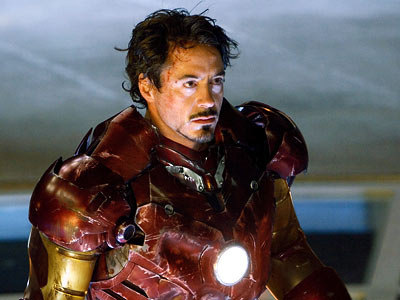
The plot is pretty straight forward, with S.H.I.E.L.D losing the Tesseract, a powerful energy source, to Loki (Tom Hiddleston), adopted brother of demigod Thor (Chris Hemsworth) brother. The director of S.H.E.I.L.D, Nick Fury (Samuel L. Jackson) brings together Tony Stark, Bruce Banner (Mark Ruffalo), who has kept his Dr. Jekyll, the Hulk under control, Steve Rogers, the recently unfrozen super soldier known as Captain America (Chris Evans) and Thor together to find it. That's pretty much it but what really makes this movie work is how well written it is.Whedon understands its humour that can save the day in movies like this. It's not just the one liners, a lot of them courtesy of Robert Downey Jr.'s Tony Stark, but the great sight gags, the unexpected blasts of humour.

There's also Whedon's ability to balance all the characters on screen. He does this by making the personalities of the Avengers come through rather than trying to give them all characters arcs. Essentially they all share the same character arc, which is they have to learn to work together as a team.  Ten years ago, if these characters had their own movies they probably would only have to worry about saving the day by themselves- and in their seperate movies, that what happened. But now these characters are facing something none of them can face alone. It's no longer just about one man but about people from different worlds and eras fighting for one thing. It's a simple idea but also a poignant one considering how one-hero centric many superhero films have been.

The film also doesn't fall in to the trap of being one character's sequel. This never feels like Iron Man 3 or Captain America 2 and as a result the whole movie feels bigger, it feels like an Avengers movie. I would have like to have learned a little more about Hawkeye (Jeremy Renner) and also his relationship with  Natasha Romanoff/Black Widow (Scarlett Johansson). Romanoff was more of a cipher in Iron Man 2 but here we learn a little more about her as a person. I wished they had gone a little further with revealing her backstory. I also would have liked to have seen the public's reaction to the return of a legendary figure like Captain America. There's a scene between the police and Captain America which I thought would lead in a moment like this but it didn't happen.

Tom Hiddleston is convincingly sinister but sometimes the movie treated like a pushover. Though to be fair, I think that may have been part of the joke. Performance wise, the all the actors do an awesome job. Evans gives a cynical edge to Steve Rogers this time and in some respects much more assertiveness. Downey Jr., as always makes Tony Stark charming and funny despite his arrogance. Ruffalo does a really good job of suggesting kindness and darkness at the same time. In many ways, he seems the most haunted of the three actors who have played Bruce Banner in a film (Eric Bana and Edward Norton being the other two). And Hemsworth continues to make his Thor a more mature character. I also liked seeing Gwyneth Paltrow back briefly as Pepper Potts. Clark Gregg also gives his most enjoyable performance yet as Agent Phil Coulsen.

The action in the film is incredible. You'd expect a movie like to this feel epic and man does it ever. I have to say, all the previous films leading up to this look a little small scale compared to this film. There's also quite a bit of  humour in the action scenes, especially a moment between Hulk and Thor, which had my audience clapping and cheering. Definitely see this with a crowd.

So, if you like comic books, if you've ever liked a comic book movie, if you've like any of the lead up films and if you want to remember how exciting it can be to see characters like this up on screen, then I think The Avengers will satisfy you. Don't believe the hype, believe the movie.

Sunday, 29 April 2012

James Bondifying the Superhero


In a recent interview, Kevin Feige, the President of Marvel Studios, discussed the future of the Iron Man franchise once its star Robert Downey Jr. decides to bow out. In the interview he references the character who has gone through the most plastic surgery in 50 years, James Bond:

"I think Bond is a good example. Let’s put it this way: I hope Downey makes a lot of movies for us as Stark. If and when he doesn’t, and I’m still here making these movies, we don’t take him to Afghanistan and have him wounded again. I think we James Bond it."

Now, the whole idea of superhero franchies going down the James Bond route has been brought up before on the internet and thinking about it, I really like this idea of superhero franchises having a long running continuity like the James Bond franchise has, or had pre Daniel Craig. In fact, the James Bond film franchise has been like a comic book in that James Bond doesn't really age, and if he does, he gets a little younger once a new actor comes in.

A James Bond continuity would also benefit these franchises by allowing characters to develop over a long period of time and, unlike superhero trilogies like Spider-Man and X-Men, not feel like they're only scratching the surface of these characters' universes condensing every villain in to three movies.

 I wouldn't nessecarily want this approach taken with the Iron Man franchise though. I'm not familar enough witity h the Iron Man comics to be attached to that particular part of the Marvel Universe. That, and I think it'd be really hard to recast Tony Stark when the time comes. I don't know how close Downey is to the Tony Stark of the comics but for me, he is Tony Stark. There's also the problem of the continuity set us as a lead in to The Avengers- if there's more Avengers movies after the inevitable sequel, it'll be a jarring casting change, particularly for one of the lead actors.

For me, I'd most like to see a James Bond like continuty with the post Christopher Nolan Batman series and the new Spider-Man series. Those two universes I think deserve to develop over time. I want to see Peter Parker move past being a teenager and a college student. I want to see him fall in love with Mary Jane after the death of Gwen Stacy and eventually marry her. Now, to be fair, I'm not ready for a Batman reboot quite yet, and may not even be ready by 2015. I do really wish Warner Bros. would just let the Nolan Batman films be the Batman films for another ten years or so. But when the new franchise comes, I think the James Bond route would be ideal.

Of course, theres's a problem with re-casting Peter Parker and Bruce Wayne. The pre-Craig Bond films, despite a loose continuty, are self contained adventures, with Bond always sort of being Bond. If Peter were to lose Gwen in a third Spider-Man film and then Andrew Garfield leaves the role, only to have a new actor mourn her in a fourth film, it'd be jarring. If  we're to really grow to love these characters, an actor has to be committed to the role for a while.

It's a little exhausting thinking about the future of superhero franchises but also fascinating. With a long form continuity within films, which we've already begun to see in the years leading up to The Avengers, comic book movies genuinely seem to becoming more like the comics that spawned them.


Sunday, 22 April 2012

Girl, You'll be a Woman, Soon: "The Girl With the Dragon Tattoo"


Mild Spoilers Ahead

So, I was finally able to catch up with David Fincher's The Girl With the Dragon Tattoo.  Overall, I enjoyed the film, and thought screenwriter Steven Zaillian did a an excellent job of condensing the first novel in the late Steig Larsson's "Millenium" trilogy. I liked the novel but found it was really dense with exposition and characters. Zaillian doesn't waste too much time setting up Mikael Blomkvist (Daniel Craig) as a disgraced journallist and Lisbeth Salander (Rooney Mara) as a, to put it mildy, socially awkward computer hacker. The screenplay also acknowledges how difficult it is to to keep track of the Vanger family tree.

I loved the casting of Rooney Mara as Lisbeth. I think it's very funny that Mara has essentially switched roles with Jesse Eisenberg. In The Social Network, she was Erica Albright, the innocent, well adjusted girlfriend to Eisenberg's Mark Zuckerberg, the socially retarded computer genius. In this film, while she's giving a very different performance than Eisenberg's, it's now her turn to play the socially retarded, emotionally aloof computer genius.  It's a remarkable transformation from the girl next door she played in The Social Network.

In a role that could be regarded as this generation's Scarlett O'Hara, Mara creates a woman both vulnerable yet capable of vicious cruelty, as when she is raped by he new guardian Nils Bjurman (Yorick van Wagenheim). It's a crucial turning point for the character and our impression of her. Even though Bjurman is a vile man, I couldn't help but be frightened by her when she takes her revenge.She never loses our sympathy though....or our interest. Lisbeth is the best kind of cypher, one which we don't know everything about but are given enough to fascinate us.

In a movie like this, you really need a rock, a character who can guide you through the dark, lurid elements of the story. Daniel Craig. In a movie with Lisbeth as a main character and a family with former nazis and a serial killer, you need someone at least moderately well adjusted to cling to. People seem dismiss movie-stardom nowadays but I think Blomkvist may be a role that, in a Hollywood film at least, needs a familar and powerful presence. Craig fits that mold but like Humphrey Bogart, he has a kind of world weariness that makes him believably human. It's these qualities that I think made Craig a great James Bond and make him an asset here.

While Fincher's films are very character driven, the characters' development over the films are usually interwined with some kind of plot device: the grisly murders in Se7en, the "game" in The Game, and the search for the Zodiac killer in Zodiac.  Like Zodiac, which I think is Fincher's masterpiece, The Girl With the Dragon Tattoo is about the process of investigation and also the obession a unsolved case can have on the human soul. Blomkvist hears from an elderly policeman that every officer has his "Rebekah Case," named after a policeman who never solved a murder of a girl named Rebekah. This story brings to mind the police officers and journalists in Zodiac. But it's Henrik Vanger (Christopher Plummer), still looking for neice Harriet after 40 years, who shows us a life consumed with trying to find an answer.  Unlike Zodiac, this film does have an answer and an eventual emotional catharsis for Vanger- and it's probably the most emotional resonant moment in the whole movie.

I think the big issue in this movie is that the eventual reveal of the serial killer and how it relates to Harriet's disapperance feels like just another story beat. It's an intense sequence, don't get me wrong, but we never get a sense of its implications or how it affects Henrik. I think we also could have gotten a better sense of the backstory of the killer, why he does what he does, and his relationship to Harriet. I think all this came across better in the novel.

Fincher's direction, as always, is precise, controlled, and methodical, well suited to a story all about the details of an investigation- but I'm wondering if Fincher's direction is almost too controlled. Fincher clearly knows how he wants to make this movie but I don't know if he's taking any risks in his direction. I wonder what an up and comer, trying to make his or her mark, would have done with this material. Still, I don't want to undersell how exceptionally well directed this film is- and in Rooney Mara and Daniel Craig, Fincher has found a really exciting screen couple.      

Wednesday, 18 April 2012

The Movies of the Decade: The Dark Knight (2008)


This is a new series I'm starting up where I'll talk about some of the most fascinating films of the last decade.

It's hard to underestimate what a pop culture phenomonon Christopher Nolan's The Dark Knight was back when it premiered in the summer of 2008. In an era where a film can make tons of money at the box office but leave no lasting impression on the audience, I think The Dark Knight really got under people's skins and in to their souls, and brought them back for multiple viewings. Nolan had already helped relaunch the Batman franchise with Batman Begins in 2005. it brought Batman back to his darker roots after the campy Batman & Robin. It's a very fine film but when this sequel came along, it seemed had done more than just make a good sequel, he tapped in to themes both relevant to our times and also to Batman's long history. It was the right super hero film at the right time.

We were nearing the end of a decade which saw the rise of the super hero film as a genre in of itself but by the time 2008 came by, both the Spider-Man and X-Men franchises had disappointed with their third installments and Bryan Singer's Superman Returns, as well as Ang Lee's Hulk failed to both restart and start their title characters' respective franchises. The summer of 2008 had already brought us the promising franchise start up Iron Man and the return of the Hulk in The Incredible Hulk, and Nolan's film completed the resurgence of excitement in superhero films. But more than that, The Dark Knight, for me, represents one the most, if not the most ambitious and intriguing superhero film of the last several years.

It's a little hard to talk about what The Dark Knight is about because it's about so many things. It's probably Christopher Nolan's most thematically dense film to date. In writing this retrospective I'm going to focus on some of the film's themes and issues one at a time

The City

The city has always been important to the superhero. Superman has Metropolis, Spider-Man has New York- and of course Batman has Gotham City. The city is important to these characters because of the way in which its citizens react to these super-hero figures. The role of the city helps us relate as readers and/or viewers to these fictional worlds. How would I react if some one like Batman or Spider-Man started to fight crime in my city. Nolan has said he wanted The Dark Knight to be a "city movie" in the vein of Michael Mann's Heat, from which The Dark Knight draws inspiration- and The Dark Knight is one of the best representation of  a city's relationship to a superhero- maybe the best.

One of the essential ideas in The Dark Knight is how Batman (Christian Bale) becomes such an integral a part of Gotham that he not only helps it but also brings upon it someone like the Joker. Batman, in many ways he helps shape the fate of the city. I'm largely thinking of the end of the film where he takes the fall for Harvey Dent's (Aaron Eckhart) crimes. It's Batman who sacrifices his reputation in order to save Harvey's. Batman feels Gotham deserves to have its faith rewarded rather than crushed.

You Either Die a Hero or You Live Long Enough to See Yourself Become the Villain

One of the central questions in The Dark Knight is what it means to be a hero. It also asks if heroism isn't enough, if you have to become something more than a hero to really change things. Batman's sacrifice at the end of the film is the culmination of what's been hinted at earlier in the film by Alfred (Michael Caine), who had told Rachel that Bruce Wayne, by not revealing himself as Batman to the Joker, was being more than a hero.

Batman becomes more than a hero by preserving Harvey's image as a hero. To be a true hero you s have to allow someone else to that iamge, even if you don't. Harvey, despite becoming a vengeful murderer, deserves to have his reputation intact.

The ending of the film makes me ask this: Even though people believe in Harvey Dent, what about the people who believe in Batman, who viewed him as their hero? I think that's one of ending's dilemmas. Batman and Commissioner Gordon (Gary Oldman) make a decision on the spot to go through with this plan, there's not much time to think.

The Dark Knight also acknowledges that even Bruce Wayne wants to hang up the cape and cowl, even though deep down, and emphasized later by Rachel's (Maggie Gyllenhall) letter, he'll always need to be Batman. When Harvey dies so does Bruce's chance at a normal life. Rachel's death also leaves a hole in his soul. Rachel was the one Bruce wanted to settle down with- though even if she had lived, she had chosen to be with Harvey. I think Bruce has to accept his place as Batman even if his orginal intentions are compromised by taking the blame for Harvey's murders.

Even before Batman has to take the fall for these murders, the film says that the line between Batman and his nemesis the Joker is very thin. The film implies that Joker (Heath Ledger), like Batman, has a troubled past, though due to Joker's conflicting backstories, we're not quite sure what from his past led this man to become the Joker. This is very much in line with the comics' representation of the Joker. The Joker's conflicting backstories in this film are in direct opposition to Batman's definitive, unchanging backstory, the murder of his parents- but essentially, Bruce Wayne' dawning of the bat suit and Batman persona is not exactly a sane choice and Bruce could have easily gone down a different path after his parents were killed- and still could if pushed too far. As the Joker says near the end of the film, "Madness is like gravity. All you need is a little push." Bruce could have easily become the Joker. This is what I think attracts the Joker to Batman, why he tells him "You complete me." The Joker needs a foil like him, someone who stands outside of society and outside of traditonal psychology.

 Introduce a Little Anarchy

Coming back to Gotham City, The Dark Knight, at it's broadest, is about a city on the verge of destroying itself from within. Ultimately, it's not Batman who saves the city but the ability for humans, even at their most afraid, to do the right thing. I wouldn't call the man who wanted to blow up the ferry with the convicts on it noble but at the same time there's some decency in him because he can't go through with it. In an interesting twist, it's the convict who throws the detonator out the window on the other ship who comes across as the most noble.

The theme of anarchy extends from the Joker, who calls himself an agent of chaos. The Joker isn't looking for money or anything else material but I believe he does have motivation He wants to show how easily a city can descend in to madness and anarchy,  how people aren't that different from him.  The Joker is a mirror reflection of Gotham City and, like Batman, becomes a defining part of the city, another connection they share.

The Joker tells Harvey he doesn't have plans and it's interesting to ponder whether the Joker actually believes that or if he's trying to distance himself from Rachel's death. Either way, he's manipulating Harvey to, like him and Batman, stand outside of society. The Joker cannot corrupt Batman, maybe become Batman has become too scarred to be manipulated by the Joker but Harvey, the shining white knight of the city, who thought he, Batman and Gordon could be "decent men in an indecent time," was vulnerable to the Joker's manipulation.

Anarchy starts from within in The Dark Knight. All it takes is one bad day to send us over the edge. One man's fall can lead to an entire city's soul being crushed. The Joker knows this which is why Harvey is his "ace in the hole." And even at the end of the film, the city's soul may be saved and Harvey's image preserved but Harvey's soul is destroyed. The Dark Knight becomes the tragedy of Harvey Dent. It's one of the most interesting twists the film takes when a film we thought was going to be mainly about Batman and the Joker, becomes a Harvey Dent story. It's a lot fresher take than  most superhero sequels which always seem to focus on the same character.

By Any Means Nescessary

The characterization of Batman throughout the years has asked the question about how far should we go to stop injustice in society. Batman's answer has always seemed to be that one has to sometimes stand outside of traditional justice in order to fight crime, particularly when their is so much corruption in the city, as we saw in Batman Begins. The Dark Knight takes things a step further and also closer to our own time by bringing up the issue of wire tapping. Bruce has created a sonar device in Wayne Enterprises that can pick up every phone in the city. For him this is the only way to catch the Joker at the end of the film. As Lucius Fox (Morgan Freeman) says, it is unethical. But the film asks, in the face someone as distanced from our normal view of sanity, is it possible to go to far?

When Batman uses this sonar device, it's reminesent of the sequence where he went to Hong Kong to bring back Lau. That sequence showed that Batman had no jurisdiction, being outside of the law. When Batman uses this sonar device, it's not the government or the police spying on people's phones- Batman hasn't had these kind of ethical rules enforced on him. He makes his own rules The film seems to want to have it both ways, having Batman use the machine but allow Lucius to destroy it after the job is done.

Batman does have one rule, which is that he doesn't kill. At the end of the film he saves Joker after pushing him to what would have been his death. While this scene is the last we'll see of Heath Ledger's Joker in the Nolan series, it''s a haunting thought that the Joker is alive at the end of The Dark Knight and still kill and terrorize if and when he gets out of Arkham. And from what we've seen in The Dark Knight, the Joker can arrange any kind of situation to get him out of Arkham.

Some Last Thoughts

I admire and like The Dark Knight very much. As I said at the beginning of this essay, I think it's one of the most ambitious superhero films in the last few years. Zach Synder's adaptat Watchmen would also be up there in terms of ambition. I like the film is an ensemble piece, not merely being about Batman and Joker but about Harvey Dent, Commissioner Gordan, Alfred, Lucius Fox and Rachel Dawes.

Heath Ledger's performance as the Joker is really stunning, the kind of performance where the line between actor and character disappears, with the actor fully embodying his or her character. Christian Bale does a fine job of playing three characters: Batman, the real Bruce Wayne, serious, focused, and the shallow playboy act Bruce puts on to make people think he could never be Batman. Gary Oldman makes earnestness compelling and he may be the only actor to make Gordon's final speech work. Aaron Eckhart makes Harvey's transformation in to Two Face believable and powerful. It's not a realistic transformation but in Eckhart's hands its a powerful one. Michael Caine lends Alfred a world weary wisdom and a devotion to Bruce and his cause. Morgan Freeman gives Lucius a professionalism and integrity, making us believe Bruce would trust him with his secret. I think Maggie Gyllenhall was a better fit for a hardened lawyer in Gotham City than Katie Holmes. She also has a sweetness and vulnerabiltity to her. He final scene was the most powerful sequence in the film for me the first few times I saw the film.

I don't know what long term effects The Dark Knight will have on the superhero genre and none of the superhero films since have seemed to be inspired by it- but I for a brief moment, this film, in many ways, became THE supehero film. I look forward to the last entry in this series, The Dark Knight Rises but I'm not sure if it'll be able to top this film. It can be more focused, have a tighter script, but will it have the impact of The Dark Knight? I don't know...but it doesn't have to. The Dark Knight made an impact, and that's what counts. For fans of the superhero genre, it completed us.

Friday, 13 April 2012

Cabin Fever: "The Cabin in the Woods"


It's become as much a cliche as The Cabin in the Woods' setup to say how hard it is to talk about The Cabin in the Woods without spoiling it. In this review I'll try to talk about what makes this movie good without spilling all the beans.

The set up is simple: five friends go for a weekend up to a cabin in the woods. Bad things start to happen. It sounds like many other horror films but The Cabin in the Woods takes a very meta approach to the horror genre- and unlike something like Scream, The Cabin in the Woods isn't just about characters acknowledging they're in a horror movie. In fact, it's kind of the opposite. The characters become unwillingly manipulated to act out the patterns of  a horror movie and act like typical stock movie characters. Curt (Chris Hemsworth) is the jock, his girlfriend Jules (Anna Hutchinson) is the bad girl, Dana (Kristen Connolly) is the nice girl, Holden (Jesse Williams) is the intellectual, and Marty (Franz Kranz) is the comic relief stoner.

The actors are really appealing, particularly Connolly and Kranz. Connolly does a admirable job of changing from an innocent young woman who's not overly assertive to becoming someone who can take charge in horrific situations. Kranz is hilarious but also keeps Marty grounded in the real world. He's the eccentric best friend we all have-or wish we could. Hemsworth shows us the intelligence behind the jock stereotype he eventuually inhabits. Hutchinson has this great scene where she's dared to make out with a wolf's head on the wall, which she absolutely sells. She also shows a certain amount of intelligence in her first scene with Connolly. Williams gets a wonderful scene where he makes a choice between being decent or voyeuristic, which he plays with humour and humanity.

What I really liked about The Cabin in the Woods was how it takes a lean and straightforward premise and pulls back the curtain, so to speak, showing us how these horror movie scenarios are preordained. It gives us a different perspective on all our favourite horror movies, making us wonder what goes on behind the gore. Drew Goddard, the writer of Cloverfield, makes his directorial debut. He also co-wrote the script with Joss Whedon. I feel like they've made a metaphor for the filmmaking process, particularly in regards to horror filmmaking. How much free will do these writers and directors who make horror films give to their protagonists, and how much orginality in terms of personality? Why do they make these people suffer? Fortunately, Goddard and Whedon don't take a hypocritical stance towards the horror genre so much as they accept the problematic nature of the genre even while they're having fun revelling in it.

But even after the manipulation of the game seems to be over, the film opens up even more, raising its story to a mythic and even apocalyptic scale. What's impressive is how Goddard and Whedon keep the film focused while still maintaining a batshit crazy sense of fun and unpredictability.   

I wish there was just a tiny bit more character development. I also feel the themes of free will and whether the human race deserves to survive could have gotten a little more breathing room. Still, The Cabin in the Woods is a must see film, it's one of the most fascinating and unique  horror films in recent memory.