Showing posts with label Leonardo DiCaprio. Show all posts

Friday, 17 January 2020

Some Thoughts on the 2020 Oscar Nominations


Image result for oscars 2020

Earlier this week the nominations for the 2020 Oscars were announced; and as expected there was controversy over who was nominated and who wasn't, especially in regards to race and gender. Greta Gerwig became the new Barbara Streisand as her adaptation of Louis May Alcott's Little Women garnered 6 nominations including Best Picture but she was left out of the Best Director line-up, which was completely absent of any women. I do wonder if the outcry over Gerwig's lack of a Best Director nomination will help her win Best Adapted Screenplay. Though if she wins there it'll feel like the Academy attempting to brush aside the problem. 

Todd Phillips' Joker led with 11 nominations, including Best Actor for its star Joaquin Phoenix and Best Picture. While I think they overdid it with the nominations I'll say it's incredible we're at a point where a film based on a comic book character can receive the most nominations from the Academy Awards. I do believe The Dark Knight paved the way for Joker, and Black Panther getting in last year. I remember the push to get Christopher Nolan's film to get in the Best Picture and Best Director race. Now with the expanded line-up, The Dark Knight would be a shoo-in for at least a nomination in both categories.

Could Joker win Best Picture? I know even the thought of the film winning gives certain people aneurysms. Many people believed the film would incite violence, claiming it appealed to incels, though the fact the film grossed a billion dollars and has received awards and nominations shows it appeals to people outside of that democratic. If Joker does win, there's a chance Best Director doesn't go to Phillips. Sam Mendes, who won Best Director 20 years ago for his debut film American Beauty, stands a very good shot at winning his second Oscar since his war epic 1917, crafted to look like one continuous shot, is perhaps the *most* directed of the Best Picture nominees, and the Academy often go for that kind of direction.
Image result for tarantino


Then there's Quentin Tarantino, nominated for Once Upon a Time...in Hollywood, who's never won Best Director but has two screenwriting Oscars. Tarantino is arguably the most due of any Hollywood director right now, and if there's a film for which the Academy may finally give him Best Director, it's likely OUATIH, which feels like his most personal and humane film. Also, the film is a love letter to Hollywood, and the Academy has awarded films about itself in the past.

Brad Pitt appears to be a sure thing for OUATIH in the Best Supporting Actor category. He has the advantage of being the only nominee without an acting Oscar (he has one for producing Best Picture winner 12 Years a Slave) in this category. He also has the overdue factor and if he wins it'll be as much for his career as this particular performance. Joe Pesci could upset him. Martin Scorsese had to coax him out of retirement for The Irishman, so this will likely be Pesci's last appearance in a film. He has the sentimental factor, as does his co-star Al Pacino, who's nominated for the first since finally winning Best Actor for Scent of a Woman. I love Pacino and I think it's a shame he didn't win for either of the first two Godfather films, Serpico or Dog Day Afternoon. 

Tom Hanks received his first nomination in nearly 20 years (for Castaway) for playing Fred Rogers in A Beautiful Day in the Neighborhood. Hanks could win a third Oscar some day but I think this is a more of a "Welcome back Tom" nomination. The same goes for Anthony Hopkins in The Two Popes, his first nomination in 22 years, his last being for Amistad in this category.

As with Pitt, Laura Dern winning Best Supporting Actress for Marriage Story feels like a career win, though her speech about the double standards for men and women is a quintessential "Oscar scene." Her co-star Scarlett Johansson received not only her first Oscar nomination but two, Best Actress for Marriage Story, and in this category for JoJo Rabbit, Taika Waititi's satire about a boy in Nazi Germany whose imaginary friend is Adolf Hitler. 

Image result for renee zellweger judy

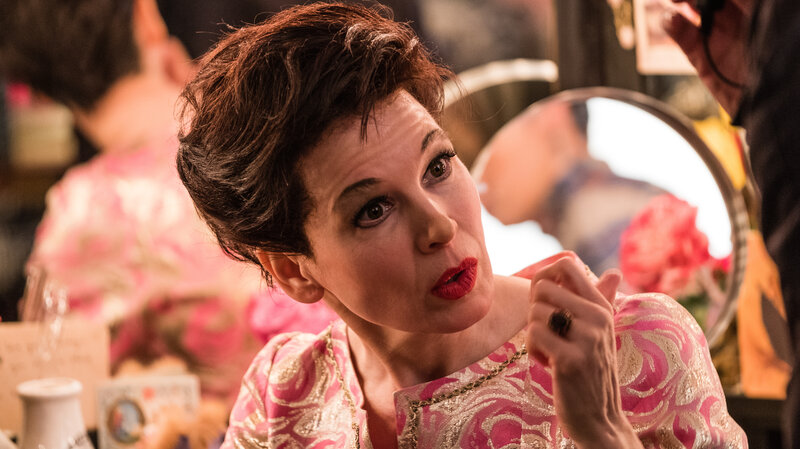
While Renee Zellwegger's turn as Judy Garland in Judy has made her the de facto front-runner, I'm thinking Johansson could upset her here. I don't feel the passion around Judy and without Zellwegger  there'd likely be more of a narrative for Johansson winning. She's had a long career in Hollywood and has reinvented herself from child actress to indie darling. She became a sex symbol and Marvel hero. Now she's becoming somewhat of a character actress. And with Marriage Story having more support in other categories I think she genuinely has a shot. 

Saoirse Ronan received her fourth nomination for Little Women. An argument could be made she deserved to win for Gerwig's debut feature Lady Bird, the Academy likely feels they can get to her later. There's no urgency to reward her just yet.

Joaquin Phoenix has been the front-runner for Best Actor since Joker premiered at the Venice Film Festival back in September I feel he's pretty locked to win. He has the overdue factor as well as the big showy role. And if Joker wins awards through the night before Best Actor is announced, it'd be odd if its star is ignored. I also think Hildur Guonadottir could win Best Original Score for the film. She's already built up an impressive resume with her collaborations with Denis Villeneuve and Alejandro Inarritu and had a breakthrough year with Joker and the HBO miniseries Chernobyl.  She's only the seventh woman to be nominated for Best Original Score and would become the fourth recipient if she won. If the Academy feels they need to make up for the lack of female nominees this year it'd also help Gunadottir's chances. 
Image result for thelma schoonmaker

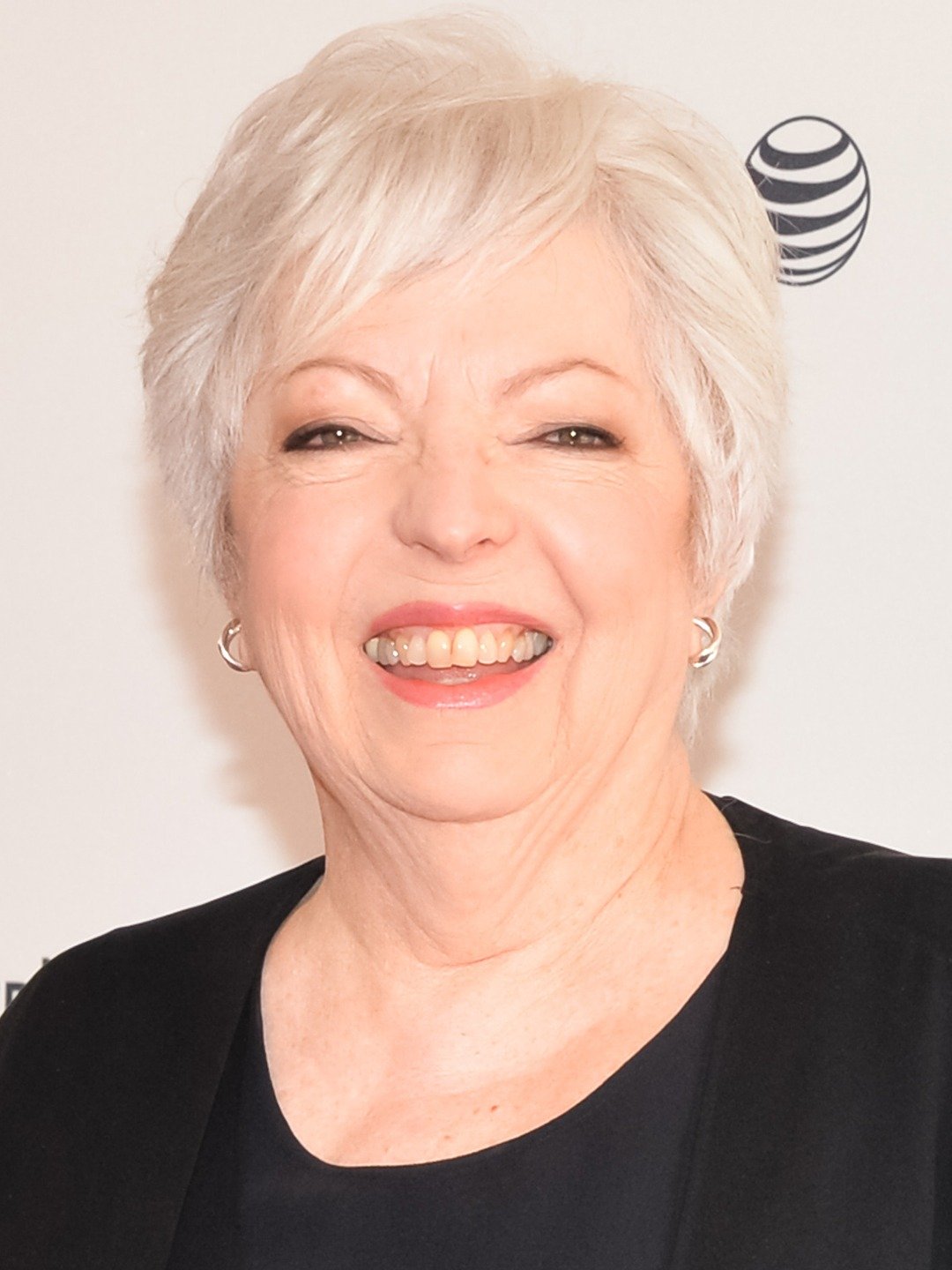
Thelma Schoonmaker, Martin Scorsese's long time editor, received her eighth nomination for The Irishman and has won three times previously for Raging Bull, The Aviator and The Departed.  I could see Parasite or Joker winning here. Joker feels like it could do really well on Oscar night though it could also under-perform. 

OUATIH missed out in editing; the editing nomination is seen as essential for a film to win Best Picture, with the exception of Birdman which was made to look like a continuous shot, which is likely the reason why 1917 also failed to receive an editing nomination as well. I think Best Picture is wide open. Parasite could become the first Foreign Language Best Picture winner. Alfonso Cuaron's Roma seemed pegged to take that honour but lost out to Green Book. If Parasite wins, it'll make history and act as a make-up for Roma.    

Now, I want to talk a little bit more about the controversy surrounding the lack of female and POC nominees this year, which has also been an issue previous years as well. I believe that the lack of diversity in the Oscar race is a symptom of the larger problem in Hollywood rather than the cause. If this problem is to be fixed we have to approach it from the angle from how movies are made and who gets to make them. I know this also easier to say then to do but it's important to remember the Oscars are part of a larger problem. 

So, those my overall thoughts on this year's nominations. How do you feel about the nominations? Who did want to get in and who do you think will win. Let me know.

Friday, 27 April 2018

Shakespeare on Screen: "Romeo + Juliet" (1996)

Image result for romeo + juliet


Baz Luhrmann's Romeo + Juliet is both of its time but also slightly outside of it. It wasn't the first time Shakespeare was modernised on screen (Richard Loncraine's Richard III starring Ian McKellen as Richard in a fascist 1930s England was released the previous year) nor was it the first re-contextualisation of Romeo and Juliet in to a contemporary setting- West Side Story, which began as a play before becoming an Oscar-winning film in 1961, had already approached the story via the concept of rival gangs. But while Romeo + Juliet technically wasn't the first of its kind, it's still a one of a kind adaptation, fully committed without irony or embarrassment, sincere without being sappy- a genuine vision.

I would argue Romeo and Juliet, perhaps more than any of Shakespeare's other plays, makes the most sense to set in the present day. Two sexually aroused teenagers who take their love way too seriously and whose parents hate each other suits the modern era conceivably better than it did in 1597. Luhrmann opens the film with a television set in the distance, surrounded by black, an ominous image that immediately establishes the contemporary nature of the film and differentiates it from Franco Zeffirelli's classic and controversial (he cast actual teenage actors- Olivia Hussey and Leonard Whiting) 1968 version. The TV screen also establishes how in a modern setting, the story of Romeo and Juliet would be a media frenzy, especially with them being the children of prominent families in Verona Beach.

Luhrmann stages the opening brawl between the Capulets and Montagues at a gas station. Luhrmann plays it out like the most frantic neo-western you've ever seen, reminiscence of something out of a Robert Rodriguez movie. The media plays a part in this sequence as the shootout (I love that the guns are called swords and daggers) moves in to the wider area and we see Juliet's father Fulgencio Capulet (Paul Sorvino) turn on the news and see the headline "Third Civil Brawl." Prince Escalus from the play Captain Prince of the police, played by the stalwart actor Vondie Curtis-Hall. It's a bombastic opening that establishes the film's style and it's approach to the Bard.

I mentioned West Side Story earlier and I believe Luhrmann owes something to both the musical and film since Romeo + Juliet is a musical as well. No, Romeo (Leonardo DiCaprio) and Juliet (Claire Danes) don't burst in to song but the film's key emotional moments are accompanied by people singing either in the the scene or on the soundtrack. Also, most of the songs were written specifically for it. "Kissing You," the film's love theme sweetly underscores the first meeting of Romeo and Juliet as they view each other through a fish tank. This occurs after Romeo has sobered himself up after taking ecstasy from Mercutio (Harold Perrineau, clearly having a blast), during which we see Mercutio in drag sing "Young Hearts." The sequence is brazen and the transition to the softer interlude with Romeo and Juliet is reminiscence of what we would see in a musical, with a big number followed by a more intimate one by two lovers.  
Image result for young hearts run free romeo and juliet


It's not surprising Shakespeare has been adapted in to Opera. He lends itself to the form since he's...well operatic. And appropriately, Luhrmann's next film would be Moulin Rouge (2001). I would also argue Romeo + Juliet is less about the poetry of Shakespeare's words than it is about the visuals and music. DiCaprio and Danes aren't great Shakespearean actors but I would put forward that for this film and it's intention, they don't have to be. Their sincerity is what really carries the film. Between this and Titanic the following year, I think DiCaprio was the biggest heartthrob on the planet, though DiCaprio did distance himself from these kind of roles. And Danes may be at her most beautiful here. The late Pete Postlethwaite (who had one of the great faces in movies) is supposedly the only actor in the film to speak in iambic pentameter and he's terrific as the no-nonsense but empathetic Father Laurence. 

The movie's energetic style also slows down considerably when it's focused on Romeo and Juliet. When the two first meet in the aforementioned fish tank scene, the movie is slowing down, making us feel the immediate intimacy and affection Romeo and Juliet share. The scene also communicates how time does slow down when you're falling in love. I also like the symbolic touch of Juliet wearing angel wings.

The famous balcony scene is staged in a pool, giving the scene an erotic energy. It also makes sense in a modern-context for them to be more intimate during this scene. I don't think they would allow themselves to be restricted by any barriers. The pool also parallels them meeting at a fish tank. 

Related image

Romeo and Juliet represent teenage love at its most extreme. They fall in love after meeting and agree to get married. Moreover, they can't bare to live without each other. Romeo drinks poison when he believes Juliet to be dead. When Juliet wakes up and sees Romeo is dead she stabs herself. However, Romeo and Juliet begin the play in different emotional places. Romeo is in love with a girl named Rosaline but Juliet isn't interested in getting married to Paris, Dave Paris in the film (played by Paul Rudd). Romeo can't conceive of loving anyone else other than Rosaline. Then he literally falls in love at first sight with Juliet. We have to wonder, would Romeo had dropped Juliet for someone else had they lived? Romeo feels more obviously the one to kill himself over a girl than Juliet to kill herself over a boy. In a bold move, Luhrmann has Juliet wake up as Romeo is taking the poison. Unlike the play they do share one last moment together.

I can't help but think there's a lot of Romeo and Juliet in many teenagers- especially if you agree with critic Harold Bloom that Shakespeare invented human consciousness. Hell, I was probably too stuck on certain girls in my teenage years. It may be a little hard for many readers and audiences to non-ironically accept Romeo and Juliet's love. But I doubt is the story works if the interpretation is ironically detached. 

It's worth noting that what sets the tragedy in to motion is Mercutio's death by Tybalt (John Leguizamo), a casualty of the conflict between the Montagues  and Capulets,  who is of neither house. Mercutio's "A plague on both your houses" is essentially what happens. Mercutio is the play's most laid-back and jovial character and his death truly marks a dark turn for the story. For all his hyper-stylization, Luhrmann knows how to compose a shot. My favourite shot in the film is Romeo going off to kill Tybalt. Mercutio's body is in the foregound while Romeo in the background gets in the car while being persuaded to stay. 
Image result for mercutio's death romeo and juliet 1996


I'd say Romeo shooting down Tybalt is more potent than stabbing with him a sword. In the context of this universe Romeo has essentially committed a gangland murder. He's become a gangster, not that different than Tybalt.

At last, it is Romeo and Juliet's deaths that bring the Montagues and Capulets together. The story ends up being about parents' actions affecting their children, with the parents having to deal with those consequences. With Shakespeare, tragedy always is necessary for positive change or for a lesson to be passed down by the survivors In the context of this film's universe, the story is being told through the media. How will the people in this world react to this story. When viewing the film now in 2018, I can't help but think of how the media is criticised for supposedly spinning a particular narrative.

Luhrmann's film still stands as one of the boldest cinematic interpretations of Shakespeare, one that emphasises the appropriateness of placing the doomed romance in a modern setting. There's something more provocative in seeing the suicide of two young lovers in the present. Seeing them in body bags on a TV screen invokes real-life tragedy and asks how would we react to a story like this. Could we sum it up as eloquently as Shakespeare. Probably not. 


Monday, 6 January 2014

My Favourite Films of 2013


These past few years, I always find it a tad difficult to do a top ten list at the end of the year. Not being a professional critic I haven't seen everything. That, and I find that I often have to give certain films a second look before I can be sure how I feel about them. A lot of the time I enjoy a film more on the second watch. There's also the question I always face, which is, what films from this year did I truly love and stood out to me? What are the ones I'll want to go back and watch as the years go by? It's a difficult question, especially when you don't know how a certain film will age or how you'll feel in five years about a film you love now. All that being said, here are my favourite films of 2013, starting with number 1 and proceeding alphabetically.


1. Blue Is the Warmest Color


When I saw Abdellatif Kechiche's film back at the Atlantic Film Festival here in Halifax this past September I immediately thought it was the best film I had seen in 2013. While I may have seen better films over the next few months, this is still my favourite film of 2013, a love story both of our time and timeless, a film that captures the pain and joy of love better than many other films I've seen. It tells the story of a young high school student named Adele (Adele Exarchopoulos) who falls in love with a fine arts student named Emma (Lea Seydoux).  The two embark on a passionate love affair that changes both their lives. The film is seen through Adele's eyes, who, through her attraction to Emma, discovers her sexuality. While Emma has known her own sexual identity for years Adele is only beginning to understand herself.

The term "coming of age film" has become somewhat of a cliché but Blue Is the Warmest Color painfully and beautifully portrays a woman "coming of age" in ways both positive and heartbreaking. Exarchopoulos' performance is a big factor in why we feel Adele's transformation so deeply. Exarchopoulous seems to age and grow right before our eyes, and we feel we're on the journey with her. Sadly, Exarchopoulos probably won't be nominated for an Academy Award for her magnificent performance.


Before Midnight

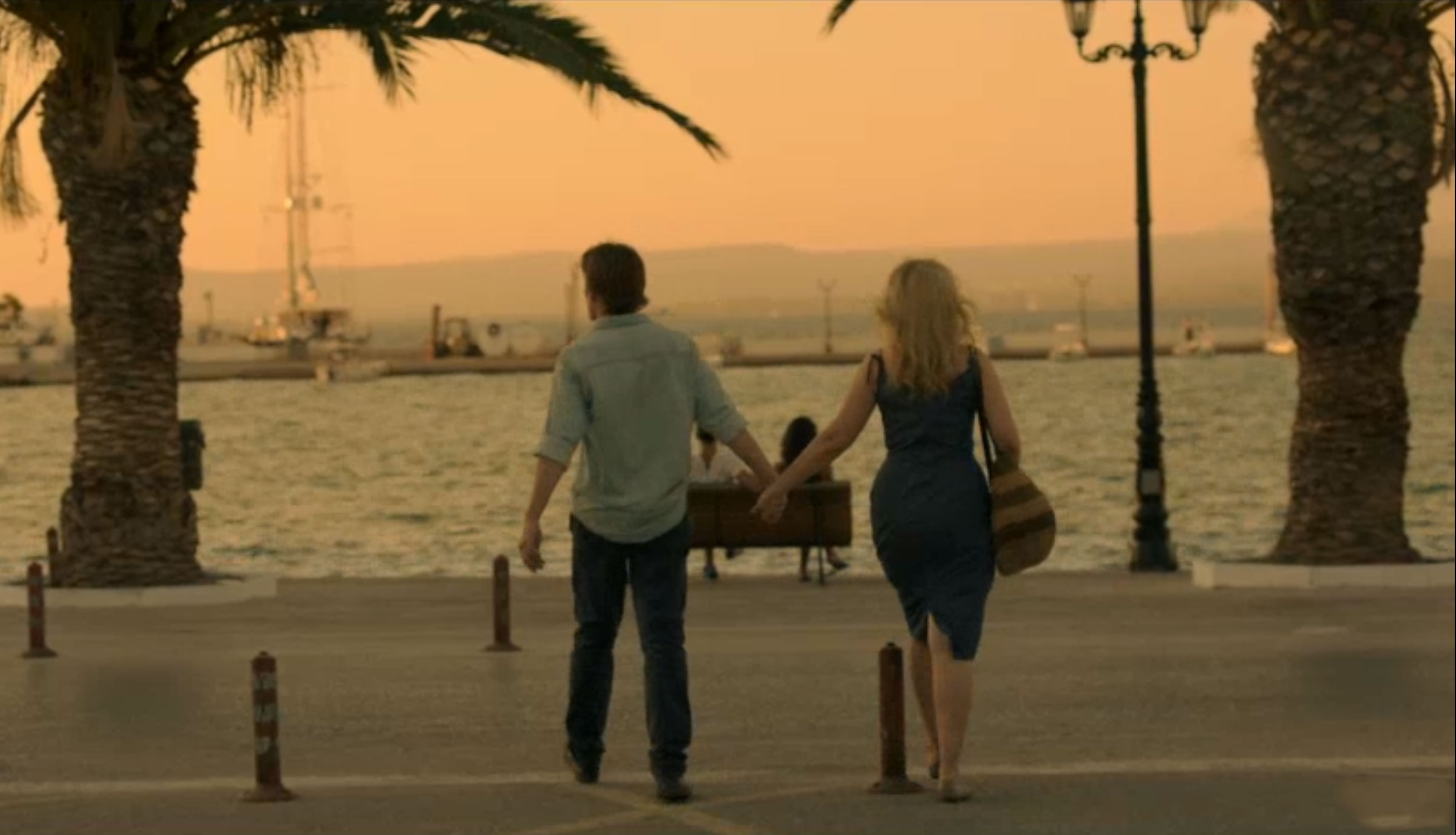
After viewing Before Midnight this past summer, the third in Richard Linklater's series chronicling the relationship between Jesse (Ethan Hawke) and Celine (Julie Delpy), I walked away somewhat disappointed, despite admiring the acting and writing on display. I think it was due to wanting to see more in the style two films in the series, Before Sunrise and Before Sunset,  whereas I viewed this film as the "couple fighting" installment. I also felt the structure of the film was "off." It was only on a second viewing and third (with commentary by Linklater, Hawke and Delpy) that I truly came to appreciate how excellent this film truly is. Hawke and Delpy give lived in performances- they've known these characters for almost 20 years and surely Jesse and Celine have not only become their signature roles but integral part of their lives. It's hard to imagine any one else playing either of these parts.

What's fascinating about Before Midnight, in contrast with the previous two films, is while those films showed us the only two instances these characters met, Before Midnight picks up after nine years of living together, of conversations and complications. This is immediately clear during a extended long take during a car drive (a virtuoso feat of filmmaking with only one cutaway) where Jesse and Celine's conversation no longer feels like it's betwee just two young people who've jut me. Instead the dialogue captures the rhythms of people who've lived together and know each other well. There are still talks of philosophy that remind us of the first film- notably during a dinner at a writer's villa in Greece, where we're introduced to a few new characters- a change of pace from the mostly Jesse/Celine format of these films. But most of the conversation in this film between Jesse and Celine deal with their own personal issues as a couple, notably Jesse wanting to move to Chicago to be with his son from his first marriage.

I mentioned earlier that I was disappointed this film had Jesse and Celine fighting. I  think I missed the way they talked in the first two films. But the hotel sequence which climaxes the film is truly amazing in how it's structured, the way the dynamic changes and how it tempts us in to choosing sides. But we really can't. Both Jesse and Celine are flawed people who both fight in ways that stop communication from flowing. Celine is overly passionate while Jesse is sarcastic and dismissive. Before Midnight strips away the idealized nature of Before Sunrise and shows us the organic evolution of this relationship, which can be almost painful to watch. But Before Midnight isn't really cynical about love and marriage, just honest, funny, and ultimately hopeful, albeit cautiously about the future.


The Conjuring

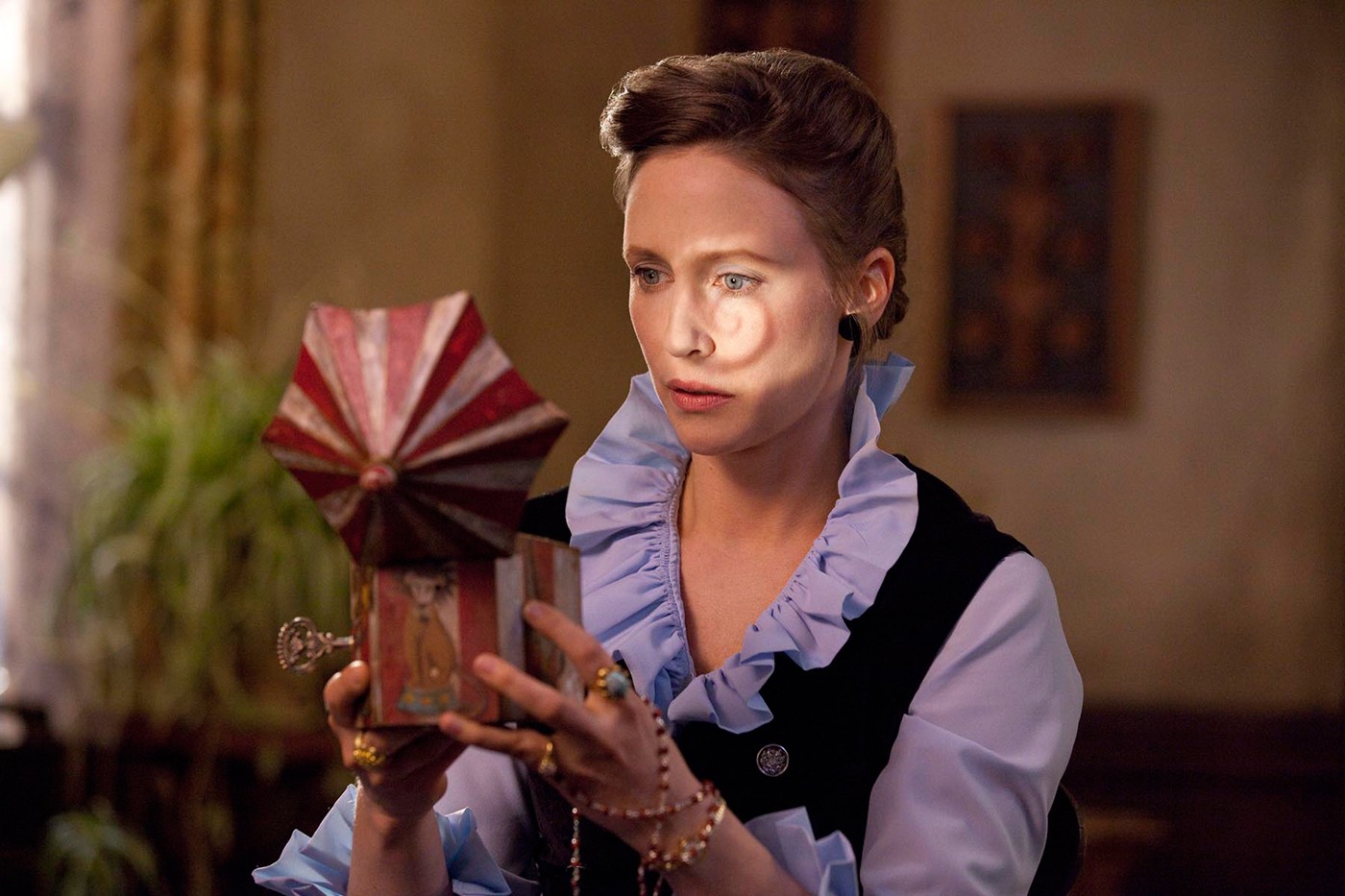
One of the most effective horror films in recent memory, The Conjuring demonstrates how a talented filmmaker can take familiar genre elements and make them fresh and exciting. The Conjuring is based on a real life case from the files of paranormal investigators Ed and Lorraine Warren (Patrick Wilson and Vera Farmiga) concerning the haunting of a house occupied by the Perron family. I love old fashioned haunted house films so The Conjuring definitely appealed to my sensibilities. Director James Wan crafts sequences that are as horrifying and nerve shattering as anything in the classic horror movie pantheon, all while allowing his actors to give well defined portraits of good people confronting evil.


Gravity

I'm still not sure how well Alfonso Cuaron's Gravity works as actual movie but as an experience (I saw it in IMAX 3D) it's one of my favourite film going memories of 2013. In an age where blockbusters have numbed us and taken the wonder out of big budget spectacle, Gravity was genuinely mind-blowing. Love it or hate it, for better or worse, I think this film is a game changer and I can already see a young kid watching this film and sparking a passion for filmmaking.

While it's largely a technical achievement, the film isn't soulless. The film has a deeply spiritual core. Stranded in space, astronaut Ryan Stone (Sandra Bullock) goes through a rebirth as she struggles to survive, all while remembering the death of her young daughter. Bullock and George Clooney, perfectly cast as veteran astronaut Matt Kowalski ground the film and give it humanity. Gravity is at once a revolutionary exercise in spectacle as well as timeless and inspiring tale of human survival.


Inside Llewyn Davis

The Coen Brothers returned this year with a quiet triumph of a film. Inside Llewyn Davis chronicles one week in the life of folk singer Llewyn Davis (Oscar Isaac), circa 1961, as he struggles to make it big . Unfortunately for Llewyn, artistic success doesn't seem to be his future. This is before Bob Dylan came on the scene and ignited the folk music genre. Inside Llewyn Davis is essentially a film about being unsuccessful- but instead of being depressing it has a perfect sense of melancholy that never completely dips in to tragedy or optimism. I don't believe the Coens view Llewyn as a failure but they do believe- and demonstrate- that even a talented artist won't always become a legend. But while Llewyn may never become a legendary musician like Dylan, Inside Llewyn Davis is a film for the ages.


The Past

Asghar Farhadi's follow up to A Separation is, like that film, both a family drama and a mystery. In both films the mystery isn't simply a whodunit but an existential quest for truth and a exploration of morality and responsibility. It tells the story of Ahmad (Ali Mosfatta) an Iranian man who returns to Paris after several years due to his wife Marie (Berenice Bejo from The Artist) wanting a divorce. Marie is in a relationship with an Arab man named Samir (Tahar Rahim from A Prophet), whose wife is in a coma. Marie and Ahmad's daughter does not approve of Marie's relationship with Samir, which complicates matters. While The Past tells a somewhat familiar story and its plot can verge on what some naysayers call "soap operish," The Past is adult filmmaking at its best, examining the complexities of family dynamics and the inability to find an objective truth about events. And like A Separation it's also a very accessible film for those who haven't seen many foreign language films


The Place Beyond the Pines

While I knew the structure of The Place Beyond the Pines before viewing the film I was still quietly blown away and shaken by where this film begins and eventually ends. It's rare that films have this type of expansive scope. The Place Beyond the Pines explores a simple and old theme, that of persona; choices reverberating throughout the years, particularly in terms of fathers and sons. Motorcycle stuntman turned bank robber Luke (Ryan Gosling) and rookie cop Avery Cross (Bradley Cooper) cross paths one fateful day, changing the course of Avery's life and of Luke's newborn son Jason. Director Derek Cianfrance has crafted what may eventually be called an American film classic.


This Is the End/The World's End

Both This Is the End and The World's End are- on the surface-comedies about the end of the world and alien invasions- but at their heart are actually painfully honest films about broken relationships and wanting to get back what's now in the past. In This Is the End, Seth Rogen and Jay Barachel (playing versions of themselves) deal with Jay's outsider status amongst Seth's L.A. friends, including James Franco and Jonah Hill (also playing themselves). While Seth, Jay and others are holed up in James' house, tensions come to a head and the meta humour of the actors playing themselves gives us as the audience insight in to these men's lives

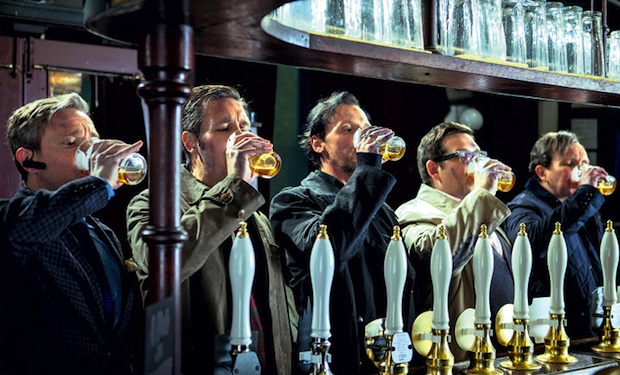
In The World's End, the final film in Edgar Wright's Cornetto Trilogy, after Shaun of the Dead and Hot Fuzz, Gary King (Simon Pegg) wants to recapture his youth by finally finish a famous pub crawl he and his friends didn't complete after high school graduation. He gets the old gang, including Andy (Nick Frost) and Oliver (Martin Freeman), back together. While Gary's friends have grown up he still hasn't moved on from his high school days. As the film goes on we realize what a tragic character Gary is. While I don't love The World's End as much as Hot Fuzz, it may actually have the most depth of the Cornetto Trilogy. I think The World's End is a better film than This Is the End- it's a narratively tighter film- but both are two of the smarter comedies in recent memory.


12 Years a Slave

It may come across as cliché to call 12 Years a Slave an important film, as well as making the film seem stuffy, but 12 Years a Slave is truly an important piece of filmmaking by director Steve McQueen. Not just because it deals with one of the most horrific crimes against humanity in our history but because it's one of the most essential documents of American slavery on film. The film portrays the inhuman treatment of men and women in a brutal and uncompromising fashion. The film is based on the memoir of the same name by Solomon Northrup (Chiwetel Ejiofor), a black man born free in New York who was kidnapped and sold in slavery. Ejiofor, in the role that may win him an Academy Award conveys dignity in the face of inhuman treatment as well as the emotional toil life as a slave takes on him. Michael Fassbender, as one of Solomon's several masters, shows us a horrifying vision of true evil.  While period pieces can sometimes feel a little dry cinematically, McQueen's visual style makes this a truly cinematic film. A long take of Solomon hanging by a tree may be the most unforgettable and powerful shot of the year. As the film ended, after Solomon is reunited with his family and words are unable to describe the emotions in that room, I was overwhelmed in a way I rarely am by a film.


The Wolf of Wall Street

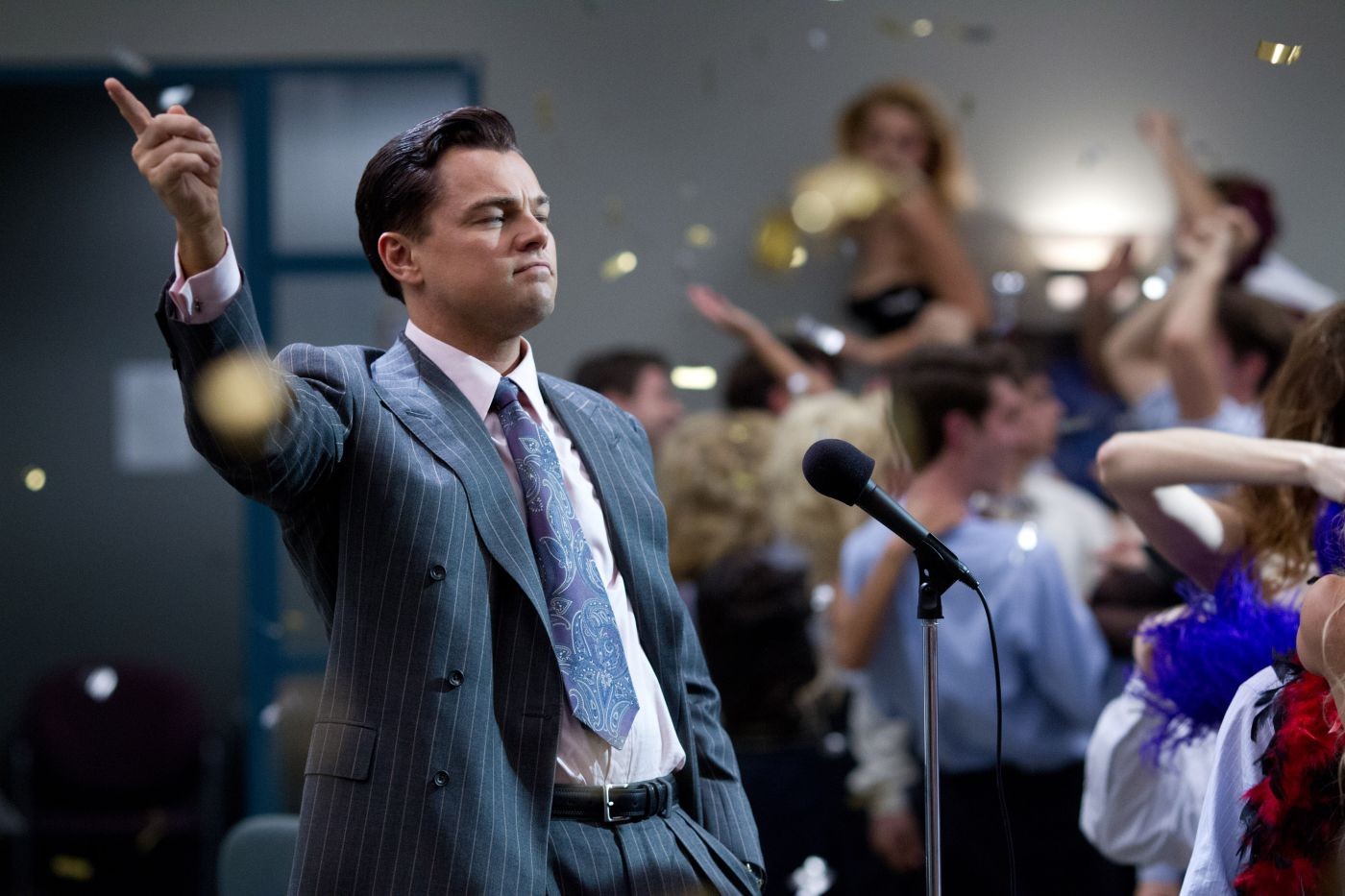
If Martin Scorsese's Goodfellas and Casino were siblings then his latest film The Wolf of Wall Street is their twisted cousin, showing us that maybe those ruthless gangsters weren't that bad compared to the slimy stock brokers on Wall Street. The Wolf of Wall Street is a period piece, taking place in the late 80s and 90s- but it has a modern feel and its depiction of these crooked men still seems relevant. Leonardo DiCaprio plays Jordan Belfort, who in 1987 takes a job at a firm run by Mark Hanna (Matthew McConaughey). Belfort loses his job when the stock market crash of Black Monday happens. Belfort then creates his own firm, which grows in prominence and comes to the attention of the FBI.

DiCaprio gives what is arguably his best performance of this career thus far. As much as I like DiCaprio he can come across as trying too hard with some of his performances but here, as with last year's Django Unchained, His theatrical style of acting perfectly suits the character of Belfort. He creates a vivid portrayal of a man who in any other film would be self destructive- but as addicted to cocaine and sex as Belfort is, he never really gets his comeuppance or experiences any kind of moral epiphany. Belfort may not be the deepest character DiCaprio has played but it allows him to be freer as an actor. The "lemmons" sequence also demonstrates what a great comedic actor DiCaprio can be.

The film has been criticized a condoning the actions of Belfort and his cohorts. I think the film, while entertaining, ileaves it to the audience to both have fun watching the insane antics of these men but also acknowledge the immorality and stupidity of several of the characters. By doing this the film avoids being hypocritical and trusts the intelligence of its audience.

It can't be said enough how amazing it is that Scorsese, at 71, can still make a more exciting and purely cinematic movie than most filmmakers half his age. While one does feel the three hour length and it is a little meandering the film never really drags. The film is tinged with so much energy and hilarity that the three hours move by pretty quickly. The fast paced nature of the film is not only due to Scorsese's live wire direction but also the editing of frequent collaborator, Thelma Scoonmaker.

While I'm still partial to DiCaprio and Scorsese's last collaboration, the underrated Shutter Island, The Wolf of Wall Street is still a vital and bold film, and one of the most entertaining films of 2013.


Some other films I liked: Much Ado About Nothing, Drinking Buddies,  Iron Man 3, The Wolverine, Man of Steel, Insidious Chapter 2, Warm Bodies, The Heat, The Hobbit: The Desolation of Smaug, Now You See Me, Mud, Evil Dead, I Give It a Year, To The Wonder

Still need to see: Frozen, The Hunger Games: Catching Fire, The Spectacular Now, Short Term 12, The Act of Killing, American Hustle, Dallas Buyer's Club, Her, Fast and Furious 6, All is Lost, Nebraska

Looking forward to: Interstellar, Guardians of the Galaxy, X-Men: Days of Future Past, The Amazing Spider-Man 2, Inherent Vice, Gone Girl, Godzilla, The Hobbit: There and Back Again, Captain America: The Winter Soldier, Dawn of the Planet of the Apes


The Davies Awards:

Favourite Actors:
Leonardo DiCaprio, The Wolf of Wall Street
Chiwetel Ejiofor, 12 Years a Slave
Martin Freeman, The Hobbit: The Desolation of Smaug
Oscar Isaac, Inside Llewyn Davis

Favourite Actresses:
Adele Exarchopoulos, Blue Is the Warmest Color
Olga Kurylenko, To the Wonder
Jane Levy, Evil Dead

Favourite Supporting Actors:
Benedict Cumberbatch, Star Trek Into Darkness and The Hobbit: The Desolation of Smaug
Charlie Day and Burn Gorman, Pacific Rim
Tom Hiddleston, Thor: The Dark World
Danny McBride, This Is the End
Matthew McConaughey, The Wolf of Wall Street

Favourite Supporting Actresses:
Kat Dennings, Thor The Dark World
Carey Mulligan, Inside Llewyn Davis
Margot Robbie, The Wolf of Wall Street

Favourite Directors:
Alfonso Cuaron, Gravity
Joel and Ethan Coen, Inside Llewyn Davis
Abdellatif Kechiche, Blue Is the Warmest Color
Terrence Malick, To the Wonder,
Nicholas Winding Refn, Only God Forgives
Steve McQueen, 12 Years a Slave
Martin Scorsese, The Wolf of Wall Street
James Wan, The Conjuring and Insidious Chapter 2

Favourite Cinematography: To the Wonder

Favourite Action Sequences:
The barrel sequence, The Hobbit: The Desolation of Smaug
Plane rescue, Iron Man 3
Bullet train fight, The Wolverine
Superman vs. Zod, Man of Steel

Happy Anniversary Awards: The Exorcist, Badlands and Mean Streets, 40th Anniversaries, Die Hard, 25th Anniversary, From Russia With Love, 50th Anniversary, Jurassic Park and Schindler's List, 20th Anniversaries, A Nightmare Before Christmas, 20th Anniversary, Return of the Jedi, 30th Anniversary.


Sunday, 13 May 2012

Hitch, Marty and Chris: Vertigo and Its Spiritual Descendants


Warning: Spoilers for Vertigo, Shutter Island and Inception Follow

In 2010, Leonardo DiCaprio starred in two films that were linked not just by his presence but by their obsession with reality versus dreams, the deconstruction of professionalism through emotional turmoil, the way romantic desire can be twisted by the mind and...obsession. The two films were Martin Scorsese's Shutter Island and Christopher Nolan's Inception. While Comparing the two of them would be fascinating, I'd like to link them back to Alfred Hitchcock's 1958 film Vertigo. Shutter Island and Inception, arguably moreso than the other genres and films they refrence, contain significent thematic similarities to Hitchcock's film.

All three films are essentially mazes crafted by their respective directors, and also by characters in the films. for their protagonists to travel through, reaching an emotional chararis or realization about themeselves. The catch is the characters don't know they're in a maze or think they know what kind of maze they're in. In Vertigo former detective John 'Scottie" Ferguson (James Stewart) feels he understands what's happenng every step of the way At first, he believes that Gavin Elster (Tom Helmore) just has an active imagination, that his wife Madeline (Kim Novak) couldn't really be possessed by a sprit- but as he learns more about Madeline's great-grandmother Carlotta Valdes, he begins to believe there's something to Elster's story.

Vertigo_0131

What Scottie fails to understand is he's part of  Elster's plan to murder his real wife. The Madeline Scottie follows is just a decoy. Scottie sees what he believes to be Madeline committing suicide from jumpng of the top of a bell tower. What he actually sees is the dead body of the real Madeline Elster. With Scottie a witness, Elster gets away scott free.

Vertigo_0596

Scottie is also part of Hitchcock's maze, which ties the plot and the psychological aspects of the Scottie character together. Htchcock takes Scottie on a journey from a man emotionally detached but curious former detective to a man obsessively in love with Madeline, so in love that he makes over Judy (Novak again), the decoy Madeline, back in to Madeline. Hitchcock eventually leads Scottie to finally overcoming his acrophobia. Hitchcock also brings Scottie to a revelation about his obsessive love for Madeline: it can never be real because Madeline was never real, at least not the one he knew. By makng Judy over all he's done is, like Elster, strip away Judy's identity for a dream. Men, and I speak as one myself, sometimes cling to a fantasy woman rather than something tangiable in front of us. What's disturbing is in Scottie's case the fantasy woman and the real woman are the same. He comes to the realization about his obsession, it's too late to go back- and as Judy falls to her death, for real this time, Scottie loses the real woman he could not love. As Scottie is standing outside the bell tower, he's come out of the maze- what kind of man and what his future holds remains one of the great mysteries of film.

Vertigo_1187

In Vertigo, Scottie is a former detective, spendng most of the film outside of his profession while still taking part in it. In Martin Scorsese's Shutter Island, Teddy Daniels (Leonardo DiCaprio) is a former US Marshall who is a patient at Ashcliffe Hosptal for the Criminally Insane on Shutter Island. His real name is Andrew Laeddis and he went insane after killing his wife Dolores (Michelle Williams) who in turn had murdered their three children.Teddy spends the movie outside of his profession yet taking part in it as well. He has created a reality where he is still a US Marshall and has come to Shutter Island to invetigate the disappearance of a patient named Rachel Solondo (Emily Mortimer).

As with Vertigo, the plot mechanics of Shutter Island are a fabrication. In this case, a fabrication made by Teddy to esccape from his guilt of not helpng his wife who he knew was mentally ill. Dr. Cawley (Ben Kingsley) allows Teddy to play out his fantasy, which also includes Nazi experiements done on the island, so that Teddy can come to realize the truth and come to accept what's he done. Vertgio takes us through what seems like several genres, thriller, mystery, ghot story, gothic romance until it reveals itself to be a character study about obsessive love. Shutter Island travels through film noir, paranoid conspiracy thriller, horror and romance, and, at the top of a lighthouse, reveals itself to be a story about the way film narratives comfort and help us escape from reality. Scorsese creates a tribute to the films he loves and also ties them in to the pyschology of the Teddy character. Teddy has created a world that, uncomforting as it is, is more bearable than the truth.  Horror movies can scare us but they do so in mangeable ways. Film noirs have a cynicism to them but they also have style to burn.


I think the strongest link between Vertigo and Shutter Island are the themes of lost love and trying to reclaim that love through fantasy. Teddy constantly dreams about and imagines Dolores. Part of his illusion is that Dolores died in an apartment fire started by ''Andrew Laeddis," who Teddy is looking for on Shutter Island. Teddy has preserved Dolores the way she was rather than what she became. He preserves her in time like Scottie preserves Madeleine and just as Scottie made over Judy, Teddy has made over his subconscious. Teddy, like Scottie, has to come to the realization, that his love is a fantasy. The real Dolores, and his relationship with her was destroyed when she murdered her children. Teddy has to confront the real woman, not the dream, not the fantasy.


Vertigo and Shutter Island are both about the crumbling of professionalism through romantic desire. Scottie is at first a detached but curious observer but things become more complicated when he falls in love. Teddy's mission, while a fantasy, is complicated by the appearance of Dolores, who feeds in to his paranoia, thus making his fantasy much more dangerous.

A dead wife who appears in the protagonist's dreams is the most humourous connection between Shutter Island and Christopher Nolan's Inception. Nolan has been compared to Stanley Kubrick and drew inspiration from Ridley Scott and Michael Mann for his Batman films. For me, I see him comparisons between him and Hitchcock. Like Hitchcock, Nolan's films exist in a heightened reality. On the surface are films driven by twists and turns, elements that have led Nolan to be labelled a shallow director -"amusing but mechanical"- according to critic Jim Emerson. In his time Hitchcock also seemed to be the victim, I and I think still is, of being labelled shallow.  But, like Hitchcock, beneath Nolan's plot mechanics lie interesting psychological studies of obsession.


I think Inception, out of all Nolan's films, has the strongest thematic links to Hitchcock, which brings me back to the role of the dead wife in the film. Leonardo DiCaprio again has a lost love on his mind. He plays Dom Cobb. He's an extractor, a man who is hired to steal infomation from powerful people. He does this by having an architect build a dream world he and the subject can enter. Once inside Cobb can extract the information needed. Things are complicated by the constant appearance of Cobb's deceased wife Mal (Marion Cotillard).

Cobb and Mal spent 50 years in the dream world known as Limbo. Mal began to lose track of reality, which led Cobb to perform inception on her, convincing her that they needed to kill themselves in order to wake up. Once in the real world Mal still believed she was in a dream world, which led her to suicide. In Vertigo, it was partly Scottie's guilt for what he believed was Madeleine's death that led him to make over Judy in to his lost love. In Inception, it's also guilt that causes Cobb to hold on to the memory of his wife, to create a vision that doesn't blame him for anything, that's preserved in time, even moreso than Madeleine or Dolores. Like Teddy, Cobb has made over his subsconscious, and even stays in it to visit and be with Mal.


Inception is all about mazes. The dream worlds Ariadne (Ellen Page) create for the job to incept Robert Fischer (Cillian Murphy) are all designed to be mazes- and ultimately the film is a maze that not only the Cobb and his team send Fischer through, but that Nolan sends Cobb through as well. The maze in case requires Cobb to downwards, both literally and metaphorically. "Downwards is the only way forwardss" he says- which speaks for his character arc. To let go of his guilt and the fantasy he clings on to, he must go downwards back to Limbo.


All three films end on the top of a building of somesort. In Vertigo, it's the bell tower, In Shutter Island it's the lighthouse and in Inception the film ends on the top floor of a building in Limbo. In in these places where everything is revealed and the characters reach an emotional catharsis of sorts. It's in this building that Cobb tells Mal

"I can't imagine you with all your complexity, all you perfection, all your imperfection. Look at you. You are just a shade of my real wife. You're the best I can do; but I'm sorry, you are just not good enough"

 Cobb realizes he can't bring back Mal back from the dead. Like Scottie, all he can do is create an image, a fantasy. There are echoes of Andrei Tartovsky's Solaris in Shutter Island and Inception, and Solaris may owe much to Vertigo. All four films are about a romantic desire that's can't be completely fullfilled, how you can never really know who the person you love really is.


Vertigo, Shutter Island and Inception all concern the nature of dreams and their relationship to filmmaking. Much has been made of how we never see how Scottie got down from the roof at the beginning of the film. Is everything after the first scene some kind of dream. The film almost moves like a dream, with plot points that don't make sense and several concidences. The scenes of Scottie following Madeleine also have a dreamy quality to them. Shutter Island's dream sequences evoke different genres, from melodrama to horror, relating to the movie Teddy has crafted for himself in the real world. Inception combines several genres, the heist film, the spy thriller, film noir, sci-fi and even a little bit of Fred Astaire. Nolan does this to emphasize how movies themselves are like dreams.

All three films also involve continous loops, relating to the constant loops films are on- when we rewatch them the characters go through the same motions even if we know the story. Scottie ends the movie standing over an abyss, where he began the film. Cawley compares Teddy to a tape that's on a endless loop. Inception begins with Cobb in Limbo and eventually returns to that scene at the end. Teddy breaks this endless loop by pretending to regress again, making the surgeons perform a lobotomy on him. Cobb makes Saito (Ken Watanabe) realize he's in Limbo, making Saito shoot himself and Cobb to wake up.       

The last shot of Inception is Cobb's totem spinning on the table. The film cuts to black before we know if it topples. Cobb, while happier than Scottie is at the end of Vertigo, is suspended between dreams and reality. We're always suspended between not knowing what is real and what isn't. Are we constantly dreaming? We ultimately have to accept what is given to us- if life is a dream, make it a happy one.


Tuesday, 14 February 2012

Top 11 Films For Valentine's Day


This is a little late but here's my movie playlist for Valentine's Day:

1. Casablanca (Michael Curtiz, 1943)
The Rest (Alphabetically)
2. An Affair to Remember ( Leo McCarey, 1957)
3.The Apartment (Billy Wilder, 1960)
4. Brokeback Mountain (Ang Lee, 2005)
5. Casino Royale (Martin Campbell, 2006)
6. City Lights (Charlie Chaplin, 1931)
7. Make Way For Tomorrow ( Leo McCarey, 1937)
8. Romeo + Juliet ( Baz Luhrmann, 1996)
9. Spider-Man and Spider-Man 2 (Sam Raimi, 2002 & 2004)
10. Vertigo (Alfred Hitchcock, 1958)
11. WALL-E (Andrew Stanton)

Saturday, 17 December 2011

Some Thoughts on the Oscar Race


I'm not much of a prognosticator when it comes to awards season. Mostly I go from what others are saying, with a few of my own thoughts creeping in. Nevertheless, it's been a while since I wrote about the Oscars and now is as good a time as any. I'll going through several of the categories giving my thoughts on each one.

Best Actor
Could this year's race really come down to a battle between the two biggest movie stars on the planet? It looks like it, with George Clooney and Brad Pitt being virtual locks for their performances in The Descendents and Moneyball, respectively. There's a certain stigman against movie stars; a belief no one famous could be talented, or according to Emma Stone, talented enough to make people forget he or she is a star and play a real person. Some will scoff at the idea of two movie stars being leading candidates for the Best Actor Oscar but from what I've heard, Clooney and Pitt give career best performances. Add the fact Pitt has also recieved acclaim for his work in Terrence Malick's The Tree of Life and Clooney did quadriple duty this year with directing, producing, co-writing and acting in the political thriller The Ides of March, and it's no suprise these two guys are frontrunners.

Another big star, Leonardo DiCaprio, also has a solid chance at getting his first Best Actor nomination since 2006's Blood Diamond, with Clint Eastwood's J. Edgar. I liked DiCaprio's performance but I still prefer his work in Shutter Island and Blood Diamond. If anything, I hope DiCaprio's probable inclusion doesn't lead to Gary Oldman's exclusion. I haven't seen Tinker, Tailor, Soldier, Spy yet but Oldman is supposed to be terrific in the role of George Smiley. Oldman has also never been nominated before. After so many years in the business and being able to go from playing Dracula to Commissioner Gordon, I think most are in agreement it's finally time.

Adding to the list of movie stars, Jean Dujardin, a star in France, is also likely to get a Best Actor nomination for his work in the silent film The Artist.

Woody Harrelson is also supposed to be great in Rampart but like Oldman he missed out on the SAG and Golden Globe nominations. Ryan Gosling was just nominated for his roles in Crazy Stupid Love and The Ides of March at the Golden Globes. His role in Ides is probably the best bet for a nomination but something tells me he's going to be left out agan this year.  

I think the eventual line-up will be: Clooney, Pitt, DiCaprio, Dujardin, Oldman.

Best Actress
Despite having two Oscars , there's a feeling Meryl Streep is overdue. It's been nearly thirty years since she won for Sophie's Choice and she has been pretty close with her roles in Doubt and Julie and Julia, losing out to Kate Winslet and Sandra Bullock. She plays former British Prime Minister Margaret Thatcher in The Iron Lady and it's the kind of role which screams Oscar, namely a real person, and a wildly controversial one at that. For the longest time people were talking about the race for Best Actress would be between Streep and Glenn Close, who hasn't been nominated since the 1980s. Her role in Albert Nobbs is that of a woman pretending to be a man in 19th century Ireland. This is also a role which screams for a Oscar. Close has never won, giving her the "due" factor. I'm just wondering if the film will make enough of an impression for Close to win.

Some, like Dave Karger of Entertainment Weekly, feel the race is between Streep and The Help's Viola Davis. The Help has a better chance of being nominated for Best Picture than The Iron Lady or Albert Nobbs, which I feel gives Davis a slight advantage over both of them.

I think Michelle Williams is also a lock for playing Marilyn Monroe in My Week With Marilyn but as I said in my review of the film I think Williams deserves a better movie. Tilda Swinton is gaining momentum for her work in We Need to Talk About Kevin. I had Elizabeth Olsen as one of the top five, thinking she'd be the Jennifer Lawrence of this year, but I think she's lost steam recently. Charlize Theron or Rooney Mara could be get the fifth spot, or the fourth and fifth if Swinton if left out.

Best Supporting Actor
I think Christopher Plummer has a really good shot at finally winning an Oscar this year. Plummer only recieved his first nomination two years ago for The Last Station but lost to Christop Waltz for Inglorious Basterds. His role in  Beginners as a father who reveals he's gay in his seventies has already landed Plummer a few of the critic's awards for Best Supporting Actor. Albert Brooks has also picked up a few awards for Drive, making him Plummer's closest competition. Ingmar Bergman alumni and acting legend Max von Sydow could also get in for his role in Extremely Loud and Incredibly Close. The thing is, the film, despite it's pedigree, doesn't seem like a big player, which may be a result of it being screened later than other films. I also think Kenneth Branagh has a good chance at a nomination but like Williams, I think he deserves a better movie. Could Jonah Hill, a SAG and Golden Globe nominee for Moneyball ride Brad Pitt's wave to a nomination? I could see it happening but he's not a lock yet. Armie Hammer has just been nominated for a SAG for his role in J. Edgar. This puts him back in the race after it seemed he was pretty much out. Like Hill, I still think he could get left out, particularly if J. Edgar isn't a big player.

Best Supporting Actress
I think this race could come down to the ladies of The Help, Octavia Spencer and Jessica Chastain. Chastain has been in everything this year, and has been in danger of splitting the vote among her performances. I think she's safe for a nomination though, with people leaning towards The Help. Chastain could still split the vote with Spencer. Shailene Woodley, who plays George Clooney's daughter in The Descendants, could take it if there's a vote split but I don't see the academy giving it her. She's still fairly young and new to the movie scene. There's no pressure to give it to her either. Vanessa Redgrave has been seen as a frontrunner for some time now but she lost out on the SAG and Golden Globe Nomination for her role in Ralph Fiennes' adaptation of Shakespeare's play Coriolanus. I think Laurence Olivier was the first and last actor to win for a Shakespearean role, that of Hamlet. I would love a Shakespearean performance to win this year. The Artist's Berenice Berjo also seems like a likely candidate. Some people have mentioned Sandra Bullock in Extremely Loud and Incredibly Close but even if it picks up steam, which it can, I don't see Bullock getting in.

Best Picture/Best Director
I think The Artist and The Descendants are locks for Best Picture. Their respective directors, Michel Hazanavicius and Alexander Payne will also get in. Martin Scorsese's Hugo as well. While I'm a little mixed on Hugo, I think it'd be great for Scorsese to win another Best Director Oscar. The pressure to award him is gone though so they'll probably give to someone else. The Help has a good chance at getting in but I feel it's director Tate Taylor is not a big enough name to get a nomination. Midnight in Paris, while a small scale film, is getting more love than most of Woody Allen's recent films. It could get in, with Woody Allen receiving his first Best Director nomination since 1994's Bullets over Broadway. Never underestimate Steven Spielberg, particularly with two big holiday releases this year, War Horse and The Adventures of Tintin. The director I most want to see get nominated is Terrence Malick for The Tree of Life. Unfortunately, I think the origin of the universe and afterlife sequence will turn off some academy members.

So there you go, some of my thoughts on a slightly open Oscar race this year.

Friday, 18 November 2011

Not Like There's Anything Wrong With That: "J. Edgar" Review


There's a moment a little while in to J. Edgar, where an elderly J. Edgar Hoover (Leonardo DiCaprio), dictating his autobiography to an agent (Mike Vaughn) asks the agent, "Who was the most famous person of the twentieth century, thus far?" The agent eventually asks "Is that you, sir?" Hoover seems mildly amused the agent would give this answer, though we can't help but think there's some kind of pride Hoover finds in being seen as famous.

Of course, we don't know exactly what Hoover is thinking in this moment, and its this type of mystery which extends all the way through J. Edgar. The film, while it explores the secret life of the man who was the head of the F.B.I for nearly fifty years, doesn't really try to explain the man. I think it's possible that director Clint Eastwood, who himself grew up when Hoover was in power, is still struggling to figure out the man who arguably held more power than the eight presidents he served under.

The film shifts back and forth from Hoover's younger years in the 1920s and 30s, when he first became head of the Bureau of Investigation, which eventually became what we know as the F.B.I., his relationship with his right hand man, Clyde Tolson (Armie Hammer)-and Hoover as an old man, dictating his biography. I liked this approach for several reasons. One is that it allows you to get used to the old age makeup on DiCaprio and Hammer. The make up has been harshly criticized but I for one was able to settle in to it as the film progressed. I also like how the film's structure gives equal emphasis to both young and old Hoover instead of showhorning older Hoover in to the last few minutes of the film. Another nice structural element is the juxaposition of certain scenes and moments that connect the past and the present. For example, an older Hoover and Tolson get in a elevator and then we cut to the younger Hoover and Tolson getting out of an elevator; we see Hoover on a "date" with secretary Helen Gandy (Naomi Watts) where he asks her to marry her but eventually has to settle for her as his secretary- we then cut to a scene older Hoover and Gandy, and just by juxapositing these two scenes, we get a sense of a long history between these two.

Dustin Lance Black's script (he also won an Oscar for writing another biopic, Milk), as well as the film itself, is surprisingly sympathetic towards Hoover, which has angered at least one critic. The film is less interested in demonizing Hoover than exploring Hoover's inner demons. A major focus of the film is the relationship between Hoover and Tolson, whom many believe was a romantic one. While these claims are still speculative, the film shows Hoover as a man, who despite loving Tolson, cannot be himself because of the era he lived in, his mother's statement that she rather have "a dead son than a daffodil," and his committment to his work above all else. In it's own way, J. Edgar is Brokeback Mountain with cops; but I don't mean to trivialize the film with that joke because J. Edgar gains its emotional resonance, its heart, from the relationship between Hoover and Tolson. Christy Lemire mentions the looks DiCaprio and Hammer share for just a little too long, and its moments like these, as well as Tolson's condition that he joins Hoover as his right hand man, they never skip a meal, which communicate deep yearning for human companionship within both men.

DiCaprio may be the most unglamorous movie star we have in that he specializes in really haunted individuals who aren't always clearly the protagionists of the film. While DiCaprio doesn't look like Hoover, as portrayed in this film, he's an almost perfect fit for DiCaprio. There's always seems to be a certain "DiCaprioness" which comes through in DiCaprio's performances, not that's he's playing himself but more a larger than life version of himself. I think this is what turns some people off of his performances, and certainly it takes a little while to settle in to DiCaprio's performance; but once you do, and I think the old age scenes help, DiCaprio once again provides a really live wire performance. His mid atlantic accent, while distracting at first, gives Hoover an old fashioned feel. It's also been noted, and is shown in the film, that Hoover had a stammer and the accent's rigidness was a result of combating the stammer.

Hammer played the Winklevoss twins in David Fincher's The Social Network; the twins were symbols of American manliness and entitlement but here Hammer gives a much softer and sympathetic performance as Tolson. Hammer gives Tolson an open face, not afraid to show his character's vulnerability, but he also shows Tolson's efficency of character as well as his intelligence and I found him very convincing as a man Hoover could fall in love with.

Unfortunately, Naomi Watts doesn't get as strong a character arc as DiCaprio and Hammer but she's very effective nonetheless in capturing Gandy's loyalty and precision as Hoover's secretary. Judi Dench, who plays Annie Hoover, Hoover's mother is chilling in the aforementioned scene when she tells Hoover about a boy who was killed because he was found out to be gay and that she'd rather her son be dead than gay.

I thought Jeffrey Donovan's accent, playing Robert Kennedy, was distracting so it was to completely get in to his scenes with Hoover.

I think the main problem with J. Edgar is that it tries to focus on too much but not enough. Much of the focus regarding Hoover's career involves the kidnapping of the Linburgh baby, which led to kidnapping becoming a federal crime. This section of the film has great detail and is an important part of Hoover's career but I wish we had seen more of Hoover's career, particularly regarding gangsters like John Dillinger. I also feel, and this comes back to the sympathy issue, that the film doesn't delve deep enough in to Hoover's darker characteristics. We see him blackmail Robert Kennedy with information about his brother's affairs, as well as listen to a bedroom liason between Martin Luther King and a woman, but I think the film needed to show more of Hoover's tyranny over his office. DiCaprio has played morally ambiguous characters before but I feel showing Hoover as a tyrant would have allowed DiCaprio to be darker than ever before. I think with this film, you have to take it less as a completely literal biopic of Hoover than one interpretation or angle on him. If taken that way, J. Edgar provides an interesting cipher of a man and in DiCaprio's performance, still one of the most interesting movie stars of our times.     

Friday, 4 November 2011

J. Edgar: Reviews and Oscar Chances


I wrote a little bit about Clint Eastwood's new film J. Edgar back in August when I discussed potential Oscar contenders. Last night J. Edgar premiered at the AFI Fest and reviews for the film are coming in. They're slightly mixed, with much of the praise going towards Leonardo DiCaprio's performance in the title role of the infamous head of the F.B.I for nearly fifty years, J. Edgar Hoover. Todd McCarthy, who gave the film a good review, says of DiCaprio's performance that's it's a "It's a vigorous, capable performance, one that carries the film and breathes new life into the old tradition of plain real folk achieving retroactive allure by being played by attractive stars."

Peter Debruge, who finds Eastwood's tackling of Hoover's supposed homosexuality too tasteful, nevertheless praises

DiCaprio's remarkable ability to play the character at any point along that timeline. Aided by a convincing combination of facial appliances, makeup and wigs, the thesp draws auds past that gimmick and into the character within a matter of a few scenes.

I'm glad DiCaprio is getting notices for his work here. Last year DiCaprio gave two strong performances in Shutter Island and Inception; unfortunately he wasn't nominated for either performance. As I wrote back in August, I think he has a good chance of being nominated for Best Actor, particularly now with the good reviews. I'm wondering though if the mostly muted praise for the film has hurt its bigger Oscar chances like Best Picture or Best Director. Of course even when a film isn't the hugest critical hit (The Reader), it can still make the cut. I also think it's the kind of movie the academy likes, a biopic with an A-list pedigree. Ultimately, while I'm not certain it'll be the front runner for Best Picture, I think it'll be in the race.  

Tuesday, 16 August 2011

Oscar Nominations: 2012


It's almost September which means we're coming to my favourite time of the year: Oscar Season! Well, maybe's it not that time yet but certainly once we get in to the fall, the studios unleash their big guns, the films which they feel have the best chance at claiming Oscar Gold. I'm going to talk about some of the films coming out in the fall, along with films released earlier this year, in no particular order, and theorize about their Oscar chances.


J. Edgar- Clint Eastwood's biopic about the infamous head of the F.B.I, J. Edgar Hoover, is one of those films which has all the markings of an Oscar contender. It has the prestigious director, Eastwood, the leading man, Leonardo DiCaprio, diving in to the role of a real person. It's also written by the Oscar winning writer of Milk, Dustin Lance Black. I felt DiCaprio should have been nominated for Shutter Island last year and I feel he has a pretty good chance of taking the gold this year, possibly being the one to beat. Arnie Hammer, who broke out last year as th Winklevoss twins in The Social Network, plays the assistant director of the F.B.I. and rumoured lover of Hoover. I don't how much the film will delve in to Hoover's supposed homosexuality but I think Hammer will get some plum scenes with DiCaprio and may have a good chance of receiving a Best Supporting Actor nomination. Naomi Watts also stars as Hoover's secretary, Helen Gandy. Like Hammer, she's probably has ample screen time with DiCaprio and if the Best Supporting Actress race doesn't get too croweded, I can definitely see her getting a nomination. It'll be interesting to see if this is Eastwood's Oscar comeback. While Changeling and Invictus scored nominations for its actors, an Eastwood has received a Best Picture or Best Director nomination since 2006's Letters From Iwo Jima. I feel his time away from the Best Director category was a good thing, for this film at least, and a nomination this year for both him and the film, for now at least, seems like a good bet. Black also seems to have a good chance of getting a screenwriting nomination.


The Help- Controversy will get you noticed in the Oscar race but it can also hurt your chances. The Help seems like the type of film the academy loves. It deals with an important social issue, which is the treatment of black maids in 1960s Mississippi and the plight of two maids, played by Viola Davis and Octavia Spencer, as well as a young white woman named Skeeter, played by Emma Stone, to reveal the truth about these conditions in a book. It's a period piece, and from the reviews it sounds like an acting showcase, and by a nearly all female cast to boot. Unfortunately, the film has been criticized for distorting historical fact as well as falling prey to the "white saviour" model of storytelling, where a story about African Americans is told through the perspective of  a white character who ultimately saves the black characters. On the other hand, I've also read things which say it is the story of the black maids more than it is about Skeeter. The controversy could hurt the film but I think it's main problem will be retaining momentum through the fall season. From the praise Davis has been getting, I think she may be close to a lock for a Best Supporting Actress nomination, or as some have been saying, a Best Actress nomination. It all depends on the campaigning. Spencer's performance has also been praised and I can both her and Davis in the Best Supporting Actress category. Stone's chances seem up in the air at the moment. She's Hollywood's new "It Girl" and seems well liked in the community, which could definitely push her in to the Best Actress category. Again, it all depends on campaigning. Some have even suggested her for the Best Supporting Actress category, where she could compete with Spencer. Davis could take a Best Actress slot. Hey, let's go even further and put Davis and Spencer both in the Best Actress race and have Stone compete with Bryce Dallas Howard or Jessica Chastain. Sorry, that's getting pretty complicated. I do have a feeling Spencer will be supporting either way. Also, in a reply tweet from Entertainment Weekly's Dave Karger, he told me the academy would probably focus more on Davis and Spencer than Stone. Maybe not getting a nomination will be the best thing for Stone since she's already been a little bit too overexposed. Tate Taylor, close friend of Kathryn Stockett, the author of the novel on which the novel is based, may not be a name people know well enough to get a best director nomination; most of the praise has been going to the actresses. A lack of a best director nomination could also hurt it's chances at a nomination for Best Picture. Again, I think it needs to keep its momentum through the season.


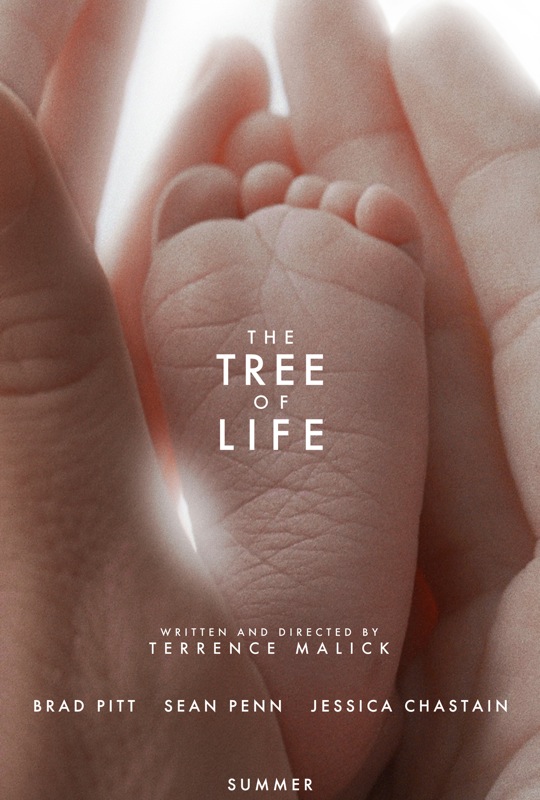
The Tree of Life- The film that caused a 100 walkouts, thanks to some dinosaurs and the creation of the universe. The Tree of Life's buzz seems to have died down but I think a film like this, once seen, is hard ro forget. If it gets a campaign push when it comes to DVD and Blu-Ray, I think this film, due largely to its ambition, as well the the legendary status of director Terrence Malick can get a Best Picture nomination. Winning is another matter. The Tree of Life, which juxtaposes the life a 1950s family with a sequence where we see the creation of the universe, is an impressionistic film, one which abandons a linear narrative structure and a clear cut ending. The film is a divider and that hurt its chances winning Best Picture. I think Brad Pitt and Jessica Chastain are terrific as Mr. and Mrs. O'Brien but due to the impressionistic style of the film, their performances may be overlooked. The cinematography by Emmanuel Lubezski and original score by a Alexandre Desplat who was just nominated for The King's Speech also have solid chances of getting nominations. I also feel the editing, which is the core of the film's aesthetic, also has a good chance of being noticed.


Midnight in Paris- Director Woody Allen's ode to romantic nostaligia has been called his best film in ages. I really liked the film but I feel it's too small a film to get a Best Picture nomination. It's best chance is probably in the Best Original Screenplay category where they may even decide to honour him for the film. Owen Wilson gives what may be his best performance here but I don't think it's the kind of role which can lead to a nomination.


Drive- Ryan Gosling, who some feel was snubbed for last year's Blue Valentine, which resulted in a Best Actress nomination for Michelle Williams, has gotten some serious buzz for his performance as a Hollywood stuntman who moonlights as a wheelman. The film is supposed to be excellent and it'll be interesting to see if the academy warms to it.


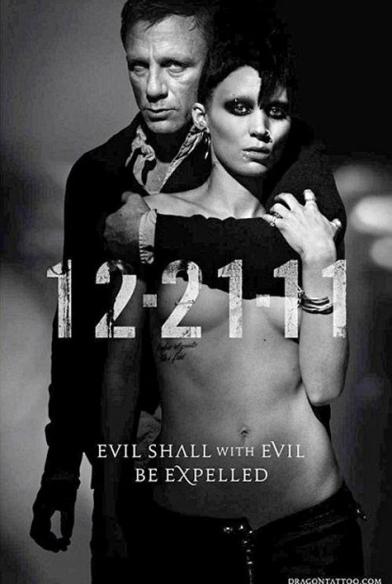
The Girl With The Dragon Tattoo- Already being marketed as "The Feel Bad Movie of Christmas," David Fincher's take on the international bestseller will rise and fall, I think on the performance of Rooney Mara as computer hacker Lisbeth Salander. Mara played Mark Zuckerberg's girlfriend in Fincher's last film The Social Network and he clearly saw something in her while they were filming and during the audition process which led Fincher to pick her over more established actresses. If Mara hits it out of the park, I think she'll have a great chance at securing a nomination. I don't know if Daniel Craig's role, despite being the lead, will be baity enough to get a nomination but only time will tell. Those who've read the novel know this is dark and gruesome material and fortunately the academy can embrace movies like this, with Black Swan being nominated this year and The Silence of the Lambs winning Best Picture nearly twenty years ago. Many feel Fincher was robbed this year for The Social Network so there is the possibility he may recieve a make-up Oscar this year.


Extremely Loud and Incredibly Close- Based on a novel by Jonathan Safran Foer, this film chronicles the story of nine year old Oskar, whose father died two years earlier on 9/11. He discovers a key which belonged to his father and proceeds to journey around New York to find information about the key. The film will concede with the 10 Anniversary of the attacks, which add to its emotional poignance. The academy also seems to love its director, Stephen Daldry, so I can see this possibly being a contender if its subject matter, which from what I gather exists in heightened reality, can work on film. It's been a while since Tom Hanks was nominated for an Oscar but I don't know if his role as Oskar's father will be his return to the race. It all depends on how the film is received and whether the role is fleshed out enough.


The Ides of March- George Clooney received a Best Director Nomination for his work on Good Night, and Good Luck  and I can see him getting another Best Director nomination for this political drama about a staffer (Ryan Gosling), learning about politics while on the campaign trail for a presidential candidate, played by Clooney. If the role is meaty enough, Clooney could also score a nomination or either Best Actor or Best Supporting Actor. It depends how Clooney is campaigned. I wonder if Gosling will be pushed for this film instead of Drive. I sense that Gosling is the lead and Clooney is supporting. Phillip Seymour Hoffman and Paul Giamatti could also score nominations if their roles are big enough, though it'll probably be Clooney who gets the push.


My Week With Marilyn- Michelle Williams could score two consecutive Best Actress nominations if she's nominated for playing Marilyn Monroe in this film. It seems like the kind of role Oscar would love to nominate. Kenneth Branagh plays Laurence Olivier but I feel much of the attention will go to Williams. Emma Watson also stars but I believe her role is small so while it's not hard to see Watson getting a nomination some time down the road, it probably won't be for this film.

That's all for now. Certainly there are quite a few more films to talk about but I just wanted to touch on a few possible contenders. Hopefully the race this year will have some actual suspense and excitement.