Sunday, 26 August 2012
Oscar Season Ponderings: "The Dark Knight Rises" and The Superhero Barrier
The superhero genre may be the last barrier that needs to be broken in terms of the academy awards. Despite being critically acclaimed, films like Spider-Man 2 and even The Dark Knight have failed to snag Best Picture nominations. Though to be fair, Christopher Nolan's first two Batman films have a combined nine Oscar nominations, eight of those belonging to The Dark Knight, including wins for Heath Ledger's iconic turn as the Joker as well as sound editing. Ledger's performance was rightly honoured but The Dark Knight missing out on both Best Director and Best Picture nominations and were perceived as snubs in many circles. Some feel the Academy's decision to expand the Best Picture field to ten nominees was in response to the criticisms regarding the film not getting a nomination, or at least to allow genre films like The Dark Knight to get a nomination. The following year the sci-fi film District 9 actually received a Best Picture nomination and Nolan's next film Inception, another sci-fi film, received a nomination for Best Picture.
Now the final film of Nolan's Dark Knight Trilogy, The Dark Knight Rises, has been released to strong critical support. The question is, can The Dark Knight Rises be the first superhero film to receive a Best Picture nomination? While I can't say it's a done deal but I do feel it has a chance. Why I feel it has a chance can be boiled down to a few select reasons. First, the expanded Best Picture field allows for films that may have got lost in the shuffle if there were only five nominees. Even if the film doesn't score directing or acting nominations, it could still score a nomination, similar to Inception.
Second, while The Dark Knight Rises still has a guy dressed up in a bat suit, it's not as self-consciously "comic booky" as The Avengers or even The Amazing Spider-Man, which actually takes some inspiration from Nolan's Batman Begins. Not that "comic booky" is a bad thing, just that it may turn off certain members of the academy who may not be enamoured with the superhero genre. The Dark Knight Rises, similar to the previous film, is stripped down and more stylistically realistic, which allows it to just exist as a movie about a city unconsciously living a lie and an outside terrorist force using economic crisis as a means to divide the city before destroying it. It's not that The Avengers or The Amazing Spider-Man can't be enjoyed as standalone movies, just that The Dark Knight Rises may allow certain academy members to put aside their biases and see how Nolan's universe relates and parallels our own world.
Then there's Nolan as a possible Best Director contender. While Nolan has received nominations for his screenwriting on Memento and Inception he has yet to be nominated for Best Director. If there's any feeling among the academy that he's overdue, it could lead to him getting nominated and that may also go hand in hand with votes for a Best Picture nomination.
The Lord of the Rings is usually brought up in situations like this, with this being the final film of Nolan's trilogy. The final Lord of the Rings film won Best Picture and that is usually seen as the academy honouring the entire trilogy. The Lord of the Rings, however, had received Best Picture nominations for the first two films in the trilogy, while Batman Begins and The Dark Knight did not. The academy really has to be brought on board in terms of this being the final film and the culmination of a very epic and ambitious saga. Warner Bros., which has produced all the Batman films since Tim Burton's Batman in 1989, definitely has to campaign hard for this film. Unfortunately, something's telling me The Dark Knight Rises may be the Harry Potter and the Deathly Hallows Part 2 of this year: the solid and satisfying finale that won't get honoured due to there not being enough academy support for the franchise leading up to the finale.
The superhero genre is still the final barrier in terms of getting a Best Picture nomination. This is not to say a film has to receive Oscar nominations to be considered a great or important film. Nolan's trilogy stands pretty tall amongst the superhero genre and getting or not gettng a Best Picture nomination won't change that. It'd be nice to for the film to be among the Best Picture nominees this year especially since it's a film of the moment and the ideal Oscars are always ones where the nominated films represent how filmmakers are interpreting the era we live in.
I'm not certain The Dark Knight Rises deserves a nomination for Best Picture over some of the films coming out this fall but I feel it still deserves consideration due to how it ties together all the themes and ideas of the previous two films in a cohesive and exciting and yet ambitious way- as well as its ambition and willingness to create a blockbuster entertainment that can be both grim and terrifying as well as being a thrilling action epic.
Wednesday, 15 August 2012
The Essential Films: "Rear Window" (1954)
The Essential Films: A Series of Writings on Films that I feel are essential viewings for film lovers, coupled with films that are personal to me.
Spoilers Ahead
Rear Window is probably my favourite film of Alfred Hitchcock's. It takes a concept that sounds like it'd be the most uncinematic of movies, a man stuck in his apartment spying on his neighbours, and makes it in to an ultimate cinematic experience- and like Vertigo, it's a perfect metaphor for the way we watch movies, how movies represent a form of voyeurism that is supposed to make us a feel innocent. By calling attention to movies as voyeurism, Hitchcock shows us that we, as we're sitting down in a movie theatre, are not as innocent as we think we are.
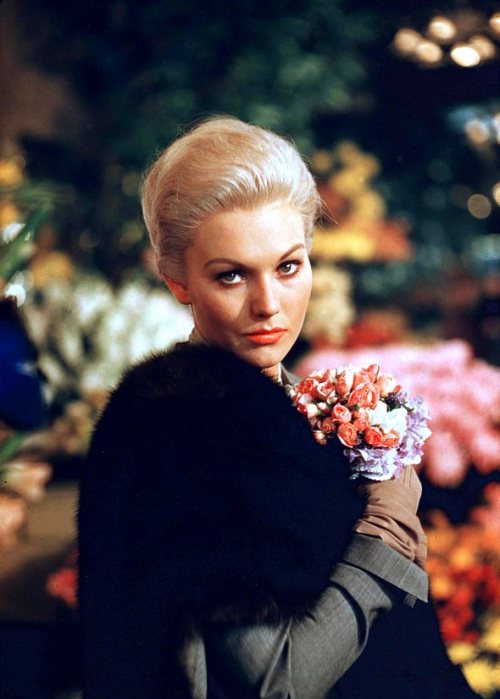
In Vertigo, we, just like Scottie Ferguson (James Stewart), become obsessed with the image of Madeline Elster (Kim Novak), and become accomplices in Scottie's makeover of Judy (Novak again) in to his dream image. She represents the woman we see in a film who we know we can never have but pursue relentlessly, like a lovesick puppy- except that puppy is chasing it's own tail. Not many people can live up that image we have of them on screen. Even Cary Grant once remarked, "Everyone wants to be Cary Grant. Even I want to be Cary Grant." Madeline was always an image, something Scottie couldn't grasp until it was too late, after he was already swallowed up by his obsession.
Rear Window is also about a man obsessed with the images of others. In the film, photographer L.B. "Jeff " Jeffries (Stewart again) is stuck in his apartment after breaking his leg while taking photographs in the middle of a race track. He has nothing to do but look out his window and spy on his neighbours. He soons becomes suspicious of the salesman Lars Thorwold (Raymond Burr) after seeing him make numerous trips out of the apartment one night. He starts to believe Thorwold murdered his invalid wife. Like Jeff, we too become obsessed with the mystery surrounding the disappearance of Thorwold's wife, as well as with the lives of the other neighbours. The film is not only a metaphor for our fascination with the private lives of people in movies but in ourr fascination in the private lives of people in real life as well- even they're bored and sad people. One of the people Jeff sees in a woman he calls "Miss Lonelyhearts"- a woman who pretends to have dinner with a man. As she raises a glass to her imaginary beau, Jeff raises a glass. It's an achingly poignant scene and one that I relate to on a personal level. I also like how it shows Jeff's compassion towards her, that he does care about these people on some level.
Hitchcock's films, even when they had high concept premises such as this, always were able to ground themselves with nice character relationships that give the characters texture and personality. The emotional centre of this film is probably the relationship between Jeff and his high society girlfriend Lisa Fremont (Grace Kelly). I like that the main conflict in their relationship is Jeff feels she's too perfect for him. As a photographer who travels around the world, Jeff needs someone who can live the kind of life that requires you to get dirty, to live out of a suitcase and, according to Jeff, eat food you wouldn't be able to look at when it was alive. When he looks at Lisa, he sees a woman who belongs at fancy restaurants and parties. We see Jeff's point but also see that Lisa does care about Jeff and is intelligent enough to make her own decisions. We also sense a inner strength, which Hitchcock shows us later on when Lisa starts to believe and support Jeff's suspicions about Thorwold. And when Lisa sneaks in to Thorwold's apartment to leave a note, when she comes back, Jeff's face, full of pride, says it all.
James Stewart was, and I think still is, the quintiessential "everyman" actor, someone who, despite being a movie star, you could relate to and feel represented the values of normal people. That was there in the films he did for Frank Capra, Mr Smith Goes to Washington and It's a Wonderful Life. It's a persona that also fit perfectly in to Hitchcock's universe, which would frequently involve normal people caught up in extraoridinary circumstances. By having Stewart play Jeff, we get involved with his obsession and investigation him because we feel we are him on some level. I think that's one of the keys to Hitchcock's greatness- his films exist in a heightened reality but are populated by characters that feel real. I just rewatched The Birds and that film, while being an almost apocalyptic story about birds waging war on humans, is at its heart a character drama about two women, a mother and the woman her son may love, learning to co-exist. I like Thelma Ritter as Jeff's nurse Stella. She feels like the most wise character in the film and acts as a confidente for Jeff in certain scenes. I also like how she, along with Lisa do come to believe Jeff. Even his detective friend Tom Doyle (Wendell Corey) at first sees some validity in Jeff's suspicions. This is a nice change of pace from
the type of movie where absolutely no one would believe Jeff. Again, this helps make the characters feel more realistic. It's not just a movie one smart man (Jeff) and some not so bright people.
It's really impressive how Hitchcock, like Phillip Seymour Hoffman in Synechode New York, essentially creates an entire universe out of one set- a play with multiple little stories going on at once. Mostly everything is seen from Jeff's perspective, which puts us in his mind and allows us to put our own meaning on what we see- much like he does. In typical Hitchcock fashion, while there's plently of talky scenes, it's also a very visual film- and we get sucked in to the visual rhythms of looking with Jeff outside his apartment.
A nice detail of the film is how Jeff and Lisa want Mrs. Thorwold to be dead so their suspicions can be confirmed. It's a dark moment when Lisa tells Jeff they should be happy she's alive (after Doyle says Mrs. Thorwold picked up her bags at the train station). It's also a very human moment, especially since we realize we'd be giddy too if we stumbled upon a potential murder. Hitchcock actually uses the murder of Mrs. Thorwold to provide some signature macabre humour. Funnily enough we find ourselves sympathizing with the dog Thorwold kills because it almost uncovered something he buried.
For me, the most powerful scene is when the woman who owned the dog cries out in the middle of the night "You don't know the meaning of the word 'neighbors'. Neighbors like each other, speak to each other, care if anybody lives or dies! But none of you do!" This scene highlights a central theme of the film, which is the disconnection in society between people. Until this scene, everyone in the courtyard is disconnected from each other, only to be finally united by this woman's grief. The theme of disconnection is also highlighted by the fact that a murder happened right under everyone's noses and only Jeff noticed. Looking back on the film, I started to think about the story of Kitty Geneovese, the woman was murderd in the early sixties outside her apartment, while her neighbours were not quite sure what was happening or if they should help.
The final confrontation of the film occurs when Thorwold comes in to Jeff's apartment. While seemingly a straightforwars climax, what's striking about it is it's the first time someone other than a friend has come in to Jeff's apartment. Thorwold has turned the tables on Jeff, not just spying Jeff spying on him but violating Jeff's space as well. We've seen Thorwold from a distance for so long- now we see him up close.
In the final scene, we see things have changed: new dog, new paint job for Thorwold's apartment, Miss Lonelyhearts meets the musician in the courtyard- but at the same time you feel life goes on-it has to. Some people feel the need to change but for Lisa, after proving herself adventurous- and as she switches from a foreign travel book to Bazaar- she shows she's quite comfortable being herself.
Thursday, 2 August 2012
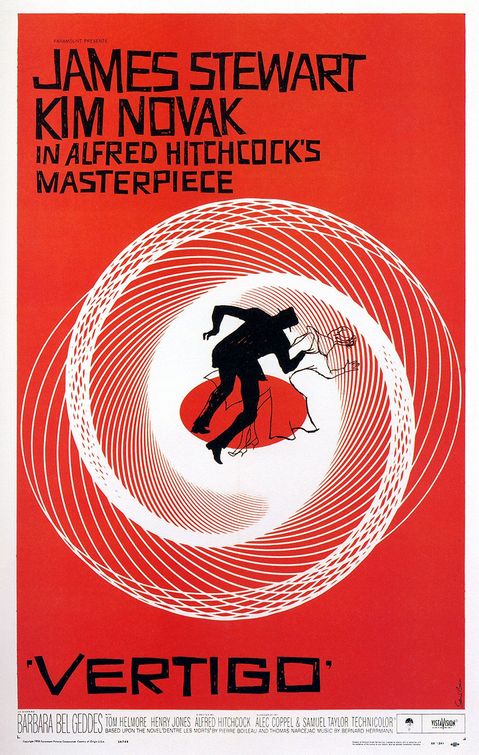
"I Look Up, I Look Down- Hey it's Citizen Kane": What Vertigo's Place On Top of Sight & Sound's Top Ten Greatest Film Poll May Mean
So, Orson Welles' revolutionary classic Citizen Kane has been dethroned from the top spot of the British film magazine Sight & Sound's Top Ten Greatest Films Poll. It's seat has now been filled by Alfred Hitchcock's Vertigo, the film considered by many to be Hitchcock's masterpiece. And while Citizen Kane still holds the number 2 spot, it's quite a shakeup considering its held the number one position for fifty years.
The first Sight & Sound poll was conducted in 1952. The film that ranked number one on that first poll was Vittorio De Sica's Neorealist Bicycle Thieves. Citizen Kane, released in 1941, was no where to be found. On his commentary for the DVD, film critic Roger Ebert mentions that the film, due to the controversy surrounding its similarities to the life of William Randolph Hurst, the newspaper baron, Hurst used his powerful influence in order to make theatres limit the number of showings for Citizen Kane, leading to poor box office. Ebert says it was only in the late fifties that many people were able to see the film. The lack of exposure for the film back in 1941 may have a role in keeping it out of the Sight & Sound Top Ten.
It was only ten years later, in 1962, when the film entered the top ten and claimed the number one spot, keeping that spot over the decades, as other films entered or fell out of the top ten. In 1952, Charlie Chaplin held the number 2 and 3 spots with City Lights and The Gold Rush, respectively. Sadly, from 1962 onwards Chaplin is completely absent from the top ten, with City Lights ranking 50th this year. For that devastatingly beautiful last scene, I feel it should be much higher. One film that has slowly crept up the list is Hitchcock's Vertigo. A film that, on its initial release, was met with poor box office and negative reviews, entered the top ten in 1982, tieing with Welles' The Magnificent Ambersons and Michelangelo Antonioni's L'avventura for the seventh spot. In 1992 it climbed to the number 4 spot and in 2002 it was number two right behind Citizen Kane.
Now Vertigo has claimed the number one spot, edging out Citizen Kane by 34 votes (Vertigo: 191, Citizen Kane: 157). The question remains: does it mean anything that Vertigo is now in the number one position? Many people will still feel Citizen Kane is the greatest film ever made while others will still feel it's "overrated." Some have already argued that Vertigo isn't really Hitchcock's best film (for me, Rear Window is my favourite of his but I feel Vertigo is his greatest film). Ultimately, it comes down to the slow shift of perspective regarding Hitchcock's film. It look a little longer for it enter the top ten and even longer to reach the top spot. It didn't automatically claim the spot as Citizen Kane did. But over time, Vertigo is one of those films that keeps reminding viewers, new and old, how great and timeless it truly is. It's a film that captures the obsessive and twisted forms love can take-especially within the male psyche. It starts out as a mystery about a woman, Madeline (Kim Novak) who may be possessed and the former detective, Scottie Ferguson (James Stewart), assigned to follow her-and becomes the story about a detective being haunted by her spirit, becoming possessed himself by the need to mold another woman, Judy (the same woman in fact), in to Madeline's image. It's essentially a character study that doesn't reveal itself as a character study until the third act.
And like Citizen Kane, it never truly resolves itself. It allows the audience to interpret what they've seen and draw their own conclusions regarding the title characters. Can the loss of his sleigh Rosebud truly define Citizen Kane's titular character, Charles Foster Kane's (Welles) life? Or is it impossible, as the reporter Mr. Thompson says, to define an entire man's life by just one word? In Vertigo, what happens to Scottie after the death of Judy? Is he able to finally move on or will he plunge even deeper in to his obsessive abyss? Both films show men brought down by ambition and obsession. Citizen Kane is about a man who had everything in his life but love. Vertigo is about a man who can only love a woman if she fits the image of his obsession- and the woman who will change herself in order for him to love her.
But, back to the question at hand. What does it mean for Vertigo to be in the number one position. Well, as I said, the perspective regarding the film has changed and evolved slower than Citizen Kane and this year more people felt it was the greatest film ever made. Some have argued that Kim Novak's comment about feeling "raped" when this year's Best Picture winner, The Artist, used Bernard Herrmann's score, brought the film back to some people's minds, which may have led to some viewing it again. While that may sound humorous, it's not too big of a stretch that this comment made people revisit the film.
After 50 years, some voters may have felt it was time for a new film to take the number one spot. Some of these voters may have been new, some may have just come around to Vertigo after years of ranking it lower on their ballots or not ranking it at all. Now that Vertigo has placed number one, the best possible outcome is for more people to discover the film as well as other Hitchcock's films. Whether Vertigo is the greatest film of all time, I feel it's definitely one of the greatest films in cinema history.
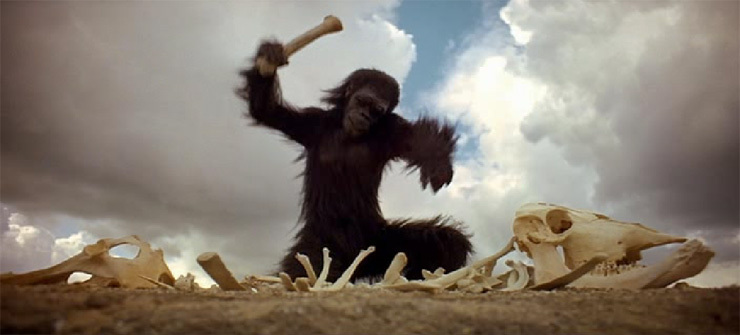
Now, what of the rest of the list? What's fascinating, and maybe a little bit disappointing, is that the youngest film in the top ten is Stanley Kubrick's 2001: A Space Odyssey, released in 1968. So, the most recent film in the top ten came out over forty years ago. Contrast this with the first Sound & Sight Poll in 1952 where Bicycle Thieves, released only four years prior in 1948, topped the list. City Lights (1931, #2) was only 21 years old and The Gold Rush (1925, #3), only 28 years old when they ranked high on the list.
Now, there was "slightly" less film history in 1952 and more room for twenty year old films to appear on the list-but even when you look at the 1962 list, Citizen Kane was only 21 years old when it first claimed the top spot and was still only 31 years old in 1972. L'avventura was only 2 years old when it appeared on the 1962 list. Federico Fellini's 8 1/2 was only 9 years old when it appeared on the 1972 list. Now, in 2012, there are no films from the last five, ten, twenty or even thirty years in the top ten. No Pulp Fiction or Schindler's List. No There Will Be Blood or Fargo. The Godfather and The Godfather Part II, which appeared together on the 2002 list, have now fallen out of the top ten. This may be due to the rule change that wouln't allow them to be counted as one film.. A Martin Scorsese film has also never appeared in the top ten. Taxi Driver is ranked 31 this year, tieing with The Godfather Part II. Raging Bull, and Goodfellas are not ranked within the top 50.
For reference, this is the top ten for 2012:
1. Vertigo (1958, Hitchcock)
2. Citizen Kane (1941, Welles)
3. Tokyo Story (1953, Yasujiro Ozu)
4. The Rules of the Game (1939, Jean Renoir)
5. Sunrise (1927, F.W. Murnau)
6. 2001: A Space Odyssey (1968, Stanley Kubrick)
7. The Searchers (1956, John Ford)
8. Man With a Movie Camera (1928, Dziga Vertov)
9. The Passion of Joan of Arc (1928, Carl Theodor Dreyer)
10. 8/12 (1963, Federico Fellini,)
Now, I've seen eight of the 10 films listed (I still haven't seen Sunrise or Man With a Movie Camera) and while it's a more than respectable list, it does feel a little boxed in. While the voters didn't sit down and decide not to have any post sixties films in the top ten, it's unfortunate that many of the great films from the 70s, 80s, 90s and the last decade are only represented outside of the top ten.
Now, Casablanca is my favourite film and it's not ranked at all. While I understand it's not as revolutionary as Citizen Kane or as psychologically probing or disturbing as Vertigo, its characters are as memorable and enjoyable as the ones in the aforementioned films, and while its filmed in a very classical Hollywood style, its images, the closeups of Bogie and Bergman, among others, really resonate. While I'm not a voter I've decided to throw out a top ten made up of personal favourites and films I just feel are great.
1. Casablanca (1943, Michael Curtiz)
2. Rear Window (1954, Hitchcock)
3. The Apartment (1960, Billy Wilder)
4. 12 Angry Men (1957, Sidney Lumet)
5. Citizen Kane (1941, Welles)
6. The Passion of Joan of Arc (1928, Dreyer)
7. Vertigo (1958, Hitchcock)
8. Taxi Driver (1976, Scorsese)
9. The Godfather (1972, Francis Ford Coppola)
10. Psycho (1960, Hitchcock)
And look, I only have one film from the seventies. Aren't I hypocritical. Pot, Kettle.There's also so many I left out! Singin' in the Rain!, GFII!, Goodfellas! Damn you lists! Anyway, those are some of my thoughts regarding the new Sight & Sound Poll. Whatever meaning lists like S&S have, if they make you want to revisit films you haven't seen for a while or discover one you've never seen, well, I think that's a pretty good thing.
P.S: Here's a piece I wrote on Vertigo's influence on Scorsese's Shutter Island and Christoper Nolan's Inception: http://thenoirzone.blogspot.ca/2012/05/hitch-marty-and-chris-vertigo-and-its.html
Saturday, 21 July 2012
Why Do We Fall?: "The Dark Knight Rises"
Minor Spoilers Ahead
Where to begin with The Dark Knight Rises? While I may be a tad disappointed in it, I can't generalize and say this movie is a disappointment, or a failure. Believe you me, it's not. We get plenty of blockbusters each year that blow stuff up and attempt to be epic. The Dark Knight Rises, on the other hand, despite being too lengthy in some respects, genuinely feels epic. It's scale harkens back to an almost old fashioned idea of what a Hollywood epic once was and can still be and it ends Christopher Nolan's Dark Knight Trilogy on a well balanced note of conclusion and continuation.
It's remarkable that The Avengers, The Amazing Spider-Man, and The Dark Knight Rises are all superhero films yet despite that genre label they all seem to exist in a different genre of their own. Also, on the tonal spectrum they're miles apart. The Avengers is probably the most "comic booky" of the three, the one that's most in love its central characters and what it means for them all to finally come together in one movie. It's also probably the funniest of the three and it doesn't forget to give its larger than life very relatable human moments. The Amazing Spider-Man is the sweetest and most intimate of the three. Andrew Garfield and Emma Stone have a sexy and cute chemistry that sets the groundwork for the tragedy we know is to come. It's a pretty low key movie, more concerned with Peter Parker than Spider-Man in some respects- though it does have some great shots that feel straight out of a Spider-Man comic book.
The Dark Knight Rises is the darkest of the three superhero films this summer and tonally the one most distant from its comic book origins. This feels like the least "Batmany" of Christopher Nolan's trilogy and I'm still trying to figure out how much of a good or bad thing that is. Nolan's vision from the very beginning, with Batman Begins, was to ground Batman in the real world. It wasn't a completely realistic universe but it played like it was. The same with The Dark Knight, which was a superhero epic within the context of crime drama. Both films achieved an almost perfect balance between creating a contemporary and stripped down universe while still feeling quintiessentially Batman. After making such definitive and mythic statements on Batman, It was no doubt difficult for Nolan to know where to go next. With The Dark Knight Rises Nolan has made the most "real world" feeling of his Batman films yet. All three films in the the trilogy are reflections of America's inner turmoils. In Batman Begins it was a battle against a city's police corruption. The Dark Knight asked the question of how one fights terrorism in a post 9/11 world. In The Dark Knight Rises, it's economic crisis and how it leads to Gotham being at risk of annihilation. The previous two films were able to relate the mythology of Batman to its conflicts but this film seems the least concerned with Batman's place within its battle.
The Dark Knight Rises begins eight years after the events of The Dark Knight. Bruce Wayne (Christian Bale) has retired the cape and cowl after taking the fall for Harvey Dent's (Aaron Eckhart) crimes as Two-Face. Nolan has joked that while he hasn't been able to do his Howard Hughes biopic, he has filled that gap by making these Batman films. Bruce certainly isn't too far away from Hughes' type of eccentricity. He's become a recluse and Selina Kyle (Anne Hathaway) mentions that he doesn't have long fingernails like people say. I love the detail of Bruce becoming a recluse because it fits in to Nolan's "real world" style. In reality (he he), it wouldn't be a stretch to imagine Bruce Wayne as a shut in hermit. The fact he no longer operates as Batman adds even more resonance to the hermit characterization. There's a pretty good joke early on between Bruce and Selina and a certain kind of weapon that I won't reveal.
Selina Kyle is, of course, Catwoman. While Nolan was uncertain of how her character would fit in to his universe, his brother Jonah turned him around. The Dark Knight Rises deals with class divisions and the overthrowing of the rich. Catwoman works perfectly within this context because she's a cat burgular who wasn't born in to privilege. This is in stark contrast to Bruce Wayne, a man who, despite the tragedy of his parents' murder, was always provided for. I liked Hathaway a lot as Catwoman. When Hathaway was first cast I felt it was a little too conventional and "Hollywood" a choice but she does a great job of being funny, sexy and hardedged.
The villain of the film is Bane (Tom Hardy), a terrorist leader that was trained by Ra's Al Ghul (Liam Neeson), Bruce's former mentor. Bane isn't as diabolically entertaining as Heath Ledger's Joker but nevertheless Bane fascinates me. In many respects he feels the most "realistic" of the villains in the trilogy, making him the most intimidating. I felt a genuine sense of dread as he cuts off Gotham from the outside world and plans to destroy it. Like The Dark Knight, it's a heightened form of terrorist threat but one that's eerily plausiable.
I wish there was a little more of Gary Oldman as Commissioner Gordon. He seems to spend most of the movie in a hospital and I wish for the last movie there was more of a role for him to play before the final act comes around. I did however love a moment between him and Batman near the end which ties their relationship back to the first film in an unexpected but I feel meaningful way. Joseph Gordon Levitt gives a strong performance as John Blake, a patrol officer who becomes a detective after Gordon is shot. Levitt has a great scene early on with Bale where we get a sense of how much Bruce meant to him as a young orphan since Bruce was an orphan himself, a 'Billionaire orphan" as Blake calls him. I don't want to reveal what else happens in the scene but Blake's knowledge, while it may not make logical sense, makes dramatic and thematic sense.
Michael Caine has a great scene which pays off on a decision Alfred made in The Dark Knight but I felt he and Morgan Freeman as Lucius Fox also deserved a little more to do. I don't want to reveal too much about Marion Cotillard's character Miranda Tate but I wish she was a little more prominent as well. For a while it seems like she's going to be a new love interest but that''s dropped pretty quickly. She does get to shine towards the end but that's all I'm saying.
And what about the (Bat) man himself, Christian Bale? Bale got a little overshadowed by Heath Ledger and Aaron Eckhart in the last movie but here he has a little more room to shine. Bale is pretty terrific here, convincingly conveying Bruce's lack of passion for anything in life in both sad and humorous way. He also conveys Bruce's brokeness in Bane's prison. And I have to say- I love the Bat voice. While after The Dark Knight came out it seemed a little ridiculous and over the top, I couldn't do without it. It's both hilarious and, when Batman repeats to Bane something he told Batman earlier, pretty intense and awesome.
Since Batman Begins Nolan has been criticized for his action sequences but I feel Nolan has improved over time in terms of his action sequences. I feel his action work here is arguably his best work yet just in terms of clarity. The fight scenes between Batman and Bane have a real weight to them and unlike the hand to hand combat in Batman Begins you can see Batman fighting. The prologue of the film, involving Bane, aside from being a great homage to the James Bond film Licence to Kill, is also a simultaneously unsettling and exciting feat of zero gravity action filmmaking.
There is a long stretch of time when the film does feel too lengthy and I was feeling that the film just wasn't as memorable as The Dark Knight or had as many great moments as that film- or even Inception. But by the time we finally get to the final action set pieces I was thinking "This is kind of great" and I was totally in to the race against time to save the city.
I said it was probably hard for Nolan to say much about Batman after the last two movies and that Batman didn't completely fit in to the film's main battle. This film seems less about Batman's relationship to Gotham's conflict and more about about Bruce Wayne's redemption, in a physical sense at least. While he comes back as Batman early on in the film, it's not enough. He truly has to learn how to be Batman again and that means having to push himself physically more than ever before.
The ending of the film, without revealing too much, is able to both conclude its story yet suggest a continuation of the Batman mythos in a way that works within Nolan's universe as well as provide a intriguing take on the Batman mythos in general. I'll probably have to give the film another viewing in order to catch some plot points I missed before as well as get a firmer hold on the themes the film is exploring. But after just one viewing I feel The Dark Knight Rises, while maybe not the best of the trilogy, nevertheless concludes the trilogy in a respectful and resonant manner.
Monday, 9 July 2012
Some Thoughts on "The Amazing Spider-Man 2"
With The Amazing Spider-Man being a solid hit, both critically and commercially, it's inevitable that nothing's going to stop a sequel from going forward. I want to talk a little about what plot points and characters will probably be in the film and how I'd like to see them developed.
Mary Jane and Harry Osborn
Both Mary Jane Watson and Harry Osborn were absent from The Amazing Spider-Man, making it the first Spider-Man film the characters didn't appear in. No doubt they'll be in the sequel since Harry's father Norman Osborn will most likely also make an appearance. Harry is Peter Parker's best friend and that adds some dimension to the fact Harry's father transforms in to Peter and Spider-Man's arch nemesis the Green Goblin. Peter also didn't seem to have any real friends in The Amazing Spider-Man aside from Gwen Stacy so it'll be nice to see Peter establish a relationship with another guy. I would have Harry feel a little weird being a wealthy kid at a regular high school. He wouldn't know if people liked him just because he was rich or because he was a decent guy. Peter would be the only one who wouldn't care either way if Harry was rich or not.
If I was introducing Mary Jane in to the mix I wouldn't want it to be an automatic love triangle. I don't want Gwen being "Get away from my man bitch" right off the bat. I would have Gwen and Mary Jane be friends at first, only for things to be complicated when she becomes attracted to Peter. That way, what's at stake isn't merely Gwen and Peter's relationship but her and Mary Jane's as well. Peter would ultimately feel Mary Jane was a little too superfical for his tastes and would eventually reaffirm his love to Gwen. This would be the start of Mary Jane's arc from a carefree and flightly teenager to a mature young woman. Gwen's death in the comics is what brings her and Peter closer together and eventually leads to their romance. Mary Jane needs to be developed really well in order for us to believe Peter could fall in love with her after Gwen's death. The first film established a really strong bond between Peter and Gwen, thanks to strong performances from Andrew Garfield and Emma Stone. Whoever is cast as Mary Jane will have to have a similar chemistry with Garfiled as well as with Stone. Stone was a fan favourite for the role and was even thought to be playing Mary Jane before it was confirmed she'd be playing Gwen. I'd still give anything to hear Stone purr the line "Face it Tiger, you've just hit the jackpot." It'd actually be funny to have Stone play both roles, with the running joke being that no one notices Gwen and Mary Jane look alike. It'd also be very Vertigo-ish. Hey, Peter already has a Rear Window poster in his room, so it'd be another Hitchcock reference. Mary Elizabeth Winstead is also a big fan favourite and I'd be all for that casting.
Villains
A superhero film is only as strong as its villain, particularly for a sequel. After the using a major villain like the Lizard,
who'd be strong enough to carry the movie? I don't think Doc Ock should be used in another second movie. We don't want to rush the black suit/Venom plot line again. Mysterio would be a fascinating choice because he attacks Spider-Man mentally with illusions. Two villains could work, especially if you use the Lizard, who's already been established and has a special connection to Peter.
It's almost inevitable and unavoidable that the Green Goblin will be the villain. Norman Osborn is mentioned but never seen in The Amazing Spider-Man but he'll definitely make an appearance in the sequel. What's already interesting about this interpretation of Norman is he's dying. Curt Connor's research was being used to cure Norman. What cured Connors turned him in to the Lizard and will probably warp Norman's mind and create the Green Goblin personality. In the Ultimate continuity of the Marvel Universe, Norman actually turns in to a Goblin creature rather it just being a mental transformation. It'd be hard to do this since we've already have a creature villain. That is unless they wait until the third movie to have Green Goblin as the villain.
The Death of Gwen Stacy
The moment the Green Goblin shows up in this series, we know that Gwen will have to die. It's not something to look forward to but it feels necessary for the development of Peter's character. Even Stone feels it needs to happen. At the end of The Amazing Spider-Man Peter goes back on his promise to Gwen's father to stay away from Gwen in order to protect her. While Peter's turnaround has received criticism, it's a good foreshadowing of what Peter's recklessness will bring upon Gwen and the guilt he'll feel. Garfield and Stone have already made us love Peter and Gwen as a couple and I feel if done right, Gwen's death will have an emotional impact as powerful as it was in the comics.
The question is, will Gwen die in this film or will her death occur in the third film of what is reportedly going to be a trilogy. I feel her and Peter's relationship will have to be developed a little more before she dies. If that can happen in the second film without being rushed, I think her death in this film could work. You also don't want the series to get bogged down by the same romance. Shifting focus from Gwen to Mary Jane will keep things fresh.
J. Jonah Jameson
Old J.J.J is a very important supporting character in the Spider-Man mythology. He's constantly trying to turn the city against Spider-Man while unknowingly employing the very man he despises. Back when Jameson was going to appear in this film, John Slattery from Mad Men was rumoured for the part. I think if anyone could take the reigns from J.K. Simmons and do Jameson justice it'd be Slattery. Slattery can be the arrogant blowhard who you find yourself loving anyway.
The Untold Story
The Amazing Spider-Man was heavily promoted as "The Untold Story," referring to the mystery behind Peter's parents disappearing when he was a child. While that angle is still in the film, much of that subplot has also been cut out. From my understanding, we were going to get a twist similar to Ang Lee's Hulk film regarding Peter's genetic background. I would love to see a Director's Cut of this film but I have a feeling the cut material will be retconned for the sequel.
Thursday, 5 July 2012
But Those Are The Best Kind: "The Amazing Spider-Man"

I think it was always a controversial decision to reboot the Spider-Man franchise. I remember how anti-climatic it felt in early 2010 when the reboot was announced. It did feel a little soon to be hitting the reset button but now 2 and half years later, there's more of a distance between the previous trilogy and the new film, The Amazing Spider-Man. I also said to myself that I would judge this movie only when I finally saw it. Now that it's out, what do I think? Well, I'm a little divided. It's a pretty solid reboot of the series with a wonderful and sexy romance at the center but I felt there were elements that could have been fleshed out and once it reaches its last act, the action and spectacle is not as thrilling as it could have been.
Essentially, the film is a retelling of Spider-Man's origin story. This film doesn't have the advantage of reboots like Batman Begins or Casino Royale, both of which had a lot of leg room to flesh out their protagonists' origin stories. In Tim Burton's Batman, Bruce Wayne had already established himself as Batman. We got flashbacks to the night his parents was murdered but we didn't see the process of him becoming Batman. I think Batman Begins did a great job of showing us what Bruce Wayne had to go through, mentally and physically, in order to become Batman. Casino Royale, based on the first James Bond novel by Ian Fleming, showed us Bond's first mission, how he earned his 00-status and how he was betrayed by the woman he loved, cementing his cavlier attitude towards women. Both films went behind the mystique of these characters, giving us greater insight than what had come before. I don't think Spider-Man has that same kind of mystique, and since Sam Raimi's first Spider-Man film already gave us pretty much all we needed to know about Spider-Man's origin, The Amazing Spider-Man can't have first dibs on the origin story. I was weary going in to this film of having to see the origin story once again. Surprisingly, despite re-telling this story, the film makes it enjoyable.
This has to do with how the film's overall atmosphere. While Raimi's first 2 Spider-Man films allowed for plenty of humane and grounded moments, this film takes this one step further. It essentially does for Spider-Man what Christopher Nolan did for Batman- but in its own way that suits the character. While Nolan's Batman films are stripped down and gritty, they're not really grounded. "Grounded" is a word Andrew Garfield, who plays Peter Parker/Spider-Man, used when discussing the tone of the film. He said if him and the filmmakers tried to be too much like Batman, they'd fail. Fortunately the movie understands you can be grounded wtithout being overly serious and gritty.
The film is at its strongest when it's just about Peter Parker and his relationships to the people around him. The relationship that comes through strongest is probably the one between him and Gwen Stacy (Emma Stone). Garfield and Stone are really wonderful together, really making you believe these two kids are falling in love- one of hardest things to do in film. What I liked most about their chemistry was how sexy their romance was, which sometimes is lacking in super-hero romances. As everyone probably already knows, Gwen Stacy dies in the comics. The Green Goblin throws her from a bridge and Spider-Man catches her, breaking her neck. If played pitch perfectly in the next film, it'll truly be one of the most heartbreaking and powerful moments in a superhero film. Garfield does a fine job of not overdoing the brooding young teenage rebel. He brings a lightness of touch to the role that lifts him out any possible stereotype. Stone is a lovely actress and always makes it believable that a man could fall in love with her. But Gwen's not just a delicate flower but a confident young woman who knows what she wants. Denis Leary plays her father Captain George Stacy, who feels that Spider-Man is a dangerous vigilante. Leary is convincing as a strightlaced authorial father figure and he has a nice bit with Stone in the middle. It seems
The main marketing ploy of this film involved telling audiences this was "the untold story," meaning that it would explore the mystery behind why Peter's parents left him. Early in the film Peter discovers a briefcase that belonged to his father Richard (Campbell Scott). He discovers a connection between his father and Dr. Curt Conners (Rhys Ifans), who works at Oscorp (and we all know what Oscorp is!). Conners was his father's partner, and both him and Richard were working on cross genetics within species- experiments that would have allowed Connors to grow back his rght arm. Essentially, Peter helps Connors continue he and his father's work, creating the formula that helps Connors grow back his arm. Of course, Connors is the ultimate "Side effects may include" cautionary tale. Connors, aside from growing back an arm, also grows a tale and becomes a giant lizard.
I would have liked for the film to've played up the relationship between Peter and Connors. This is a man who may have the key to Peter growing up without parents and I wish there were more scenes, even a scene, where Peter really tries to find the truth behind their disappearance. Connors being a mentor figure to Peter would've also been an a good angle to play up. In the comics and animated series Connor also has a wife and son. It would added something to Connors' arc if we saw how his transformation affected his family.
One element of Spider-Man's origin that I think should have been emphasized more is how Peter uses his powers for selfish reasons before he indirectly causes his Uncle Ben's (Martin Sheen) death. While Peter is still responsible for Ben's death, his decision to become Spider-Man seems based more revenge than on knowing "With great power comes great responsibility." I'm okay with Peter wanting revenge but I feel there should have been a moment where he acknowledges the responsibility he has to help people. Okay...to be fair, he does say it's his job to stop the Lizard. Speaking of Uncle Ben, Sheen brings a good balance of warmth and sterness to the role. Sally Field is underused as Aunt May and I hope she's developed more in the next film.
This film uses more practical effects than the previous trilogy, allowing a more realistic sense of Spider-Man swinging through the air. I have to say though, while the action sequences are well staged, I don't feel any of them actually blew my mind. That, and all the Spider-Man action seemed jammed in to the final act. The whole final act isn't as well paced as the rest of the film.
Some of the "untold story" aspect of the film seems to have been cut out of the film. I understand this mystery surrounding Peter's parents will probably be an overarching story in a supposed trilogy but I kind of wish the mystery would have been resolved. I think it would have made for a more fully rounded film. So, as I said, I'm divided. Garfield and Stone are so good and the beginnings of Peter becoming Spider-Man started to convince this was probably the best Spider-Man movie yet. And I think that's still a possibility if we get a director's cut of the film. Maybe we have to wait until The Amazing Spider-Man 2 to get that film. Ultimately, this is a solid and enjoyable film that shows potential for the return of the Spider-Man franchise.
P.S- For all the gushing about how "witty" Spider-Man was going to be in this film, he doesn't make that make any more jokes than in the original trilogy.
Thursday, 28 June 2012
I've Always Been Standing At Your Door: "Spider-Man 2"
I find that superhero franchises occasionally follow a certain patter, which is their first film is usually a solid first go-around with the character(s) but one that, on retrospect, feels like a set up for bigger and better things. This is what it's like watching Bryan Singer's first X-Men. I even find Christopher Nolan's Batman Begins, which I think is one the best depictions of an origin story on film and is a good standalone movie, only scratches the surface of Nolan would do in The Dark Knight. Sam Raimi's first Spider-Man film is another example of a director and franchise finding their legs (in this case eight of them), doing a straight forward origin story and setting up the blocks for future stories. Spider-Man 2 is the payoff to the set up and a wonderfully relatable and energetic superhero epic. It's the best of Sam Raimi's trilogy and the one of the strongest superhero films of the last decade.
I like when we can just jump in to the action in a superhero film. I don't nescessarily mean action sequences, just that we're jumping in to the character's life as a superhero, which we do in Spider-Man 2. I like this because it feels like when we read a comic book and are shoved right in to a story with already established characters. Spider-Man 2 gives a sense of what's it like being a superhero after a while, once the awe of discovery is over, and you've settled into a rut where you're just trying to balance being a superhero while still trying to live a normal life, and despearately just wanting a normal existence, particularly so you can be with the person you love. Spider-Man 2 opens with a billboard of Mary Jane (Kirsten Dunst) staring down at Peter Parker (Tobey Maguire), and Peter tells us "She looks at me everyday." This opening image and narration personifies Peter's guilt over breaking Mary Jane's heart at the end of the first film, unable to tell her the truth about why he couldn't be with her- as well as his crushing desire to be with her. It also puts her high above Peter, where he's always metaphorically put her, like Cleopatra, Joan of Arc or Aphrodite. Yes- I just made that joke.
Peter loses his job as a Pizza Delivery man after he has to save some kids before finally getting the pizzas to their destinations. The patron (Emily Deschanel from Bones) won't pay because Peter works for one of those 30 minutes or less places. It's a nicely relatable situation that the film specializes in. If you were a superhero you would probably lose your job because you'd always have to save a kitten or something. Okay...probably something more extreme than that but you get the idea. The film, despite its giant spectacle, is all about these kind of down to earth conflicts. Peter can't get to class and his grades are slipping, he can't get to Mary Jane's play on time, she's going to marry someone else, his best friend Harry (James Franco) hates Spider-Man because he believes he killed his father Norman, who of course was also the Green Goblin. On top of all this, Peter starts to lose his powers. In one very funny scene, he has to, in his Spider-Man suit, has to ride an elevator with another passenger. Adding insult to injury, the passenger doesn't even realize it's actually Spider-Man next to him. This deflates any kind of confidence Peter has while in the suit and makes the suit an embarassment to him in this situation. It's a funny scene but also one that emphasizes how, despite Peter's remarkable powers, he's still a guy who can't catch a break.
One of the most quietly powerful scenes in the film is when Peter tells Aunt May that he was responsible for Uncle Ben's murder. It captures beautifully the pain of having to tell someone horrible secret and how Peter's guilt also extends to robbing his aunt of her husband. It's around this time that Peter has quit being Spider-Man- essentially going back on motto of "With great power comes great responsibility." While it may seem like the film is having Peter learn this lesson again, it's a little more complicated this time around. Peter begins to feel he was never meant to be a hero- that's he just not up to it, which has a lot to do with his losing his powers. It's only when Aunt May tells him that everyone needs a hero, that he realizes it is his destiny to be Spider-Man-maybe even regardless of Uncle Ben's death.
Of course, you always have to have an atagonist in a superhero film. In this film, it's Dr. Otto Octavious (Alfred Molina), a brilliant scientist, who, after a science demonstration gone wrong, has his mechanical tentacles fused in to his body, making him Dr. Octopus. I love how J. Jonah Jameson remarks about the odds of a guy named Otto Octavious having extra arms like an octopus. Now, fans have criticized the film for making Doc Ock sympathetic rather than just an evil scientist like he is in the comics. I like how Doc Ock does get more of an arc in this film-from good to evil to redemption. I also really enjoy Molina's performance as well. He goes from the warm, mentor figure to Peter to a man out to achieve his goals at any cost.
The fight scenes between Spider-Man and Doc Ock are terrifically staged and I think an improvement on the action in the first film. The train sequence is a highlight, especially when Peter has to stop a train after Doc Ock has destroyed the control panel. Using just his webbing, Peter is able to slow the train down. It's a great moment because it shows how powerful Peter can be. At the same time, we see how this takes a great deal out of him. The people on the train pass him down over their heads before setting him down. When he wakes up, he's maskless. Many fans don't like how often he's unmasked in the films but I think this is a beautiful moment. Peter is afraid that everyone can see his face but ultimately what the people see isn't "Peter Parker" but a hero. When a child gives him back his mask he calls him "Spider-Man." That's who he is in that moment.
Mary Jane's motivation in this film seems to be to make Peter her boyfriend. Looking back on the film, I wish she'd had more scenes to herself to breath as a seperate character. She also becomes the damsel in distress...again. I do however really like how she takes initiative at the end of the film and tells Peter she can live with the risks of him being Spider-Man. This is after she learns the truth during the final fight between Spider-Man an Doc Ock. It's a strong character moment. She brings balance to Peter's life, allowing him to be with her but still be Spider-Man. She tells him to "Go get'em tiger" to which he dons his costume and goes out the window to fight crime. The final shot of Mary Jane, looking out the window, knowing he could die, takes us by surprise, particularly after the excitement of Spider-Man swinging by helicopters. It reminds us the difficulties that lie ahead for this couple, a very relatable idea regarding being a superhero. You can have love but there will always be risks.
Subscribe to:
Posts (Atom)