Showing posts with label Marion Cotillard. Show all posts

Friday, 13 February 2015

Bye, Bye, Blackbird: "Public Enemies"


Ending Spoilers Ahead


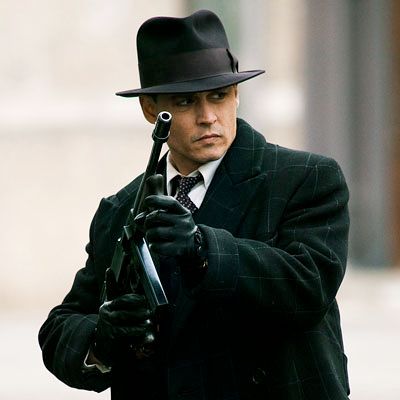
With Michael Mann's latest film Blackhat being released- and subsequently bombing with critics and audiences- I decided to take a look back at Mann's previous film, 2009's Public Enemies, starring Johnny Depp as Depression-era gangster John Dillinger, who was killed by the FBI in 1934, at the age of 31.


Like 2006's Miami Vice-the film Mann made before this- I think some distance is needed to truly appreciate what Mann is doing aesthetically and thematically in this film. Public Enemies exists in a weird purgatory between art film and mainstream entertainment, between crime film archetypes and characters more deeply felt, and between action and something more slow-burning.


What stood out for me on this viewing  is its vision of the time period is possibly the most un-romanticized version of the past I've ever seen in a mainstream film. Or maybe I should say the least Hollywood-ized. Usually in films like this there's a very prestige feel to the look and production/art design. In this film 1930s is a living, breathing world and way of life, free of any kind of nostalgia. I think this particular mood comes from Mann's use of digital photography. By applying a modern aesthetic to a period piece Mann removes the barrier between past and present, myth and man. We're put right in action, whether it be a gun fight or an interaction between two characters. The 1930s- while the distant past to us- was to these people the modern world. It was immediate and the future was uncertain. The Depression was in its fourth year and anew kind of criminal had emerged. and FBI Director J. Edgar Hoover (Billy Crudup) declares "America's first war on crime. This line not only speaks to the time period but to the wars North America would fight against drugs and terrorism in later decades.      


Public Enemies isn't so much a biopic of Dillinger- it only chronicles the last year or so of his life. During the course of the film Dillinger begins a romance with Bille Frechete (Marion Cotillard). At first Billie says she can't begin a relationship with a man she hardly knows. Dillinger then tells her: 

"I was raised on a farm in Moorsesville, Indiana. My mama died when I was three, my daddy beat the hell out of me cause he didn't know no better way to raise me. I like baseball, movies, good clothes, fast cars, whiskey, and you...what else you need to know?"

This isn't just directed at Billie but at the audience as well. The film is telling us it's not interested in exploring Dillinger's backstory or psychoanalyzing him. It adds to the immediacy of the film that we meet Dillinger fully formed rather than seeing him as a child and then as a teenager, etc. Mann doesn't want to unlock Dillinger, maybe because he feels there's no reason to. Dillinger was just a man when all was said and done. Dillinger gained mythic stature after his death- and was a public icon even before  then but behind that myth was a ordinary man.

"Time is luck" is a phrase Mann has used in his films. While it's not spoken in Public Enemies, the sentiment runs through the film. Dillinger lives in the moment, knowing he may  not be alive tomorrow. I noted that the time period of the film was un-romanticized but Mann is still very much a romantic. The relationship between Dillinger and Billie epitomizes the doomed romance Mann explored in Heat and Miami Vice. This love affair can't last. It's "too good to last," as Colin Farrell's Sonny Crockett says to Gong Li's Isabella in Miami Vice. 
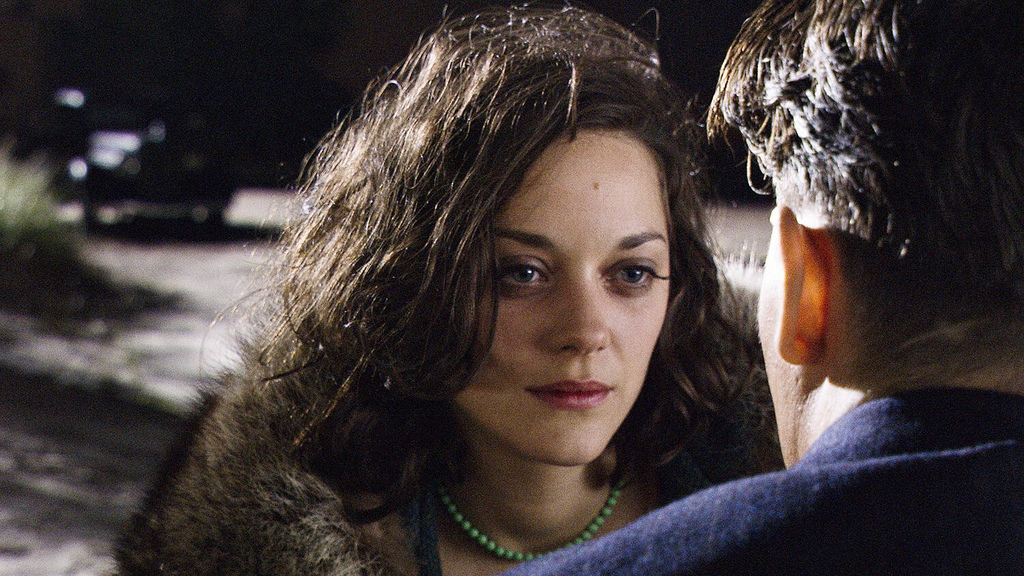


When Dillinger is killed the film ends with Billie. Mann is compassionate towards Billie and views her loss as the tragedy of the film. Charles Winstead (Stephen Lang), one of the FBI agents who killed Dillinger- and who heard Dillinger's last words- tells Billie "He said 'Tell Billie for me: Bye, bye, Blackbird'," which was the name of the song Dillinger and Billie first danced to. Similar to the endings of Heat and Miami Vice, this conclusion sneaks up on you with how emotionally devastating it. It rises above the archetypes and tropes of the genre and achieves something transcendent.  


This is one of  Depp's most restrained performance- particularly in comparison to everything from 2003 onwards. He plays Dillinger with a folksy charm and charisma, winning the public over to his side even while pitting the FBI against him. Christian Bale plays Melvin Purvis, the FBI agent who led the man hunt for Dillinger. Bale doesn't get a lot to work with but he plays the part with conviction and subtle nobility, with a dash of arrogance when Dillinger is arrested earlier in the film. I do wish the film had given us more insight in regards to Purvis- especially when the coda informs us Purvis committed suicide in 1960. I would say Cotillard is the heart of the film. It's her final shot in the film which makes the ending so emotionally affecting.

Coming back to digital photography, aesthetic choices influence us in conscious and unconscious way- and Mann wants us to be conscious of the digital aesthetic and the difference between it and film. Mann challenges the way we think movies should look and feel. And I feel your opinion and reaction to this kind of aesthetic determines whether you like these latter day Mann films. Most notably Mann utilizes digital filmmaking to make his action sequences vividly realistic and hard-hitting. The opening prison escape establishes the rhythm of the action and the "in the moment" feel of the film. 
While other modern action sequences don't have much personality, Mann's set pieces feel distinctly and organically part of his overarching aesthetic.

Public Enemies has grown in stature in my mind after re-watching it. Mann understands the romanticism and the inherent tragedy beneath the conventions of the genres of which he explores. And Public Enemies is a tragedy about the people that are left behind, the survivors of the world Dillinger and others after him have inhabited.


Saturday, 21 July 2012

Why Do We Fall?: "The Dark Knight Rises"


Minor Spoilers Ahead

Where to begin with The Dark Knight Rises? While I may be a tad disappointed in it, I can't generalize and say this movie is a disappointment, or a failure. Believe you me, it's not. We get plenty of blockbusters each year that blow stuff up and attempt to be epic. The Dark Knight Rises, on the other hand, despite being too lengthy in some respects, genuinely feels epic. It's scale harkens back to an almost old fashioned idea of what a Hollywood epic once was and can still be and it ends Christopher Nolan's Dark Knight Trilogy on a well balanced note of conclusion and continuation.

It's remarkable that The Avengers, The Amazing Spider-Man, and The Dark Knight Rises are all superhero films yet despite that genre label they all seem to exist in a different genre of their own. Also, on the tonal spectrum they're miles apart. The Avengers is probably the most "comic booky" of the three, the one that's most in love its central characters and what it means for them all to finally come together in one movie. It's also probably the funniest of the three and it doesn't forget to give its larger than life very relatable human moments. The Amazing Spider-Man is the sweetest and most intimate of the three. Andrew Garfield and Emma Stone have a sexy and cute chemistry that sets the groundwork for the tragedy we know is to come. It's a pretty low key movie, more concerned with Peter Parker than Spider-Man in some respects- though it does have some great shots that feel straight out of a  Spider-Man comic book.

The Dark Knight Rises is the darkest of the three superhero films this summer and tonally the one most distant from its comic book origins. This feels like the least "Batmany" of Christopher Nolan's trilogy and I'm still trying to figure out how much of a good or bad thing that is. Nolan's vision from the very beginning, with Batman Begins, was to ground Batman in the real world. It wasn't a completely realistic universe but it played like it was. The same with The Dark Knight, which was a superhero epic within the context of crime drama. Both films achieved an almost perfect balance between creating a contemporary and stripped down universe while still feeling quintiessentially Batman. After making such definitive and mythic statements on Batman, It was no doubt difficult for Nolan to know where to go next. With The Dark Knight Rises Nolan has made the most "real world" feeling of his Batman films yet. All three films in the the trilogy are reflections of America's inner turmoils. In Batman Begins it was a battle against a city's police corruption.  The Dark Knight asked the question of how one fights terrorism in a post 9/11 world. In The Dark Knight Rises, it's economic crisis and how it leads to Gotham being at risk of annihilation. The previous two films were able to relate the mythology of Batman to its conflicts but this film seems the least concerned with Batman's place within its battle.

The Dark Knight Rises begins eight years after the events of The Dark Knight. Bruce Wayne (Christian Bale) has retired the cape and cowl after taking the fall for Harvey Dent's (Aaron Eckhart) crimes as Two-Face. Nolan has joked that while he hasn't been able to do his Howard Hughes biopic, he has filled that gap by making these Batman films. Bruce certainly isn't too far away from Hughes' type of eccentricity. He's become a recluse and Selina Kyle (Anne Hathaway) mentions that he doesn't have long fingernails like people say. I love the detail of Bruce becoming a recluse because it fits in to Nolan's "real world" style. In reality (he he), it wouldn't be a stretch to imagine Bruce Wayne as a shut in hermit. The fact  he no longer operates as Batman adds even more resonance to the hermit characterization. There's a pretty good joke early on between Bruce and Selina and a certain kind of weapon that I won't reveal.

Selina Kyle is, of course, Catwoman. While Nolan was uncertain of how her character would fit in to his universe, his brother Jonah turned him around. The Dark Knight Rises deals with class divisions and the overthrowing of the rich. Catwoman works perfectly within this context because she's a cat burgular who wasn't born in to privilege. This is in stark contrast to Bruce Wayne, a man who, despite the tragedy of his parents' murder, was always provided for. I liked Hathaway a lot as Catwoman. When Hathaway was first cast I felt it was a little too conventional and "Hollywood" a choice but she does a great job of being funny, sexy and hardedged.

The villain of the film is Bane (Tom Hardy), a terrorist leader that was trained by Ra's Al Ghul (Liam Neeson), Bruce's former mentor. Bane isn't as diabolically entertaining as Heath Ledger's Joker but nevertheless Bane fascinates me. In many respects he feels the most "realistic" of the villains in the trilogy, making him the most intimidating. I felt a genuine sense of dread as he cuts off Gotham from the outside world and plans to destroy it. Like The Dark Knight, it's a heightened form of terrorist threat but one that's eerily plausiable.

I wish there was a little more of Gary Oldman as Commissioner Gordon. He seems to spend most of the movie in a hospital and I wish for the last movie there was more of a role for him to play before the final act comes around. I did however love a moment between him and Batman near the end which ties their relationship back to the first film in an unexpected but I feel meaningful way. Joseph Gordon Levitt gives a strong performance as John Blake, a patrol officer who becomes a detective after Gordon is shot. Levitt has a great scene early on with Bale where we get a sense of how much Bruce meant to him as a young orphan since Bruce was an orphan himself, a 'Billionaire orphan" as Blake calls him. I don't want to reveal what else happens in the scene but Blake's knowledge, while it may not make logical sense, makes dramatic and thematic sense.

Michael Caine has a great scene which pays off on a decision Alfred made in The Dark Knight but I felt he and Morgan Freeman as Lucius Fox also deserved a little more to do. I don't want to reveal too much about Marion Cotillard's character Miranda Tate but I wish she was a little more prominent as well. For a while it seems like she's going to be a new love interest but that''s dropped pretty quickly. She does get to shine towards the end but that's all I'm saying.

And what about the (Bat) man himself, Christian Bale? Bale got a little overshadowed by Heath Ledger and Aaron Eckhart in the last movie but here he has a little more room to shine. Bale is pretty terrific here, convincingly conveying Bruce's lack of passion for anything in life in both sad and humorous way. He also conveys Bruce's brokeness in Bane's prison. And I have to say- I love the Bat voice. While after The Dark Knight came out it seemed a little ridiculous and over the top, I couldn't do without it. It's both hilarious and, when Batman repeats to Bane something he told Batman earlier, pretty intense and awesome.

Since Batman Begins Nolan has been criticized for his action sequences but I feel Nolan has improved over time in terms of his action sequences. I feel his action work here is arguably his best work yet just in terms of clarity. The fight scenes between Batman and Bane have a real weight to them and unlike the hand to hand combat in Batman Begins you can see Batman fighting. The prologue of the film, involving Bane, aside from being a great homage to the James Bond film Licence to Kill, is also a simultaneously unsettling and exciting feat of zero gravity action filmmaking.

There is a long stretch of time when the film does feel too lengthy and I was feeling that the film just wasn't as memorable as The Dark Knight or had as many great moments as that film- or even Inception. But by the time we finally get to the final action set pieces I was thinking "This is kind of great" and I was totally in to the race against time to save the city.

I said it was probably hard for Nolan to say much about Batman after the last two movies and that Batman didn't completely fit in to the film's main battle. This film seems less about Batman's relationship to Gotham's conflict and more about about Bruce Wayne's redemption, in a physical sense at least. While he comes back as Batman early on in the film, it's not enough. He truly has to learn how to be Batman again and that means having to push himself physically more than ever before.

The ending of the film, without revealing too much, is able to both conclude its story yet suggest a continuation of the Batman mythos in a way that works within Nolan's universe as well as provide a intriguing take on the Batman mythos in general. I'll probably have to give the film another viewing in order to catch some plot points I missed before as well as get a firmer hold on the themes the film is exploring. But after just one viewing I feel The Dark Knight Rises, while maybe not the best of the trilogy, nevertheless concludes the trilogy in a respectful and resonant manner.