Showing posts with label Crime film. Show all posts

Sunday, 8 July 2018

The Essential Films: Touch of Evil (1958): 60 Years Later

Image result for touch of evil


A Series of Writings on Films that I feel are essential for film lovers, coupled with films that are personal to me.

Orson Welles' Touch of Evil (1958)  begins with a literal ticking bomb and ends with a man whose time has run out. Like other noirs it's inherently tragic and fatalistic. The making of the film would end sadly as well, with Welles losing control over the film. His rough cut was re-edited and re-shot by Universal. After Welles viewed the re-edited version, he was prompted to write a 58 page memo outlining what he wanted changed. His notes were ignored and it wasn't until 1998, 13 years after Welles' death, that a restored version, based on Welles' notes, edited by the legendary Walter Mursch and produced by Rick Schmidlin, was released. There can never be a true "Director's Cut" of Touch of Evil, since Welles' rough edit is lost, but the restored version is likely the closest to Welles' original vision. And admittedly it's the only version I've seen- the one on which this essay is based.

The film begins with what is heralded as one of the greatest tracking shots in cinema history. A bomb is placed in the trunk of American businessman Rudy Linnekar (Jeffrey Green) . The camera follows the car and drives though a Mexican border town, while also introducing us to Mexican narcotics officer Miguel "Mike" Vargas (Charlton Heston) and his wife Susie (Janet Leigh) on their honeymoon. When Linnekar and his girlfriend Zita (Jo Lansing) drive across the border of the United States, the car blows up. Since the bomb was planted on the Mexican side of the border Vargas has to postpone his Honeymoon and join the investigation with the American police. 

Captain Hank Quinlan (Welles) arrives on the scene and is antagonistic towards Vargas, establishing the racial tension that's a prominent theme throughout the film. The encounter between Vargas and Quinlan is paralleled with Susie's encounter with Joe Grandi (Akim Tamiroff), the brother of a drug dealer whom Vargas put in prison. Despite being married to a Mexican man, I couldn't help but feel she harbours some prejudice against certain Mexican people. She calls one of Grandi's nephews "Pancho" and Grandi himself "Little Caesar." The film does portray its Mexican villains very broadly but to be fair the motel nightman (Dennis Weaver) appears later isn't exactly subtle either. And Quinlan is another theatrical Wellesian character. The film ultimately walks a fine line between being about racism but also having troubling aspects of its time period- the largest one being Heston in brown face. Thankfully, the portrayal of Vargas is that of noble man attempting to navigate an in-noble world.   
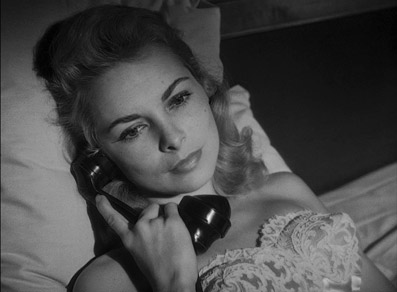
Image result for janet leigh touch of evil


As the investigation proceeds Quinlan plants evidence (two sticks of dynamite) in the apartment of Manolo Sanchez (Victor Millan), who's been having a relationship with Linneker's daughter Marcia. The interrogation sequence is a another long take, emphasizing the claustrophobia felt by Sanchez Vargas, who saw the empty shoe box that the dynamite was planted in it, calls him out on it. The fact Quinlan is so easily caught planting evidence shows he's losing his edge. It's also a major turning point for both Quinlan and Vargas. Both their motives will now change. Vargas will attempt to reveal that Quinlan has been planting evidence over the years; and Quinlan will do anything undermine Vargas' investigation. He conspires with Grandi to make Susie look like a drug addict.
.
Quinlan recounts to his partner Pete Menzies (whom Quinlan took a bullet for in his leg) his wife was strangled back when he was a rookie cop. Quinlan never caught the killer, who he says was killed in battle during WWI. "That was the last killer that ever got out of my hands," Quinlan says. This line is the key to his character. His guilt over never finding his wife's killer drives him to make sure no one ever escapes justice. Quinlan is sympathetic. He may have been a good cop once but has become a cynical and corrupt man. Menzies idolises Quinlan but eventually comes to realise-or maybe he always knew- that Quinlan is unethical. Menzies' arc is quietly heartbreaking and arguably the most significant in the film. 

Vargas is not the traditional noir hero. He's not an anti-hero or someone who goes through a tragic downfall. I'd put forward that Vargas' whole persona is designed to contrast with Quinlan, but also suggests the man Quinlan used to be or could have been. Vargas is young, honourable, newly married and thin. Quinlan is old, fat, practically unrecognisable to Tanya (Marlene Dietrich), the brothel owner who- besides Menzies- is the only person with whom Quinlan has some kind of emotional connection. She's also the one who delivers the fatalistic line, "Your future is all used up." At the end of the film Vargas is reunited with Susie but Tanya doesn't get to Quinlan in time before he dies from Menzies' bullet.

Welles was a life-long Shakespeare fan, directing and starring in film adaptations of Othello and Macbeth, as well as Sir John Falstaff in Chimes of Midnight.  Charles Foster Kane and Hank Quinlan are themselves grand, tragic figures. Even Tanya's final words about Quinlan- "He was some kind of man. What does it matter what you say about people"- invokes the ending of Shakespearean tragedy, with a character remarking on the hero and the events of the play. While Tanya is only in a few scenes, the film ends on her, reminding the audience that despite Vargas' Hollywood happy ending, life goes on for others. Tanya isn't a sentimental person, which gives the final image of her walking back to the brothel an stronger emotional resonance than an outpouring of grief.       


Image result for marlene dietrich touch of evil


The final irony of the film is that Sanchez really did plant the bomb. However, if not for the planted evidence, would Sanchez have gotten away with the crime? Ultimately, I feel whodunit and why is always beside the point in noir. It's more about, style, behaviour and dialogue.

Cinematographer Russell Metty would win an Oscar several years later for Stanley Kubrick's Spartacus but he should've been nominated and won for Touch of Evil. The world of Touch of Evil is atypically shadowy for noir but also has a distinct blend of grounded-ness and stylization. Welles' films often had a surreal quality to them, with sometimes nightmarish images. In the case of this film, when Susie is attacked in the motel by Grandi's nephews. However, I don't like the Susie subplot, and think the film would be tighter with something different for her to do. The problem is she's not proactive enough and feels like a victim throughout the whole film.

Despite being acknowledged as one of the greatest and most innovative filmmakers in history, Welles had a career full of financial and artistic struggles, though the fact he was still able to craft worthwhile and artistically ambitious films is a testament to his genius as a filmmaker. The restored version of Touch of Evil may not be the director's cut but it still an evocative and sad film made by a master filmmaker.

Tuesday, 11 July 2017

"Was he slow?" Baby Driver

Image result for baby driver poster

Warning: Major Spoilers Follow

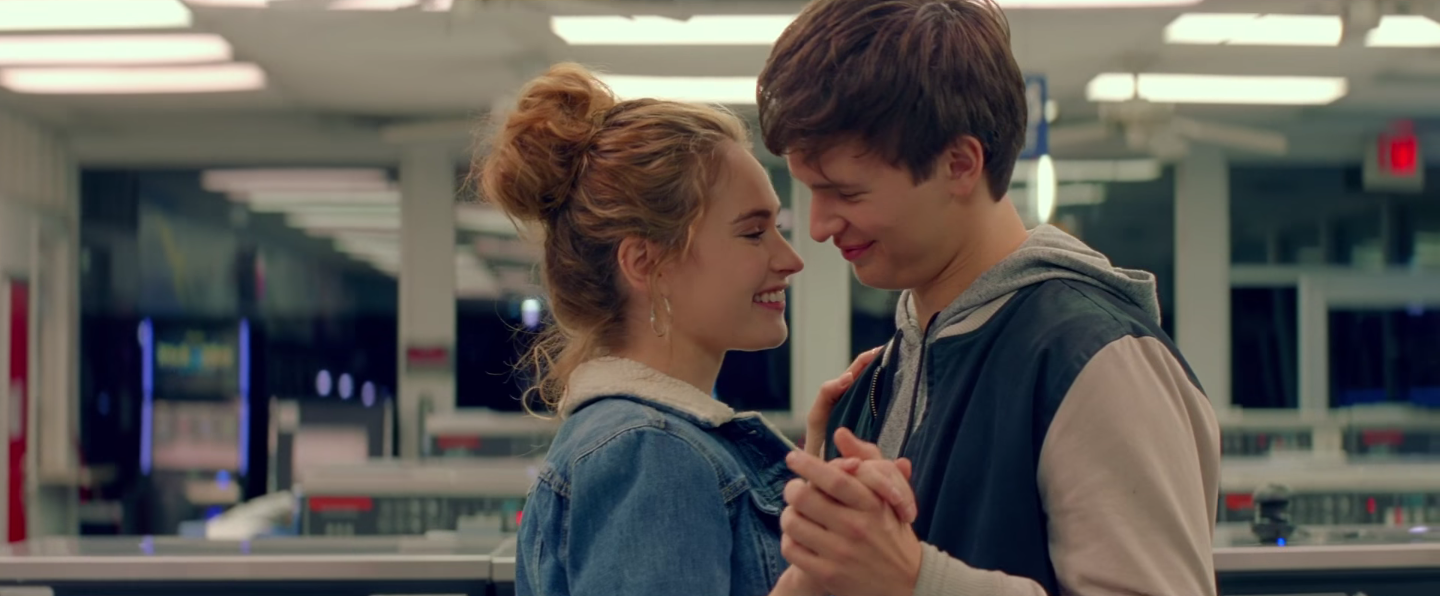
Edgar Wright is someone who's in love with his job as a filmmaker, which has shown in every film he's made thus far. This love affair continues with his latest film Baby Driver. The film's story involves familiar genre archetypes: a getaway driver (Ansel Elgort) who wants to quit the life of crime, the crime boss (Kevin Spacey) who reels him in for another job, the waitress with whom our hero wants to run away (Lily James) and the assortment of criminals along for the ride (Jon Hamm, Eiza Gonzalez, and Jamie Foxx). It's an old song but performed with genuine style, charm and heart.

Speaking of songs, Baby Driver can be best described as a film noir musical. This is because our hero-Baby- listens to music while heists are being pulled off and when he's out-driving the police. He also records conversations and makes songs out of them. The film as an extension of Baby's mindset; Wright shot and edited the action sequences to the music, creating a unique synthesis of sound and visuals that's organic to the film's universe. 

We learn Baby listens to music constantly due to a childhood car accident which left with him a constant humming in his right ear. The same accident also killed both his musician mother (Sky Ferreira) and father (Lance Palmer). When he was still a kid, Baby stole from Spacey's Doc. Doc was so impressed that he's used Baby for every heist. Baby is in debt to Doc and is due to retire after one more heist. Like Ryan Gosling's unnamed character in Drive Baby is great at his job but still strikes others as odd. Griff (Jon Bernthal) and Foxx's Bats are antagonistic towards him. However, due to his youth several of the criminals treat him as a surrogate son or little brother. 

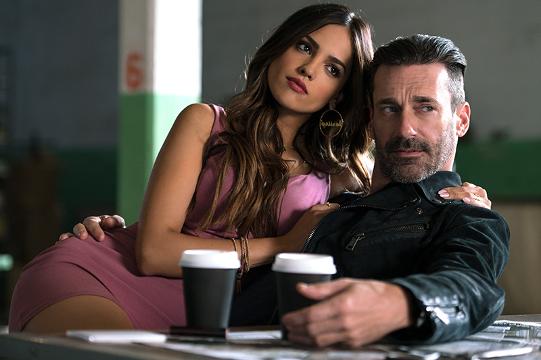
Hamm and Gonzalez's Bonnie and Clyde married couple Buddy and Darling treat him with a kind of bemusement- not quite affection but a certain level of respect. Baby has a complicated relationship with Doc, who is part extorter/part father figure to Baby. Spacey is one of the best actors at doing quiet menace while being darkly funny. When he brings Baby back in to the fold after debts had supposedly been settled Doc casually remarks that he could cripple Baby and kill everyone he loves if Baby doesn't keep working for him; it's this scene where Baby realizes how much he's still in Doc's grip- and desperately needs a way out. 
Image result for lily james baby driver

While James Debora and the whole love story between her and Baby is somewhat underwritten, she and Elgort's chemistry makes the relationship very pleasurable to watch unfold. Wright understands that there's a inherent romanticism inherent in noir- wanting to drive away with a beautiful woman, turning your back on the world of violence and greed- and he portrays the romance in an idealized fashion. The movie believes two people can be brought together by music. I get the impression that Baby sees something of his mother in Debora- a memory of a happier time when he felt protected. Debora and Darling are notably the two major female characters in the film and they are deliberately contrasted. Darling isn't quite a femme fatale but she's certainly a more dangerous and sexual figure than Debora- who projects a virginal innocence. And while Gonzalez is younger than James, Darling does come across as older and seasoned woman.

While Baby may see his mother in Debora, fatherhood an important aspect of this film. I mentioned that Doc is a twisted version of a father figure; but the man Baby views as a father in the film is foster father, Joe (C.J. Jones), who is deaf and whom Baby looks after, being a father of sorts to Joe. This relationship is perhaps the most touching in the film and helps make Baby a more sympathetic character. 

While the movie is using well-worn genre tropes, it also manages to subvert expectations- particularly regarding certain characters. Bats is killed before the third act even though he was being built up as possibly the major antagonist of the film. It's actually Buddy who becomes the villain in the finale of the film. We understand Buddy's motivations- Darling is killed by the police after Baby intentionally ruining the heist. We see that Buddy and  Darling's love was as or even more genuine than Baby and Debora's. Unlike other noir heroes- Baby lives at the end of the film- but the film doesn't escape tragedy if you look at the film from Buddy's point of view. This makes ending's romanticized reunion of Baby and Debora- after Baby gets out of prison- ironic considering the fact Baby is partly responsible the death of a man's wife.

Image result for eiza gonzález baby driver jon hamm
  

Hamm- who became famous for his portrayal of Don Draper on the TV show Mad Men- has in his film roles avoided Draper-esque characters. Instead he's played the good-looking doofus (Bridesmaids), rugged detective (The Town), and a doctor who specializes in lobotomies (Sucker Punch). Hamm's smooth grizzled-ness makes Buddy a distinct personality and a character who could likely carry his own movie.

I do want to talk about Elgort's casting in the role of Baby. Elgort first came to audiences' attention with his role in the teen romance The Fault in Our Stars alongside Shailene Woodley, whom he also co-starred with in the Divergent franchise. His casting as a slick getaway driver would appear to be a case of miscasting. But it ends up working due to how Elgort's image as an actor in Young Adult-orientated films offers a humorous contrast to the noir archetype he's playing; at the same Elgort's offbeat stoicism makes him believable as this odd but cool getaway driver. The opening scene establishes the relationship between Baby and his music, how he grooves to it even as a dangerous heist is occurring. 

I don't know where I'd rank Baby Driver in the Wright Pantheon, particularly since I still need to re-watch most of his work- but it clearly shows a director high on the joy of making movies and pushing himself as an artist, which makes what he'll do next always very exciting. 

Friday, 13 February 2015

Bye, Bye, Blackbird: "Public Enemies"


Ending Spoilers Ahead


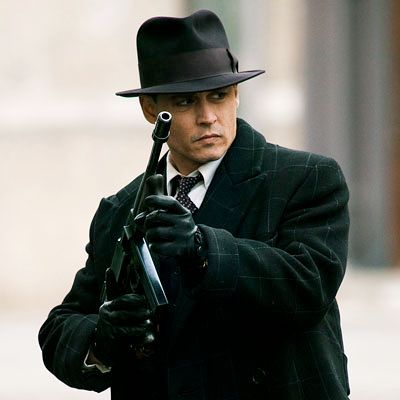
With Michael Mann's latest film Blackhat being released- and subsequently bombing with critics and audiences- I decided to take a look back at Mann's previous film, 2009's Public Enemies, starring Johnny Depp as Depression-era gangster John Dillinger, who was killed by the FBI in 1934, at the age of 31.


Like 2006's Miami Vice-the film Mann made before this- I think some distance is needed to truly appreciate what Mann is doing aesthetically and thematically in this film. Public Enemies exists in a weird purgatory between art film and mainstream entertainment, between crime film archetypes and characters more deeply felt, and between action and something more slow-burning.


What stood out for me on this viewing  is its vision of the time period is possibly the most un-romanticized version of the past I've ever seen in a mainstream film. Or maybe I should say the least Hollywood-ized. Usually in films like this there's a very prestige feel to the look and production/art design. In this film 1930s is a living, breathing world and way of life, free of any kind of nostalgia. I think this particular mood comes from Mann's use of digital photography. By applying a modern aesthetic to a period piece Mann removes the barrier between past and present, myth and man. We're put right in action, whether it be a gun fight or an interaction between two characters. The 1930s- while the distant past to us- was to these people the modern world. It was immediate and the future was uncertain. The Depression was in its fourth year and anew kind of criminal had emerged. and FBI Director J. Edgar Hoover (Billy Crudup) declares "America's first war on crime. This line not only speaks to the time period but to the wars North America would fight against drugs and terrorism in later decades.      


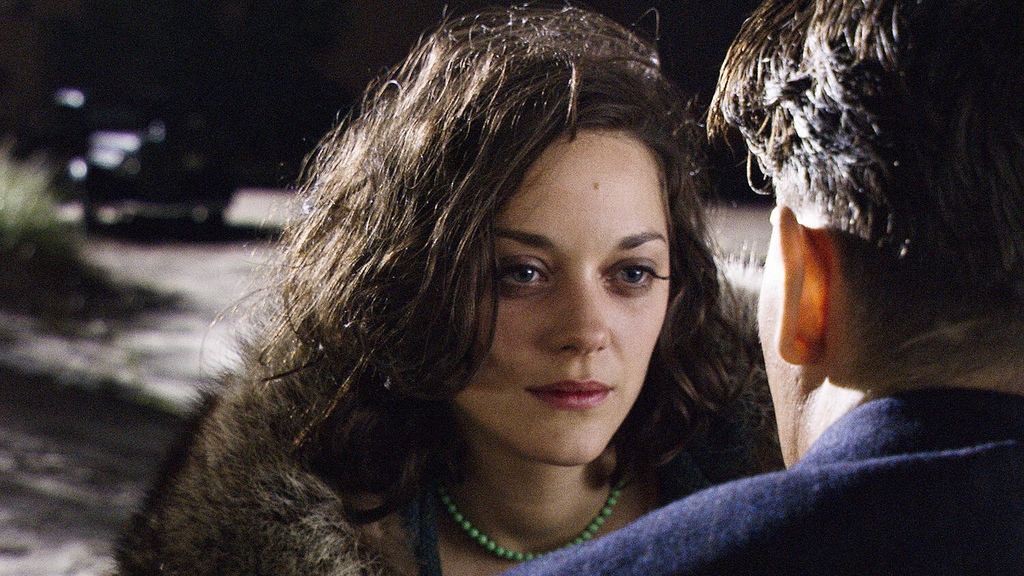
Public Enemies isn't so much a biopic of Dillinger- it only chronicles the last year or so of his life. During the course of the film Dillinger begins a romance with Bille Frechete (Marion Cotillard). At first Billie says she can't begin a relationship with a man she hardly knows. Dillinger then tells her: 

"I was raised on a farm in Moorsesville, Indiana. My mama died when I was three, my daddy beat the hell out of me cause he didn't know no better way to raise me. I like baseball, movies, good clothes, fast cars, whiskey, and you...what else you need to know?"

This isn't just directed at Billie but at the audience as well. The film is telling us it's not interested in exploring Dillinger's backstory or psychoanalyzing him. It adds to the immediacy of the film that we meet Dillinger fully formed rather than seeing him as a child and then as a teenager, etc. Mann doesn't want to unlock Dillinger, maybe because he feels there's no reason to. Dillinger was just a man when all was said and done. Dillinger gained mythic stature after his death- and was a public icon even before  then but behind that myth was a ordinary man.

"Time is luck" is a phrase Mann has used in his films. While it's not spoken in Public Enemies, the sentiment runs through the film. Dillinger lives in the moment, knowing he may  not be alive tomorrow. I noted that the time period of the film was un-romanticized but Mann is still very much a romantic. The relationship between Dillinger and Billie epitomizes the doomed romance Mann explored in Heat and Miami Vice. This love affair can't last. It's "too good to last," as Colin Farrell's Sonny Crockett says to Gong Li's Isabella in Miami Vice. 


When Dillinger is killed the film ends with Billie. Mann is compassionate towards Billie and views her loss as the tragedy of the film. Charles Winstead (Stephen Lang), one of the FBI agents who killed Dillinger- and who heard Dillinger's last words- tells Billie "He said 'Tell Billie for me: Bye, bye, Blackbird'," which was the name of the song Dillinger and Billie first danced to. Similar to the endings of Heat and Miami Vice, this conclusion sneaks up on you with how emotionally devastating it. It rises above the archetypes and tropes of the genre and achieves something transcendent.  


This is one of  Depp's most restrained performance- particularly in comparison to everything from 2003 onwards. He plays Dillinger with a folksy charm and charisma, winning the public over to his side even while pitting the FBI against him. Christian Bale plays Melvin Purvis, the FBI agent who led the man hunt for Dillinger. Bale doesn't get a lot to work with but he plays the part with conviction and subtle nobility, with a dash of arrogance when Dillinger is arrested earlier in the film. I do wish the film had given us more insight in regards to Purvis- especially when the coda informs us Purvis committed suicide in 1960. I would say Cotillard is the heart of the film. It's her final shot in the film which makes the ending so emotionally affecting.

Coming back to digital photography, aesthetic choices influence us in conscious and unconscious way- and Mann wants us to be conscious of the digital aesthetic and the difference between it and film. Mann challenges the way we think movies should look and feel. And I feel your opinion and reaction to this kind of aesthetic determines whether you like these latter day Mann films. Most notably Mann utilizes digital filmmaking to make his action sequences vividly realistic and hard-hitting. The opening prison escape establishes the rhythm of the action and the "in the moment" feel of the film. 
While other modern action sequences don't have much personality, Mann's set pieces feel distinctly and organically part of his overarching aesthetic.

Public Enemies has grown in stature in my mind after re-watching it. Mann understands the romanticism and the inherent tragedy beneath the conventions of the genres of which he explores. And Public Enemies is a tragedy about the people that are left behind, the survivors of the world Dillinger and others after him have inhabited.


Sunday, 2 September 2012

Films of the Decade: "Collateral" (2004)


Collateral picture


This is a series of writings where I'll talk about some of the most fascinating films of the last decade.

The last time I did one of these I was writing about Christopher Nolan's The Dark Knight. Now, I'm tackling a film from a director who has been a big influence on Nolan's work in the past, particularly in regards to The Dark Knight: Michael Mann. Someting I've noticed, in terms of Mann's crime films, is that he goess beyond the archetypes of good guy/bad guy, cop/criminal and finds the texture and humanity in his characters.

In his 1995 film Heat, Mann views Robert DeNiro's bank robber Neil McClusky and Al Pacino's detective Vincent Hanna as professionals above anything else, two men who do what they do. They learn to understand each other, which makes their dynamic more complex than cop/criminal. In his 2004 film, Collateral, it's easy to view Vincent (Tom Cruise), the hit man who forces cab driver Max (Jamie Foxx) to drive him around while he does his rounds, as the villain and Max as the protagonist. And the surface veneer of the film reinforces this. But it's a surface that is always on the verge of collapsing underneath these characters' and the audience's feet.

While the film begins with Vincent receiving the information he needs for the job via a briefcase exchange with Jason Statham (Yes, that Jason Statham), the character we first get to know is Max. Max has been a L.A. cabdriver for 12 years even though he calls it a "temporary" job. He wants to start his own limo service but makes up reasons why he can't start it up. He picks up Annie Farrell (Jada Pinkett-Smith), a prosecutor, and they have a lovely scene where we learn about Max's dreams and Annie's fears about her new case. When he drops her off, she gives him her number to which he's very surprised and happy.

I love that the film allows this small interlude. It really allows you to get to know Max and connect with him before Vincent enters his life. It also makes Max's descent in to Vincent's world feel more real because it shows Max's life before Vincent enters it-Max is stuck in a rut but meets a woman who makes his day-and then life throws him a curveball in the form of Vincent. We can imagine the same thing happening to us. Fate doesn't care about what path we're already on, it'll inevitably send you down another. What's intriguing about Vincent's plan is that Max was never supposed to know what he was up to. Vincent then shoots a man out of a window and he falls on Max's cab. This is when things get more complicated-not only for Max, but for Vincent as well. Vincent is an efficient and calculating man and he'd no doubt prefer if Max was none the wiser.

Collateral was shot on digital rather than film and Mann said in an interview he tried to make a look out of digital video rather than try to make it look like film. You can definitely tell it's shot digitally and while you wouldn't want every film to have this look, particularly with more films being shot digitally, it really works for this film because it captures what L.A. must really feel like at night.

My favourite scene in the film is the one at a jazz club where Vincent will kill a jazz player named Daniel Baker (Barry Shabaka Henley). Daniel sits down with Vincent and Max before he knows who Vincent really is. Daniel tells a story about meeting Miles Davis in the very same jazz club and playing with him. Daniel, like Vincent's other targets, is a witness for the prosecution in the case to indict drug lord Felix Reyes-Torrena (Javier Bardem). Daniel implies he made a deal to stay out of a prison and was never going back. While Daniel only plays a small part in this film, Henley's performance gives us the sense of an entire life in only a few short minutes, a man who never quite achieved his dreams but nevertheless was for one night able to feel alive. "I was born in 1945 but that night was the moment of my conception." Vincent offers Daniel the chance to answer a question about Davis. If he answers correctly he can walk away. "Where did Miles Davis learn music?" is the question. Daniel says it was Julliard  Vincent shoots him. Vincent then says Miles dropped out and was mentored by Charlie Parker. This scene simultaneously shows Vincent's cruelty as well as his appreciation for the arts. It's almost darkly comic that this small detail is how he decided Daniel's fate-though it's hard to believe Vincent would have let him live either way. Daniel was "born" in that jazz club- and that's where he died.

Collateral almost becomes a bizarre take on the buddy film  in instances where Vincent helps Max stand up to his boss as well as take him to visit Max's mother in the hospital. We realize Max isn't always the nicest guy since he hardly visits his mother. It's moments like this that shows Vincent does have some nobility despite his violent nature. Thanfully, the film never makes Vincent completely soft, which makes these flashes of humanity all the more tragic. We learn Vincent had an abusive father, which he may have killed, and we realize this is man who was always destined to be who he is. Despite his inherent humanity, he can't escape who he is. He's in much of a rut as Max except Max can change his own fate. If Max makes it through the night alive, he can end up like Daniel, a man who never achieved his dreams or he can start to get his limo service up and running. There's a scene near the end of the film where Max and Vincent deconstruct each other's lives in ways similar to what I've just described. It reveals the film as not only a crime thriller but an existential study about purpose in an often disconnected and cold universe. 

While there's this meme that actors like Cruise are too famous to completely disappear in to their roles, Cruise's performance is more convincing than even his heroic roles. The silver hair he sports is a great touch that does a lot for his transformation in to Vincent. Cruise does a fine job of conveying Vincent's cold-bloodedness while suggesting the deeper reservoirs of pain that made him who he is today. Foxx is really good as well, both charming but vulnerable- showing how out of his element Max is. His greatest moment in the film is when he has to pose as Vincent in a meeting with Felix in order to get the information about Vincent's last two targets. At first Max is scared of Felix but  he slowly regains his confidence and pursuades Felix to give him the information. In this scene Max, while pretending to be Vincent, reclaims the assertiveness and confidence we knew he had at the beginning of the film.

The finale of the film is where things do become a little too coincedential, with Annie being the prosecutor for the Felix case as well as Vincent's last target. But it works because Mann keeps the tension up instead of resorting to gunfights and explosions. The film ends with what on paper seems like a typical Hollywood ending: Max kills Vincent on a train and walks away with Annie in to the sunset (or in this case sunrise). But Mann ends the film on a melancholic and somber note. Vincent mentions the story he told Max when they first met about a man who died on a L.A. train and no one noticed for hours. Vincent wonders if anyone will notice him. In his final moments Vincent acknowledges that despite being a man who determined other peoples' fates even without knowing them, his death will ultimately be insignificent to everyone except the man who killed him. While Max killed Vincent in the heat of the moment, in the fight for survival, there's nothing triumphant about his victory. Max and Vincent weren't friends but they saw each other clearer than anyone ever did. And inspite of everything Vincent did to Max, in a cold and disconnected universe, that connection meant everything.