Showing posts with label James Bond. Show all posts

Thursday, 18 December 2025

For England?: 30 Years of "GoldenEye"


It's crazy we're as far removed from GoldenEye, released this fall back in 1995, as that film was from 1965's Thunderball. Even when I was younger in the 90s, those 60s Sean Connery films already felt like relics from a bygone age. I don't think GoldenEye would feel as much like a time piece to Gen Z or Gen Alpha the way the Connery films did when I was growing up; it still probably acts as a perfect gateway in to the Bond franchise. It was mine and admittedly I didn't exactly love the older Bond films when I initially saw them- probably because they weren't GoldenEye and it took me a while to get used to older films.

I also can't help but remember that I'm about the same age as my mother when Goldeneye was released. I'm about to turn 37 in February and she was 37 when she took me to see my first Bond in theatres, The World is Not Enough and that is a little weird. Your parents seem so much older when you're younger and when you hit their age when you were a kid, you realize young they were. My mother was a single mother and I can't imagine raising a kid on my own. 

GoldenEye was the first Bond released in over 6 years, the last one coming out when I was a baby in 1989, that film being Timothy Dalton's second and last Bond film, Licence to Kill. It wasn't a huge it at the box office, coming out the same summer as Tim Burton's original Batman, Lethal Weapon 2, Ghostbusters II, and Indiana Jones and the Last Crusade. It would end up being the last Bond film released in the summer. Behind the scenes legal issues would delay a third Dalton film until 1994, but by that time Dalton had decided to quit. Pierce Brosnan, who was supposed to take over from Roger Moore in The Living Daylights but was replaced when his contract for the TV show Remington Steele was renewed and Bond producer Albert R. Broccoli didn't want Brosnan doing both, was chosen as Dalton's replacement. 

GoldenEye was originally written for Dalton and it's one of the sizable what ifs of the Bond franchise, along with what if George Lazenby continued on in the role. Okay, maybe not as sizable as that, but still pretty sizable. As much as I like Dalton and I think he would've killed certain moments, I don't know if Goldeneye is as big of a deal if Dalton comes back. He wasn't the most popular Bond in his time, even though he gained a following. I think Brosnan got a lot oof people excited when he finally got to take over the role, and he became the Bond for mu generation.  

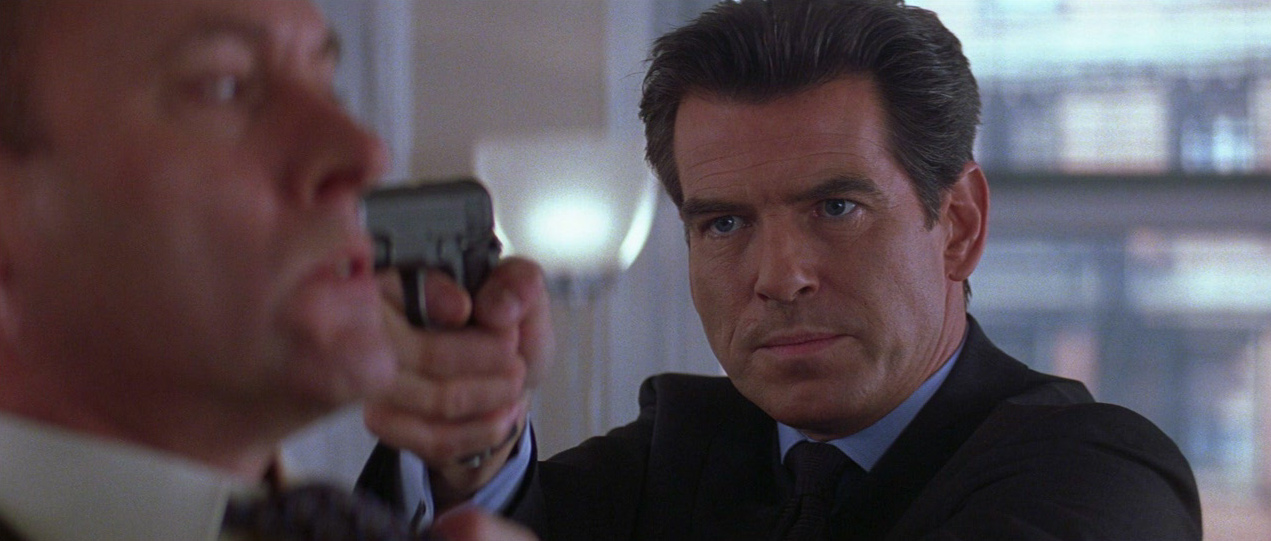
Brosnan was the first actor to come of age with the franchise, citing seeing Goldfinger as having a huge influence on him. His portrayal of Bond is often seen as an amalgamation of the previous Bonds, and just as often he's negatively seen as not being different enough from the other Bonds. But I'd argue what Brosnan is doing is harder than it looks. He has to be both down to business as a spy but still pull of the humour, as well be convincing in the more tender scenes with Natalya Simonova (Izabella Scorupco). Personally, I feel Brosnan pulls it really well, though I think he gets even more comfortable in the part as he goes along. Was he a safe choice for Bond? Sure, especially when he's placed in between Dalton and Craig, two bolder choices. But I think Brosnan is probably the coziest Bond next to Roger Moore. 

We fans take it for granted but from 1962 until 1989 there was only a two year to at the most a three year gap between Bond films. People were never given the chance to miss the franchise. That, and there was so much competition from other franchises, like Indiana Jones and action films like Die Hard, Batman and Lethal Weapon. Before Star Wars, Bond was kind of the pinnacle of cinematic escapism and excitement, and even Bond can feel passe compared to other franchises, and I feel Bond 26 has the potential to make Bond exciting again, the way GoldenEye did. The six year gap from 1989 to 1995 gave the franchise the opportunity to feel fresh again, with new writers, a new director (Martin Campbell took over from John Glen who had directed the last five films in the series), and again, a new actor who would appeal to both old and new fans. 

Aesthetically, there's a big jump from Licence to Kill to GoldenEye. If the 1980s Bond films are often criticized for being TV movieish, from the very first shot GoldenEye feels more wildly cinematic. It also has a stronger sense of mood and place. Campbell and cinematographer Phil Meheux create a more shadowy and atmospheric film, a film that's haunted the ghosts of the Cold War.  It feels like a more lived-in world of spies and espionage, vibing like an actual spy film in a way the Bond films usually don't. The film's aesthetics are complimented by Eric Serra's industrial score, with also has its moments that can't help but create a certain amount of nostalgia in me. I know Serra's score is somewhat controversial and not well liked by some. Maybe because I grew up with this movie and the score is ingrained in me that I've never had a problem with it. I get it's not the typical score that was defined by John Barry as the Bond sound but it's a sizable part of what gives the film its singular identity in the franchise (David Arnold would score the next five films) and for me it sounds as much "Bond" as the Barry stuff. And Tina Turner's theme song does feel indebted to the classic Bond songs of Shirley Bassey and remains one of the more underrated songs in the franchise

GoldenEye was the first Bond film made after the fall of the Berlin Wall and the end of the Cold War, and this is strongly reflected in the film's story and vibes. As I said earlier, The ghosts of the Cold War haunt this film, with one sequence taking place in a graveyard where Bond meets a literal ghost from his past, Alec Trevelyan, former 006, who fakes his death at the beginning of the film and is the villain behind the stealing of the titular GoldenEye satellite, planning to send England back to the "stone age" in revenge for England's betrayal of the Leinz Cossacks after WWII, which led Trevelyan's father to the murder of his mother and then suicide. Trevelyan was the first time the series attempted a sympathetic villain, and making him a former ally of Bond (another first) just makes him doubly interesting. I don't love a lot of the main Bond villains but Trevelyan is my favourite, I think largely due to Sean Bean's performance. It's those line readings, right. They're so good. Bean supposedly did audition for Bond and casting a would-be Bond as Bond's dark twisted mirror is kind of perfect. And if the previous film, Licence to Kill saw Bond going rogue avenging his friend, GoldenEye sees Bond on a mission where he has to eliminate a friend. 


The big meta-narrative of GoldenEye is how the world has changed and Bond is a relic of the past. Bond's boss, M, is now a woman (Judi Dench in her debut in the role), who calls him out for being a "sexist, misogynist dinosaur." Bond is a difficult character to grapple with because he originated in the 50s, and unlike superheroes like Superman and Batman are easy to adapt modern times, Bond often does feels stuck in the past. His womanizing and sexism feel like it's hard to separate from the character without making him completely different. However you do have to call it out. Natalya also calls out Bond on his emotional detachment in perhaps the film's most pivotal scene, though because it's a Bond she still winds up in bed with him after. That's always going to be a problem when franchises do the self-critique thing.  There's always limit to how much you can do it because you ultimately still embrace what makes the franchise the franchise, and also you still have to making the movies.

Natalya may be my favourite Bond woman. I like that she feels like a real person who's been swept up in to a Bond adventure. It's often pointed out she's as much a main character as Bond and we spend quite a bit of time with her before she meets Bond and she's given her motivation and backstory. We sympathize with her due to her witnessing the murder of her colleagues during the stealing of the GoldenEye. While her romance with Bond could feel forced Brosnan and Scorupco make the affection between Bond and Natalya surprisingly real. Natalya never comes across as just automatically falling for Bond because he's Bond. There's certain efficiency in how the script brings Bond and Natalya believability together emotionally by sending them through a pretty tense series of events. It ends up being one of the series' most likable relationships. I remember being disappointed that she wasn't back in Tomorrow Never Dies, but this was before I understood the formula Bond series. Sadly, Bond's relationships don't last.

GoldenEye may have the best ensemble cast of all the Bond films. We remember this film not just because of Bond but of the supporting characters. Tchecky Karyo is only in this film for a few minutes as Defense Minister Dmitri Mishkin but he has such a strong presence you forget how little he actually is in this film. Robbie Coltrane may be Hagrid to many but I always think of him as Valentin Zukovsky, the ext-KGB agent whose knee "aches every day, twice as bad when it's cold." Gottfreid John and Alan Cumming as General Ouromov and Boris Grishenko, respectively, are perfectly slimy in their roles, I would say pretty much all the villains in this film are perfectly deserving of their comeuppances. 

All of the Brosnan films provided personal stakes for Bond and despite the finale's large scale backdrop, the story all comes down to a pretty brutal fight between Bond and Trevelyan.  Trevelyan's demise is probably the best of any Bond villain: Bond drops him from the satellite, responding to Trevelyan's "For England, James?" which he's said to Bond throughout the film,  with "No. For me." Trevelyan always thought Bond cared more about the mission than his friend, which is ironic considering the previous film, but at the end Bond makes it clear he did care about the friendship enough to feel betrayed. Bond wants Trevelyan to know this isn't just about the mission, it's personal. 


Campell had a magic touch when he directed GoldenEye and later, Casino Royale, the first Daniel Craig film. He's able to find the balance of seriousness and fun that I think the Craig films struggled with post Casino Royale. GoldenEye has dramatic weight to it but it's still giving the audience a good time with enough Bondian humour and a sense of escapism. Xenia Onatopp (Famke Janssen) is a campy villain but she surprisingly never unbalances the more serious elements. Denis Villenueve is directing the next film in the franchise and his films are pretty heavy. I would hope he would find he balance between seriousness and humour that the franchise is at its best when it nails the juggling act.

The film owes something to Dalton but Skyfall also owes a lot to it. That film is also commenting the relevance of Bond in the modern world, as well as having a villain who's a mirror to Bond. Skyfall also takes from Brosnan's third, The World is Not Enough, where the villain wants revenge against M. Brosnan is the more archetypal Bond between Dalton and Craig, who are spiritually connected, but the Dalton and Brosnan eras set the stage for Craig.

GoldenEye is the most important Bond film of my life, and I hope it's that important for the younger generation getting in to the franchise. It's kind of a perfect gateway in to this world, so here's to 30 years and to another 30 more. Thanks Martin Campbell and Pierce Brosnan for making me a life long Bond fan.

Friday, 16 December 2022

The Essential Films: "The Spy Who Came in From the Cold" (1965)


A Series of Writings on Films that I feel are essential for film lovers, coupled with films that are personal to me. Spoilers for people who haven't seen the film.

At the height of the James Bond craze, as well as amongst shows like The Avengers and Get Smart, 1960s audiences were offered a bleaker, chillier alternative: Martin Ritt's The Spy Who Came in From the Cold, based on John Le Carre's third novel, his breakthrough success, which Graham Greene called the best spy story he ever read. Nearly 60 years after the book was published and the film was released the story still holds up- due to the cynical brilliance of its plot. This may be the best representation of the government agent's life- the loneliness, the unglamorous lifestyle, the realization you're a pawn in a larger scheme that you can't help but bitterly admire. The film is ultimately a tragedy, but not of the Shakespearean kind. The tragedy here feels more mundane, but still inevitable. 

At the film's beginning one of British agent Alec Leamas' (Richard Burton) operatives is killed at Checkpoint Charlie in Berlin. Leamas is called back to London by agency chief Control (Cyril Cusack), where he is supposedly dismissed from the service. Leamas gets a job at a library where he meets Nan Perry (Claire Bloom), with whom he begins a relationship. One day Leamas drunkenly assaults a grocer (Bernard Lee, funnily enough the original James Bond "M") and briefly goes to jail. When he is released, he's approached as a possible defector by East Germany. 

It's revealed this is all been set up by control so Leamas can implicate an East German agent- Mundt (Peter van Eyck)- as a British spy and have him killed. That we do not learn of this mission until after spending time establishing Leamas' relationship with Nan and seeing him approached to be a defector, makes the revelation more satisfying. The audience get to say "Oh, I get it," which is always very rewarding. It also establishes that the story requires patience. And by film's end I think everything pays off brilliantly. Paul Dehn and Guy Trosper's screenplay also has these events play out in a naturalistic way, giving you the feeling of a real spy story unfolding before you.

Leamas is no Bond. He's not a fun character to be around and doesn't seem to being having a lot of fun himself, unless he's being sardonic. His relationship with Nan doesn't have the sexual excitement of the Bond films- it feels more paternal Burton was never the warmest of actors, which makes him perfect for the role of a standoffish, burnt-out spy. In a performance that's as bitter as a cyanide pill, Burton makes you feel that weariness from years of service in your own bones, playing a part that's not really much of a part. It feels there's a very thin line between the role Leamas is playing and the man he is. As Michael Sragrow says in his essay for the Criterion Collection release of the film, pertaining to when Leamas is first sent on his mission,

    "...those who haven't read the book must wonder whether Leamas becomes a drunken has-been or             is merely playing one...it's hard to know when Leamas is putting everyone, or where the put-on              ends and the real Leamas begins."

When Leamas tells Fielder, Mundt's second-in-command, and who's suspicious of Mundt, that becoming a spy was just about the money, I don't think Leamas is lying. It's easy to pretend to be a defector when you are genuinely fed up with the job. Fielder stands in contrast to him, he believes in the communist cause, and feels Leamas should believe in something. Leamas says he holds the right to be ignorant, the "Western way of life," as he calls it. 

This isn't the first time in the film Leamas is confronted with a person whose passion clashes with his dispassion. Nan is also a communist, which Leamas takes as Nan being naive. He says that when it comes to things like communism and capitalism, it's the "innocents who get slaughtered. This calls forward to the conversation with Fielder where Fielder states he would kill innocent people to achieve his goals- but that if innocent people are to die, if should be for something.Maybe Leamas did believe in something once- perhaps all cynics are reformed optimists- but even if he did, it wouldn't stop the events of the story. Leamas is ultimately a pawn in a larger game, one in which he unknowingly dooms both Nan and Fielder. 

Fielder puts Mundt on trial for being a double agent, but when Nan is brought to the tribunal and admits to having received payments by British Intelligence, Leamas had to admit he's a British agent. Fielder is arrested and will probably be killed. Mundt frees Leamas and Nan, which leads to Leamas explaining what just happened. Mundt actually is a double agent and Leamas' mission was ultimately to discredit Fielder, with Nan being part of that plot. And it all comes back to philosophy, with Leamas answering Nan's question of who this operation helped, stating

"What the hell do you think spies are? Moral philosophers measuring everything they do against the word of God or Karl Marx? They're not! They're just a bunch of seedy, squalid bastards like me: little men, drunkards, queers, henpecked husbands, civil servants playing cowboys and Indians to brighten their rotten little lives. Do you think they sit like monks in a cell, balancing right against wrong? Yesterday I would have killed Mundt because I thought him evil and an enemy. But not today. Today he is evil and my friend. London needs him. They need him so that the great, moronic masses you admire so much can sleep soundly in their flea-bitten beds again. They need him for the safety of ordinary, crummy people like you and me."

Leamas could have believed in philosophy he wanted throughout this story, but he still would've come to the same conclusion he comes here. All that's changed for Leamas is, as he says, Mundt is now his "friend." 

Leamas is, by design, a difficult character to work with because he's blase about things and not necessary the most exciting guy to be around. He's not traditionally and his lack of belief system (which maybe in itself is a belief system) doesn't really change over the course of the film but is rather confirmed. When Nan gets killed by one of Mundt's henchmen while she and Leamas are attempting to climb the Berlin Wall, it calls back to what Leamas said about innocents get slaughtered. 

If Nan is the innocent victim than Fielder is arguably the closest thing the story has to a hero (though there are no true heroes in this world). He wants to expose a traitor in the Communist party, and Werner makes Fielder surprisingly likable and charming. And the fact that he's right about Mundt means he has to be killed. "London made us kill him, Kill the Jew," Leamas tells Nan. Mundt is a former Hitler Youth, which is a big reason Fielder doesn't like Mundt. This makes Fielder a more sympathetic character than Leamas, whose final statement about him, as complimentary as Leamas gets, is he was a "clever Jew." 

Now, I want to talk a little about the film's director, Martin Ritt. Ritt, like Fielder, was Jewish, born in Manhattan, and who started out as an actor in the theatre, where he eventually met Elia Kazan. Ritt worked as playwright and director of plays before turning to television.  He became a victim of the Hollywood blacklist in 1952, after which he returned to the theatre. When things died down, he made his film debut with Edge of the City (1957), starring Sidney Poiter and John Cassavetes. It based on a true story about corruption on the docks, similar to On the Waterfront. (1954). It was Ritt's experiences playing football in North Carolina, seeing the contrast between the deep south and his Manhattan upbringing that made him to do socially conscious films. He would direct Poitier again, alongside Paul Newman, in Paris Blues (1961) Newman and Ritt would collaborate again on Hud (1963), The Outrage (1964, a remake of Akira Kurosawa's Rashomon) and Hombre (1967). Ritt received a Best Director nomination for Hud. 

He won the BAFTA for Best British Film for Spy but would not receive an Oscar nomination for his elegant direction. Neither did Oswald Morris for his beautifully stark black and white cinematography, which provides much of the film's aptly chilly atmosphere. The film would only receive two Oscar nominations, Burton for Best Actor, and Best Art Direction- Black and White (Hal Periera, Tambi Larsen, Ted Marshall, Josie McAvin). Burton is my pick for Best Actor (though I haven't seen Lee Marvin's winning performance for Cat Ballou). Werner got a Golden Gloe nomination for Best Supporting Actor and I feel he should've been nominated for the Oscar (he actually was up against Burton in Best Actor for Ship of Fools). The Sound of Music was the Best Picture winner that year. That's no doubt a beloved and remembered film, and it's not a surprise the stark reality of Spy wasn't embraced by the academy. However, Spy has only grown in esteem and still feels like an uncommonly austere portrait of a spy's life.

Monday, 7 March 2022

"Diamonds are Forever" and "Live and Let Die" as Films of Transition


After George Lazenby made On Her Majesty's Secret Service he was convinced by his agent that James Bond was fast becoming a relic of the 60s and would not last in to the 70s. This led to Lazenby leaving the role, which would prove to be big mistake since the series did last in to the 70s and beyond. But the series transition from the 60s in to the 70s is a conspicuous one, with Diamonds are Forever and Live and Let Die showing the struggle to remodel the franchise for the 70s. These films took the James Bond series from the glamorous 60s to the rougher, grittier 70s, from cloak and dagger to camp, from Japan to Las Vegas, from baccarat to blaxploitation. This is when the series pretty much shifted from Ian Fleming's original conception to something more offbeat and strange. 

After Lazenby left the role  Bond producers Harry Saltzman and Albert R. Broccoli persuaded Sean Connery to return to the role he abdicated after You Only Live Twice. Connery was paid 1.25 million (the most any actor was ever paid at the time) and came back for what is essentially a one-off before Roger Moore inherited the role, playing it for 12 years and 7 movies. It's perhaps appropriate that after beginning the character's cinematic legacy in the 60s, Connery would bring us in to the 70s before passing the torch to Moore, the Bond of the 70s. 

The contrast between Diamonds are Forever and its predecessor OHMSS is important when examining the transition the series made from the 60s in to the 70s. OHMSS was grand and romantic, hopeful and happy until it turned tragic at the conclusion with the death of Bond's wife Tracy (Diana Rigg) After the shattering of Bond's world,  Diamonds are Forever's world is a marked departure from the universe of OHMSS and the other previous Bond films. It's sleazier, grittier, chintzier. But it's not just Bond's world that has changed, it's that the real world because increasingly more cynical and morally uncertain as we transitioned in to the 70s.As Xan Brooks discusses in his essay on why Diamonds are Forever is his favourite Bond film: 

Cubby Broccoli's franchise started out in the early 60s fired by a sleek moral certitude, prowling a        world of clearly defined good and evil before slipping into a jokey self-parody during the mid-to-late     70s. Diamonds, though, is the missing link, the crucial transition; ideally placed at the turn of the      decade and implicitly haunted off in the nation at large. Here is a Bond film in which the old glamour has lost its sparkle and resolute hero has lost his way. It's jaded, uncertain and disillusioned.

I'd argue the self-parody begins here and gives way to what the Moore films became. Blofeld (Charles Gray) is in drag in one scene and Bond drives a moon buggy. There's even a sheriff who may have been the model for Sheriff J.W. Pepper (Clifton James in Live and Let Die and The Man With the Golden Gun. But I do agree with Brooks that there is a more cynical feel to the film and Connery's portrayal. The death of Plenty O'Toole (Lana Wood)- drowned at bottom of a pool- feels cruel even by the standards of the previous Bond films. And Bond may not be having as much fun as he was in Goldfinger. Part of that is because Connery was pretty much here for a paycheck. 

Another way Diamonds are Forever is transitional film is it puts a capper on the Blofeld/SPECTRE storyline that ran through the first five Connery films, with the exception of Goldfinger. This would be Blofeld's last official appearance in the series until Spectre in 2015. This is due to a legal battle with producer Kevin McClory, who worked with Ian Fleming on a screenplay that would be the basis for the book Thunderball. McClory was able to attain the rights to the Blofeld character but an unnamed version of the character would appear in For Your Eyes Only and be killed by Bond as revenge for the death of his wife. And Max von Sydow would appear as the character in the McClory produced Never Say Never Again, a remake of Thunderball starring Connery. Blofeld was the villain in three straight Bond films- You Only Live Twice, OHMSS and Diamonds are Forever. But moving in to the Moore films and beyond, Blofeld and SPECTRE do not officially appear. 

After Connery declined the offer to return once again for Live and Let Die, Moore was chosen and established his Bond as the proper English gentleman to Connery's more rough-and-tumble version. After Lazenby left and Connery brought it felt like the producers saying "Well we tried with a new guy and it didn't work so here's the real James Bond again." But Moore's distinct take on the character  helped the series flourish through the 70s and 80s. I'd argue the main reason Live and Let Die is a transitional film because is it proved Bond could survive beyond Connery.  

As I mentioned before the Moore films also marked the transition away from Blofeld and SPECTRE being a ongoing threat throughout the series Moreover, the villain's scheme is on smaller scale than the last three plots. Dr. Kanaga (Yaphet Kotto) plans to distribute 2 tonnes of heroin free of charge through his restaurants, putting drug dealers out of business and increasing the amount of addicts, which he would exploit for his new monopoly. The series was going smaller; Even Diamonds are Forever's climax feels miniature compared to YOLT and OHMSS. It wouldn't be until The Spy Who Loved Me that we got back to epic Bond.

Live and Let Die would also be where the Bond series started to borrow from different genres. It is often said that the Bond series went from being a trendsetter to being a trend follower. The next film, The Man With the Golden Gun, would have a kung-fu sequence due to Enter the Dragon and other such films. Licence to Kill is often compared to other 80s action films and the Craig films took inspiration from Jason Bourne (Casino Royale and Quantum of Solace) and The Dark Knight (Skyfall). And Spectre has been theorized to be an attempt at something equivalent to the Marvel Cinematic Universe in regard to connecting the previous three Craig films together. But Live and Let Die is where we begin to see Bond being influenced by popular culture.

In the case of Live and Let Die, the filmmakers looked at the blaxploitation films of the era, a subgenre that had black characters as the leads and black communities as the settings. Harlem is a setting in this film. Bond being white provides a juxtaposition between Bond's race and the black communities in which he occupies. And even more so than Diamonds are Forever, Live and Let Die has a gritty aesthetic that stands in contrast to the cleaner and more glamorous look of the 60s films. This also makes Moore's very polished feel even more of an outsider when he's in New York and Harlem. It's a little awkward placing a white character as the lead in what is a black subgenre, especially with the introduction of the aforementioned J.W. Pepper as comedic relief, which relies on his racist nature. All in all, the experiment in genre appropriation doesn't completely work.  

Diamonds are Forever and Live and Let Die show the Bond series awkwardly entering a new era, and it wouldn't be until TSWLM that the series would truly find it's footing in the decade with a more authentically feeling 70s update of the Bond formula. So, what are your thoughts on these two transitional films? Where do they rank for you in the Bond series? Comment and let me know.


Saturday, 29 January 2022

My Favourite James Bond Pre-Title Sequences


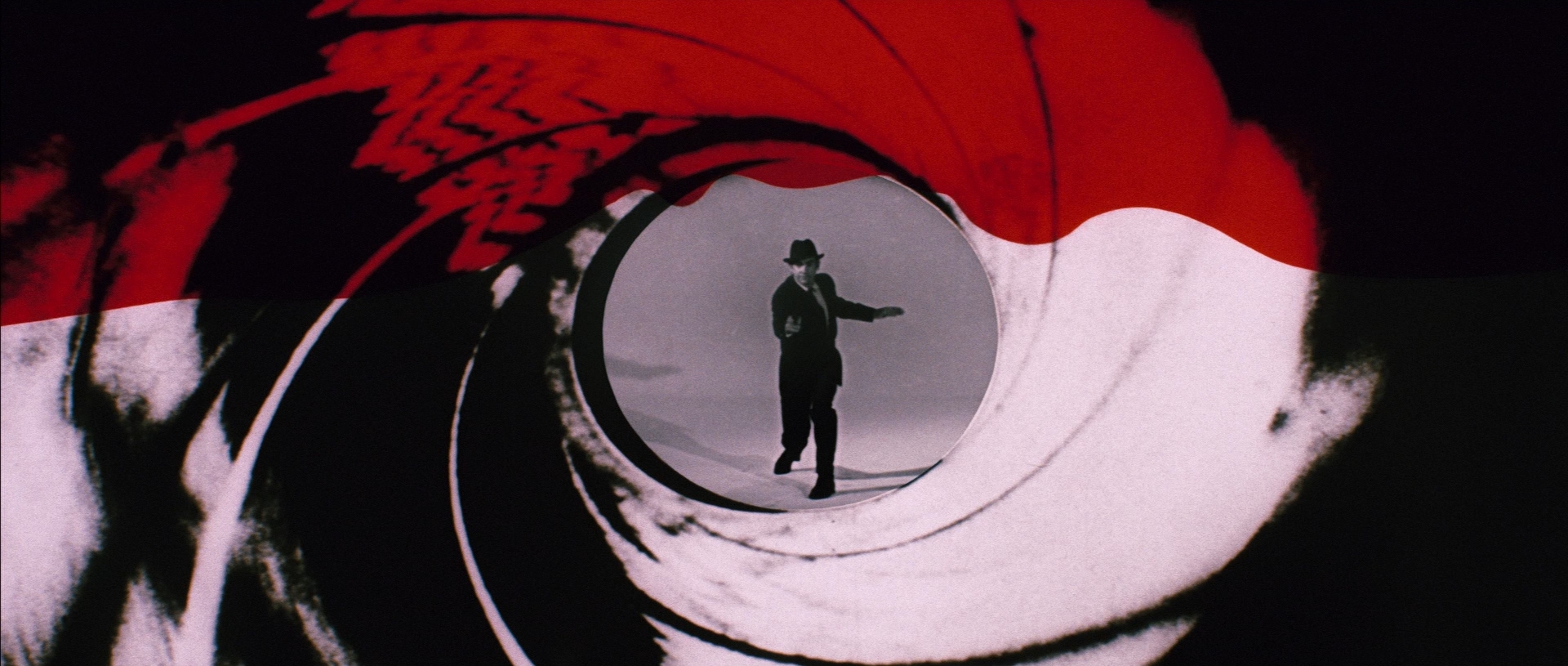
The pre-title sequence is a signature of the James Bond franchise. Even the rule-breaking Daniel Craig films kept to this tradition, sans the gunbarrel  at  beginning for most of the films. While the Bond franchise weren’t the first movies to have pre-title sequences, they’re most closely aligned with the series. So, I want to talk about my favourite pre-title sequences of the franchise. Starting with the one that reintroduced the character of 007 and showed us how he gained his "00" status.


Casino Royale

In my piece late last year about Casino Royale I talked about film's opening sequence, saying 

"it efficiently sets up this version of  Bond as we see him talking calmly to MI6 Section Chief (and traitor) Dryden while cutting to Bond earlier brutally killing Dryden's contact, Fisher, in a bathroom. The black and white cinematography switches between a stark and gritty look in the bathroom to a smoother one in the present. This contrasts the hands on killing of Fisher with one silent bullet assassination of Dryden. Though to be fair, Fisher does come back to life and Bond shoots him as well."

This opening quickly establishes this as a different kind of Bond movie and a different kind of Bond.  This new Bond is a "blunt instrument" but also someone capable of a cleaner kill. I love the use of the different black and white footage, contrasting the more brutal and messy kill of Fisher and the efficiency of the Dryden kill. Craig's performance immediately proves  how he was the perfect choice for this new version of Bond, rough and rugged, but also cool and cold. And incorporating the gunbarrel in to the actual narrative- as Fisher revives and attempts to kill Bond- is such a brilliant reinvention of an old tradition. 


From Russia With Love

The series' first pre-title sequence came with the second film and was the first to "kill off" Bond. We're led to believe the real Bond (Sean Connery) is being stalked by an assassin named Red Grant (Robert Shaw) but it's revealed to be SPECTRE training exercise. It effectively sets up Grant as a threatening and ruthless villain for Bond to face, creating genuine suspense through it's visual storytelling. The atmosphere is perfect and only two movies in showed the franchise was willing to subvert audience expectations. 


Goldeneye

From the opening dam jump to the climatic plane escape, Goldeneye's pre-title sequence made Bond a action hero for the 90s. That dam jump is still one of the most impressive stunts in film history and Pierce Brosnan established himself as great Bond, cool under pressure but with hints of vulnerbility, as when he witnesses the "death" of fellow 00 agent Alec Trevelyan (Sean Bean). It was great to see Bond work with another 00 and his supposed death adds genuine drama to the action. The chemical weapon facility has great production design,  a terrifically cold late cold-war aestethic. It's one of the series most memorable locations.


Skyfall

That opening shot with Bond (Craig) stepping in to frame with the first couple of notes of the Bond theme playing is so good. And it showcases Roger Deakins' gorgeous cinematography right from the start. From there the action becomes what director Sam Mendes calls a "Russian nesting doll,”  going from car chase to bike chase all the way to a fight on a train, where Bond is accidentally shot by Moneypenny (Naomie Harris) when M (Judi Dench) tells her to take the shot at Patrice, the man Bond is fighting. Bond's "death" primes us for a film that will be about rebirth and reinvention, both for Bond and the franchise. The opening also shows us how the relationship between Bond and M will be tested to the limit throughout the film.


Thunderball

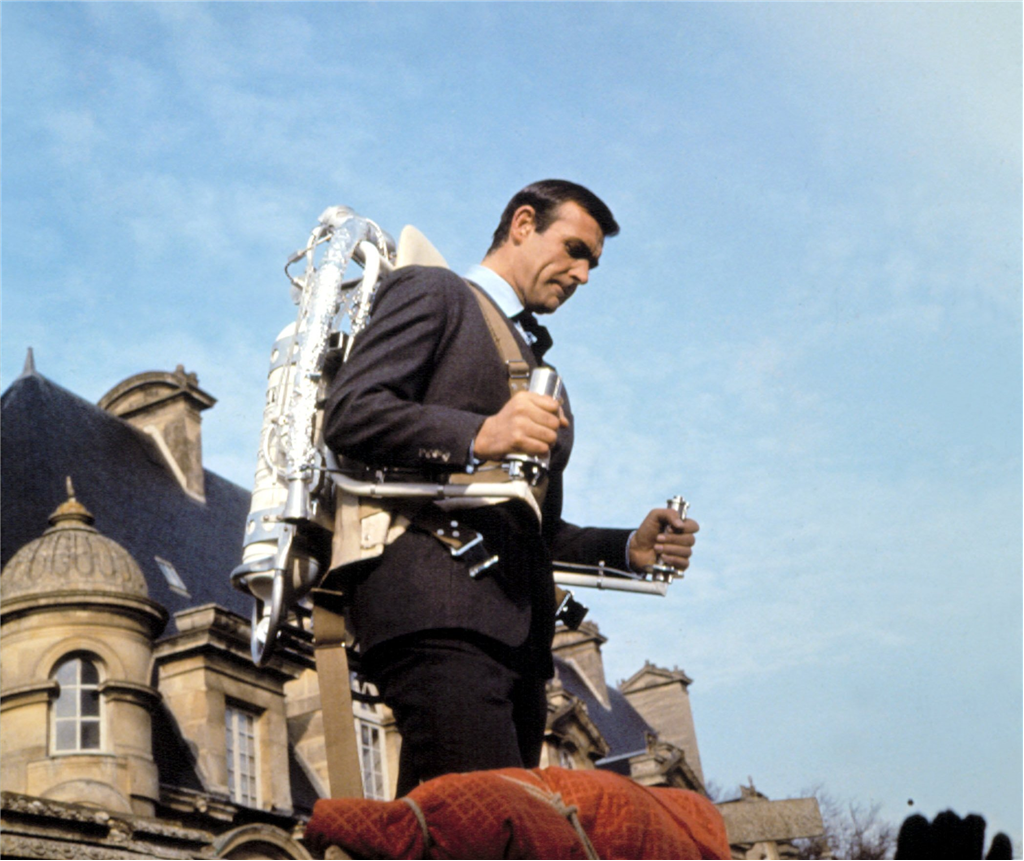
It's the jetback, it's pretty much that. That, and the origin of  Austin Powers punching a woman he thinks is a man. 


Goldfinger

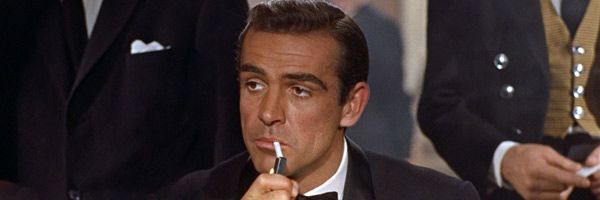
While From Russia With Love had the franchise's first pre-title sequence, Goldfinger solidifies what the pre-title sequence would be going forward. We have the real Bond (Connery) this time, placing explosives in a drug factory then taking off his wetsuit, revealing a white dinner jacket. He then waits for the explosion, smoking casually as they go off. This is all quintessential Bond and helped define the franchise's image. And then there's that "shocking" climax, where Bond throws a lamb in a bathtub, killing his would-be assassin.


No Time To Die

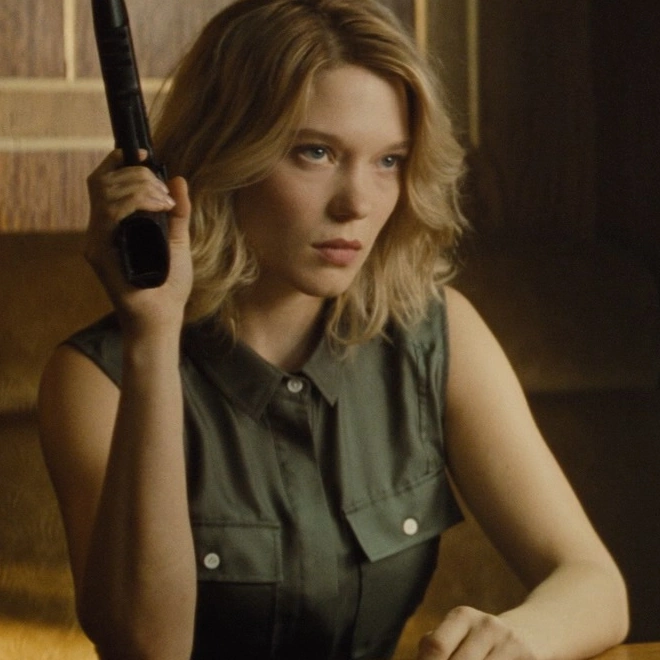
The most recent pre-title sequence is also the series' longest to date. And it's actually two sequences in one, both which see Madeleine Swann (Lea Seydoux) lose someone close to her. The first sees young Madeleine encounter the film's villain Safin (Rami Malek), who kills her mother. The second has Madeleine lose her lover, Bond (Craig), who is tricked in to believing she's betrayed him as Vesper Lynd did. Bond visiting Vesper's grave ties the film back to Casino Royale and Bond's actions after it blows up reveals Bond never really got over her betrayal. This dooms him and Madeleine's relationship, losing 5 years with Madeleine and his daughter. This is the most emotional pre-title sequence, with Bond sending Madeleine away on a train, beautifully and hauntingly segwaying in to Billie Eilish's title song, which reflects Bond's emotional state at the moment.  


Spectre

While Spectre falls apart once it gets to Blofeld's compound, the pre-title sequence is strong, especially with its opening tracking shot which follows Bond in to a hotel and then out on to a balcony. And then there's Bond fighting a bad guy in a helicopter, leading it to flip over. It's a shame the rest of the film's action doesn't live up to this prologue.


The Living Daylights

Timothy Dalton's debut as Bond introduced-through the pre-title sequence-an authentically physical Bond who chases down a Russian assassin who kills two 00s during a training exercise. After the obvious stunt doubles in Roger Moore's A View to a Kill Bond on the roof of a truck as it drives down a cliff is refreshing and thrilling. 


The Spy Who Loved Me

After three smaller scale- and somewhat cheap feeling films (Diamonds Are Forever, Live and Let Die, The Man With the Golden Gun) The Spy Who Loved Me makes it clear right from the beginning that epic Bond is back, having a submarine be hijacked in the first scene. Then during a ski chase Bond (Roger Moore) jumps off a cliff then releases his parachute with the Union Jack, a moment that got cheers when the film had its UK premiere. The chase itself is terrific and ties in to the emotional arc of the film by having Bond kill the lover of Russian agent XXX (Barbara Bach), with whom Bond will team up during the course of the film. 


Moonraker

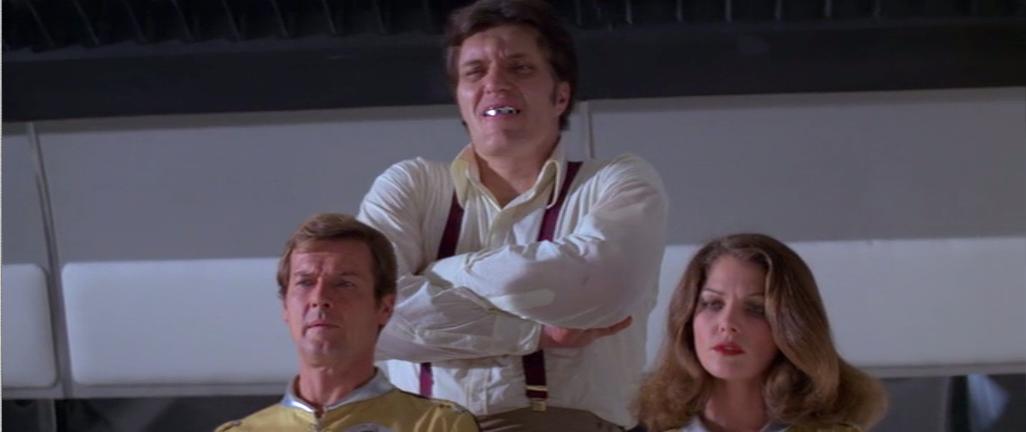
One of the weaker Bond films but one of the better openings. Bond (Moore) is pushed out of a plane without a parachute by Jaws (Richard Kiel, who first appeared in TSWLM). It has great stunt work and I love how it's just a random event in Bond's life that doesn't tie in to the rest of the film, sans Jaws.


For Your Eyes Only

While I don't like the way it unceremoniously dispatches the unnamed villain (who is Blofeld but because of rights issues wasn't able to be called that), Bond (Moore) being stuck in a remote controlled helicopter is a inventive conceit. It was also a nice touch to have Bond visit his wife Tracy's grave since it was Blofeld who had her killed.


So, what are your favourite pre-title sequences and are they from your favourite films? Comment and let me know. 

Wednesday, 27 October 2021

The Future of the James Bond Franchise: Bond 26 and the Next James Bond Actor

Being James Bond movie to stream free ahead of No Time to Die release -  Radio Times

Spoilers for No Time To Die follow


I know, I know. This is becoming a James Bond blog. But I promise this is the last one for a while. With No Time To Die being out for several weeks there's already been talk about the franchise's future, especially in regard to the new film's ending. Before I go further I want to say I'm going to spoil the ending, so if you haven't seen the film yet, turn back now. 


Okay. James Bond is dead. Well, the version played by Daniel Craig is but as they always say, James Bond will return. The Craig films reinvented the idea of the character and the franchise in general, twice actually, with Casino Royale and Skyfall, arguably the two greatest films in the series. Craig went deeper in to the character than previously and we had the most continuity between films, giving this Bond an actual arc throughout the films. We even got to see Bond have a daughter and possibly settle down.  Weirdly, Bond had to die for the franchise to continue. There's no future in a family-man version of Bond. And literally blowing up Bond at the film's end sends a clear message the next film will be a ground-up reimagining of the franchise.

I would argue the most refreshing way to reinvent the franchise is not to reinvent. Make the next Bond film a straightforward Bond adventure, with an established 00, similar to Goldeneye. We don't need to see how he became Bond; the audience knows the character and what he's all about. We can learn about this new version of Bond through his actions and what the new actor brings to the role. 

Which brings us to the question of who will be the next Bond. My pick is Dan Stevens, Cousin Matthew from Downton Abbey and David, Professor Xavier's son, from Legion. I really like Stevens as an actor and I like that he has a sinister kind of quality to him, even playing a villain in The Guest. I think the actor who plays Bond should be someone who can be convincing as a villain, since Bond has a darker quality to him, often verging on being an anti-hero in his actions. 

I do wonder if Craig's supporting cast will be brought back- Ralph Fiennes, Naomie Harris and Ben Whishaw. I like them and it'd be a shame to lose them. Judi Dench was brought over from Pierce Brosnan's movies for Casino Royale and it ended up being a great choice, with a stellar dynamic between her and Craig's Bond which paid off in Skyfall. And I think there's even more you can do with Fiennes as M, especially with a younger Bond. And I'd like to see Whishaw play off Stevens as well. 

People have suggested making the next Bond a period piece and that's an idea I can get behind, especially since it'll get us away from the whole "Is Bond relevant in the modern world" theme we've explored in the last several movies. The question I have is do you set it in a highly stylized version of the 60s or do you make it feel like the authentic period. Will the technology be modern or will it be similar to the technology of the 60s Bond films. Of course, if you set it in the 60s you can't make it  exactly like they made Bond movies in the 60s. The way Sean Connery often treated women doesn't fly and even as far back as Goldeneye the sexism of the franchise was being called out, with Dench's M calling Bond a "sexist misogynist dinosaur, a relic of the cold war." And even Moneypenny used the term "sexual harassment." 

Who should direct? I saw a suggestion of James Wan, who I love and would bring the kind of technical bravado the franchise has been seeking with people like Sam Mendes and Cary Joji Fukunaga. Though after doing a couple of Aquaman movies he may not want to do another franchise. Kathryn Bigelow would be another good choice- eventually a woman will have to direct one of these. I haven't seen Black Widow but that film's director, Cate Shortland is also a viable choice if you wanted a woman to direct. Christopher Nolan is a lot of people's choice but I feel I already know what a Nolan Bond film would look like, largely because he's paid homage to the franchise quite a bit in his Batman films, Inception and his latest film Tenet. 

Of course, you could just bring back Martin Campbell to perform a hat trick after rejuvenating the franchise twice with Goldeneye and Casino Royale. Unfortunately, 2011's Green Lantern hurt his career but he just recently had a movie released, The Protege, starring Maggie Q, Michael Keaton, and Samuel L. Jackson. And 2017's The Foreigner with Jackie Chan and Brosnan was an okay film. 

The one thing I know is whoever will play Bond next will be someone's first Bond and the actor they'll later call their favourite. Bond 26 could be Goldeneye or Casino Royale for a whole new generation, with new fans being brought in and old fans being satisfied as well. As an older fan I hope to have a great time with the next film and actor. So now, I hand it over to you.  Who do you want to play James Bond and what do you want from Bond 26, including the director. Comment and let me know. 

Tuesday, 19 October 2021

All the Time in the World: "No Time To Die"

Daniel Craig talks 'No Time to Die' and leaving James Bond behind: 'I'll  miss it a lot' | EW.com

Major Spoilers Below

"We have all the time in the world" James Bond (Daniel Craig) says to Dr. Madeleine Swann (Lea Seydoux) as they're driving in Italy near the beginning of No Time To Die, Craig's fifth and final Bond film. The line and the instrumental version of Louis Armstrong's song are poignant homages to On Her Majesty's Secret Service but fans also know these words are a sign of bad things to come. It's fitting that Craig's final film would reference On Her Majesty's Secret Service since his first, Casino Royale, was that film's spiritual heir, with both films showing Bond genuinely falling in love and suffering heartbreak  No Time To Die comes full circle, not just back to Casino Royale, but back to first truly emotional James Bond film.  

Just as Bond's murdered wife Tracy loomed over the previous iterations of Bond, the spectre of Eva Green's Vesper Lynd still haunts Craig's Bond. Bond had supposedly put her behind him at Quantum of Solace's conclusion but her impact on his life was still felt in Skyfall, despite the film never mentioning her. Bond was ready to retire to be with her but when he was presumed dead in Skyfall and had an escape from the service there was no one to keep him away when MI6 was attacked. Spectre brought her back to the forefront and introduced Madeleine as a second chance at happiness. The film ended with Bond retiring with Madeleine, which is where No Time To Die picks up. 

Madeleine persuades Bond to visit Vesper's grave but there an attack by Spectre agents occurs, which leads him to believe Madeleine, like Vesper, has betrayed him. Bond puts Madeleine on a train, which leads in to the title sequence and Billie Eilish's theme song. The transition between the pre-titles and the song reflects the transitioning of Bond and Madeleine's relationship,  making it an uncommonly affecting way to end the pre-credits. And the lyrics- "Was it obvious to every one else that I'd fallen for a lie." "Fool me once, fool me twice." portray Bond's emotional state, talking not just about Madeleine but Vesper as well.

I think it was inevitable that the tragic love story between Bond and Vesper could never be replicated but Spectre still didn't do enough to make the Bond and Madeleine relationship as potent as it could've been, which does hurt this film a bit. However, I think the beginning break-up does have real weight. And emotionally the film gets over the finish line due to Craig's performance and this Bond's whole arc across the five films. The film also adds even more emotional depth to Bond by giving him a daughter named Mathilde. 

Yes, Bond has a daughter, though Madeleine denies he's the father. Family, especially the loss of family, is the central theme in No Time To Die and actually has been a theme running throughout the Craig films. In Casino Royale he was a loner but found someone with whom he could have  a family. When Vesper betrayed him it turned him back in unattached bachelor. In Quantum, Camille Montes (Olga Kurylenko), wants revenge for the death of her family. Judi Dench's M was a mother figure to Bond across the first three films and he lost her at Skyfall's climax. In Spectre, Blofeld (Christoph Walz) was Bond's presumed dead foster brother and Madeleine was dealing with the death of her father, Spectre member Mr. White.   

No Time To Die continues the loss of family theme by beginning with a flashback of  Madeleine's mother being killed by assassin Lyutsifer Safin (Rami Malek). Safin is looking for her father because he wants revenge against Spectre for killing his family. Then Madeleine loses the father of her child when Bond pushes her away. And even the main villain plot revolves around family members. The film's Macguffin is  a bio-weapon designed around D.N.A based nanobots, a stolen MI6 project called "Heracles" being overseen by Bond's former boss, M (Ralph Fiennes), which can pass on from one family member to another. Bond is infected by Safin with the nanobots, meaning he'll kill Madeleine and Mathilde if touches them does. Bond stays behind when Safin's base is destroyed by missiles. The loss of family theme payoffs with sacrificing yourself for your family.  

I want to discuss Safin, who is fascinating in certain ways but needed more fleshing out. It feels like the film is doing of couple of different things with him that don't completely mesh. The first is his plot against Spectre using their theft of Heracles against them. The second is the archetypal Bond villain plot of world domination and the third is his emotional connection to Madeleine. He killed her mother but saved her when she was young after she fell under some ice. When he meets her again he tells her saving someone is like taking their life- they belong to you. These three things needed better blending I believe. I do think Malek brings a steady creepiness to the role, a calmness in the midst of a chaos. Malek has said in interviews that Safin views himself as a hero. In the film he tells Bond they both eradicate people to make the world a better place but Bond is redundant because of Heracles' capabilities.

The "Is Bond still relevant" question is still being asked here, as it was in Skyfall and Spectre. Of course, the answer can never be "no" if the series is to continue. And I would argue asking the question is a way to keep the series relevant and displays self-awareness regarding things about the character that do not fly anymore. Phoebe Waller Bridge is one of the film's screenwriters, along with mainstays Robert Wade and Neal Purvis. In an interview she said Bond doesn't have to change,  just the world around him. That, and you have to treat the women characters with respect. No Time To Die shows the changing world and the franchise's updated view of women through the introduction of  two younger agents-  Nomi (Lashana Lynch), who has taken on the "007" moniker, and Bond's C.I.A friend Felix Leiter's (Jeffrey Wright) bubbly but lethal protege Paloma (Ana De Armas), who kicks more ass than Bond in her brief appearance, even gaining a genuine compliment from him. Both these women could take over the movie from Bond. Armas is so good you wish she stuck around longer and that the film was about her and Bond. 

I feel I liked the early parts of this film- especially the stuff with De Armas- the best-which I think are the most fun. The film's director, Cary Joji Fukunaga stages the action with vigour and the right amount of humour when needed.  The film could've been a little tighter but looking back it doesn't feel like it runs over 2 1/2 hours. Editors Tom Cross and Elliot Graham give the film genuine momentum. Visually it doesn't quite rival Skyfall but Fukunaga and cinematographer Linus Sandgren's have made a very handsomely mounted film. Sandgren's cinematography has some great use of colours, like in the Jamaica bar scene between Bond and Felix, the purple sunset after the titles, and a foggy cat-and-mouse sequence later in the film. 

One last thing: We've come a long way since the blunt instrument of Casino Royale, a man alone in the dark ready to kill a man. By the end of No Time To Die, Bond is in the light, ready to sacrifice himself for his family. The family man Bond couldn't be the franchise's future, so he had to die, allowing the next Bond to perhaps be more traditional.  The world gets to change but to paraphrase Led Zeppelin, the Bond remains the same.   

Monday, 4 October 2021

Daniel Craig James Bond Retrospective: "Skyfall" and "Spectre"

Skyfall”: The Bond Market | The New Yorker 

Spoilers for both films below

After the mixed critical reaction to Quantum of Solace the James Bond producers returned 4 years later with the franchise's most acclaimed entry to date- Skyfall. Arriving in time for the series' 50th anniversary it was an appropriately meta-textual film, commenting on the character's place in the 21st century and questioning whether he has a place. Director Sam Mendes- the first Oscar winning director to helm a Bond film- cited Christopher Nolan's The Dark Knight as an influence, another film which questions the hero's place in society.  In an interview Mendes said that with The Dark Knight Nolan was able to make a "huge movie that is thrilling and entertaining and has a lot to say about the world we live in."  Like The Dark Knight, Skyfall asks how we fight a new kind of villain that doesn't play by the old rules. And both films end without a clear-cut victory for the hero or villain. 

Skyfall has grown on me while I've been working on this piece and also listening to Mendes' commentary. It couldn't recapture the experience of seeing Casino Royale but I would argue Skyfall is the best crafted Bond film. Roger Deakins' cinematography really is incredible and Mendes stages both the action and dialogue scenes tremendously. While the film has its story flaws- I think we needed more set-up early in the film for going to Skyfall, Bond's family home, Severine (Berenice Merlohe) feels wasted and is cruelly treated by the film, and Javier Bardem's Raoul Silva goes through a lot just to kill Judi Dench M. But the film is elevated by its craftsmanship, performances and some really good character moments. 

If Craig's first two films were about his Bond becoming the more polished version of the character we know, Skyfall is about what it means to be James Bond, to have committed yourself to being a tool for Her Majesty's government. Eva Green's Vesper Lynd was a chance at a happy and normal life until her betrayal. Quantum ended with Bond leaving that part of himself behind, having received closure for Vesper's betrayal and death. M told him she needed him back, to which he replied he never left. 

This is where Skyfall picks up. several years later, with Bond loyal to M and the service. But the film is largely concerned with Bond having to question that loyalty. In the pre-title sequence he's presumably killed while fighting a mercenary on a top of a train. This is due to M telling MI6 agent Eve Moneypenny (Naomie Harris)  to shoot the mercenary even though Bond could be hit, which he is.  After years of service she still risked Bond to complete the mission,  not trusting Bond to do it himself.

Bond stays "dead" for several months but he returns when MI6 is attacked. Bond was willing to retire in Casino Royale but now he doesn't have anything else but the service. The problem- as the film states quite frequently- is Bond is old and worn out. So is M, who's  being pressured to retire by Gareth Mallory (Ralph Fiennes) due to her losing the list of undercover NATO agents in the pre-title sequence.

The man who has the list is the aforementioned Silva, a former MI6 agent who was given up by M to the Chinese government when he was discovered to be hacking them. This feels like the film is drawing from Goldeneye, where Bond faced off against a former MI6 agent turned bad, with the former agent a dark mirror version of Bond. And like Elektra King in The World is Not Enough Silva has a grudge against M

When Bond and Silva first meet Silva informs Bond he failed the fit for active duty tests but M sent Bond on the mission anyway. Both Bond and Silva are betrayed by M but one will remain loyal while the other seeks revenge. Silva's introductory speech is an analogy for him and Bond: on his grandmother's island, to stop rats from eating the coconuts they were captured and unable to escape began to eat each other  When there were 2 survivors left they were let go but now they only ate rat. "You've changed their nature," he says. M has trapped them together and now they will be forced to metaphorically eat each other.  

 Bond and Silva are also contrasted by Silva being a technological villain whereas Bond is an old-school fists-and-guns hero. The first two films stripped Bond of his gadgets and in this film the new Q (Ben Whishaw) could be Bond's nephew, another reminder that Bond's getting antiquated. The theme of old vs. new comes to a head when Bond takes M to Skyfall,  making the battlefield  a place without technology.  M does end up dying from her wounds, though after Bond kills Silva. The question is did Bond fail?  Bond's old school tactics ended up not preventing his death, so is he irrelevant? The film doesn't give us the easy answer. Instead it ends with Mallory becoming the new M and Bond telling him he's ready to get back to duty. Bond's loyalty isn't just to one woman but to a whole country, even one that thinks it may not need him. And his relevancy is will be further questioned in the next film.   

All posts tagged 'Ernst Stavro Blofeld' | Mega Bears Fan

After Skyfall's financial and critical success it made sense for Mendes to be brought back to direct, the first director to do back-to-back Bond movies since John Glen in the 1980s. Spectre continues Skyfall's thematic arc regarding Bond's relevancy in the modern world. Max Denbigh (Andrew Scott), head of the  merger between MI5 and MI6, wants to disband the "00" section and create the Nine Eyes Committee, an intelligence gathering alliance. He believes there's no use for field agents like Bond. It's later revealed that Denbigh is working with the terrorist organization Spectre and Nine Eyes will be used by Spectre to collect intelligence throughout the world. Spectre is headed by Bond's presumed dead foster brother Franz Oberhauser (Christoph Waltz,) now calling himself Ernst Stavro Blofeld. Spectre was behind Quantum in the first two films and Blofeld- jealous of his father's love for Bond- has been taking his revenge on Bond since Casino Royale. 

Making Blofeld Bond's foster brother- and having a vendetta against Bond- was a misstep. I have no problem with Blofeld operating in the shadows during Casino Royale and Quantum, since they established the whole shadowy organization thing. (I used to assume they would bring Blofeld back) And Blofeld works better when he is a mysterious figure  in the shadows who we don't see, as in the early Sean Connery films. I find it's much less interesting for Blofeld to have done everything just to torture Bond. It's more compelling and sinister if Blofeld had no personal vendetta against Bond, for him to have just been caught up in Blofeld's impersonal machinations, with Blofeld never giving one thought to Bond and Vesper falling for each other.  And retconning Silva in to having been part of Spectre feels odd because his motivation was so personal.

The best way the film ties the previous Craig films together is the inclusion of Mr. White from the first two films, dying of radiation poisoning inflicted on him from Blofeld because his crisis of conscious made him turn against Blofeld. The scene between White and Bond shows how much these two men have changed since they first met. It's surprising to see White so frail and disheveled. And it's clear these two men no longer have any reason to be enemies. White is much more human here and before he kills himself with Bond's gun he asks him to protect his daughter, Dr. Madeleine Swann (Lea Seydoux), from Spectre. 

I do like Seydoux's performance and she and Craig have some good moments together but their relationship isn't developed enough to make the love story aspect of this film completely work, especially compared to the one in Casino Royale. Like Vesper, Madeleine comes in to the film later but her introduction lacks the impact of Vesper's, which changed that whole film's dynamic. The pacing of the film is another issue; it feels really drawn out . Though the over-extended running time makes this feel very much like like a Bond film. except I think it needed a lighter touch. It's not a humourless film but it lacks a certain pop.  

Despite my criticisms I do like quite a bit of the film until until we get to Blofeld's compound. It's pre-title sequence is the best since Casino Royale, starting with a tracking shot that follows Bond through the Day of the Dead festival in to a hotel then out on its ledge. Then there's the fight inside a helicopter, with it turning upside down. Though visually, the Spectre meeting is the film's most visually striking sequence, compliments of Hoyte Van Hoytema's cinematography. 

And Craig gives his most Bondian performance As with Skyfall he's grown so comfortable in the role that he just kind of is Bond.  Watching the films close together it's been cool to see his Bond evolve from the rough around the edges assassin to the more polished secret agent we know and love. We get see what it took for him to get to this place and Vesper is never far from my thoughts when I see Craig's Bond.

I do like the idea of Bond having re-confront Vesper's legacy after supposedly putting it behind him. I believe Madeleine is supposed to be Bond's second chance at happiness after Vesper but I don't think film goes deep enough  in to his thematic territory. The film doesn't commit enough to what it's doing, making it both the most ambitious of the Craig films but also the least interesting conceptually.  And like Skyfall it doesn't really answer the Bond relevancy question. Though I like how Bond sparing Blofeld at the end calls back to what M told Denbigh about a licence to kill also being a licence not to kill. The human factor is lost when killing at a distance via a drone. The decision to kill or not is much more difficult up close. 

I'm glad I re-watched the Craig films leading up to No Time To Die. I've enjoyed seeing Craig's performance evolve and think he's been a stellar Bond. Each performance has been different and I'm interested in how he plays it in his last film. This may be the Bond I care the most about on an emotional level and I've heard No Time To Die is a pretty emotional send-off. It'll be really poignant seeing the guy who's played Bond since I was in high school leave the role and I'll always appreciate what he gave me with Casino Royale. So, until then, what are your thoughts on Craig's tenure as Bond? What's your ranking? Comment and let me know. 

Wednesday, 29 September 2021

Daniel Craig Bond Retrospective: "Casino Royale" and "Quantum of Solace"

Casino Royale Pre Title Sequence Color Photo: JamesBond

Spoilers for the films below

With the Daniel Craig era of the James Bond franchise coming to a close with No Time to Die I wanted to look back his at tenure, starting with my favourite, Casino Royale. This movie was a big deal for 17 year old Andrew. And it's incredible to think Craig has been playing Bond since I was still in high school. It was 2005 when he was first announced to be playing Bond and now it's 2021. Crazy. I fell in love with the tragic love story between Bond and Vesper Lynd (Eva Green), the reinvention of the gun barrel, set at the end of the series' first black and white sequence, was so cool. And Craig's performance made him my favourite Bond. While I often say Timothy Dalton is my favourite Bond, re-watching Casino Royale and Quantum of Solace back-to-back I think Craig may be my favourite, though it's always hard to choose. And while I can't say I love this film in exactly the same way I used to, I still feel some of that old love. It's a very nostalgic movie for me.

While Pierce Brosnan's final Bond film Die Another Day was a box office hit it was seen as too fantastical with its invisible car, ice palace and other such things. The decision was made to not only recast but to completely reboot the franchise, taking this opportunity to film Bond creator's Ian Fleming first Bond novel, Casino Royale. When Albert R. Broccoli was first making the Bond films, producer Charles K. Feldman had the film rights to the book which he made in to the 1967 spoof version. Broccoli tried to buy the rights from Feldman but to no avail. When Sony bought Columbia 1999 they got the rights and when they able to distribute the Bond movies, Broccoli's EON Productions was finally able to do the story proper. And the film is actually one of the most faithful Bond adaptations, retaining the basic plot of Fleming's novel though adding a lot more action. 

When Craig was chosen there was plenty of controversy but  the reviews for the film and Craig were maybe the best the franchise ever received until Skyfall. And director Martin Campbell, who introduced Pierce Brosnan in Goldeneye, had for the second time rejuvenated the franchise. Casino Royale was coming at a time where I believe audiences were open to more serious takes on characters like Batman and Bond. I feel people now want something a little lighter, that they're tired of the darker tome. But the film, I'd argue, has the right balance between seriousness and humor. There's a real sense of fun in the reinvention of this icon.

Casino Royale is very much a character study of Bond. It's also an origin story that's not an origin at the same time. Instead of starting with Bond getting recruited by MI6 from the navy or showing his schoolboy days the pre-title sequences jumps right in to Bond carrying out the two kills which will earn him his "00" status. Another film would've taken more time getting to Bond's first two kills but Casino Royale retains an element of mystery regarding Bond's past. The next time we see him he's chasing down a bombmaker in the film's first and stand-out set-piece. While he's a more rough-around-the-edges character, a "blunt instrument" as Judi Dench's M calls him, he's pretty much Bond right from the start- quipping, womanizing, gambling. The only  exception is him not giving a damn whether his martini is shaken or stirred. 

Coming back to the pre-title sequence, it efficiently sets up this version of  Bond as we see him talking calmly to MI6 Section Chief (and traitor) Dryden while cutting to Bond earlier brutally killing Dryden's contact, Fisher, in a bathroom. The black and white cinematography switches between a stark and gritty look in the bathroom to a smoother one in the present. This contrasts the hands on killing of Fisher with one silent bullet assassination of Dryden. Though to be fair, Fisher does come back to life and Bond shoots him as well. 

It takes almost an hour for Vesper to shows up, which makes her introduction more impactful. We've spent nearly an hour with Bond, seeing how he operates, free of emotional attachment. And then he meets the woman he doesn't know is going to change his life. He's never met a woman like Vesper and it changes the dynamic of what the film has been so far. Bond has been a loner, now he's working with someone who's going to challenge him and his ego. The dialogue between Bond and Vesper is the best we've ever had between Bond and his leading lady. It's snappy but also shows them probing each other, challenging each other's beliefs 

Their mission involves making sure terrorist financier Le Chiffre (Mads Mikkelsen) doesn't win the high stakes poker game at Casino Royale. Bond foiled Le Chiffre's plan to bankrupt the airline industry, which lost Le Chiffre the money of his clients. If Le Chiffre loses MI6 can offer him protection in return for information. The gambling isn't the most exciting part of this movie but the script by Neal Purvis, Robert Wade and Paul Haggis adds enough business around the game to up the tension and give us some nice character moments, including Bond being poisoned and Vesper having to re-start his heart. The scene where Vesper is sitting in the shower after Bond has killed several of Le Chiffre's who has come looking for their money. is one the franchise's most genuinely tender scenes as well. 

Just as how the film is simultaneously an origin story and not, Le Chiffre is a traditional Bond villain but also not. He has the physical disfigurement that's a trademark of several Bond villains, the sinister presence, and for the first hour Bond is a trail which leads to him. But Bond stops Le Chiffre's plan before the film has hit the hour mark. Le Chiffre becomes desperate man attempting to pay back his clients, rather than the villain with a world domination plot. The film's true villains are in the shadows, who we'll learn in the next film are the terrorist organization Quantum, who have kidnapped Vesper's boyfriend to get her to help them. And this makes Bond part of their plot as well, since it's him winning the game which gets them their money.  

Bond and Le Chiffre and just both expendable pawns. When Le Chiffre is torturing Bond, he tells him that even if he kills Bond MI6 will still help him. And Le Chiffre is killed because Quantum can't trust him. And this is before the final act. This further exemplifies how Le Chiffre is not the big bad of the film. And the larger threat looms over the happiness Bond and Vesper find with each other. Like On Her Majesty's Secret Service we see Bond given an opportunity for a different kind of life before it's tragically snatched away. But it's inevitable, if not for Bond than for the audience, who know Bond can't quit. There wouldn't be a franchise if he did. But there is odd sense of triumph to the film's final scene, with Bond standing over Quantum member Mr. White (Jesper Christensen), saying the iconic "Bond. James Bond" It's letting us know Bond's not going to be brought down by tragedy.

 Review: Quantum of Solace: Bad Title, Good Bond | WIRED

But Bond still has to deal with Vesper's betrayal and his need for vengeance in the next film, Quantum of Solace, a film that was one of the victims of the 2007-2008 writer's strike and displays it's lack of a polished story pretty clearly. I guess it wasn't originally supposed to be a direct sequel but became that later on. Stylistically the film does feel different from Casino Royale- largely I think because Campbell didn't return and Marc Forster ended up directing-and it's plot involving a coup in Bolivia and control over its water supply feels like it could've been in a standalone movie. 

Quantum is best viewed it back-to-back with its predecessor,  since it takes place right after Casino Royale ends, a first for the franchise.  Watching it for this retrospective, I didn't like it quite as much as I had before. It's a little thin and underdeveloped, and doesn't get to have to a true built from the ground up story. And it feels rushed compared to the more thought out prequel. The film has its moments: I like the bits of humour, stylistic flourishes and Craig's performance but it can't help but feel like a disappointment as a sequel to what was a breath of fresh for the franchise.

It was a bold choice to shove us right back in to the story of Casino Royale but I wonder if the story should've been placed some time after, allowing more space to build up its story rather than forgoing a traditional first act. Casino Royale took  time with its story but Quantum of Solace, at only 106 minutes with credits- including the pre-title sequence- is the shortest Bond film and as I said, it's kind of rushed. Bond usually has a more leisurely quality as we follow Bond from one exotic location to the next. But the shorter running time does befit what's an essentially a revenge story. If Craig is the 21st Century's Timothy Dalton then this is his Licence to Kill, a harder edged Bond film where Bond is caught between his emotions and his duty. 

I said the previous film was an origin story that wasn't and I'd argue Quantum is a revenge story that's not quite a revenge story. The film's main villain Dominic Greene (Mathau Almaric) is never established as having been involved with Vesper's kidnapped boyfriend who was being used to blackmail her. The whole point is Bond doesn't know where to direct his anger. As M tells him, he's so full of "inconsolable rage" he doesn't care who he hurts. It turns out Vesper's boyfriend was himself was a Quantum member and his kidnapping was staged to get her to help them. Bond confronts the boyfriend at the end, deciding to spare him and allow MI6 to arrest him. So, it's kind of an anti-revenge story in a way. And see Bond learn restrain, becoming more like the Bond we know other films. 

The revenge/character stuff is set against the backdrop of geopolitical plot concerning Quantum helping General Medrano's (Joaquin Cosio) coup against the government in exchange for control over Bolivia's water supply, with the C.I.A turning a blind eye. The film is obviously going for a plot reflecting real world geo-politics but there's not enough connective issue between Bond's inner turmoil and the main villain plot. There needed a clear turning point where begins to care about the bigger picture. One thing I do appreciate about the film's plot is how it incorporates Bond's C.I.A ally Felix Leiter (Jeffrey Wright), giving Felix a little moral dilemma.  Wright as Felix is great casting and wish he was in these films more. 

What's always remarked about the film is its frantic editing. The editing is very messy in this film but I can see how they were maybe going for something impressionistic. The opera shootout id actually quite good, with the editing cutting between the action on stage with the gunfight. It's one of the most "arty" things ever put in a Bond movie. And I admire the build up to the opening car chase. We're shown glimpses Bond's eyes, guns, and the car in shadows. The music builds and then we're suddenly thrust in to the chase Forster is a more "art house" kind of director than journeyman Campbell so it makes sense while we have more of these stylistic displays.

The film is at its best in its quieter character moments than in its action. The scenes between Rene Mathis (Giancarlo Giannini), who Bond thought had betrayed him in the previous film, have a real warmth to them. Mathis' death features both Bond being comforting and cruel in quick succession. He holds Mathis while he's dying but then throws in the garbage. Bond's relationship with Bolivian Secret Service agent Camille Montes (Olga Kurylenko) also has a surprising poignancy to it. Their relationship never becomes sexual. Instead, the film focuses on how they're both broken people looking for closure. Camille wants to kill Medrano for him killing her family. Bond doesn't attempt to lecture her about revenge. He even apologizes for screwing up her shot at Medrano earlier in the film. These are nice character details which make Craig's Bond maybe the most nuanced incarnation of the character. 

Casino Royale began with Bond killing two men and Quantum ends with him sparing one. It's a nice bookend for the duology. M tells Bond she needs him back, to which Bond replies he never left. Bond then drops Vesper's necklace in the snow. This ending actually segues nicely in to Skyfall, where Bond has committed himself to M16 for years, a cog in a machine. And he begins to question his relationship with M and what it means. But that's for next time. See you then.


Wednesday, 1 May 2019

Some musings on "Bond 25"


I'll always have a soft spot for the James Bond franchise. Along with Star Wars, it's one of the big film series I grew up with and watched constantly. And while it's become popular to put the Mission: Impossible franchise above it, I'm honestly more excited for Bond 25- which announced its cast and plot, but no title last Thursday- than I am the next two M:I films. I think this is due to Bond being M.I.A for a while. The last Bond film, Spectre, came out in November 2015. It's the only Bond film I've only seen once and I do want to revisit it to clarify my feelings. I thought it had a good build-up but it made the mistake of making Christoph Waltz's version of Ernst Stavro Blofeld intimately connected to Bond. Instead of just being the head of Spectre, he was Bond's Foster brother and  being responsible for the tragedies which had bad befallen Bond. I had no problem with Spectre being behind the events of Casino Royale and Quantum of Solace but giving Blofeld a vendetta against Bond didn't feel like a natural continuation of those films, especially when Javier Bardem's character, Raoul Silva, from Skyfall was revealed to be part of Spectre as well. And like Star Trek Into Darkness, Spectre relied too much on Blofeld's identity being a twist solely for the audience and not Bond. Just as the name "Khan" wouldn't mean anything to Kirk and Spock, the name Blofeld means nothing to Bond.

If Spectre was Star Trek Into Darkness then maybe Bond 25 will be Star Trek Beyond. a more streamlined and simple film that lets Bond be Bond. Without a trailer and just some basic plot details, it's hard to know. We do know Jeffrey Wright will be back as Bond's C.I.A ally Felix Leiter, who will be getting Bond out of retirement for a mission involving a kidnapped scientist.. It's nice that Felix is returning to the franchise. He was gone completely from Pierce Brosnan's tenure and was absent from Spectre and Skyfall. I'd like to see a Bond/Felix team-up film.Felix helped out Bond frequently in the pre-Craig films but he actor playing Felix always changed and was mostly a supporting character. Wright and Craig already have a pre-established relationship as the characters so putting them together with Felix being more at the forefront would be a good pay-off to Craig's run. 


Image result for madeline swann

Lea Seydoux is also set to return as Dr. Madeline Swann from Spectre. Madeline would be the first main Bond woman to return. The late Eunice Gayson played the supporting Bond woman Sylvia Trench in Dr. No and From Russia With Love. Maude Adams played Francisco Scaramanga's (Christopher Lee) lover in The Man With the Golden Gun and then main Bond woman Octopussy nearly a decade later. We know that Bond drove off with her at the end of Spectre but it's not confirmed if they're going to be together in Bond 25. I hope she's not killed off early to leave room for him to shack up with Ana De Armas' character. This Bond has already dealt with the death of Vesper Lynd (Eva Green) and Judi Dench's M. I think it's time for Craig's Bond to have a little bit more fun. 

Rami Malek will be the third Oscar-winning actor in a row to play a Bond villain, and the first to win Best Actor (Bardem and Waltz, along with A View to a Kill's Christopher Walken, all won Best Supporting Actor.) I think Malek has the right look (those eyes) and vibe to make a good Bond villain. Ralph Fiennes, Naomie Harris and Ben Whishaw are all set to reprise their roles as M, Moneypenny and Q, respectively. Skyfall and Spectre gave Moneypenny a bigger part to play in the plot than previous Bond films and may be the case here. I do love Whishaw's take on the Q character though no one will ever replace Desmond Llewelyn. And I do miss  Dench as M.


Image result for cary joji fukunaga movies and tv shows


Danny Boyle was set to direct but bowed out due to the oft cited creative differences. While I was disappointed Boyle left the project I feel Cary Joji Fukunga is an exciting choice for director. Fukunga  directed the first season of True Detective and the recent mini-series Maniac starring Emma Stone and Jonah Hill, along with the films Jane Eyre and Beasts of No Nation. He's adaptable to different genres. and also a skilled technical director so I think the franchise is in good hands. Cinematographer Linus Sandgren, who won the Oscar for La La Land, will be photographing the film. The Craig Bond films have been  beautiful looking films, and that tradition will no doubt continue.

As the world changes, so must Bond's place in it and the way in which the character is approached. Producer Barbara Broccoli has already stated the #MeToo movement will have an influence on the film. I also wonder if there'll be any parallels to Brexit given its controversy and topicality; plus, the Craig Bond films have addressed political themes before.

So, what are your thoughts on Bond 25? What do you think the title will be and in which direction do you think it'll take the franchise. Comment below and let me know.

Sunday, 8 November 2015

Shaken, Stirred, and Ranked: My Personal Ranking of the James Bond Films


I don't think there's a film series that I have a more nostalgic affection for than the James Bond franchise. It's been a series that has been apart of my life for so long it's weird there was a time when I hadn't seen them all multiple times- yes even the bad ones. For me, they define escapist entertainment. In a time before constant superhero films- these where the films that dominated that market for fantastical thrills and comfortable formula. These rankings are highly personal. This isn't an attempt to rank them objectively- though matters of quality to play a part. When ranking the films I'm going more by preference. This isn't a concrete ranking. If I went back and re-watched some films, they rank higher. And as long as they keep making Bond films the list will always change. Having just seen Spectre-which I will also include in these rankings- it makes things a little more difficult. So, with that being said, here are my rankings. Warning: spoilers below.


24. Diamonds are Forever

After the mixed critical and audience reception towards On Her Majesty's Secret Service- the first film in the franchise not to star Sean Connery in the role of Bond (George Lazenby took over leading man duties then left the role)- the Bond producers paid Connery a then record 1.25 million to reprise the role. A big reason I don't like the film is it's a terrible follow-up to OHMSSDiamonds are Forever forgoes what made OHMSS so good- the epic sweep, the fidelity to Bond creator Ian Fleming's work, and the film's emotional core- and trades it in for a production that feels very cheap in comparison to previous Bond films, an inconsistent Bond Girl (Jill St. John as Tiffany Case) and a camp tone that would define subsequent films in the franchise. Diamonds are Forever is a Roger Moore Bond film without Roger Moore.

With the exception of the pre-title sequence- in which Bond hunts down Ernst Stavro Blofeld (Charles Gray) the film essentially ignores the events of the previous film- both emotionally and thematically. Bond's wife Tracy was murdered at the end of OHMSS but you never feel Connery is carrying the weight of losing a loved one. As others as pointed out, the film plays out more like a follow up to the last Connery Bond film, You Only Live Twice. And even viewing it on its own terms Diamonds are Forever still isn't that good of a film- Bond or otherwise. However it does have some bright spots: the Las Vegas car chase is one of the series' better set-pieces, Natalie Wood's sister Lana Wood is charming as Plenty O'Toole, and Jimmy Dean as a Howard Hughes inspired businessman named Willard Whyte is humourous. 

But I think the most memorable aspect of the entire film is probably Bruce Glover and Putter Smith as the not so ambiguously (and yes, pretty offensive) gay hitman duo, Mr. Wint and Mr. Kidd., respectively. Also, Shirley Bassey's theme song is one of the series' best (it's in my top ten):  Davies in the Dark: My Top Ten James Bond Themes.


23. Live and Let Die

In the early 70s the Bond producers struggled with how to bring the Bond series in to the 70s. Live and Let Die, the first with Roger Moore in the role, was their attempt to make a Bond film in the style of the Blaxploitation films of the time- which included films such as Shaft, Foxy Brown, and Superfly. This attempt at relevance doesn't click and the racist overtones regarding the portrayal of African Americans (almost every Black person in this film is a villain) makes it one of the more troubling Bond films.

The film also introduces the most ill-advised character in the entire franchise- Sheriff J.W. Pepper (Clifton James). Nothing against James as an actor or a person- he commits to the role- it's just that Pepper such an unnecessary character, and one more obnoxious than funny.

Yaphet Kotto adds some class to the film as the villain Kanaga/Mr. Big, and Geoffrey Holder as Baron Samedi is possibly the scariest Bond villain of all. This is certainly the creepiest of all the Bond films- though I feel the supernatural isn't a natural fit for the franchise. The Bond films are often fantasies but other than here they avoid anything resembling magic or voodoo. Jane Seymour makes her film debut as Solitare, a psychic who works for Kanaga. Seymour is lovely but Solitaire feels like a character who's only purpose is to be manipulated by Kanaga and then Bond.

Moore makes a fine debut- giving a distinctly different performance than Connery. Moore was more of the English Gentleman type as opposed to Connery's more rugged approach. It was the beginning of the longest run any actor had as the character- 12 years and seven films.


22. Octopussy 

Moore's penultimate outing as Bond- Octopussy- has one of the best extended climaxes in the series history- the train sequence, nuclear bomb diffusing, raid on villain's, and fight on the wing of the plane. It also features a really good pre-title sequence. But the film is stuck between seriousness and silliness-  there's a Tarzan yell while Bond swings from a vine, and putting Bond in a clown costume.

Maud Adams makes her second appearance in a Bond film as the titular character (the only time a Bond film was named after it's Bond Women). She played the villain's lover in The Man With Golden Gun, making this the only time an actress played two separate Bond Women. Adams is one of the more mature Bond Women, playing someone who's more morally complicated than previous women in the franchise.


21. The Man With the Golden Gun

It's funny that Guy Hamilton made Goldfinger- often considered of the best if not the best Bond film- then followed it up with the considerably weaker films- Diamonds Are Forever, Live and Let Die, and his last film for the series- The Man With The Golden Gun. Hamilton is akin to the Joel Schumacher of the Bond franchise- a director likely capable of doing more serious fare- but boxed in by the whims of the studio to craft a much campier film.

The Man With The Golden Gun is an "in between" film for me. Enjoyable in several ways but brought down by a useless Bond Woman, the return of Sheriff J.W. Pepper- whose racist bigotry would launch a thousand think-pieces if he appeared in a film today- and one of the most off-putting moments for Bond in the franchise.

It also squanders its villain, Francisco Scararmanga (Christopher Lee) and a intriguing premise- what if Bond met an assassin that could be the death of him? It doesn't delve deep enough in to the parallels between Bond and Scararmanga- and Scararmanga wanting sell a device called the solex agitator-  which can convert the sun's ray in to a weapon- feels tagged so there can be a Macguffin. Lee is great, however, committing to the character so well you wish he was in a better film.
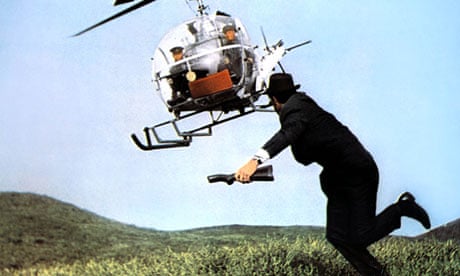
The dojo escape and car chase are fun set-pieces. The corks-screw car jump is one of the best stunts of the series but it's undermined by a comedy whistle sound.  And Scararmanga's demise feels ant-climatic- though it is a good pay-off to the Bond mannequin in the pre-title sequence

Britt Ekland is painfully gorgeous as Mary Goodnight- a MI6 operative stationed in Hong Kong. Ekland lends charm to the role as well but Goodnight may be the most useless Bond Women in the series history- causing more trouble than actually helping.

The scene in which Bond psychically assaults Scararmanga's lover Andrea Anders (Maud Adams) doesn't fit with Moore's portrayal. It's too mean and it makes Bond un-likable. Connery could arguably get away with that kind of scene but with Moore it's just off-putting. 


20.  A View to a Kill

Moore's last film was the first of his I ever saw. This swan song isn't great but it does have redeeming qualities. Chief among them is Christopher Walken (the first Oscar winner to appear in a Bond film) as businessman Max Zorin. Zorin  is one of the more psychologically interesting villains in the series- the result of Nazi experiments on pregnant women by Dr. Hans Glueb/Dr. Carl Mortner (Willoughby Gray), whom became a father figure to Zorin. Zorin now wants to destroy Silicon Valley so he can corner the market on microchips and Walken's quality as an actor makes you believe in Zorin's psychopathy. I wish there had been a little more done with the character but Walken elevates the film and the role.

The Eiffel Tower pursuit, fire truck chase, and blimp fight are all stellar set pieces- even with the obvious Moore stunt doubles. The scenes between Bond and Sir Godfrey Tibbett (Patrick Macnee, who played John Steed on the TV series The Avengers, along with Bond Women Honor Blackman and Dianna Rigg) are so fun you'd like the whole film to be a buddy comedy with Moore and Macnee. Sadly, Tibbett is killed off rather early in a scene almost worthy of being called Hitchcockian.

The huge weak spot is Tanya Roberts as Stacy Sutton. Roberts gets a few cute moments but she's one of the weakest Bond Women. Grace Jones and Zorin's henchwoman and lover Mayday is more interesting- when she realizes Zorin has betrayed her and she sides with Bond, it has some actual dramatic heft. And there's a fun little interlude when Bond runs in to a former lover, Russian spy Pola Ivanova (Fiona Fullerton). It's neat to meet a Bond Women from a previously unseen adventure.

This was also the final film for the definitive Miss Moneypenny- Lois Maxwell.  


19. The World is Not Enough 

The World Is Not Enough was the first Bond film I saw in theatres and it was a pretty big deal to see one of these on the big screen. It's difficult to rank this one since while I feel it's one of the more underrated Bond films, it may be my least enjoyed of the Pierce Brosnan era films. The World Is Not Enough has some ambition in regards to subverting Bond formula expectations and it has authentic human drama- but it undermines itself by falling back in to formula and not following through with its themes.

Elektra King (Sophie Marceau) has emotional depth not often seen with Bond villains. She is the daughter of oil tycoon Sir Robert King (David Calder) and was kidnapped years earlier by the terrorist Renard (Robert Carlyle) and held for ransom. M (Judi Dench) persuades King not to pay the ransom. MI6 agent 009 was sent to rescue Elektra and kill Renard. 009 put a bullet in his head. It didn't kill Renard but it's travelling through his brain, killing off his senses and rendering him immune to pain. During her kidnapping, Elektra made Renard her ally. They hatch a plan that results in King's murder. But the major part of the plan is to destroy Istanbul, making Elektra's pipeline more valuable.

Elektra may be the only Bond villain whom you can call tragic. If this was a Daniel Craig film, it would've ended with Bond killing Elektra but it continue in the typical Bond fashion and pretty much forgets Bond and Elektra's relationship. Denise Richards isn't very good as nuclear physicist Dr. Christmas Jones and she's only here as a fall-back girl for Bond. The film would've ended with Bond being haunted over Elektra's death. Instead, the final line is a Moore-worthy Christmas joke. Brosnan- in his third film as Bond- handles the dramatic parts really well. This is arguably his best performance as the character- though Goldeneye is the better film.

Marceau plays Elektra as both victim and villain, making her one of the best Bond Women and villain of recent times. Carlyle is under-served by the script, not given enough to completely flesh out Renard and his psychology. Michael Apted- director of the Up series and Coal Miner's Daughter- may be the most high-brow director to ever helm a Bond film. His direction is elegant and he makes the film consistent with the established tone of the previous Brosnan films. The World is Not Enough ranks somewhat low here but it is an admirable attempt and shaking up the franchise.


18. Die Another Day

Die Another Day was the first Bond film of the 21st Century but it moves counter-intuitive to the direction of other modern spy films such as the Bourne series and the Craig films- Aside from Bond being tortured in North Korea, the film isn't attempting a more grounded approach. Instead, we have an invisible car, a space laser, and a North Korea Colonel transforming himself in to a British billionaire.

Die Another Day is a fascinatingly isolated film in the Bond series. It's very different in tone and style than the previous Brosnan Bond films and the next film in the franchise was the reboot, Casino Royale. Even if Brosnan had continued in the role his next probably would been toned down substantially- the Bond usually get back to basics after going too over the top. The film often feels like an attempt at an updated version of a Moore era film.

Quality-wise Die Another Day is the worst of the Brosnan era but I admit I actually enjoy the film. There's a certain kind of ambition in throwing the most bizarre things at the screen and playing it very matter-of-factly.
Halle Berry as NSA agent Jinx is clearly the series attempt at another Wai Lin (Michelle Yeoh) from Tomorrow Never Dies but I feel Berry kind of overdoes her performance. Toby Stephens as Gustav Graves is fine but it never feels Graves and Colonel Moon (Will Yun Lee) are the same guy, though I guess that's intentional. At this point Brosnan had become another Roger Moore- and I mean that in the best way possible. Brosnan is so comfortable in the role by now he could've played the role a couple more times- and aged more gracefully than Moore did- without a problem. Though I am glad we got Casino Royale. 


17. Quantum of Solace

Daniel Craig is often seem as the heir apparent to Timothy Dalton's no nonsense performances as Bond. If Casino Royale was Craig's The Living Daylights (Dalton's first)- a grounded but still Bond-flavoured and romantic adventure- than Quantum of Solace is his Licence to Kill- a brutal and streamlined affair where Bond's mission is personal. As opposed to Licence to Kill however, in Quantum of Solace- getting revenge isn't as straightforward for Bond. Vesper Lynd (Eva Green) was the one who betrayed him and killed herself- so the question is- on whom does Bond take out his pain and anger. This makes Quantum of Solace a more complicated "revenge" film than others of its kind.
 
The film was a victim of the writer's strike of 2007-08. Craig and director Marc Forster had to rewrite scenes and make decisions on their own, which is why the plot and story can often seem thin and underdeveloped. The film also struggles in being both a direct follow-up to Casino Royale (the first time this has happened in the series) and being its own film. Stylistically Quantum of Solace has a different feel than Casino Royale. Ideally, Martin Campbell (that film's director) should have returned, making the two films feel more like one long story.

Even with its problems Quantum of Solace is one Bond film which has grown on me over the years. The shortest Bond film on record, it's a solid little thriller. Camille (Olga Kurylenko) doesn't match Vesper but I like how she has her own objective and doesn't end the film by sleeping with Bond. Her and Bond go their separate ways, which feels way more natural as a conclusion to their story. Dominic Greene (Mathau Almaric) isn't all an all-time great villain but Almaric gives the character a dose of personality. And Craig brings humanity and brutality to the role of Bond.  


16. Moonraker

Moonraker is often considered the worst Bond film but honestly I think this is one Moore's best films. The success of Star Wars in 1977 made the producers cash in on the film's popularity but I feel Moonraker owes more to Stanley Kubrick's 2001: A Space Odyssey, as well the previous film in the franchise, The Spy Who Loved Me. That film's director, Lewis Gilbert, returns for his last Bond film, concluding a trilogy of sorts that began with You Only Live Twice.

There's a lot of visual beauty in this film. The scenes in space are genuinely haunting. Hugo Drax's (Michael Lonsdale, possibly the driest Bond villain) to essentially murder everyone on Earth and re-populate it with those he considers perfect specimens of humanity feels genuinely apocalyptic and practically mythic. And I love Drax's line about these people's offspring: From their first day on Earth they will be able to look up and know that there is law and order in the heavens."

The campy elements of the film are what people remember but the film does have a dark edge to it. The scene where Drax's personal pilot Corrine (Corrinne Clery) is chased through the forest by Drax's dogs after her betrayal is worthy of a horror film- visually poetic and terrifying. There's also the sequence in which Bond is almost killed by a G-force machine. It's  rare moments in the series where we feel Bond could actually be killed. After Bond sabotages the machine with a wrist-gun, Bond stumbles out. It's one of Moore's best acting moments in his tenure as Bond.

Holly Goodhead (Lois Childs)  is a competent and capable Bond Women, who doesn't take any of Bond's shit. Jaws (Richard Kiel) makes his second and final appearance in the series, the only henchman to appear more than once. This is the one where Jaws falls in love. Yes, it's silly but I still find it kind of sweet. Also of not  is Jaws and Dolly (Blanche Ravalec)'s relationship is communicated almost completely visually. And Jaws teaming up with Bond makes sense since he realizes Drax will eliminate him and Dolly for not measuring up to his standards.            

The film has several outstanding set-pieces, including the pre-title sequence where Bond is pushed out an airplane, the G-force scene, the cable-car confrontation, and lasers in space. If you haven't seen this one in a while, take another look. It has its problems it's one of the better pure Bond films.


15. Thunderball

"Here comes the biggest Bond of All!" the posters for Thunderball promised. And they were telling the truth. Thunderball was the first epic Bond film. It's clear the film-makers behind the film knew- after Goldfinger's success- what they had on their hands with the Bond franchise. They pulled out all the stops to create something that would top every thing they'd done before. And more so than Goldfinger, Thunderball is completely recognizable as the archetypal James Bond film.

And it features what may be my favourite pre-title sequence- Bond killing a SPECTRE agent at his own "funeral," and who's dressed as his grieving "widow." Bond then escapes using a jetpack. There's something quaint but still awesome about Connery getting away from the bad guys- it's the series at it's most fun.

SPECTRE plays its largest role to date in the series, stealing two nuclear warheads and holding the world ransom. SPECTRE Number 2 Emilio Largo (Adolfo Celi) is in charge of the relationship. His mistress is Domino (Claudine Auger), whose brother- pilot Francois Derval (Paul Stassino- was killed by SPECTRE so they could hijack the plane he was piloting- the same plane with the nuclear warheads. This gives Domino more weight as a character- and she's the one who gets to kill Largo at the end, which is great.

Terence Young was brought back to direct- his last time doing so- after not directing Goldfinger and he handles the larger scale masterfully, while retaining sensibilities he brought to Dr. No and From Russia With Love. The underwater battle is filmed and edited beautifully (editor Peter R. Hunt would go on to direct OHMSS) with John Barry's score building up the suspense. It's a vision of all hell breaking loose.


14. Dr. No

Dr. No- the first Bond film- is a little creaky but it still works due Connery's performance as Bond. While Connery would get even better in his next two films- right from the moment he introduces himself (maybe the most iconic character introductions in film), he is James Bond. Connery gives one of the great star-making performances. His Bond is seductive, ruthless and determined. The scene where he kills an unarmed man in cold blood is shocking in its bluntness.

While the Bond films are often standalone films the existence of the sinister organization SPECTRE would be established in this film- if only by name- and would run through the Connery films. This film's villain Dr. Julius No (Joseph Wiseman) is a SPECTRE operative. Wiseman has a cold and alien-like quality to Dr. No, making him one of the most intimidating villains Bond has faced through the series. Dr. No is kept in the shadows throughout most of the story- the film is almost over before we actually see him in the flesh. This helps build up a sense of mystery and mystique for the character.

When Ursula Andress stepped out of the ocean (in the role of Honey Ryder) she set the precedent for all Bond Women to come- exotic, beautiful, sexy and "totally unavailable to anyone apart from him" as Jonny Lee Miller's character said in Trainspotting. 

It's funny that Dr. No has "The End" over its final image. This was only the beginning.  


You Only Live Twice

13. You Only Live Twice


This is where the Bond franchise truly and completely had become a genre unto itself. It's also where Connery wasn't quite as in to the role as he had been earlier- but even so, You Only Live Twice is the Bond formula done right. The final volcano battle would become a template for future Bond climaxes- This film's director, Lewis Gilbert, would essentially remake this climax in both The Spy Who Loved Me and Moonraker. 

This is where we finally see Blofeld's face. Donald Pleasence is entertainingly creepy as Blofeld, essentially the inspiration for Dr. Evil in the Austin Powers films, but he doesn't quite live up to the Blofeld of From Russia With Love and Thunderball.

I really love the film's atmosphere- the beauty of Japan, Nancy Sinatra's wistful and moony theme song. Little Nelly is one of Q's essential gadgets. The also marks the end of an era- the last Connery film of the 60s. And neither Diamonds are Forever or the unofficial Never Say Never Again would capture the feel of the Bond film in their 60s prime. 


12. For Your Eyes Only

After the success of Moonraker the Bond producers decided to bring Bond back down to earth- literally and figuratively. For Your Eyes Only- which was originally supposed to be the follow-up to The Spy Who Loved Me- is the most grounded of the Moore Bond films and the most stripped down film in the series since OHMSS. Appropriately enough the film begins with Bond laying flowers on the grave of his beloved wife Tracy. The gravestone- marking Tracy's death as 1969- brings to the foreground that not only does this Bond have a consistent history but this Bond is ageing in real time.  Bond would be de-aged when Dalton and Brosnan took the role- but here the gravestone brings some weight to Moore's often light approach to the character.

Moore is good in the film, handling the serious aspects of the film quite well but I think the film would've been even better if Dalton had started his run as the character here. Of the films post OHMSS (for which he was offered the role but at 24 he deemed himself too young) this feels the most suited to Dalton's approach.

Melina Havelock (Carole Bouquet) is wooden but it kind of fits the one-track mind of her character. She wants revenge on Greek smuggler Aris Kristatos (Julian Glover) who had her parents killed when her father- a marine archaeologist- was looking for a sunken ship with the A.T.A.C- a device on board which can control nuclear submarines. Kristatos plans to sell the A.T.A.C to the Russians. Glover makes for one of the most realistically evil villains in the Bond canon. He's not bent on world domination. He's just greedy and remorseless.    

As Kristatos' rival Milos Columbo (Topol) is a bright spot, one of the enjoyable Bond allies. The climax of the film- which features Bond climbing up a mountain to Kristatos' hideout is refreshingly simple compared to other Bond climaxes but hugely suspenseful.


11. Spectre

Spectre is one of the most difficult Bond films to rank- largely because it's so new and the only film in the series I've seen just once. It's last half hour or so brings it down but it has some great intrigue and build-up. It's bravado pre-title sequence is one of the series' cinematically bold openings- beginning with an extended long take. Cinematographer Hoyte van Hoytema gives the film a look that envelops you in its universe. The first Spectre meeting has a understated creepiness that both invokes and updates the Spectre scenes from the Connery films.

Craig- more than any actor to have played Bond- wears the character's history on his face and in his soul. Unlike prior Bond actors, there's an emotional arc running through Craig's tenure as Bond. I'll have more to say about the film in a later review but Spectre is the most thematically ambitious of the Craig films thus far.


10. Skyfall 

Of all the Bond films this may be the one on which I'm most conflicted. Skyfall has plenty of things I love- the new Q, Sam Mendes' elegant direction and Roger Deakins' glorious cinematography, Ben Whishaw as Q, Javier Bardem as the film's villain, former MI6 Raoul Silva, Naomie Harris as Eve Moneypenny, and the simple but still grand climax at Bond's childhood home, which takes a page out of Sam Peckinpah's Straw Dogs. Of all these elements are among my favourite in the franchise. But I've never thought of Skyfall as the absolute best Bond film. I feel it sometimes feels more like the outline of a story rather than a fully developed one.

Still, Skyfall ranks this high for me because it's one the rare blockbuster made this decade that feels legitimately artistic on a filmmaking level. I think the choice to make Q a younger, slightly more arrogant man is brilliant and Whishaw is a worthy successor to Desmond Llewelyn. Ralph Fiennes and Harris are also great heirs to Bernard Lee and Lois Maxwell, respectively. Silva's introduction is my favourite in all Bond history- moving towards the camera until he towers over Bond and us.

Most blockbusters these days climax with the end of the world at stake. Skyfall's conclusion is all personal- Silva hates M (Judi Dench) and wants to eliminate her. A master hacker, Silva is lured by Bond and M away from technology to duke it out old school. People have compared the film's climax to Home Alone but as I said earlier, it's more like Straw Dogs. I feel the Home Alone demeans the film- and I love Home Alone. The film ends with failure for Bond but ifailure is something even the greatest spy has to push through, of which the film reminds us when the new M (Fiennes) asks Bond if he's ready to get back to work and Bond responds, "With pleasure, M. With pleasure."


9. The Spy Who Loved Me

The Spy Who Loved Me is pretty much the perfect Bond film- it's outlandish without being too campy, and has enough heart to make you care about the central relationship. And it's certainly best of the Roger Moore era. After attempting the fit the Bond formula in to blaxploitation and kung fu films, the Bond producers decided to just make a straight up Bond film-taking You Only Live Twice and updating and giving it a 70s update. To direct the film they got that film's director, Lewis Gilbert, to helm the film. The resulting film is a prime example of the Bond formula done right.

I feel early 70s Bond films felt cheap but The Spy Who Loved Me is suitably grand. Right from the start it tells us this is going to be a bigger film- with Bond skiing off a cliff on the run from assailants- then unveiling a Union Jack parachute. Even today it's a spectacular stunt.

Richard Kiel as the steel-toothed assassin Jaws is my favourite henchman of the entire series- operating almost as a slasher movie villain while still providing some humour as he occasionally bungles the mission. Karl Stromberg (Curt Jurgens) is deliciously diabolical, though the character is clearly a stand in for Blofeld. As Russian agent Anya Amasova, Barbara Bach isn't a great actress she and Moore have great chemistry. This is also the first film post OHMSS to to mention the death of Bond's wife Tracy. Anya recounts Bond's history and this leads to Moore's most human and vulnerable moment in his entire run as the character. Overall, an incredibly solid entry in the series.


8. Tomorrow Never Dies

Tomorrow Never Dies is one of my most re-watched Bond films. While I wasn't as in to it when I first saw it-largely because it wasn't Goldeneye but it's one that I've come to really enjoy. The villain's scheme is worthy of a great satire- a Media tycoon named Elliot Carver (Jonathan Pryce)-reportedly based on Rupert Murdoch and Robert Maxwell- plans to start a war between the UK and China as means to gain exclusive broadcasting rights in China. It's a classic Bond scheme from the 60s/70s but with a modern twist. This was the first film in which I ever saw Jonathan Pryce and the role of Elliot Carver will always define him for me. He does expert scenery chewing and for me is one the most Bond villains.

Bond's former lover, Paris (Teri Hatcher) is married to Carver. It's an interesting new angle on the Bond Woman trope- what if a former flame resurfaced and was married to the villain. This sub-plot needed to be explored a little more before Paris is murdered- but thankfully fellow spy Wai Lin (Michelle Yeoh) is such a strong presence in the film, one of the few Bond Women to transcend that label- until the ending where the filmmakers resort to formula and pair her and Bond romantically.

Roger Spottiswoode (director of the 48 Hours films with Eddie Murphy and Nick Nolte) makes a slicker looking film than Goldeneye. While Goldeneye was about the ghosts of the Cold War and the old world still hovering over everything, Tomorrow Never Dies pushes forward in to the modern world, making way for the approaching 21st Century.


7. Goldfinger

If Goldfinger isn't the greatest Bond film, then it definitely still the most important in regards to the series' evolution. This is where the series began it's shift from being adaptations of Fleming's novels to being a genre unto itself. This is where elements- present in the previous two films, Dr. No and From Russia With Love- were really solidified in to what we think of when we think of Bond- the gadgets are more in the forefront, we have a Bond girl with a double entendre name-Pussy Galore (Honor Blackman), a pre-title sequence that acts as its own mini-adventure, the imposing henchman (Oddjob), and a tone that isn't specific to a typical spy yarn.

Goldfinger also has the most iconic imagery in the franchise- Shirley Eaton covered in gold, Oddjob's razor blade hat, Bond nearly being castrated by a laser beam, the ejector seat ("You must be joking") and several others. While it does has gender issues (the barnyard scene) and as well as structural ones-Bond spends most of the second half of the film captive and doesn't get to save the day in a traditional way- the film is maybe the most re-watchable Bond film- and despite it's problems, it transcends them due to its style and effortless sense of entertainment.

Shirley Bassey's theme tune is the quintessential Bond theme song- brassy, sexy, and sinister, Gert Frobe as Auric Goldfinger is a wonderful mix of smart and stupid, and of course, there's Connery as Bond. Connery was in his prime here as Bond- and I don't think he ever recaptured that magic in his post-Goldfinger films. And Blackman and Eaton remain two of the sexiest Bond women of all time.


6. From Russia With Love

While we don't often think of any of the Bond films as sequels (with the exception of Quantum of Solace), From Russia With Love- the second Bond film- is one of the best sequels ever made. Terence Young returned to the director's chair and made a more refined and complex entry in the franchise.  Of all the Bond films From Russia With Love feels the most like an espionage thriller- which is the main reason why I like it so much.

The plot involves the sinister organization SPECTRE and their plan to steal a Russian Lektor cryptographic machine. SPECTRE Number 3, Rosa Klebb (Lotte Lenya) manipulates a young cipher clerk named Tatiana Romanova (Daniela Bianchi) to defect to the British- along with the Lektor. Tatiana tells the British she will only defect to Bond. Tatiana believes Klebb is still working for the Russians- so both Tatiana and Bond are being played by SPECTRE.

The plot mechanics are never too confusing and they add an emotional complexity to the Bond/ Bond Girl relationship not always found in these films. Connery was great in Dr. No but his performance is more polished here- and I'd say it's his best performance in the role. Lenya's performance makes Klebb one of the most unsettling villainesses in movie history. Robert Shaw is totally convincing as the ruthless assassin Red Grant- his fight with Bond on the Orient Express is the best fight sequence in the entire franchise. And more than 50 years on, the sequence in which Bond being chased by that helicopter- an homage to the crop-duster sequence from Alfred Hitchcock's North by Northwest- is still suspenseful. This film has several climaxes- and it's on the best examples I can think of where they all feel organic to the plot and story.

This film also marks the first appearance (kind of) of Ernst Stavro Blofeld, the head of SPECTRE. While the image of Blofeld is often associated with Dr. Evil from Austin Powers, not seeing Blofeld's face, only hearing his voice (an uncredited Eric Pohlmann), is actually effective in making Blofeld an ominous figure whose spectre (pun intended) hovers over the film's proceedings. Along with Blofeld, this was the beloved Desmond Llewelyn's first appearance as "Q."


5. Licence to Kill

While he only portrayed Bond twice Timothy Dalton is my favourite Bond. I find his two films- The Living Daylights and this one- along with Casino Royale and OHMSS-the most emotionally compelling Bond films. Dalton's more serious sensibilities as an actor worked with The Living Daylights but Licence to Kill was specifically fashioned to his strengths as an actor. After Bond's friend, former CIA and now DEA agent Felix Leiter (David Hedison, who played Leiter in Live and Let Die) is brutally attacked by drug lord Franz Sanchez (Robert Davi)- whom Leiter and Bond had helped capture earlier.

Felix's new bride, Della (Priscella Barnes) is also murdered. I like how this parallels Bond's wife, Tracy being murdered on their wedding day. There's even a reference to Bond's marriage- one of the few in the series- before Felix and Della are attacked. Bond resigns from MI6 and goes after Sanchez- eventually teaming up with CIA agent Pam Bouvier (Carey Lowell's no nonsense performance plays off well with Dalton). Even Q gets in on the action.

While the stakes are smaller in this film- no take over the world scheme- they feel weightier because they are personal.  Even when Bond has to prevent Sanchez's larger scheme, the final confrontation between Bond and Sanchez is down and dirty, with a great punchline. I like how Sanchez comes to think of Bond as a potential friend and partner, genuinely feeling betrayed when he discovers Bond's motives. Davi never goes too far over the top, and he's one of the genuinely threatening Bond villains.

This without a doubt the most violent Bond film- Felix's leg gets bitten off by a shark, a man's head explodes, and Benicio Del Toro (as Sanchez's henchman Dario) gets shredded. One could argue the violence is gratuitous but it fits the world the film explores- and Dalton's Bond knows how to survive in it.


4. On Her Majesty's Secret Service  

On Her Majesty's Secret Service was once the unwanted child of the Bond franchise. But time has been kind to the film and now it's often considered one of the best in the series- earning praise from film-makers Steven Soderbergh, Christopher Nolan (Inception's snow fortress climax is essentially a love letter to this film's climax), and even Martin Scorsese. The film one of the most ambitious in the series- particularly at the time. Not only did the producers cast a virtual unknown- Australian model named George Lazenby- but they gave the character and the story an emotional weight not seen in any of the previous Bond films.

To find Blofeld (Telly Savalas), Bond makes a deal with Marc-Ange Draco (Gabrielle Ferzetti)- head of a European crime syndicate. Bond will court Draco's troubled daughter Tracy di Vicenzo (Dianna Rigg). While at first Bond isn't interested in being a married man, he and Tracy do fall in love. After thwarting Blofeld's scheme, Bond and Tracy are married, only for Tracy to be gunned down by Blofeld's henchwoman, Irma Bunt (Ilse Steppat). The film ends with Bond cradling the dead body of his wife. It's hard to imagine a franchise film today ending in such a tragic manner- and it arguablt them until Casino Royale to really attempt anything like it.

I love the way this film balances grand scale while still very character focused and true to the spirit of Fleming's original novel. It's also one of the Bond films that's just outlandish enough without becoming overly campy. Peter R. Hunt- an editor on the previous Bond films- took the director's chair this time around, and brings an new visual flavour to the franchise- particularly in the action scenes, which were ahead of their time in terms of editing. John Barry's score- including the lyric-less theme song- is maybe his best work in the entire series. Salvalas is the most grounded Blofeld- and delivers an villainy suave performance.

While it'd be easy to say the film is good in-spite of Lazenby, he brings a certain humanity that I don't know if we would've gotten with Connery, as great as he was. It helps that he has an exquisite actress to play off- If they ever attempt to redo this story I'd love to see Rebecca Hall play Tracy.


3. Goldeneye   

After a six year hiatus following Licence to Kill- the longest in the franchise history- Bond entered the 90s with Pierce Brosnan (he almost got the role after Roger Moore retired but his TV show Remington Steele was renewed for another season) filling out Bond's tuxedo. Goldeneye is a seminal film for me- it's the film that made me a Bond fan- and of course the video game was a big part of that too. And I feel Goldeneye still holds up fairly well.  Director Martin Campbell- who would go on to helm Casino Royale a decade later- knows how to handle big set-pieces while never losing track of the human story underneath. Goldeneye is largely about the remnants of the Cold War/the past still pervading over everything- and Campbell's direction invokes that theme both visually and atmospherically.

Brosnan is the most accessible Bond- he's serious but not as serious like Dalton, not as cheeky as Moore. He's not a misogynist like Connery and is a more seasoned actor than Lazenby. And he's more traditionally handsome than Craig. While I think Brosnan got better in his subsequent films he's quite good here, giving giving an understated performance that still delivers plenty of humorous moments.

Goldeneye also boasts one the best ensemble casts in the series. Natalya Simonova (Izabella Scorupco) is one of my favourite Bond Women- smart, with a vulnerability that masks a inner toughness. Former MI6 agent Alec Trevelyan (Sean Bean) may be the best Bond villain of the last twenty years- a man who knows Bond better than any previous villain. Famke Janssen never got a role as memorable as Xenia Onatopp- who kills men with her thighs. Alan Cumming will always be Boris "I'm invincible" Grishenko to me. Tcheky Karyo and Gottfried John lend authenticity to their roles Defense Minister Dmitri Mishkin and General Ourumov, respectively. And Robbie Coltrane as ex-KGB agent Valentin Zukovsky delivers some of the best lines in the series.

This is also Judi Dench's debut as M. Her role isn't as prominent as Skyfall but she makes her a character feel fully rounded even in her short screen time. And to further emphasize that this is a modern Bond film, Dench's M is the first woman to ever point blank call Bond a misogynist.


2. The Living Daylights 

If there's a true heir to From Russia With Love in the Bond cannon, I'd say it's The Living Daylights, which isn't surprising Dalton (making his debut in the role) wanted to take Bond back to his routes as a more serious character.

The Living Daylights shares the same kind of intricate plotting as From Russia With Love. where both Bond and the Bond Woman, cellist Kara Milovy (Maryam D'Abo) are both being played by the villain of the film- Russian General Grigori Koskov (Jeroen Krabbe), who fakes a defection to the British and has his girlfriend Kara pose as a sniper sent to kill him. Koskov convinces MI6 that General Leonid Pushkin (John Rhys-Davies) is killing British spies. In fact, Koskov just wants Pushkin out of the way so Koskov's and arms dealer Brad Whitaker's (Joe Don Baker, who would go on to play Bond's CIA ally in Goldeneye and Tomorrow Never Dies) opium scheme can go through.

Koskov isn't a classic Bond villain but he's a great "love to hate" villain. He's slime-ball who'd definitely sell his own mother out if it got him ahead. Whitaker is the more interesting villain of the two, a man who admires men like Hitler and Genghis Khan- and whose villainy has an unsettling jolliness to it.

I admire the complexity of the film's plot even if you can pokes holes through it. The film is softer than Licence to Kill. It fits pretty comfortably between seriousness and lightheartedness, never feeling too tonally inbalanced. Dalton keeps it grounded and D'Abo's innocence and spunk plays off wonderfully with his world-weariness. She helps make him likable. Their relationship is one of the most touching in the series and makes The Living Daylights one of the genuinely romantic Bond films.


1. Casino Royale

From it's stark black and white opening, to it's twist on the gunbarrel sequence, all way to its heartbreaking climax, Casino Royale- along with Batman Begins- is an example of a reboot/origin absolutely working- making the franchise feel fresh again. Going back to Fleming's first Bond novel and updating it to the 21st Century, the Bond producers found a way to avoid the typical contrivances of movies like this. It doesn't ignore the fact there were 20 previous Bond adventures but it's never too self-referential. There's not the usual "This is the first time the character did this" quality. This isn't Jimmy Bond, it's just Bond without the edges sanded off.

There was controversy surrounding Daniel Craig's casting as Bond but his performance is one of the most acclaimed performances as the character. It's maybe my favourite performance by Craig thus far. Vesper Lynd (Eva Green) is the Tracy for his iteration of Bond, someone who'll always haunt Bond. Her death is more dramatic here is in the book but it actually works better- at least for this kind of film.

While keeping Judi Dench in the role of M is unavoidably distracting, continuity-wise but Dench fits in with the tone of the Craig films quite well- and the relationship between her and Craig is an defining element of the Craig era.

Martin Campbell returned to direct, creating a distinct atmosphere different from Goldeneye- but like Goldeneye balances big scale action and human drama. While the action set-pieces does make the film a tad bloated, thy are spaced out  as to never undermine the character stuff. Even the climax in Venice has an emotional urgency rare in blockbuster cinema. It's the closest the series has come to matching the impact of Tracy's death. While Vesper's death isn't as blunt- and the film continues beyond that point- the film is less about the tragedy of Vesper's death than it is the birth of Bond. When he finally delivers his famous introduction, first uttered by Connery more than 40 years prior, he- and the film-earns it.


So yeah, that's my very rough ranking of the Bond series. Chime in below. What are you personal rankings and what's your favourite Bond film?