Showing posts with label Marvel Cinematic Universe. Show all posts

Friday, 13 July 2018

Some thoughts on ''RoboCop Returns'' and other recently announced films

Image result for robocop

It was recently announced that another RoboCop film-entitled RoboCop Returns- is in development with Neil Blomkamp attached to direct. What intrigues me about this announcement is it's not another remake or re-imagining but a direct sequel to the original, essentially ignoring RoboCop 2 and 3, and based on a story by the writers of the original film, Edward Nuemeier  and Michael Miner. Nuemeier and Miner wrote a script for RoboCop 2, which was never used. Justin Rhodes- who wrote the new Terminator film in production- will be writing the screenplay 

I know for many Blomkamp is a director who made one good movie (District 9) and hasn't made anything worthwhile since. I agree Blomkamp hasn't completely lived up to his promise; both Elysium and Chappie partly felt like attempts to replicate District 9's success. However, I do believe he's a talented director and working from another writer's script may be beneficial. Also, Blomkamp is somewhat of a spiritual heir to Paul Verhoeven who directed the original. Like Verhoeven Blompkamp blends social commentary and gory violence, though with all together different aesthetic. 

This isn't the first time a franchise film has ignored previous sequels. Superman Returns acted as alternate Superman 3 to the first two Christopher Reeve films; the upcoming Halloween (with Jamie Lee Curtis returning) is ignoring everything post John Carpenter's original, nixing the brother-sister twist regarding Michael Myers and Laurie. Funnily enough, Blomkamp wanted to make a follow-up to Aliens with Sigourney Weaver, disregarding David Fincher's controversial Alien 3. I was worried that Blomkamp just wanted to do Aliens again, even though I still want Weaver to come back for another film. Ideally, RoboCop Returns won't just be Blomkamp remaking the original but expanding upon its themes- similar to Blade Runner 2049.


Image result for joaquin phoenix joker


. 
I'll freely admit I'm more of a fan of the DCEU than the MCU, despite the behind the scenes problems and reshuffling constantly going on at Warner Bros. I'm also one of those people who want to see Zack Snyder's cut of Justice League, despite having fun with the theatrically released version. With that said, it's a little odd to be getting two Joker movies, one with the already established Jared Leto version from Suicide Squad and an origin film set a different continuity, starring Joaquin Phoenix and directed by Todd Phillips, with Martin Scorsese on board as a producer. But I do like that DC is further distancing itself from the MCU, with movies set in alternate continuities, which reflects DC Comics history.

While I was excited for Leto's performance in Suicide Squad I  was a little disappointed in the depiction of the character, though in a better written and realized film I think he can be great. I love Phoenix as an actor, and I've always have since seeing in M. Night Shyamalan's Signs back in 2002. I think he's a perfect fit for the Joker. 

The problem I have is this film is to be a Joker origin story. I feel the Joker works best without a origin story. It differentiates him from Batman's other villains and super villains in general. The Joker isn't defined by a tragic past or any psychological motivation, which makes him the complete opposite of Batman, who is all about having a tragic past and psychological motivations. Batman wants to control the chaos of his mind and the world, while the Joker is an "agent of chaos," as Heath Ledger's Joker proclaimed himself in The Dark Knight. And a big part of what made Ledger's Joker great is the character's ambiguous nature. Were any of the stories he told true, were some aspects true, can he not even remember? In Alan Moore's seminal graphic novel The Killing Joke the Joker says he prefers his backstory to be "multiple choice," casting doubt on the backstory we're given in the story.  

I'm also not excited about Phillips directing. though I see how his background in directing gritty comedies about masculinity does fit. It's just I'd be more enthusiastic if someone like Fincher or Denis Villenueve was behind the camera.
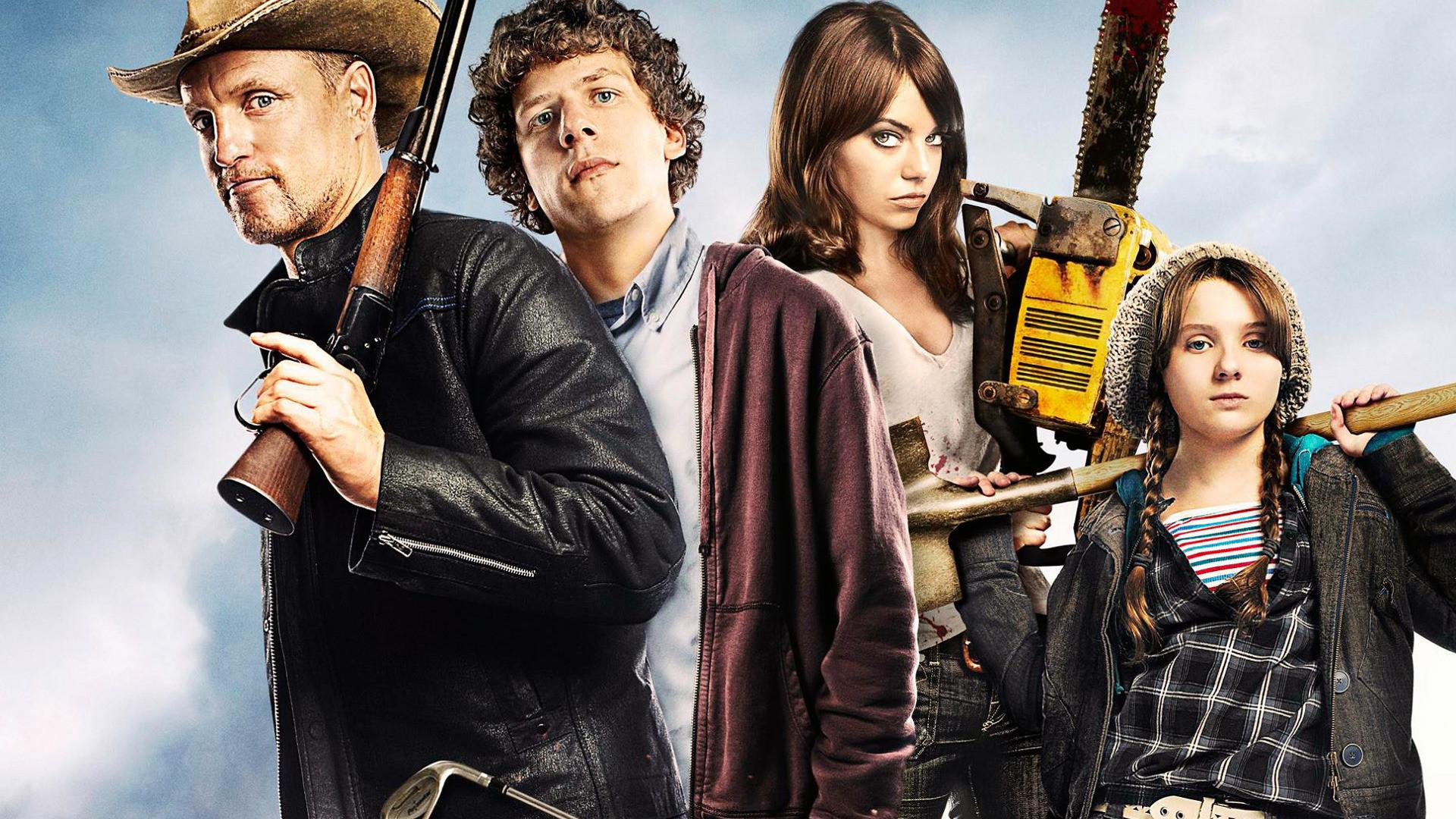
Image result for zombieland


Almost a decade later, a sequel to Zombieland has been officially announced, with the original cast members (Jesse Eisenberg, Woody Harrelson, Emma Stone, and Abigail Breslin) all returning, as well as original director Ruben Fleischer. I don't know exactly what you do with a sequel to this property. I really liked the original when I first saw it but it essentially was a re-worked TV pilot made in to a movie. Certainly, Eisenberg and Stone are bigger names than they were in 2009. Back then he was probably still seen as the ''poor man's Michael Cera'' and she was still the ''girl from Superbad.'' It'll be weird seeing them back in these parts, particularly Stone who to me always comes across as just being Emma Stone. Given the gap in time between movies, especially in regards to Breslin- I assume this movie will be ten years post the original, so I'd be kind of interested in what the world of the original looks like now. Maybe civilization has rebuilt itself though the charm of the original came from it being a four-hander. I think it's best to not incorporate too many new characters. Keep it simple. 

So, what are your thoughts on these upcoming projects? Comment below and let me know.

Wednesday, 20 June 2018

"We Belong to the Light": Deadpool 2


Warning: Spoilers Below

Deadpool 2 is the most surprising superhero film I've seen in some time. This isn't due to any originality regarding the plot; as with the first instalment it borrows plot points from other films, most prominently from The Terminator and Looper. What I mean by surprising is how emotionally affecting it is. For all the irreverence and ironic detachment associated with the character, Deadpool 2 is perhaps the most nakedly sentimental superhero film since last year's Guardians of the Galaxy Vol. 2. And like GOTG Vol. 2 I ended up liking this go-around more than it's predecessor. 

Now, since the film has been out a while I believe I can talk freely about the plot but but if you still haven't seen the film, turn back. At the film's beginning mercenary Wade Wilson/Deadpool (Ryan Reynolds) fails to kill one of his targets, resulting in the death of his lover, Vanessa (Morena Baccarin), when the target returns to enact revenge.  While it appears like an example of killing the love interest as a revenge motivation, the film handles her death with genuine pathos. Deadpool can't get revenge since the guy who killed Vanessa is killed after he and Deadpool are hit by a car. Deadpool has a healing factor so he can't die. Deadpool blames himself for Vanessa's death and attempts suicide but again-due to his healing factor- he's essentially Bill Murray in Groundhogs Day. 

Deadpool attempts to better himself, finally conceding to X-Men Colossus and joining the X-Men as aa trainee. His first mission involves talking down Russell (who nicknames himself Firefist due to to his firestarting abilities) at a mutant re-education centre. Realizing Russell has been abused by the orphanage staff, Deadpool kills one of the staff, leading to him and Russell being put in a mutant prison called the "Ice Box."

David Leitch, co-director of the John Wick films, takes over from Tim Miller; Leitch's approach is both consistent with the original but he brings his specific action sensibilities to the table, specially in a jail break-in sequence with time-travelling mutant Cable (Josh Brolin). While the action was good in the first, I feel it's even stronger here. The film is packed with comedic and genuinely impressive comic-book-brought-to life set-pieces.

I love how this film delves more in to X-Men thematic territory than the first, focusing on a young mutant who has the choice to either be a Magneto or a Xavier. Funnily enough, this film feels more like the X-Men comics than the traditional X-Men comics- we have yellow costumes, Juggernaut being monstrously big, and power suppressor collars. 

Image result for cable deadpool 2


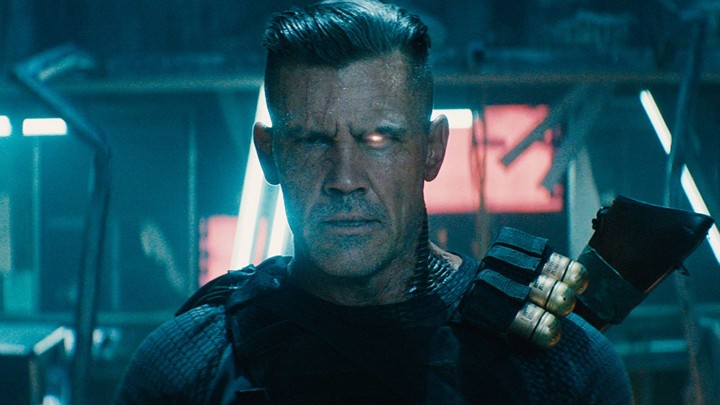
Complicating things further is the emergence of the aforementioned Cable (Josh Brolin). Russell kills Cable's family in the future and Cable plans to prevent that. Brolin is spot-on casting considering his history of playing gruff tough guys. He plays Cable seriously but not to the point of self-parody.  To stop Cable, Deadpool puts together "X-Force," which includes Domino (Zazie Beetz), whose mutant power is being lucky. The movie anticipates the audience reaction to has Deadpool outright say that luck isn't a power. The film then has fun visualizing how luck actually is her power in both cool and humourous way.

This isn't strictly a Deadpool/Cable buddy film though the two eventually have to team-up when Russell aligns himself with the Juggernaut and attempts to enact his own revenge. Deadpool and Cable are both men who've suffered tragic losses. The difference is in how they deal with them. Cable represents the more atypical revenge quest while Deadpool blames himself for Vanessa's death, attempting to better himself through helping Russell. This puts both their motivations at odds and the climax is largely about the two character arcs will be reconciled

I will say, as much as I loved the set-up and subversion of the X-Force team- with them all except Domino dying after jumping from a helicopter, it does feel like the second act is just a extended joke rather than structurally pushing the story forward. I also wish Negasonic Teenage Warhead (Brianna Hildebrand) had gotten a little more to do. On a side note, it's great that she has a girlfriend-Yukio- and the film doesn't make a big deal out of it. There's a little bit of contrivance in how Deadpool says he doesn't care about Russell so that Russell can team up with Juggernaut; I think Deadpool and Russell needed a few more moments together to beef up their relationship.

Image result for domino zazie beetz


The film pays off emotionally when Deadpool does "die," taking a bullet for Russell while having a collar on. The whole idea of Deadpool going to heaven may sound hokey to some but I really went with it. And as I said before, it's surprising since these films would be the last you'd expect to literally take it's wise-cracking character to heaven. I believe these two films have been able to ground Deadpool in some kind of emotional reality while stilling injecting the requisite fourth-wall breaking and digs at the superhero subgenre. 

I also liked how Cable's arc payed off, with him going back in time and finding a way to saving Deadpool. He finds redemption and discovers the future is not set, that Russell can still be a good person. I wanted more future scenes with Cable to flesh out where he came from but I understand the filmmakers didn't want to waste too much time getting Cable in to the story.

Deadpool 2 may be surprisingly sentimental but maybe it's par for a character who's all about subversion and unpredicatability. And of course, in the mid-credits, Deadpool goes back in time and saves Vanessa. Does that make the film pointless? I'd say no, since these films don't strictly obey strict continuity and may even ignore that going forward. That, and Deadpool still has learned about family throughout the film. I'd be interested to see the next film explore the consequences of bringing Vanessa back, especially if she becomes more like her comic-book counterpart, the mutant Copycat.

It's a little up in the air whether we will actually get a Deadpool 3. The next film may be an X-Force film with Deadpool as part of the ensemble or in a cameo appearance.  I love Brolin and Beetz in their roles and am excited to see them explored further down the line. Regardless, I hope Leitch stays around in this universe and the other creatives behind the franchise take even bigger risks going forward. I'm not quite ready to say Deadpool 2 is in my top ten superhero/comic-book films but it's certainly one of the my favourite of the recent superhero output.                         


Saturday, 3 March 2018

World of Wakanda: "Black Panther"


Warning: Spoilers Below


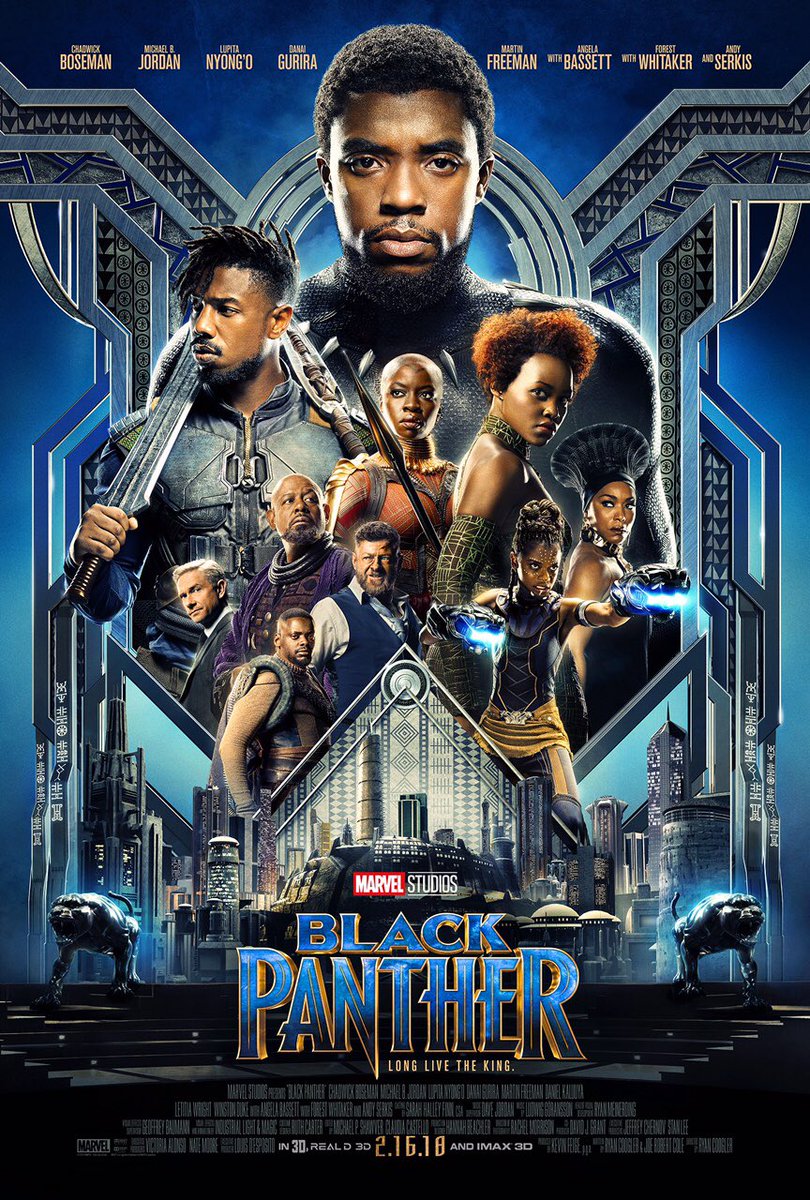
It's incredible to think the Marvel Cinematic Universe began ten years ago with 2008's Iron Man, modest beginning for the largest franchise on the planet. At one point, putting a interconnected comic book universe on screen would have appeared too difficult an endeavour. Now we've become so used to this intricacy, it's hard to imagine when superheroes were isolated on screen. A large part of the the Marvel Studios' films is the continuity and while it's still inherent to their latest film, Black Panther, the film would still feel epic and expansive even if it wasn't in the MCU. This is due to the film's setting, Wakanda, a technologically advanced African country. Wakanda feels so rich with history and mythology. Wakanda presents itself as a third world country to the rest of the world, essentially isolationist, not providing aid or weapons to the rest of the world.

Despite the film's focus on Wakanda, this is also a globe-trotting film. We go from a casino in South Korea- right out of a James Bond movie and one of the best sustained action scenes in the Marvel films thus far- to Colorado and London. All this widens the epic scope of the film. Cinematographer Rachel Morrison (who became the first woman  to be nominated for Best Cinematography at the Oscars- for her work on Mudbound) provides a distinct look for these locations without feeling like we're constantly in a completely different film. This is also attributable to a consistent tone, which doesn't undermine itself with too much jokiness. It's serious while having a healthy amount of humour.  

Black Panther isn't the first black superhero film or the first black-led MCU property (Luke Cage), the significance of a blockbuster having a prominently black cast, a black director and being set in an African country (howbeit fictional) can't be understated. And it really feels like director Ryan Coogler (whose previous two films are Creed and Fruitvale Station) was able to make the film without watering down the deep African spirituality that pervades much of the film. There are scenes and moments in this film that are unlike any I've seen in a superhero film- including the primal combat that decides who will rule, and T'Challa seeing his father in a spirit world- a scene which invokes The Lion King.


Image result for killmonger


The film takes place shortly after Captain America: Civil War, in which the King of Wakanda, T'Chaka (John Kani) was killed by a terrorist attack. His son T'Challa (Chadwick Boseman) is to become the new king. Soon after his coronation, T'Challa is alerted to the re-emergence of arms-dealer Ulysses Klaue (Andy Serkis), who in the past stole Wakanda's precious resource vibranium (from which Captain America's shield is made). He has stolen a Wakandan artifact from a British museum. 

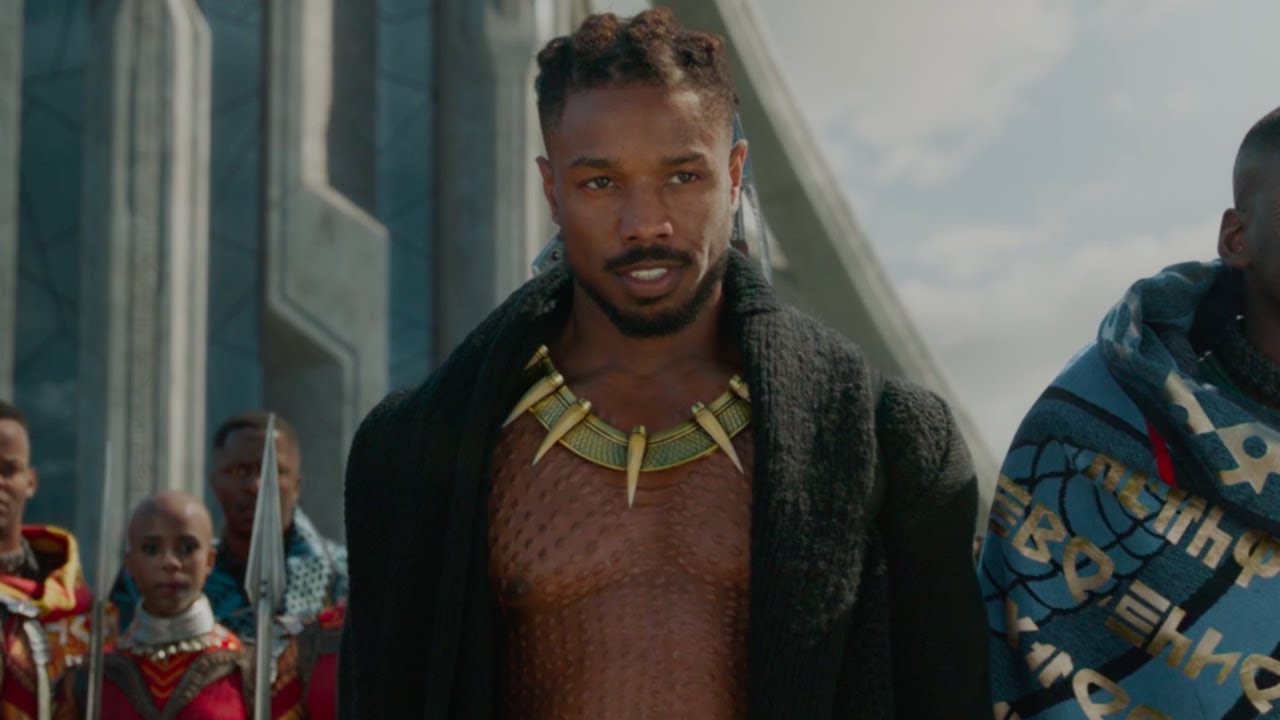
What T'Challa doesn't know is the theft is part of a larger plan concocted by Erik Killmonger (formerly Stevens), who's T'Challa's cousin. T'Chaka had sent his brother N'Jobu (Sterling K. Brown) undercover to America many years ago. He fell in love with an American woman and had a son- Erik. In 1992 T'Chaka (Atandwa Kani) comes to N'Jobu, accusing him of helping Klaue steal vibranium. N'Jobu's partner James is actually another Wakandan spy, Zuri (Denzel Whitaker, later Forest Whitaker), who confirms T'Chaka's suspicions. When N'Jobu attempts to kill Zuri, T'Chaka kills N'Jobu, leaving Erik behind, who eventually became a black ops soldier. N'Jobu was stealing vibranium so he could provide weapons to oppressed people across the world. Now Erik is continuing on his father's plan, part of which is claiming his birthright as King.

Erik is one of the strongest villains we've had in a Marvel film to date, because we can truly sympathise with him. He lost his father and was abandoned due to Wakanda's rejection of outsiders. I think T'Chala can see himself in Erik, the anger at the death of a father and the need for revenge. T'Challa even somewhat agrees with Erik. T'Challa blames Wakanda's isolationism for creating the monster Erik has become in the first place. There is validity in believing Wakanda should provide help to the oppressed but Erik's way is too extreme. I would argue that it's Erik's actions that help T'Challa realize that things have to change, that Wakanda should attempt to reach out and help others. 

I like that Erik feels like a real guy who just happens have a connection to a fantastical world.  His American accent and use of slang is juxtaposed with the Wakandan accents, highlighting his different upbringing and lack of pretence to fit in. Erik is way past attempting to assimilate in to Wakandan society. He wants to remodel Wakandan to fit him and his philosophy. The final scene between him and T'Challa, where Erik removes T'Challa's knife from his chest, allowing himself to die, is one of the most emotionally impactful villain deaths in quite some time. It has a Shakespearean quality to it. Erik's death is a tragedy because he could have done great things if events had happened differently. Moreover, what he says about his ancestors knowing it was better to die than live in bondage, is something more painfully truth than we're used to in superhero movies.

Image result for shuri


I've talked so much about the men of Black Panther but it's important highlight the women as well. I love Letitia Wright as T'Challa's younger sister Shuri. Continuing the James Bond analogy she acts as his Q, creating his gadgets and upgrading his suit. Their big brother-little sister relationship humanizes T'Challa and makes him relatable. 

General Okoye (Danai Gurira) is loyal to the throne of Wakanda regardless of who's on it but eventually can't abide Erik's plan. Gurira is absolutely convincing as an austere warrior who feels deeply but is adept at hiding those feelings. She finds herself in conflict with her lover W'Kabi (Get Out's Daniel Kaluuya), who sides with Erik. She tells him that for Wakanda, she would kill him- and you believe her.

Wakandan spy Nakia (Lupita Nyong'o) is T'Challa's ex but she's never merely a love interest, but someone with her own point of view on Wakanda's isolationism. If Wakanda won't help others, Nakia will do whatever she can to aid the oppressed. 

There are some issues I have with the film. The sub-plot with C.I.A agent Everett Ross (Martin Freeman), particularly him helping save the day, feels like the only plot thread in the film which was studio-mandated (i.e. have at least one white character do something heroic). Freeman is such a likable actor that it doesn't sink the film but it feels like the most Marvel thing in the film.

Structurally, I find it odd that Erik is introduced fairly early in the film but disappears for a significant period. I also wanted more development of W'Kabi to better understand why he sides with Erik despite being friends with T'Challa and Erik apparently killing T'Challa. 

Overall I'm excited to see what happens now that Wakanda has revealed itself to the world. What are the positives and what are the negatives. I sense this will be the line of films leading the way for Marvel in the coming years. While I don't know if Black Panther is my favourite Marvel film, it's definitely in the top tier of their output. And it's a sure sign there's still life in the superhero sub-genre. 

Friday, 3 November 2017

Revisiting the Thor Films

Related image

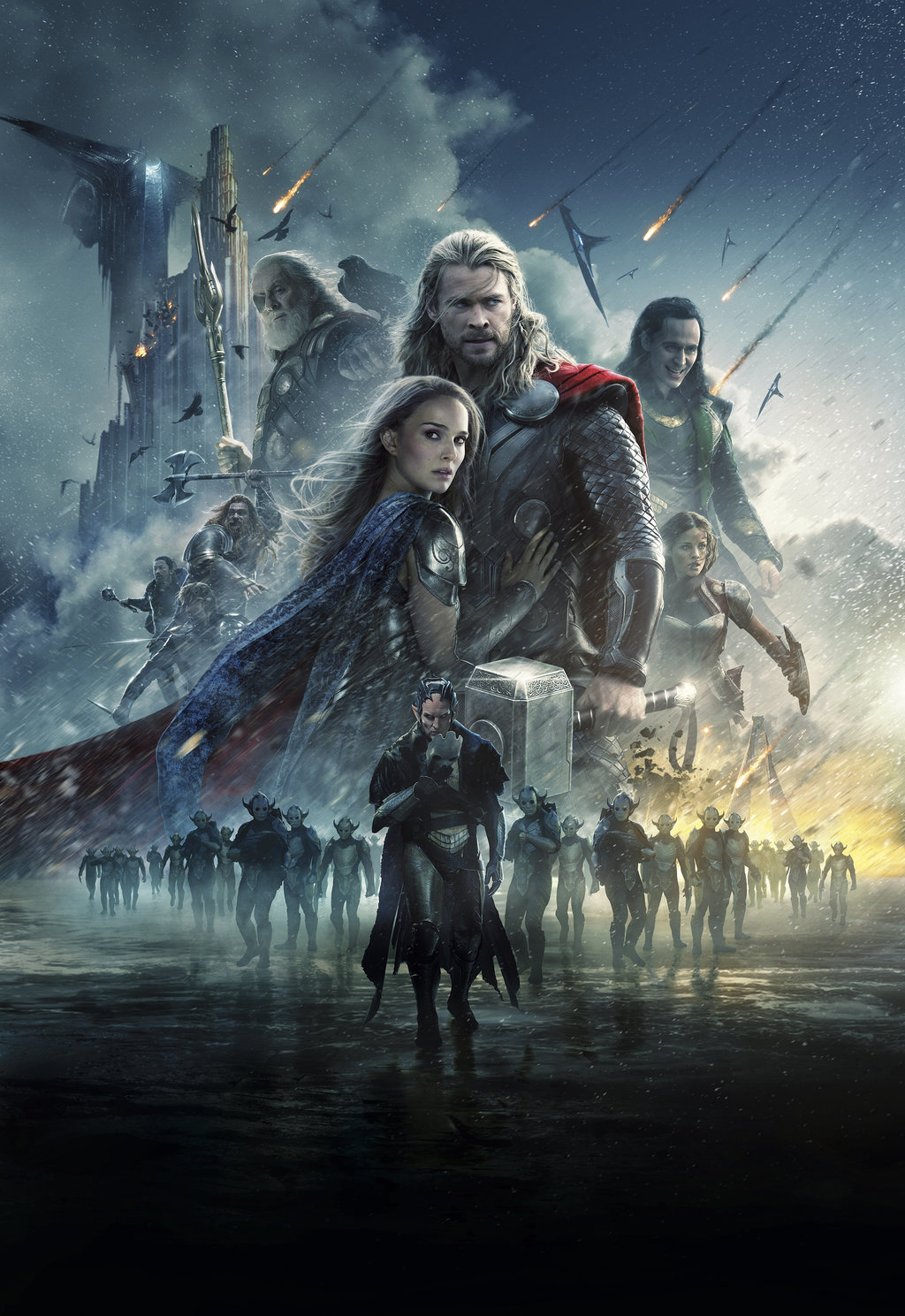
With Thor: Ragnarok being released to North American audiences this weekend, I decided to revisit the first two Thor films. It feels like a long time since we've gotten a Thor film. Thor: The Dark World came out back in 2013, pre-The Winter Soldier and the first Guardians of the Galaxy. That film ended with a huge twist- Tom Hiddelston's Loki disguising himself as Odin (Anthony Hopkins) and ruling on the throne of Asgard. I find it surprising such a major plot point was never addressed in the subsequent Marvel films- though I assume Ragnarok wraps it up. 

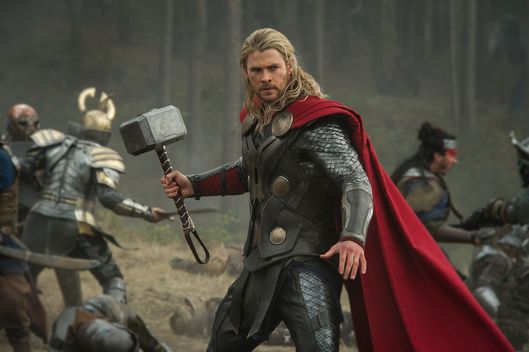
The first Thor, directed by Kenneth Branagh, is the film that opened up the Marvel Cinematic Universe beyond Tony Stark/Iron Man. We already knew Stark was part of a larger universe but Thor announced that Norse Gods existed in this world. Branagh's background in theatre and Shakespeare suited the...well, Shakespearean qualities of the source material. The best parts of the film take place in Asgard. Usually I find the the fantasy elements in Hollywood blockbusters can come across as dry and exposition-heavy. However, I like the interpersonal dynamics of these scenes. Thor (Chris Hemsworth) is about to be crowned Asgard's King when Frost Giants invade. They are killed but Thor wants to retaliate. His anger at this "day of triumph" being ruined and Odin dismissing Thor's desire for revenge shows his arrogance while also making him relatable. Loki is more reserved and an observational than Thor, an Iago-esque character that remains the MCU's most alluring antagonist.

Bo Welch's production design and the  gives Asgard a somewhat alien look feel. There's a grandness and mystery to it, with an specifically spooky atmosphere to it. Alexandra Byrne's costume design finds a middle ground between fantasy and science-fiction. I love how Thor's red cape stands out in this show. I also think it's a beautiful example of the production design, art direction and direction.
  
  
After battling with the Frost Giants in their home world of Jotenheim, Odin banishes Thor to Earth (Midgard to the Asgardians) and strips of his power. He sends Thor's hammer Mjolnir as well but Thor won't be able to pick it up until he becomes worthy. Thor encounters Astrophysicist Dr. Jane Foster (Natalie Portman,) Erik Selvig (Stellan Skarsgard) and Darcy Lewis (Kat Dennings). S.H.I.E.L.D  shows up and takes all their equipment and research due to the three being where Thor landed on Earth. S.H.I.E.L.D's presence in the story is a good example of organic world-building. It makes sense they'd be in this story because they're interested in Mjolnir. They also provide essential conflict for Thor on Earth while not being outright villains. When Thor can't lift Mjolnir at the S.H.I.E.L.D research site and then is lied to by Loki (He tells Thor he's permanently banished) Thor goes from brass braggart to humbled man with no home shows how good Hemsworth is in this role. He's able to be both arrogant, charming, romantic, heroic, and vulnerable. It's a true superhero movie performance.

I think the best scene in the movie is Loki confronting Odin about true lineage. Loki is a Frost Giant- Laufey's (Colm Feore) son- Odin adopted when he was a baby, after Odin waged war against the Frost Giants. We feel Loki's resentment at being lied to and realising while Thor was always favoured over him. Odin's pain over his relationship with both his sons' being broken is also apparent. While Odin can be viewed as simply a pay-cheque role, I think Hopkins is great at both scenery-chewing and more deeply-felt moments. What's intriguing about Loki is you see the evolution of his villainy, though I think the script makes things a little too convenient for Loki, with Thor being banished and Odin, overcome with emotion, falls in to the "Odinsleep." And honestly, I'm still not sure what that it is.
Image result for anthony hopkins odin

   
I wish this film was set entirely in Asgard- a Shakespearean Lord of the Rings mixed with Game of Thrones and 300. I do understand why they needed to create a connection between Thor and Earth, particularly his relationship with Jane. Hemsworth and Portman have good chemistry, the two characters clearly like each other. However, I think this romance needed a few more scenes to develop and deepen, particularly when we get to the second film. The relationship never feels like the grand romance it's supposed to be. 

Returning the matter of scale, I also think the filmmakers wanted to do a throwback to what a Thor movie would be like in the 80s or 90s. I find this movie resembles a early 2000s version of a Thor movie made with 2011 special effects. Even the use of the Foo Fighter's "Walk" over the end credits feels reminiscent of Sam Raimi's Spider-Man films.  

Image result for the dark world

I remember enjoying Thor: The Dark World in theatres, despite feeling it was just a filler film. Revisiting it for the first time since theatres, it's even more apparent the film is essentially a two part TV finale rather than a movie. It's story has potential but it's never fully developed enough, especially in a movie that's under two hours. That's not to say you can't have a well-developed story in under two hours, just that this film felt it needed more time to breathe. I glean there was difficulty in figuring where to take Thor next. Thor doesn't really have an arc in this film. At the beginning he doesn't want to be King of Asgard and by the end he feels the same way. The only real change is he admires Loki for sacrificing his life to help him; but that emotional development is undermined by the ending reveal, essentially an"Oh that Loki" moment that reinforces the filler quality of the film. 

The scenes between Thor and Loki are the film's strongest and emotional. Loki continues to be more multilayered than the other MCU villains. Moreover, The conversation between Loki and his his mother Frigga (Rene Russo) reveals Loki's emotional vulnerability. When he learns of her death at the hands of the Dark Elves, he psychically smashes things in his cell. Without dialogue or even seeing his face, we feel his anger and despair and his mother's death.  

Alan Taylor, who had directed several Game of Thrones episodes, replaced Branagh on this film. Taylor made sense as a replacement due to Game of Thrones having the qualities that would suit a Thor film but I feel Taylor doesn't bring the same directorial stamp as Branagh. Asgard does have a more Game of Thrones feel but it lacks the atmosphere and striking visual look of the first film

Malekith is the weakest villain of the MCU thus far, a shame since Christopher Eccleston is wasted and the character is much more entertaining sinister in the comics. I do like the Star Trek/Wars look of the Dark Elves, with their blasters and spaceships. They're a good representation of how the Thor side of the MCU blends fantasy and science fiction.

The teleportation climax is inventive and Thor getting on the train is a great bit. Skarsgard smartly deadpans Selvig's insanity after being possessed by Loki in The Avengers and is pretty funny- but I wish this plot thread was treated more dramatically. 

Ragnarok is supposed to be the best of the three Thor films. I gather it's the Iron Man 3 to The Dark World's Iron Man 2, less filler, more style and energy. I think Thor is a mostly good film and The Dark World has its entertaining moments but Ragnarok has be excited. Walking in to the Marvel films I always hope it'll be my favourite one so far.