Showing posts with label Mark Hamill. Show all posts

Saturday, 26 December 2020

On "The Mandalorian," "The Last Jedi," and other things regarding Star Wars

The Mandalorian Season 2 Episode 6 Recap: The Empire Strikes Back

Spoilers for The Mandalorian Season 2 Finale

I haven't written much about Star Wars on this blog, which is strange since like many people I have a lot thoughts about Star Wars. I do find it incredible that the most popular thing Disney has done with Star Wars is the Disney+ show, The Mandalorian. Though it also makes sense. The animated The Clone Wars became more well liked than the prequels and even redeemed them in many peoples' eyes. The Mandalorian has the same executive producer as The Clone Wars, Dave Filoni, who is seen as the heir apparent to George Lucas. And with the divisive reaction to Rian Johnson's The Last Jedi and further negative feelings towards J.J. Abrams' The Rise of Skywalker, The Mandalorian has the benefit of being outside what Disney has done with the Sequel Trilogy. It doesn't reactionary the way The Rise of Skywalker did, nor is it deconstructive like The Last Jedi. It's a show about a guy in cool armor and his cute baby. 

But in the season 2 finale, a major cameo and story turn caused many to rejoice and provoked cynicism in others. Luke Skywalker (a de-aged Mark Hamill) cut through Moff Gideon's (Giancarlo Esposito) Death Troopers before taking Baby Yoda-a.k.a Grogu- to train him in the ways of the force. Fans were happy to see the "real" Luke back after The Last Jedi showed us a broken Luke, no longer the hopeful young man of the original trilogy. Others felt Luke's appearance was a further rejection by Disney of  Johnson's objective in The Last Jedi, which was to deconstruct both the Star Wars mythology as well as the mythic hero archetype Luke came to embody.  

On a surface level Luke's appearance does feel like a retreat back in to nostalgia and providing people what they wanted in the sequel trilogy, i.e. Luke being a "badass." But as Alden Diaz, a user on Twitter, laid out in a thread, Luke in The Mandalorian does connect with Luke in The Last Jedi. I've posted a link to the 

Alden Diaz 🎙 on Twitter: "“Because I was Luke Skywalker. Jedi Master. A legend.” It honestly, truly blows my mind that some people don’t see (or don’t want to see) how #LukeSkywalker in #TheMandalorian connects so beautifully to Luke in #TheLastJedi. It adds immense emphasis to so much of what TLJ is. https://t.co/DYRvEpjTOt" / Twitter

I agree with Diaz, especially since in The Last Jedi Luke he got caught up in his own image: "I was Luke Skywalker, Jedi master." And in The Mandalorian, when he's chopping up those droids, with his cloak up, he is definitely playing in to the image of the mythic hero. Diaz says, 

"We are witnessing the man gain the mythical status & aura that make him feel invincible. It’s underlining his fall"

and that Luke's taking on Grogu after Ahsoko Tano refused underlines how Luke still believes the Jedi's old ways can work. 

I have to admit, in the moment, seeing Luke the way we remember him from Return of the Jedi really got me. While I'm not against the direction Johnson went with Luke in The Last Jedi I still want to see more of what happened in between the trilogies and what got him to that breaking point with Ben Solo. I'm also wondering where Grogu was during the events of the sequel trilogy. 

There's also the question of where the show goes from here. The relationship between Grogu and the titular Mandalorian, Din Djarin (Pedro Pascal), has been a huge factor in the show's popularity. People love that little green guy, including me, so I his absence will have to weigh on Din going forward.I assume the taking back of Mandalore will be the main arc going forward. And I guess Din and Bo- Katan (Katee Sackhoff) still have to fight for the Dark Saber.

And even before Season 3, we are getting The Book of Boba Fett in December 2021. It definitely feels like we've brought the Expanded Universe to live action. Before, anything specifically focused on Boba Fett would be a book or a comic. And Luke rebuilding the Jedi Order was also a ongoing thing in the old Expanded Universe.

So, what are your thoughts on The Mandalorian finale and the direction the series may be going in? Are you excited for a Boba Fett show? Comment below and let me know.   

Thursday, 25 May 2017

The Essential Films: Looking back on "Star Wars" 40 Years Later

Image result for twin suns tatooine


A Series of Writings on Films that I feel are essential viewings for film lovers, coupled with films that are personal to me

Spoilers Below

In May of 1977, pop culture and cinema was forever changed by the release of director George Lucas' Star Wars. Before it was Episode IV, before it was A New Hope, before people argued about who shot first- it was just that: Star Wars, as pure and simple as the story which it told. Star Wars- and the subsequent episodes of the Original Trilogy, The Empire Strikes Back and The Return of the Jedi- have become so ingrained in the popular imagination, so influential and obsessed over, that's it hard to look at it as just a movie. Like the stories of Superman and Batman- and even the work of J.R.R Tolkien, it's become something like a modern myth, almost a religion. This isn't to say Star Wars is above criticism or that it can't be analysed; just that it's so much bigger than just a really popular movie. 

Star Wars is  one of the biggest franchises in history but when Lucas was making the original film there was no guarantee it would be a success. We've become so accustomed the world of Star Wars but all this stuff about Jedi, the Force, Wookiees, and a big guy in a black suit with a breathing problem would have struck the people involved in the film's production as weird. Lucas' vision was of the pulpy/fairy tale sort rather than the cerebral nature of Stanley Kubrick's 2001 or the original Star Trek series. I don't even think 20th Century Fox had much faith in the film. Harrison Ford had worked with Lucas on Lucas' sophomore feature American Graffiti and would become a star with his performance as Han Solo. He's notorious for telling Lucas that the dialogue could be written but couldn't be spoken. In many ways I would argue Star Wars is the most mainstream and successful cult movie of all time.
Image result for hidden fortress

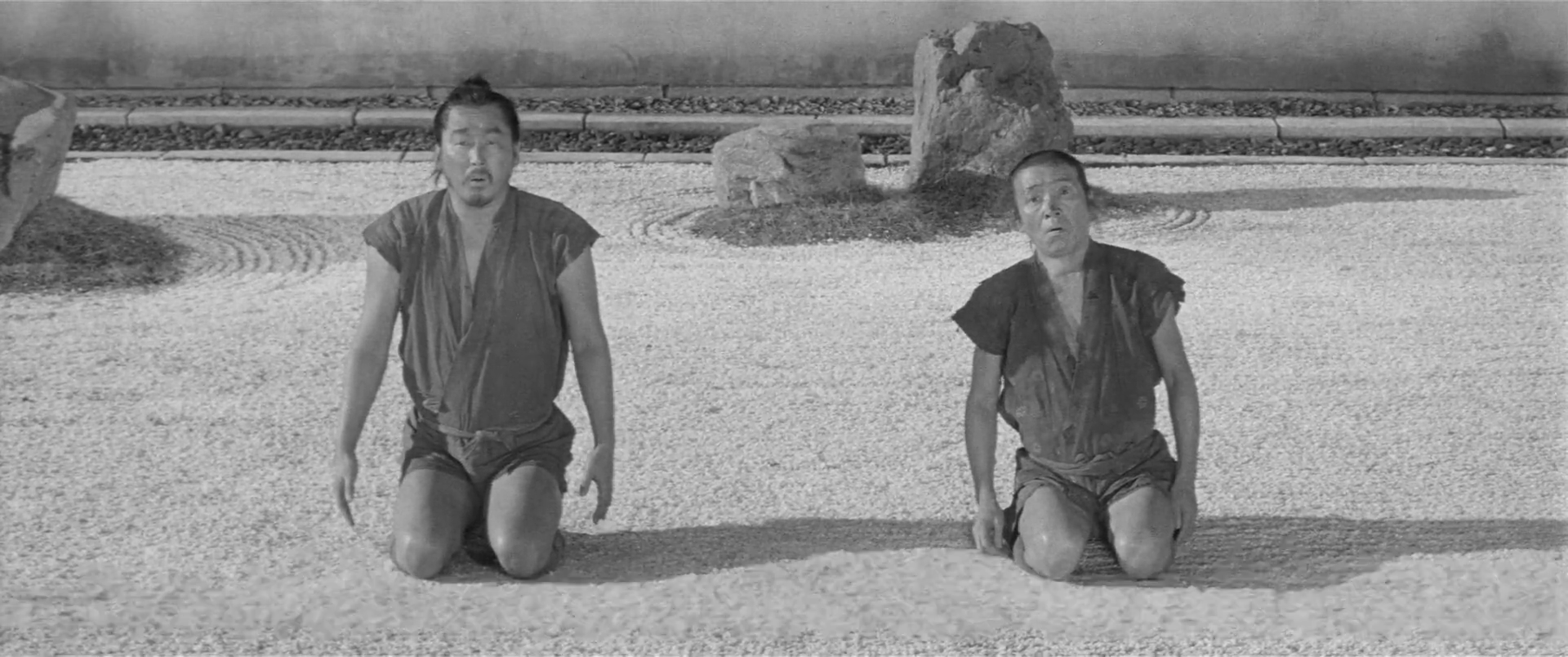
In crafting the story for Star Wars, Lucas drew inspiration from various genres- samurai film, fantasy, pulp sci-fi, swashbuckling adventure, war epic, western, and coming of age/hero's journey tale. In regards to the specific films which influenced Lucas, Akira Kurosawa's 1958 film Hidden Fortress inspired Star Wars' narrative structure. Lucas begins the film with the droids C-3P0 (Anthony Daniels) and R2-D2 (Kenny Baker). Kurosawa tells the story of his film from the perspective of two peasants who accompany a general and a princess across enemy lines. Fritz Lang's groundbreaking 1927 film Metropolis inspired the design of C-3P0. The homestead burning on Tatooine comes from a similar scene is John Ford's The Searchers (1956). Leni Riefenstahl's Nazi propaganda film Triumph of the Will (1935) was the basis for the medal ceremony which closes the film. 

What's impressive is how Lucas blends diverse genre tropes in to a cohesive whole where the archetypes and iconography compliment each other. The result is a film which feels familiar yet boldly new. I think a big reason for Star Wars' success is how its story already felt old-fashioned back in 1977- and accessible to general audiences- while expanding their idea of what could be accomplished cinematically. More on that later.


Related image


When talking about genre archetypes in relation to Star Wars, the character that stands out most to me is Obi-Wan "Ben" Kenobi (Alec Guinness). Ben represents both a samurai and an old wizard- like Gandalf in The Lord of the Rings. He begins to mentor Luke Skywalker (Mark Hamill) while still carrying the weight of his failure with his last apprentice, Darth Vader; Vader turned to the dark side and helped the Empire eliminate the Jedi Order. I feel Guinness is underrated in the part- maybe due to the fact we don't think of it as a performance, to many he just is Obi-Wan Kenobi. Guinness convinces me he is this old Jedi master, the Force exists and there was once Jedi Knights who protected the galaxy for thousands of years. And when Luke mentions the Clone Wars- which became a huge part of Star Wars media- it provides a sense of history to this universe. 

Along with Guinness, Peter Cushing- who played Grand Moff Tarkin- was the other veteran actor with a major role in the film. Guinness represents the mythological side of this universe while Cushing is the face of the totalitarian and fascist Empire. I would argue he's the true villain of this film, not Vader. Tarkin orders Princess Leia's (Carrie Fisher) home planet of Alderaan destroyed by the Death Star just to prove a point. What's great about Cushing's performance is he doesn't over play Tarkin's evilness, which makes Tarkin's actions and demeanour all the more believable and unsettling.

Image result for darth vader a new hope


But when it comes to villainy in the Star Wars saga, people will always think about Vader. If Vader isn't the greatest screen villain of all time then he's certainly up there. Even in the original film, before it's revealed he is Luke's father, Vader is a commanding and compelling presence. Vader represents the bygone time of the Jedi; He is more connected to the mystic side of the universe rather than the technical. He's contrasted with the technological and brute-force based Empire. During a meeting about the Death Star with the Imperials Vader states the station's power is meaningless next to the Force. General Motti (Richard LeParmentier) tells Vader not to attempt intimidation with his "sorcerer's ways." Motti sees Vader as something of a relic- calling the Force an "ancient religion." Vader displays his power by choking Motti via-the Force. Tarkin orders Vader to stop, further emphasising he's in charge, not Vader. Later Tarkin disregards Vader's sensing of Obi-Wan aboard the Death Star. Vader is an outsider among the Imperials, though we later learn the Emperor is a Sith like Vader.
Related image


Luke, Han and Leia come from different backgrounds. Luke is the farm boy who's never been off Tatooine, Han is the smuggler who never stays in one place, and Leia is a princess who's the only one of the three who has her mind on defeating the Empire. The film is largely about these three people coming together for a single purpose. It's part of why the series is so enduring- it believes regardless of background people can work together and accomplish great things.

Luke longs for a better life, one of adventure and purpose. His uncle Owen (Phil Brown) doesn't allow him to leave because he needs Luke's help on the farm. Owen is also afraid Luke will follow in his father's footsteps and become a Jedi Knight (in the context of this film Luke's father Anakin was murdered), We understand Luke's frustration but we can also see Owen sincerely cares about Luke and is reasonable. The tragedy of Owen and Beru's (Shelagh Fraser) murder is Luke never got to reconcile with Owen. Moreover, now Luke has no choice but to leave Tatooine. Obi-Wan becomes a father figure to Luke. When Obi-Wan dies Luke truly has to grow up. Hamill was already in his mid-20s when he played 19 year old Luke but he conveys Luke's immaturity, genuine decency and infectious energy perfectly.

Leia isn't afraid of Vader nor Tarkin. She's confident but we see her fear and desperation when Tarkin forces her to disclose the location of the rebel base or he'll destroy Alderaan. Her confident and arrogant exterior slips away; we see how powerless she- and the whole idea of royalty-is in this situation. She's snobbish in how she treats Luke and Han but comforts Luke after Obi-Wan's death. Despite losing her planet she shows compassion to the man who rescued her. The late Fisher plays these different sides of Leia's personality with grace, making them all feel part of the same person.

Han is the scoundrel with the heart of gold. The key to Ford's performance is you believe he's really out for himself while at the same time you buy that he comes back to help the rebellion at the film's conclusion. Ford is arguably the closest thing we have to a modern day Humphrey Bogart. His performance is charming, sly, ruthless and funny. The scene where he's talking over the intercom display Ford's ability to convincingly play the tough guy who's occasionally ill-equipped in certain situations.
Image result for star wars visual effects a new hope

I mentioned earlier that Star Wars expanded people's idea about what could be achieved cinematically. This is due to how groundbreaking and influential its visual effects (by John Dykstra and his team at ILM (Industrial Lights & Magic)) were. Star Wars is a film that embraces its goofy pulp sci-fi roots; while being more technically sophisticated then that sub-genre had been before  The opening shot of the Star Destroyer chasing the Tantive IV is still an incredible visual marvel. It automatically establishes the rebels as the underdogs and the Empire as oppressive and all-encompassing. Ben Burtt's sound design also deserves credit. The sound design of Star Wars is so iconic all you have to do is hear the sound of a TIE fighter and you know what you're listening to.

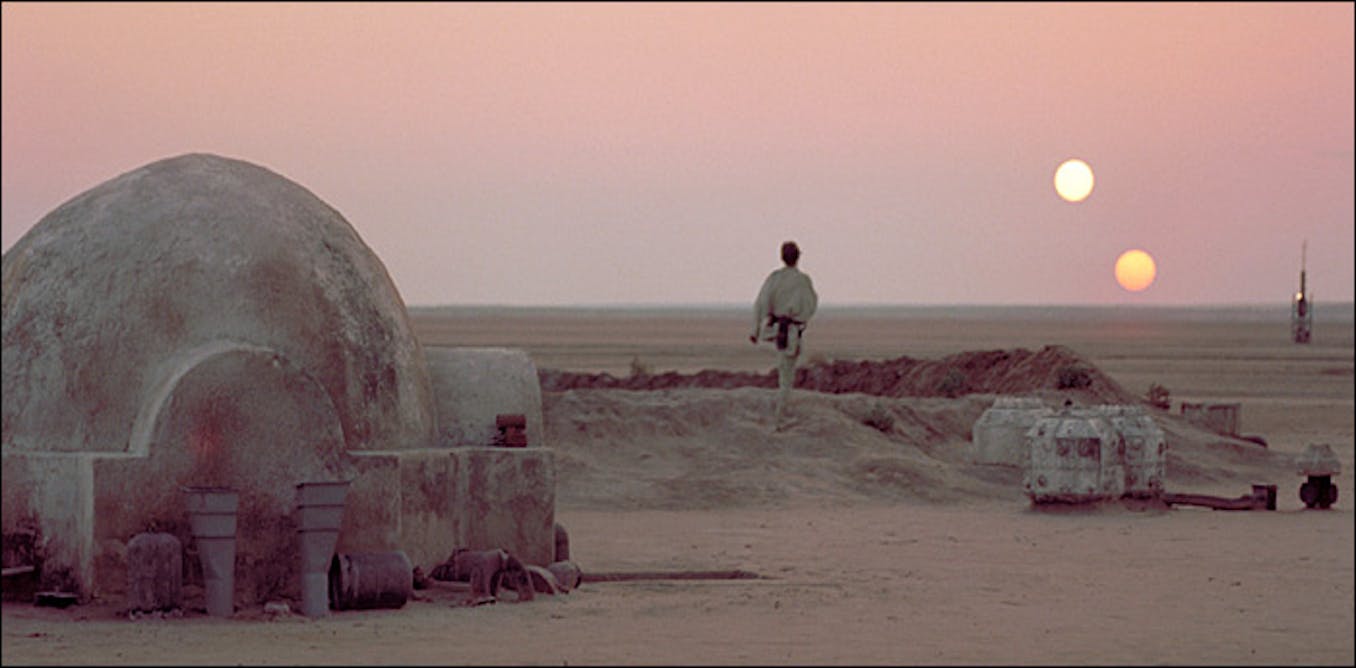
For me, Star Wars isn't quite Star Wars without John Williams' music. The fanfare- accompanying the title as it recedes in to space and the opening scrawl is romantic, epic, poignant and thrilling to this day. The force theme, which plays over Luke looking at the twin sunset, invokes longing and the hope for a better future. It became such an indelible combination of visual and sound that Lucas ended the Prequel Trilogy Owen and Beru looking at the twin suns.

In 40 years, I think this film- and the Original Trilogy as a whole- will still be classic. It's world and its characters feel timeless- appealing to multiple generations and people of different backgrounds. It inspires the imagination and has a purity to it that's often missing in the modern blockbuster landscape. So, what is your favourite aspect of the original film, and what does it mean to you? Comment below and let me know.

Saturday, 13 May 2017

Some thoughts on Luke Skywalker and "The Last Jedi"


Image result for the last jedi poster

Spoilers for The Force Awakens below

Darth Vader is my favourite Star Wars character but it's his son Luke Skywalker's story that for best epitomizes the mythic nature of the Star Wars saga. The original trilogy is about Luke's journey from a Tatootine farm-boy who doesn't know the legacy of his namesake to a Jedi who redeems his father and helps save the galaxy. When we get to The Force Awakens Luke has become a figure of legend. Rey believes he's just a myth. One can imagine that children in the post-Return of the Jedi galaxy have grown up with stories of Luke, Han Solo and Princess Leia. This is appropriate considering the fairy tale nature of the saga.


What intrigues me most about the The Last Jedi trailer is Luke saying the Jedi must come to an end. It appears that Luke is a more cynical character 30 years since Return of the Jedi's ending. I can't help but think of Luke telling Obi-Wan Kenobi he wanted to about the Force and become a Jedi like his father; and later, telling the Emperor he'll never turn to the dark side, that he is a Jedi, like his father before him. Now, what he once strove to become may not have any positive meaning for him anymore. 


Image result for the last jedi  luke skywalker
'

The ending of Return of Jedi left Luke as the person who would rebuild the Jedi Order, albeit likely different in certain ways from what became before. In The Force Awakens we know that Luke has attempted to train new Jedi but Ben Solo- Han's son and Luke's nephew- and the Knights of Ren killed Luke's pupils. This sent Luke in to exile like Obi-Wan and Yoda- and likely led to a new outlook on the relevancy and purpose of the Jedi, thinking beyond the dogma of both the Jedi and the Sith. With the Jedi being eliminated twice perhaps Luke is taking that as a sign from the Force. Maybe the galaxy would be better without dogmatic religions. What I'm curious about is that will affect the role of force users in the saga post this new trilogy. 

Also: Supreme Leader Snoke and Ben (now calling himself Kylo Ren) aren't Sith, so they themselves represent a different type of dark side user. However, Ren still worships his grandfather who was a Sith.

I'm also wondering what Luke is going to be teaching Rey specifically and how her arc will proceed People have theorized that she will go to the dark side, which would be a bold choice. I enjoyed The Force Awakens but I feel this film will explore new mythological territory in regards to the Star Wars universe; like The Empire Strikes Back, this middle chapter will deepen and redefine what came before, leading us in to the conclusion of this trilogy.

So, what are your theories on Luke's possible story in The Last Jedi. Comment below and let me know.