Showing posts with label Science Fiction. Show all posts

Friday, 26 June 2026

"Disclosure Day"


Warning: Spoilers Below

Throughout his career Steven Spielberg has explored the UFO subgenre through various angles. In Close Encounters of the Third Kind he approached the material through the prism of one man's obsession and the breaking down of the family unit; in E.T. it was a coming of age story. He made H.G. Wells' War of the Worlds in to a 9/11 allegory that was as terrifying as Orson Welles' famous 1938 broadcast. With the fourth Indiana Jones movie, Indiana Jones and the Kingdom of the Crystal Skull, he took the 1950s B movie approach to the material, though obviously that foundation was laid by George Lucas. In his newest foray in to his genre, Disclosure Day, it's all about truth and faith. How would peoples' faith in religion and God be shaken by the revelation of aliens, and who gets to decide if the truth should be revealed; should we be treated as children who can't handle the truth and need to lied to by our parents? We of course live in a post-truth world, where "alternative facts" matter as much as objective reality. Trump and his supporters will lie to your face and call you deranged for pointing out what an imbecile and clown (apologies to clowns) he is. Spielberg suggests truth should win out over comfort. Though he's often seen as giving the audience too much comfort rather than challenging or upsetting the viewer, and he perhaps perhaps needed to push and expand upon its ideas, Disclosure Day has potentially one of the most provocative endings of his career.

Disclosure Day feels like the spiritual cousin of Close Encounters. One can feel the spirit of Richard Dreyfuss's Roy Neary in Daniel Kellner (Josh O'Connor) and meteorologist Margaret Fairchild (Emily Blunt). Like Roy, Margaret has something unlocked within her after an encounter with an alien (appearing in the form of a bird). She begins speaking other languages, including an alien one which she speaks live on air. She's also able read minds and while Roy had images of Devil's Tower in Close Encounters, she sees images of Daniel, formally charge keeping government secrets regarding aliens safe but now on the run with proof of their existence. And weirdly, though definitely not coincidentally, Daniel is also able to understand the alien language Margaret is speaking

David Koepp's script begins on a run, pretty much skipping the usual first act stuff and beginning with Daniel already on the run being chased by the shady government unit Wardex and its head, Noah Scanlon (Colin Firth).  As several people have pointed out the film never does the "Five days earlier" thing, we're just expected to play catch up and pay attention. Koepp's script pulls this trick where it skips the first act but still does the first act thing of establishing this bigger conflict then introducing he normal person in to the mix, who is Margaret, which ends establishing her as the main character, more so than Daniel. Like Close Encounters with Roy and Melinda Dillon's Jillian, the story takes its time getting these together, making it more satisfying when these two pieces of the story fit together. We eventually learn both of them were experimented on when they were children, though it's never clear why they were picked by the aliens, other than they're the main characters. Daniel's ability 

Looking over Koepp's filmography, he's done quite a few films I really like, including Brian De Palma's Snake Eyes and the first Mission: Impossible, also directed by De Palma. He's probably best known for writing Jurassic Park and I also feel War of the Worlds is an underrated Spielberg film. Secret Window, which Koepp also directed is also an underappreciated gem. Koepp is adept at structurally his scripts quite elegantly and I actually think Disclosure Day is one of the better structured and paced blockbusters of the modern era. Spielberg and Lucas often get blamed for the blockbusterization of American cinema. Not only would I argue that's more the studios' fault than the two filmmakers, I'd say Spielberg's blockbusters, regardless of how challenging they should be vs. what they aren't, provides a human touch that is often absent in more recent blockbusters. There's also a level of craftsmanship that can't really be denied. Spielberg has always been really good at understanding the appeal of movies and how to make them work on an emotional level. 

Margaret, I think, embodies exactly what a Spielberg often is- funny, sad, melancholic, and very earnest.  This is probably the most I've liked Blunt in a movie. I don't know if she's always been the most exciting actress but she's really wonderful. Like Daniel, she has a partner who questions her journey (this being her boyfriend Jackson, played by Wyatt Russell). Russell is one of those actors who's able to be both likable but is also believable as kind of dismissive guy who doesn't completely emphasize with what Margaret is going through. I love she is pulled over by a cop and through her psychic powers, we learn more about this character then we would've have in an ordinary drama. Blunt conveys the overwhelming feeling of seeing and feeling everything about this man. 

Daniel is positioned as a guy with good intentions but is also someone who, like Scanlon and Wardex, making a choice for everyone else. His love interest Jane (Eve Hewson), who is a former Nun, brings forth the question of how revealing the existence of aliens will affect peoples' faith. Spielberg's films are often about belief in something beyond the material, seemingly rational world. The Indiana Jones movies always have Jones doubt in the supernatural but is ultimately always proven wrong. Disclosure Day doesn't cement a supernatural being existing but puts forward the idea- stated by an older Nun character, that it'd be weird for a God to create such a vast universe just for us. However, the film suggests we shouldn't embrace Messiah figures-- as her powers emerge Margaret outright rejects being viewed as a messiah. The aliens are positioned less as deities in Spielberg's film then they are something hat provokes awe and wonderful while not being inherently superior or necessarily above understanding This makes him the opposite of Kubrick in 2001: A Space Odyssey, which hypothesis that our evolution and future is largely determined by an unknowable alien species.  

 There's no really winning when it comes to the film's conflict. Scanlon and Daniel both have their reasons for hiding or revealing the biggest truth humanity may ever face. And Scanlon says, there's no reset key if Daniel reveals the truth. I wish Daniel was challenged even further then he is, and O'Connor, while he brings the proper earnestness to Daniel, the problem is Daniel is given the proper grit and hauntedness that I think the character needs. Admittedly, I've already kind of forgotten his backstory. Hewson is appealing but again, I don't feel we get enough of her as a character.

The film also never figures out what to down with Scanlon as a villain. The idea of his using alien tech t invade Janes' mind is a good and creates some tension, but it feels he doesn't get to be as dynamic given the chase-thriller aspect of this film. He's ultimately less of a villain then just some guy, and maybe that's the point. His relationship with Wardex whistleblower Hugo Wakefield (Colman Domingo) gives Scanlon some proper humanity, and when Margaret is able to appear to others as their loved ones, she appears to Scanlon as his deceased wife, whose death, Hugo, suggests, cut Scanlon off from people emotionally.

It can sometimes feel like the ideas of the film are talked about more than explored, including the conversation between Scanlon and Hugo, where Domingo has to use his natural charisma to sell the more philosophical dialogue. I know I'm starting to sound a little more down on the film than I planned to. I actually overall quite liked the film, largely because its old-school Spielberg feel, which transposes what he did in the later 70s and 80s to 2026. This ends up making Disclosure Day feeling less like a 2026 blockbuster, or at least not like any other blockbuster of this era, then something that feels like it's pushing the blockbuster both towards and back to something more pure and cynical. Like Close Encounters represented something more optimistic for the cynical times of the 70s, the same as Star Wars, which came out the same year, Disclosure Day is perhaps a represents something more optimistic for the post-truth Trumpian era. What better to unite us then the suggestion we are not alone, that out there there's something so much bigger than us. It make all our petty squabbles appear so insignificant. Spielberg was in his early 30s when he made Close Encounters, ending it on a more whimsical note. Almost 80, and with more life experience, Spielberg ends this film on a more sober note, a plea to listen. Hopefully the audience will. 

Friday, 30 May 2025

Sith Happens: 20 Years of "Revenge of the Sith"


It's interesting how the reception of the Star Wars prequels, particularly the first has so dramatically changed over the 26 years since The Phantom Menace came out in 1999. There was plenty of vitriol and disappointment from fans when the film was released, and Attack of the Clones wasn't beloved either. Revenge of the Sith- released 20 years ago this past month- was the most critically well received, and I think fans were more responsive. But overall these well liked movies. Red Letter Media became famous for their "Mir Plinkett" reviews and I think fans who liked them were in a minority.

But over time, with people my age or younger who saw the prequels when they younger, and gained a presence online, the prequels have gone through a resurgence. It's not unsurprising. There's something incredibly nostalgic about this franchise, a certain magic that makes it different from anything in film history. And it feels like we're in a era where everything not immediately beloved is almost reclaimed automatically. Prequel fans say the sequel trilogy will never be reevaluated but never say never, right.

But as the prequels have become more praised, with many claiming they're masterpieces of cinema, I've gone in the opposite direction, becoming critical and negative towards them, though I don't consider them irredeemably bad. They are intriguing contradictions-grand scale achievements that revolutionized filmmaking, but not really great films on a directing, acting, or screenwriting level. George Lucas's greatest gift as a filmmaker is his unique imagination but I think he struggles with, and maybe is a little bit bored, with the more intimate and human parts of storytelling. Lucas set out to create a Shakespearian/Greek tragedy with back drop concerning the fall of democracy, but he also wanted to revolutionize and experiment with new special effects. He ended up getting lost in the technology and not taking enough time to finetune the story and character beats and overall dramatic and political arc of the story. 

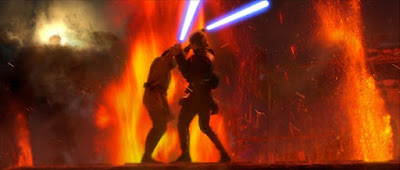
But I understand why for my generation Revenge of the Sith is the Star Wars film. I get it. I can see why at 10 or 12 years of age it blew a lot of peoples' mind in the same way the original films did for the previous generation. The opening action sequence, the lightsaber duels, as well as Obi Wan fighting General Grievous, are really spectacular stuff. Revenge of the Sith is the best of the prequels even though the execution of its stories and themes is still uneven. It has the most dynamic pacing and the strongest overall dramatic arc. In the previous two prequels Lucas was too leisurely in his pacing. In The Phantom Menace in particular we spend an entire act before even getting to Anakin Skywalker. And even then it's not really his story. In Attack of The Clones we get more focus on Anakin and an actual internal struggle, something lacking in Phantom Menace, but in Revenge of the Sith, there's more urgency, and it feels like an actual movie.

At the time Revenge of the Sith was supposed to be the final Star Wars film, bringing the saga full circle back to those twin suns on Tatooine, and a lot was riding on it. As I mentioned, many were disappointed with Phantom Menace and Attack of the Clones and Lucas had to stick the landing on this one. The critical reception was much better this time, with former New York Times critic A.O. Scott calling it better than the original Star Wars, even though he said it made his inner child shudder. And in 2012, critic Camille Paglia called Revenge of the Sith was the greatest work of art of the last 30 years 

Revenge of the Sith is the most streamlined of the prequels but that turns out to be a double edged sword. As I said earlier, Revenge of the Sith feels more urgent compared the first two prequels and has more forward momentum but at the same time it feels almost too compact and rushed. I think the problem, again, lies in Lucas being too leisurely in those first 2 prequels, with Phantom Menace not really being Anakin's story. While most of the necessary pieces are there in the previous films- leaving his mother, not being accepted by the Jedi, the death of his mother, and his love for Padme (Natalie Portman)- something still feels lacking in the development of his arc. For one, Anakin and Padme's lovey story wasn't organically told. However, you can feel Anakin's desperation in wanting to save Padme when he begins having visions of her dying from childbirth. Anakin had visions of his mother dying and wasn't able to save her in time, so it makes he's so determined to prevent this from happening again.

 We also needed see more of Anakin coming to believe the Jedi were corrupt and a genuine threat, turning so violently against them. It's an interesting angle Lucas takes that Palpatine (Ian McDermid) is kind of right about the Jedi. I do sometimes find it hard to know how to take the Jedi in these films, since we don't really get to know them. The Order 66 montage is superb and, again, it makes this film feel more dramatically immediate, but are the Jedi tragic or are they the cause of their own destruction. I guess it's supposed to be both. If we had seen more of Anakin's friendship with the other Jedi, this sequence probably hits even harder. When Anakin tells Obi Wan (Ewan McGregor) that he should've know the Jedi were taking over and from his point of view the Jedi are evil, it doesn't feel completely earned. I guess the point is Anakin isn't thinking straight and is trying to convince himself that what's he doing is right. Still, when  he says he's brough peace and justice to his new Empire, it doesn't really fit with the motivation of trying to save Padme. There is that red flag scene in Attack of the Clones where Anakin talks about the merits of fascism but it's only briefed touched upon and laughed off.


Revenge of the Sith opens pretty well, the strongest of all the prequels' beginning. I like that we see more of the Anakin/Obi Wan friendship then previously, and Anakin feels more like the mature and skilled Jedi that we heard about in the original film. Christensen's acting has gotten a lot of flak over the years but the way Anakin was conceived and written by Lucas, Christensen's acting is kind of fitting. I do wish we had seen more of the Clone Wars in these films instead of just getting the beginning and the end, and it's another reason why Phantom Menace feels kind of disconnected from the second and third films, with it being more of a set up for a duology rather than part one of a trilogy. The Clone Wars maybe should've been ongoing through the trilogy and we could've seen how it devastated the galaxy, establishing that it was so destructive that people wanted to prevent that ever happening again, which is why Palpatine restructuring the republic in to an Empire and killing off the Jedi is so embraced. For such grand-scaled films we don't see how the politicians actually operate, or how they feel and the wider galaxy feels . It is strange that Lucas doesn't use the death of Anakin's mother, Shmi, as more a catalyst for why he turns against the Jedi, since it is largely their fault for keeping Anakin away from, when he could've saved her if he had gotten to Tatooine. The films don't do enough with the whole "Jedi don't anything about slavery" angle, and how that relates to Anakin, who as a child wanted to save the slaves on Tatooine. The irony obviously is that as Vader he helps oppress the whole galaxy.  

Lucas himself compares himself to Vader, saying he became the very thing he fought against. In Anakin's case it was the Sith, in Lucas' case it was the Hollywood studio systems and corporations. Lucas then became a corporate businessman and the conflict between being an artistically pure filmmaker while also making films that could sell toys is deeply felt in the prequels, as well as Return of the Jedi.

I do give Lucas credit for being ahead of the curve with the whole fall of democracy thing. "So this is how liberty dies, with thunderous applause," spoken by Padme, feels pretty relevant in today's world.  Lucas obviously wanted to parallel real world politics and events, showing realistically in a fantasy setting how a democracy becomes a dictatorship. As much as Star Wars was an escapist fantasy, Lucas always had political messages and allegories he was delivering, basing Palpatine on Nixon, and the Empire on the US. The rebellion is the Vietcong, with the Ewoks being the less technologically advanced society that overtakes a massive war machine. And when Anakin tells Obi Wan "You're either with me or you're my enemy," people have always seen that as a clear allusion to George W. Bush. Lucas always talks how these movies "rhyme," and I'll add that  history repeats itself, which keeps these films very relevant. Palpatine and the Empire can be whatever dictatorship or colonial power you want them to be, they're not  locked in to the 70s. And of course the sequel trilogy is all about having to continuingly fight the same battles. 

Lucas also wanted to show even an innocent child who's good at heart become a fascist monster.. I mean how many people started decent before they became monsters? The first time we Anakin is him asking Padme if she's an angel, the last time is this man stuck in a machine looking over a planet destroying weapon. It's quite an arc.  When Anakin and Obi Wan part before Anakin goes down the dark path, Obi Wan reminds us he has trained Anakin since he was a boy. It's a wonderful moment that makes Obi Wan's final speech to Anakin even more tragic. McGregor really sells the love Obi Wan had for Anakin, probably better than the movies have.  

The film's best scene is arguably where Palpatine tells Anakin the story of "Darth Plageuis the Wise." I don't know if Lucas had someone to punch up the dialogue in this scene but it's really well crafted in showing Palpatine beginning to plant the seeds of distrust in Anakin's mind regarding to the Jedi. We see that Anakin does admire what it means to be a Jedi, even though he has a difficult relationship with the council. I love when Palpatine says "They made you do something that made you feel dishonest," in relation to Anakin being made to spy on him. So warm, so understanding. It's easy to see why Anakin viewed him as someone he could talk to. Did Palpatine have some genuine fatherly warmth for Anakin? Maybe so. McDermid is so good in this film because he knows exactly how to pitch his performance, from seductive and warm to hammy. While actors have struggled under Lucas' direction, McDermid knows what kind of movie he is. 

Another great passage in the film is Anakin and Padme looking across the Coruscant skyline from two different locations, edited to look like they're looking at each other. When Lucas lets the images and John Williams' music do their thing he's at his best. I think Lucas definitely struggles a bit with character arcs and A to B plotting. To be fair Lucas never wanted to be a conventional narrative filmmaker, wanting to do experimental films and documentaries, which is why I think he grapples with character scenes arcs and plotting. His first film, THX-1138, based on his short film, is more abstract and mood driven then plot driven. And American Graffiti is very loose in its and structure and has pretty basic characters. The original Star Wars was probably the most plot driven thing he had done at that point. But even that film is very stripped in terms of plot and character.   


While the montage with Anakin and Padme is splendid. Lucas lets down Portman as an actress and Padme as a character. A big part of that is cutting out her scenes where she's forming the rebel alliance with Mon Mothma and Bail Organa. It feels like she has less screen time then in the previous 2 films and just isn't as proactive. She was essentially the hero of Phantom Menace and she was the one who wanted to go help Obi Wan in Attack of the Clones. For being so important to Anakin's turn, she mostly just sits at home in this film. And I while I get that dying from grief is a real thing, I don't think Lucas really sells just how much trauma she's been though

While Lucas is perhaps the most influential filmmaker of the last 50 years, I feel his fellow fillmakers and friends who came up in that era, Steven Spielberg, Martin Scorsese, Francis Ford Coppola, and Brian De Palma are better filmmakers overall. It's hard not to wonder what Lucas would have done if Star Wars hadn't taken over the world and had been more of a modest success. I know directing the film was such a grueling ideal that he didn't direct Empire Strikes Back or Return of the Jedi, but again I'm interested in what he would've directed and what his legacy would be. Creating something as game changing as Star Wars is a mighty weight to hold on your shoulders. I think even Lucas views it as a curse sometimes, despite it giving him a permanent place in film history. 

I feel fans have a hard time criticizing Lucas, using the argument that he made the films he wanted to make the way he wanted to make. My problem is this basically negates any criticism of any film, or any piece of art. The artist made it intentionally that way so it's beyond criticism. I get it, Lucas made Star Wars and many fans have such warm feelings towards Lucas that they have difficulty seeing him as anything less than a God. I mean, Lucas is second to none when it comes to creating a whole cinematic universe on screen, more so than something like Marvel, but I feel post Empire Strikes Back, the films start to become more uneven, including Return of the Jedi, even though there's plenty of stuff I like about that film.

I also feel Lucas probably relied a little too much on CGI for the second and third films. I know people will make the argument that more practical effects and sets were used for these films than the originals but it's hard not feel you're often drowning in a computer generated world, especially when you cut to Ewan McGregor walking in a real environment on the set of the Tantive IV. Now, there is some great us of CGI in this film, particularly that shot of the twin suns at the end. And there's Coruscant in general, maybe my favourite planet in the series, and a great representation of what the Republic used to be, as well as a contrast to where Anakin grew up. 

For better or for worse, Revenge of the Sith was the end of an era, the next time we would see Star Wars on screen would be without his involvement. And regardless of how good you think the newer films, one can tell that these are films made without the original creator, films and tv shows that are riffing on what came before. I think Rian Johnson's The Last Jedi is the most ambitious and narratively and thematically curious of the new trilogy, the one closest to having more a directorial vision. I'll probably have to write about that one one day. So, how do you feel Revenge of the Sith on its 20th anniversary. Comment and let me know. 

Saturday, 8 June 2024

The Essential Films: “Alien” (1979)


A series of writings on films that I feel are essential for film lovers, coupled with films that are important to me. Spoilers for those who haven't seen

There's just something about Alien. It's the atmosphere, the vibe. Yes, Aliens is often considered the better movie. And yes, Aliens is one the best movies of its kind, a textbook for any aspiring action filmmaker. But Alien is on a whole other level in its visual design, acting and suggestive power. It was partly born out of director Ridley Scott's depression after seeing what George accomplished technically with Star Wars. Scott had made his first film, The Duellists, and was planning on doing Tristan and Isolde next but Star Wars gave him the urge to make a science fiction. It's funny. Star Wars appears so quaint now, which is fine and appropriate given Lucas's old fashioned influences, but Alien still the power to startle its audience. And while Star Wars is seen as the creative vision of one man, Alien acts as a debunking of the "auteur theory." The film isn't just indebted to Scott but also to screenwriters Dan O'Bannon and Ronald Shusett and artist H.R Giger. 

Scott viewed Star Wars as the flipside of Stanley Kubrick's 2001: A Space Odyssey, and in turn Alien was the flipside of Star Wars. Both films, however, influenced the visual look of the film. In a Deadline interview on the influence of Star Wars, director Guillermo Del Toro elegantly summed up the influence of Lucas's and Kubrick's visions   

If you think about Ridley Scott and 'Alien,' the idea of truckers in space, which Ridley Scott does beautifully, and the way he made certain parts of the bowels of the ship feel worn and used and dingy. That is the crossbreeding of '2001' with 'Star Wars.' Ridley Scott is in the direct lineage of Lucas and Kubrick. His is a very different tone but he is as precise with his lensing. The areas of the ship that are pristine are very Kubrick-ian in a way, but there are parts of the ship where you can see the direct influence of 'Star Wars.

The other film apart from Star Wars and 2001 I can draw a comparison to is Alfred Hitchcock's Psycho. Both Alien and Psycho take their time getting to their most iconic moments, the shower scene and the chestburster. Marion Crane steals money to set up a life with her boyfriend, veering off course to spend a night at the Bates Motel. The crew of the freighter vessel the Nostromo are woken up out of cryosleep, supposedly because they're near earth, but like Marion they are taken off course to pick up a distress signal. From their titles, we know they're going to be a "psycho" and an Alien. But when are they going to show up. All through Marion's car journey, to her meeting with Norman, tension and unease mounts. The crew find a derelict ship with alien eggs on them. Kane (John Hurt) gets a facehugger to, well, the face. Quarantine is broken by scientist officer Ash (Ian Holm). And then there's the whole bleeding acid thing. Norman is a friendly but strange man with an unhealthy relationship with his mother. The facehugger falls, off and the crew can finally go home. Marion decides to return the money and takes a shower. The crew sit down to eat. Them it happens/ Marion is killed by a knife-wielding maniac and an alien bursts out of Kane's chest.

Both these moments take place in safe, benign settings- a shower, a meal room. The violence is shocking because every thing has returned to calm. These moments also push forward the narratives in to the second half of their stories. Psycho starts out as a crime drama, Alien starts out as a sci-fi mystery, and they both organically take us through the events as they become more horrific. It's all about structure. Alien is a perfectly structured film, with immaculate pacing. Some may find it slow. I get that but again I think the pacing is masterful.    

A big part of why the horror of Alien is so effective is its sense of realism. The film takes this sci-fi premise and grounds it in a lived-in workaday reality. Making the characters "truckers in space" was a great way to make these people relatable and normal. It also takes the glamour of the idea of space travel. These aren't explorers, there's no sense of awe and wonder in what they do. You even have tow characters, Parker (Yaphet Kotto) and Brent (Harry Dean Stanton) who are only focused on getting their fair share. There's a documentary-like quality to the performances, with Scott creating a detached, unsentimental vibe to the proceedings. He creates a breathing room for the performances and the atmosphere. 

The film's sense of realism is also indebted to Michael Seymour's immersive production designed. The Nostromo feels like an actual space vessel that people would live on. The derelict spacecraft has this ominous vibe, one of mystery and unease. The ship, and the moment they find the "Space Jockey" suggests a mysthic grandeur that contrasts with the more claustrophobic interiors of the Nostromo

I mentioned this film's "suggestive power" earlier. I want to explain what I mean. Without the characters having to discuss it philosophically, the film conveys its deeper meanings through its actions. The facehugger and chestburster represent the themes of sexual assault. The film is often talkin about as taking the fears of women and placing them on a man. There's also what I just mentioned about the Space Jockey, a sense of mystery of what species are out there. Then there's the themes of distrust towards authority, with the company the truckers work for treating them as expendable in the face of retrieving the "xenomorph." This was the 70s. There was a whole nihilistic streak to the films of this error, The difference between 70s and 80s cinema is best exemplified in the contrast between Alien and Aliens. Alien is a bleak, unsentimental horror film while Aliens is a Reagan-era pumped up action movie with one-liners and Spielbergian sentiment, including a happy ending for its surviving characters. Ellen Ripley (Sigourney Weaver) barely survives this film and the ending is more low-key than strictly happy.  

The dichotomy between Alien and Aliens can also be found in The Terminator and Terminator 2: Judgment Day (funnily enough, both Terminator films are directed by Aliens helmer James Cameron). The originals are stripped down horror thrillers while the sequels are bigger action blockbusters. There's a bad robot in the first, a good robot in the second who the female lead has to learn to trust. There's the mother/child relationship, and an ending that seemingly puts to bed any need for sequels.  

You know what makes Alien scary? More than the xenomorph? It's Ash. We know there's something up with Ash. However, the film constantly draws our attention away and never reveals too much. When it his head is bashed off by Parker, revealing him to be android, it's one of the film's creepiest images. Then there's that smirk from the disembodied head and the slightly electronic voice, telling the remaining crew members that he has his sympathies. I don't think this film is as unsettling if it's just the alien. That somebody else is "alien" amongst the crew, seemingly friendly but slightly creepy, working against them, makes the film even starker. He acts as the face of the company "Weyland-Yutani," which gets a human face for the sequels but remains in the shadows here, which I like better. For the company these people are expendable. And they'll alone in the coldness of space. The film's famous tagline is "In space no one can hear you scream" which I think just sums up the bleakness of this film and this era of film so well. 

Then there's Ripley.  Weaver wasn't a star when the film was released and Ripley wasn't the iconic character she is now so it wasn't a guarantee that she would live initially. Weaver has such a unique presence as a an actress, a strong no-nonsense physical presence while also being a capable dramatic actress, believable in her vulnerability and strength to survive.  And okay, you're either going to get why she goes back for the cat or not. I would probably go back for the cat. It just makes her more human. 

Alien could've just been as cash-in on the sci-fi craze like the James Bond film Moonraker, also released the same year. But it stands up as a genuine classic in the genre. Scott may have been depressed when he saw Lucas accomplished but he helped make something that could also cause the same level of depression in an aspiring filmmaker. And even Kubrick wanted to know how the chestburster scene was done. Alien is the greatest sci-fi horror film of all time, smart and sophisticated, while never carrying itself with pretension. Just an all around immaculately made movie.  

Saturday, 23 September 2023

"No One Will Save You"


Some spoilers below

My favourite director, Alfred Hitchcock, always believed in the concept of "pure cinema," which is basically telling of a film's story purely through the visuals. Hitchcock thought many films were "photographs of people talking" and that the silent cinema was more ideal than the "talkies.". Writer/director Brian Duffield seems to taken Hitchcock's commitment to pure cinema to heart for his sophomore film, No One Will Save You, which asks the question "What if Signs was a silent, one-woman show?" It's another ambitious venture for Duffield, whose 2020 film Spontaneous took a "How do you make out of that" premise and made an unexpectedly emotional love story out of it. As with Spontaneous, No One Will Save You is a character piece with a genre conceit as its background, grounding its fantastic premise in something authentically human and relatable.

Kaitlyn Dever stars as Brynn Adams, a woman who lives in a huge house all alone, doesn't really have any friends and is still mourning the loss of her mother from several years earlier. One night her house is invaded by alien...and that's pretty all I can tell, one- because that's pretty much what the movie is. As I said it's Signs but with one person, but also, where the film eventually goes is perhaps too vague on Duffield's part and honestly, I'm still not sure about what these aliens want or what happens in the film's final act and closing scene. It also feels like it has three big emotional climaxes, with Duffield not knowing where to end it or tie all three together. 

But if the film doesn't completely live up to it's potential, it's a still worth seeking out due to its commitment to visual storytelling and also to is lead performance. Dever was so good in Olivia Wilde's Booksmart and last year's Shakespeare-inspired comedy Rosaline, and this is a great showcase for her underrated talents. She creates a sympathetic and dimensional character out of the sparsity of Duffield's script. From the very beginning, with Brynn waving to herself in the mirror, Dever reveals Brynn's awkwardness in social situations, and Dever carries herself as someone who's only really comfortable building model houses. Dever has such an appealing face and a down to earth to beauty that you have no problem watching her.

Though there are scenes with other people, the lack from Brynn to them or them to her gives us this isolating feel, putting us in Brynn's shoes and making everyone feel as much like an uncomfortable presence to us as they are to Brynn. Everyone feels...alien. The only time Brynn comes close to speaking to anyone, the parents of her friend Maude who died years ago, she's spit on by Maude's mother. Then, when Brynn's on a bus attempting to leave an the initial attack, a man sits behind her on the bus. We expect this is some kind of creep, but then it's revealed it's an alien in disguise who attacks her. Everyone feels like they could be a threat to Brynn and since Duffield so effectively puts us in Brynn's head, it's like a radical form of empathy.  Coming back to Hitchcock, he was adept at putting you in the minds of his characters, good or bad. Remember when Norman is cleaning up the mess after "shower scene"? Remember how Hitchcock makes you worried Norman is going to be caught when the car doesn't sink in the river? Part of why Hitchcock's films are so suspenseful is because you're feeling the suspense the characters are feeling.   

I want to talk a little about the aliens. Duffield and his VFX artists go for a retro look with the invaders, which I think works. A more original look would've put the focus more on them than on Brynn. There's also something humorous about this young woman killing aliens right out of a 50s B movie. On a side note,  it's always hard not to think about Home Alone when you see someone preparing for a home invasion. Spielberg's shadow, like a mothership, will always hover over the alien visitor sub-genre, so Duffield was also likely thinking of Spielberg's own retro take on aliens in Close Encounters of the Third Kind, another film that's essentially a character piece. And if Roy Neary (Richard Dreyfuss) was a family man who becomes a loner who runs away from his life, Brynn is a loner who has to deal with her past.  

We admire Brynn for her resourcefulness in facing off against the aliens. There's a believability to how Brynn interacts with these creatures, a simplicity to how these kills them. It's close encounters in closed in spaces. While the aliens do have psyhic powers, it's the only advantage they really have. They're Kryptonian warriors from Man of Steel or even the terrifying tripods from Spielberg's War of the Worlds. Again, there's kind of a humorous touch to the proceedings, without dipping in to full comedy. 

So yeah, I would say check this one out. Again, I think it needed a little more clarity in the final act to bring it together seamlessly but it's a worthwhile experiment. So, what's your favourite alien invasion/contact story. Comment and let me know.


Wednesday, 10 August 2022

The Essential Films: "Signs" (2002)


A Series of Writings on Films that I feel are essential for film lovers, coupled with films that are personal to me. Spoilers for those you haven't seen the film

20 years ago the cover of Newsweek proclaimed writer/director M. Night Shyamalan "The Next Spielberg," ahead of his latest film, the alien invasion drama Signs. While many laugh at this proclamation now, considering the rough road Shyamalan's career went down, if you rewind your mind back to 2002 it's not a surprise he gained this moniker. Like Spielberg, Shyamalan was a filmmaker with an seemingly innate understanding of filmmaking language whose made genre films  about ordinary people in extraordinary circumstances, imbued with the kind of sentiment often seen in Spielberg's work. Re-watching Signs, I found it's Shyamalan's most Spielbergian film, the closest to a modern day Close Encounters of the Third Kind in that both are intimate family dramas in disguise as alien arrival stories. While I'd argue Unbreakable is his best film, Signs is the one closest to my heart. This may sound funny but Signs was an important film for me on my journey as a cinephile. I think this was the first film I analyzed on a filmmaking level, where I started to think about shot composition and framing. I know you're laughing but hey, I was 13. 

Signs centers around the Hess family: Graham (Mel Gibson), a former priest who left the church after his wife was killed after being hit by a car, Merrill (Joaquin Phoenix), a failed Minor League baseball player, and Graham's two children, Bo (Abigail Breslin) and Morgan (Rory Culkin). They all live on a farm in Bucks County, Pennsylvania and one morning they wake up to discover a crop circle in their corn field. Things get stranger when an intruder is seen on the property and lights appear in the sky over Mexico. While there are several other characters present in the film, including police officer Caroline Paski (Cherry Jones) and Ray Reddy (Shyamalan), the man who killed Graham's wife Colleen (Patricia Calmeber), the story is told through the eyes of the Hesses. Shyamalan eventually leaves behind the other characters, isolating the Hesses. This is similar to Alfred Hitchcock's The Birds, where Hitchcock also isolates Melanie Daniels and The Brenner family by the film's end. Also, when the Hesses board up their house is a direct reference to The Birds' climax.

As I mentioned earlier, Shyamalan as innate filmmaking sense. There's a preciseness to his compositions and camera movement. There's a Kubrickian feel to this shot:


And the way the camera pans to the knife, foregrounding it, is funny and tense in exactly the right way.


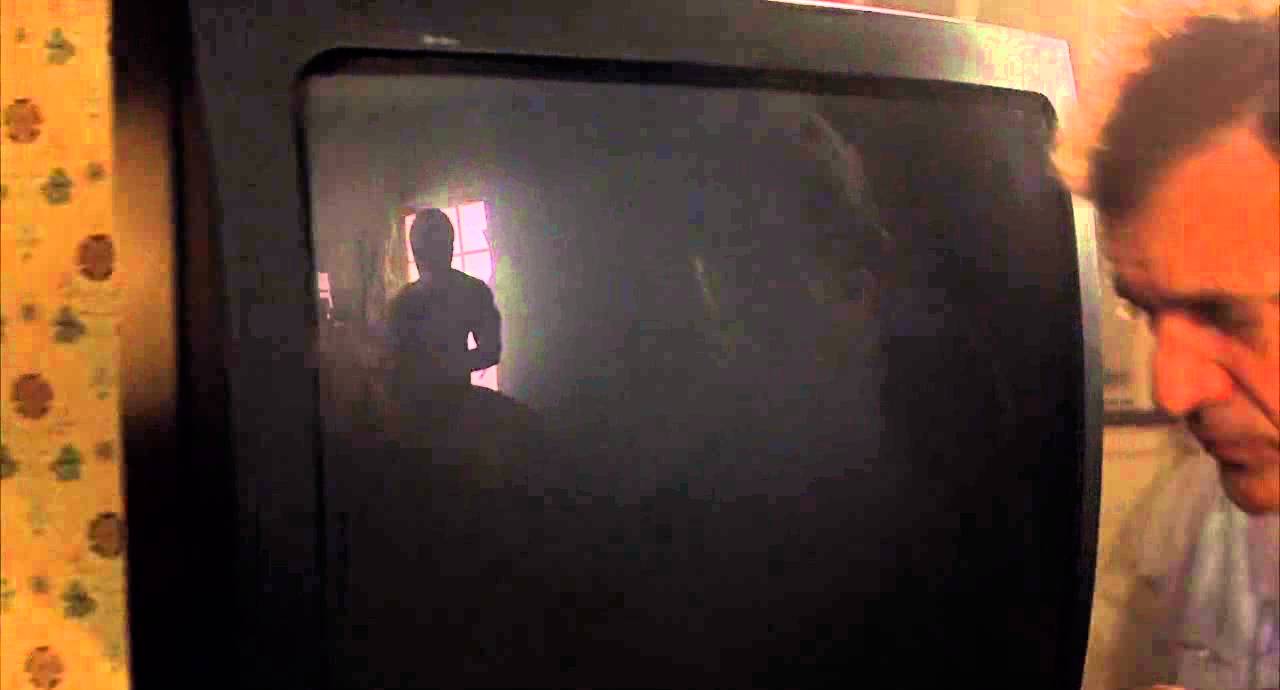
I also love the reveal of the alien still being in the house at the end through the TV screen


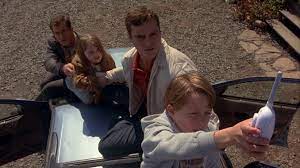
Coming back to Spielberg, the scene where the Hesses are using a walkie-talkie to hear the aliens talking is perhaps the most Spielbergian in the film:


The Sixth Sense and Unbreakable were films about coming to accept the incredible, whether it be the ability of a young boy being able to see ghosts, or that you're a superhero. Malcolm Crowe (Bruce Willis), at first doubts that Cole Seer (Haley Joel Osment) can see ghosts, realizes he's telling the truth after discovering his former patient had the same ability. David Dunn (Willis again), comes to accept he has superhuman powers. In Signs, Graham eventually can't deny there are aliens ready to invade. These films are about faith and belief, as well as accepting your purpose- Cole as the helper of the deceased, David as a superhero vigilante. Shyamalan takes these themes further in Signs by having Graham not just realize these aliens are real but there's a greater design to the universe, something he may have once believed in but turned his back on after his wife was killed. In perhaps Signs' best scene, Graham tells Merrill that there are two groups of people: people who see those lights in the sky and think they're seeing a miracle; the other believe that whether good or bad, there's no higher power looking out for them. 

I think Gibson gives what may be the best performance of his career in this film. Like with Willis, Shyamalan casts Gibson against type as a non-confrontational former priest who can't swear convincingly. When Graham and Merrill are attempting to scare off the intruder Graham awkwardly says "I'm losing my mind." It's hard not to imagine Gibson having fun playing a guy *pretending* to lose his mind rather than genuine loose cannons like Martin Riggs and Mad Max. This role also allows Gibson to be the most emotionally vulnerable he's been since the first two Lethal Weapon movies. There's a scene where Graham encounters Ray, whose trapped an alien in his house and leaving for a safer place, in which her tells Graham he's sorry for the pain he caused him. Gibson's reaction to that-the pain, the anger, but the acceptance of Ray's apology, displays how stronh he can be as actor. Overall it's a great movie star performance and perhaps the last time Gibson was without baggage as an actor/star.

Instead of casting another huge movie star as Merrill Shyamalan went for a more offbeat choice with Phoenix. Phoenix was coming off his first Oscar nomination for Gladiator and Walk the Line was a few years down the road. This was the film that turned me in to a Phoenix fan. He's so funny here. His reaction to the alien walking across the TV screen and the image of him sitting with the children, all of them wearing tinfoil hats, is likely the funniest thing Shyamalan has put on screen. Merrill is sort of a loser but he's got a good heart and is pretty endearing. I love that when Graham asks Merrill if he believes in miracles Merrill tells of the time he avoided being vomited on a girl he wanted to kiss because he had to take a piece of gum out. This is the same scene where Graham outlines the two groups of people and Shyamalan really gives us a good sense of how these two guys approach life. Gibson and Phoenix don't look a thing like brothers but I really enjoy their chemistry.

Coming back to the themes of faith and belief, Shyamalan's twist ending her- along with the Village- is his most audacious conceptually and thematically. I remember when I first the saw Signs I was expecting a twist along the lines of The Sixth Sense or Unbreakable, more of an "Oh my God!" than a slow realization of what has been set up over the course of the film. Shyamalan is going less for shock than for quiet realization. Bo's leaving glasses of water around for various reasons (supposed contamination, tastes funny), Morgan's asthma, Merrill's bat hanging in the living room, and Colleen's final words to Graham about telling Merrill to swing away, are all part of a grand design, calling back to Graham's question, "What if there are no coincidences?" Morgan's asthma protects him from the aliens' poisons and the glasses of water kill the aliens. Graham's faith is restored and the final shot shows him months later getting ready to go to church. He's found his purpose again. I find the ending I find little too pat. If Shyamalan had made things more ambiguous regarding whether certain things were coincidental or not it would've provided some great discussion. Instead, there's not much room for questioning these things. If we're going to continue the Spielberg comparisons, it's the kind of  easy ending for which, Spielberg often gets criticized. 

Ultimately, I don't think Signs is a particularly deep movie but I still think the movie overall works on an emotional and technical level. After using Eduardo Serra on Unbreakable as his cinematographer, Shyamalan brought back his The Sixth Sense cinematographer Tak Fujimoto (who photographed no less than Terrence Malick's debut feature Badlands as well as The Silence of the Lambs) for Signs. Fujimoto bring an eerily cozy feel to the film, the same way he did with The Sixth Sense. There's a paradoxical cold and warmth to these early Shyamalan films. James Newton Howard's elegant and elegiac scores also bring a beautiful autumnal melancholy this film and Shyamalan's other work. There's a little bit of Danny Elfman too in Howard's main theme for Signs. If not for Shyamalan's name you'd be forgiven if you thought maybe you were about to watch a Tim Burton alien invasion film. 

Like H.G.Wells' War of the Worlds and its cinematic interpretations, the aliens are defeated pretty easily at the end of story, which I'm okay with because the story isn't really about a war against aliens. It's a home invasion thriller which just happens to be set against a backdrop of a world invasion. The Birds, which I referenced earlier is also a smaller, almost apocalyptic story that's focused on this small town and its inhabitants. Shyamalan goes even smaller than Hitchcock, creating an almost chamber drama feel to the certain parts of the film. I almost wish there no other characters in the film other than the Hesses. 

The next Spielberg moniker obviously didn't stick, with The Village getting mostly negative reviews and Shyamalan getting worse and worse reviews over the next several films, though he's made a comeback or the last several years. However,  I don't think Shyamalan has ever recaptured what made people deem him the heir to Spielberg. The specific atmosphere of his early work has never completely returned for me unfortunately. Still, Shyamalan has always stayed true to his own particular sensibilities, similar to George Lucas, who's also gone through a reappraisal regarding his specific quirks. Maybe because we're at a place where pop culture lacks vision and spark it's easier to appreciate people like Shyamalan more now. Signs, along with The Sixth Sense, Unbreakable and yes, The Village, represent a filmmaker unafraid of being laughed at for his earnestness, whose pretentiousness oddly feels like genuine sincerity. 

It's weird to think of Signs as a 20 year old film but it makes sense- it does feel like a film from another era, a star and director driven blockbuster, the kind that would feel like a throwback if released now. I never know how to end these things so I'll say that despite it losing some of its luster for me over the years, I still think Signs is a beautiful, if somewhat reductive, film, which represents a filmmaker who at the time seemed unstoppable as a pop culture force, even if calling him the next Spielberg ended up being a curse. So, what are your thoughts on Signs and M. Night Shyamalan's career. Comment and let me know. 

Wednesday, 25 May 2022

Begun, the Clone Wars have: "Star Wars Episode II: Attack of the Clones" at 20


Spoilers Below

For a while I've wanted to talk more about Star Wars on this blog, since along with James Bond and Planet of the Apes, it's probably the most important film franchise for me. With the second installment of the Prequel Trilogy, Attack of the Clones, turning 20, I've decided this was a good opportunity to discuss more of my feelings on the series. Attack of the Clones is perhaps the most maligned of George Lucas' maligned trilogy, though the trilogy now has the same nostalgic reverence of the Original Trilogy. If the older generation hated these films then the younger generation, people my age or younger, really took to them. I still consider myself an OT fan but I was at the right age to like these films when they came out. However, over time  my feelings have grown increasingly complicated. I like things about the PT and dislike others. And you know what, often they're the same things. The PT have great ideas and are conceptually brilliant but the execution of the story is were many of the problems lie. It feels like the scripts are all a couple of rewrites from being really solid, especially the first 2. However, I don't want to focus too much on the PT overall. Instead, let's talk about  Attack of the Clones.

As Scott Mendelson points out in his retrospective piece, by the time Attack of the Clones was released, there were challengers to Lucas' blockbuster throne such as the first The Lord of the Rings and Harry Potter films. The first Spider-Man came out several weeks before Attack of the Clones and became the highest grossing film of the year, the first time a Star Wars film wasn't the number one grosser. Attack of the Clones also didn't have the novelty of being the first Star Wars movie in 16 years like The Phantom Menace had. That, and since Phantom Menace burned people so badly there was trepidation about this film. Moreover, during the whole prequel era these aforementioned were better received by critics and audiences. 

For those who need a refresher on the plot, it goes like this: Former Queen of Naboo, now senator, Padme Amidala (Natalie Portman) survives two assassination attempts and is taken back to Naboo to hide by Jedi Padawan Anakin Skywalker (Hayden Christensen), who has grown infatuated with Padme over the last ten years and is struggling with being so close to her again. Meanwhile his master Obi-Wan Kenobi (Ewan McGregor) tracks the dart that killed the would-be assassin to the cloning facility on Kamino, where they've been creating a army using the bounty hunter Jango Fett (Temuera Morrison) as a DNA donor. Jango even had the Kaminoans make him a son, Boba, who we know will be the future bane of Han Solo's existence.

If Phantom Menace was an ensemble piece then then Attack of the Clones is the closest the Star Wars series has gotten to a character study. It asks the question we came to prequels to find out: who is Anakin Skywalker, the future Darth Vader. The answer wasn't what fans expected. Making Anakin a nine year old boy in Phantom Menace was Lucas' first subversion of fan expectations. Then in Attack of Clones, instead of a noble, good-head on his shoulders young man with some personal flaws, this Anakin was all flaws. He's petulant, whiney (though I guess that's where Luke gets it from), disobedient, overly infatuated with Padme, and in one scene, murders a bunch of people. Lucas doesn't portray Anakin as a mythic, larger than life hero, the badass warrior who becomes a badass villain. Instead, Lucas saw Anakin as a "pathetic individual." 

I'm conflicted about Anakin's portrayal in this film. It's certainly a unique characterization and psychologically complicated. Anakin definitely had psychological issues which demanded serious therapy. The characterization does a make certain kind of sense. Unlike the other Jedi who were taken from their parents before they grew attached to them, Anakin left his mother when he already formed a bond with her. He grew a crush on Padme and then spent the next 10 years being taught to suppress his emotions. He was never in a relationship with a woman so I can see how his crush grew until it became an obsessive infatuation. Anakin has no idea how to talk to women so his creepy/stalkerish behaviour towards Padme is fitting. 

The problem lies in the execution. Lucas could've gotten away with Anakin being immature and angry if we saw  him mature throughout the film and become the noble warrior and friend Obi-Wan looks back on fondly in the original film. That, and if his infatuation towards Padme was examined and called attention to as being unhealthy. Either that or you establish Anakin as a heroic warrior, albeit a little arrogant. Then you show him crumbling upon meeting Padme again. Despite his confidence in every other area, when it comes to romantic feelings he's very awkward but in a charming and un-stalkerish way. Padme would deal with her romantic feeling in a more diplomatic (since she's a politician). Lucas also could've fleshed out the idea that neither of them had a normal upbringing, having sworn themselves to their duties.

The romance would've made more sense if Anakin was a little older in Phantom Menace. We could've seen more of Anakin and Padme's friendship grow, allowing Padme to have similar romantic feelings towards him. Since he was a little boy in the she could've never had those feelings; and she definitely wouldn't have feelings for Anakin now, not the guy who extolls the virtues of fascism. That's a weirdly handled scene. It's supposed to be cute and is set against the backdrop of hills from The Sound of Music but when he says "If it works" as a response to Padme saying his preferred style of government sounds like a dictatorship it's very dark foreshadowing for what is laughed off and forgotten.

Then there's Anakin's murder of the sand people for the death of his mother, Shmi (Pernilla August). Anakin going off to save Shmi is one of the strongest parts of the film, with Anakin on a speeder bike set against Tatooine's twin sunsets being a visually potent image. It's a shame Lucas is a such a flat visual stylist when he's shooting dialogue scenes. Shmi's death is honestly effective, showing us hints of an emotionally stronger and better film. Anakin's Kubrickian stare before he murders the sand people also showcases Christensen's acting ability which are often lost under Lucas' dialogue. But what I want to get at is Padme's reaction to Anakin telling her about killing "Not just the men, but the women and the children too." She's way too relaxed and even more so than him championing fascism, it makes usus question how Padme could fall in love with Anakin. 

I also feel like Anakin pretty much becomes Darth Vader when he kills the sand people. When you give in to hate and anger is when you turn to the dark side. In Return of the Jedi Luke's pivotal moment is when he almost kills Vader but then grants him mercy. I understand Shmi's death is crucial to Anakin's choices in Revenge of The Sith. His dreams of her dying which came true and he's scared of his dreams of Padme's coming to fruition as well. However, the murdering of the sand people just feels like too much too soon.

Coming back to the romance (there's a lot to talk about regarding the romance), David Lean's Doctor Zhivago was an influence on the film. Lucas even wanted the poster for Attack of the Clones to mimic the poster for Lean's epic romance about the Russian Revolution and Russia's role in WWI, the backdrop for a romance between a Doctor Yuri Zhivago and Nurse Lara Antipova. While Lean was a director who was able to make the scenes between his characters as powerful and memorable as his grand compositions (he also directed one of the great romances with the smaller scale Brief Encounter), Lucas' scenes between characters are often his weakest, due to the dialogue, blocking and compositions lacky dynamism. I know the dialogue in the Star Wars was always intended to be hokey and melodramatic but since this is more complex story, I think the dialogue and the performances should've been on a higher level than in the OT.

The PT is at its most powerful when Lucas allows the images and music to tell the story The image of Anakin and Padme in silhouette being led out to an arena to be executed, with John Williams' love theme playing, says more than Lucas' words could ever do. I wish Lucas did rely less on dialogue to sell us on this romance. Anakin's and Padme's actions should have spoke for them as we saw them grow closer because of the threat on her life. They never feel in danger though, not until they're led out to die with Obi-Wan on Geonosis.

Speaking of Obi-Wan, we unfortunately don't get to see enough of his friendship with Anakin in this movie. I always feel Phantom Menace could've focused on Anakin and Obi-Wan becoming friends, ending with them becoming master and apprentice. Attack of the Clones would then show us how that affects their relationship. There are moments of warmth between Anakin and Obi-Wan but it'd been nice to see more of that great friendship. It's important to remember that Obi-Wan was never supposed to train Anakin. Obi-Wan's master Qui Gon Jinn (Liam Neeson) was going to train Anakin against the council's wishes. When he was mortally wounded by Darth Maul his dying wish was for Anakin to be trained, to which Obi-Wan agreed. Both Obi-Wan and Anakin lost a father figure, and father/son relationships are obviously an important theme in Star Wars. So, both Anakin and Obi-Wan are both living in Qui-Gon's shadow and attempting to live up to his high hopes for both of them. I think it was a missed opportunity not to mention Qui-Gon at all in this film. It would've been a good bonding moment if these men reminisced about their surrogate father. 

Obi-Wan gets more to do in this film since he got the shaft in Phantom Menace, with arguably Qui-Gon taking on some of what his role originally supposed to be. His sub-plot in this film ties more in to the larger story of the film, the beginning of the Clone Wars. The Clone Wars were name dropped in the original film but we never knew exactly what they were about. Essentially they were a piece of world-building that made the Star Wars universe more alive, that it was a piece of history everyone knew about. It's established  Attack of the Clones and paid off in Revenge of the Sith that the Clone Wars were the beginning of the end for the Jedi. There was something insidious (Darth Sidious) about the creation of the clones but the Jedi were too-shortsighted to truly to see it. It's an idea that I wish was better presented. The way Lucas portrays it makes us question the Jedi's intelligence. It shouldn't have been so obvious how shady the cloning operation was. However, I love the Imperial March playing over the Clones getting ready for battle at the end. It's another example of how great a filmmaker Lucas can be when he's not relying on dialogue to tell the story, just images and music.


I think Lucas is often a better conceptual director than he is a narrative one. He always been an experimental filmmaker at heart, from his early film school films, including THX 1138, which became the basis for his first feature film of the same name. However, he's not always great at crafting character or story arcs, The plot is driving things rather than the characters' choices.  Anakin doesn't really have a character arc here. He doesn't mature and he's already so infatuated with Padme from the beginning there's not much room for him to go anywhere regarding his feelings, at least not how Lucas goes about it.. Stuff happens in Attack of the Clones but it doesn't feel like there's a real arc to the story. Lucas creates a sound structure but doesn't always know what to do in that structure.   

Attack of the Clones does at least give us a clearer picture of how things will connect to the OT, with the beginning of the Clone Wars and Anakin's romance with Padme. The film in several ways is the key to understanding Anakin's story, the middle chapter and heart of the PT in the same The Empire Strikes Back is the heart of the OT. Though I'd argue Attack of the Clones- as I did earlier- suffers from having to re-introduce Anakin. It would've made the flow of the story from Phantom Menace to Attack of the Clones tighter and stronger if we had the same actor continuing their performance from the first film. So, in cloning, I mean closing, Attack of the Clones is the awkward first step towards Anakin's downfall in Revenge of the Sith. We see the beginning of man's obsession with preventing those he loves from dying, which will lead to death of whom he loves and his own spiritual death. 

So, is Attack of the Clones an underrated masterpiece or does it rank low on your list of Star Wars films? Comment and let me know.

Tuesday, 4 January 2022

Why did this story feel like a memory?: "The Matrix Resurrections"


Spoilers Below


"They took my life and turned in to a video game" laments Neo (Keanu Reeves) at one point in Lana Wachowski's The Matrix Resurrections, her return, sans her sister Lily, to the universe that defined them. Neo has learned after his sacrifice at the end of The Matrix Revolutions he was resurrected and put back in to the Matrix, where he was given the identity of a video game developer who created the video game called...The Matrix. One of the big themes of The Matrix was choice of identity. The Matrix gives you an identity but it is not one of your choosing. In Resurrections Neo's identity has been robbed of him and his life has been reduced to entertainment. The Matrix took humanity's imprisonment and turned it in to mass entertainment created by the very man who attempted to free humanity from their virtual prison. It would be a cosmic joke except it was specifically manufactured by a computer program, the Analyst (Neil Patrick Harris), who took over the Matrix from the Architect, he of the "ergo" and "vis a vis."

Bugs (Jessica Henwick), a resistance fighter, tells Neo that the Matrix took something so important to her and others, Neo's story and "turned it in to something trivial. Were better to bury truth than in something as ordinary as a video game?" One can hear through Neo and Bugs' conversation Wachowski lamenting on what was so personal to them becoming so commercialized. Hell, The Matrix was turned in to a video game, one written and directed by them. So maybe there's a little bit of self-critique from Wachowski. The Matrix was so personal to them- it's often read as a trans allegory- so perhaps it was reductive to turn it in to a video game and make sequels from it.

It's no coincidence the film's title has Resurrections in it, acknowledging  this is a dead franchise being resurrected, along with a couple of previously thought dead characters. The film is a meta-commentary on legacy sequels, nostalgia and the role of a creator. This is Wachowski grappling with the legacy of her creation and the burden of creating something so popular it almost becomes bigger than you.

The Matrix Resurrections was to be made even without the Wachowskis' involvement but Lana Wachowski came on to steer the ship along with novelist and co-screenwriter David Mitchell (who wrote the novel Cloud Atlas on which the Wachowskis' film was based.) Neo (Thomas Anderson in the Matrix), like the Wachowskis, is told by his business partner (Jonathan Groff)- who's actually a new version of Neo's old nemesis Agent Smith- a sequel is happening to his seminal game with or without him. Smith even name drops Warner Bros. Making a sequel to the game is largely about nostalgia and Wachowski is critiquing how legacy sequels are largely dependent and coast on nostalgia. There's also the irony, as I already mentioned, of humanity's imprisonment becoming a touchstone for a generation via this game. 

The success of the game has plagued Neo as he is unable to separate his "real life" from his "creation," even almost walking off a roof, believing he could fly.  As a creator you can become so defined by your creation that it becomes a curse. You're not able to completely move on from it and people keep asking for more, more of you that you shouldn't have to give, more of what gives them comfort from the real world. In the film's case the "real world" is in itself a virtual reality. When you're playing a video game you're enjoying a simulation within what you don't realize is a simulation. 

Your creation can also be co-opted by people for whom it was never meant. Look at how the concept of the Red Pill was incorporated in to the alt-right philosophy even though The Matrix was made by two trans women, people whom that movement hates. While art is always open to anybody to interpret as they wish, certain people can attach themselves to and misinterpret your work.

Coming back to Neo being unsure of his own reality- when Morpheus (Yahya Abdul Manteen II) shows up Neo thinks he's going crazy. This Morpheus is a computer program created by Neo, an amalgamation of the real Morpheus and Smith. I like Manteen's laidback and chic cool cat interpretation of Morpheus. This version of Morpheus is a cool conceit and I like that he can interact with people in the real world via a new technology. But my favourite performance in the film may be Groff's. Groff doesn't imitate Hugo Weaving but instead invokes something about that performance, all while adding his own corporate cut-throat smarm to the part. And his "awakening" provides one of the film's most memorable moments.

When Neo is taken out of the Matrix and learns the truth he begins grappling with his own legend and questions whether his sacrifice at the end of Revolutions mattered, due to learning his whole life became a video game for mass consumption. He's a little like Luke Skywalker in The Last Jedi in that regard. He has to be told that what he did indeed mattered, even if things didn't work out perfectly. There actually was peace between machines and humans until a civil war broke out between the machines over an energy shortage. The last human city Zion was destroyed but humans and their machine allies forged a new underground city called IO. And Neo reunites an old ally, Niobe (Jada Pinkett Smith), who never believed in the concept of the "One" but believed in Neo. There's even a field of study encompassing his life called "Neology." 

Neo is defined by his own legend, just like the Wachowskis are defined by their creation. He is a man who can never just be a man. He is the One, he is a legend, he's the creator of the most important video game ever. Whether in the Matrix or out he's burdened by expectation, just like the Wachowskis are expected to always return to this universe. The only thing grounding Neo is Trinity (Carrie-Anne Moss), who died in Revolutions but along with Neo was resurrected by the aforementioned Analyst, who was tasked with researching Neo. He discovered Neo's powers were linked to Trinity and he could run the Matrix based on Neo and Trinity's relationship. I'm still a little confused on how this all works. But essentially, with Neo leaving the Matrix, it has destabilized. Trinity was given the name "Tiffany" while in the Matrix and the Analyst made sure to keep her and Neo close together in the Matrix. Neo wanting her out of the Matrix puts him at odds with the Analyst who wants him back in the Matrix. While the love story between Neo and Trinity didn't quite work for me in the trilogy I found there was something genuinely touching about their reunion in this film. 

As others have pointed out, the Analyst is essentially a cynical Kevin Feige- like studio producer who's vision of the Matrix is to give people what they want. "The sheeple aren't going anywhere. They like my world," he tells Neo and Trinity in the final scene. "They want to be controlled. They crave the comfort of certainty." Coming back to the title, he's essentially resurrected the franchise and its dead characters. But Neo and Trinity tell him they're going to rewrite the Matrix. This echoes the original film's ending which implied Neo could change the Matrix, which the sequels ignored. It's also commenting on change and creativity in a franchise a good thing. And I would hope if there is a Matrix 5 the Matrix should look very different. 

I feel I'm liking this film more in retrospect, which I know I've said before about certain films. I do feel this a film that's more interesting than enjoyable. It perhaps loses itself in its meta-commentary to the detriment of being a satisfying entertainment. The reason the original film is still the best is because it was just a exceptionally cool action film, with its blend of philosophy, martial arts, cyberpunk and rage against the system energy. The first two sequels- particularly The Matrix Reloaded- doubled down on the philosophy and action, ending up disappearing up their own asses. Re-watching them recently what stands out is the thin and stretched out story. Most of the films' running time is dedicated to bigger action sequences and duller scenes of philosophical discussion.

The original film had the right amount of philosophy without losing the audience. It was simple and accessible. And it was one of those zeitgeist defining films, a film I'd argue is the Star Wars of its time. And It probably never should have never gotten a sequel.  The Matrix films have become like the Terminator franchise, in that it's been difficult to continue on the story from the first film- though Terminator 2 is a terrific sequel. The Matrix Resurrections critiques its own existence but may not prevent more Matrix films. It may have even opened the door. But as Morpheus would say, the Wachowskis will be the ones who have to walk through it.  

Friday, 20 August 2021

The Essential Films: "Creature From the Black Lagoon" (1954)

Classic Film Through a Feminist Lens: CREATURE FROM THE BLACK LAGOON


A Series of Writings on Films that I feel are essential for film lovers, coupled with films that are personal to me. Spoilers for people who haven't seen the film.

If you were to guess what movie director Ingmar Bergman reportedly watched every year on his birthday the answer may not be Creature From The Black Lagoon but it shows the far-reach and lasting impact of this film, an impact its makers probably could've never expected. But why does Creature endure? I would argue it's due to its odd elegance and beauty as well as the subtle tragic pathos of its titular character, who despite being a "monster" is actually a sympathetic figure. He's in love with a woman with whom can never be and is trying to protect his home from interlopers. He winds up being more alluring and interesting than the human characters.  

Before I get to the film's plot I want to talk about the film's fascinating and strange origin. Actor and future producer William Alland-who was part of Welles' Mercury Theater and played the reporter in Citizen Kane- was at a dinner party with Welles, actress Dolores del Rio and cinematographer Gabriel Figueroa during Citizen Kane's production. Figueroa told stories of  part-fish, part-human creatures that lived in the Amazon. These stories inspired Alland to write down notes that a decade later would be developed in to the script for Creature.

Jack Arnold, who directed It Came From Outer Space, was hired on to direct. Before he became a feature film director Arnold was an actor on Broadway. When WWII began he was placed in the Signal Corps where he took a course on cinematography. He then became a cameraman, working on military documentaries as an assistant to famed documentary filmmaker Robert Flaherty (Nanook of the North). After the war he formed a production company with his air squadron friend Lee Goodman named Promotional Films, which made fund-raising films for non-profit organizations. He would eventually direct an Oscar-nominated documentary entitled With These Hands, about working conditions in the early 20th Century.  

The underwater sequences were directed by James C. Havens and photographed by Scotty Welbourne. Ricou Browning played "Gill-man" in the underwater scenes while Ben Chapman played him in the land scenes. Browning started out as a diver in underwater shows but after being in Creature and its two sequels he would go on to have a career in the film business as a producer, director and second unit director. He was the second unit director on the James Bond film Thunderball, which is funny because when I was watching the film I couldn't help but think of Thunderball's underwater scenes.   

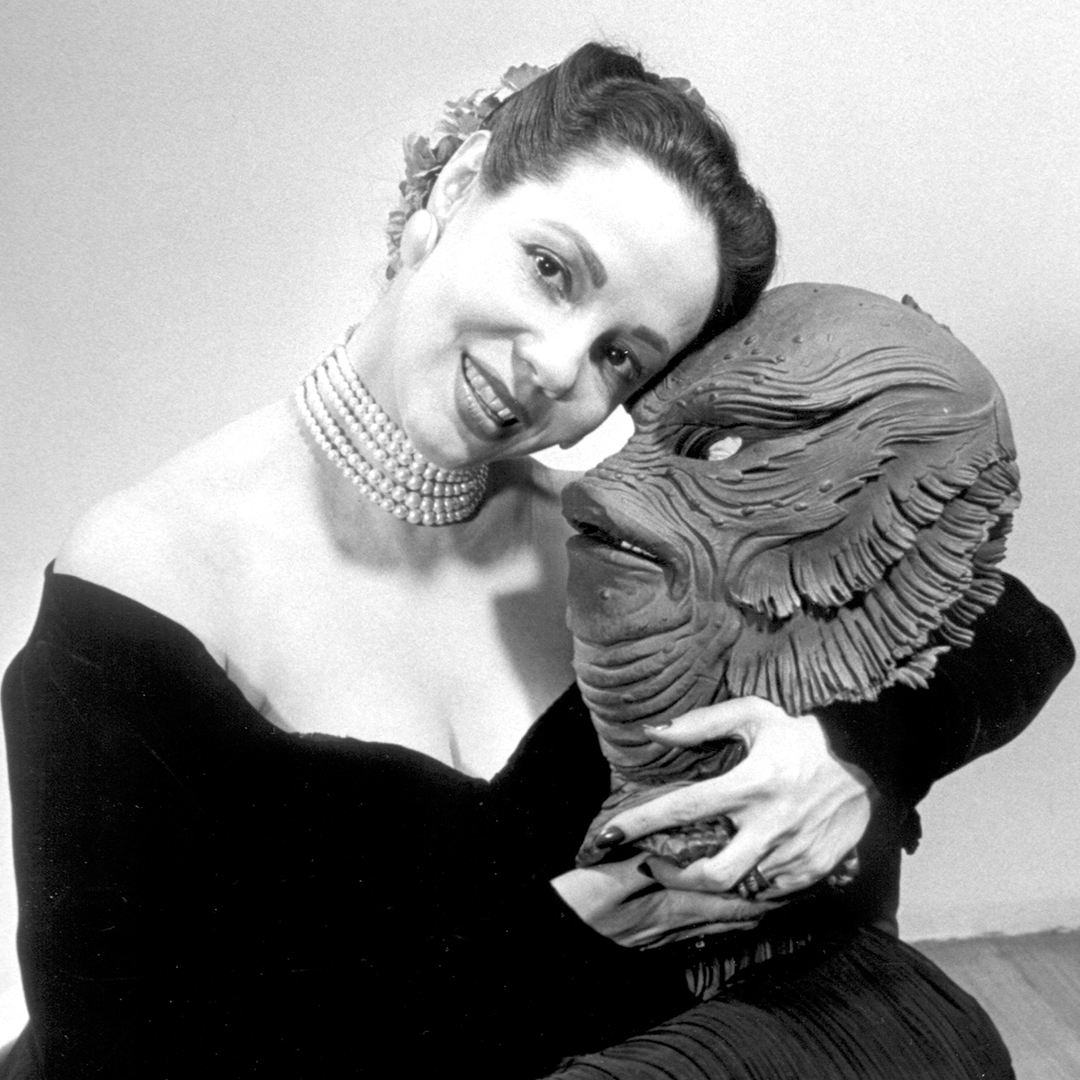
The design for "Gill-man" came from Milicent Patrick, born Mildred Elizabeth Fulvia di Rossi, and who some claim to have been an Italian baroness. Her father C.C. Rossi helped design William Randolph Hearst's castle estate (another Citizen Kane connection.) She worked as animator for Walt Disney before becoming a model. When she became an actress she met Bud Westmore, head of Universal Studios' make-up department, showing him her sketches.

Universal Monsters Spotlight on MILICENT PATRICK: Hollywood's Unsung M –  Mondo

She created Gill-man's design but was let go from Universal due to Westmore's jealousy over her creating the design. Westmore got the credit for Gill-Man until research reclaimed Patrick's contribution to the film. Patrick is the most fascinating figure associated with this film, with a recent book about her life and career by Mallory O'Meara entitled The Lady From The Black Lagoon being published in 2019.

I've talked quite a bit about the behind the scenes players  so now it's time to discuss the actual  story. The film begins with the discovery of a a skeletal hand which links man and sea animal. Dr. Carl Maia (Antonio Moreno) seeks out friend and former student Dr. David Reed (Richard Carlson) to help with an expedition. David, Carl, Dr. Mark Williams (Richard Denning), Dr. Edwin Thompson (Whit Bissel), and David's colleague and lover Kay Lawrence (Julie Adams), go back to the amazon to find the rest of the skeleton. This leads to them encountering the Gill-man, who takes a liking to Kay, ala King Kong. 

The characters are archetypes- you have the good scientist who doesn't want to kill the creature (David), the scientist who acts like a big game hunter (Mark), the bookish scientist (Edwin), the older doctor (Carl), the girl (Kay), and the foreign riverboat captain, Lucas (Nestor Paiva). But the simplicity of the characters just makes Gill-man all the more interesting. Chapman and Browning both give Gill-Man a personality despite never speaking, a certain "character" if you will. Chapman was directed by Arnold to not lift his feet when walking on the boat. Arnold conceived that since Gill-Man glided underwater he would glide on surface. It's easy to forget its two actors playing the part because it feels like a consistent character.

Coming back to King Kong, If that film's plot is repurposed for Creature, then Creature's DNA can be found in everything that came after, including Jaws and Alien. The sequence where Kay is swimming in the lagoon, mirrored by Gil-man underwater, can't help but bring to mind Stevem Spielberg's classic. When we see Kay from the creature's perspective it's hard not imagine Spielberg having seen the film when he was a boy. In the opening where we see Chrissie (Susan Backline) from the shark's perspective underwater it feels like a clear homage. Welbourne's cinematography gives this scene a dream/nightmare-like quality. The underwater sequences all have a lyrical and visceral quality. And since this film was released in 3-D, audiences in 1954 were immersed in the watery world along with the characters. 

Playing the 'Creature from the Black Lagoon' | Considerable


Adams describes Kay and Gill-Man swimming together- unbeknownst to Kay- as a "love dance," which I think is a great description. There's always  an odd romanticism in this kind of film, with the creature in love with a human. On the DVD documentary historian and science fiction illustrator Vincent Di Fate suggests that thinking too much about the logic of sexual intercourse between Gill-man and Kay would ruin the story. He say what matters is the subtext of this scene connecting with an audience.  

The lagoon becomes the thin dividing line between humanity and Gill-man, where humanity is the intruder on his terrain. In the documentary film historian Paul M. Jensen sees an environmental message in the film. When Kay dumps a cigarette in the water it pans down to Gill-man. While Gill-man is actually looking at Kay rather than the cigarette Jensen says the camera movement links the cigarette to Gill-man. This makes it seem like Gill-man is watching his home being polluted. This for makes his actions understandable, and I would argue sympathetic. As Chapman puts it in the documentary, if you came home and people were partying in your house, how would you react? 

Continuing on with the film's themes regarding the underwater world, there's a particular emphasis put on the underwater world's mystery and danger. In one scene David tells Mark:

We've just begun to learn about the water and its secrets, just as we've only touched on outer space. We don't entirely rule out the possibility that there might be some form of life on another planet, and why some entirely different form of life in a world we already know is inhabited by millions of living creatures?

I like the comparison to space, how it and the water are both mysterious worlds still in many ways unknown to man, though we know for certain the water is inhabited. Even if Gill-man is scary he's also an incredible discovery. The film's opening narration is dedicated to how life started underwater, placing the Gill-man as a mythic figure who's been around for ages and is a missing link between man and amphibian. The point of the story is how man will react violently to such a creature. They would want to destroy it instead of trying to make peaceful contact or leaving it alone. Gill-man, after kidnapping Kay is shot down at the end, though the ending was made to be ambiguous so as to leave room for a sequel, which I as made reference to earlier did happen- twice. 

On the DVD commentary, Tom Weaver quotes from an interview Arnold gave where he said he always set out to explore man's inhumanity towards man and those who are different- as well and how humanity hadn't evolved beyond focusing on what was superficial- in his science-fiction films. However he wanted to do so in a way audiences would accept. Arnold said he didn't think audiences would sit for a polemic. He also knew the House Unamerican Activities Committee or other societies would come after him. Arnold wanted to entertain but also hoped audiences would pick up on the deeper themes. Arnold strikes me as a thoughtful filmmaker even if certain critics didn't see anything deeper in Creature. I feel he was able to make an entertaining film without falling in to camp. I think its because it takes its premise seriously without being too serious.  

A discussion of Creature wouldn't be complete mentioning its score and the iconic "Bah Bah Baaahh" theme for Gill-man (created by Herman Stein), which is played every time he appears,. The score is an composite of different composers' contributions, including Henry Mancini (Breakfast at Tiffany's, The Pink Panther), as well as tracks from other Universal Studios' films. 

So, that's Creature From The Black Lagoon. Where does it rank for you amongst the Universal horror films? And why do you think it has endured over the years. Comment and let me know.