Showing posts with label Sigourney Weaver. Show all posts

Saturday, 8 June 2024

The Essential Films: “Alien” (1979)


A series of writings on films that I feel are essential for film lovers, coupled with films that are important to me. Spoilers for those who haven't seen

There's just something about Alien. It's the atmosphere, the vibe. Yes, Aliens is often considered the better movie. And yes, Aliens is one the best movies of its kind, a textbook for any aspiring action filmmaker. But Alien is on a whole other level in its visual design, acting and suggestive power. It was partly born out of director Ridley Scott's depression after seeing what George accomplished technically with Star Wars. Scott had made his first film, The Duellists, and was planning on doing Tristan and Isolde next but Star Wars gave him the urge to make a science fiction. It's funny. Star Wars appears so quaint now, which is fine and appropriate given Lucas's old fashioned influences, but Alien still the power to startle its audience. And while Star Wars is seen as the creative vision of one man, Alien acts as a debunking of the "auteur theory." The film isn't just indebted to Scott but also to screenwriters Dan O'Bannon and Ronald Shusett and artist H.R Giger. 

Scott viewed Star Wars as the flipside of Stanley Kubrick's 2001: A Space Odyssey, and in turn Alien was the flipside of Star Wars. Both films, however, influenced the visual look of the film. In a Deadline interview on the influence of Star Wars, director Guillermo Del Toro elegantly summed up the influence of Lucas's and Kubrick's visions   

If you think about Ridley Scott and 'Alien,' the idea of truckers in space, which Ridley Scott does beautifully, and the way he made certain parts of the bowels of the ship feel worn and used and dingy. That is the crossbreeding of '2001' with 'Star Wars.' Ridley Scott is in the direct lineage of Lucas and Kubrick. His is a very different tone but he is as precise with his lensing. The areas of the ship that are pristine are very Kubrick-ian in a way, but there are parts of the ship where you can see the direct influence of 'Star Wars.

The other film apart from Star Wars and 2001 I can draw a comparison to is Alfred Hitchcock's Psycho. Both Alien and Psycho take their time getting to their most iconic moments, the shower scene and the chestburster. Marion Crane steals money to set up a life with her boyfriend, veering off course to spend a night at the Bates Motel. The crew of the freighter vessel the Nostromo are woken up out of cryosleep, supposedly because they're near earth, but like Marion they are taken off course to pick up a distress signal. From their titles, we know they're going to be a "psycho" and an Alien. But when are they going to show up. All through Marion's car journey, to her meeting with Norman, tension and unease mounts. The crew find a derelict ship with alien eggs on them. Kane (John Hurt) gets a facehugger to, well, the face. Quarantine is broken by scientist officer Ash (Ian Holm). And then there's the whole bleeding acid thing. Norman is a friendly but strange man with an unhealthy relationship with his mother. The facehugger falls, off and the crew can finally go home. Marion decides to return the money and takes a shower. The crew sit down to eat. Them it happens/ Marion is killed by a knife-wielding maniac and an alien bursts out of Kane's chest.

Both these moments take place in safe, benign settings- a shower, a meal room. The violence is shocking because every thing has returned to calm. These moments also push forward the narratives in to the second half of their stories. Psycho starts out as a crime drama, Alien starts out as a sci-fi mystery, and they both organically take us through the events as they become more horrific. It's all about structure. Alien is a perfectly structured film, with immaculate pacing. Some may find it slow. I get that but again I think the pacing is masterful.    

A big part of why the horror of Alien is so effective is its sense of realism. The film takes this sci-fi premise and grounds it in a lived-in workaday reality. Making the characters "truckers in space" was a great way to make these people relatable and normal. It also takes the glamour of the idea of space travel. These aren't explorers, there's no sense of awe and wonder in what they do. You even have tow characters, Parker (Yaphet Kotto) and Brent (Harry Dean Stanton) who are only focused on getting their fair share. There's a documentary-like quality to the performances, with Scott creating a detached, unsentimental vibe to the proceedings. He creates a breathing room for the performances and the atmosphere. 

The film's sense of realism is also indebted to Michael Seymour's immersive production designed. The Nostromo feels like an actual space vessel that people would live on. The derelict spacecraft has this ominous vibe, one of mystery and unease. The ship, and the moment they find the "Space Jockey" suggests a mysthic grandeur that contrasts with the more claustrophobic interiors of the Nostromo

I mentioned this film's "suggestive power" earlier. I want to explain what I mean. Without the characters having to discuss it philosophically, the film conveys its deeper meanings through its actions. The facehugger and chestburster represent the themes of sexual assault. The film is often talkin about as taking the fears of women and placing them on a man. There's also what I just mentioned about the Space Jockey, a sense of mystery of what species are out there. Then there's the themes of distrust towards authority, with the company the truckers work for treating them as expendable in the face of retrieving the "xenomorph." This was the 70s. There was a whole nihilistic streak to the films of this error, The difference between 70s and 80s cinema is best exemplified in the contrast between Alien and Aliens. Alien is a bleak, unsentimental horror film while Aliens is a Reagan-era pumped up action movie with one-liners and Spielbergian sentiment, including a happy ending for its surviving characters. Ellen Ripley (Sigourney Weaver) barely survives this film and the ending is more low-key than strictly happy.  

The dichotomy between Alien and Aliens can also be found in The Terminator and Terminator 2: Judgment Day (funnily enough, both Terminator films are directed by Aliens helmer James Cameron). The originals are stripped down horror thrillers while the sequels are bigger action blockbusters. There's a bad robot in the first, a good robot in the second who the female lead has to learn to trust. There's the mother/child relationship, and an ending that seemingly puts to bed any need for sequels.  

You know what makes Alien scary? More than the xenomorph? It's Ash. We know there's something up with Ash. However, the film constantly draws our attention away and never reveals too much. When it his head is bashed off by Parker, revealing him to be android, it's one of the film's creepiest images. Then there's that smirk from the disembodied head and the slightly electronic voice, telling the remaining crew members that he has his sympathies. I don't think this film is as unsettling if it's just the alien. That somebody else is "alien" amongst the crew, seemingly friendly but slightly creepy, working against them, makes the film even starker. He acts as the face of the company "Weyland-Yutani," which gets a human face for the sequels but remains in the shadows here, which I like better. For the company these people are expendable. And they'll alone in the coldness of space. The film's famous tagline is "In space no one can hear you scream" which I think just sums up the bleakness of this film and this era of film so well. 

Then there's Ripley.  Weaver wasn't a star when the film was released and Ripley wasn't the iconic character she is now so it wasn't a guarantee that she would live initially. Weaver has such a unique presence as a an actress, a strong no-nonsense physical presence while also being a capable dramatic actress, believable in her vulnerability and strength to survive.  And okay, you're either going to get why she goes back for the cat or not. I would probably go back for the cat. It just makes her more human. 

Alien could've just been as cash-in on the sci-fi craze like the James Bond film Moonraker, also released the same year. But it stands up as a genuine classic in the genre. Scott may have been depressed when he saw Lucas accomplished but he helped make something that could also cause the same level of depression in an aspiring filmmaker. And even Kubrick wanted to know how the chestburster scene was done. Alien is the greatest sci-fi horror film of all time, smart and sophisticated, while never carrying itself with pretension. Just an all around immaculately made movie.  

Thursday, 4 January 2024

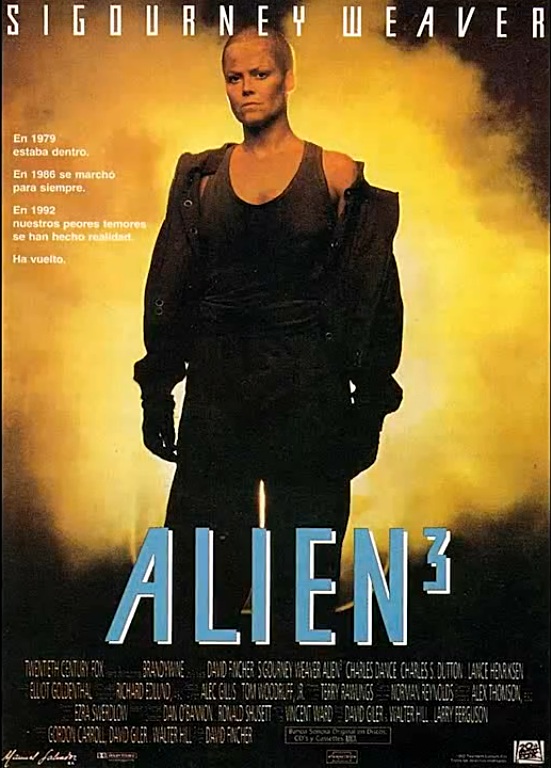
Death, Taxes, and Franchise Longevity: "Alien 3" and "Alien Resurrection" as Franchise Extensions and Parallel Versions of "Alien" and "Aliens"


Spoilers for the Alien series below

When Charlton Heston blew up the planet of the apes at the end of Beneath the Planet of the Apes, it was thought by Heston- who came up with the idea- that this would prevent any more sequels being made. But, this didn't stop 20th Century Fox from making Escape From The Planet of the Apes shortly after. James Bond is dead but we'll see a new Bond...sometime in the future. Avengers: Endgame felt like, well, the endgame of the MCU. The thing is, a franchise will always find a way to extend its life, even when it probably should end (though I guess there were several loose ends at the end of Endgame).  The question is, how do you continue on a story after it's logical end point. "Rebooting" is always the easy option but there was a time where you didn't really wipe the slate clean- you just continued on with new characters or a new actor as Batman or Bond. When it comes to clear-cut endings, James Cameron's Aliens gives Ellen Ripley (Sigourney Weaver) a pretty neat ending-
having overcome the trauma from the original Ridley Scott Alien, and gaining a surrogate daughter and possible love interest. But of course, a third film had to be made. After having difficulty nailing down a story, and even without a finished script, Alien 3 was made, helmed by first time director David Fincher. Alien 3 gives an even more definitive end to Ripley's story- having her commit suicide but, again, a sequel had to be made, and Ripley was brought back as a clone for Alien Resurrection, this time directed by French auteur Jean Pierre Jeunet. Neither Alien 3 or Resurrection are beloved as the first two films but in this piece I want to talk about how they operate, not only as franchise extensions, but also largely as parallel versions of the first two films. 

If Aliens is one of the quintessential Hollywood blockbusters, incredibly audience friendly- filled with one liners and an almost Spielbergian sentiment, then Alien 3 is perhaps the bleakest, nihilistic and audience-unfriendly film of any franchise. It essentially tells its audience "Hey, remember that cute little girl and the cool Colonial marine you loved so much from Aliens? Yeah they're dead, and our supporting cast is now of group of ex-convicts guilty of rape, murder and child molestation. And, oh yeah, Ripley has an alien growing inside of her and wants to kill herself." I've heard Alien 3 compared to a Michael Haeneke film and yeah, the tone of the film does feel like you're watching a depressing European art-house film rather than the 3rd film in a popular film franchise. But that's what I kind of love and appreciate about it. I can't think of another franchise installment that gut punches its audience the way this one does (though I understand many had the same experience with The Last Jedi).
It's pitiless and remorseless, in stark contrast to the sentiment of Aliens.

If Cameron makes very audience friendly films with a certain kind of sentiment, than Fincher often really puts the audience through it, not really giving them easy joy or comfort. I can't really see Cameron ever doing anything as bleak as the ending of Seven. This isn't a judgement call on Cameron as a filmmaker, just an observation. What I love about the original 4 movie cycle is that each film stands out as distinct vision. Aliens could've been the template for all the Alien sequels afterwards, similar to how Terminator 2 became the basis for pretty much every Terminator sequel afterwards. Alien 3, on the other hand, feels increasingly radical as a sequel as the years pass since it stops the story of Aliens in its natural path, saying we're not going to Earth or continuing on the family story of Ripley, Hicks and Newt.  We're not doing a bigger scale film but something small, intimate and sad. 

Alien 3 takes a back to basics approach, limiting itself to one alien, and removing guns from the equation. As with the original, the characters have to get creative in how they'll kill the xenomorph. As franchises go on, there's usually a tendency to keep going bigger with the set-pieces and more of what people liked before. However Alien 3 is pretty minimalist as far as sequels go, surprisingly somber and understated. The setting- a former prison colony now overseen as a lead factory by its former inmates who've found religion- also gets back to the original's gothic atmosphere. Star Wars' lived in universe aesthetic influenced Scott when making Alien and its present in Alien 3,  filtered through Fincher's 90s grunge aesthetic. This is perhaps the most visually striking film in the franchise, Alex Thomson's cinematography creating something beautiful out such a bleak setting.
 

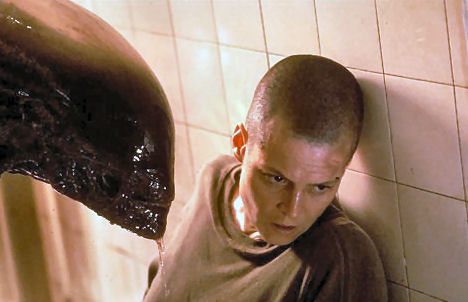
The horror of the original Alien was largely based in its theme of sexual assault and death through childbirth. Many have remarked in the past how it subverts the image of sexual assault by having a man raped instead of a woman. . In Alien 3, the fear of sexual assault is placed back on the female character, but this time with the threat of sexual assault coming from the former inmates. If Alien didn't make a big deal of Ripley's gender (I believe Ripley was originally written to be a man) this film positions her as the lone female, the first and only time in the series, with the threat of male violence against her a constant undercurrent. There is an attempted rape by some of the prisoners on Ripley, who's saved by Dillon (Charles S. Dutton). The irony is clear- this is the man who straight out told Ripley he was a "murderer and a rapist of women." Dillon is a man looking for some kind of redemption and he and Ripley become unlikely allies. 

One of the criticisms of the film is its hard to care about killing these men who are guilty of such heinous crimes, which I get. Outside of Ripley, the character we're allowed to feel the most warmth towards is Clemens (Charles Dance), the medical doctor who was once a former prisoner. He there because he got drunk and prescribed an incorrect dose of painkillers on survivors of a fuel plant boiler explosion. Ripley and Clemens become intimate- the only time we actually see a romantic interaction in the four films- but Clemens is killed off pretty early, Psycho-style, leaving the audience with pretty much just the inmates. Again, I actually kind of appreciate how the film doesn't make it easy for the audience. We're not given them easily identifiable or straight out likable characters but I'd argue the film is asking the audience if they're willing to sympathize or at least get on board with these characters. I find something compelling about Ripley and these inmates having to team together to fight the alien. This is essentially a story about people who have either lost everything (Ripley) or had nothing to begin with (Dillon) having to work together against a common enemy. Dillon sums it up pretty well when he tells the inmates that they're all going to die, you just have to decide how you're going to do it. This may sum up the whole franchise- when facing certain death how are you going to do it? 

Returning to the theme of sexual assault, the ultimate irony comes when Ripley realizes she's already been sexually assaulted by a facehugger, with a xenomorph growing within her. In Alien, Ripley fought for her own survival, and in Aliens, for her surrogate daughter. Here, Ripley is fighting the right to end her own life.  largely to stop the alien from getting in to the hands of the Weyland-Yutani corporation who want to use it as a weapon. In his video essay on the film for his "The Unloved" series, Scout Tofoya remarks how rare it is to see a mainstream Hollywood emphasize with a woman's desire to have an abortion. Ripley does ultimately succeed in killing herself.  This  may not be the happy ending people were left with at the end of Aliens, is a sort of final triumph for this character, going out on her own terms.


And for a while, Alien 3 was the conclusion of the story. Of course, the ending didn't stick, with Alien Resurrection coming several years later. Just as Alien 3 parallels Alien, with its gothic setting and bleak tone, Resurrection attempts to ape Aliens' more humorous, fun action movie vibe. We have multiple xenomorphs, the return of guns to the equation and the broader characterizations.  The film's director, Jeunet, is probably best known to people as the director of Amelie though he hadn't directed it at this time, though he had directed The City of Lost Children and Delicatessen. Jeunet is the franchise's most off-beat and out of left field choice, with Resurrection being is the strangest, ickiest, and tonally conflicted of the four films. Screenwriter Joss Whedon has expressed his dissatisfaction with the film, saying it was directed wrong, acted wrong, and cast wrong. Unlike Aliens, which I think balanced its tone pretty well, Resurrection can't completely decide what kind of film it needs to wants to be. It wants to be, I think, a fun action movie in the vein of Aliens, but's it almost too grotesque and weird, and not really as exciting as Cameron's film.  
 
We almost had a deeper connection to Aliens with Whedon's original idea of cloning Newt, making her the lead of the film. 20th Century Fox however didn't want a story without Weaver. I feel Newt had potential as the lead of the franchise, if they had cast a strong actress in the role (Carrie Henn quit acting after Aliens, her only film). The idea of cloning Ripley was actually a joke producer David Giler made to Weaver when Alien 3 premiered. Resurrection definitely feels like the textbook definition of a franchise jumping the shark, or maybe we should say xenomorph, in an attempt to extend its life cycle, though the film does do funny and bold things with the idea of Ripley being a clone, though she's not just a clone, she's an alien human hybrid. In interviews Whedon said he thought Weaver wouldn't want to play Ripley in such a weird way but he was surprised she told him to push things further. Like in Aliens, Ripley is a mother figure, having been the bearer of the xenomorph embryo, a queen which gives birth to a human/xenomorph baby- yeah, it's very weird. Ripley was attempting to save her surrogate daughter before whereas now as he she has to kill her literal offspring. 

Another parallel with Aliens, and something I think is integral to Ripley's story, is the continuation of the "Rip Van Winkle" thing with Ripley waking up years in the future. Ripley was in cryosleep for 57 years between the first two movies, now it's 200 years in the future. Ripley becomes more and more of an isolated character as the sequels go on- with the Resurrection positioning her as not even being completely human or even the same Ellen Ripley. When we arrive on Earth at the film's end, the android Call (Winona Ryder) asks what's next, to which Ripley replies that she's a stranger there herself. While I get why killing Newt off is seen as an unforgivable sin by many, I think Ripley works better as a loner, a ultimately a tragic figure. Sure, a big part of me wonders what alternate universe version of Alien 3 looks like but I love that the Alien 3 we got makes you feel the pain of triumph snatched away, that sickening irony. Each sequel does undo the victory of the previous film's ending, though I guess that's just the horror genre- it doesn't matter how many times you kill Michael Myers or Jason Voorhees, they'll be back for the sequel. I think it's best to look a the Alien quadrilogy as variations on a theme, with each director approaching their film as a stand alone film rather than as a Marvel-esque serialized piece of storytelling.

I never know how to end these things so I'll hand it over to you. What are your thoughts on the two latter Alien sequels. Are you a fan or do yo find them huge disappointments. Comment and let me know. 


Wednesday, 6 June 2012

In Space...: Revisiting the "Alien" Franchise


I wanted to revisit the Alien series because Prometheus, Ridley Scott's new film which is supposed to be a prequel of sorts to his orginal film, is coming out soon- and also because I really wanted to see them again-especially on Blu-ray! What I like about the four Alien films- the ones starring Sigourney Weaver- is that each of them, helmed by a different director, is it's own thing. The ingredients are pretty much the same but the directors all bring their own style, even if the film isn't very good.


What's remarkable about the first film in the series, Alien, is that, on a plot and character level, it's essentially a B movie, a haunted house movie set aboard a spaceship with an Alien. What makes it an A movie is Ridley's Scott direction, which slowly builds up tension, then giving us a great payoff that never feels just like a jump scare- but he never really relieves us of the tension. The film is also benefited by strong performances from the cast. While the characters are not super complex, the actors make them feel like real people. Who come to sympathize with them and all their deaths really hurt- especially when the captain of the Nostromo, Dallas (Tom Skeritt) is taken by the alien. Once that happens you feel the rock of the film is gone. What also elevates the film in to A film level status is how terrifying the Alien is. Based off designs by H.R. Giger, the alien is never cheesy or lame. And like the shark in Jaws, only a few years prior, Scott doesn't show the alien all at once but slowly shows us more as the film goes along. The fact that we don't always see the alien adds to the terror of the film- by hardly ever seeing it, we feel it can just jump out of nowhere.


The dread in this film just keeps escalating as we realize nothing can stop this monster. What also enhances the dread is that the real villain of the film is never seen. It's the corporation that sent out the ship and which views the crew as expendable- all that matters is getting the alien back to Earth. It's a theme that's present through all the alien films. The alien is a killing machine but what really causes the trouble is Weyland-Yutani. I think that's what makes this film so disturbing. The faceless villain that has doomed the entire ship.


After Dallas is gone, Ellen Ripley (Sigourney Weaver) emerges as the main character of the film. At the time I believe people believed Dallas was going to be the hero of the film. What's also interesting is that supposedly Ripley was the only character written specifically to be a man- but with Weaver in the role, the film takes on feminist undertones. What I like though is that Ripley never really becomes a traditional hero in this film. At the end, left alone, she's scared shitless as she tries to blow up the ship and escape in the hatch pod. They don't make her "tough"- that comes later. She's strong though, scared, but strong.


Aliens, the second film, does what most sequels never have the leisure to do. Most sequels are the same genre of the previous film. Aliens, despite still having the ingredients of a horror film, is actually more of an action film than horror. James Cameron, who had made his name with the first Terminator film, didn't want to remake the first film so he essentially made his own riff on the concept. But while Aliens is very different from Alien, Cameron does a great job of expanding upon the universe Scott created in the first film. In the first film, it was a lone alien in the shadows, stalking the crew. This time, it's war, as the film's tagline declared. Things are no longer just contained to a spaceship, and it's not just one alien.

I think Cameron's main interest in this film is developing the character of Ripley. Ripley has been in hypersleep for 57 years after escaping from the Nostromo. Weyland-Yutani find her but don't believe her story.  In the special edition of the film, which Cameron says he prefers, there's a scene where she discovers her daughter has died- she sees a picture of her, a grandmother and recalls she promised she'd be back home for her 11th birthday. This scene, cut for the theatrical cut, provides a great deal of subtext and emotional weight to her relationship to Newt (Carrie Henn). She wants the mother-daughter bond she can no longer have with her real daughter- and by protecting Newt, somehow may want to redeem herself. Cameron makes Ripley a woman out of time, with every one she ever knew dead or old. She's also plagued by nightmares every night. Only by confronting the aliens with the marines can she be at peace. I think the arc Ripley goes through in this film is the strongest out all the films.


Aliens, I think, is the warmest of the Alien films, the one in which I'm most attached to what's happening on screen. But while it has it's tender moments, it's not overly sentimental. Cameron deftly combines and switches between tenderness and real terror. This makes the stakes higher as we know this young girl, and Ripley's redemption, lies in the balance. The film also develops the "Alien" universe's fear of American bureacracy, personified here by Paul Reiser's Carter Burke. At first Burke seems like a decent enough guy- but we learn what he'll do in order to get an alien specimen.

Also- on an action movie level, this film is spectacular. Cameron stages intense sequences of action without losing any of the suspense or fear needed in a movie like this. This feels almost non-stop- but it never becomes overbearing.


Alien 3 is where the franchise started to lose its way. It was a troubled production from early on. There was trouble settling on a script and on landing a director. Renny Harlin,was hired on as director but left to direct Die Hard 2 once the production wasn't coming together. Vincent Ward, who has a story credit on the film, was called on to direct but was  fired due to disagreements with producers. Eventually, directing duties fell to David Fincher. At the time, Fincher had never directed a feature film before- only music videos. Fincher, from my understanding, was not treated well by the studio (20th Century Fox) during production- and there were constant re-writes on set. Fincher is one of the things that makes Alien 3 worth watching. Even on his first film, and a troubled one at that, one can see his directorial talent, his eye for great visuals, shining through.

My main problem with Alien 3 is that it feels too much like a franchise movie- and I think this is when the series started to be seen in those terms by the studio. When I say it feels like a franchise film, what I mean is that the script essentially finds a new location to put Ripley in, surrounds her with a bunch of characters to be killed off by the alien, and lets the alien run loose and do its thing. Now to be fair, that description fits the first two Alien films. But with Alien, it was okay to have a straightforward plot and Aliens  had a larger scale and a different emotional centre. Alien 3 seems like it takes the basic ingredients for an Alien movie and puts them on screen. The scale of the film also feels too small after Aliens. While I wouldn't want a sequel to Aliens to just replicate that film, I feel this film should have gone to the alien homeworld or bring the aliens to earth- two ideas which were tossed around in the early development stages on Alien 3. By having Ripley crash land on Fiorina "Fury" 161, the film also feels it has crash landed in a story that's not the one the series needed to tell.


Now, I'm not a hater of this film. I can't say I like it because it is such a cold and distancing film- but I do admire some of its elements. I said it feels like a franchise film but there are elements of the film which make it unique. I like the idea of these prisoners "finding God at the ass-end of space," as Ripley puts it. Redemption is a  big theme in this film and finds an interesting outlet through these prisoners. My favourite sequence in the film is near the end when Ripley and the prisoners have the alien chase them through the tunnels, locking a door at certain check points. I also like the relationship between Ripley and the doctor Clemens (Charles Dance). It's the closest thing the film has to an emotional centre. Unfortunately, the alien kills Clemens pretty early on- particularly in the 2003 Assembly Cut. The Assembly Cut, which was the cut I watched when I was revisiting the series, does feel a little more developed than the theatrical cut- but it does seem to drag a bit. The Assembly Cut does restore an interesting subplot involving one of the prisoners, Golic (Paul McGann), who releases the alien after Ripley and the others have captured it. Golic worships the alien like a God because the alien did not kill him when he encountered it. Golic meets his end at the hands (or mouth) of the alien. Golic's subplot fits well with the theme of religion in the film and it's an fascinatng reaction from a character to the alien.

The main criticism people have of Alien 3 is the killing off of Newt and Hicks (Michael Biehn). While I can see why their presence wouldn't have worked in this film, I do feel killing them off killed off the possibilities to develop them further as characters as well as their relationship to Ripley. There is an unshakable feeling that their deaths makes the emotional arc of Aliens, not so much pointless but pointless to this film- and I feel the film should have continued their story. The android Bishop (Lance Henriksen) also gets the shaft. It's a shame he gets reduced to a pile of scrap metal and gets only about a minute of screentime.


The most important element that raises this film above the franchise film label is Ripley's suicide at the end of the film- she chooses to kill herself and the alien inside her to stop the Weyland-Yutani from getting it. It's an appropriate ending to the film- and at that time-the franchise.


Of course, a franchise like this never stays dead for long. Alien Resurrection is the fourth and last (in the standalone Alien series). It's my least favourite film of the franchise. It feels very soulless and pointless. The only really interesting thing about the film is having Ripley being cloned and having her come back as a human with alien DNA. Can she be trusted? How human is she.  I wish the film had gone a little bit further with these ideas. They seem be there mostly as subtext that's slightly on the surface but it's not taken to the extreme levels it could have reached. There's also no emotional centre for the audience to get attached to. No Newt, no Hicks, not even Clemens. There are a few nice moments between Ripley and Annalee\Call (Winona Ryder), the android who wanted to kill her due to her alien DNA, but it's not developed enough to be something we find ourselves getting involved with. My favourite moment of the film is when the ship enters earth's atmosphere. Call asks Ripley what's going to happen and Ripley says she doesn't know- "I'm a stranger here myself." It's a very poignant moment that acknowleges how epic Ripley's journey has been- it's been 200 years since Alien 3, and 57 years passed between the first two films, making it 257 years since Ripley left earth on the Nostromo.


I also like the scene where Ripley finds the failed Ripley clones and proceeds to destroy them all. If the film had been as haunting and compelling as that scene, it would have been a stronger film. The director of the film is Jean-Pierre Jeunet and like the previous three directors, he has a great visual eye, creating a very good looking film. This is the only film of his that I've seen and I'd see a film where his direction is paired with a stronger script. Joss Whedon wrote the script for this film. In an interview he says in terms of direction and casting, the script wasn't treated that well. I feel even with a different director and cast, the script is where most of the problems lie.

So, those are my thoughts on the Alien series. I should also say that Sigourney Weaver gives consistantly strong performances through the franchise. She and Ridley Scott created a terrific female action hero and it's a testament to the character that we remember her as vividley as the alien.