Monday, 13 August 2018

The Tragedy of Harvey Dent: ''The Dark Knight'' at 10

Related image

Christopher Nolan's The Dark Knight is one of those before/after films; it changed how people viewed the superhero/comic-book movie sub-genre. While I'll be the first to admit I feel it perhaps gets put too high on a pedestal, I can't deny what an absorbing and affecting experience it was back in 2008 when it first premiered. It certainly connected to people apart from just featuring a popular character. It wasn't even the first Batman film ever made or the first Batman film of the modern era- it was the sequel to Nolan's previous Batman Begins (2005). But there was something about it, emotionally, thematically that made it one of the most successful films of the decade, both critically and financially. That it featured actor Heath Ledger's final completed performance played a part but I would argue it was also tthe film was something most summer blockbusters weren't and still aren't- it was an epic tragedy- the tragedy of Harvey Dent (Aaron Eckhart)- his transformation from idealistic lawyer to revenge-fuelled killer. While tragedy is inherent to many superheroes and even their nemeses, The Dark Knight isn't about the birth of a super-villain. Two-Face is not a beginning in Nolan's universe but an end. As a result of Batman (Christian Bale) saving Jim Gordon's (Gary Oldman) young son from Dent, Dent is pushed to his death. This Two-Face isn't going to be robbing banks or teaming up with the Riddler. He's dead and the survivors have to deal with what to do next.

Nolan made a smart choice in structuring the film around Dent's downfall. Another film would have j had Dent in a supporting role, setting him up to be Two-Face in the sequel, which I think people presumed was the route the filmmakers were going. But Nolan decided to make Dent the main focus of the film, with his transformation being a product of the  Joker's machinations. Nolan's approach to the character was influenced by Jeph Loeb and Tim Sale's The Long Halloween, which served as a Two-Face origin story and- like The Dark Knight- is a crime epic.

Bruce Wayne/Batman and Dent are paralleled throughout the film, with Gordon referring to Dent as ''Gotham's White Knight'' in contrast to Batman being the titular ''Dark Knight.'' Bruce believes Dent is the future of Gotham and Batman's presence will soon be irrelevant. He cleaned up the city without wearing a mask or working outside the law. But Dent has a dark and violent side, which we see when he's interrogating Thomas Schiff (David Dastmalchian), who works with the Joker, putting a gun to his head. Batman says everything Dent has accomplished would be undone if people knew Dent was threatening a suspect. All his convictions would be thrown out. Batman can exist outside the law but Dent has to work within its boundaries. If Batman is Bruce channelling his inner rage for good, the Dent we see in this scene as Two-Face, is the manifestation of all Dent's worst attributes. Batman is a mask that Bruce can hide behind but Dent doesn't have that luxury.

Image result for dent batman dark knight


Throughout his trilogy Nolan always attempted to contexualize Batman in a semi-realistic world and ask what his role would be in a modern urban society. Bruce feeling he can soon quit being Batman reflects how a real-wold Batman would view himself. The way comics are designed, Batman is always perpetually a man in his late thirties, with a seemingly endless crusade against crime. Comic characters never really end but in the context of this universe Batman is only a short-term solution. There's no Justice League or threat of alien invasions, there's no Mr. Freeze or Poison Ivy. Bruce won't be a young man forever. Even Dent says Batman can't fight crime the rest of his life. Bruce puts his faith in Dent and the idea of law and order without the presence of a masked vigilante. Bruce also wants a future with childhood friend with whom he fell in love, Rachel Dawes (Maggie Gyllenhaal, replacing Batman Begins' Katie Holmes.), who is now dating Dent.

This optimistic future is thrown in disarray due to the Joker's presence, who operates outside the rules of conventional criminality, someone who can't be taken down by conventional means. What I love about the film is how it connects the Joker and Dent in a way I don't think was ever done in the comics. The standard Two-Face origin has mobster Sal Maroni (played in this film by Eric Roberts) throw acid in Dent's face, disfiguring him. While the film makes a nods towards that origin, it made sense to alter the origin to make Dent's transformation the logical extension of Joker's philosophy, which is that everyone is corruptible. After the Joker is successfully captured, Dent and Rachel are kidnapped by the crooked cops on Gordon's squad, strapped to explosives in separate locations. They're allowed to talk to each other, a very cruel touch. Joker tells Batman where they're both located but tricks Batman in to going to Dent's location, thinking it's Rachel's. Batman saves Dent but the police are too late to save Rachel.

This altered origin functions as another parallel of Dent and Batman. Dent was helpless to save Rachel just as Bruce was helpless to save his parents from being murdered when he was a child. The difference is that Bruce created Batman as a means using tragedy and fear to do good. Dent, on the other hand, gives in to despair and rage, seeking revenge against those who wronged him. In Batman Begins, Bruce also started out wanting revenge against his parents' killer, Joe Chill. He even had a gun and was ready to kill him until Chill was killed because he testified against a mob boss. It was actually Rachel who made Bruce reconsider his motivations. Now it's her death that sends Dent on his path of vengeance

I'm reminded of Alan Moore's graphic novel The Killing Joke, in which the Joker says one bad day is enough to make anyone exactly like him. In that story the Joker shoots Barbara Gordon, paralizing her. He uses this horrific act to push her father Commissioner Gordon in to insanity. I'd put forward The Dark Knight is The Killing Joke on a larger scale, with the soul of Gotham at the verge of complete anarchy.
Related image

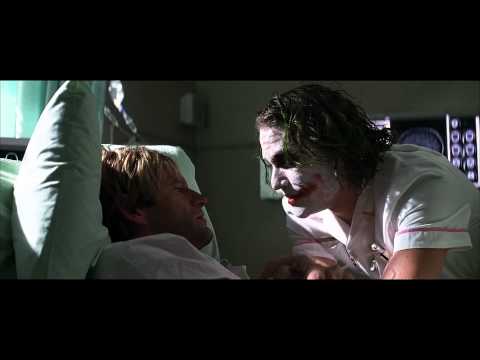
It makes sense in the context of this universe that Joker would be the creator of Two-Face. This isn't a universe where super-villains pop up separate from each other;  Dent's fate had to be a result of the Joker. Joker and Dent only share one scene together in the hospital. It's where Joker converts Dent to his philosophy of chaos. It was revealed earlier Dent's coin was two-headed. Dent made his own luck. Rachel had it when she died, resulting in it becoming scarred. When Dent first wakes up in the hospital he sees the coin and believes briefly Rachel could still be alive. It's seeing the scarred side which makes Dent realize Rachel is truly gone. This is the true birth of Two-Face.

Dent understands he can't control things. Despite his good intentions, he lost everything. Chance and fate have more power over your life than a rigged coin. To Harvey the coin represents how he views the world now, driven by chance and chaos. But as Batman says, Rachel's death wasn't chance. It was a result of Batman, Dent and Gordon's actions together. But Dent asks why he lost everything, not understanding Batman is Bruce. Dent believes it's only fair one of the Gordons should die.

However, Dent is still the one pulling the trigger. He has the choice not too but doesn't take it, which leads to his death. But Batman doesn't lose his faith in what Harvey represented or he was. He turns Dent's scarred face over to the good side. He decides to take the fall for Dent's crimes. This to me is the logical extension of the real world Batman idea. If Batman was not to retire (which he does in The Dark Knight Rises) he would to be something more complicated and ambiguous than a hero, super or otherwise. A man like Dent's reputation would supersede Batman's. The film says Batman can never be Dent, despite his good intentions.

Dent lived to see himself to become the villain but what he represented is worth preserving. Dent became a crucial part of Nolan's Batman mythology and I'd argue a more significant than he is in the comics. Eckhart gives an underrated performance, working overtime to give Dent's downfall a Shakespearean grandeur while still grounding his performance in reality. The tragedy of Harvey Dent is why I believe- beyond just Ledger's performance- The Dark Knight is one of the- if not most admired superhero film of all time.

P.S. I still don't know how he got that burnt jacket but I can forgive it.


Friday, 13 July 2018

Some thoughts on ''RoboCop Returns'' and other recently announced films

Image result for robocop

It was recently announced that another RoboCop film-entitled RoboCop Returns- is in development with Neil Blomkamp attached to direct. What intrigues me about this announcement is it's not another remake or re-imagining but a direct sequel to the original, essentially ignoring RoboCop 2 and 3, and based on a story by the writers of the original film, Edward Nuemeier  and Michael Miner. Nuemeier and Miner wrote a script for RoboCop 2, which was never used. Justin Rhodes- who wrote the new Terminator film in production- will be writing the screenplay 

I know for many Blomkamp is a director who made one good movie (District 9) and hasn't made anything worthwhile since. I agree Blomkamp hasn't completely lived up to his promise; both Elysium and Chappie partly felt like attempts to replicate District 9's success. However, I do believe he's a talented director and working from another writer's script may be beneficial. Also, Blomkamp is somewhat of a spiritual heir to Paul Verhoeven who directed the original. Like Verhoeven Blompkamp blends social commentary and gory violence, though with all together different aesthetic. 

This isn't the first time a franchise film has ignored previous sequels. Superman Returns acted as alternate Superman 3 to the first two Christopher Reeve films; the upcoming Halloween (with Jamie Lee Curtis returning) is ignoring everything post John Carpenter's original, nixing the brother-sister twist regarding Michael Myers and Laurie. Funnily enough, Blomkamp wanted to make a follow-up to Aliens with Sigourney Weaver, disregarding David Fincher's controversial Alien 3. I was worried that Blomkamp just wanted to do Aliens again, even though I still want Weaver to come back for another film. Ideally, RoboCop Returns won't just be Blomkamp remaking the original but expanding upon its themes- similar to Blade Runner 2049.


Image result for joaquin phoenix joker


I'll freely admit I'm more of a fan of the DCEU than the MCU, despite the behind the scenes problems and reshuffling constantly going on at Warner Bros. I'm also one of those people who want to see Zack Snyder's cut of Justice League, despite having fun with the theatrically released version. With that said, it's a little odd to be getting two Joker movies, one with the already established Jared Leto version from Suicide Squad and an origin film set a different continuity, starring Joaquin Phoenix and directed by Todd Phillips, with Martin Scorsese on board as a producer. But I do like that DC is further distancing itself from the MCU, with movies set in alternate continuities, which reflects DC Comics history.

While I was excited for Leto's performance in Suicide Squad I  was a little disappointed in the depiction of the character, though in a better written and realized film I think he can be great. I love Phoenix as an actor, and I've always have since seeing in M. Night Shyamalan's Signs back in 2002. I think he's a perfect fit for the Joker. 

The problem I have is this film is to be a Joker origin story. I feel the Joker works best without a origin story. It differentiates him from Batman's other villains and super villains in general. The Joker isn't defined by a tragic past or any psychological motivation, which makes him the complete opposite of Batman, who is all about having a tragic past and psychological motivations. Batman wants to control the chaos of his mind and the world, while the Joker is an "agent of chaos," as Heath Ledger's Joker proclaimed himself in The Dark Knight. And a big part of what made Ledger's Joker great is the character's ambiguous nature. Were any of the stories he told true, were some aspects true, can he not even remember? In Alan Moore's seminal graphic novel The Killing Joke the Joker says he prefers his backstory to be "multiple choice," casting doubt on the backstory we're given in the story.  

I'm also not excited about Phillips directing. though I see how his background in directing gritty comedies about masculinity does fit. It's just I'd be more enthusiastic if someone like Fincher or Denis Villenueve was behind the camera.

Image result for zombieland


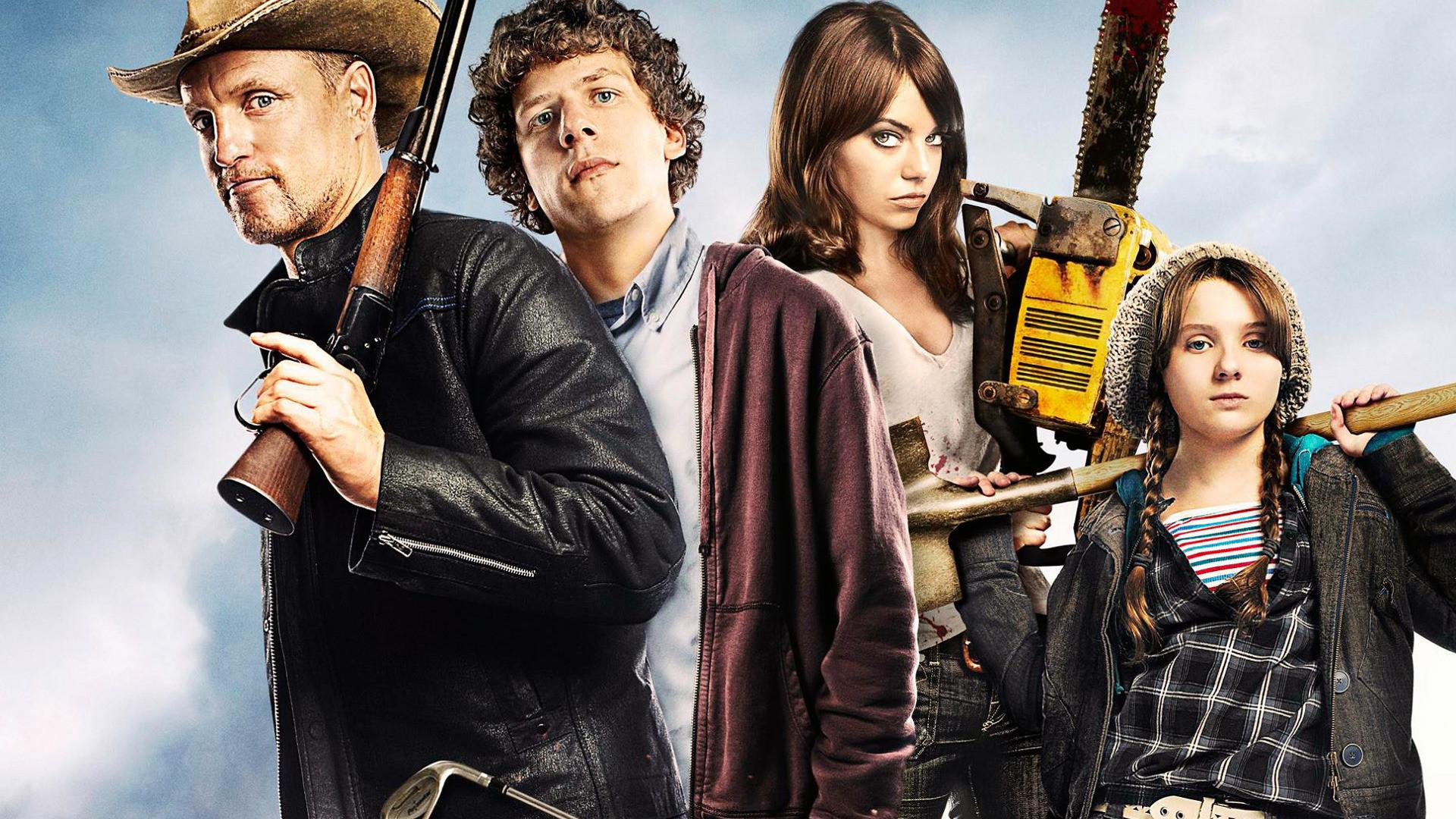
Almost a decade later, a sequel to Zombieland has been officially announced, with the original cast members (Jesse Eisenberg, Woody Harrelson, Emma Stone, and Abigail Breslin) all returning, as well as original director Ruben Fleischer. I don't know exactly what you do with a sequel to this property. I really liked the original when I first saw it but it essentially was a re-worked TV pilot made in to a movie. Certainly, Eisenberg and Stone are bigger names than they were in 2009. Back then he was probably still seen as the ''poor man's Michael Cera'' and she was still the ''girl from Superbad.'' It'll be weird seeing them back in these parts, particularly Stone who to me always comes across as just being Emma Stone. Given the gap in time between movies, especially in regards to Breslin- I assume this movie will be ten years post the original, so I'd be kind of interested in what the world of the original looks like now. Maybe civilization has rebuilt itself though the charm of the original came from it being a four-hander. I think it's best to not incorporate too many new characters. Keep it simple. 

So, what are your thoughts on these upcoming projects? Comment below and let me know.

Sunday, 8 July 2018

The Essential Films: Touch of Evil (1958): 60 Years Later

Image result for touch of evil


A Series of Writings on Films that I feel are essential for film lovers, coupled with films that are personal to me.

Orson Welles' Touch of Evil (1958)  begins with a literal ticking bomb and ends with a man whose time has run out. Like other noirs it's inherently tragic and fatalistic. The making of the film would end sadly as well, with Welles losing control over the film. His rough cut was re-edited and re-shot by Universal. After Welles viewed the re-edited version, he was prompted to write a 58 page memo outlining what he wanted changed. His notes were ignored and it wasn't until 1998, 13 years after Welles' death, that a restored version, based on Welles' notes, edited by the legendary Walter Mursch and produced by Rick Schmidlin, was released. There can never be a true "Director's Cut" of Touch of Evil, since Welles' rough edit is lost, but the restored version is likely the closest to Welles' original vision. And admittedly it's the only version I've seen- the one on which this essay is based.

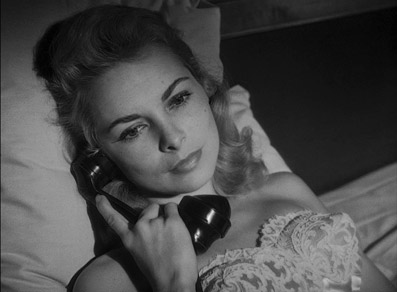
The film begins with what is heralded as one of the greatest tracking shots in cinema history. A bomb is placed in the trunk of American businessman Rudy Linnekar (Jeffrey Green) . The camera follows the car and drives though a Mexican border town, while also introducing us to Mexican narcotics officer Miguel "Mike" Vargas (Charlton Heston) and his wife Susie (Janet Leigh) on their honeymoon. When Linnekar and his girlfriend Zita (Jo Lansing) drive across the border of the United States, the car blows up. Since the bomb was planted on the Mexican side of the border Vargas has to postpone his Honeymoon and join the investigation with the American police. 

Captain Hank Quinlan (Welles) arrives on the scene and is antagonistic towards Vargas, establishing the racial tension that's a prominent theme throughout the film. The encounter between Vargas and Quinlan is paralleled with Susie's encounter with Joe Grandi (Akim Tamiroff), the brother of a drug dealer whom Vargas put in prison. Despite being married to a Mexican man, I couldn't help but feel she harbours some prejudice against certain Mexican people. She calls one of Grandi's nephews "Pancho" and Grandi himself "Little Caesar." The film does portray its Mexican villains very broadly but to be fair the motel nightman (Dennis Weaver) appears later isn't exactly subtle either. And Quinlan is another theatrical Wellesian character. The film ultimately walks a fine line between being about racism but also having troubling aspects of its time period- the largest one being Heston in brown face. Thankfully, the portrayal of Vargas is that of noble man attempting to navigate an in-noble world.   
Image result for janet leigh touch of evil


As the investigation proceeds Quinlan plants evidence (two sticks of dynamite) in the apartment of Manolo Sanchez (Victor Millan), who's been having a relationship with Linneker's daughter Marcia. The interrogation sequence is a another long take, emphasizing the claustrophobia felt by Sanchez Vargas, who saw the empty shoe box that the dynamite was planted in it, calls him out on it. The fact Quinlan is so easily caught planting evidence shows he's losing his edge. It's also a major turning point for both Quinlan and Vargas. Both their motives will now change. Vargas will attempt to reveal that Quinlan has been planting evidence over the years; and Quinlan will do anything undermine Vargas' investigation. He conspires with Grandi to make Susie look like a drug addict.
.
Quinlan recounts to his partner Pete Menzies (whom Quinlan took a bullet for in his leg) his wife was strangled back when he was a rookie cop. Quinlan never caught the killer, who he says was killed in battle during WWI. "That was the last killer that ever got out of my hands," Quinlan says. This line is the key to his character. His guilt over never finding his wife's killer drives him to make sure no one ever escapes justice. Quinlan is sympathetic. He may have been a good cop once but has become a cynical and corrupt man. Menzies idolises Quinlan but eventually comes to realise-or maybe he always knew- that Quinlan is unethical. Menzies' arc is quietly heartbreaking and arguably the most significant in the film. 

Vargas is not the traditional noir hero. He's not an anti-hero or someone who goes through a tragic downfall. I'd put forward that Vargas' whole persona is designed to contrast with Quinlan, but also suggests the man Quinlan used to be or could have been. Vargas is young, honourable, newly married and thin. Quinlan is old, fat, practically unrecognisable to Tanya (Marlene Dietrich), the brothel owner who- besides Menzies- is the only person with whom Quinlan has some kind of emotional connection. She's also the one who delivers the fatalistic line, "Your future is all used up." At the end of the film Vargas is reunited with Susie but Tanya doesn't get to Quinlan in time before he dies from Menzies' bullet.

Welles was a life-long Shakespeare fan, directing and starring in film adaptations of Othello and Macbeth, as well as Sir John Falstaff in Chimes of Midnight.  Charles Foster Kane and Hank Quinlan are themselves grand, tragic figures. Even Tanya's final words about Quinlan- "He was some kind of man. What does it matter what you say about people"- invokes the ending of Shakespearean tragedy, with a character remarking on the hero and the events of the play. While Tanya is only in a few scenes, the film ends on her, reminding the audience that despite Vargas' Hollywood happy ending, life goes on for others. Tanya isn't a sentimental person, which gives the final image of her walking back to the brothel an stronger emotional resonance than an outpouring of grief.       


Image result for marlene dietrich touch of evil


The final irony of the film is that Sanchez really did plant the bomb. However, if not for the planted evidence, would Sanchez have gotten away with the crime? Ultimately, I feel whodunit and why is always beside the point in noir. It's more about, style, behaviour and dialogue.

Cinematographer Russell Metty would win an Oscar several years later for Stanley Kubrick's Spartacus but he should've been nominated and won for Touch of Evil. The world of Touch of Evil is atypically shadowy for noir but also has a distinct blend of grounded-ness and stylization. Welles' films often had a surreal quality to them, with sometimes nightmarish images. In the case of this film, when Susie is attacked in the motel by Grandi's nephews. However, I don't like the Susie subplot, and think the film would be tighter with something different for her to do. The problem is she's not proactive enough and feels like a victim throughout the whole film.

Despite being acknowledged as one of the greatest and most innovative filmmakers in history, Welles had a career full of financial and artistic struggles, though the fact he was still able to craft worthwhile and artistically ambitious films is a testament to his genius as a filmmaker. The restored version of Touch of Evil may not be the director's cut but it still an evocative and sad film made by a master filmmaker.

Wednesday, 20 June 2018

"We Belong to the Light": Deadpool 2


Warning: Spoilers Below

Deadpool 2 is the most surprising superhero film I've seen in some time. This isn't due to any originality regarding the plot; as with the first instalment it borrows plot points from other films, most prominently from The Terminator and Looper. What I mean by surprising is how emotionally affecting it is. For all the irreverence and ironic detachment associated with the character, Deadpool 2 is perhaps the most nakedly sentimental superhero film since last year's Guardians of the Galaxy Vol. 2. And like GOTG Vol. 2 I ended up liking this go-around more than it's predecessor. 

Now, since the film has been out a while I believe I can talk freely about the plot but but if you still haven't seen the film, turn back. At the film's beginning mercenary Wade Wilson/Deadpool (Ryan Reynolds) fails to kill one of his targets, resulting in the death of his lover, Vanessa (Morena Baccarin), when the target returns to enact revenge.  While it appears like an example of killing the love interest as a revenge motivation, the film handles her death with genuine pathos. Deadpool can't get revenge since the guy who killed Vanessa is killed after he and Deadpool are hit by a car. Deadpool has a healing factor so he can't die. Deadpool blames himself for Vanessa's death and attempts suicide but again-due to his healing factor- he's essentially Bill Murray in Groundhogs Day

Deadpool attempts to better himself, finally conceding to X-Men Colossus and joining the X-Men as aa trainee. His first mission involves talking down Russell (who nicknames himself Firefist due to to his firestarting abilities) at a mutant re-education centre. Realizing Russell has been abused by the orphanage staff, Deadpool kills one of the staff, leading to him and Russell being put in a mutant prison called the "Ice Box."

David Leitch, co-director of the John Wick films, takes over from Tim Miller; Leitch's approach is both consistent with the original but he brings his specific action sensibilities to the table, specially in a jail break-in sequence with time-travelling mutant Cable (Josh Brolin). While the action was good in the first, I feel it's even stronger here. The film is packed with comedic and genuinely impressive comic-book-brought-to life set-pieces.

I love how this film delves more in to X-Men thematic territory than the first, focusing on a young mutant who has the choice to either be a Magneto or a Xavier. Funnily enough, this film feels more like the X-Men comics than the traditional X-Men comics- we have yellow costumes, Juggernaut being monstrously big, and power suppressor collars. 

Image result for cable deadpool 2


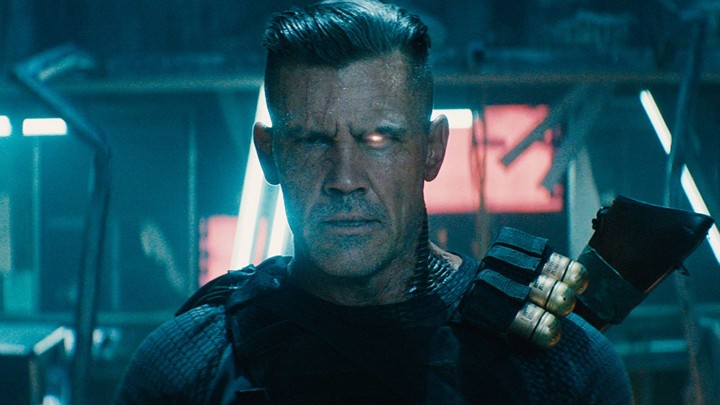
Complicating things further is the emergence of the aforementioned Cable (Josh Brolin). Russell kills Cable's family in the future and Cable plans to prevent that. Brolin is spot-on casting considering his history of playing gruff tough guys. He plays Cable seriously but not to the point of self-parody.  To stop Cable, Deadpool puts together "X-Force," which includes Domino (Zazie Beetz), whose mutant power is being lucky. The movie anticipates the audience reaction to has Deadpool outright say that luck isn't a power. The film then has fun visualizing how luck actually is her power in both cool and humourous way.

This isn't strictly a Deadpool/Cable buddy film though the two eventually have to team-up when Russell aligns himself with the Juggernaut and attempts to enact his own revenge. Deadpool and Cable are both men who've suffered tragic losses. The difference is in how they deal with them. Cable represents the more atypical revenge quest while Deadpool blames himself for Vanessa's death, attempting to better himself through helping Russell. This puts both their motivations at odds and the climax is largely about the two character arcs will be reconciled

I will say, as much as I loved the set-up and subversion of the X-Force team- with them all except Domino dying after jumping from a helicopter, it does feel like the second act is just a extended joke rather than structurally pushing the story forward. I also wish Negasonic Teenage Warhead (Brianna Hildebrand) had gotten a little more to do. On a side note, it's great that she has a girlfriend-Yukio- and the film doesn't make a big deal out of it. There's a little bit of contrivance in how Deadpool says he doesn't care about Russell so that Russell can team up with Juggernaut; I think Deadpool and Russell needed a few more moments together to beef up their relationship.

Image result for domino zazie beetz


The film pays off emotionally when Deadpool does "die," taking a bullet for Russell while having a collar on. The whole idea of Deadpool going to heaven may sound hokey to some but I really went with it. And as I said before, it's surprising since these films would be the last you'd expect to literally take it's wise-cracking character to heaven. I believe these two films have been able to ground Deadpool in some kind of emotional reality while stilling injecting the requisite fourth-wall breaking and digs at the superhero subgenre. 

I also liked how Cable's arc payed off, with him going back in time and finding a way to saving Deadpool. He finds redemption and discovers the future is not set, that Russell can still be a good person. I wanted more future scenes with Cable to flesh out where he came from but I understand the filmmakers didn't want to waste too much time getting Cable in to the story.

Deadpool 2 may be surprisingly sentimental but maybe it's par for a character who's all about subversion and unpredicatability. And of course, in the mid-credits, Deadpool goes back in time and saves Vanessa. Does that make the film pointless? I'd say no, since these films don't strictly obey strict continuity and may even ignore that going forward. That, and Deadpool still has learned about family throughout the film. I'd be interested to see the next film explore the consequences of bringing Vanessa back, especially if she becomes more like her comic-book counterpart, the mutant Copycat.

It's a little up in the air whether we will actually get a Deadpool 3. The next film may be an X-Force film with Deadpool as part of the ensemble or in a cameo appearance.  I love Brolin and Beetz in their roles and am excited to see them explored further down the line. Regardless, I hope Leitch stays around in this universe and the other creatives behind the franchise take even bigger risks going forward. I'm not quite ready to say Deadpool 2 is in my top ten superhero/comic-book films but it's certainly one of the my favourite of the recent superhero output.                         


Friday, 27 April 2018

Shakespeare on Screen: "Romeo + Juliet" (1996)

Image result for romeo + juliet


Baz Luhrmann's Romeo + Juliet is both of its time but also slightly outside of it. It wasn't the first time Shakespeare was modernised on screen (Richard Loncraine's Richard III starring Ian McKellen as Richard in a fascist 1930s England was released the previous year) nor was it the first re-contextualisation of Romeo and Juliet in to a contemporary setting- West Side Story, which began as a play before becoming an Oscar-winning film in 1961, had already approached the story via the concept of rival gangs. But while Romeo + Juliet technically wasn't the first of its kind, it's still a one of a kind adaptation, fully committed without irony or embarrassment, sincere without being sappy- a genuine vision.

I would argue Romeo and Juliet, perhaps more than any of Shakespeare's other plays, makes the most sense to set in the present day. Two sexually aroused teenagers who take their love way too seriously and whose parents hate each other suits the modern era conceivably better than it did in 1597. Luhrmann opens the film with a television set in the distance, surrounded by black, an ominous image that immediately establishes the contemporary nature of the film and differentiates it from Franco Zeffirelli's classic and controversial (he cast actual teenage actors- Olivia Hussey and Leonard Whiting) 1968 version. The TV screen also establishes how in a modern setting, the story of Romeo and Juliet would be a media frenzy, especially with them being the children of prominent families in Verona Beach.

Luhrmann stages the opening brawl between the Capulets and Montagues at a gas station. Luhrmann plays it out like the most frantic neo-western you've ever seen, reminiscence of something out of a Robert Rodriguez movie. The media plays a part in this sequence as the shootout (I love that the guns are called swords and daggers) moves in to the wider area and we see Juliet's father Fulgencio Capulet (Paul Sorvino) turn on the news and see the headline "Third Civil Brawl." Prince Escalus from the play Captain Prince of the police, played by the stalwart actor Vondie Curtis-Hall. It's a bombastic opening that establishes the film's style and it's approach to the Bard.

I mentioned West Side Story earlier and I believe Luhrmann owes something to both the musical and film since Romeo + Juliet is a musical as well. No, Romeo (Leonardo DiCaprio) and Juliet (Claire Danes) don't burst in to song but the film's key emotional moments are accompanied by people singing either in the the scene or on the soundtrack. Also, most of the songs were written specifically for it. "Kissing You," the film's love theme sweetly underscores the first meeting of Romeo and Juliet as they view each other through a fish tank. This occurs after Romeo has sobered himself up after taking ecstasy from Mercutio (Harold Perrineau, clearly having a blast), during which we see Mercutio in drag sing "Young Hearts." The sequence is brazen and the transition to the softer interlude with Romeo and Juliet is reminiscence of what we would see in a musical, with a big number followed by a more intimate one by two lovers.  
Image result for young hearts run free romeo and juliet


It's not surprising Shakespeare has been adapted in to Opera. He lends itself to the form since he's...well operatic. And appropriately, Luhrmann's next film would be Moulin Rouge (2001). I would also argue Romeo + Juliet is less about the poetry of Shakespeare's words than it is about the visuals and music. DiCaprio and Danes aren't great Shakespearean actors but I would put forward that for this film and it's intention, they don't have to be. Their sincerity is what really carries the film. Between this and Titanic the following year, I think DiCaprio was the biggest heartthrob on the planet, though DiCaprio did distance himself from these kind of roles. And Danes may be at her most beautiful here. The late Pete Postlethwaite (who had one of the great faces in movies) is supposedly the only actor in the film to speak in iambic pentameter and he's terrific as the no-nonsense but empathetic Father Laurence. 

The movie's energetic style also slows down considerably when it's focused on Romeo and Juliet. When the two first meet in the aforementioned fish tank scene, the movie is slowing down, making us feel the immediate intimacy and affection Romeo and Juliet share. The scene also communicates how time does slow down when you're falling in love. I also like the symbolic touch of Juliet wearing angel wings.

The famous balcony scene is staged in a pool, giving the scene an erotic energy. It also makes sense in a modern-context for them to be more intimate during this scene. I don't think they would allow themselves to be restricted by any barriers. The pool also parallels them meeting at a fish tank. 

Related image

Romeo and Juliet represent teenage love at its most extreme. They fall in love after meeting and agree to get married. Moreover, they can't bare to live without each other. Romeo drinks poison when he believes Juliet to be dead. When Juliet wakes up and sees Romeo is dead she stabs herself. However, Romeo and Juliet begin the play in different emotional places. Romeo is in love with a girl named Rosaline but Juliet isn't interested in getting married to Paris, Dave Paris in the film (played by Paul Rudd). Romeo can't conceive of loving anyone else other than Rosaline. Then he literally falls in love at first sight with Juliet. We have to wonder, would Romeo had dropped Juliet for someone else had they lived? Romeo feels more obviously the one to kill himself over a girl than Juliet to kill herself over a boy. In a bold move, Luhrmann has Juliet wake up as Romeo is taking the poison. Unlike the play they do share one last moment together.

I can't help but think there's a lot of Romeo and Juliet in many teenagers- especially if you agree with critic Harold Bloom that Shakespeare invented human consciousness. Hell, I was probably too stuck on certain girls in my teenage years. It may be a little hard for many readers and audiences to non-ironically accept Romeo and Juliet's love. But I doubt is the story works if the interpretation is ironically detached. 

It's worth noting that what sets the tragedy in to motion is Mercutio's death by Tybalt (John Leguizamo), a casualty of the conflict between the Montagues  and Capulets,  who is of neither house. Mercutio's "A plague on both your houses" is essentially what happens. Mercutio is the play's most laid-back and jovial character and his death truly marks a dark turn for the story. For all his hyper-stylization, Luhrmann knows how to compose a shot. My favourite shot in the film is Romeo going off to kill Tybalt. Mercutio's body is in the foregound while Romeo in the background gets in the car while being persuaded to stay. 
Image result for mercutio's death romeo and juliet 1996


I'd say Romeo shooting down Tybalt is more potent than stabbing with him a sword. In the context of this universe Romeo has essentially committed a gangland murder. He's become a gangster, not that different than Tybalt.

At last, it is Romeo and Juliet's deaths that bring the Montagues and Capulets together. The story ends up being about parents' actions affecting their children, with the parents having to deal with those consequences. With Shakespeare, tragedy always is necessary for positive change or for a lesson to be passed down by the survivors In the context of this film's universe, the story is being told through the media. How will the people in this world react to this story. When viewing the film now in 2018, I can't help but think of how the media is criticised for supposedly spinning a particular narrative.

Luhrmann's film still stands as one of the boldest cinematic interpretations of Shakespeare, one that emphasises the appropriateness of placing the doomed romance in a modern setting. There's something more provocative in seeing the suicide of two young lovers in the present. Seeing them in body bags on a TV screen invokes real-life tragedy and asks how would we react to a story like this. Could we sum it up as eloquently as Shakespeare. Probably not. 


Saturday, 3 March 2018

World of Wakanda: "Black Panther"


Warning: Spoilers Below


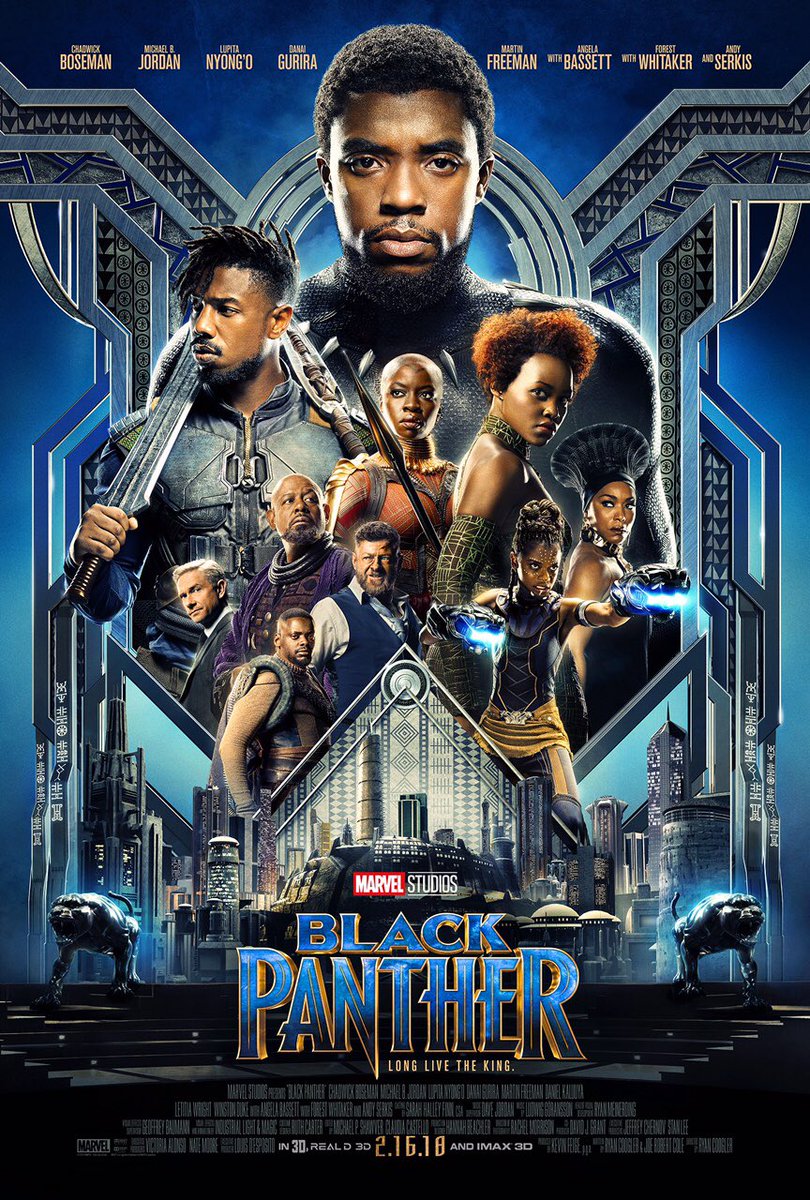
It's incredible to think the Marvel Cinematic Universe began ten years ago with 2008's Iron Man, modest beginning for the largest franchise on the planet. At one point, putting a interconnected comic book universe on screen would have appeared too difficult an endeavour. Now we've become so used to this intricacy, it's hard to imagine when superheroes were isolated on screen. A large part of the the Marvel Studios' films is the continuity and while it's still inherent to their latest film, Black Panther, the film would still feel epic and expansive even if it wasn't in the MCU. This is due to the film's setting, Wakanda, a technologically advanced African country. Wakanda feels so rich with history and mythology. Wakanda presents itself as a third world country to the rest of the world, essentially isolationist, not providing aid or weapons to the rest of the world.

Despite the film's focus on Wakanda, this is also a globe-trotting film. We go from a casino in South Korea- right out of a James Bond movie and one of the best sustained action scenes in the Marvel films thus far- to Colorado and London. All this widens the epic scope of the film. Cinematographer Rachel Morrison (who became the first woman  to be nominated for Best Cinematography at the Oscars- for her work on Mudbound) provides a distinct look for these locations without feeling like we're constantly in a completely different film. This is also attributable to a consistent tone, which doesn't undermine itself with too much jokiness. It's serious while having a healthy amount of humour.  

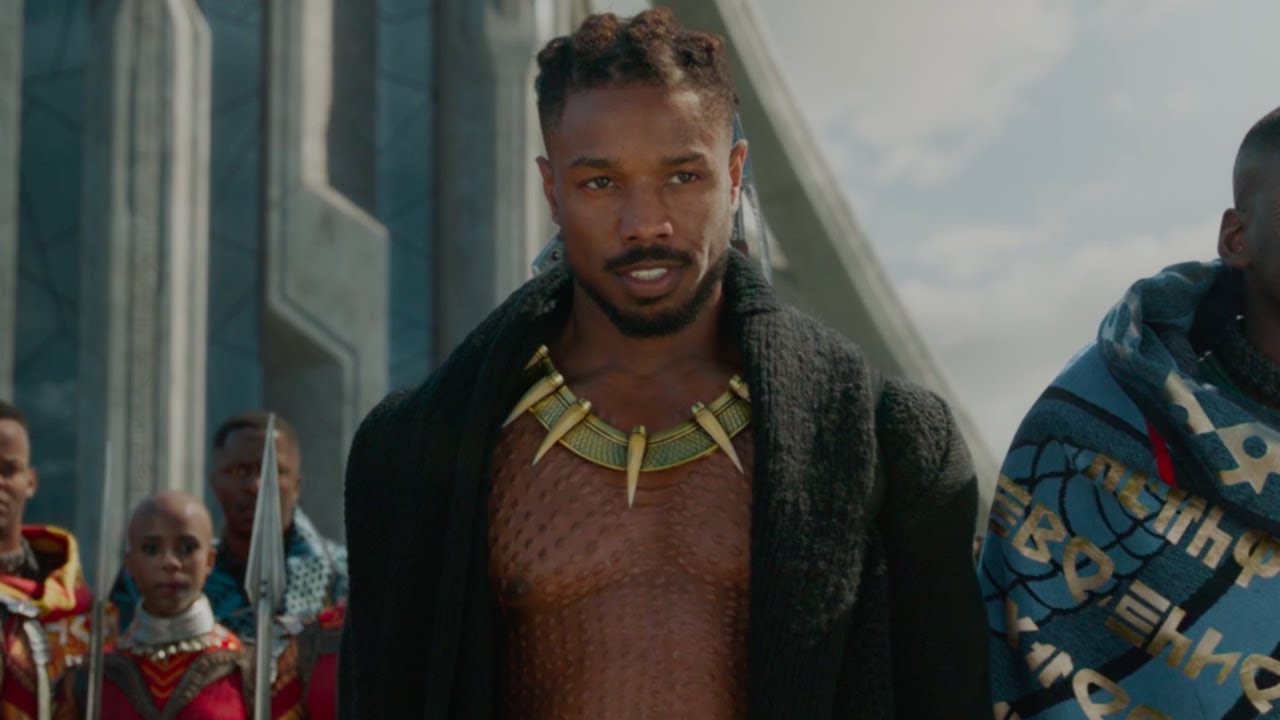
Black Panther isn't the first black superhero film or the first black-led MCU property (Luke Cage), the significance of a blockbuster having a prominently black cast, a black director and being set in an African country (howbeit fictional) can't be understated. And it really feels like director Ryan Coogler (whose previous two films are Creed and Fruitvale Station) was able to make the film without watering down the deep African spirituality that pervades much of the film. There are scenes and moments in this film that are unlike any I've seen in a superhero film- including the primal combat that decides who will rule, and T'Challa seeing his father in a spirit world- a scene which invokes The Lion King.


Image result for killmonger


The film takes place shortly after Captain America: Civil War, in which the King of Wakanda, T'Chaka (John Kani) was killed by a terrorist attack. His son T'Challa (Chadwick Boseman) is to become the new king. Soon after his coronation, T'Challa is alerted to the re-emergence of arms-dealer Ulysses Klaue (Andy Serkis), who in the past stole Wakanda's precious resource vibranium (from which Captain America's shield is made). He has stolen a Wakandan artifact from a British museum. 

What T'Challa doesn't know is the theft is part of a larger plan concocted by Erik Killmonger (formerly Stevens), who's T'Challa's cousin. T'Chaka had sent his brother N'Jobu (Sterling K. Brown) undercover to America many years ago. He fell in love with an American woman and had a son- Erik. In 1992 T'Chaka (Atandwa Kani) comes to N'Jobu, accusing him of helping Klaue steal vibranium. N'Jobu's partner James is actually another Wakandan spy, Zuri (Denzel Whitaker, later Forest Whitaker), who confirms T'Chaka's suspicions. When N'Jobu attempts to kill Zuri, T'Chaka kills N'Jobu, leaving Erik behind, who eventually became a black ops soldier. N'Jobu was stealing vibranium so he could provide weapons to oppressed people across the world. Now Erik is continuing on his father's plan, part of which is claiming his birthright as King.

Erik is one of the strongest villains we've had in a Marvel film to date, because we can truly sympathise with him. He lost his father and was abandoned due to Wakanda's rejection of outsiders. I think T'Chala can see himself in Erik, the anger at the death of a father and the need for revenge. T'Challa even somewhat agrees with Erik. T'Challa blames Wakanda's isolationism for creating the monster Erik has become in the first place. There is validity in believing Wakanda should provide help to the oppressed but Erik's way is too extreme. I would argue that it's Erik's actions that help T'Challa realize that things have to change, that Wakanda should attempt to reach out and help others. 

I like that Erik feels like a real guy who just happens have a connection to a fantastical world.  His American accent and use of slang is juxtaposed with the Wakandan accents, highlighting his different upbringing and lack of pretence to fit in. Erik is way past attempting to assimilate in to Wakandan society. He wants to remodel Wakandan to fit him and his philosophy. The final scene between him and T'Challa, where Erik removes T'Challa's knife from his chest, allowing himself to die, is one of the most emotionally impactful villain deaths in quite some time. It has a Shakespearean quality to it. Erik's death is a tragedy because he could have done great things if events had happened differently. Moreover, what he says about his ancestors knowing it was better to die than live in bondage, is something more painfully truth than we're used to in superhero movies.

Image result for shuri


I've talked so much about the men of Black Panther but it's important highlight the women as well. I love Letitia Wright as T'Challa's younger sister Shuri. Continuing the James Bond analogy she acts as his Q, creating his gadgets and upgrading his suit. Their big brother-little sister relationship humanizes T'Challa and makes him relatable. 

General Okoye (Danai Gurira) is loyal to the throne of Wakanda regardless of who's on it but eventually can't abide Erik's plan. Gurira is absolutely convincing as an austere warrior who feels deeply but is adept at hiding those feelings. She finds herself in conflict with her lover W'Kabi (Get Out's Daniel Kaluuya), who sides with Erik. She tells him that for Wakanda, she would kill him- and you believe her.

Wakandan spy Nakia (Lupita Nyong'o) is T'Challa's ex but she's never merely a love interest, but someone with her own point of view on Wakanda's isolationism. If Wakanda won't help others, Nakia will do whatever she can to aid the oppressed. 

There are some issues I have with the film. The sub-plot with C.I.A agent Everett Ross (Martin Freeman), particularly him helping save the day, feels like the only plot thread in the film which was studio-mandated (i.e. have at least one white character do something heroic). Freeman is such a likable actor that it doesn't sink the film but it feels like the most Marvel thing in the film.

Structurally, I find it odd that Erik is introduced fairly early in the film but disappears for a significant period. I also wanted more development of W'Kabi to better understand why he sides with Erik despite being friends with T'Challa and Erik apparently killing T'Challa. 

Overall I'm excited to see what happens now that Wakanda has revealed itself to the world. What are the positives and what are the negatives. I sense this will be the line of films leading the way for Marvel in the coming years. While I don't know if Black Panther is my favourite Marvel film, it's definitely in the top tier of their output. And it's a sure sign there's still life in the superhero sub-genre. 

Friday, 12 January 2018

Shakespeare on Screen: Laurence Olivier's "Richard III"


Laurence Olivier's Richard III (1955) was the third and last Shakespeare adaptation directed by Olivier, the two previous being Henry V (1944) and Hamlet (1948), the latter which won Olivier both Best Picture and Best Actor at the Oscars. Olivier did not intend Richard III to be his final interpretation of Shakespeare as director. He planned to helm a version of Macbeth with Vivien Leigh (to whom he was then married) but unfortunately, due to Richard III not performing well financially the film never came to fruition. However, Richard III befits a trilogy capper and is perhaps Olivier's crowning achievement as a filmmaker. The film is gorgeously photographed, expertly blends the theatrical and the cinematic, and Olivier's performance is a transformative marvel.

While Richard isn't as complex a villain as Iago or Macbeth he's conceivably Shakespeare's most entertaining creations. Despite his villainous acts Richard is very likeable, largely because he's intelligent and witty. I think we can respect his intelligence. There's also a darkly comic aspect to the proceedings, which makes us laugh even though we know we shouldn't. Vocally, Olivier plays Richard with a high pitched cadence, setting his voice apart from the other characters' graceful voices. Physically, Olivier moves roughly, reminding us of the burden of Richard's hunchback. The performance is theatrical but Olivier understands how close-ups and medium shots allow for more subtlety than a performance on stage
Image result for claire bloom lady anne

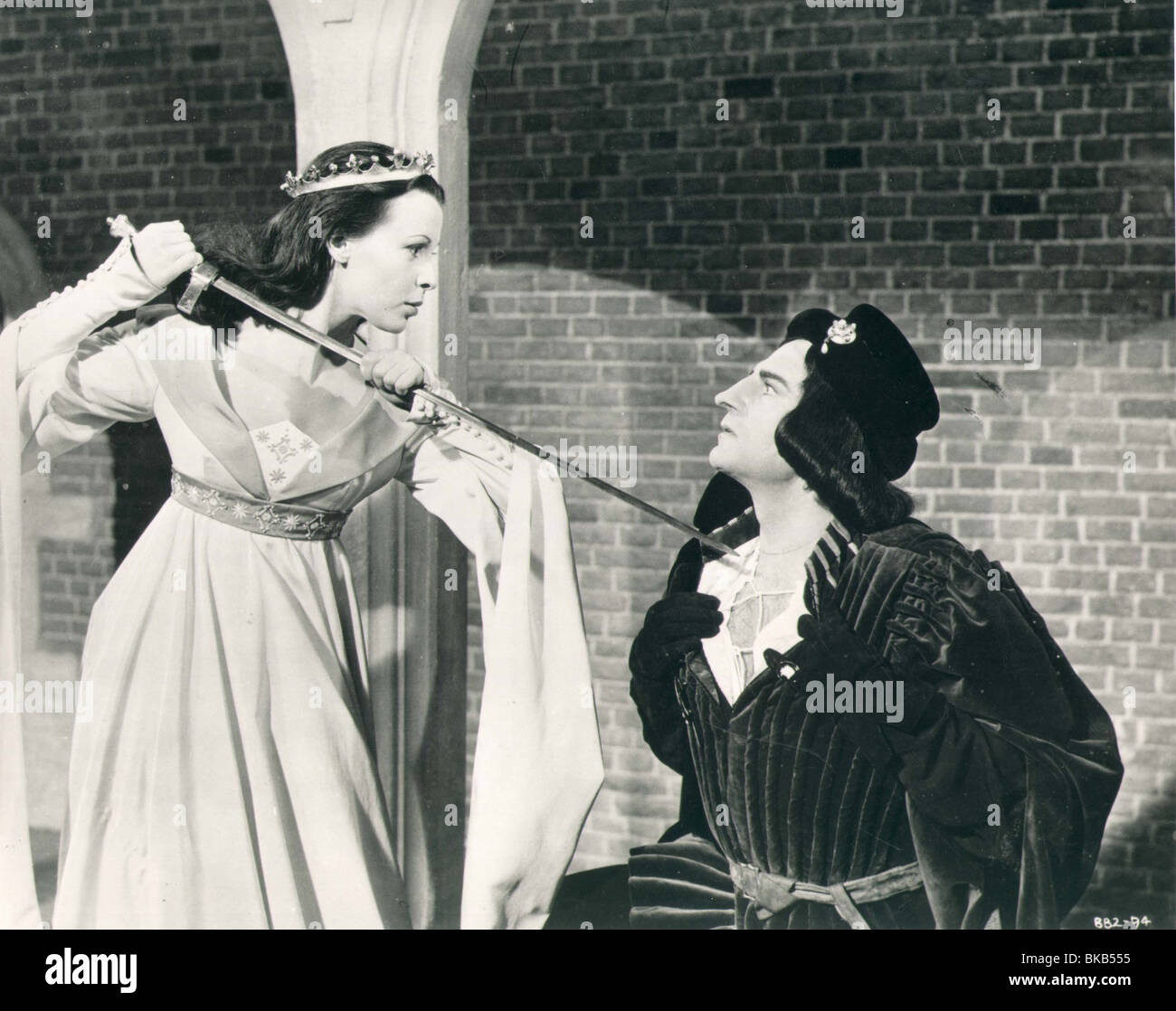
But let's also remember the other tremendous actors who act texture and depth to the film. The role of Lady Anne is difficult since she hates Richard for murdering her husband and father-in-law but being wooed by him. Claire Bloom convincingly plays a Anne as conflicted, not merely falling in love with Richard but harbouring conflicting feelings of lust and hatred.  

John Gielguld makes Clarence a vivid and sympathetic character. He conveys the horror of Clarence's nightmare and its lasting effect once awake. 

Olivier wanted to cast Orson Welles as Richard's co-conspirator Buckingham but Olivier's friend Ralph Richardson wanted it and he felt he owed it to Richardson. Richardson lends an intelligence and genuine moral compass to his portrayal.

While it's understandable why'd we focus on the performances when walking an adaptation of Shakespeare, it must be said that Richard III is an elegantly well-crafted film this is. Just re-watching it, I was really noticing the camera movement, Olivier's compositions and blocking of scenes. Most notably, he plays out scenes either in one long take or in several long takes. Olivier brilliantly brings us in Richard's first soliloquy ("Now is the winter of our discontent") by moving the camera move through a closed door, revealing Richard in the background beside the throne. It's an unsettling image but oddly inviting since Richard only shares his thoughts with us. Olivier performs the soliloquy in a single take. This reflects the theatrical experience but it's also cinematic due to the camera movement through rooms and the ability for Olivier to move away from and towards the camera.


Image result for olivier richard iii crown


Olivier begins the film with the final scene of King Henry VI Part III, in which King Edward IV (Cedric Hardwicke, adding warmth to the film) is coronated (the first shot, which is repeated when Richard is crowned, is a crown hanging from a ceiling). This provides context for viewers are new to this play. It also allows for the happiness of the coronation to be subverted as we transition to Richard stating his plan to become King. 

Olivier stages the scene where Edward (on his deathbed) learns of his brother Clarence's death in multiple long takes, only cutting on specific moments. The blocking of this scene and its camera movements are all specific and concise. It takes what could be a visually dull scene and makes it dynamic in regards to how its acted and filmed. 

What's also visually striking about this film is how colourful it is, as well as Roger K. Furse's extravagant production design. On the Criterion Collection commentary, playwright and stage director Russell Lees says there's an almost surrealistic, storybook quality to the look of the film. He argues Olivier does this to prepare the audience for the heightened quality of Shakespeare's language. The production design and cinematography remind me of an old Disney cartoon, particularly the recurring image of Richard's shadow. The most disquieting instant of this image is when Richard enters Anne's bed chamber. He opens the door and the camera pans down to show the bottom of her dress and his shadow enveloping it.  

Some other visuals I love include Richard looking out and through windows, with the deep-focus photography allowing us to seeing what he does. The introduction of Richard is also effective. At first, we only see the back of his head. Richard then turns his head. It appears as if he's looking at us but he's really looking at Buckingham. The aforementioned image of hanging crown is repeated when Richard is crowned and when Richmond becomes King Henry VII. It's a wonderful motif, representing the crown outliving its wearers, a continuously passed down symbol of power. The film begins with one King ushering in a new era of peace, one which doesn't last long. By the end Henry VII is doing the same, ideally an age of peace which lasts longer.


Image result for richard iii claire bloom

Lees argues we should feel bad for liking Richard and adds that Lord Stanley (Laurence Naismith) is crowning us at the end, symbolizing power belonging to the people in democracy. Moreover, now that we have realized that we all have evil within us, what kind of ruler will we be?

How do we reconcile the pleasure we take in Richard's personality and scheming with the awareness of the pain and suffering he inflicts on others? We have to like Richard for his defeat to have the sobering effect it needs, to understand the inevitable downfall that follows ascension by murder and betrayal. Though Olivier does excise Queen Margaret, whose presence exemplifies the theme of being haunted by the past, the theme is still present, particularly when you consider Richard is literally haunted by ghosts before the final battle. Unfortunately, Olivier removes Richard's soliloquy after being haunted but I believe Olivier trusts the audience to understand Richard's guilt. When Richard dies Olivier has Richard lift his sword up by the blade, another of the film's trademark images. Lees highlights how its the sign of the cross- Olivier gives Richard a "a moment of grace".

Is Richard a tragic figure? He's certainly not a tragic figure like Othello or Hamlet, and on the commentary, former governor of the Royal Shakespeare Company, John Wilders, argues Richard lacks "tragic depth" even though the plot follows the structure of tragedy. I would argue villainy always comes from a very human place. While I don't condone Richard's actions I understand his bitterness at being a hunchback and his desire for power. I also think there's something sorrowful about being so hateful and power-hungry you'd have your own brother murdered. I would put forth that Richard is also a product of his environment, one that is full of violence and betrayal. and unclean hands. Again, this is not to apologize for Richard just to put his actions in a larger context, particularly that of Shakespeare's other History plays, which are full of betrayal 

Olivier created something special with this film. While we didn't get another Shakespeare adaptation from him, I'm thankful Olivier concludes his trilogy with a triumphant blend of theatre and cinema, and one of the great screen performances of all time.