Showing posts with label Christopher Nolan. Show all posts

Thursday, 21 August 2025

Why Do We Fall?: 20 Years of Batman Begins


Spoilers below

The Batman film franchise, barring the 1940s serials and the 1966 Adam West movie based on the  TV series, began with Tim Burton's 1989 Batman, released a little over a decade after the original Christopher Reeve Superman opened the doors for all future superhero adaptations. The Burton films were attempt to present a darker, more gothic vision of the dark knight, akin to Frank Miller's Year One and The Dark Knight Returns than the West show. When Batman Returns, the follow-up to Burton's original, where he had more creative control, was met with outcries from parents for being too dark and violent, as well as MacDonald's cutting its Happy Meal deal with Warner Bros. for the same reasons, the studio decided to go in a more kid friendly direction, hiring Joel Schumacher to direct the third installment, Batman Forever. The film was a success and Schumacher was tasked with directing the follow-up, Batman & Robin. To quote George Lucas watching the rough cut of Phantom Menace's climax, Schumacher may have gone a little too far in some places. Schumacher dialed up the camp, and supposedly would say "Remember, it's a cartoon" before yelling action. Ironically, there was a really good Batman cartoon in the 90s that appealed to kids while still being mature and character driven. 

While Schumacher was originally slated to direct a third film, Batman Triumphant, which may have starred Nicolas Cage as the Scarecrow and Madonna as Harley Quinn (except retconned in to being the Joker's daughter), it never came to fruition. Appropriately for a film starring Mr. Freeze, Batman & Robin put the franchise on ice for several years. It wouldn't be until 2005 that we saw the caped crusader again, except this time it wouldn't just be another film in a franchise, but a film that reinvented the whole idea of the Batman franchise, creating something more psychological and character-driven that had been done in the live action films. This was Christopher Nolan's Batman Begins.. At this point in his career Nolan wasn't yet the blockbuster auteur he would become with The Dark Knight and Inception. He was still very much the indie filmmaker making his first blockbuster. The film feels modest compared to the second and third and film in the trilogy but it also feels the most like a stright forward Batman film. 

Burton's approach to Batman was enigmatic and mysterious, while Nolan and Goyer's is internal and personal. Batman Forever tried to be a little more character driven, most of Val Kilmer's arc as Bruce was exorcised in that film. To be fair, those previous 4 films were more interested in the villains than Batman. And I get why- they're often more colorful and entertaining than him. But I appreciate Nolan and Goyer zeroing in on Bruce and Batman essentially giving us the full of arc of Bruce becoming Batman. To get us more in to Bruce's head, Goyer's script employs a flashback structure, beginning with this nightmare Bruce is having of the time when he was a child and fell in to a pit of bats. We then jump to Bruce waking up in prison. In the years since his parents were murdered during a mugging, Bruce has traveled the world learning the ways of criminals, but has completely lost himself in that life. But then a man named Henri Ducard (Liam Neeson) gives him a chance to train under Ra's Al Ghul (Ken Watanabe) and become part of the League of Shadows. As he trains with Ducard we get more flashbacks of Bruce's life before leaving Gotham, including the moment where he about to kill Joe Chill, his parents' murderer, before he is murdered for being a informer by one of mobster's Carmine Falcone's (Tom Wilkinson) cronies. After being given a stern lecture on justice vs. revenge by childhood friend, now lawyer, Rachel Dawes (Katie Holmes), he begins his journey in to the criminal underworld.

Nolan and Goyer don't just use the murder of Bruce's parents as a set up for a completely sepearate story but use is as the film's thematic crux. Joe Chill only existed because of the economic depression, leading to financial desperation in men like him. While the murder of the wealthy Waynes supposedly urged Gotham to pull itself out of this depression Rachel points out that things haven't really gotten better. Gotham is full of corruption and is run by Falcone. And essentially this corruption and decadence fuels Ghul's motivation to destroy Gotham.

Nolan and Goyer trust the audience to wait awhile for Bruce to don the cowl. They knew they had to make Bruce a compelling enough figure our of the suit that audiences wouldn't be impatient getting to  Batman stuff. I think the reason why this approach ended up working for audiences is due to Nolan and Goyer approaching this material with a certain kind of seriousness and earnestness. From very beginning the film plays out as a straight drama rather than a comic-book movie, though I feel of the trilogy this one feels the most a straight-up Batman movie. Ultimately, the film encourages the audience to engage with the narrative on a character and thematic level rather than just pure entertainment. I do hate when people say Nolan was embarrassed to be doing a comic-book movie since I feel it's the opposite. Nolan obviously thought there was something more to this material then silly pulpiness. He saw something mythic and compelling this character. He of course had to strip down some of the fantasy in order to do the story he wanted, but I like when these films have a specific vision. And to be fair, this is still a pretty pulpy movie and it has a sense of humour about itself.

Maybe the film's wisest decisions, is forgoing the Joker as the antagonist. Structurally, it just ended up working better for the overarching story of the trilogy. In this one Batman brings hope back to Gotham City and by the beginning of The Dark Knight is very confident in his abilities, and even underestimates the Joker, as does the mob. only for the Joker to completely destroy his whole world. This film's ending is so satisfying, having Lieutenant Gordon (Gary Oldman) giving Batman the Joker's calling card. It's the best sequel set-up of any superhero film, largely because it wasn't designed to be a set-up, but a payoff of the whole story.  

In typical Nolan fashion, he uses the concept of fear both as a plot device and as a larger thematic concept. Ducard (who is revealed to have been the actual Ghul in the third act) wants to use Dr. Jonathan Crane/Scarecrow's (Cillian Murphy) fear toxin against Gotham so it it will tear itself apart. Bruce uses fear (the symbol of the Batman) to invoke a positive change. And Bruce initially blames his fear of bats (he had to leave the opera due to the people in bat costumes) for his parents' death. 

 While I usually really like Neeson, I do find the character, and his performance, a little bit on smug side. It's a big part of why I have a love/hate relationship with this film. I do like that this movie focuses in more on Batman than any of the previous live action films and feels the most like a Batman of Nolan's trilogy, especially in the aesthetic of Gotham. I do wish Nolan was a stronger visual stylist and that his shooting style wasn't always so basic. There's also some janky editing going on in the fight scenes, and the third act just isn't as strong as the first two. Rachel also feels likes she's just there to tell Bruce what he needs to hear, rather than being a fully formed character, though Nolan has often been a stronger idea and conceptual guy and his characters can often feel like mouthpieces for exposition. However, his Dark Knight Trilogy does have some really good character stuff and oddly feels like his most character driven work.

He's not unlike George Lucas, who also struggles with dialogue and character. Lucas' strengths, like Nolan, are in the bigger picture stuff.  But Lucas and Nolan's flaws as directors don't really matter to most people because their films, often seen by people when they're younger, have such a impact on viewers and define a young person's upbringing as a cinephile. 

Superhero movies often get seen as right wing power fantasies, though someone like Stan Lee was always very progressive in his politics. Batman, in particular, gets reduced, maybe fairly or unfairly, to the rich guy who beats up poor people. Nolan also got blowback when The Dark Knight came out when Batman chose to spy on people via cell phone to find the Joker, viewing this as pro Bush and Patriot Act. And in the third film, Tom Hardy's Bane was seen as a criticism of Occupy Wall Street. The Dark Knight does prevent the surveillance stuff as pretty morally dubious and Bane doesn't really represent the ideals of Occupy Wall Street but rather uses the ideology to turn Gotham against itself. Still, Nolan does try to have it both ways with the surveillance technology, presenting it as necessary one time thing before it's destroyed. The ending of The Dark Knight also prevents lying about Harvey Dent's crimes as a necessary evil to keep order. And The Dark Knight Rises does present the ideology of Occupy Wall Street as useful weapon to turn classes against each other. Nolan's politics are thorny but I'd argue it makes the films more interesting, especially compared to the more overt thematic exposition that has probably hurts these films the most on rewatch. 

The key to casting Batman and Bruce Wayne is you don't go for the traditional leading man like George Clooney. You go for someone like Michael Keaton or Val Kilmer. You need some who you can believe dresses up as bat and fights crime. Christian Bale may have gotten himself the role by playing another rich, crazy guy with Patrick Bateman in American Psycho. I think Bale often gets overshadowed in these movies by the more colorful performances but he's good in this initial go around. Bale can sometimes be too actorly and heavy as an actor, but here he doesn't overplay the seriousness but lets it come naturally. He finds the reality in essentially an outlandish character.

While I feel The Dark Knight and The Dark Knight Rises are stronger films formally, I understand why Batman Begins is often seen as the best of the trilogy and many peoples' favourite. It's thematically the tightest and feels the most comfortable being a superhero film. I always wonder the series would've been like if  Nolan had continued on with this aesthetic. So, what are your feelings about Batman Begins? Is this your favourite? Comment and let me know.


Monday, 20 May 2019

On Robert Pattinson as Batman and Fan Entitlement.


When it comes to comic book movie- or any big Hollywood movie- casting, history, as in all things, repeats itself. With Robert Pattinson announced as the new Batman in Matt Reeves' upcoming film,
there's already a petition to replace Pattinson, just like his predecessor Ben Affleck when his casting in Zack Snyder's Batman v. Superman was announced. They're both in good company though.

When Michael Keaton was first cast as Bruce Wayne/Batman in Tim Burton's 1989 Batman (which, like me, celebrates its 30th anniversary this year), the reaction from fans was less than positive. Keaton was known for his comedic roles in films such as Mr. Mom, Johnny Dangerously and Burton's Beetlejuice. Due to Keaton's comedy background, the impression was Burton's film would be similar the Batman TV show from the 60s starring Adam West, which was notably comedic, whereas fans were hoping for a more serious take. 

Burton's film would ultimately turn out to be a fun-house mirror version of the 60s series, with Jack Nicholson's Joker being a more psychotic take on Caesar Romero's performance. West played Batman as just a normal guy dressing up in a Bat-suit; Keaton brought a strong silent presence to his portrayal of the Caped Crusader and played to his comedic strengths as Bruce Wayne. Keaton's performance was a slightly "off" version of Wayne, a version of the character that emphasized how weird and anti-social a guy who decided to dress up as a bat would be. Now, it's hard to disassociate Keaton from the role, especially for my generation who grew up with Keaton and Burton's two films.

Heath Ledger's casting as the Joker in Christopher Nolan's The Dark Knight was met with intense scepticism who couldn't see Ledger as a psychotic clown. Ledger would go on to posthumously win the Oscar for Best Supporting Actor, the only actor to win an Oscar for a superhero film. And his performance is still seen as the benchmark for super-villain performances.

Even Robert Downey, Jr. as Iron Man was met with resistance. But his performance and the original Iron Man gave birth to what's arguably the biggest franchise in film history, the Marvel Cinematic Universe. 

Image result for heath ledger joker

It's okay to have doubts regarding an actor's casting but creating a petition to recast an actor before they even give a performance is, I believe, dictating the film-making process. I feel certain fans want to control the making of these movies when t's the director's crew and cast whom craft it. Pandering to fans does not a good movie make. Look at Justice League, which was re-shot from Snyder's original version to accommodate fans who disliked Batman v. Superman and Man Steel. It ended up making Superman a caricature and losing any of the edge and thematic aspiration that Snyder brought to his previous two films. 

There's also a petition to remake Season 8 of Game of Thrones and before that one to remake The Last Jedi. However one feels about the new season of GOT (I haven't seen it but know the events of the previous episode) or The Last Jedi, they will never be remade. Ultimately they have be viewed as they are, good or bad, or somewhere in between. I have my criticisms of The Last Jedi but there will never be a version of the film which "fixes" my issues with it. Being critical of the media you consume is healthy but wanting an artist to somehow to remake or change a film or TV show reeks of entitlement. Now, there are cases a where a director has gone back and tinkered, added or eliminated things from a film. Oliver Stone continued to rework his maligned Alexander. Ridley Scott went back twice to Blade Runner and of course George Lucas notoriously added to special effects to the original Star Wars trilogy. While it is possible for a film to be changed down the road, in these cases it was the directors' choice to go back and alter their films. Their reasons had to do with their creative fashion rather than fan dictation.

Coming back to Pattinson, I think he's a tantalizing choice for the role because like Keaton and Bale, and even Val Kilmer, he's not a conventional leading man. In his roles in David Cronenberg's Cosmopolis and the Safdie Brother's Good Time, has an off-kilter quality that befits the weirdness inherent in Bruce Wayne's character. I also admire Reeves as a filmmaker. The last two Planet of the Apes films are what more Hollywood blockbusters should aspire to be. So now I leave it to you. What you think about Pattinson's cast as well as fan petitions? Comment below and let me know.

Monday, 13 August 2018

The Tragedy of Harvey Dent: ''The Dark Knight'' at 10

Related image

Christopher Nolan's The Dark Knight is one of those before/after films; it changed how people viewed the superhero/comic-book movie sub-genre. While I'll be the first to admit I feel it perhaps gets put too high on a pedestal, I can't deny what an absorbing and affecting experience it was back in 2008 when it first premiered. It certainly connected to people apart from just featuring a popular character. It wasn't even the first Batman film ever made or the first Batman film of the modern era- it was the sequel to Nolan's previous Batman Begins (2005). But there was something about it, emotionally, thematically that made it one of the most successful films of the decade, both critically and financially. That it featured actor Heath Ledger's final completed performance played a part but I would argue it was also tthe film was something most summer blockbusters weren't and still aren't- it was an epic tragedy- the tragedy of Harvey Dent (Aaron Eckhart)- his transformation from idealistic lawyer to revenge-fuelled killer. While tragedy is inherent to many superheroes and even their nemeses, The Dark Knight isn't about the birth of a super-villain. Two-Face is not a beginning in Nolan's universe but an end. As a result of Batman (Christian Bale) saving Jim Gordon's (Gary Oldman) young son from Dent, Dent is pushed to his death. This Two-Face isn't going to be robbing banks or teaming up with the Riddler. He's dead and the survivors have to deal with what to do next.

Nolan made a smart choice in structuring the film around Dent's downfall. Another film would have j had Dent in a supporting role, setting him up to be Two-Face in the sequel, which I think people presumed was the route the filmmakers were going. But Nolan decided to make Dent the main focus of the film, with his transformation being a product of the  Joker's machinations. Nolan's approach to the character was influenced by Jeph Loeb and Tim Sale's The Long Halloween, which served as a Two-Face origin story and- like The Dark Knight- is a crime epic.

Bruce Wayne/Batman and Dent are paralleled throughout the film, with Gordon referring to Dent as ''Gotham's White Knight'' in contrast to Batman being the titular ''Dark Knight.'' Bruce believes Dent is the future of Gotham and Batman's presence will soon be irrelevant. He cleaned up the city without wearing a mask or working outside the law. But Dent has a dark and violent side, which we see when he's interrogating Thomas Schiff (David Dastmalchian), who works with the Joker, putting a gun to his head. Batman says everything Dent has accomplished would be undone if people knew Dent was threatening a suspect. All his convictions would be thrown out. Batman can exist outside the law but Dent has to work within its boundaries. If Batman is Bruce channelling his inner rage for good, the Dent we see in this scene as Two-Face, is the manifestation of all Dent's worst attributes. Batman is a mask that Bruce can hide behind but Dent doesn't have that luxury.

Image result for dent batman dark knight


Throughout his trilogy Nolan always attempted to contexualize Batman in a semi-realistic world and ask what his role would be in a modern urban society. Bruce feeling he can soon quit being Batman reflects how a real-wold Batman would view himself. The way comics are designed, Batman is always perpetually a man in his late thirties, with a seemingly endless crusade against crime. Comic characters never really end but in the context of this universe Batman is only a short-term solution. There's no Justice League or threat of alien invasions, there's no Mr. Freeze or Poison Ivy. Bruce won't be a young man forever. Even Dent says Batman can't fight crime the rest of his life. Bruce puts his faith in Dent and the idea of law and order without the presence of a masked vigilante. Bruce also wants a future with childhood friend with whom he fell in love, Rachel Dawes (Maggie Gyllenhaal, replacing Batman Begins' Katie Holmes.), who is now dating Dent.

This optimistic future is thrown in disarray due to the Joker's presence, who operates outside the rules of conventional criminality, someone who can't be taken down by conventional means. What I love about the film is how it connects the Joker and Dent in a way I don't think was ever done in the comics. The standard Two-Face origin has mobster Sal Maroni (played in this film by Eric Roberts) throw acid in Dent's face, disfiguring him. While the film makes a nods towards that origin, it made sense to alter the origin to make Dent's transformation the logical extension of Joker's philosophy, which is that everyone is corruptible. After the Joker is successfully captured, Dent and Rachel are kidnapped by the crooked cops on Gordon's squad, strapped to explosives in separate locations. They're allowed to talk to each other, a very cruel touch. Joker tells Batman where they're both located but tricks Batman in to going to Dent's location, thinking it's Rachel's. Batman saves Dent but the police are too late to save Rachel.

This altered origin functions as another parallel of Dent and Batman. Dent was helpless to save Rachel just as Bruce was helpless to save his parents from being murdered when he was a child. The difference is that Bruce created Batman as a means using tragedy and fear to do good. Dent, on the other hand, gives in to despair and rage, seeking revenge against those who wronged him. In Batman Begins, Bruce also started out wanting revenge against his parents' killer, Joe Chill. He even had a gun and was ready to kill him until Chill was killed because he testified against a mob boss. It was actually Rachel who made Bruce reconsider his motivations. Now it's her death that sends Dent on his path of vengeance

I'm reminded of Alan Moore's graphic novel The Killing Joke, in which the Joker says one bad day is enough to make anyone exactly like him. In that story the Joker shoots Barbara Gordon, paralizing her. He uses this horrific act to push her father Commissioner Gordon in to insanity. I'd put forward The Dark Knight is The Killing Joke on a larger scale, with the soul of Gotham at the verge of complete anarchy.
Related image

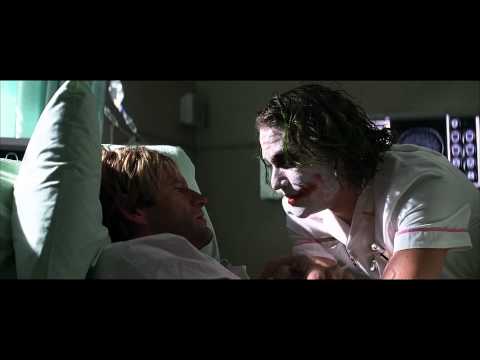
It makes sense in the context of this universe that Joker would be the creator of Two-Face. This isn't a universe where super-villains pop up separate from each other;  Dent's fate had to be a result of the Joker. Joker and Dent only share one scene together in the hospital. It's where Joker converts Dent to his philosophy of chaos. It was revealed earlier Dent's coin was two-headed. Dent made his own luck. Rachel had it when she died, resulting in it becoming scarred. When Dent first wakes up in the hospital he sees the coin and believes briefly Rachel could still be alive. It's seeing the scarred side which makes Dent realize Rachel is truly gone. This is the true birth of Two-Face.

Dent understands he can't control things. Despite his good intentions, he lost everything. Chance and fate have more power over your life than a rigged coin. To Harvey the coin represents how he views the world now, driven by chance and chaos. But as Batman says, Rachel's death wasn't chance. It was a result of Batman, Dent and Gordon's actions together. But Dent asks why he lost everything, not understanding Batman is Bruce. Dent believes it's only fair one of the Gordons should die.

However, Dent is still the one pulling the trigger. He has the choice not too but doesn't take it, which leads to his death. But Batman doesn't lose his faith in what Harvey represented or he was. He turns Dent's scarred face over to the good side. He decides to take the fall for Dent's crimes. This to me is the logical extension of the real world Batman idea. If Batman was not to retire (which he does in The Dark Knight Rises) he would to be something more complicated and ambiguous than a hero, super or otherwise. A man like Dent's reputation would supersede Batman's. The film says Batman can never be Dent, despite his good intentions.

Dent lived to see himself to become the villain but what he represented is worth preserving. Dent became a crucial part of Nolan's Batman mythology and I'd argue a more significant than he is in the comics. Eckhart gives an underrated performance, working overtime to give Dent's downfall a Shakespearean grandeur while still grounding his performance in reality. The tragedy of Harvey Dent is why I believe- beyond just Ledger's performance- The Dark Knight is one of the- if not most admired superhero film of all time.

P.S. I still don't know how he got that burnt jacket but I can forgive it.


Tuesday, 28 November 2017

Looking Forward to the 2018 Oscars


Image result for oscars 2018

While it's difficult not to feel somewhat cynical about awards season, particularly in the final weeks  before the Oscars, I can't help but still be invested in the guessing game that is the Oscars. And after Moonlight winning Best Picture this year and young members being inducted in to the Academy, could we be looking at a more diverse and exciting line-up? We'll have to see. I want to look at several of the categories and examine the contenders.
Image result for get out

Best Picture

Jordan Peele's Get Out is one of the year's best reviewed years and would likely been seen as an egregious snub is left out of the Best Picture race. It says more about race in America than other prestige films while operating as an entertaining horror thriller. While horror films have been nominated before, a horror-comedy may be a tougher sale.

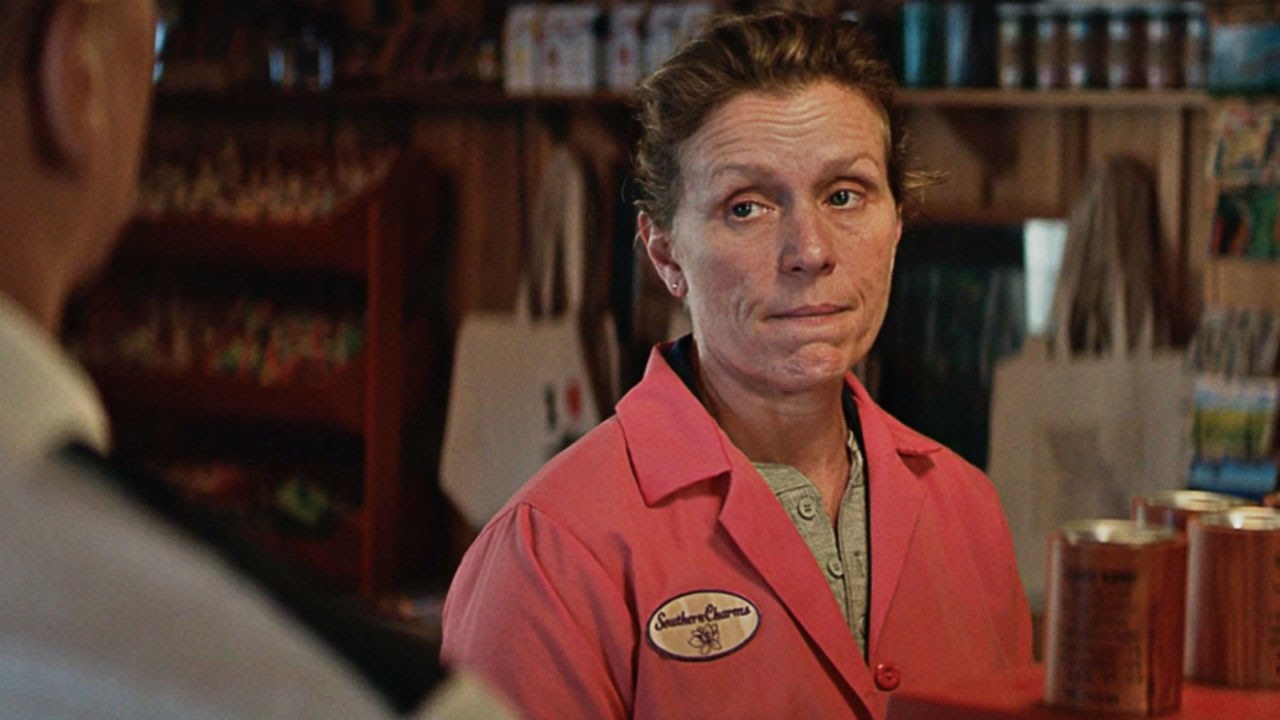
Martin McDonagh's The Three Billboards Outside Ebbing, Missouri (unwieldy title aside) is also capturing the zeitgeist- it concerns a woman name Mildred Hayes' (Frances McDormand) whose daughter's murder has yet to be investigated by the police. The anger at injustice and the inaction of authority figures can't help but be relevant. If it and McDormand (who's the Best Actress frontrunner) win, it'll be the first we've had a Best Picture/Actress win since Million Dollar Baby in 2005.

Christopher Nolan's Dunkirk was one of the summer's biggest non-franchise hits, proving Nolan's drawing power as a director. It's been called his masterpiece and could be this year's Gravity or Mad Max: Fury Road, a film that sweeps the technical awards. It could even snag Nolan's first Best Director Oscar. Though I wonder if it'll have the same impact on smaller screens when watched on screeners. Some may also feel the film is too "cold" and doesn't have enough character or story.

If that's the case, the WWII movie to support would be Joe Wright's The Darkest Hour, which chronicles newly elected Prime Minister Winston Churchill who has to decide what action to take regarding Adolf Hitler. I've heard it's a good companion piece to Nolan's film. And a story about standing your ground against fascism will speak to younger voters as much as older ones.

Image result for the post spielberg


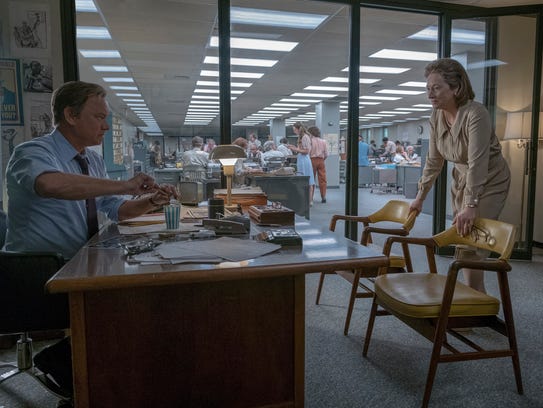
Steven Spielberg's The Post is another period piece that could be a contender. The film concerns the Washington Post's publication of the Pentagon Papers during the Vietnam War. Said papers revealed a cover-up by the United States regarding the War. The film was just awarded Best Film of the year by the National Board of Review and Ton Hanks and Meryl Streep took lead acting honours.  You can't count Spielberg when's he in prestige drama mode, especially with Hanks and Streep leading the cast. This could be another Bridge of Spies or even Lincoln. And in a time when Journalists reporting the truth are called liars, the subject matter is timely.

Guillermo Del Toro's The Shape of Water, taking place in the 60s, is perhaps this year's oddest period film. It's Del Toro's most acclaimed film since 2006's Pan's Labyrinth, with some critics saying it's superior. While its love story between a woman and a fish creature won't work for everyone, the film is also said to be a love letter to cinema itself, which will appeal to the Academy (Argo, The Artist) However, it did miss the NBR top ten.

Call Me By Your Name is already being heralded as a masterpiece, even though it's stirred controversy for its a depiction of a relationship between a teenage boy and an older man. It could ultimately not make the cut.

While Greta Gerwig's coming-of-age dramedy Lady Bird is a small-scale film, it's stellar reviews will be hard to ignore. It may be this year's Brooklyn (which also starred Lady Bird's Saorise Ronan.) The Florida Project is another small-scale film that will benefit from critics' reviews. And both were in the NBR top ten.

Netflix could be getting their first Best Picture nomination for Dee Rees' Mudbound. It's gotten strong reviews and deals with issues of racism and life after war, subjects right up the Academy's alley.

Moving on from small-scale indie to a Hollywood blockbuster, could Wonder Woman be the first superhero film nominated for Best Picture? I have my doubts- it's generic climax could lead it to being seen as another superhero film. However, Warner Bros. is be pushing for it; and would be meaningful for the first superhero film to be Best Picture nominee to be led and directed by women.


Image result for christopher nolan dunkirk


Best Director

Christopher Nolan has the aura of "overdue" around him (he appeared to be a sure-thing for Inception). While he has been criticised for being emotionally cold I think he could win Best Director even if Dunkirk doesn't win Best Picture. Best Picture/Director have been split recently, with Director going to the big technical film- i.e. Gravity, The Revenant  and La La Land). Guillermo Del Toro can also be considered overdue since he didn't get in for Pan's Labyrinth. The Shape of Water is already a critically beloved film- and after fellow Mexican filmmakers Alfonso Cuaron and Alejandro Inarritu winning, it feels like his time.

Martin McDonagh, like Kenneth Lonergan for Manchester by the Sea, is a playwright who'll likely receive his first Best Director nomination for Three Billboards. He's already an Oscar winner for his 2006 short film, Six Shooter. He was also nominated in Best Original Screenplay for 2008's In Bruges. 

Greta Gerwig would only be the fifth woman to be nominated for Best Director if she gets in for Lady Bird. And Dee Rees' would be the first African American female director nominee if Mudbound gains momentum.

Spielberg can't be counted out for The Post but if feels like the Academy will want to nominate new blood. Joe Wright missed for Atonement a decade ago but returning to WWII with The Darkest Hour could garner him his first nomination.

Call Me By Your Name is one of the year's most acclaimed films and Luca Guadagnino could be the Michael Hanake-esque nominee

Jordan Peele made of the most assured directorial debuts in recent memory with Get Out, balancing, horror, comedy, satire and drama with ease. He'd be the fifth black director to receive a Best Director nomination.

Image result for three billboards

.
Best Actress

I mentioned earlier that Frances McDormand is the front-runner for Three Billboards. She's one before (for Fargo) but the argument could definitely be made she's overdue for a second, considering she's been a consistently great actress. I could see Margot Robbie being a genuine threat to McDormand for her portrayal of disgraced figure skater Tonya Harding in I, Tonya. Actresses de-glamming themselves for a role (i.e. Halle Berry, Nicole Kidman, Charlize Theron) have won before and like Kidman and Theron, Robbie is playing a real life person. Saorise Ronan was the front-runner for Brooklyn a couple of years ago before Brie Larson stole her momentum. Her performance in Lady Bird will likely get her a third nomination (her first was for Best Supporting Actress for Atonement). 

Some consider Meryl Streep over-nominated (especially after her nomination for Florence Foster Jenkins) but you can never count her out, especially starring alongside Tom Hanks and being directed by Steven Spielberg in The Post. If her performance is genuinely one of her best then she's probably in.

Related image


Sally Hawkins plays a mute woman in The Shape of Water and giving a silent performance led Jane Wyman and Holly Hunter to Oscars for Johnny Belinda and The Piano, respectively. Hawkins has gotten great reviews and already appears to be a favourite for some people. She also benefits from her work in Maudie earlier this year. Moreover, some may remember her being left out for Happy-Go-Lucky almost ten years ago and want to rectify that.  Though arguably, she could be like Amy Adams in Arrival and ultimately miss out on nomination morning.

Jessica Chastain in Aaron Sorkin's directorial debut Molly's Game (he also wrote the screenplay) appears to be the same situation as last year's Miss Sloane, a well-reviewed performance that gets left by the wayside. Though with one of the most acclaimed actresses working today reciting Sorkin's writing, she can't be entirely dismissed.

I don't think last year's winner Emma Stone will be nominated again for Battle of the Sexes. It feels like the film kind of came and went, though a Golden Globes nomination in the comedy/musical category is certainly likely. And the winner before her, Brie Larson- unless she gets a surprise SAG nomination- is probably not going to get any love this year for The Glass Castle.

Speaking of ingenue winners, I thought Jennifer Lawrence gave her best performance in Darren Aronofsky's Mother! And with 4 nominations already at such a young age it's not a stretch to think she could get in. However, it's a polarising film that turns off many people.


Image result for beatriz at dinner

Salma Hayek in Beatriz at Dinner could be another Viggo Mortensen or Demian Bechir, propelled by critics' support in to the final five.

Annette Bening missed for 20th Century Women but she has another chance this year for Film Stars Don't Die in Liverpool. But she'll need a good critics' push and a strong campaign to get in to the top five.

Nicole Kidman delivered strong work alongside Colin Farrell in The Beguiled and The Killing of a Sacred Deer. The Beguiled is a better bet but she seems too far down the list of contenders.

Image result for gary oldman churchill

Best Actor

Gary Oldman seems like a shoe-in for Best Actor in The Darkest Hour. All the ingredients are there: he's never one and is considered overdue, he's covered in make-up and is playing a real-life figure (Winston Churchill) in a WWII film. And if the film gets in for Best Picture/Director and technical awards, all the better. 

Some consider Denzel Washington to have been robbed for Fences and if anyone could challenge Oldman it'd be Washington for Roman J. Israel, Esq. However, the reviews are mixed and it just doesn't seem like it'll be a contender.

Another major challenger could be Daniel Day-Lewis in his supposed final role, The Phantom Thread, which re-teams him with his There Will Be Blood director Paul Thomas Anderson (who directed him to his second Best Actor Oscar). Day-Lewis was the first to win three Best Actor Oscars and if he won again he'd make history again. Still, Anderson's films have become increasingly polarising and if the film doesn't hit off, Day-Lewis could miss.  

Tom Hanks hasn't been nominated since 2000's Castaway and has missed out for Captain Phillips and Sully. He's the type of actor that makes it look easy, which is why I think he's often overlooked. But he could in for The Post, playing the editor of the Washington Post Ben Bradlee, a role that got Jason Robards a Supporting Actor Oscar for All The President's Men back in 1977

On the younger side of things, Andrew Garfield could pull a Eddie Redmayne and receive a consecutive Best Actor nomination for Breathe, in which he plays Robin Cavendish, who was inflicted with polio at the age of 28. With the love of his wife he sets out to help other polio patients. I can't help but think of The Theory of Everything, which won Redmayne the Best Actor Oscar. 

I feel Jake Gyllenhaal has been unfairly left out of Best Actor for his recent work (particularly Nightcrawler) but he has a chance this year for Stronger, the story Jeff Bauman, who lost his legs in the Boston Marathon bombing. Gyllenhaal benefits from a more open Best Actor field and the strength of previous un-nominated work.

James Franco in The Disaster Artist is a funny situation. Older viewers won't get why his interpretation of The Room director Tommy Wisseau is funny but he could get a lot of support from younger voters. 
This also appears to be the most transformative performance Franco has given, which also helps.

Timothee Chalamet would be one of the youngest Best Actor nominees in history if he gets in for Call Me By Your Name. I don't think he'll win but it'd a major boost for his career.

If Get Out really hits off, Daniel Kuluuya could get in. He's arguably the most underrated part of the movie and he grounds the film with genuine emotion.


Image result for allison janney i tonya

Best Supporting Actress

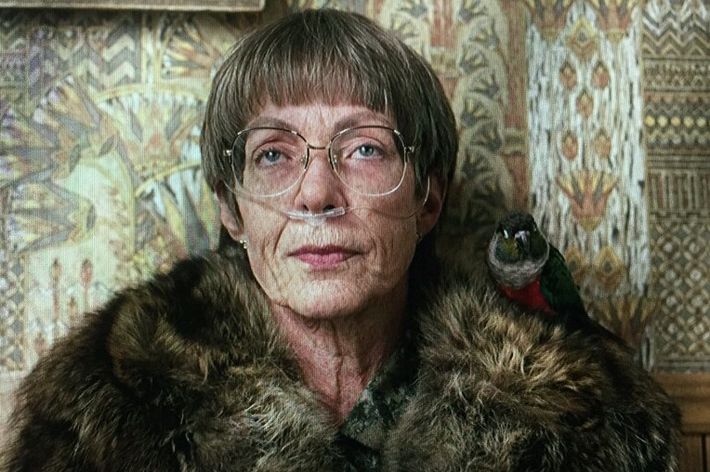
Allison Janney has received accolades for he work on TV but has never gotten an Oscar nomination. That's likely to change come nomination morning. Her performance as Tonya Harding's mother, LaVona Fay Golden in I, Tonya is the kind of meaty role that can take her a win, though I've heard the character is one-note. It's been remarked that the category this year is full of mothers. Laurie Metcalf and Holly Hunter are also up for playing mothers in Lady Bird and The Big Sick, respectively. It makes sense why Hunter is being positioned as the acting representative for the film. Along with Ray Romano, she's the most known actor in the film and has some standout moments.

Moving on from mothers to wives/girlfriends, Claire Foy being campaigned in this category for playing Diana Cavendish in Breathe appears to be a case of category fraud a la Alicia Vikander in The Danish Girl. Tatiana Maslany, who like Foy and Janney has gotten a lot praise for her TV work could get in for Stronger. And If The Darkest Hour is another The King's Speech, Kristen Scott Thomas could easily get in for playing Clementine Churchill.

Octavia Spencer could get a consecutive nomination after Hidden Figures for The Shape of Water. Mary J. Blige is also getting buzz for Mudbound, which would give us two black actresses in this category. And if Hong Cho gets in for Alexander Payne's science-fiction comedy Downsizing, we'd have the first Thai actress nominated for an Oscar. 
  

Related image

Best Supporting Actor

Willem Dafoe could be getting a career achievement Oscar for his work in The Florida Project. He's the most recognisable actor in the film and would be the way to honour the film- since it faces strong competition in other categories.

Sam Rockwell and Woody Harrelson are both up for Three Billboards. Rockwell is a hard-working character actor who's never been nominated and it feels like Harrelson is due for another nomination considering his post-True Detective work. Unfortunately, two actors from the same film in the same category can lead the two cancelling each other out.

Speaking of which, there may be some category fraud with Armie Hammer being in Best Supporting Actor for Call Me By Your Name, where he's more of a co-lead. He and Chalamet's co-star Michael Stuhlbarg could actually sneak in over Hammer.

Ben Mendelshon is an expert character actor and may finally get his due with his role as King VI  in The Darkest Hour. Buzz is also growing for Mark Rylance in Dunkirk. He's the film's best bet for an acting nomination but I feel the film's characterisation is too minimal to snag a nomination.

Image result for three billboards outside ebbing missouri


Best Original Screenplay

Martin McDonagh's screenplay for Three Billboards could be the one to beat but let's not forget Lady Bird, written by Greta Gerwig and loosely based on her adolescence. Jordan Peele's sharp and insightful screenplay for Get Out certainly deserves to be here. The Darkest Hour feels like the British Lincoln- which won Tony Kushner a Best Adapted Screenplay Oscar in 2013. The film's writer, Anthony McCarten, could win. Moreover, he's a previous nominee for The Theory of Everything- as both screenwriter and producer.  

The Big Sick, written by Emily V. Gordan and Kumail Nanjiani and based on their relationship, could win, especially since this would be the place to honour the film. 

If The Shape of Water is to be a major contender Guillermo Del Toro's screenplay is sure to be here.

Look out for: The Post, The Florida Project


Image result for james ivory


Best Adapted Screenplay

This is where Call Me By Your Name could win, especially with James Ivory (of Merchant Ivory) being the film's screenwriter. Ivory hasn't been nominated at the Oscars since 1994 (Best Director, The Remains of the Day) and this would be his first screenplay nomination.

Aaron Sorkin missed out for Steve Jobs but he could come back for Molly's Game, especially if Chastain gets in for Best Actress.

If Mudbound becomes a Best Picture contender, Dee Rees and and Virgil Williams' screenplay will have a good chance of scoring a nomination 

The younger voters who would get James Franco in to Best Actor for The Disaster Artist would also put support behind its screenplay, written by Scott Neustadter and Michael H. Weber.


Image result for roger deakins blade runner 2049


Best Cinematography


Are the Academy ever going to give Roger Deakins an Oscar. His work on Blade Runner 2049 may finally earn him his first Oscar. Hoyte van Hoytema is gunning for his first nomination and possibly first win for Dunkirk.

Bruno Delbonnel has been nominated four times and will surely get a fifth for The Darkest Hour. The Shape of Water's Dan Lausten has never been nominated but appears poised to receive his first for Del Toro's romantic fantasy. Sayombhu Mukdeeprom is another conceivable newcomer for Call Me By Your Name.

Image result for dunkirk tom hardy


Best Editing 

I'm betting on Dunkirk to win this award, since the film is so much about its specific editing. Lee Smith has already been nominated twice and perhaps will win his first Oscar. The Darkest Hour's editor Valerio Bonelli is also a viable contender. Blade Runner 2049 will reasonably get several deserved technical nominations, and its editing contributes to its atmosphere as much as its cinematography. Expect Joe Walker, who was nominated for Arrival, to secure a second consecutive nomination and his third overall (his first being for 12 Years a Slave). Walter Fasano has already acquired a Spirit Awards nomination for his editing of Call Me By Your Name, which gives a boost. 

So, those are pretty much my thoughts as of now. What are your predictions and/or hopes for this year's Oscar nominations?


Friday, 2 September 2016

"Men are still good:" An essay on "Man of Steel" and "Batman v. Superman"


Warning: Spoilers for both films will follow


I don't think it's too hyperbolic to say that Zack Snyder's Man of Steel and Batman v. Superman: Dawn of Justice are arguably the most controversial and divisive superhero films ever made. They've received both intense hate and love, which isn't surprising. From tone to characterisation, these are not the films many people want. For many, these films are too dark, too violent ("Batman and Superman shouldn't kill"), and don't have enough levity. For me, MoS and BvS are two of the boldest examples of modern blockbuster film-making- significantly flawed but still potent and filled with numerous moments of visual and emotional beauty. This essay will focus on MoS and BvS' thematic concerns rather than attempt to outright review the films. 

On an important side-note, with the newly released Batman v. Superman: Dawn of Justice- Ultimate Edition on Blu-ray, (which contains 30 more minutes of footage), we're able to see Zack Snyder's original vision for his much maligned film. The Ultimate Edition is fuller and more cohesive. It also feels like the three hour epic as which it was originally conceived.The film's reputation has gained some much needed positivity due to the Ultimate Edition, which I think is helpful as we move closer to next year's Justice League. 

Beginning with MoS, the film shares structural similarities to Christopher Nolan's Batman Begins (David S. Goyer wrote both films, Nolan shares a story credit and is a producer on MoS). Like Batman Begins, MoS has a fractured narrative. As the ship carrying baby Kal (Superman's Kryptonian name) is about to crash on earth, we cut to adult Clark Kent (Henry Cavill) working as a fisherman. It's an elegant way to start at the beginning  of the Superman story (Krypton's destruction) while not wasting time getting to Clark as an adult. We then witness, via flashback, Clark's childhood, where he learns about and struggles with his super-human powers. In the present an adult Clark finally discovers where he came from and of his real purpose on Earth.

By employing a flashback structure, MoS distances and diversifies itself from Richard Donner's original classic with Christopher Reeve, which told its story linearly. And by positioning the scenes of Clark's childhood and young adulthood as flashbacks, it makes the experience of the film more intimate; Clark reflects on the moments of his life that defined him, which inform the moments in the present. The scenes of MoS where Clark is discovering where he came from- are its strongest. They feel less like a traditional superhero film than an independent film about someone who has super powers. When General Zod (Michael Shannon) and his fellow Kryptonians come to earth, the film becomes an alien invasion sci-fi film that happens to have Superman in it.

Both MoS and BvS also approach the concept and character of Superman from a very specific angle, which is, how would people react if Superman actually existed in our world. Some would worship him as a saviour, some would fear him or even hate him, and some wouldn't know how to feel. The film-makers approached MoS as a first-contact story- our first encounter with alien life. By being a story about Earth's first encounter with alien life, MoS isn't just a story about Superman, it's a story about the whole being at the precipice of a new chapter in history. The attempted terra-forming and subsequent battle of Metropolis are ground-zero for everything going forward in the DCEU (DC Extended Universe). We are shown a modern and realistic world that witnesses the birth of a modern mythology. The events of the film will be spoken about for generations to come. The arrival of Superman has irrevocably changed the course of world history.


Image result for superman kills zod


At the end of MoS, Superman is forced to kill  Zod the most controversial moment in either film. I don't want to get in to whether Superman should or shouldn't kill. In the context of the film I feel killing Zod is a sacrifice Superman has to make for humanity. He has to kill the last of his race so that the Earth can survive. This makes him the last living Kryptonian on the planet. By showing he is able to sacrifice Krypton for Earth he becomes the representation of Krypton to Earth- the bridge between Krypton and Earth of which his birth father Jor-El (Russell Crowe) spoke.

Moving on to BvS, in that film's news montage, Vikram Gandhi (playing himself) person says the arrival of Superman is a "paradigm shift," and that we can't presume to make Superman abide by our rules- it just won't work. While we Gandhi states people have to start to thinking beyond politics. But as Andrew Sullivan (also playing himself) says, whatever Superman does can be construed as a political act. Sullivan's statement appears to me to be a comment on the image of Superman as an all-American hero. In the modern era, Superman has to represent everyone and care about the state of the whole world- but again, as grand a figure as he is, he can't really escape the political implications and ramifications of his actions. "Must there be a Superman?" Charlie Rose asks Senator June Finch (Holly Hunter). Her blunt answer: "There is." Superman is here, regardless of whether people want him or not; he is part of their existence. This one line conveys how it would feel to know- and have to accept- someone like Superman existing in our world. 

And maybe people do need a Superman. All super-heroes inspire us to be better and Superman represents this idea of inspiration better than all the others. While some may find Superman outdated, I think he remains relevant in our current time. There is so much hatred and cynicism that poisons the world. that what Superman stands for is still important: Hope. The hope that we can be better as a people if led the way, if we come together instead of continuing to push each other away.


One criticism of both MoS and BvS is they don't have the optimistic and light-hearted tone that we'd expect from a Superman film. And that's true- but despite being quite serious dark in many places, I believe there is an optimistic undercurrent to both films. In MoS, Superman gaining Colonel Nathan Hardy's (Christopher Meloni) trust and respect when he saves Hardy from Kryptonian Faora (Antje Traue) during the fight in Smallville shows Hardy's- and mankind in general- ability to look beyond his prejudice and see Superman as a hero and ally rather than just an alien. And during the film's climax, Perry White (Laurence Fishburne) stay with Jenny (Rebecca Buller) as Metropolis is crumbling around them, displaying the compassion that even the most hardened man is capable of showing.   

Most importantly, by the end of BvS Superman has restored Bruce Wayne's (Ben Affleck) faith in humankind. In the film's closing scenes Bruce tells Diana Prince/Wonder Woman (Gal Gadot), "Men are still good. We fight. We kill. We betray one another. But we can rebuild. We can do better. We will. We have to." Bruce has spent most of the film hating and wanting to kill Superman- but in a bitter-sweet irony, Superman's sacrifice and death in the fight against Doomsday has shown Bruce a person's ability to be selfless and good. Superman still struggles with being a symbol of hope throughout BvS. People still question his motivations- politically and morally- throughout the film. Through his death at the film's end, I feel he becomes that symbol. His death rises him above politics and fear, and his absence allows humanity to reflect on his time on Earth and how they'll move forward. Superman's sacrifice ties both he and Bruce's arcs nicely together. 

Speaking of Bruce Wayne, I think along with Batman Begins, BvS features the best exploration of Bruce/Batman in live-action. The film begins with the funeral of Bruce's parents, Thomas and Martha Wayne- which bookends with Superman's funeral at the end. Just as MoS began with the cries of baby Kal El- the first natural birth on Krypton in centuries- BvS begins with the "birth" of Batman. In a dream sequence where he's at his parents' funeral Bruce falls down a hole and is swarmed by bats who- in one of the film's most striking images- bring him back up to the surface- to a "beautiful lie," as Bruce tells us in voice-over.

We then witness the Battle of Metropolis from Bruce's perspective. This first scene with the older Bruce establishes his motivations for wanting to destroy Superman. He blames Superman the destruction of Metropolis and the loss of the people in of his buildings. He comforts a girl who lost her mother in the destruction. Part of what drives Bruce in his mission as Batman is the need to prevent his tragedy happening to another child. The orphaned girl further fuels Bruce's rage.


He also fears what would happen if Superman decides to turn against mankind. This is highlighted by the "Knightmare" sequence in which Bruce sees a possible future where Superman is a tyrant (reminiscent of the Injustice video game and the subsequent comic book series it inspired). This sequence is a miniature movie in itself. It both reflects and reinforces Bruce's fears of Superman's unlimited capabilities. 

Just before the fight between Batman and Superman, Bruce tells Alfred (Jeremy Irons) that killing Superman will be his legacy. Bruce feels that criminals are like weeds but eliminating Superman will secure the survival of the world. This is an point-of-view from the character I don't think has ever been explored in the comics- Bruce thinking about a legacy outside his war on crime. Maybe it wouldn't work in the comics medium but in a film it makes sense. This Bruce has aged in real time- 20 years in Gotham as the Batman. This exchange between Bruce and Alfred also conveys that Bruce has been driven over the edge by Superman's presence in the world, on top everything else he's experienced through his. He's willing to fight a super-human being so he can secure a legacy beyond that of beating up criminals, one that's befitting of the Wayne name- "They were hunters," Bruce says of his ancestors.

Bruce also mentions he's older than his father ever was. Like other superheroes that followed them, Superman and Batman's beginnings are based in the loss of parents. MoS is very much a film about fathers, as Superman has two- his aforementioned Kryptonian father Jor and his adopted father, Jonathan Kent (Kevin Costner). Jonathan is protective of his son, knowing he's meant for something greater but afraid what will happen when he reveals himself to the world.

If MoS was largely about fathers, then BvS is about mothers. The "Martha" scene has been the subject of much ridicule. People read the scene as Batman becoming Superman's ally just because their mothers share the same name. But I think it goes deeper than that. Batman realizes he's been manipulated by Lex Luthor (Jesse Eisenberg). He also finally sees Superman as someone with genuine humanity- he has a mother who he's trying to save. Batman has an epiphany, which brings him back from the edge.

Now, about Lex Luthor. I feel BvS' Lex is one of the more unusual villains in recent comic-book movie history. Eisenberg's interpretation is the most eccentric Lex we've seen on screen thus far. His motivations have nothing to do with taking over the world or real estate. All the intricate plot mechanics- which were muddled in the theatrical version of BvS- are in service of Lex's anger from a childhood trauma that never healed. Lex tells Superman that no God saved him when his father physically abused him. To Lex, Superman represents the God who was never there when he needed him. Lex directs all his hatred toward Superman and wishes to prove that the perfect God figure isn't perfect- when pushed, he'll kill someone to save his mother. Though, ironically, Lex's plan is self-destructive, since kidnapping Martha Kent (Diane Lane) is what brings Batman over to Superman's side.

Despite its title, BvS isn't really about Batman and Superman fighting. Yes, it's pivotal sequence in the film and the plot threads of the film lead to it- but BvS is more about bringing these heroes together. What's more satisfying than seeing these two titans duke it out onscreen is seeing them reconcile- to witness Batman seeing Superman for who he really is. "I failed him in life. I will not fail him," says Bruce at the end. This line solidifies Bruce's arc in the film; and it says a great deal about how our relationship with someone can drastically change. Bruce began hating Superman but now he'll make certain his sacrifice isn't in vain. Superman's death is the basis for gathering the Justice League, a team that will honour his memory. And when Superman returns, he will lead this team. I don't find the tease of Superman's return in the film's closing shot cheap. The film slows down in it's final scenes, allowing the audience to feel weight of his loss and how it affects the world.


I think what has made Batman and Superman such inspiring figures for readers throughout the years is that they are characters who have suffer tragedies but use those tragedies as the foundation to do good in the world. Superman will never be able to return to Krypton but he can save Earth from Krypton's fate. Batman fights criminals so another child doesn't have to lose his/her parents. They may go about things differently but Batman and Superman can find common ground, which itself is a hopeful sentiment. If Batman and Superman can get along, maybe we all can.

Tuesday, 31 March 2015

My 11 Favourite Films of 2014


I don't believe there's such a thing as a bad year for movies. As easy as it is to be cynical with the modern movie landscape I feel each year does bring us films of originality, wonder and genuine vision. For me, every year is defined by the movies that were released. It's hard for me not to associate a given year with certain films. And it's a treat to look back at what films made up my year watching movies.


This list of my favourite films of 2014 is coming a little later than I planned and there are still several films from the past year I haven't seen; as well as films I did see but haven't revisited. But here are the films of 2014 that I either loved, deeply affected by, or just really enjoyed and admired. I don't use the word "best" because I don't know what I would objectively call the best. While I would certainly name several of these films as the best, this list is to be taken merely and
humbly as my own preferences. As always, I'll start with my number one favourite film and then proceed alphabetically.

SPOILERS FOR CERTAIN FILMS AHEAD


1. The Grand Budapest Hotel


I saw Wes Anderson's The Grand Budapest Hotel about this time last year and no other film from 2014 has taken its place. The Grand Budapest Hotel is a film I'll still be watching in 20 years, a film that already feels like a classic. It sort of falls in to the category of film Quentin Tarantino called "hangout movies," a movie you watch just to spend time with the characters. Even though the film has a fast pace (in many ways its a screwball comedy), it does give us enough slower scenes and moments that allow to fall in love with the characters.


The film's main storyline focuses on the adventures of  a hotel concierge- M. Gustave (Ralph Fiennes)- and his new lobby boy Zero Moustafa (Tony Revlori)- which revolve around a stolen painting and a vast family fortune. All of this is taking place against the backdrop of 1930s Europe. But the plot mechanics don't really matter. Anderson is more interested in the idea of storytelling and the way in which stories are passed down through the generations.


The theme of "passing down of stories" is reflected in he the film's layered structure. We begin with a young girl reading a book by an unnamed writer (Tom Wilkinson). The book is a recount of a trip he made to the Grand Budapest Hotel in 1968. During this time he met the older Zero (F.Murray Abraham), who now owns the hotel  and who tells the young writer (Jude Law) about his relationship and adventure with M. Gustave.  


I view The Grand Budapest Hotel as a film largely about nostalgia. Zero believes  Gustave epitomized and represented a world which was a already a thing of the past. And the heart of the film is Zero looking back at the pivotal era of his life. I have a particular fondness for films about someone looking back at their past. I find something poignant about the concept; and when we learn why Zero never shut down the hotel, it encapsulates how even the briefest amount of time being happy defines the rest of our lives.


Birdman


Alejandro Gonzalez Inarritu's Birdman is an example of how drastically a film's reputation can change in less than a year. After receiving rave reviews from critics it eventually became the film to hate. And when it won Best Picture at the Oscars in February its victory was compared to another acclaimed but then reviled film which won Best Picture, Paul Haggis' 2005 Crash. I understand why many dislike this film. It's self-conscious and it's script is largely unsubtle, it may not have as much depth as it purports to be-  and it's "one take" conceit is seen as just a cheap gimmick.


But for me, Birdman was one of the most enjoyable film experiences I had last year. While I have wondered whether it's mostly a surface level film I can't help but admire it as a high wire act of directing and acting.  Being comprised of numerous long takes- instead of merely being a gimmick- feels organic to the narrative largely taking place backstage at a theatre. Here, former movie star Riggan Thompson (Michael Keaton) is attempting a comeback by directing, writing and starring in an adaptation of Raymond Carver's "What We Talk About When We Talk About Love." The continuously moving camera puts us backstage and part of this hectic environment, where arrogance and pent-up aggression abound. 


Moreover, the long takes result in the film taking on play-like elements- with actors having to hit their marks and not mess up their lines- while still feeling cinematic. The meta-ness of the film is accentuated by Michael Keaton- known for his performances as Batman- in the role of an actor famous for playing a superhero. While it's reductive to say Riggan is a reflection of Keaton I do feel Keaton's performance  is a personal exploration of how fame and an iconic role can become like an albatross- as well as the difficulty of shedding that past existence and being born anew as an artist.


Boyhood


While admittedly I don't have the same amount of passion for Boyhood as other critics but I can't deny the authenticity and beauty of director Richard Linklater's 12 years in the making vision of one boy- Mason (Ellar Coltrane) from 6 to 18. With this film and the Before Trilogy, Linklater confirms his place as the utmost chronicler of life as it unfolds (white middle class life- but still). While the broad strokes of the story aren't particularly original, it's the small details- the interactions between characters and the non-showy way in which Linklater portrays the passage of time- that make up Boyhood's artistry.   


I see the film as asking after whom Mason will model himself since his step fathers weren't exactly ideal role models. Even his biological father, Mason, Sr. (Ethan Hawke)- a decent guy at heart- has his own flaws. Even at the end, Mason is still forming his identity.  But maybe all he needs to do let the moment seize him.


Calvary


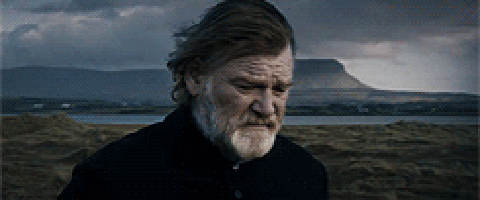
I enjoyed John Michael McDonagh's The Guard but I feel his more profound work is his follow-up, Calvary. In the film Brendan Gleeson (who also starred in The Guard) plays an Irish  priest named Father James. While listening to a confession the parishioner tells James he plans to kill him in a week. The parishioner was sexually abused as a child and since the priest who committed the crime is dead, the parishioner chooses to murder James instead; this is largely because James is a good man and a good priest. The parishioner was an innocent child so an innocent man but be punished in return.  


The film then follows James as he interacts with  other parishioners as well as repairing his relationship with his estranged daughter Fiona (Kelly Reilly). The takes on a somewhat episodic structure, creating a lived in world that is both humorous but also incredibly dark. McDonagh's script and director create an cohesive balance between the humour and drama, the warmth and the bleakness of the story. McDonagh also has the benefit of Gleeson in the lead role, who's the anchor of the story; his understated performance grounds the film in an emotional reality.


We don't know who the would-be murderer is until the end but the film isn't really about this mystery. Calvary is- at it's core- a film that asks how you would face your own imminent death, especially when you're being punished for someone else's crime. The film's climax on a beach, stunningly photographed by cinematographer Larry Smith, stands as one of my favourite denouements of any film from last year.


Dawn of the Planet of the Apes


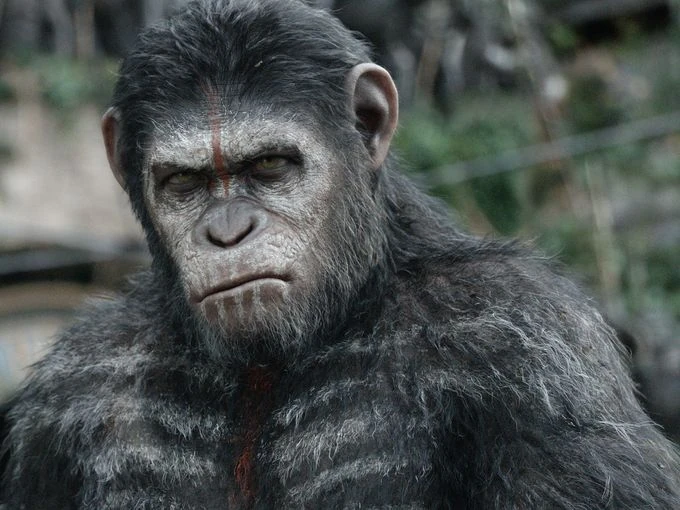
2011's Rise of the Planet of the Apes and last year's sequel Dawn of the Planet of the Apes are prime examples of how franchise films based on pre-existing and previously adapted material can be just as vital and artistic as original blockbusters. If Rise was a reimagining of 1972's Conquest of the Planet of the Apes then Dawn is this new series version of 1973's Battle for the Planet of the Apes. 15 years after the simian flu has killed off most of humanity, the ape leader


Caesar (Andy Serkis) and Malcolm (Jason Clarke) attempt to make peace between apes and humans- whom Caesar still distrusts from his time in captivity. But Caesar's general Koba (Toby Kebbel) wants war between the two species.


Dawn explores how even a great leader cannot control the path of his people. Via motion-capture, Serkis further cements his legacy as an actor. His performance as Caesar in these two films is an even deeper and more impressive feat than his role as Gollum in the Lord of the Rings and Hobbit trilogies.

Director Matt Reeves- taking over the reigns from Rupert Wyatt- crafts some amazing set pieces while also allowing the film to breathe, telling a thoughtful and ultimately tragic story about coming close to peace and it being torn apart. "I thought we had a chance" says Malcolm at the film's conclusion. "I did too," responds Caesar. Rarely does a blockbuster laments violence in such a devastating fashion.


Gone Girl


David Fincher is maybe the most precise of contemporary American film directors, which is why he's perfect for films based around investigation and painstaking details. And it's his often deeply cynical view of human nature which makes him unafraid to confront the themes of Gillian Flynn's adaptation of her best-selling novel.


While some will dismiss the film as merely an adaptation of an "airport novel," Gone Girl isn't just an entertaining amd involving mystery about whether Nick Dunne murdered his wife Amy (Rosamund Pike). The film is largely a funny and uncomforting satire about the America media and how it can reinforce paranoia and distrust. Fincher also explores the nature of identity in relation to being in a marriage- the "cool girl" persona  Amy creates to win over Nick and- after it's revealed Amy staged her own disappearance out of revenge- the persona Nick takes on to win her back. "The only time you liked yourself was when you were trying to be someone this cunt might like," Amy tells him after her reappearance.    


Fincher takes Affleck's limitations as an actor and coasts out Affleck his best performance yet. Affleck plays Nick neither too sympathetically or wholly unlikable. He's not a clear-cut protagonist but rather a flawed and potentially violent human being. Nick has to win people over and Affleck- as much as any actor in Hollywood- knows how easy it is for people to turn against you.  When Nick says "They hated me, and now they love," it sounds like Affleck summing up the arc of his career."    


Interstellar


I've never subscribed to the theory that Christopher Nolan is an unemotional filmmaker but I do feel Interstellar- while very divisive-  is arguably his most purely emotional film to date. Nolan takes what was mostly symbolic in Inception- Cobb's (Leonardo DiCaprio) children- and makes it more tangible via Cooper's (Matthew McConaughey) relationship to his daughter (Mackenzie Foy). Akin to Inception, Interstellar is about the protagonist's desire to return home. Due to the Earth dying, Cooper has to leave in order to find a planet for humanity to inhabit. 

The idea of having to leave your home, not knowing when you can come back, is universal and it's at the heart of Interstellar grand vistas and huge big ideas. Nolan- with his Batman trilogy and Inception- has always attempted to make films that are in the spirit of large-scale epics of David Lean and Stanley Kubrick. I always admire Nolan's use of practical effects instead of over-reliance on CGI. It's what gives his films a sense of reality and texture we don't always get with many modern blockbusters. But's what most surprising about the film is how intimate the film's climax is, intercutting between father and daughter- and eventually tying the themes of the emotions together in a sequence that people either scoff at or embrace. I think it's a wonderful set piece. And while not make complete sense on a pure logic level, but I think dramatically and emotionally it achieves its goals.


The film also asks the question of whether true altruism can exist or whether Cooper's journey is based more on saving his daughter's future rather than everyone else's future. It's eventually revealed that instead of Plan A- which will bring humans from Earth to the new planet- Plan B- embryos being used to restart the human race- is the ultimate game plan. The question of altruism then extends to the people who helped build Cooper's ship. If they knew they would be left behind, would they have helped? The question is a challenging one. The fact Nolan doesn't give us a reassuring answer makes Interstellar the most morally dark blockbuster in years.     


The Lego Movie


The Lego Movie is one of the funniest, joyful and inventive comedies I've seen in quite some time. What struck people as merely a toy commercial before it was released, another unoriginal cash grab, turned out be a testament to creativity, originality and individuality. Directors Phil Lord and Christopher Miller  have created careers out of taking material that sounds on the surface like Hollywood cynicism (a remake of 21 Jump Street? a movie based on Lego?) and subverting our expectations Even when it goes down conventional routes in its storytelling The Lego Movie always manages to surprise and entertain.


The Rover


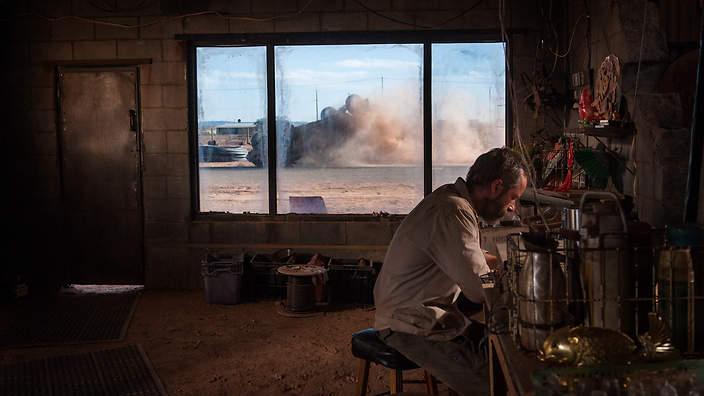
David Michod's follow up to his 2010 film Animal Kingdom is a bleak but empathetic story set in the Australia outback a decade after the world suffered a global economic collapse. Michod isn't concerned with explaining every detail of what lead to the state of the world. He instead focuses in on Eric (the always underrated Guy Pearce), a drifter whose car is stolen by a gang of thieves after a robbery. Henry (Scoot McNairy) leaves behind his injured brother Rey (Robert Pattinson), whom Eric uses to find Henry and the car.


Michod's creates one of the most realistic visions of a dystopia I've seen in a film. And it suits the subtlety of the narrative as the characters wander through the remains of the old world. This is a film many will call boring. But for me, I found Michod's filmmaking, his sense of composition and deliberate pacing, very absorbing. This is a film which places you firmly in its world, lets you breathe it in and understand what life is it like in the remnants of the world.


We only get hints of Eric's backstory- including the final reveal- but Pearce's face and his demeanor create a lived in performance. Pearce is always reliable but the biggest surprise is Pattinson's performance. He's as far away from Edward and Twilight as he's ever been. With a thick and drawly southern accent Pattinson's performance is a fascinating display of an actor forging a new identity for himself on screen.


I admire how Michod develops Eric and Rey's relationship throughout the film. They never become buddy-buddies but they do reach an unspoken peace and understanding. And with the film being so restrained, the emotions in the climax feel like some kind of catharsis.     


Noah


Darren Aronofsky's adaptation of the story of Noah's arc got lost in the shuffle of 2014 but I think it's the most visionary blockbuster to come out this year (even more so than Interstellar and Dawn of the Planet of the Apes). Instead of making a sanitized version of this tale, Aronofsky creates a dark fantasy that's full of grit and moral ambiguity as Russell Crowe''s Noah leaves people to their deaths and almost kills a baby as to prevent further reproduction (he wants humanity to end with his family). Many purists will take issue with Aronofsky's vision. Personally I feel Aronofsky brings us the non-religious audience much closer to the character of Noah and this story than ever before


Whiplash


I don't think there's any horror movie villain which has frightened me in the same way Terence Fletcher has. Watching Damien Chazelle's Whiplash, J.K. Simmons' Oscar-winning performance as a tyrannical and merciless music teacher felt like it was pulled out from my subconscious and put on screen. I'm an easily intimidated person and Fletcher represents the kind of man who would absolutely petrify me in real life. Fletcher is a man whom- no matter how much I hated him- I would still strive to please.


But Fletcher isn't the main character of the film. That's Andrew Neiman (Miles Teller) an ambitious young drummer at the prestigious Shaffer Conservatory in New York who'll do anything to become the next jazz great. Fletcher pushes his students beyond what's acceptable. Whiplash asks troubling questions about the line between passion and obsession, between stern- and occasionally unorthodox- teaching and straight up mental abuse. How can true greatness be unlocked and how far would push yourself to achieve true mastery- and possibly legendary stasis.


Fletcher believes there's no more harmful phrase than "Good job." We can understand where Fletcher is coming from- how coddling isn't always healthy; but it's also important to acknowledge Fletcher goes too far in the opposite direction, treating his students with cruelty and disrespect. Simmons is amazing but Teller's performance is also crucial to the film. Teller finds a way to make Andrew both sympathetic but also capable of his own coldness and cruelty, even breaking up with his girlfriend Nicole (Melissa Benoist) because he views her as someone who will get in the way of his ascension to greatness. And Teller's drum playing makes you feel Andrew's "blood, sweat and tears." 


The psychological warfare between Andrew and Fletcher culminates in a stunning final sequence which may be the best ending to any film from 2014. .It'd be one thing if the film was just a vehicle for great performances but Chazelle's direction and Tom Cross Oscar- winning' editing are stellar, making the film its own kind musical performance. The aforementioned final sequence isn't just the culmination of Andrew and Fletcher's relationship, but it also represents Chazelle reaching transcendence as a filmmaker.


The Davies Awards

Favourite Actors (Female)


Emily Browning- God Help The Girl


Emily Blunt- Edge of Tomorrow
Jessica Chastain- The Disappearance of Eleanor Rigby
Marion Cotiillard- The Immigrant
Karen Gillan- Oculus
Keira Knightley- Begin Again
Felicity Jones- The Theory of Everything
Rosamund Pike- Gone Girl
Aubrey Plaza- About Alex
Zoe Kazan- The F Word

Favourite Actors (Male)


Jake Gyllenhaal- Nightcrawler


Ben Affleck- Gone Girl
Tom Cruise- Edge of Tomorrow
Chris Evans- Captain America: The Winter Soldier
Ralph Fiennes- The Grand Budapest Hotel
Michael Keaton- Birdman
James MacAvoy- X-Men: Days of Future Past
Matthew McConaughey- Interstellar
David Oyelowo- Selma
Eddie Redmayne- The Theory of Everything
Andy Serkis- Dawn of the Planet of the Apes 
Dan Stevens- The Guest
Channing Tatum- Foxcatcher
Miles Teller- Whiplash

Favourite Supporting Actors (Female)


Katherine Waterston- Inherent Vice


Patricia Arquette- Boyhood
Melissa Benoist- Whiplash
Jessica Chastain- Interstellar
Carrie Coon- Gone Girl
Kim Dickens- Gone Girl
Scarlett Johansson- Captain America: The Winter Soldier
Jane Levy- About Alex
Jena Malone- Inherent Vice
Hannah Murray- God Help The Girl
Saorise Ronan- The Grand Budapest Hotel


Favourite Supporting Actors (Male)


J.K. Simmons- Whiplash


Dave Batista- Guardians of the Galaxy
Josh Brolin- Inherent Vice
Bradley Cooper- Guardians of the Galaxy
Bryan Cranston- Godzilla
Ethan Hawke- Boyhood
Edward Norton- Birdman
Robert Pattinson- The Rover
Tyler Perry- Gone Girl
Mark Ruffalo- Foxcatcher


Favourite Directors


Wes Anderson- The Grand Budapest Hotel


Paul Thomas Anderson- Inherent Vice
Darren Aronofsky- Noah
Damian Chazelle- Whiplash
Scott Derrickson- Deliver Us From Evil
Gareth Evans- The Raid 2
David Fincher- Gone Girl
James Grey- The Immigrant
Alejandro Gonzalez Inarritu- Birdman 
Richard Linklater- Boyhood
John Michael McDonagh- Calvary
David Michod- The Rover
Christopher Nolan- Interstellar
Phil Lord, Christopher Miller- The Lego Movie 
Matt Reeves- Dawn of the Planet of the Apes
David Leitch, Chad Stahelski- John Wick


Favourite Screenplays


Wes Anderson- The Grand Budapest Hotel
Damien Chazelle- Whiplash
Gillian Flynn- Gone Girl
Phil Lord, Chris Miller- The Lego Movie


Favourite Action Sequences-  


Hammer Girl train fight- The Raid 2
Car chase- The Raid 2
Final fight- The Raid 2
Boat sequence- Captain America: The Winter Soldier
Highway sequence- Captain America: The Winter Soldier
Quicksilver set-piece- X-Men: Days of Future Past
Boarding the arc- Noah 
Shootout in John Wick's house- John Wick
Red Circle shootout- John Wick

Favourite Cinematographers


Jeff Cronenweth- Gone Girl


Hoyte van Hoytema- Interstellar
Darius Khondji- The Immigrant
Matthew Libatique- Noah
Emmanuel Lubeski- Birdman
Sharone Meir- Whiplash
Jonathan Sela- John Wick
Larry Smith- Calvary
Robert Yeoman- The Grand Budapest Hotel