Showing posts with label Gary Oldman. Show all posts

Saturday, 22 April 2023

Oceans of Time: "Bram Stoker's Dracula"


Spoilers Below

We don't make films that look and like Francis Ford Coppola's Dracula anymore. It belongs to the era that also gave us Tim Burton's Batman Returns and Joel Schumacher's 2 Batman films, as well as
Baz Luhrmann's Romeo + Juliet, singular, director driven movies with big budgets and based on popular source material. Dracula and Batman Returns owe themselves more to German expressionism and silent movies than Hollywood conventions. While we have auteur driven big budget films from the likes of Christopher Nolan and Denis Villeneuve it's hard to imagine either them making something as campy, avant-garde and erotic as this film. They're both too sexless to make an sexual film. Robert Eggers is doing his Nosferatu remake but that's probably going to be a more somber affair without the camp humour of this film. But to be fair, the guy who put a decapitated horse's head in a guy's bed and had Marlon Brando talk about polio doesn't necessarily seem like anyone's idea of a sexy filmmaker. However, Coppola's career and style has always been varied and unpredictable. 

Coppola's style is defined by its fluidity and adaptation, fitting his style to what the film needs- from the novelistic quality of The Godfather films, the surreal nightmarishness of Apocalypse Now, the chilly paranoia of The Conversation, and the lowkey fantasy of Peggy Sue Got Married. He also doesn't box himself by genre. He took the gangster film and put on a Shakespearean scale with both parts of The Godfather, combined the gangster and musical genres with The Cotton Club, and made a war film as strange and atmospheric as Apocalypse NowDracula is a horror film but it's also a gothic romance blended with the avant-garde and camp. It also wasn't the first time Coppola delved in to the gothic. When he enrolled in UCLA film school, he directed couple of short horror films, Two Christophers, inspired by Edgar Allan Poe's William Wilson, and Ayamonn The Terrible, about a sculptor's nightmares coming to life. In 1963 Coppola was one of several uncredited directors on Roger Corman's The Terror, starring Boris Karloff and a young Jack Nicholson. Coppola's first full length feature was the Psycho-inspired Dementia 13.  And one can detect Coppola's horror roots in the horse's head and murder of the five families sequences from The Godfather

Before Dracula, Coppola returned to this greatest financial and artistic success with The Godfather Part III. And thematically Dracula begins where that film ends. After seeking legitimacy throughout the film  Michael Corleone (Al Pacino) witnesses his daughter Mary (Sofia Coppola) murdered by assassins meant to kill him. In 1462 Romanian knight Vlad Dracula (Gary Oldman) returns home from his war against the Ottoman Empire to find his wife Elisabetta (Winona Ryder) has committed suicides after the Ottomans reported him dead. Dracula is enraged that after fighting for God this same God didn't prevent his wife's death (and since it was a suicide she won't be allowed in to Heaven). Dracula renounces God and, in an expressionistic piece of storytelling. drinks the blood from a stone cross,  making him in to a vampire. Both Michael and Dracula lose loved ones to their enemies and if Godfather Part III's ending reminds us of King Lear, Dracula's prologue brings to mind Romeo & Juliet, which Coppola does reference in one of the behind the scenes documentaries, as well as Ophelia's suicide from Hamlet. So, Coppola, as he did with the Godfather films, is taking a piece oggenre fiction and reinterpreting it as operatic tragedy. Dracula's howl of pain before cutting to the title is probably the film's most effective emotional moment, for me. 

Coppola said in interviews he felt the other adaptations of Dracula never really did the book, so with his interpretation is was an attempt to follow Bram Stoker's novel more closely- the official title of this film is Bram Stoker's Dracula and Coppola always likes giving the author credit. However, I believe the love story element is something screenwriter James V. Hart added (Hart also did two other literary adaptations, Steven Spielberg's Hook. Kenneth Branagh's Frankenstein and, of all things, Muppet Treasure Island). I've never read Stoker's novel but I do know it's told via letters and journal entries, which Hart and Coppola reference throughout the film. And of course there's this great (practical shot of Jonathan Harker's (Keanu Reeves) diary in the foreground while a train runs across the screen in the background. The diary was an oversized book and the train was an actual miniature train. 


Harker (Keanu Reeves) is  the young solicitor who, in 1897, comes to Dracula's castle to arrange his real estate acquisitions in London. His fiancee, Mina Murray (Ryder, again), is the reincarnated Elisabeta and when Dracula sees her picture it becomes his goal to seek her out. Without the use of flashbacks, we're left to imagine the hundreds of years Dracula has been undead. He feels like the loneliest, most haunted Dracula to grace the screen. This was Oldman back when he really threw himself in to these offbeat villain roles and such a chameleon that I remember knowing someone who joked he wasn't sure what Oldman actually looked like. Oldman certainly knows what kind of movie he's in and is able to pull off the campy, gothic and theatrical side of the character while also bringing real pathos to his tragic longing, specifically when he transitions from decrepit count to handsome and seductive Prince Vlad. 

Reeves. dodgy accent aside, is endearing as Harker, and works as a proper contrast to Oldman. Reeves' Harker is sexually non-threatening, kind of dull, as opposed to Prince Vlad, a more sexually exciting prospect, challenging the Victorian restrictiveness Mina she's used to. But the relationship between Dracula and  is where my problems with the film begin. I just have a hard time getting swept up emotionally as much as I'd like with the film's love story. I'm not even sure if Oldman and Ryder even have chemistry. I do wonder what the film would've been like with a young Kate Winslet or Rachel Weisz. I also have a problem in general, I think with these kind of heightened love stories. I prefer lower-key, more developed and slower burn romances instead of the more melodramatic kind. for which the film is going. It's a little bit like what Coppola's friend and contemporary George Lucas was attempting in Attack of the Clones with Anakin and Padme. I liked the idea behind the romance but I don't believe it pulled it off that well. However, I think the romance in Dracula is better acted. 

Dracula is one of those films that leads with its aesthetics and mood rather than strong storytelling. If the first 2 Godfather films are like a great novel on screen than Dracula feels like an overproduced Broadway play. This isn't to say there aren't visual pleasures to be found here. The in-camera practical effects are terrific, and they make the film, especially with the stuff in Dracula's castle, reminiscent of a 1920s silent film. Honestly, I'd watch a whole film set in this film's version of late 15th century Transylvania, an expressionistic fairy tale where Dracula fights silhouettes of shadow puppets instead of actors. I also love Dracula's armour, which is like a sci-fi take on Japanese samurai armour. In Elizabeth Joy Glass' piece on the film's costumes (Designing Fear: Bram Stoker's Dracula - The Art of Costume), she discusses how at  the beginning of  production, Coppola said "The costumes will be the set." Glass adds that Coppola "wanted the costumes to be visually exciting set pieces, and set the film's atmosphere." Coppola enlisted Eiko Ishioka, who had designed the Japanese poster for Apocalypse Now,  and who at the time only had a couple of costume credits but she would go on to win the Oscar for Best Costume Design. The Simpsons homaged the film's most famous outfit, Dracula's red coat, along with his hundred-of-years-old white make up and what I once heard described as the "boob head." Lucy (Sadie Frost), Mina'a friend who Dracula turns in to a vampire also has a striking funeral/death dress that's a highlight "set piece Watching the film, it's clear what Coppola was going for. Moreso than the settings, the film's costumes- significantly Dracula's different looks, which rival Padme's in The Phantom Menace- define the film's mix of realism and stylization, where certain scenes feel like they're an authentic depiction of the period, while others, like the scenes in Dracula's castle, feel very theatrical and exaggerated. This helps create a distinction between Dracula's world and the more normal world of Victorian England, which then becomes invaded by Dracula's presence.

But coming back to what I was saying, the storytelling and character work does take a backseat to the costumes and the mood. Don't get me wrong, I'll all about visual style and I hate the expression "style over substance." And I do feel strong visual style and directing can overcome a film's other issues. But like Ridley Scott's Legend, a film that also draws me back because of its strong aesthetics (I know, I'm using that word a lot), I wish I could get more in to Dracula emotionally or at least on a entertainment level. There's some grade A Anthony Hopkins ham from his performance as Professor Abraham Van Helsing, who's brought in to the fray after  Lucy is turned in to a vampire. Hopkins was right off his Oscar win for The Silence of The Lambs and one wishes the movie was just Hopkins vs. Oldman, in a similar vein to the Christopher Lee/Peter Cushing Hammer Horror Dracula movies. There's definitely a more entertaining film in here about Helsing and Dr. Jack Seward (Richard E. Grant), Lucy's fiancĂ©e, Arthur Holmwood (Cary Elwes), and Texan Quincy Morris (Billy Campbell) facing off against Dracula. 

So, the film isn't emotionally engaging on the love story level, and it's not fun enough despite the Hopkins bits, so it ends up unsatisfying as both a romance and an entertaining horror film. The sincere romanticism and the camp are also never completely reconciled. Though the film's unwieldy nature gives it its beguiling and esoteric allure. Like Lucas, Coppola is a experimental director at heart, more so than his populist success would lead you to believe. I feel that if Lucas would've kept directing movies after the original Star Wars, he may have eventually become who Coppola is now, a director whose films are outside of the mainstream and experimental. Dracula is one of Coppola's last true commercial films, followed by Jack (1996) and the John Grisham adaptation  The Rainmaker (1997).  He has just completed production on his long-gestating project Megalopolis, a sci-fi film about an architect attempting rebuild New York in to a utopia after a disaster. 

Dracula is a film I always return to, wanting to love it more than I do and it has grown on me in certain respects, though I can't say it's a complete success. However, it's such an distinctive film of excess and theatricality that I'll always go back to for its strong visual design fun performances. A little over 30 years after its release, there's still never anything quite like Coppola's gothic, camp, whatever you want to call it, opus.

Tuesday, 28 November 2017

Looking Forward to the 2018 Oscars


Image result for oscars 2018

While it's difficult not to feel somewhat cynical about awards season, particularly in the final weeks  before the Oscars, I can't help but still be invested in the guessing game that is the Oscars. And after Moonlight winning Best Picture this year and young members being inducted in to the Academy, could we be looking at a more diverse and exciting line-up? We'll have to see. I want to look at several of the categories and examine the contenders.
Image result for get out

Best Picture

Jordan Peele's Get Out is one of the year's best reviewed years and would likely been seen as an egregious snub is left out of the Best Picture race. It says more about race in America than other prestige films while operating as an entertaining horror thriller. While horror films have been nominated before, a horror-comedy may be a tougher sale.

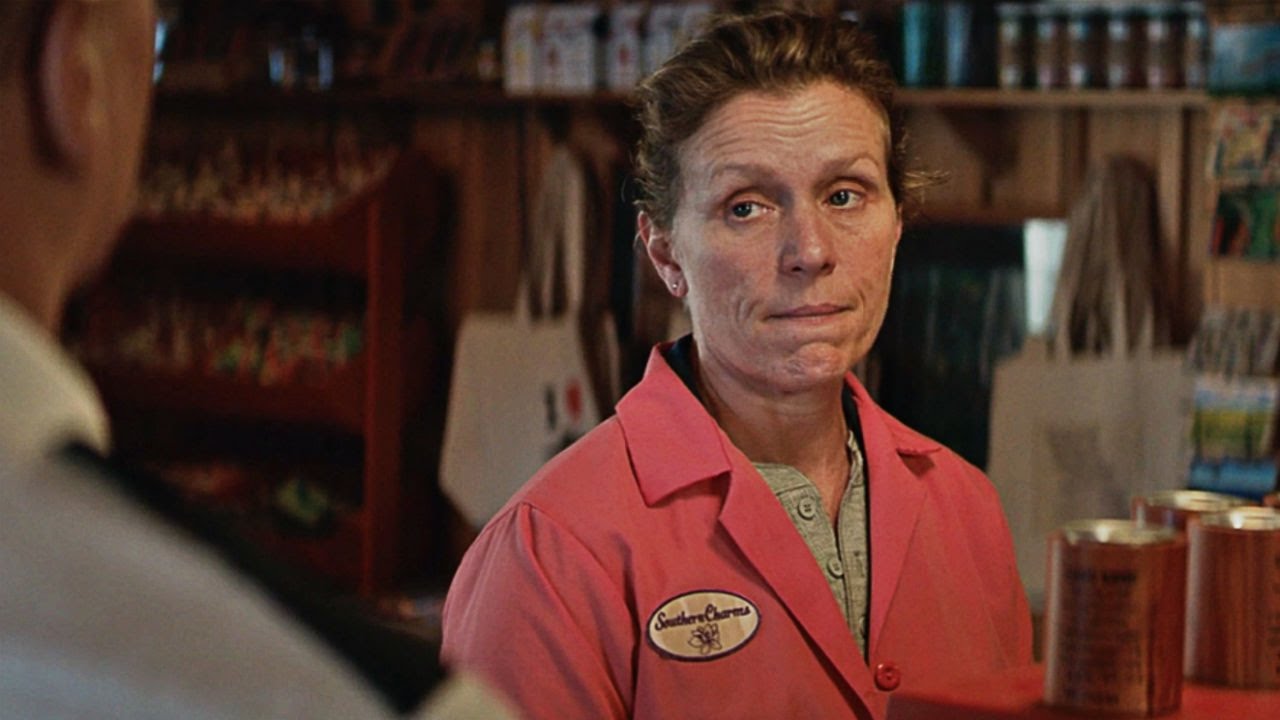
Martin McDonagh's The Three Billboards Outside Ebbing, Missouri (unwieldy title aside) is also capturing the zeitgeist- it concerns a woman name Mildred Hayes' (Frances McDormand) whose daughter's murder has yet to be investigated by the police. The anger at injustice and the inaction of authority figures can't help but be relevant. If it and McDormand (who's the Best Actress frontrunner) win, it'll be the first we've had a Best Picture/Actress win since Million Dollar Baby in 2005.

Christopher Nolan's Dunkirk was one of the summer's biggest non-franchise hits, proving Nolan's drawing power as a director. It's been called his masterpiece and could be this year's Gravity or Mad Max: Fury Road, a film that sweeps the technical awards. It could even snag Nolan's first Best Director Oscar. Though I wonder if it'll have the same impact on smaller screens when watched on screeners. Some may also feel the film is too "cold" and doesn't have enough character or story.

If that's the case, the WWII movie to support would be Joe Wright's The Darkest Hour, which chronicles newly elected Prime Minister Winston Churchill who has to decide what action to take regarding Adolf Hitler. I've heard it's a good companion piece to Nolan's film. And a story about standing your ground against fascism will speak to younger voters as much as older ones.

Image result for the post spielberg


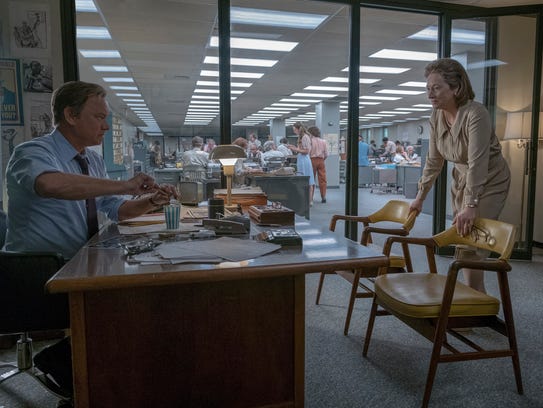
Steven Spielberg's The Post is another period piece that could be a contender. The film concerns the Washington Post's publication of the Pentagon Papers during the Vietnam War. Said papers revealed a cover-up by the United States regarding the War. The film was just awarded Best Film of the year by the National Board of Review and Ton Hanks and Meryl Streep took lead acting honours.  You can't count Spielberg when's he in prestige drama mode, especially with Hanks and Streep leading the cast. This could be another Bridge of Spies or even Lincoln. And in a time when Journalists reporting the truth are called liars, the subject matter is timely.

Guillermo Del Toro's The Shape of Water, taking place in the 60s, is perhaps this year's oddest period film. It's Del Toro's most acclaimed film since 2006's Pan's Labyrinth, with some critics saying it's superior. While its love story between a woman and a fish creature won't work for everyone, the film is also said to be a love letter to cinema itself, which will appeal to the Academy (Argo, The Artist) However, it did miss the NBR top ten.

Call Me By Your Name is already being heralded as a masterpiece, even though it's stirred controversy for its a depiction of a relationship between a teenage boy and an older man. It could ultimately not make the cut.

While Greta Gerwig's coming-of-age dramedy Lady Bird is a small-scale film, it's stellar reviews will be hard to ignore. It may be this year's Brooklyn (which also starred Lady Bird's Saorise Ronan.) The Florida Project is another small-scale film that will benefit from critics' reviews. And both were in the NBR top ten.

Netflix could be getting their first Best Picture nomination for Dee Rees' Mudbound. It's gotten strong reviews and deals with issues of racism and life after war, subjects right up the Academy's alley.

Moving on from small-scale indie to a Hollywood blockbuster, could Wonder Woman be the first superhero film nominated for Best Picture? I have my doubts- it's generic climax could lead it to being seen as another superhero film. However, Warner Bros. is be pushing for it; and would be meaningful for the first superhero film to be Best Picture nominee to be led and directed by women.


Image result for christopher nolan dunkirk


Best Director

Christopher Nolan has the aura of "overdue" around him (he appeared to be a sure-thing for Inception). While he has been criticised for being emotionally cold I think he could win Best Director even if Dunkirk doesn't win Best Picture. Best Picture/Director have been split recently, with Director going to the big technical film- i.e. Gravity, The Revenant  and La La Land). Guillermo Del Toro can also be considered overdue since he didn't get in for Pan's Labyrinth. The Shape of Water is already a critically beloved film- and after fellow Mexican filmmakers Alfonso Cuaron and Alejandro Inarritu winning, it feels like his time.

Martin McDonagh, like Kenneth Lonergan for Manchester by the Sea, is a playwright who'll likely receive his first Best Director nomination for Three Billboards. He's already an Oscar winner for his 2006 short film, Six Shooter. He was also nominated in Best Original Screenplay for 2008's In Bruges. 

Greta Gerwig would only be the fifth woman to be nominated for Best Director if she gets in for Lady Bird. And Dee Rees' would be the first African American female director nominee if Mudbound gains momentum.

Spielberg can't be counted out for The Post but if feels like the Academy will want to nominate new blood. Joe Wright missed for Atonement a decade ago but returning to WWII with The Darkest Hour could garner him his first nomination.

Call Me By Your Name is one of the year's most acclaimed films and Luca Guadagnino could be the Michael Hanake-esque nominee

Jordan Peele made of the most assured directorial debuts in recent memory with Get Out, balancing, horror, comedy, satire and drama with ease. He'd be the fifth black director to receive a Best Director nomination.

Image result for three billboards

.
Best Actress

I mentioned earlier that Frances McDormand is the front-runner for Three Billboards. She's one before (for Fargo) but the argument could definitely be made she's overdue for a second, considering she's been a consistently great actress. I could see Margot Robbie being a genuine threat to McDormand for her portrayal of disgraced figure skater Tonya Harding in I, Tonya. Actresses de-glamming themselves for a role (i.e. Halle Berry, Nicole Kidman, Charlize Theron) have won before and like Kidman and Theron, Robbie is playing a real life person. Saorise Ronan was the front-runner for Brooklyn a couple of years ago before Brie Larson stole her momentum. Her performance in Lady Bird will likely get her a third nomination (her first was for Best Supporting Actress for Atonement). 

Some consider Meryl Streep over-nominated (especially after her nomination for Florence Foster Jenkins) but you can never count her out, especially starring alongside Tom Hanks and being directed by Steven Spielberg in The Post. If her performance is genuinely one of her best then she's probably in.

Related image


Sally Hawkins plays a mute woman in The Shape of Water and giving a silent performance led Jane Wyman and Holly Hunter to Oscars for Johnny Belinda and The Piano, respectively. Hawkins has gotten great reviews and already appears to be a favourite for some people. She also benefits from her work in Maudie earlier this year. Moreover, some may remember her being left out for Happy-Go-Lucky almost ten years ago and want to rectify that.  Though arguably, she could be like Amy Adams in Arrival and ultimately miss out on nomination morning.

Jessica Chastain in Aaron Sorkin's directorial debut Molly's Game (he also wrote the screenplay) appears to be the same situation as last year's Miss Sloane, a well-reviewed performance that gets left by the wayside. Though with one of the most acclaimed actresses working today reciting Sorkin's writing, she can't be entirely dismissed.

I don't think last year's winner Emma Stone will be nominated again for Battle of the Sexes. It feels like the film kind of came and went, though a Golden Globes nomination in the comedy/musical category is certainly likely. And the winner before her, Brie Larson- unless she gets a surprise SAG nomination- is probably not going to get any love this year for The Glass Castle.

Speaking of ingenue winners, I thought Jennifer Lawrence gave her best performance in Darren Aronofsky's Mother! And with 4 nominations already at such a young age it's not a stretch to think she could get in. However, it's a polarising film that turns off many people.


Image result for beatriz at dinner

Salma Hayek in Beatriz at Dinner could be another Viggo Mortensen or Demian Bechir, propelled by critics' support in to the final five.

Annette Bening missed for 20th Century Women but she has another chance this year for Film Stars Don't Die in Liverpool. But she'll need a good critics' push and a strong campaign to get in to the top five.

Nicole Kidman delivered strong work alongside Colin Farrell in The Beguiled and The Killing of a Sacred Deer. The Beguiled is a better bet but she seems too far down the list of contenders.

Image result for gary oldman churchill

Best Actor

Gary Oldman seems like a shoe-in for Best Actor in The Darkest Hour. All the ingredients are there: he's never one and is considered overdue, he's covered in make-up and is playing a real-life figure (Winston Churchill) in a WWII film. And if the film gets in for Best Picture/Director and technical awards, all the better. 

Some consider Denzel Washington to have been robbed for Fences and if anyone could challenge Oldman it'd be Washington for Roman J. Israel, Esq. However, the reviews are mixed and it just doesn't seem like it'll be a contender.

Another major challenger could be Daniel Day-Lewis in his supposed final role, The Phantom Thread, which re-teams him with his There Will Be Blood director Paul Thomas Anderson (who directed him to his second Best Actor Oscar). Day-Lewis was the first to win three Best Actor Oscars and if he won again he'd make history again. Still, Anderson's films have become increasingly polarising and if the film doesn't hit off, Day-Lewis could miss.  

Tom Hanks hasn't been nominated since 2000's Castaway and has missed out for Captain Phillips and Sully. He's the type of actor that makes it look easy, which is why I think he's often overlooked. But he could in for The Post, playing the editor of the Washington Post Ben Bradlee, a role that got Jason Robards a Supporting Actor Oscar for All The President's Men back in 1977

On the younger side of things, Andrew Garfield could pull a Eddie Redmayne and receive a consecutive Best Actor nomination for Breathe, in which he plays Robin Cavendish, who was inflicted with polio at the age of 28. With the love of his wife he sets out to help other polio patients. I can't help but think of The Theory of Everything, which won Redmayne the Best Actor Oscar. 

I feel Jake Gyllenhaal has been unfairly left out of Best Actor for his recent work (particularly Nightcrawler) but he has a chance this year for Stronger, the story Jeff Bauman, who lost his legs in the Boston Marathon bombing. Gyllenhaal benefits from a more open Best Actor field and the strength of previous un-nominated work.

James Franco in The Disaster Artist is a funny situation. Older viewers won't get why his interpretation of The Room director Tommy Wisseau is funny but he could get a lot of support from younger voters. 
This also appears to be the most transformative performance Franco has given, which also helps.

Timothee Chalamet would be one of the youngest Best Actor nominees in history if he gets in for Call Me By Your Name. I don't think he'll win but it'd a major boost for his career.

If Get Out really hits off, Daniel Kuluuya could get in. He's arguably the most underrated part of the movie and he grounds the film with genuine emotion.


Image result for allison janney i tonya

Best Supporting Actress

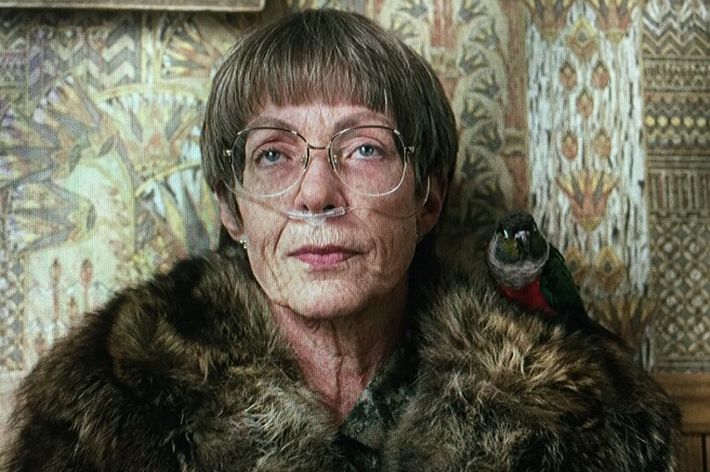
Allison Janney has received accolades for he work on TV but has never gotten an Oscar nomination. That's likely to change come nomination morning. Her performance as Tonya Harding's mother, LaVona Fay Golden in I, Tonya is the kind of meaty role that can take her a win, though I've heard the character is one-note. It's been remarked that the category this year is full of mothers. Laurie Metcalf and Holly Hunter are also up for playing mothers in Lady Bird and The Big Sick, respectively. It makes sense why Hunter is being positioned as the acting representative for the film. Along with Ray Romano, she's the most known actor in the film and has some standout moments.

Moving on from mothers to wives/girlfriends, Claire Foy being campaigned in this category for playing Diana Cavendish in Breathe appears to be a case of category fraud a la Alicia Vikander in The Danish Girl. Tatiana Maslany, who like Foy and Janney has gotten a lot praise for her TV work could get in for Stronger. And If The Darkest Hour is another The King's Speech, Kristen Scott Thomas could easily get in for playing Clementine Churchill.

Octavia Spencer could get a consecutive nomination after Hidden Figures for The Shape of Water. Mary J. Blige is also getting buzz for Mudbound, which would give us two black actresses in this category. And if Hong Cho gets in for Alexander Payne's science-fiction comedy Downsizing, we'd have the first Thai actress nominated for an Oscar. 
  

Related image

Best Supporting Actor

Willem Dafoe could be getting a career achievement Oscar for his work in The Florida Project. He's the most recognisable actor in the film and would be the way to honour the film- since it faces strong competition in other categories.

Sam Rockwell and Woody Harrelson are both up for Three Billboards. Rockwell is a hard-working character actor who's never been nominated and it feels like Harrelson is due for another nomination considering his post-True Detective work. Unfortunately, two actors from the same film in the same category can lead the two cancelling each other out.

Speaking of which, there may be some category fraud with Armie Hammer being in Best Supporting Actor for Call Me By Your Name, where he's more of a co-lead. He and Chalamet's co-star Michael Stuhlbarg could actually sneak in over Hammer.

Ben Mendelshon is an expert character actor and may finally get his due with his role as King VI  in The Darkest Hour. Buzz is also growing for Mark Rylance in Dunkirk. He's the film's best bet for an acting nomination but I feel the film's characterisation is too minimal to snag a nomination.

Image result for three billboards outside ebbing missouri


Best Original Screenplay

Martin McDonagh's screenplay for Three Billboards could be the one to beat but let's not forget Lady Bird, written by Greta Gerwig and loosely based on her adolescence. Jordan Peele's sharp and insightful screenplay for Get Out certainly deserves to be here. The Darkest Hour feels like the British Lincoln- which won Tony Kushner a Best Adapted Screenplay Oscar in 2013. The film's writer, Anthony McCarten, could win. Moreover, he's a previous nominee for The Theory of Everything- as both screenwriter and producer.  

The Big Sick, written by Emily V. Gordan and Kumail Nanjiani and based on their relationship, could win, especially since this would be the place to honour the film. 

If The Shape of Water is to be a major contender Guillermo Del Toro's screenplay is sure to be here.

Look out for: The Post, The Florida Project


Image result for james ivory


Best Adapted Screenplay

This is where Call Me By Your Name could win, especially with James Ivory (of Merchant Ivory) being the film's screenwriter. Ivory hasn't been nominated at the Oscars since 1994 (Best Director, The Remains of the Day) and this would be his first screenplay nomination.

Aaron Sorkin missed out for Steve Jobs but he could come back for Molly's Game, especially if Chastain gets in for Best Actress.

If Mudbound becomes a Best Picture contender, Dee Rees and and Virgil Williams' screenplay will have a good chance of scoring a nomination 

The younger voters who would get James Franco in to Best Actor for The Disaster Artist would also put support behind its screenplay, written by Scott Neustadter and Michael H. Weber.


Image result for roger deakins blade runner 2049


Best Cinematography


Are the Academy ever going to give Roger Deakins an Oscar. His work on Blade Runner 2049 may finally earn him his first Oscar. Hoyte van Hoytema is gunning for his first nomination and possibly first win for Dunkirk.

Bruno Delbonnel has been nominated four times and will surely get a fifth for The Darkest Hour. The Shape of Water's Dan Lausten has never been nominated but appears poised to receive his first for Del Toro's romantic fantasy. Sayombhu Mukdeeprom is another conceivable newcomer for Call Me By Your Name.

Image result for dunkirk tom hardy


Best Editing 

I'm betting on Dunkirk to win this award, since the film is so much about its specific editing. Lee Smith has already been nominated twice and perhaps will win his first Oscar. The Darkest Hour's editor Valerio Bonelli is also a viable contender. Blade Runner 2049 will reasonably get several deserved technical nominations, and its editing contributes to its atmosphere as much as its cinematography. Expect Joe Walker, who was nominated for Arrival, to secure a second consecutive nomination and his third overall (his first being for 12 Years a Slave). Walter Fasano has already acquired a Spirit Awards nomination for his editing of Call Me By Your Name, which gives a boost. 

So, those are pretty much my thoughts as of now. What are your predictions and/or hopes for this year's Oscar nominations?


Saturday, 19 July 2014

I Thought We Had A Chance: "Dawn of the Planet of the Apes"


Warning: This article discusses Dawn of the Planet of the Apes in depth, so don't read until you've seen the film.


Pierre Boulle wrote the novel Planet of the Apes in 1963. He created an absurd and ingenious vision of a planet where civilization had been turned upside down. On this alien planet apes- who drove cars and wore suits- ruled over primitive humans. The novel had depth but when it was adapted in to the classic 1968 film with Charlton Heston the story became a much darker allegory. In the novel the ape planet was an alien world light years from Earth. The film’s ending reveals that Heston’s astronaut George Taylor was on Earth along. He discovers the ruins of the statue of liberty on the shore. This image of the statue symbolizes mankind’s ultimate self-destruction. As the series progressed through four sequels the films became even bleaker and we found ourselves becoming emotionally invested in the ape characters. The mythology also deepened and expanded, eventually becoming a circular tale via time travel.


In 2011’s Rise of the Planet of the Apes and this year's Dawn of the Planet of the Apes we're no longer merely in the realm of the absurd. Instead we’re treated with a world that feels remarkably real and emotionally immediate. These films lean toward a more realistic take on the mythology, which isn’t too surprising given Hollywood’s tendency to “ground” certain genre properties nowadays. But thankfully these two films aren’t self-consciously grim and gritty.  Even so, the Planet of the Apes series was never without its dark elements. Moreover- these two films are so distanced in the timeline from the world of the original film- that this tonal grounding doesn’t feel like posturing on behalf of the filmmakers.


Dawn of the Planet of the Apes does the mythology justice and succeeds as both a standalone film and a sequel to Rise of the Planet of the Apes. Dawn builds upon the foundation laid in its predecessor, both enriching the first film as well as using that foundation to tell a complex story about the quest for peace and the possibility of co-habitation between apes and humans. Rise was a re-working of the series fourth installment, Conquest of the Planet of the Apes. Dawn, in turn, reinterprets the final film in the series, Battle for the Planet of the Apes. On paper, using the fourth and fifth films in a franchise as the basis for a new starting point for a series seems odd. But in the case of Planet of the Apes, these films make sense in terms of re-starting the franchise. Taking influence from Conquest and Battle allows the new series to work both as a spiritual prequel to the original film as well as doing something different with this franchise rather than just re-visiting the initial concept.


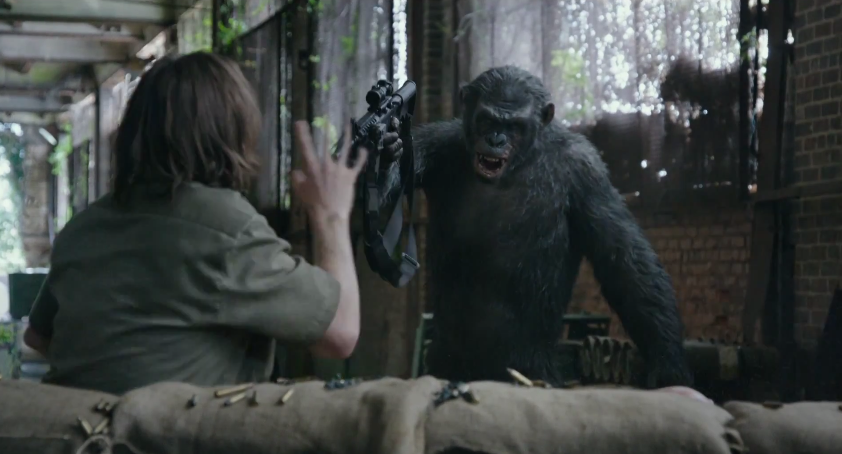
Dawn takes place 10 years after the events of Rise. After the obligatory news broadcast opening, which details the spread of the simian flu- the result of scientific testing on apes in the pursuit of finding a cure for Alzheimer’s- we’re reintroduced to Caesar (played via motion capture by Andy Serkis)-the hyper intelligent ape around which the first film largely centred. Caesar now rules over a clan of apes in post-apocalyptic Earth.  I do love the opening scenes of the apes hunting food- which harkens back to apes hunting humans in the original film- then returning to their home, where we see them living a peaceful existence, no longer in fear of captivity. The apes are unsure that humanity even still exists but are soon made aware of human survivors.


They come in to the apes' forest, hoping to gain access to a dam that could provide power to the city in which many remaining humans live. The apes tell them to go away, which shocks the humans, since they didn't know the apes were capable of speech. Caesar and the apes follow the humans back to the city. Caesar states that apes don’t want war. He wishes for the humans to stay in their territory while the apes will stay in theirs. Malcolm (Jason Clarke) goes back to the forest in an attempt to persuade Caesar to allow them access to the dam. Caesar concedes but his second in command Koba (Toby Kebbell) presents a threat; he still harbours hatred toward humans from his days being a guinea pig.


Caesar isn’t entirely a pacifist but he’s no war-monger either. He doesn’t want to go to war with humans, though Koba does. Caesar feels that by allowing the humans access to the dam he’s working in the best interests of his kind, avoiding any conflict that could get the apes killed. But it’s evident that Caesar has learned kindness and compassion from the noble humans he’s met. He also sees Malcolm is a good man and senses the humans are desperate.  


Caesar and Koba represent “two sides of the same coin.” Both were the result of testing by humans that made being super intelligent- and both were imprisoned by humans and treated with cruelty. But while Caesar knew love from his surrogate father, scientist Will Rodman (James Franco) and Will's Alzheimer’s stricken father Charles (John Lithgow), Koba never knew love from humans. When Caesar mentions that humans need to work on the dam Koba points to his numerous scars and repeats “Human. Work.” It’s this moment that encapsulates Koba’s back-story and his view on humanity. Caesar doesn’t completely trust humans but he’s left a lot of his bitterness behind, becoming a family man- married to Cornelia (a underused Judy Greer) and the father to both Blue Eyes (Nick Thurston) and a new born ape. Koba is a complete lone wolf (or ape).


There’s almost something Shakespearean about the power play between Caesar and Koba. Like many characters in Shakespeare, including the kings, Caesar is brought down by someone he trusted. Akin to his namesake, Caesar has a Brutus, which is Koba. There’s even a silent “Et tu Brute?” between them. Koba shoots Caesar using a human gun and blames the supposed assassination on the humans, leading the apes in battle against the humans. Caesar “loved wisely but not well," to quote Othello. He tells Blue Eyes- after Koba has taken over the city- that he trusted Koba because he was an ape.

Caesar’s character arc through this film leads to the realization that apes can be as treacherous as humans. When Malcolm finds Caesar alive, Caesar has them stop at his former house. He views the video recording of Will teaching him sign language. Caesar and the audience are reminded in this scene of how far Caesar has come, from a baby to a revolutionary to a leader. I also think this video shows Caesar how the love he received from Will is what made him trust Malcolm. When Malcolm asks who was on the video Caesar simply tells him “A good man. Like you.” Malcolm and Caesar don’t have the same emotional connection as Will and Caesar but a mutual respect grows between them.


One element I found fascinating while thinking back on the film relates to its anti-gun message. While it’s Koba’s actions that lead to the mass violence in the story the film uses the image of a gun to represent the threat between ape and human peace.Caesar doesn’t want the humans to bring in guns. In one scene it’s discovered that Carver (Kirk Acevedo) has brought in a gun. This leads to tension after a charming moment between Ellie (Keri Russell) and Caesar and Cornelia’s baby. Koba uses a gun to frame the humans for Caesar’s death and manipulate the apes in to violence.

The anti-gun message stands out to me because Charlton Heston- the star of the original film- became infamous for being the president of the NRA in his late years. He famously declared “From my cold dead hands” in defense of the second amendment. While I won’t be as presumptuous as to say the film is an attack on Heston’s political views, it’s hard to imagine that the image Heston created for himself wasn’t in the back of the screenwriters’ minds. The issue of gun rights has arguably never been a more pressing issue in the States then it is now. The Apes films always commented on the state of the world during the 60s/70s. It only seems appropriate that the film would confront this particular issue.


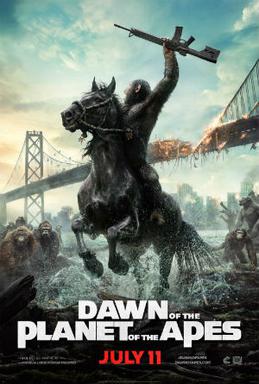
While most blockbusters present violence and destruction as the only means to defeat evil, violence doesn’t solve anything in this film. Even when Koba is defeated his actions have led humans and apes to brink of war. Despite having some spectacular images of apes on horsebacks using machine guns (which to be fair is awesome) and a stunning action climax, Dawn is sincerely anti-violence. As in Battle the apes themselves even preach against violence against their own kind. main ape commandment is “ape shall never kill ape.” To be better than humans the apes must not murder each other like humans. Koba breaks this commandment when he kills Rocket’s son Ash, who won’t kill a human. Despite hating humans, Koba is not above killing apes if they stand in the way of destroying humanity. By killing an ape Koba shows that he's no better then the humans he despises. He's capable of the same treachery and murder of his own kind.
And as a leader, Koba is the opposite of Caesar, a tyrant.


Koba hangs on a edge at the film’s climax, after a fight between him and Caesar. He says to Caesar  “Ape shall never kill ape,” to which Caesar grabs his hand and then intones “You are not ape,” letting him fall, echoing Koba’s execution of Steven Jacobs (David Oyelowo) at the end of Rise.  By betraying the commandment Koba is no longer an ape. He’s a twisted version of an ape that needs to be let go. But while Koba dies he still gets what he wants, a war between apes and humans. The ending of the film is similar to that of Christopher Nolan’s The Dark Knight in that the heroes don’t really win. Caesar didn’t want a war but now he has to fight against humans if his kind is to survive. Just as how Batman had to take the fall for Harvey Dent’s crimes to save Gotham's soul.

Malcolm tells Caesar he thought humans and apes had a chance to live peacefully together. Caesar replies that he did too, calling Malcolm his friend. This is an incredibly sad ending. Malcolm and Caesar parting ways represents the final breaking of apes and humans, the destroyed hope of peaceful co-habitation 


Similar to Rise, Dawn’s main flaw is the characterization regarding its human characters is a touch too thin. I really wish I got to know these people a little better. I do, however, like that the film allows these people to share very human moments. The characters as a result aren’t completely soulless. I like the parallel between Malcolm and Caesar being fathers who are attempting to get close to their sons. Malcolm’s son Alexander (Kodi Smit-McPhee) is still adjusting to his new step mom, the aforementioned Ellie. The film is very male dominated. The female characters- Ellie and Cornelia- have even less characterization than the males. Clarke makes a solid lead, showing both vulnerability and an inner strength. Russell does well with what little she’s given. Gary Oldman also does fine work as Dreyfus, the human leader. While Dreyfus could’ve been made in to a shallow human villain there’s an devastating moment where we learn what Dreyfus has lost.  

 
Matt Reeves takes over the director’s chair from Rise’s Rupert Wyatt. This is Reeves’ fourth film, following The Pallbearer, (1996) Cloverfield (2008) and Let Me In (2010), the remake of the Swedish Vampire film Let The Right One In (2008). Reeves is also known as the creator of the TV series Felicity (starring Russell.) Let Me In is the only previous directorial effort from Reeves that I had seen before this film. While that film strewed too close to the original, Reeves’ direction was elegant and his command of tone impressive. Reeves bring that same directorial elegance to this film. While there is plenty of action as the film progresses, Reeves doesn’t stage the action in an empty, bombastic fashion. The ape attack on the city has real dramatic weight and a conscious sense of  horror to it. A 360 degree shot on the top of a tank blends beauty and utter destruction majestically. This shot reminds me of the shot from Let Me In, in which we're in a car as it rolls over. Like Wyatt, Reeves favours build up to outright bombast. This is even more leisurely paced in some ways than Rise was. But I like how the film is more interested in story-telling and atmosphere then it is in set pieces.


The motion capture work in the previous film was impressive but it feels like it’s on another level here. Serkis has revolutionized film acting over the last decade. His work as Gollum changed how we thought about CGI characters on film. His work on Caesar is even more nuanced and emotional. To me Caesar feels as real any modern film character and it’s been amazing witnessing his journey as a character over these two films. Kebbell also deserves props for making Koba a haunted antagonist, a character whose evil masks their own hatred and bitterness. Koba is an incredibly tragic character who’s as important to this film as Caesar.


I don’t want to oversell Dawn of the Planet of the Apes but I think Hollywood would be in better shape if more blockbuster type films were like this. In its strongest moments it comes as close to an artistic vision we’ve seen in a franchise tent pole this summer. Rise and Dawn show that franchise films don’t have to be completely corporate mandated and soulless- that there’s potential to create compelling stories using a familiar brand. Both RIse and Dawn have redefined- for me at least- how I view this franchise and what it’s capable of artistically. And I'm excited to see where the series goes next.   


Thursday, 16 February 2012

Thoughts on The Best Actor Race


While I don't know if I'm ready to call it a complete lock, I think The Artist's Jean Dujardin may be the one to take home the Best Actor Oscar this year. For a while, it definitely seemed like Clooney's to lose. But then the SAG Awards happened. Dujardin won that night and then won last Saturday at the BAFTAS. I think these two wins suggest where the race is heading. There also seems to be a lot of love for The Artist this awards season, which may also lead Dujardin to victory. I think if it wasn't for Clooney or Dujardin, it'd be Brad Pitt's to win. He's excellent in Moneyball. And again, in another year Gary Oldman may have been the winner- but hey, can't count him out yet. I think Demian Bichir will get a boost from his Oscar nomination but I think he's the least likely to win.

Friday, 27 January 2012

Some Thoughts on The Oscar Nominations

Oscars+-+first+pic.png


On Monday night I posted some half-hearted predictions for the Oscar nominations. I rightly predicted Gary Oldman for Best Actor but missed out on Terrence Malick and The Tree of Life. I was hoping he and the film would be nominated and I felt he had a chance. Ultimately I put in David Fincher instead of him where I should have just gone for Malick. Here's a rundown of what I thought:

Some (quasi) surprises
While I knew who Demian Bechir was I didn't think he would make it in to Best Actor ahead of Leonardo DiCaprio or Michael Fassbender. Looking back at it, Bechir's SAG nomination was a strong indicator of his support from his fellow actors, which take up a large chunk of the Academy.

I almost put in Rooney Mara ahead of Glenn Close but I felt Close pretty much had a nomination locked. Mara ultimately knocked off Tilda Swinton. I think Mara can be considered the ingenue (I hate that word) nominee for the year, in the fashion of Jennifer Lawrence or Ellen Page.

Bigger Surprises
I thought Albert Brooks was a lock for his performance in Drive but he became this year's Andrew Garfield for me. Brooks lost out on a SAG nomination, which I guess was a foreshadowing of things to come.

While I thought Max von Sydow would have a decent shot at getting in for Best Supporting Actor, Extremely Loud and Incredibly Close didn't seem to have enough steam to become a major player. Despite it's poor reviews, it scored a Best Picture nomination but broke director Stephen Daldry's nomination streak, being nominated for his last three films.

What I'm Happy About
While I haven't seen Tinker, Tailor, Soldier, Spy, It's really great to see Gary Oldman score his first Best Actor nomination.

I'm happy to see Terrence Malick recognized for his unique and personal The Tree of Life. Whether you love it or hate it, it provoked a reaction in people and will probably be the film that most people go back and watch, and talk about, long after this year's ceremony is over.

I really liked Bridesmaids and, while early on,  a nomination for Melissa McCarthy didn't seem like it would happen, she had enough support to make it in to Best Supporting Actress. McCarthy is really funny and human in the film and while she probably won't win, this gives more of a boost to McCarthy's career.

Woody Allen's Midnight in Paris is a very charming and poignant film, one Allen's most enjoyable of his recent films. While he probably won't attend the ceremony, it's nice to see him represented.

What I'm Sad About
While I knew it wouldn't happen, it's unfortunate that Joseph Gordon-Levitt's performance in 50/50 never truly caught on. Even Will Reiser's autobiographical script didn't make the cut

While I've enjoyed some of  Leonardo DiCaprio's performances more than his work in J. Edgar, I would have like to have seen him in Best Actor.

Not only was Albert Brooks ignored for Drive, so was Ryan Gosling for his subtle but affecting performance as the man only known as Driver. Heck, he was ignored for Crazy Stupid Love. and The Ides of March as well.

Who I Think Will Win
If Michel Hazanavicious wins the DGA then I think he'll probably win the Oscar since history shows that whoever wins that award goes on to win Best Director- and if he wins the Oscar The Artist will probably win Best Picture. I can't see Hazanavicious just winning Best Director, particularly ahead of some of these other guys. I could see Martin Scorsese winning Best Director and Best Picture going to The Artist.

George Clooney seems to be the front runner for his fine work in The Descendants but could Gary Oldman take it? If it was any other year, it'd probably be his. Same goes for Brad Pitt in what could be considered a career best performance in Moneyball. If it wasn't for Clooney, I think Pitt would win. Between Clooney and Pitt, I'd probably vote for Pitt.

It seems to be a race between Meryl Streep and Viola Davis. I haven't seen either performance yet but something tells me I'd vote for Davis. If Streep wins the SAG award, I think the Oscar will go to her.

I think Christopher Plummer will win the Oscar. In another year it could be Nick Nolte or Max von Sydow.

Octavia Spencer and Jessica Chastain, both nominated for The Help, could split the vote. This would open the door for the three other nominees. If Glenn Close isn't going to win for Albert Nobbs then I can't see Janet McTeer winning. Melissa McCarthy could go all the way. If there's enough love for The Artist then Berenice Bejo would get support. Still, Spencer seems to be the frontrunner and I think she'll probably win.

Only a month until the big show!