Showing posts with label Michael Mann. Show all posts

Friday, 13 February 2015

Bye, Bye, Blackbird: "Public Enemies"


Ending Spoilers Ahead


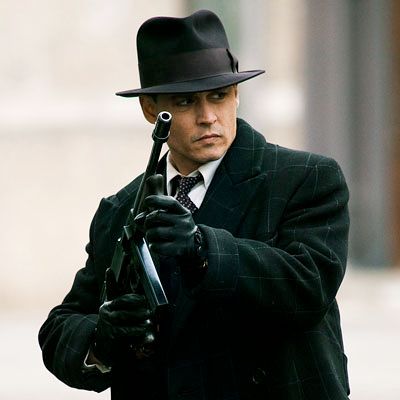
With Michael Mann's latest film Blackhat being released- and subsequently bombing with critics and audiences- I decided to take a look back at Mann's previous film, 2009's Public Enemies, starring Johnny Depp as Depression-era gangster John Dillinger, who was killed by the FBI in 1934, at the age of 31.


Like 2006's Miami Vice-the film Mann made before this- I think some distance is needed to truly appreciate what Mann is doing aesthetically and thematically in this film. Public Enemies exists in a weird purgatory between art film and mainstream entertainment, between crime film archetypes and characters more deeply felt, and between action and something more slow-burning.


What stood out for me on this viewing  is its vision of the time period is possibly the most un-romanticized version of the past I've ever seen in a mainstream film. Or maybe I should say the least Hollywood-ized. Usually in films like this there's a very prestige feel to the look and production/art design. In this film 1930s is a living, breathing world and way of life, free of any kind of nostalgia. I think this particular mood comes from Mann's use of digital photography. By applying a modern aesthetic to a period piece Mann removes the barrier between past and present, myth and man. We're put right in action, whether it be a gun fight or an interaction between two characters. The 1930s- while the distant past to us- was to these people the modern world. It was immediate and the future was uncertain. The Depression was in its fourth year and anew kind of criminal had emerged. and FBI Director J. Edgar Hoover (Billy Crudup) declares "America's first war on crime. This line not only speaks to the time period but to the wars North America would fight against drugs and terrorism in later decades.      


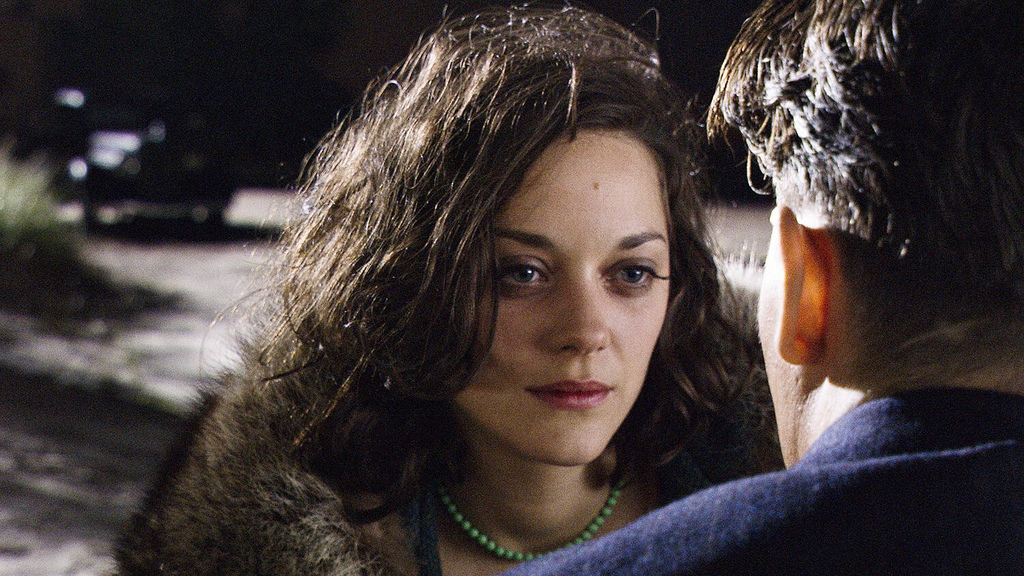
Public Enemies isn't so much a biopic of Dillinger- it only chronicles the last year or so of his life. During the course of the film Dillinger begins a romance with Bille Frechete (Marion Cotillard). At first Billie says she can't begin a relationship with a man she hardly knows. Dillinger then tells her: 

"I was raised on a farm in Moorsesville, Indiana. My mama died when I was three, my daddy beat the hell out of me cause he didn't know no better way to raise me. I like baseball, movies, good clothes, fast cars, whiskey, and you...what else you need to know?"

This isn't just directed at Billie but at the audience as well. The film is telling us it's not interested in exploring Dillinger's backstory or psychoanalyzing him. It adds to the immediacy of the film that we meet Dillinger fully formed rather than seeing him as a child and then as a teenager, etc. Mann doesn't want to unlock Dillinger, maybe because he feels there's no reason to. Dillinger was just a man when all was said and done. Dillinger gained mythic stature after his death- and was a public icon even before  then but behind that myth was a ordinary man.

"Time is luck" is a phrase Mann has used in his films. While it's not spoken in Public Enemies, the sentiment runs through the film. Dillinger lives in the moment, knowing he may  not be alive tomorrow. I noted that the time period of the film was un-romanticized but Mann is still very much a romantic. The relationship between Dillinger and Billie epitomizes the doomed romance Mann explored in Heat and Miami Vice. This love affair can't last. It's "too good to last," as Colin Farrell's Sonny Crockett says to Gong Li's Isabella in Miami Vice


When Dillinger is killed the film ends with Billie. Mann is compassionate towards Billie and views her loss as the tragedy of the film. Charles Winstead (Stephen Lang), one of the FBI agents who killed Dillinger- and who heard Dillinger's last words- tells Billie "He said 'Tell Billie for me: Bye, bye, Blackbird'," which was the name of the song Dillinger and Billie first danced to. Similar to the endings of Heat and Miami Vice, this conclusion sneaks up on you with how emotionally devastating it. It rises above the archetypes and tropes of the genre and achieves something transcendent.  


This is one of  Depp's most restrained performance- particularly in comparison to everything from 2003 onwards. He plays Dillinger with a folksy charm and charisma, winning the public over to his side even while pitting the FBI against him. Christian Bale plays Melvin Purvis, the FBI agent who led the man hunt for Dillinger. Bale doesn't get a lot to work with but he plays the part with conviction and subtle nobility, with a dash of arrogance when Dillinger is arrested earlier in the film. I do wish the film had given us more insight in regards to Purvis- especially when the coda informs us Purvis committed suicide in 1960. I would say Cotillard is the heart of the film. It's her final shot in the film which makes the ending so emotionally affecting.

Coming back to digital photography, aesthetic choices influence us in conscious and unconscious way- and Mann wants us to be conscious of the digital aesthetic and the difference between it and film. Mann challenges the way we think movies should look and feel. And I feel your opinion and reaction to this kind of aesthetic determines whether you like these latter day Mann films. Most notably Mann utilizes digital filmmaking to make his action sequences vividly realistic and hard-hitting. The opening prison escape establishes the rhythm of the action and the "in the moment" feel of the film. 
While other modern action sequences don't have much personality, Mann's set pieces feel distinctly and organically part of his overarching aesthetic.

Public Enemies has grown in stature in my mind after re-watching it. Mann understands the romanticism and the inherent tragedy beneath the conventions of the genres of which he explores. And Public Enemies is a tragedy about the people that are left behind, the survivors of the world Dillinger and others after him have inhabited.


Thursday, 13 November 2014

For Noirvember: "Time is luck:" Some Thoughts on Michael Mann's "Miami Vice"


Spoilers Ahead


When Michael Mann's Miami Vice- based on the 1984-89 series he executive produced- was released in 2006, the reaction from audiences and critics was mixed. It's not too surprising that the film didn't completely hit off with audiences or critics. For one, The film doesn't satisfy genre expectations of a crime thriller. There's not a lot of action, the story is slow paced in many sections, Farrell and Foxx trade nary a one liner, and most of the characters come across as flat and uninteresting. But since its release, the film has been embraced by critics and toted as a masterpiece. I'm not quite prepared to give the film that label; but I do feel the film is a beautiful and singular work that only could've been directed by Michael Mann.


I think Mann used the title so he could then subvert audiences' expectations of what a big screen Miami Vice remake would look and feel like. While it does borrow elements from the series, this is not a homage to the show. There are no cheeky references and it's not interested in being meta like the 21 Jump Street films that came later. Mann and his actors play things straight. Mann uses digital photography (As he did with 2004's Collateral and 2009's Public Enemies) to create a real world atmosphere and puts us in the midst of the action throughout the entire film. The movie exists between the real and the romanticized, resulting in something truly sublime. Instead of a throwback to the style of the 80s, Mann forges a visual landscape that's thoroughly modern but also transcends its era and becomes timeless.

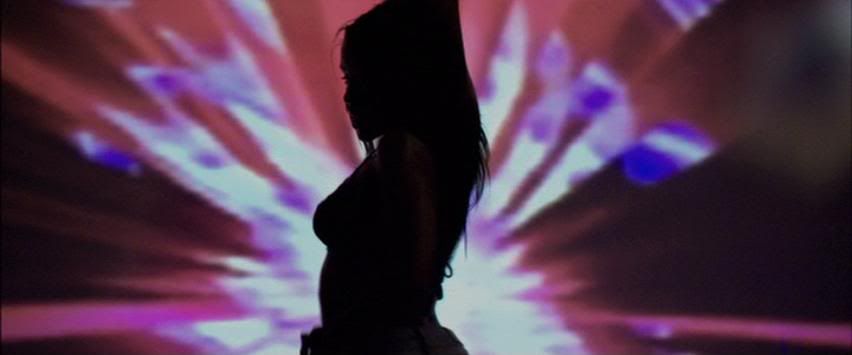
If haven't seen the film yet then try to get your hands on the theatrical cut. In North America, the director's cut is the only version of the film available. The director's cut begins with a prologue that sets the stage for a prostitution ring bust by Miami police officers Sonny Crockett (Farrell) and Ricardo Tubbs (Foxx). This set-up takes away from the theatrical cut's opening, in which we're shoved right in to the night club, where the bust is to happen, music blaring, the camera giving us close-ups of our main players.

Sonny and Rico soon become involved in a undercover operation to take down a drug cartel. They meet up with Jose Yero (John Ortiz), the second in command to the cartel's leader, Archangel de Jesus Montoya (Luis Tosar).  Montoya's financial adviser and lover is Isabella (Gong Li), with whom Sonny becomes romantically involved.


After seeing the film three times, I still couldn't tell you every aspect of the plot. But with many noir and noir-inspired films, I don't think the plot is what really matters. Mann uses the plot to further create a feeling of authenticity. When characters on screen about what's going on, we feel we're getting a first hand view at the way these kinds of operations go down. What really matters to Mann is the existential dilemmas for the characters, which I find is also the most noir aspect of the film. As Sonny and Isabella begin their love affair, they're both very conscious it has no future. Again, this is a very noir-like sentiment. Noir characters exist in a fatalistic world where there's usually only one outcome, and it's usually tragic.

Ricardo and fellow police officer Trudy Joplin (Naomie Harris) are also in a romantic relationship. While their relationship has a more optimistic future, Trudy is kidnapped by the Aryan Brotherhood who is working with Montoya's cartel. Trudy is rescued but then nearly killed by a bomb detonated by Yero. This incident makes real to Rico the fact this job can get Trudy killed. Rico tells Sonny: You know what gets me. The prospect of her losing her life over this bullshit line of work."  When Sonny asks if that's what Trudy thinks, Rico says "No, it's what I think." It's a nice character moment for Rico, showing his vulnerability but his anger in the face of violence.


While the characters in Miami Vice seem at first glance to be a little flat, after a few viewings they become more textured and interesting than on an initial viewing. The aforementioned scene is an important one in showing the warmth and openness between Crockett and Tubbs. Then there's the scene between the two before the final shootout which Rico asks if Sonny is ready for his relationship with Isabella to end. Sonny says he's "most definitely not ready." That Sonny is able to be this honest- and like Rico earlier, vulnerable- with his partner further highlights the strength of their partnership.

Similar to the noirs of the classic studio era, Miami Vice creates a heightened language of its own. "Why do I get the feeling everyone know we're 15 blocks out?" asks Sonny as he and Rico are on their way to see Yero. "'Cause everyone knows we're 15 blocks out" replies Rico. The film's dialogue is also what helps give the characters texture. One of the best scenes in the film is the first meeting with Yero, in which Sonny and Rico have to convince Yero to use them in the cartel's operations. Sonny and Rico turn the tables on Yero, asking him if he's a cop. And Rico says to Yero: "[W]e didn't come down here to audition for business. Business auditions for us." This scene showcases the tightrope undercover cops have to walk when entering in to this kind of world and working with criminals. And the scene questions how much is this the real Sonny and Rico, and how much is just play acting.


Mann employs music to sell the emotions of the film. A major example is the use of Moby's "One of These Mornings." Mogwi's "Auto-Rock" plays over the final passages of the film and is another example of how the perfect song can enhance the emotion of what's on screen. Miami Vice has what may be one of my favourite closing shots in any film. Sonny comes back to the hospital where Trudy has just woken up from her coma. Sonny has sent Isabella away but there's still hope for Rico and Trudy. The long shot of Sonny entering the hospital is so simple but- with "Auto-Rock playing over it- so sadly beautiful. Just as how the film opened right in the midst of the story, so the story ends just as abruptly, highlighting the matter-of-factness of these people's lives. The fatalism of the story comes not from things ending, but things having to continue on almost without change- but with the memory of what could've been.  

Sunday, 2 September 2012

Films of the Decade: "Collateral" (2004)


Collateral picture


This is a series of writings where I'll talk about some of the most fascinating films of the last decade.

The last time I did one of these I was writing about Christopher Nolan's The Dark Knight. Now, I'm tackling a film from a director who has been a big influence on Nolan's work in the past, particularly in regards to The Dark Knight: Michael Mann. Someting I've noticed, in terms of Mann's crime films, is that he goess beyond the archetypes of good guy/bad guy, cop/criminal and finds the texture and humanity in his characters.

In his 1995 film Heat, Mann views Robert DeNiro's bank robber Neil McClusky and Al Pacino's detective Vincent Hanna as professionals above anything else, two men who do what they do. They learn to understand each other, which makes their dynamic more complex than cop/criminal. In his 2004 film, Collateral, it's easy to view Vincent (Tom Cruise), the hit man who forces cab driver Max (Jamie Foxx) to drive him around while he does his rounds, as the villain and Max as the protagonist. And the surface veneer of the film reinforces this. But it's a surface that is always on the verge of collapsing underneath these characters' and the audience's feet.

While the film begins with Vincent receiving the information he needs for the job via a briefcase exchange with Jason Statham (Yes, that Jason Statham), the character we first get to know is Max. Max has been a L.A. cabdriver for 12 years even though he calls it a "temporary" job. He wants to start his own limo service but makes up reasons why he can't start it up. He picks up Annie Farrell (Jada Pinkett-Smith), a prosecutor, and they have a lovely scene where we learn about Max's dreams and Annie's fears about her new case. When he drops her off, she gives him her number to which he's very surprised and happy.

I love that the film allows this small interlude. It really allows you to get to know Max and connect with him before Vincent enters his life. It also makes Max's descent in to Vincent's world feel more real because it shows Max's life before Vincent enters it-Max is stuck in a rut but meets a woman who makes his day-and then life throws him a curveball in the form of Vincent. We can imagine the same thing happening to us. Fate doesn't care about what path we're already on, it'll inevitably send you down another. What's intriguing about Vincent's plan is that Max was never supposed to know what he was up to. Vincent then shoots a man out of a window and he falls on Max's cab. This is when things get more complicated-not only for Max, but for Vincent as well. Vincent is an efficient and calculating man and he'd no doubt prefer if Max was none the wiser.

Collateral was shot on digital rather than film and Mann said in an interview he tried to make a look out of digital video rather than try to make it look like film. You can definitely tell it's shot digitally and while you wouldn't want every film to have this look, particularly with more films being shot digitally, it really works for this film because it captures what L.A. must really feel like at night.

My favourite scene in the film is the one at a jazz club where Vincent will kill a jazz player named Daniel Baker (Barry Shabaka Henley). Daniel sits down with Vincent and Max before he knows who Vincent really is. Daniel tells a story about meeting Miles Davis in the very same jazz club and playing with him. Daniel, like Vincent's other targets, is a witness for the prosecution in the case to indict drug lord Felix Reyes-Torrena (Javier Bardem). Daniel implies he made a deal to stay out of a prison and was never going back. While Daniel only plays a small part in this film, Henley's performance gives us the sense of an entire life in only a few short minutes, a man who never quite achieved his dreams but nevertheless was for one night able to feel alive. "I was born in 1945 but that night was the moment of my conception." Vincent offers Daniel the chance to answer a question about Davis. If he answers correctly he can walk away. "Where did Miles Davis learn music?" is the question. Daniel says it was Julliard  Vincent shoots him. Vincent then says Miles dropped out and was mentored by Charlie Parker. This scene simultaneously shows Vincent's cruelty as well as his appreciation for the arts. It's almost darkly comic that this small detail is how he decided Daniel's fate-though it's hard to believe Vincent would have let him live either way. Daniel was "born" in that jazz club- and that's where he died.

Collateral almost becomes a bizarre take on the buddy film  in instances where Vincent helps Max stand up to his boss as well as take him to visit Max's mother in the hospital. We realize Max isn't always the nicest guy since he hardly visits his mother. It's moments like this that shows Vincent does have some nobility despite his violent nature. Thanfully, the film never makes Vincent completely soft, which makes these flashes of humanity all the more tragic. We learn Vincent had an abusive father, which he may have killed, and we realize this is man who was always destined to be who he is. Despite his inherent humanity, he can't escape who he is. He's in much of a rut as Max except Max can change his own fate. If Max makes it through the night alive, he can end up like Daniel, a man who never achieved his dreams or he can start to get his limo service up and running. There's a scene near the end of the film where Max and Vincent deconstruct each other's lives in ways similar to what I've just described. It reveals the film as not only a crime thriller but an existential study about purpose in an often disconnected and cold universe. 

While there's this meme that actors like Cruise are too famous to completely disappear in to their roles, Cruise's performance is more convincing than even his heroic roles. The silver hair he sports is a great touch that does a lot for his transformation in to Vincent. Cruise does a fine job of conveying Vincent's cold-bloodedness while suggesting the deeper reservoirs of pain that made him who he is today. Foxx is really good as well, both charming but vulnerable- showing how out of his element Max is. His greatest moment in the film is when he has to pose as Vincent in a meeting with Felix in order to get the information about Vincent's last two targets. At first Max is scared of Felix but  he slowly regains his confidence and pursuades Felix to give him the information. In this scene Max, while pretending to be Vincent, reclaims the assertiveness and confidence we knew he had at the beginning of the film.

The finale of the film is where things do become a little too coincedential, with Annie being the prosecutor for the Felix case as well as Vincent's last target. But it works because Mann keeps the tension up instead of resorting to gunfights and explosions. The film ends with what on paper seems like a typical Hollywood ending: Max kills Vincent on a train and walks away with Annie in to the sunset (or in this case sunrise). But Mann ends the film on a melancholic and somber note. Vincent mentions the story he told Max when they first met about a man who died on a L.A. train and no one noticed for hours. Vincent wonders if anyone will notice him. In his final moments Vincent acknowledges that despite being a man who determined other peoples' fates even without knowing them, his death will ultimately be insignificent to everyone except the man who killed him. While Max killed Vincent in the heat of the moment, in the fight for survival, there's nothing triumphant about his victory. Max and Vincent weren't friends but they saw each other clearer than anyone ever did. And inspite of everything Vincent did to Max, in a cold and disconnected universe, that connection meant everything.  

Friday, 30 September 2011

"Drive" Review


I'm still wrestling with my feelings about Drive, or at least, I'm a little bit in suspended animation, feeling I  need to see the film again, and eager to, yet still afraid of its more violent moments. This is the first film I've seen from director Nicolas Winding Refn, whose work also includes Bronsan, starring Tom Hardy from Inception and the upcoming The Dark Knight Rises, and I'm always intrigued to see a film from a director I'm not familiar with.

Watching Drive, I can tell Refn is a real movie lover, and that Drive is a movie for people who love movies as well. Refin, working from a script adapted by Hossein Amini by a novel from James Sallis, creates a universe where both old school and neo-noir exist in the same breath, and where Gosling plays the archetypal "strong, silent type." Comparisons have already been made to the work of Michael Mann, director of Heat and Collateral, as well as to Martin Scorsese's Taxi Driver. Both comparisons are apt. The photography immerses the audience in the nightime L.A landscape, similar to Mann's work. Also, like Mann, it's an examination of a professional who deals in criminal activity. In this case it's the character known as Driver (Gosling), a L.A stuntman by day and getaway driver by night. He has a set of rules he follows when he's on a job:

"If I drive for you, you give me a time and a place. I give you a five-minute window, anything happens in that five minutes and I'm yours no matter what. I don't sit in while you're running it down; I don't carry a gun... I drive"

In the opening scene we see him on the phone, telling his clients the rules and it's a wonderful set up to the character. It gives us a interesting and contradictory sense of loyalty but also everyman for himself, making the prospect of these jobs very tense. We see Driver get a car from his boss Shannon (Bryan Cranston) as well as helping his clients getaway from their robbery. This opening robbery is effective in how it creates suspense out of a robbery we don't see happening. We just see Driver waiting, strapping a watch to the wheel, a nice detail, and chewing a tooth pick. The sequence ends with Driver leaving the robbers in a garage while he disappears in to the streets. It's all a very economic and exciting way to establish the character's universe, or at least his nightime universe.

The Taxi Driver comparison is also appropriate, particularly when we see the opening title sequence with Driver travelling the L.A streets. Driver is also like Travis Bickle in that he lives a life of loneliness, without many human connections, aside from Shannon. This changes when he meets Irene (Carey Mulligan), his neighbour in his apartment. Irene's husband Standard (Oscar Isaac) is in jail and they have a son named Benicio. Driver begins to connect with Irene and Benicio, and the three of them become a family of sorts. There's a nice sequence when Driver takes Irene and Benicio on a drive through the LA river, with the song "A Real Human Being" playing in the background. It's very sweet and captures, simply in visual terms, the blossoming affection between the two, the sense of companionship each desires.

Standard is eventually released from prison and needs Driver's help in paying back someone from prison. This is where the who-know-what hits the fan, if you know what I mean. In it's last half hour or so, Drive becomes a very violent film. The violent, gruesome in itself, is even more jarring because much of the movie had been very reserved and without much violence. I think this was Refn and Amini's intent, create a slow burn of a film, only to shift tone so fast we feel we're going in the wrong direction on the highway. I started to not like the film as much when it became this violent. I've seen plently of violent films but I just can't but feel Drive could have focused more on Driver's intelligence in the last act, showing him play the villains off of one another. While some have criticized Drive for being too slow,  I feel the last act of Drive seems to go by too fast. This is where the film needed the most time to breath in its lead up to the final confrontation between Driver and gangster Bernie Rose (Albert Brooks).

The role of Driver requires Gosling to just hold the screen without talking, which is a hard thing for any actor, even a very good one, to do. Gosling is able to pull this feat off, making us interested in who this guy is and what his backstory is. As in many film noirs, the main character is in a way fully formed by the time he enters the film. Driver is the same way, even if he does go through development via his relationship with Irene. I think it's hard for Mulligan to not be sweet, which makes her perfect for Irene. We believe Driver would risk everything to protect her. I like Gosling's take that Driver has seen too many movies, believing he is a character in a movie. This opens the door to intriguing psychological readings of the character. It also makes Driver's actions in the final act even more disturbing. It also suits the style of the film, which is embedded in films of the past. The film can't escape it's own universe and neither can Driver.

I love A.O Scott's appreciation of Albert Brooks' performance in the film:

In his self-authored comic roles, Mr. Brooks often exudes a passive-aggressive hostility, a latent capacity for violence held in check by neurosis and cowardice. He lets you assume the same in “Drive” until the moment he stabs someone in the eye with a fork. It’s a shocking and oddly glorious moment — something a lot of us, without quite knowing it or being able to explain just why, have been waiting 30 years to see.

While Brooks does committ some pretty violent acts late in the film, what makes the performance is the way, as Scott suggests, Brooks uses his ability to hold back, suggesting the ability for brutality just under the surface.

Despite my mixed feelings about the final act, I still think Drive is good film. Its deliberately artful direction, slow pace, and fine performances, suck you in to its visual texture, wanting to explore what's in the frame and in its silences. Like numerous film noirs, It's a film ultimately about enevitability. The hero cannot escape the violence of his existence and he must leave romance in his rear view mirror.