Showing posts with label Jamie Foxx. Show all posts

Monday, 5 October 2020

On Multiverses and the Return of Jamie Foxx's Electro


This past week it was announced Jamie Foxx was in talks to reprise his role as Max Dillon/Electro in the next Spider-Man film starring Tom Holland. The question I have is whether Foxx will be playing the same Electro seen in  The Amazing Spider-Man 2- since Marvel Studios is establishing a multiverse via the Sam Raimi-directed Doctor Strange in the Multiverse of Madness- or if he'll be playing a completely different version of the character- similar to J.K. Simmons returning as an alternate J. Jonah Jameson in Spider-Man Far From Home (which I still haven't seen). Foxx posted on Instagram, teasing he won't be blue this time, implying this will be an Electro unique to the MCU.

TASM 2 wasn't a beloved film-though it does have its fans-and Foxx's take on Electro was compared to the Joel Schumacher Batman villains. By starting over with the character Marvel doesn't have to worry about bringing in that baggage. They can also give him a different character motivation that doesn't have to revolve around Spider-Man. The film can then focus on Spider-Man rather than the larger universe/multiverse.

I still believe a live action Spider-Verse movie could come to fruition. Tobey Maguire returning would have the nostalgic value Michael Keaton will bring to the upcoming Flash film with Ezra Miller. That film will also bring back Ben Affleck's Batman, making it somewhat of a Bat-Verse film. A Spider-Verse film could also give Andrew Garfield the send-off he never got due to the TASM series being cancelled.


The idea of a multiverse is the next stage in building upon the cinematic universes of DC and Marvel, albeit the DCEU is a more loose continuity than the MCU. Miller has already cameoed on the CW Network's Crisis on Infinite Earths crossover event. Said event established that all the previous versions of the DC universe are part of a larger multiverse. The problem, of bringing a multiverse to the big screen is the risk of these kinds of crossovers becoming too gimmicky, though in fairness gimmickry is ingrained in comic book storytelling. The further the movies go with this conceit the more convoluted and alienating it may get for general audiences who may not want to keep track of everything. By the 80s DC comics' continuity became so complicated they needed to fold in everything in to one universe. This was the basis for  the Crisis on Infinite Earths storyline.

As comic book movies become more like their source material audiences may yearn for the earlier films that didn't require as much homework. Comics can often feel very niche and if these movies still want to be the reigning blockbusters they'll have to keep their audiences engaged rather than confused. The idea of a cinematic universe was a gamble that paid off. The question of when the superhero movie bubble will burst- if ever- has long been pondered. The multiverse will be a test of how far this genre can go in replicating the weirder and convoluted aspects of its source material.

So, how do you feel about Jamie Foxx coming back as Electro? Were you a fan of the TASM series? And what are your thoughts about comic book multiverses being brought to the big screen? Comment and let me know.


Tuesday, 11 July 2017

"Was he slow?" Baby Driver

Image result for baby driver poster

Warning: Major Spoilers Follow

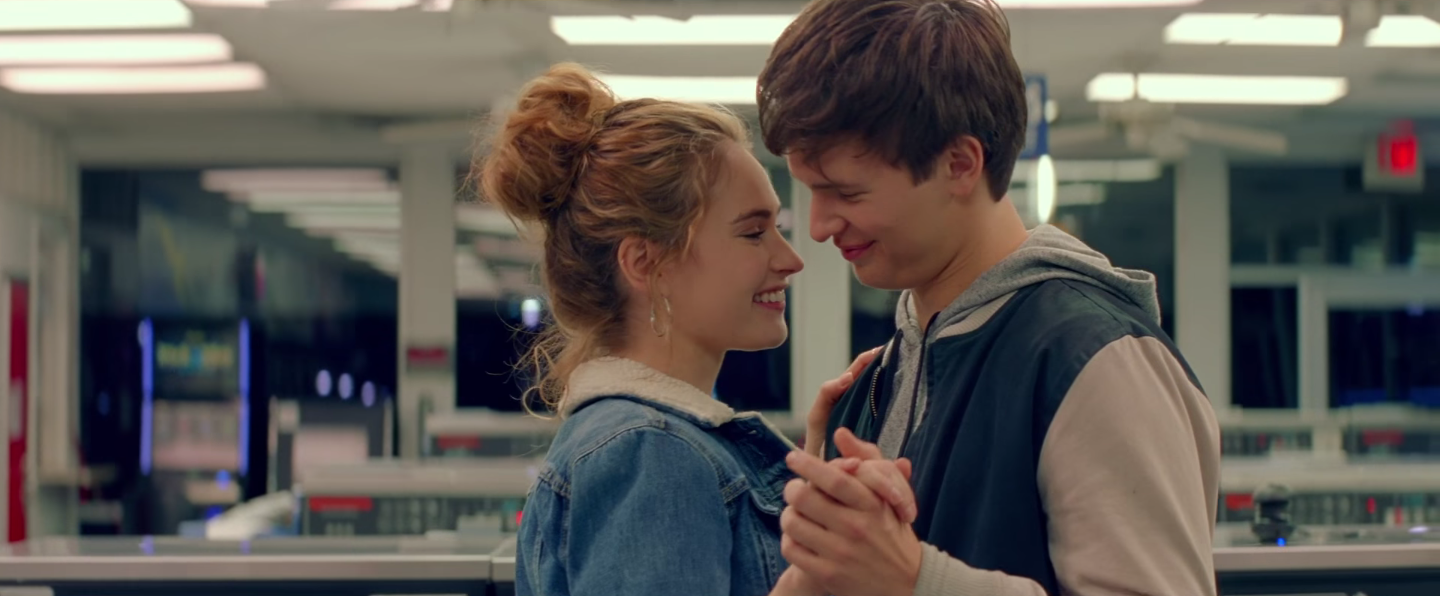
Edgar Wright is someone who's in love with his job as a filmmaker, which has shown in every film he's made thus far. This love affair continues with his latest film Baby Driver. The film's story involves familiar genre archetypes: a getaway driver (Ansel Elgort) who wants to quit the life of crime, the crime boss (Kevin Spacey) who reels him in for another job, the waitress with whom our hero wants to run away (Lily James) and the assortment of criminals along for the ride (Jon Hamm, Eiza Gonzalez, and Jamie Foxx). It's an old song but performed with genuine style, charm and heart.

Speaking of songs, Baby Driver can be best described as a film noir musical. This is because our hero-Baby- listens to music while heists are being pulled off and when he's out-driving the police. He also records conversations and makes songs out of them. The film as an extension of Baby's mindset; Wright shot and edited the action sequences to the music, creating a unique synthesis of sound and visuals that's organic to the film's universe. 

We learn Baby listens to music constantly due to a childhood car accident which left with him a constant humming in his right ear. The same accident also killed both his musician mother (Sky Ferreira) and father (Lance Palmer). When he was still a kid, Baby stole from Spacey's Doc. Doc was so impressed that he's used Baby for every heist. Baby is in debt to Doc and is due to retire after one more heist. Like Ryan Gosling's unnamed character in Drive Baby is great at his job but still strikes others as odd. Griff (Jon Bernthal) and Foxx's Bats are antagonistic towards him. However, due to his youth several of the criminals treat him as a surrogate son or little brother. 

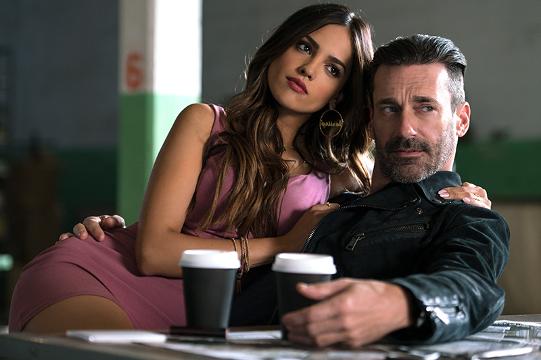
Hamm and Gonzalez's Bonnie and Clyde married couple Buddy and Darling treat him with a kind of bemusement- not quite affection but a certain level of respect. Baby has a complicated relationship with Doc, who is part extorter/part father figure to Baby. Spacey is one of the best actors at doing quiet menace while being darkly funny. When he brings Baby back in to the fold after debts had supposedly been settled Doc casually remarks that he could cripple Baby and kill everyone he loves if Baby doesn't keep working for him; it's this scene where Baby realizes how much he's still in Doc's grip- and desperately needs a way out. 
Image result for lily james baby driver

While James Debora and the whole love story between her and Baby is somewhat underwritten, she and Elgort's chemistry makes the relationship very pleasurable to watch unfold. Wright understands that there's a inherent romanticism inherent in noir- wanting to drive away with a beautiful woman, turning your back on the world of violence and greed- and he portrays the romance in an idealized fashion. The movie believes two people can be brought together by music. I get the impression that Baby sees something of his mother in Debora- a memory of a happier time when he felt protected. Debora and Darling are notably the two major female characters in the film and they are deliberately contrasted. Darling isn't quite a femme fatale but she's certainly a more dangerous and sexual figure than Debora- who projects a virginal innocence. And while Gonzalez is younger than James, Darling does come across as older and seasoned woman.

While Baby may see his mother in Debora, fatherhood an important aspect of this film. I mentioned that Doc is a twisted version of a father figure; but the man Baby views as a father in the film is foster father, Joe (C.J. Jones), who is deaf and whom Baby looks after, being a father of sorts to Joe. This relationship is perhaps the most touching in the film and helps make Baby a more sympathetic character. 

While the movie is using well-worn genre tropes, it also manages to subvert expectations- particularly regarding certain characters. Bats is killed before the third act even though he was being built up as possibly the major antagonist of the film. It's actually Buddy who becomes the villain in the finale of the film. We understand Buddy's motivations- Darling is killed by the police after Baby intentionally ruining the heist. We see that Buddy and  Darling's love was as or even more genuine than Baby and Debora's. Unlike other noir heroes- Baby lives at the end of the film- but the film doesn't escape tragedy if you look at the film from Buddy's point of view. This makes ending's romanticized reunion of Baby and Debora- after Baby gets out of prison- ironic considering the fact Baby is partly responsible the death of a man's wife.

Image result for eiza gonzález baby driver jon hamm
  

Hamm- who became famous for his portrayal of Don Draper on the TV show Mad Men- has in his film roles avoided Draper-esque characters. Instead he's played the good-looking doofus (Bridesmaids), rugged detective (The Town), and a doctor who specializes in lobotomies (Sucker Punch). Hamm's smooth grizzled-ness makes Buddy a distinct personality and a character who could likely carry his own movie.

I do want to talk about Elgort's casting in the role of Baby. Elgort first came to audiences' attention with his role in the teen romance The Fault in Our Stars alongside Shailene Woodley, whom he also co-starred with in the Divergent franchise. His casting as a slick getaway driver would appear to be a case of miscasting. But it ends up working due to how Elgort's image as an actor in Young Adult-orientated films offers a humorous contrast to the noir archetype he's playing; at the same Elgort's offbeat stoicism makes him believable as this odd but cool getaway driver. The opening scene establishes the relationship between Baby and his music, how he grooves to it even as a dangerous heist is occurring. 

I don't know where I'd rank Baby Driver in the Wright Pantheon, particularly since I still need to re-watch most of his work- but it clearly shows a director high on the joy of making movies and pushing himself as an artist, which makes what he'll do next always very exciting. 

Thursday, 13 November 2014

For Noirvember: "Time is luck:" Some Thoughts on Michael Mann's "Miami Vice"


Spoilers Ahead


When Michael Mann's Miami Vice- based on the 1984-89 series he executive produced- was released in 2006, the reaction from audiences and critics was mixed. It's not too surprising that the film didn't completely hit off with audiences or critics. For one, The film doesn't satisfy genre expectations of a crime thriller. There's not a lot of action, the story is slow paced in many sections, Farrell and Foxx trade nary a one liner, and most of the characters come across as flat and uninteresting. But since its release, the film has been embraced by critics and toted as a masterpiece. I'm not quite prepared to give the film that label; but I do feel the film is a beautiful and singular work that only could've been directed by Michael Mann.


I think Mann used the title so he could then subvert audiences' expectations of what a big screen Miami Vice remake would look and feel like. While it does borrow elements from the series, this is not a homage to the show. There are no cheeky references and it's not interested in being meta like the 21 Jump Street films that came later. Mann and his actors play things straight. Mann uses digital photography (As he did with 2004's Collateral and 2009's Public Enemies) to create a real world atmosphere and puts us in the midst of the action throughout the entire film. The movie exists between the real and the romanticized, resulting in something truly sublime. Instead of a throwback to the style of the 80s, Mann forges a visual landscape that's thoroughly modern but also transcends its era and becomes timeless.

If haven't seen the film yet then try to get your hands on the theatrical cut. In North America, the director's cut is the only version of the film available. The director's cut begins with a prologue that sets the stage for a prostitution ring bust by Miami police officers Sonny Crockett (Farrell) and Ricardo Tubbs (Foxx). This set-up takes away from the theatrical cut's opening, in which we're shoved right in to the night club, where the bust is to happen, music blaring, the camera giving us close-ups of our main players.

Sonny and Rico soon become involved in a undercover operation to take down a drug cartel. They meet up with Jose Yero (John Ortiz), the second in command to the cartel's leader, Archangel de Jesus Montoya (Luis Tosar).  Montoya's financial adviser and lover is Isabella (Gong Li), with whom Sonny becomes romantically involved.


After seeing the film three times, I still couldn't tell you every aspect of the plot. But with many noir and noir-inspired films, I don't think the plot is what really matters. Mann uses the plot to further create a feeling of authenticity. When characters on screen about what's going on, we feel we're getting a first hand view at the way these kinds of operations go down. What really matters to Mann is the existential dilemmas for the characters, which I find is also the most noir aspect of the film. As Sonny and Isabella begin their love affair, they're both very conscious it has no future. Again, this is a very noir-like sentiment. Noir characters exist in a fatalistic world where there's usually only one outcome, and it's usually tragic.

Ricardo and fellow police officer Trudy Joplin (Naomie Harris) are also in a romantic relationship. While their relationship has a more optimistic future, Trudy is kidnapped by the Aryan Brotherhood who is working with Montoya's cartel. Trudy is rescued but then nearly killed by a bomb detonated by Yero. This incident makes real to Rico the fact this job can get Trudy killed. Rico tells Sonny: You know what gets me. The prospect of her losing her life over this bullshit line of work."  When Sonny asks if that's what Trudy thinks, Rico says "No, it's what I think." It's a nice character moment for Rico, showing his vulnerability but his anger in the face of violence.


While the characters in Miami Vice seem at first glance to be a little flat, after a few viewings they become more textured and interesting than on an initial viewing. The aforementioned scene is an important one in showing the warmth and openness between Crockett and Tubbs. Then there's the scene between the two before the final shootout which Rico asks if Sonny is ready for his relationship with Isabella to end. Sonny says he's "most definitely not ready." That Sonny is able to be this honest- and like Rico earlier, vulnerable- with his partner further highlights the strength of their partnership.

Similar to the noirs of the classic studio era, Miami Vice creates a heightened language of its own. "Why do I get the feeling everyone know we're 15 blocks out?" asks Sonny as he and Rico are on their way to see Yero. "'Cause everyone knows we're 15 blocks out" replies Rico. The film's dialogue is also what helps give the characters texture. One of the best scenes in the film is the first meeting with Yero, in which Sonny and Rico have to convince Yero to use them in the cartel's operations. Sonny and Rico turn the tables on Yero, asking him if he's a cop. And Rico says to Yero: "[W]e didn't come down here to audition for business. Business auditions for us." This scene showcases the tightrope undercover cops have to walk when entering in to this kind of world and working with criminals. And the scene questions how much is this the real Sonny and Rico, and how much is just play acting.


Mann employs music to sell the emotions of the film. A major example is the use of Moby's "One of These Mornings." Mogwi's "Auto-Rock" plays over the final passages of the film and is another example of how the perfect song can enhance the emotion of what's on screen. Miami Vice has what may be one of my favourite closing shots in any film. Sonny comes back to the hospital where Trudy has just woken up from her coma. Sonny has sent Isabella away but there's still hope for Rico and Trudy. The long shot of Sonny entering the hospital is so simple but- with "Auto-Rock playing over it- so sadly beautiful. Just as how the film opened right in the midst of the story, so the story ends just as abruptly, highlighting the matter-of-factness of these people's lives. The fatalism of the story comes not from things ending, but things having to continue on almost without change- but with the memory of what could've been.  

Tuesday, 6 May 2014

You Are My Path: "The Amazing Spider-Man 2"


Warning: Spoilers Ahead


The decision to reboot the Spider-Man film franchise has always been a controversial one- even four years after the reboot was officially announced in January 2010. For everyone happy about the re-launch of the series- 2012’s The Amazing Spider-Man, directed by Marc Webb (henceforth known as TASM)- and considers it superior to Sam Raimi’s trilogy, there are still many detractors. I’ve had complicated feelings towards that film for some time. The backlash against the Raimi films has definitely soured me towards this new series, despite feeling there are things in that TASM which are stronger than the Raimi films.


Now, almost two years later, The Amazing Spider-Man 2 (henceforth known TASM 2)- which sees Webb returning to the director's chair- is here and I have a similar reaction to the one I had in the days after seeing TASM for the first time- that of disappointment and depression. As with TASM there’s a potentially great film nestled deeply in TASM 2 but it suffers from the same problems of TASM. Namely, this series is more concerned with constructing a franchise and an expansive universe then just telling a solid story that can stand on its own terms. The main difference between the two films is TASM scenes cut out that would have made the film more cohesive a compelling, whereas TASM 2 has too much stuff to juggle, resulting in a unfocused film that never decides what story it wants to tell.

One of the main criticisms I and others had about TASM was its lack of exploration concerning the disappearance of Peter Parker’s (Andrew Garfield) parents and his father’s connection to the spider that gave Peter his extraordinary powers. In that this plot line was dropped mid way through and didn’t have a strong enough through line in the film. Many said it would be picked up in the sequel but that mentality towards the film was a huge problem. People were too willing to forgive the film's dependence on getting a sequel in order to tell its story. Again, franchise building took precedence over clean story-telling, both for the filmmakers and certain audience members.

Thankfully, the story about Peter’s parents does get some resolution in this film. The film opens with Richard Parker (Campbell Scott) recording a video message explaining his disappearance. We get a shortened reprise of TASM’s opening scene, with Richard and Mary Parker (Embeth Davidtz) leaving the young Peter in the care of his aunt and uncle, May and Ben (Sally Field and Martin Sheen). We cut to Richard and Mary on board a private jet with Richard uploading files from his laptop. An assassin is on board attempt to kill them. Mary is shot but Richard is eventually able to blow out the windows of the plane, sending the assassin to his demise- but also sealing Richard and Mary’s fates. It’s a solid sequence with a touching ending. Nevertheless, I feel Webb wanted to craft a James Bond/Christopher Nolan style prologue but I don’t feel it reaches those heights.

After this sequence we essentially get another prologue with Spider-Man stopping the a Russian gangster (Paul Giamatti) from stealing Oscorp’s plutonium shipment. This sequence feels the most Spider-Man-y of any in a Spider-Man film thus far. The jokey Spider-Man stuff works better here than in TASM and Garfield feels pretty much like Spider-Man, even if I still can’t fully embrace the performance. On a side note: this is the best looking live action Spider-Man suit we've gotten so far. Peter makes his high school graduation just in time but his relationship with Gwen Stacy (Emma Stone) becomes strained. Peter is having visions of Gwen’s deceased father Captain George Stacy (Denis Leary), who was killed by the Lizard (Rhys Ifans) at the end of TASM and made Peter promise to leave Gwen alone, lest Peter’s crime fighting life put her in danger.  

The ending of TASM was very controversial since Peter, after keeping away from Gwen, decides to continue his relationship with Gwen. Many took the ending as Peter being too flippant about keeping a promise to a dying man. I wasn’t too up in arms about the broken promise but I did feel Peter's decision negated much of his character arc and made unclear what transformation he was supposed go through. I admire that this film confronts that criticism pretty head on by showing us Peter’s conflicting emotions over desiring to be with Gwen but wanting to protect her. They essentially break up but they still try to be together in some capacity.   

During the plutonium heist Spider-Man save Max Dillon (Jamie Foxx), an Oscorp employee who becomes obsessed with Spider-Man. In typical superhero movie fashion Max, after attempting some maintenance work, falls in to a batch of electric eels, turning him in to Electro, who's essentially able to control electricity. Around the same time Peter’s childhood friend Harry Osborn (Dane DeHaan) returns after many years absent. He takes over Oscorp after the death of his father Norman Osborn (Chris Cooper). We learn that Harry has the same disease which killed Norman. If you remember, Norman dying was established in TASM. In an odd twist of fate, Spider-Man’s blood may be the only thing that can save Harry.

Explaining the plot of this movie is pretty exhausting.  And as I mentioned earlier, there’s too much going on. I'm of two minds considering Electro's place in the film. Visually he looks great and the fight sequences between him and Spider-Man are miraculous. At the same time the film feels like it needed to focus on Harry's story and his eventual transformation in to the Green Goblin and having Electro gets in the way of this story. Electro’s subplot doesn’t have a strong enough thematic connection to Harry's story. It could be argued that the connection between the two is they both feel betrayed by Spider-Man. Spider-Man doesn’t want to give Harry his blood- afraid that it could harm him rather than heal him. And after confronting Spider-Man in Times Square Electro believes Spider-Man never cared about him. His delusion about them being friends is essentially shattered.

But the film doesn’t have enough of a thematic focus for the parallel between Harry and Electro to be sufficiently developed. Despite being built up as the lead villain, It feels like Electro is more of a plot device than a fully formed character, essentially here just so he's established for the eventual Sinister Six team up. I’m not certain anyone was truly committed to exploring his character or crafting a story around him. I wish Electro's shift from loving to hating Spider-Man was explored in more depth as well. I get that the character is delusional but his change of heart happen too quick.

If the film did focus on just Harry, the film could've paralleled Peter and Harry-both are orphans, both abandoned by their fathers. There's also the whole sins of the father theme that exists between them. Norman wanted to use RIchard's research for militarized weapons and Richard, who says in his video message that "People will call me a monster for what I've done," attempts to redeem himself before his death.   

As with the first film, Garfield and Stone have a strong onscreen rapport which adds weight to conceptually tedious material. There’s an improvisational quality to some of their scenes that makes one wonder if everything they say is scripted or if Webb allowed them to riff together. I can’t say I enjoyed watching their scenes- probably because Garfield and Stone’s deep connection on and off-screen makes me depressed about myself. But that's neither here nor there.  

Foxx is a good actor but his performance gets lost under a lot of CGI, though I really liked the scene where he takes on the name Electro. DeHaan is quite good as Harry. He has a slightly unhinged quality that emphasizes his troubled past and eventual evil transformation. The scene between him and Cooper, shot in a darkened room with Norman on his deathbed, is a great example of one scene being able to tell us a lot about the relationship between two people. It is surprising that we’re told Norman Osborn has died but it’s strange to think Norman is gone for good. He’s too important a part of the Spider-Man and Marvel mythos to be relegated to a cameo. At the same time, considering the route this film goes down with Harry suggests that maybe Norman may not come back. I’m still convinced that Norman is coming back, especially since there was a deleted post-credits scene with Norman's head in a jar, Futurama style.   

I’m not a purist but there are certain twists to the mythology that I’m not sure I like. For one, I feel Uncle Ben’s influence on Peter’s life has been somewhat marginalized. Ben had more of a presence in TASM than in Raimi’s original film but the film implied it was Stacy’s lecture about vigilantism that spurred Peter to use his powers to help others- whereas in the traditional origin story it’s Peter’s guilt over not stopping the man who would eventually kill Ben which makes him realize that “with great power must come great responsibility.”  And in TASM 2 its Stacy’s ghost that Peter sees throughout the film but Ben’s presence is hardly felt.

I’m also not fully onboard with Richard having a connection to his son’s eventual transformation in to Spider-Man. I understand the desire to deepen a superhero character’s origin story. But most of the time with these characters, the appeal of their origin stories are their simplicity. Peter Parker was a just an ordinary kid (aside from being a genius), an outcast who was bitten by a radioactive spider and inherited super powers. He made a mistake that got his uncle killed and now uses his powers to fight evil. That’s pretty much it.

What TASM suggested and the filmmakers confirm here is Peter was essentially the only one who could become Spider-Man, and that undermines Peter’s relatability as a character. Moreover, Peter is supposed to be a character with the weight of the world on his shoulders, a guy who has a lot of bad luck and who has difficultly balancing being a superhero and living an ordinary life-because essentially he can’t. This was the central dilemma of Raimi’s Spider-Man 2 and crafting a film around Spider-Man's existential crisis is why I feel it’s still the best Spider-Man film. And I know I’m not the only one who’s disappointed that J. Jonah Jameson is never seen in this film.


I don’t want to say that the filmmakers don’t understand Spider-Man at all since I’m not an expert either. And there are many moments that are very much Spider-Man. The ending, which I’ll get to later, also says something incredibly meaningful about superheroes and this character in particular.

Now, I want to get to the big part of this film, which may not be a complete surprise, especially to comic book readers. So, spoiler warning........


The death of Gwen Stacy is something many fans have wanted to see on screen. And ever since Gwen Stacy was known to be in this new franchise there was constant discussion about when and if she would die in the series. For a while it appeared she wouldn’t die in TASM 2 since Electro and Rhino were the only confirmed villains- that is, until Green Goblin was revealed to be in the film. The sequence in which she dies is not exactly like the comic story but it's still incredibly powerful. Garfield’s reaction to Gwen’s lifeless body is beautiful and has the potential to break the most hardened heart.

However, her death does seem redundant after the deaths in TASM, which occurred so Peter could learn about responsibility and the tragedy that's part of life he’s been thrust in to. I also feel, as I mentioned earlier, Harry’s transformation in to the Green Goblin needed more breathing room. For being involved in such a significant moment as Gwen’s death, Green Goblin is essentially a cameo. There’s also the whole issue of Gwen feeling like she was just in this franchise to die. I do like the cemetery montage, which shows us, without words, Peter’s grief over Gwen’s death and his numbness to anything else. It’s a haunting piece of filmmaking by Webb that shows how talented he can be.   

Coming back to the final scene, where Spider-Man returns after a significant absence to battle the Rhino,  now in a mechanized suit created by Oscorp.  What I like about this ending is shows that despite all the tragedy in his life Peter will still push forward and reminds us that “with great power...” The sequence states what’s beautiful about these heroes: they use the tragedy in their lives to do good for others.


Spoilers for ending over


I wrote an article some time ago concerning my mixed feelings about Marc Webb and this franchise: http://thenoirzone.blogspot.ca/2014/03/some-thoughts-on-my-mixed-feelings.html. I still stand my feelings but I’m not mad at Marc Webb. He does have talent. I’m more upset with Sony and how they didn’t allow this film to breathe and be a story. TASM 2 isn’t a soulless film. It has some incredibly soulful and beautiful human moments, Webb crafts some magnificent visual effects sequence and its climax is pretty much perfect. It’s just that Sony has suffocated this franchise with world building and wanting to catch up with Marvel Studios.  Ultimately, TASM 2 is too problematic in regards to its story and character development to be a completely satisfying.
 

Monday, 4 February 2013

Some Thoughts on Paul Giamatti and Felicity Jones' Casting in "The Amazing Spider-Man" Sequel


Last week, some big casting news was announced regarding the sequel to The Amazing Spider-Man. Paul Giamatti is in talks to play one of Spider-Man's villains, the Rhino. For those who don't know the Rhino, here's a brief summary via The Hollywood Reporter:

"The Rhino first appeared in Amazing Spider-Man #41 in 1966 as a thug from a Soviet Block country who wore a superhuman suit that made him invulnerable while giving him super-strength and super-speed. It also had a deadly horn
on top. In more recent comics, he became a sympathetic figure who found himself allying with Spider-Man."

What's fascinating about the inclusion of the Rhino in the film is certainly the casting of Giamatti, not a psychically intimidating actor. With Giamatti in the role, the film will probably emphasize the suit's ability to give him super strength, providing a contrast between the ordinary man Giamatti starts out as and the unstoppable force he becomes.

Giamatti will be joining Jamie Foxx as Electro, another of Spider-Man's rogues gallery. With two villains, along with the inclusion of Dan DeHaan as Harry Osborn and Shailene Woodley as Mary Jane Watson, as well as Felicity Jones in talks for an undisclosed role, it's starting to feel that the film may be juggling too many balls. And the idea of a Spider-Man film cramming in too many characters and subplots brings to mind Spider-Man 3, which suffered from not being able to weave its multiple plotlines together coherently. Now, I'm not trying to be an alarmist- it's just that I felt The Amazing Spider-Man script didn't quite flow narratively or click together thematically as well as it should have. I hope the script for the next film is tighter and works really well as a stand alone film.


For one thing, it's important to know how to use your villains. One needs to be the central villain, which I presume will be Electro. It's apparent that Harry's father, Norman Osborn, is the one pulling the strings in this new franchise, so it's important to keep that villain structure in mind while still having Electro be a fully developed character rather than just a henchman. Foxx has talked about Electro's origins, saying at the beginning of the film that Max Dillon, Electro's real name, will be a Spider-Man fan:

"You'll see that in his whole life, no one is talking to him. People have stolen his ideas at the big company. He's a nobody. At a certain point, Spider-Man bumps into him and says, 'You're my guy. You're my eyes and ears on the street.' And he says his name - no one has ever said [Max] Dillon's name. He goes, 'Wow' and, when Spider-Man leaves, he sort of thinks that, 'I am Spider-Man's partner!' He's cutting out Spider-Man's face and pasting it on all his boards..."

Could Rhino be an established villain at the beginning of the film, with Electro getting the main villain origin? Possibly, especially since, judging from Foxx's comments, Max will have an emotional connection to Spider-Man that will put his orgin front and centre. Then again, if Rhino has any connection to Oscorp and Curt Connor's cross species genetics work, we could definitely be seeing an origin on screen for him as well. Will there be a team up between Electro and Rhino?- if director Marc Webb is leading up his version of the Sinister Six, then a relationship between Electro and Rhino could be planting the seeds for a future installment also featuring the return of Curt Connors/the Lizard. Critic Sean O'Connell recently wrote an article about the possible universe Marc Webb is mapping out: http://www.cinemablend.com/new/Opinion-Marc-Webb-Isn-t-Making-Sequel-He-Mapping-Out-Massive-Spider-Man-Universe-35385-p2.html.  While I have disagreed with O'Connell regarding certain aspects of The Amazing Spider-Man, his article is definitely worth checking out.


So, who will Felicity Jones play? People are throwing around two big names-Felicia Hardy, aka the Black Cat, the Marvel Universe's version of Catwoman and Betty Brant, who in the comics works at the Daily Bugle. While I kind of love the idea of Andrew Garfield's Spider-Man interacting with Black Cat, I wonder if Black Cat fits in with what this franchise is doing right now. It may also be a little too soon after The Dark Knight Rises and Anne Hathaway's performace as Catwoman to bring in another cat burglar character. And finally, the romantic dynamic of this new film already seems to be set up as a love triangle involving Peter Parker, Emma Stone's Gwen Stacy and Shailene Woodley's Mary Jane. Felicia/Black Cat was one of Peter' romantic interests in the comics, so the filmmakers may want to avoid putting in another possible love interest. This isn't to say that Felicia is only defined by a romantic relationship with a man.

 
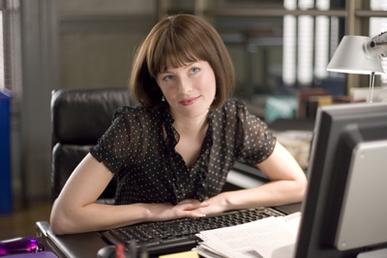
I'm leaning a little towards Betty Brant. The Daily Bugle will probably feature in some compacity in the next film, which would lead to Betty having a role. Elizabeth Banks played Betty in Sam Raimi's trilogy and the character may have a larger role in this film. In the comics, Betty was actually Peter's first love, even before Gwen. It wasn't essential to Raimi's trilogy and it may not be of importance in this trilogy, since as I mentioned earlier, the romantic triangle centres around Peter, Gwen, and Mary Jane. And like Felicia, Betty doesn't need to be defined by a romantic relationship with Peter.

So, those are pretty much my thoughts as of now. Despite my issues with the first film, I'm very intrigued by what direction this sequel, and franchise, is going.