Tuesday, 31 March 2015

My 11 Favourite Films of 2014


I don't believe there's such a thing as a bad year for movies. As easy as it is to be cynical with the modern movie landscape I feel each year does bring us films of originality, wonder and genuine vision. For me, every year is defined by the movies that were released. It's hard for me not to associate a given year with certain films. And it's a treat to look back at what films made up my year watching movies.


This list of my favourite films of 2014 is coming a little later than I planned and there are still several films from the past year I haven't seen; as well as films I did see but haven't revisited. But here are the films of 2014 that I either loved, deeply affected by, or just really enjoyed and admired. I don't use the word "best" because I don't know what I would objectively call the best. While I would certainly name several of these films as the best, this list is to be taken merely and
humbly as my own preferences. As always, I'll start with my number one favourite film and then proceed alphabetically.

SPOILERS FOR CERTAIN FILMS AHEAD


1. The Grand Budapest Hotel


I saw Wes Anderson's The Grand Budapest Hotel about this time last year and no other film from 2014 has taken its place. The Grand Budapest Hotel is a film I'll still be watching in 20 years, a film that already feels like a classic. It sort of falls in to the category of film Quentin Tarantino called "hangout movies," a movie you watch just to spend time with the characters. Even though the film has a fast pace (in many ways its a screwball comedy), it does give us enough slower scenes and moments that allow to fall in love with the characters.


The film's main storyline focuses on the adventures of  a hotel concierge- M. Gustave (Ralph Fiennes)- and his new lobby boy Zero Moustafa (Tony Revlori)- which revolve around a stolen painting and a vast family fortune. All of this is taking place against the backdrop of 1930s Europe. But the plot mechanics don't really matter. Anderson is more interested in the idea of storytelling and the way in which stories are passed down through the generations.


The theme of "passing down of stories" is reflected in he the film's layered structure. We begin with a young girl reading a book by an unnamed writer (Tom Wilkinson). The book is a recount of a trip he made to the Grand Budapest Hotel in 1968. During this time he met the older Zero (F.Murray Abraham), who now owns the hotel  and who tells the young writer (Jude Law) about his relationship and adventure with M. Gustave.  


I view The Grand Budapest Hotel as a film largely about nostalgia. Zero believes  Gustave epitomized and represented a world which was a already a thing of the past. And the heart of the film is Zero looking back at the pivotal era of his life. I have a particular fondness for films about someone looking back at their past. I find something poignant about the concept; and when we learn why Zero never shut down the hotel, it encapsulates how even the briefest amount of time being happy defines the rest of our lives.


Birdman


Alejandro Gonzalez Inarritu's Birdman is an example of how drastically a film's reputation can change in less than a year. After receiving rave reviews from critics it eventually became the film to hate. And when it won Best Picture at the Oscars in February its victory was compared to another acclaimed but then reviled film which won Best Picture, Paul Haggis' 2005 Crash. I understand why many dislike this film. It's self-conscious and it's script is largely unsubtle, it may not have as much depth as it purports to be-  and it's "one take" conceit is seen as just a cheap gimmick.


But for me, Birdman was one of the most enjoyable film experiences I had last year. While I have wondered whether it's mostly a surface level film I can't help but admire it as a high wire act of directing and acting.  Being comprised of numerous long takes- instead of merely being a gimmick- feels organic to the narrative largely taking place backstage at a theatre. Here, former movie star Riggan Thompson (Michael Keaton) is attempting a comeback by directing, writing and starring in an adaptation of Raymond Carver's "What We Talk About When We Talk About Love." The continuously moving camera puts us backstage and part of this hectic environment, where arrogance and pent-up aggression abound. 


Moreover, the long takes result in the film taking on play-like elements- with actors having to hit their marks and not mess up their lines- while still feeling cinematic. The meta-ness of the film is accentuated by Michael Keaton- known for his performances as Batman- in the role of an actor famous for playing a superhero. While it's reductive to say Riggan is a reflection of Keaton I do feel Keaton's performance  is a personal exploration of how fame and an iconic role can become like an albatross- as well as the difficulty of shedding that past existence and being born anew as an artist.


Boyhood


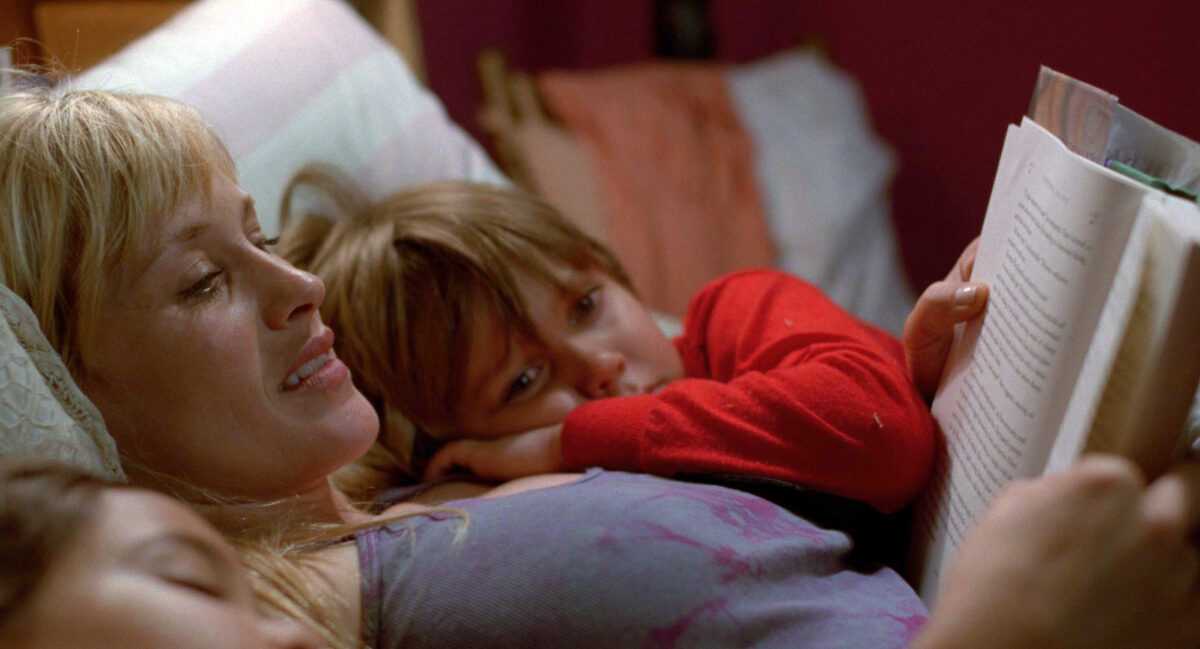
While admittedly I don't have the same amount of passion for Boyhood as other critics but I can't deny the authenticity and beauty of director Richard Linklater's 12 years in the making vision of one boy- Mason (Ellar Coltrane) from 6 to 18. With this film and the Before Trilogy, Linklater confirms his place as the utmost chronicler of life as it unfolds (white middle class life- but still). While the broad strokes of the story aren't particularly original, it's the small details- the interactions between characters and the non-showy way in which Linklater portrays the passage of time- that make up Boyhood's artistry.   


I see the film as asking after whom Mason will model himself since his step fathers weren't exactly ideal role models. Even his biological father, Mason, Sr. (Ethan Hawke)- a decent guy at heart- has his own flaws. Even at the end, Mason is still forming his identity.  But maybe all he needs to do let the moment seize him.


Calvary


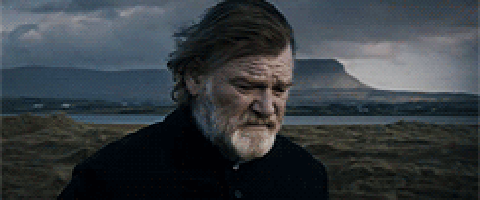
I enjoyed John Michael McDonagh's The Guard but I feel his more profound work is his follow-up, Calvary. In the film Brendan Gleeson (who also starred in The Guard) plays an Irish  priest named Father James. While listening to a confession the parishioner tells James he plans to kill him in a week. The parishioner was sexually abused as a child and since the priest who committed the crime is dead, the parishioner chooses to murder James instead; this is largely because James is a good man and a good priest. The parishioner was an innocent child so an innocent man but be punished in return.  


The film then follows James as he interacts with  other parishioners as well as repairing his relationship with his estranged daughter Fiona (Kelly Reilly). The takes on a somewhat episodic structure, creating a lived in world that is both humorous but also incredibly dark. McDonagh's script and director create an cohesive balance between the humour and drama, the warmth and the bleakness of the story. McDonagh also has the benefit of Gleeson in the lead role, who's the anchor of the story; his understated performance grounds the film in an emotional reality.


We don't know who the would-be murderer is until the end but the film isn't really about this mystery. Calvary is- at it's core- a film that asks how you would face your own imminent death, especially when you're being punished for someone else's crime. The film's climax on a beach, stunningly photographed by cinematographer Larry Smith, stands as one of my favourite denouements of any film from last year.
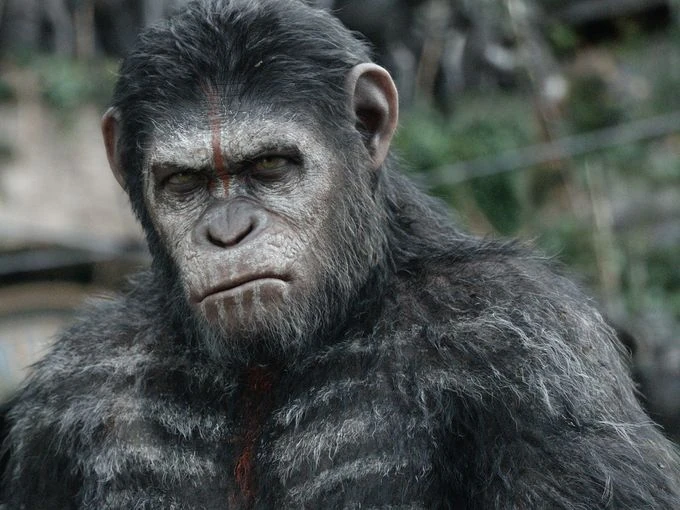


Dawn of the Planet of the Apes


2011's Rise of the Planet of the Apes and last year's sequel Dawn of the Planet of the Apes are prime examples of how franchise films based on pre-existing and previously adapted material can be just as vital and artistic as original blockbusters. If Rise was a reimagining of 1972's Conquest of the Planet of the Apes then Dawn is this new series version of 1973's Battle for the Planet of the Apes. 15 years after the simian flu has killed off most of humanity, the ape leader


Caesar (Andy Serkis) and Malcolm (Jason Clarke) attempt to make peace between apes and humans- whom Caesar still distrusts from his time in captivity. But Caesar's general Koba (Toby Kebbel) wants war between the two species.


Dawn explores how even a great leader cannot control the path of his people. Via motion-capture, Serkis further cements his legacy as an actor. His performance as Caesar in these two films is an even deeper and more impressive feat than his role as Gollum in the Lord of the Rings and Hobbit trilogies.

Director Matt Reeves- taking over the reigns from Rupert Wyatt- crafts some amazing set pieces while also allowing the film to breathe, telling a thoughtful and ultimately tragic story about coming close to peace and it being torn apart. "I thought we had a chance" says Malcolm at the film's conclusion. "I did too," responds Caesar. Rarely does a blockbuster laments violence in such a devastating fashion.


Gone Girl


David Fincher is maybe the most precise of contemporary American film directors, which is why he's perfect for films based around investigation and painstaking details. And it's his often deeply cynical view of human nature which makes him unafraid to confront the themes of Gillian Flynn's adaptation of her best-selling novel.


While some will dismiss the film as merely an adaptation of an "airport novel," Gone Girl isn't just an entertaining amd involving mystery about whether Nick Dunne murdered his wife Amy (Rosamund Pike). The film is largely a funny and uncomforting satire about the America media and how it can reinforce paranoia and distrust. Fincher also explores the nature of identity in relation to being in a marriage- the "cool girl" persona  Amy creates to win over Nick and- after it's revealed Amy staged her own disappearance out of revenge- the persona Nick takes on to win her back. "The only time you liked yourself was when you were trying to be someone this cunt might like," Amy tells him after her reappearance.    


Fincher takes Affleck's limitations as an actor and coasts out Affleck his best performance yet. Affleck plays Nick neither too sympathetically or wholly unlikable. He's not a clear-cut protagonist but rather a flawed and potentially violent human being. Nick has to win people over and Affleck- as much as any actor in Hollywood- knows how easy it is for people to turn against you.  When Nick says "They hated me, and now they love," it sounds like Affleck summing up the arc of his career."    


Interstellar


I've never subscribed to the theory that Christopher Nolan is an unemotional filmmaker but I do feel Interstellar- while very divisive-  is arguably his most purely emotional film to date. Nolan takes what was mostly symbolic in Inception- Cobb's (Leonardo DiCaprio) children- and makes it more tangible via Cooper's (Matthew McConaughey) relationship to his daughter (Mackenzie Foy). Akin to Inception, Interstellar is about the protagonist's desire to return home. Due to the Earth dying, Cooper has to leave in order to find a planet for humanity to inhabit. 

The idea of having to leave your home, not knowing when you can come back, is universal and it's at the heart of Interstellar grand vistas and huge big ideas. Nolan- with his Batman trilogy and Inception- has always attempted to make films that are in the spirit of large-scale epics of David Lean and Stanley Kubrick. I always admire Nolan's use of practical effects instead of over-reliance on CGI. It's what gives his films a sense of reality and texture we don't always get with many modern blockbusters. But's what most surprising about the film is how intimate the film's climax is, intercutting between father and daughter- and eventually tying the themes of the emotions together in a sequence that people either scoff at or embrace. I think it's a wonderful set piece. And while not make complete sense on a pure logic level, but I think dramatically and emotionally it achieves its goals.


The film also asks the question of whether true altruism can exist or whether Cooper's journey is based more on saving his daughter's future rather than everyone else's future. It's eventually revealed that instead of Plan A- which will bring humans from Earth to the new planet- Plan B- embryos being used to restart the human race- is the ultimate game plan. The question of altruism then extends to the people who helped build Cooper's ship. If they knew they would be left behind, would they have helped? The question is a challenging one. The fact Nolan doesn't give us a reassuring answer makes Interstellar the most morally dark blockbuster in years.     


The Lego Movie


The Lego Movie is one of the funniest, joyful and inventive comedies I've seen in quite some time. What struck people as merely a toy commercial before it was released, another unoriginal cash grab, turned out be a testament to creativity, originality and individuality. Directors Phil Lord and Christopher Miller  have created careers out of taking material that sounds on the surface like Hollywood cynicism (a remake of 21 Jump Street? a movie based on Lego?) and subverting our expectations Even when it goes down conventional routes in its storytelling The Lego Movie always manages to surprise and entertain.
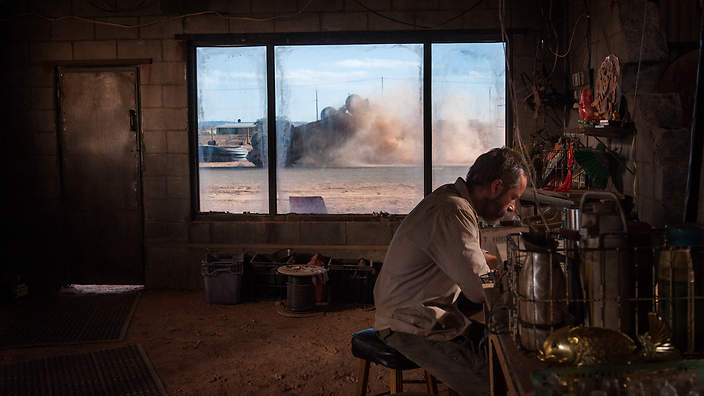


The Rover


David Michod's follow up to his 2010 film Animal Kingdom is a bleak but empathetic story set in the Australia outback a decade after the world suffered a global economic collapse. Michod isn't concerned with explaining every detail of what lead to the state of the world. He instead focuses in on Eric (the always underrated Guy Pearce), a drifter whose car is stolen by a gang of thieves after a robbery. Henry (Scoot McNairy) leaves behind his injured brother Rey (Robert Pattinson), whom Eric uses to find Henry and the car.


Michod's creates one of the most realistic visions of a dystopia I've seen in a film. And it suits the subtlety of the narrative as the characters wander through the remains of the old world. This is a film many will call boring. But for me, I found Michod's filmmaking, his sense of composition and deliberate pacing, very absorbing. This is a film which places you firmly in its world, lets you breathe it in and understand what life is it like in the remnants of the world.


We only get hints of Eric's backstory- including the final reveal- but Pearce's face and his demeanor create a lived in performance. Pearce is always reliable but the biggest surprise is Pattinson's performance. He's as far away from Edward and Twilight as he's ever been. With a thick and drawly southern accent Pattinson's performance is a fascinating display of an actor forging a new identity for himself on screen.


I admire how Michod develops Eric and Rey's relationship throughout the film. They never become buddy-buddies but they do reach an unspoken peace and understanding. And with the film being so restrained, the emotions in the climax feel like some kind of catharsis.     


Noah


Darren Aronofsky's adaptation of the story of Noah's arc got lost in the shuffle of 2014 but I think it's the most visionary blockbuster to come out this year (even more so than Interstellar and Dawn of the Planet of the Apes). Instead of making a sanitized version of this tale, Aronofsky creates a dark fantasy that's full of grit and moral ambiguity as Russell Crowe''s Noah leaves people to their deaths and almost kills a baby as to prevent further reproduction (he wants humanity to end with his family). Many purists will take issue with Aronofsky's vision. Personally I feel Aronofsky brings us the non-religious audience much closer to the character of Noah and this story than ever before


Whiplash


I don't think there's any horror movie villain which has frightened me in the same way Terence Fletcher has. Watching Damien Chazelle's Whiplash, J.K. Simmons' Oscar-winning performance as a tyrannical and merciless music teacher felt like it was pulled out from my subconscious and put on screen. I'm an easily intimidated person and Fletcher represents the kind of man who would absolutely petrify me in real life. Fletcher is a man whom- no matter how much I hated him- I would still strive to please.


But Fletcher isn't the main character of the film. That's Andrew Neiman (Miles Teller) an ambitious young drummer at the prestigious Shaffer Conservatory in New York who'll do anything to become the next jazz great. Fletcher pushes his students beyond what's acceptable. Whiplash asks troubling questions about the line between passion and obsession, between stern- and occasionally unorthodox- teaching and straight up mental abuse. How can true greatness be unlocked and how far would push yourself to achieve true mastery- and possibly legendary stasis.


Fletcher believes there's no more harmful phrase than "Good job." We can understand where Fletcher is coming from- how coddling isn't always healthy; but it's also important to acknowledge Fletcher goes too far in the opposite direction, treating his students with cruelty and disrespect. Simmons is amazing but Teller's performance is also crucial to the film. Teller finds a way to make Andrew both sympathetic but also capable of his own coldness and cruelty, even breaking up with his girlfriend Nicole (Melissa Benoist) because he views her as someone who will get in the way of his ascension to greatness. And Teller's drum playing makes you feel Andrew's "blood, sweat and tears." 


The psychological warfare between Andrew and Fletcher culminates in a stunning final sequence which may be the best ending to any film from 2014. .It'd be one thing if the film was just a vehicle for great performances but Chazelle's direction and Tom Cross Oscar- winning' editing are stellar, making the film its own kind musical performance. The aforementioned final sequence isn't just the culmination of Andrew and Fletcher's relationship, but it also represents Chazelle reaching transcendence as a filmmaker.


The Davies Awards

Favourite Actors (Female)


Emily Browning- God Help The Girl


Emily Blunt- Edge of Tomorrow
Jessica Chastain- The Disappearance of Eleanor Rigby
Marion Cotiillard- The Immigrant
Karen Gillan- Oculus
Keira Knightley- Begin Again
Felicity Jones- The Theory of Everything
Rosamund Pike- Gone Girl
Aubrey Plaza- About Alex
Zoe Kazan- The F Word

Favourite Actors (Male)


Jake Gyllenhaal- Nightcrawler


Ben Affleck- Gone Girl
Tom Cruise- Edge of Tomorrow
Chris Evans- Captain America: The Winter Soldier
Ralph Fiennes- The Grand Budapest Hotel
Michael Keaton- Birdman
James MacAvoy- X-Men: Days of Future Past
Matthew McConaughey- Interstellar
David Oyelowo- Selma
Eddie Redmayne- The Theory of Everything
Andy Serkis- Dawn of the Planet of the Apes 
Dan Stevens- The Guest
Channing Tatum- Foxcatcher
Miles Teller- Whiplash

Favourite Supporting Actors (Female)


Katherine Waterston- Inherent Vice


Patricia Arquette- Boyhood
Melissa Benoist- Whiplash
Jessica Chastain- Interstellar
Carrie Coon- Gone Girl
Kim Dickens- Gone Girl
Scarlett Johansson- Captain America: The Winter Soldier
Jane Levy- About Alex
Jena Malone- Inherent Vice
Hannah Murray- God Help The Girl
Saorise Ronan- The Grand Budapest Hotel


Favourite Supporting Actors (Male)


J.K. Simmons- Whiplash


Dave Batista- Guardians of the Galaxy
Josh Brolin- Inherent Vice
Bradley Cooper- Guardians of the Galaxy
Bryan Cranston- Godzilla
Ethan Hawke- Boyhood
Edward Norton- Birdman
Robert Pattinson- The Rover
Tyler Perry- Gone Girl
Mark Ruffalo- Foxcatcher


Favourite Directors


Wes Anderson- The Grand Budapest Hotel


Paul Thomas Anderson- Inherent Vice
Darren Aronofsky- Noah
Damian Chazelle- Whiplash
Scott Derrickson- Deliver Us From Evil
Gareth Evans- The Raid 2
David Fincher- Gone Girl
James Grey- The Immigrant
Alejandro Gonzalez Inarritu- Birdman 
Richard Linklater- Boyhood
John Michael McDonagh- Calvary
David Michod- The Rover
Christopher Nolan- Interstellar
Phil Lord, Christopher Miller- The Lego Movie 
Matt Reeves- Dawn of the Planet of the Apes
David Leitch, Chad Stahelski- John Wick


Favourite Screenplays


Wes Anderson- The Grand Budapest Hotel
Damien Chazelle- Whiplash
Gillian Flynn- Gone Girl
Phil Lord, Chris Miller- The Lego Movie


Favourite Action Sequences-  


Hammer Girl train fight- The Raid 2
Car chase- The Raid 2
Final fight- The Raid 2
Boat sequence- Captain America: The Winter Soldier
Highway sequence- Captain America: The Winter Soldier
Quicksilver set-piece- X-Men: Days of Future Past
Boarding the arc- Noah 
Shootout in John Wick's house- John Wick
Red Circle shootout- John Wick

Favourite Cinematographers


Jeff Cronenweth- Gone Girl


Hoyte van Hoytema- Interstellar
Darius Khondji- The Immigrant
Matthew Libatique- Noah
Emmanuel Lubeski- Birdman
Sharone Meir- Whiplash
Jonathan Sela- John Wick
Larry Smith- Calvary
Robert Yeoman- The Grand Budapest Hotel






Friday, 13 February 2015

Bye, Bye, Blackbird: "Public Enemies"


Ending Spoilers Ahead


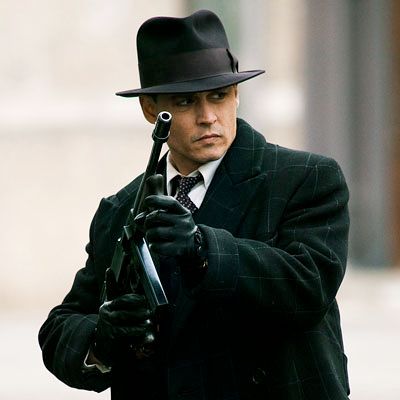
With Michael Mann's latest film Blackhat being released- and subsequently bombing with critics and audiences- I decided to take a look back at Mann's previous film, 2009's Public Enemies, starring Johnny Depp as Depression-era gangster John Dillinger, who was killed by the FBI in 1934, at the age of 31.


Like 2006's Miami Vice-the film Mann made before this- I think some distance is needed to truly appreciate what Mann is doing aesthetically and thematically in this film. Public Enemies exists in a weird purgatory between art film and mainstream entertainment, between crime film archetypes and characters more deeply felt, and between action and something more slow-burning.


What stood out for me on this viewing  is its vision of the time period is possibly the most un-romanticized version of the past I've ever seen in a mainstream film. Or maybe I should say the least Hollywood-ized. Usually in films like this there's a very prestige feel to the look and production/art design. In this film 1930s is a living, breathing world and way of life, free of any kind of nostalgia. I think this particular mood comes from Mann's use of digital photography. By applying a modern aesthetic to a period piece Mann removes the barrier between past and present, myth and man. We're put right in action, whether it be a gun fight or an interaction between two characters. The 1930s- while the distant past to us- was to these people the modern world. It was immediate and the future was uncertain. The Depression was in its fourth year and anew kind of criminal had emerged. and FBI Director J. Edgar Hoover (Billy Crudup) declares "America's first war on crime. This line not only speaks to the time period but to the wars North America would fight against drugs and terrorism in later decades.      


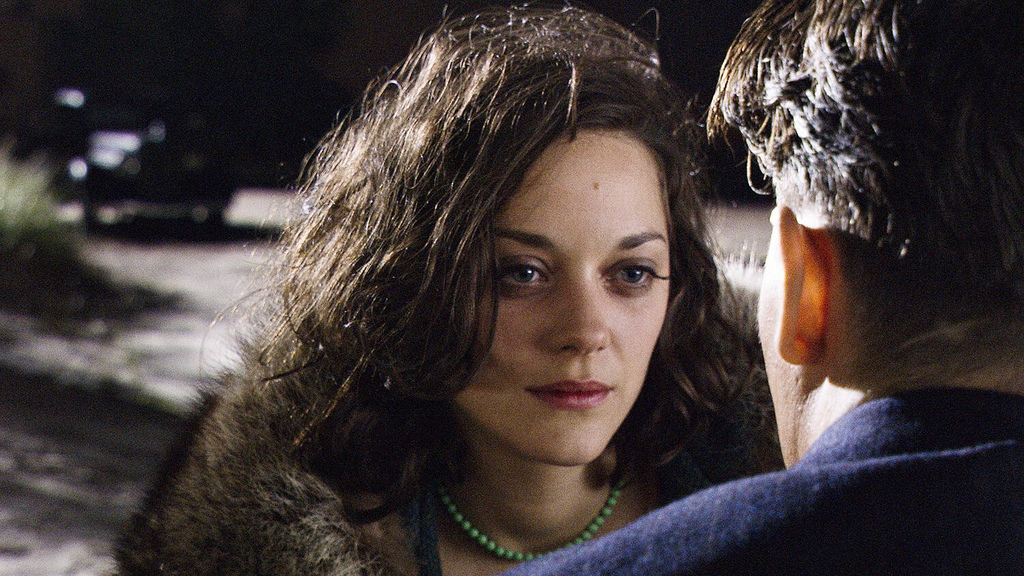
Public Enemies isn't so much a biopic of Dillinger- it only chronicles the last year or so of his life. During the course of the film Dillinger begins a romance with Bille Frechete (Marion Cotillard). At first Billie says she can't begin a relationship with a man she hardly knows. Dillinger then tells her: 

"I was raised on a farm in Moorsesville, Indiana. My mama died when I was three, my daddy beat the hell out of me cause he didn't know no better way to raise me. I like baseball, movies, good clothes, fast cars, whiskey, and you...what else you need to know?"

This isn't just directed at Billie but at the audience as well. The film is telling us it's not interested in exploring Dillinger's backstory or psychoanalyzing him. It adds to the immediacy of the film that we meet Dillinger fully formed rather than seeing him as a child and then as a teenager, etc. Mann doesn't want to unlock Dillinger, maybe because he feels there's no reason to. Dillinger was just a man when all was said and done. Dillinger gained mythic stature after his death- and was a public icon even before  then but behind that myth was a ordinary man.

"Time is luck" is a phrase Mann has used in his films. While it's not spoken in Public Enemies, the sentiment runs through the film. Dillinger lives in the moment, knowing he may  not be alive tomorrow. I noted that the time period of the film was un-romanticized but Mann is still very much a romantic. The relationship between Dillinger and Billie epitomizes the doomed romance Mann explored in Heat and Miami Vice. This love affair can't last. It's "too good to last," as Colin Farrell's Sonny Crockett says to Gong Li's Isabella in Miami Vice


When Dillinger is killed the film ends with Billie. Mann is compassionate towards Billie and views her loss as the tragedy of the film. Charles Winstead (Stephen Lang), one of the FBI agents who killed Dillinger- and who heard Dillinger's last words- tells Billie "He said 'Tell Billie for me: Bye, bye, Blackbird'," which was the name of the song Dillinger and Billie first danced to. Similar to the endings of Heat and Miami Vice, this conclusion sneaks up on you with how emotionally devastating it. It rises above the archetypes and tropes of the genre and achieves something transcendent.  


This is one of  Depp's most restrained performance- particularly in comparison to everything from 2003 onwards. He plays Dillinger with a folksy charm and charisma, winning the public over to his side even while pitting the FBI against him. Christian Bale plays Melvin Purvis, the FBI agent who led the man hunt for Dillinger. Bale doesn't get a lot to work with but he plays the part with conviction and subtle nobility, with a dash of arrogance when Dillinger is arrested earlier in the film. I do wish the film had given us more insight in regards to Purvis- especially when the coda informs us Purvis committed suicide in 1960. I would say Cotillard is the heart of the film. It's her final shot in the film which makes the ending so emotionally affecting.

Coming back to digital photography, aesthetic choices influence us in conscious and unconscious way- and Mann wants us to be conscious of the digital aesthetic and the difference between it and film. Mann challenges the way we think movies should look and feel. And I feel your opinion and reaction to this kind of aesthetic determines whether you like these latter day Mann films. Most notably Mann utilizes digital filmmaking to make his action sequences vividly realistic and hard-hitting. The opening prison escape establishes the rhythm of the action and the "in the moment" feel of the film. 
While other modern action sequences don't have much personality, Mann's set pieces feel distinctly and organically part of his overarching aesthetic.

Public Enemies has grown in stature in my mind after re-watching it. Mann understands the romanticism and the inherent tragedy beneath the conventions of the genres of which he explores. And Public Enemies is a tragedy about the people that are left behind, the survivors of the world Dillinger and others after him have inhabited.


Tuesday, 10 February 2015

Thoughts on Spider-Man Joining The Marvel Cinematic Universe


Well, it finally happened. Late Monday night it was announced that Spider-Man will now be part of Marvel Studios' shared universe. Marvel and Sony (who have produced the previous five Spider-Man films and retained the film rights to the character for over a decade) reached a deal in which Spider-Man will first appear in a Marvel film in 2016 and then get his own solo film in 2017. And as part of this deal Sony will still finance and have creative control over the films.

First off, I feel Spider-Man being in the MCU would've been better a situation if  it had been a clean break. With Sony still having a major role in making these films there's a huge chance Marvel's plans could get muddled. Still, this is a game-changer for the Marvel Cinematic Universe. I've long believed it was odd that a shared universe based around Marvel characters didn't include Spider-Man- being Marvel's most iconic character. It's almost equivalent to not having Batman in a shared DC cinematic universe. I understand why Spider-Man couldn't appear in a Marvel movie- rights issues and all- but it still felt like something was missing. So I'm glad that the MCU- while already fleshed out- now feels a little more complete. That, and the prospect of Spider-Man interacting with the other established characters is pretty exciting. Sharing zingers with Robert Downey Jr.'s Tony Stark, sharing his experiences with Chris Evans' Steve Rogers- it'll be fun to see.   

I had mixed feelings on the Amazing Spider-Man films- directed by Marc Webb and starring Andrew Garfield. I wanted to love those films but I think the backlash against the original Sam Raimi films starring Tobey Maguire soured me on that franchise even before the first film came out. Ideally we can finally get pass the bile spewing towards Raimi's films now that we're one more step removed from his trilogy. 


I initially liked elements of the first Amazing Spider-Man but in retrospect I don't feel the film really works. It has major  structure and thematic issues as well as too much studio manhandling. These same problems plagued its sequel as well. While I think Marc Webb is a competent director I don't believe he ever had much creative control over these films- contrary to the claims made by some fans that Webb has a distinct vision for this franchise. At the same time it's unfortunate that plot threads left hanging at the end of The Amazing Spider-Man 2 will likely never be resolved.  Also, is it possible to get Felicity Jones in the MCU as well? If you remember she played Felicia (Hardy) in The Amazing Spider-Man 2. It was only a small role but the film was clearly setting her up to be Black Cat in a later film. She's a lovely actress and I was looking forward to seeing her take on that role.


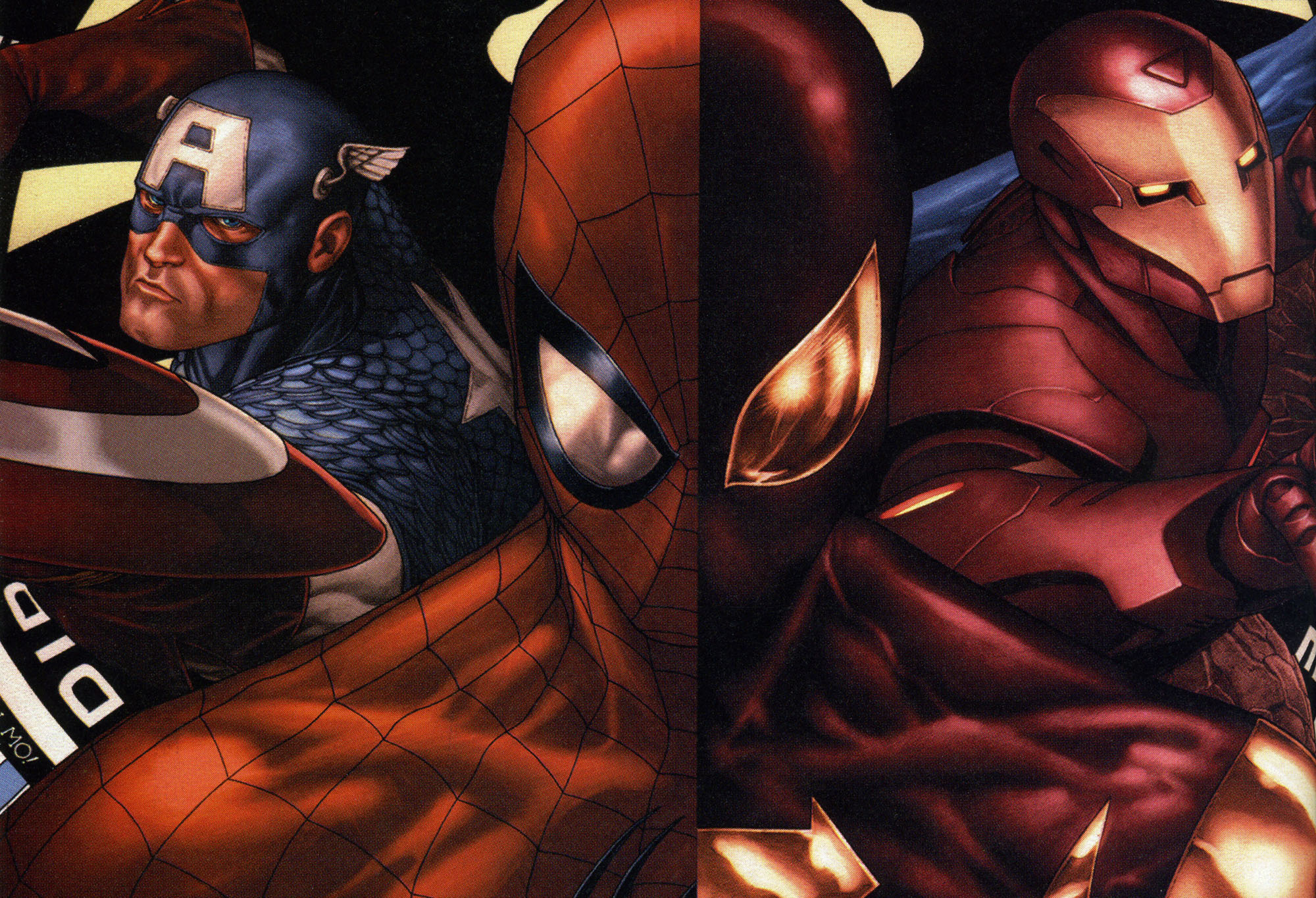
It's believed that Spider-Man may show up in Captain America: Civil War, since Spider-Man was a major character in that storyline. Though I don't think Peter Parker can reveal his identity to the world in the character's first MCU appearance. Peter revealing he was Spider-Man was impactful because the character had so much history in the comics leading up to the reveal.  However, it's not a bad place to bring Spider-Man. I assume this Peter Parker will have only been Spider-Man for a short period. He's still learning the ropes- or the webs- and he'll be caught between two giant figures- Tony Stark/Iron Man and Steve Rogers/Captain America. He'll have to decide who he wants to side with- or maybe he'll choose further independence rather than any political ideology. Then again, his role in the film may only be a cameo of sorts.


I know many people want Miles Morales to be Spider-Man in the MCU. Miles became Spider-Man after Peter Parker's death in the Ultimate Marvel Universe. I haven't read any of the comics in which Miles appears but many fans love him. Personally- whether they bring in Miles Morales or someone else- I feel Peter should be always be the first Spider-Man.  I understand the need for diversity in these kind of films- something Miles would bring, being Black Hispanic. Still, there's no reason Peter couldn't be African American. That way we can have the original Spider-Man while also having a major hero be non-Caucasian.

As major a deal as this is, it's still hard for me not to feel a tad cynical. This will be the second time Spider-Man has been rebooted and the third cinematic incarnation of the character in only 15. While it's good to keep things fresh- can you imagine going on Spider-Man 6 with Maguire still in the role?- we need a Spider-Man series that can continue beyond 2 installments.  Ideally this deal between Marvel and Sony will help Spider-Man thrive on screen again.  

Tuesday, 27 January 2015

Thoughts on the "Fantastic Four" Teaser Trailer


So, it's finally here: the first official trailer for Josh Trank's Fantastic Four reboot. With the exception of the notorious and unreleased 1994 version, 20th Century Fox first brought Marvel's First Family to screens with 2005's Fantastic Four and then with the sequel, 2007's Fantastic Four: Rise of the Silver Surfer, both directed by Tim Story. Both films were met with negative reactions from both critics and fans. Now the studio, along with Trank, the director of the found footage superhero film Chronicle (2012), is attempting to reignite the franchise, likely hoping for this to be the Batman Begins of the franchise.


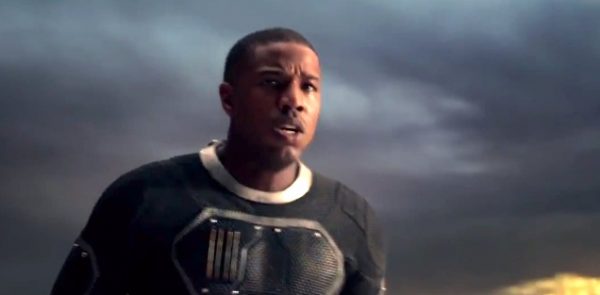
In an era where we knew the entire story of The Amazing Spider-Man before the films were even released, info on Fantastic Four has been sparse, and the production incredibly secretive. Principal photography on the film finished without any set photos of the actors in costume. It was only yesterday when we first got a picture of Michael B. Jordan (who plays the Human Torch/Johnny Storm and who starred in Chronicle) in his costume. And now, with the film coming out in August, we finally get our first trailer. August is still months away but it's rare it's taken this long for a superhero/franchise film to debut a trailer. Not that I'm complaining. I'm thankful we haven't been bombarded Amazing Spider-Man-style with too much marketing. I would keep as much info as possible close to the chest.


Trank and his film has had an uphill battle for some time now. Many fans have a vendetta against the film, trashing it every chance they get. This is due to comments from the cast which suggest the film is going to take departures from the source material, most notably in regards to the Fantastic Four's main adversary. Toby Kebbell (Koba in Dawn of the Planet of the Apes) takes the role of Dr. Doom in this film.  Kebbell said the character- who in the comics is the leader of the fictional country Lavernia- will be an "anti-social programmer," whom on blogging sites is known as "Doom." This information on Dr. Doom's new origin caused controversy. And rumours about back stage trouble between Trank and the studios added fuel to the fire that the film would be a complete misfire.


With the teaser finally released, I feel the tide may be shifting slightly, even though there's still  skepticism about the film. I know many want the Fantastic Four film rights to go back to Marvel so they can put them in the Marvel Cinematic Universe. I understand that desire- and admittedly it'd be cool to see the Fantastic Four interact with Rocket Raccoon- but I already know what a Fantastic Four film made by Marvel Studios would look and feel like. I'm more attracted to the idea of a Fantastic Four movie that exists outside of the Marvel Studios formula.


I would agree with anyone who said the Fantastic Four aren't inherently dark characters. Aside from the tragedy of Ben Grimm being stuck as a giant rock monster they are, in many ways, the most light hearted heroes in the Marvel universe.  The trailer have a more somber tone than what people would expect. I do hope this isn't going to be another Man of Steel. I like Zack Snyder's Superman reimagining more than others but I do consider it too oppressively serious.

That being said, I hesitate to fall back on "It's ripping off The Dark Knight," "It's trying to be too realistic," or using words like "dour," "grim." and gritty." I don't want to label the film and pretend it can only be one type of film. I like to think Trank will blend multiple tones instead of being monotone. What I personally inferred from the teaser is the film will have a similar tone to Bryan Singer's X-Men films- also produced by Fox. I see Trank's vision as low key and less colourful but still having humour and some exciting action sequences. The teaser is somber but I don't envision the film as "gritty" or the characters as "brooding."


In the trailer we get our first glimpse at the new iterations of the foursome. Miles Teller plays Reed Richards. Reed is typically the dad figure of the group- with Sue Storm as the mother and Ben and Johnny being the squabbling children. In this version the filmmakers are clearly going for a younger version of Reed- more of an eager young scientist than a established family man. Supposedly this version of Reed will be close to the Ultimate universe version of the character.


Kate Mara plays Sue, Johnny's sister. Much has been made of the fact that Johnny is African American in this version, and Sue and Johnny are said to be adopted in this film. Fans have taken issue with Sue and Johnny not being blood relatives, an important aspect of their relationship. I understand that criticism but I don't feel making the two adopted is an unreasonable change. What's most important- to me at least- is Mara and Jordan having strong chemistry That, and the script providing material that allows them to create a believable and emotionally tangible relationship.


The most unusual casting is Jamie Bell as Ben/The Thing. Bell looks a more muscular in the trailer but his previous roles don't suggest large similarities with Ben. However, Bell is a fine actor and I'm looking forward to what he brings to the role.


\

Coming back to Jordan, I think he has the right blend of cockiness and charisma to pull off Johnny.


This teaser is more about mood than it is about telling us what the plot/story is. And most of the superhero shenanigans are kept in the background. Moreover, costume-wise, the film is foregoing the traditional blue suits with the 4 emblems and going down the Singer X-Men route with plain black. There's also more a sci-fi vibe to the teaser than a superhero one, which I'm not against, considering Fantastic Four comics always leaned towards the sci-fi.


I am a little skeptical about them doing another origin story. As with The Amazing Spider-Man the film may be locked in to the constraints of being a set-up film. Ideally, Trank has transcended the mechanics of the origin story and craft something more than a simple origin story.  


Not being as passionate about the Fantastic Four as others, maybe I'm the real audience for this film. The best case scenario for Fox is if it can win over fans and non fans alike. We'll see how things turn out on August 7, when Fantastic Four will finally be seen by audiences.

Thursday, 15 January 2015

My Musings on the 2015 Oscar Nominations


It's the day that causes both joy and rage in the hearts of cinephiles around the world. Yes, it's Oscar nomination day. As to expected, there were sure things, glaring omissions, and some pleasant surprises. But this is also one of the Academy's most controversial years. The big snub everyone is talking about is the almost complete shutout of Ava DuVernay's Selma, the film about Martin Luther King, Jr. and his fight for the right for African Americans to vote. Selma did manage a Best Picture nomination, as well as Best Original Song, David Oyelowo's acclaimed performance as King did not make it in to the Best Actor race, and DuVernay did not receive a Best Director nomination. If she had gotten the nomination she would've been the first African American woman to be nominated in the category. I haven't seen Selma so I can't give my opinion on the film but it is a shame that a film which is so relevant to America right now doesn't have more of a presence in the nominations. And the fact that all the acting nominees are white is a big step backwards after last year's most diverse line up.  


The Best Supporting Actor category didn't offer any surprises. The nominees are Robert Duvall for The Judge, Ethan Hawke for Boyhood, Edward Norton for Birdman, Mark Ruffalo for Foxcatcher and J.K. Simmons for Whiplash. Hawke has grown on me over the years and Linklater has gotten what may be the best performance from him in Boyhood. Ruffalo continues to be an underrated actor and I'd love to see him win one day but I think Simmons is a lock for the win. His performance as the drill-sergeant-like music instructor Terence Fletcher is terrifying, pathetic, and compelling.


The nominees for Best Supporting Actress are: Patricia Arquette, Boyhood, Laura Dern, Wild, Keira Knightley, The Imitation Game, Emma Stone, Birdman, and Meryl Streep, Into The Woods. Admittedly, I don't bang the drum for Emma Stone like others do. I was hoping she'd be left out. However, she's been a lock for a nomination for a while. Though to be fair, she is good in the film. Canada's own Jean-Marc Vallee has for the second consecutive year directed two actors to lead and supporting nominations. Last year his film Dallas Buyers' Club garnered nominations and subsequent wins for Matthew McConaughey and Jared Leto for Best Actor and Best Supporting Actor, respectively. His follow up film Wild not only got Dern an unexpected nomination but Witherspoon is also nominated for Best Actress. Streep is here because she's Streep. 

As with Supporting Actor this category is already sown up by this point. Arquette is the frontrunner and will walk away with the Oscar. She played the part of Olivia Evans over 12 years As with everything about Linklater's Boyhood, this provides a rare authenticity to her performance. But putting aside Boyhood's narrative conceit, Arquette gives a lived in and emotionally honest performance. And like Simmons Arquette has a hard working and reliable actor for many years. I thin many feel she's due for Oscar's recognition.


In Best Actress we have: Marion Cotillard, Two Days, One Night, Felicity Jones, The Theory of Everything, Julianne Moore, Still Alice,  Rosamund Pike, Gone Girl, and Reese Witherspoon, Wild. It's great to see Pike nominated here. There was a question of whether her role as Amy Dunne was too unlikable and evil to get a nomination but it's a challenging role and Pike deserves acknowledgement for pulling it off.. Cotillard sneaked in this year, after getting boatloads of for her performance in both this film and The Immigrant. I think pundits were expecting Amy Adams to get in for Tim Burton's Big Eyes but Cotillard took that spot. It appears it's a "due" year for Moore. She's received five Oscar nominations- including today's- but has never won. In Still Alice, Moore plays a woman who's diagnosed with Alzheimer's. It feels like not many people outside the critic community has seen  or heard about the film. But the role sounds like the type that wins actors Oscars. If Witherspoon hadn't won already for 2005's Walk The Line, she'd be more of a threat. But I think this is Moore's year.


For Best Actor it's: Steve Carell, Foxcatcher, Bradley Cooper, American Sniper, Benedict Cumberbatch, The Imitation Game, Michael Keaton, Birdman, and Eddie Redmayne, The Theory of Everything. Cooper was a big surprise, upsetting Jake Gyllenhaal for Nightcrawler and the aforementioned David Oyelowo for Selma. I'm disappointed that Gyllenhaal didn't get nominated. His performance as Lou Bloom- a psychopathic cameraman who becomes obsessed with documenting grisly crimes, is a career best from him. While The Theory of Everything was certainly a conventional biopic I thought Redmayne gave a convincing performance as Stephen Hawking. Some expected Carell to get shut-out but his against-type performance as Olympic wrestling coach John Du Pont deservedly made the cut. But his role is somewhat a supporting role, which may hurt his chances at winning. I predict Keaton will win. He's the comeback story of the year, playing an actor who's striving for a comeback. Keaton has been one of our most underrated actors his entire career. The Oscar will be a bittersweet reward for both Birdman and decades of strong work It also helps that Birdman is one of the most acclaimed films of 2014.


The five Best Director nominees are; Wes Anderson, The Grand Budapest Hotel, Alejandro G. Inarritu, Birdman, Richard Linklater, Boyhood, Bennett Miller, Foxcatcher. and Morten Tyldum, The Imitation Game. The Best Picture nominees are: American Sniper, Birdman, Boyhood, The Grand Budapest Hotel, The Imitation Game, Selma, The Theory of Everything, and Whiplash. Anderson and Linklater- two of the finest American directors of the past twenty years- received their first career nominations for Best Director, so congratulations to these talented guys. Miller is the only nominee in the Best Director category whose film wasn't nominated for Best Picture. It's saddening that such a rich and intelligent work such as Foxcatcher wasn't nominated for Best Picture. I know many hate Inarritu and feel he's a pretentious fraud and Birdman is heavy-handed and empty- but I loved the experience of watching that film and am keen to see it again. Tyldum's direction in The Imitation Game is decent but I wouldn't his work above Whiplash's Damien Chazelle or Inherent Vice's Paul Thomas Anderson. And again, it would have been amazing for DuVerney to be included.


I'm happy my two top two favourite films of 2014, The Grand Budapest Hotel and Whiplash are Best Picture nominees but Boyhood and its director appear to be the frontrunners. The Academy loves a good narrative to go along with their winners and Boyhood has the most daring and incredible narrative of all this year's nominees. Shot over 12 years, showing one actor- Ellar Coltrane- age from 6 to 18, Boyhood was a passion project for Linklater, who also made the Before Trilogy (Before Sunrise, Before Sunset, Before Midnight). Those films explored the relationship between Jesse (Ethan Hawke) and Celine (Julie Delpy) over nearly twenty years. Linklater didn't initially plan to make the latter two films of that series but he had a clear vision for Boyhood from the outset. The resulting film is the most critically adored film of the year. If it wins Best Picture/Best Director then it's something critics and the academy can actually agree on.


In Original Screenplay, I'll go with Birdman and in adapted I'll say Whiplash (adapted from Chazelle's short film)

Like many, I'm disheartened The Lego Movie wasn't nominated for Best Animated feature. That's a truly joyous and inventive film. In Best Visual Effects, I think Dawn of the Planet of the Apes takes it due to the outstanding motion capture work. In Cinematography, Roger Deakins may get snubbed again for his work in Angelina Jolie's Unbroken. Emmanuel Lubezki won last year for Alfonso Cuaron's Gravity and may nab a repeat win for Birdman and it's "one take" camera work. CitizenFour, Laura Poitras' documentary about NSA whistleblower Edward Snowden, is the only nominated documentary I've seen. For me, it's a sharp character study of Snowden as well as film about the big issues of privacy and government spying. I'd like to see it win. 

So, that's it for now. The 87th Academy Awards will be held on February 22nd. See you there.