Showing posts with label On Her Majesty's Secret Service. Show all posts

Friday, 2 October 2015

My Top Ten James Bond Themes


MI0001067601.jpg (400×396)


A major aspect of the James Bond tradition is the theme song. Over the past 50 odd years artists such as Paul McCartney, Madonna, Shirley Bassey, Tina Turner, and- for the previous film, Skyfall- Adele, have contributed to this tradition. The latest artist to perform the theme tune for a Bond film- this November's Spectre- is Sam Smith. Last week, Smith's song- entitled "Writing's on the Wall"- was released to a mixed reception. I've only listened to the song once and I feel it doesn't have the invigorating power as "Skyfall". I hope over time it does grow on me; hearing it in a theatre over the main titles will likely add a much needed component.

But now I want to take a look back at the previous theme tunes and discuss my top ten favourite amongst them. This is purely a personal preference list rather than an attempt at objectively ranking the songs. Warning: spoilers for certain films will follow.

594797_1292001922056_full.jpg (1280×720)

10. "The World is Not Enough"- Garbage

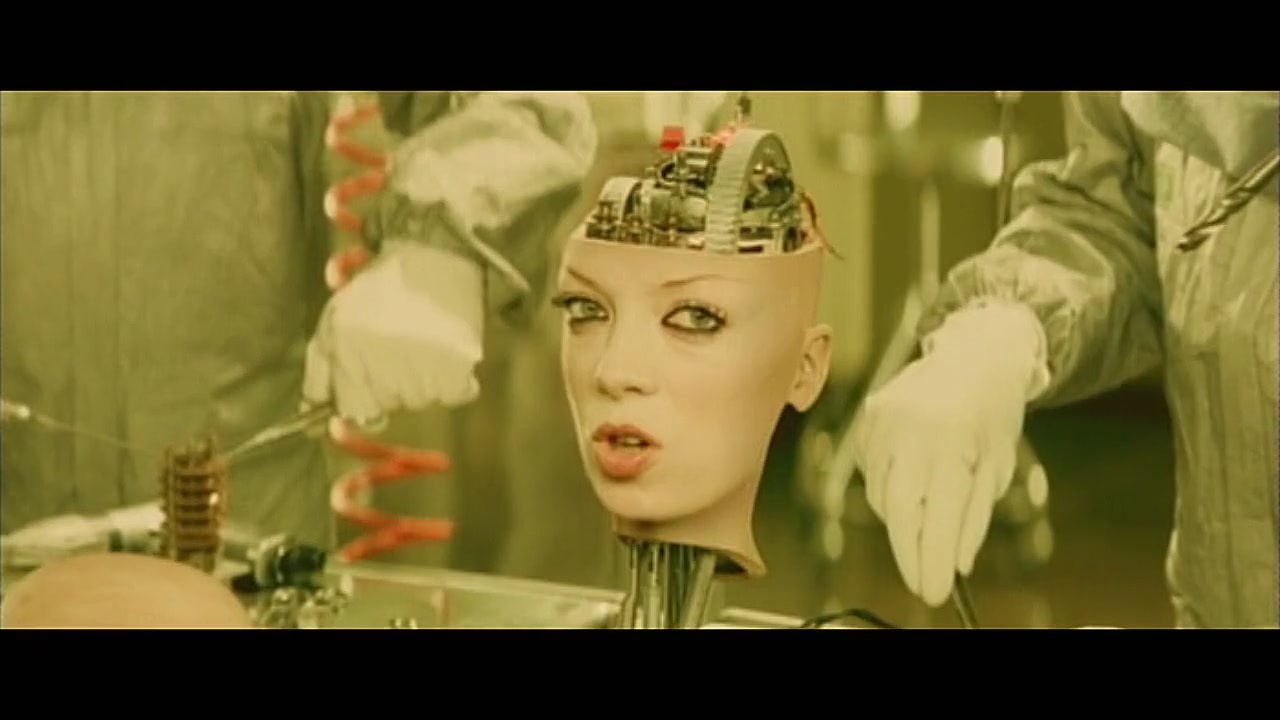
An easy joke to make about The World is Not Enough's theme song- sung by Garbage lead singer Shirley Manson- is it's garbage. For me, I enjoy this song's ominous passion- particularly when coupled with it's sci-fi/almost-apocalyptic music video. In the video a robot- played by Manson- kills the real Manson, takes her place at a concert and  kills everyone with a bomb concealed in its body. Also of note: the song appears to be from he perspective of Elektra King (Sophie Marceau)- making this the only theme song to be told from the villain's perspective. 


duran_duran_a_view_to_a_kill_1985_the80sman-e1358209196268.jpg (485×318)

9. "A View to a Kill"- Duran Duran

The story goes that at a party Duran Duran bassist John Taylor came up to Bond producer Albert R. "Cubby" Broccoli and drunkenly asked him when they'd get someone good again to sing a Bond theme. This eventually led to the band and  long time Bond composer John Barry writing the theme song together. At the time "A View to a Kill" was the most high energy Bond theme since "The Man With the Golden Gun." It has a certain goofy appeal- talking about dancing in to a fire- and some vivid imagery- "crystal tears, fall as snowflakes on your body." The song would have been a great way to usher in a new actor as Bond but A View to a Kill has a 58 year old Roger Moore (actually, a stunt double) surf-boarding to the Beach Boys' "California Girls." Still, this is one of the most fun Bond themes in my opinion.


tina_08.jpg (161×203)

8. "Goldeneye"- Tina Turner

To begin the Pierce Brosnan era of the Bond franchise- and the return of the franchise after a six year hiatus- the Bond producers enlisted the vocals of a legend for Goldeneye's theme song- Tina Turner. Turner is only a couple of years younger than Shirley Bassey (the only artist to perform more than one Bond theme) and the spirit of Bassey is felt throughout the song. Written by U2's Bono and the Edge, the song is one of several Bond songs about Bond himself- or at least about one woman's perspective of him. Turner is the woman in the shadows, feeling betrayed by Bond and wanting revenge. The song feels classic yet works as an introduction to a new age of Bond.

maxresdefault.jpg (1280×720)

7. "On Her Majesty's Secret Service"- John Barry

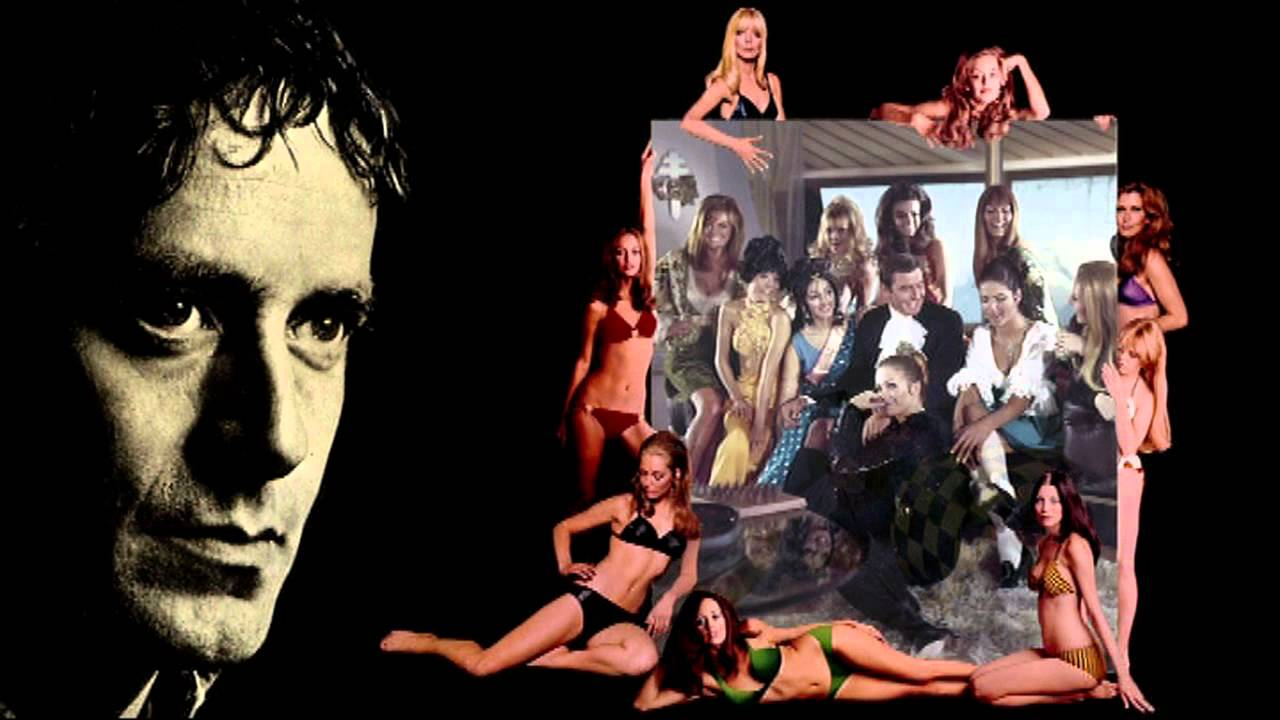
The only Bond theme to be purely instrumental- aside from Monty Norman's "James Bond Theme"- John Barry's theme for On Her Majesty's Secret Service encompasses the epic sweep and dramatic energy of the film that redefined the Bond mythology (Bond gets married and then his wife is murdered by his arch-nemesis Blofeld). It's dark, exciting and quintessentially Bond. Moreover, Barry's overall score is arguably his best work in the entire series. And Barry's theme is posed to make to a comeback-a version of the theme is heard in the latter part of the second Spectre trailer. Also of note: David Arnold (composer of Casino Royale and several other Bond films) did a fantastic remix of the theme with the Propellerheads.

maxresdefault.jpg (1920×1080)

6. "Diamonds Are Forever"- Shirley Bassey

Along with the return of Sean Connery to the franchise (after George Lazenby's single outing as Bond in On Her Majesty's Secret Service), Shirley Bassey came back after seven years to record her second Bond theme (her first being "Goldfinger.") This song has an undertone of tragedy- it's about a woman who's been spurned by love and finds solace in diamonds- they "won't leave in the night." "I don't need love,/ For what good will love do me?" she asks; "Diamonds never lie to me." Love is finite but diamonds are truly forever. It's tragic, with a tinge of anger and defiance. The song doesn't fit Diamonds are Forever's campy tone but on its own terms it's the most emotionally haunting of all Bond songs.


latest (600×600)

5. "Skyfall"- Adele

After Casino Royale's rock-infused "You Know My Name" and Quantum of Solace's Alicia Keys/Jack White sing-off "Another Way to Die," the series went down a more classical route with it's theme for Skyfall. "Skyfall" begins with "This is the end," seemingly commenting on Bond's (Daniel Craig) death in the pre-title sequence; It even mentions drowning (which is what almost happens to Bond). In the film Skyfall is the name of Bond's childhood home; but in the song the sky is literally falling- with two people having to face it together- which ties in to Bond and M (Judi Dench) making a final stand at Skyfall. This is one of the best examples of tying the film's themes in to the main song. The song is also just plain excellent: moody, soulful, and ultimately triumphant.

Lulu - The Man With The Golden Gun (single).jpg (350×350)


4. "The Man with the Golden Gun"- Lulu

What I love about this song is how upbeat it is considering Lulu (who was in 1967's To Sir, With Love with Sidney Poitier and also sang the film's theme song) is singing about a ruthless hitman- Francisco Scaramanga (the late Christopher Lee). My favourite part of the song is how Lulu digs in the word "kill," especially in the second-last verse. Like "A View to a Kill," there's not much depth to the song but I find this song giddy fun.
wings_live_and_let_die.jpg (500×509)


3. Live and Let Die- Paul McCartney and Wings

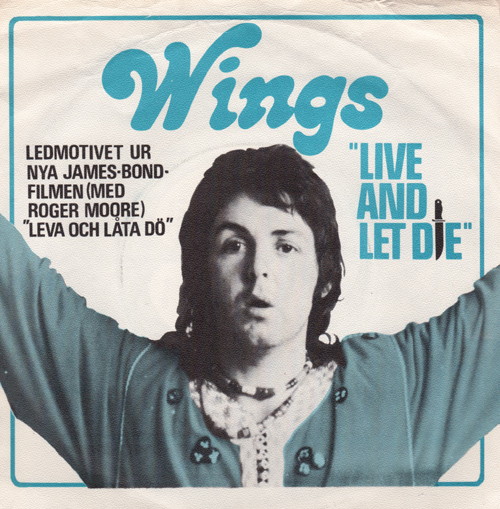
I think "Live and Let Die" is the most musically ambitious and unique of the Bond themes. It begins softly- with Paul McCartney telling someone that "When you were young/ And your heart was an open book/ You used to say, Live and yet live." McCartney then says if the world gets too much for you, say "Live and let die," a much more sinister proverb. The song then shifts in to an almost satanic guitar riff (which matches the supernatural theme of the story). And in the actual film, the head of the woman in the title sequence turns in to a flaming skull. "Live and Let Die" was the first Bond theme to be nominated for an academy award, to be followed several years later by Carly Simon's "Nobody it Better" from The Spy Who Loved Me. "Live and Let Die" was a new sound for a new era of Bond (this was Roger Moore's debut in the role). While the Bond songs would become ballad-y in the late 70s/early 80s, "Live and Let Die" was an energy charged message that Bond was here to stay.    


skyfall-007-soundtrack-adele-shirley-bassey.jpg (400×384)


2. "Goldfinger"- Shirley Bassey

The gold-standard for all Bond songs to come. Like most everything in Goldfinger, it's theme defined what a Bond theme. This was Bassey's first time recording a theme (she'd come back for the aforementioned Diamonds are Forever and finally for Moonraker), and her vocals are brassy (matching Barry's score), seductive and overpowering. The song serves as a warning about the film's villain: "Pretty girl, beware of his heart of gold/ This heart is cold." The song has a wonderfully sinister vibe and reaches an almost epic climax with Bassey's drawn out final note. Also of note: singer/actor Anthony Newley (who co-wrote the song with Barry and Leslie Bricusse) recorded a demo of the song before Bassey did her version. It's an interesting and creepy take on the iconic song: https://www.youtube.com/watch?v=1pyJd_rFrlo

51027vGLJUL.jpg (500×500)

1. "You Know My Name"- Chris Cornell

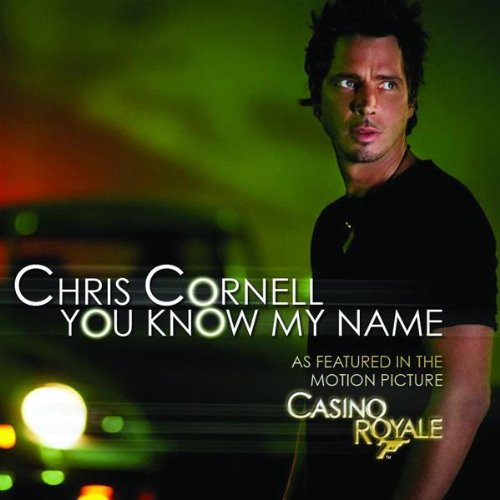
"You Know My Name" is a perfect song title for the film that reinvented of the character of James Bond. Chris Cornell's gnarled and forceful vocals ushered in Daniel Craig's tenure as Bond. We had a new Bond and a new continuity but we still knew who this guy was- we knew his name. The song is told from Bond's perspective- we're asked "If you take a life do you know what you'll give?"- which reflects the pre-title sequence in which Bond earns his 00 status by killing two men. "The coldest blood runs through my veins," we're told, reminding us how brutal the character of Bond can be. The song establishes the arc of the film- Bond in his first mission, having to be willing to die to do this job, the odds (the poker game, Vesper Lynd) will betray him. The song's grit and slight tinge of melancholy sets the stage for what is my favourite Bond film. 

Those are my top ten Bond themes. Tell me, what are your favourites and what are your thoughts on Sam Smith's addition to the Bond theme canon.

Tuesday, 2 October 2012

50 Years of Bond: "On Her Majesty's Secret Service"


This year marks the 50th anniversary of the James Bond franchise, and the 23rd Bond movie, Skyfall, is set to hit theatres this November. I thought now was a pretty good time to revisit several of the Bond films. I'll probably not cover every film but I'll discuss the most important films in the franchise as well as my personal favourites, which do overlap frequently. Now it's time to look at what's arguably the most controversial Bond film in the series' history: On Her Majesty's Secret Service.

Note: This is a revised version of a review I did a little over a year ago. The original review can be found here.

On Her Majesty's Secret Service is a paradoxical Bond film in that while the film, and especially its lead actor, have been overshadowed in the past by other Bond films, the film is actually one of the best in the series. It's a film that combines the kind of spectacle and intense action one would want from a Bond film, while still telling a shockingly poignant story about James Bond actually falling in love and having to confront the idea of quitting the British Secret Service. It's the most grounded Bond film since From Russia With Love and the closest in spirit to the original Ian Fleming novels since that film.

After Sean Connery announced his retirement from the role while filming You Only Live Twice, the Bond producers, Albert R. Broccoli and Harry Saltzman, made two signficent changes to the Bond series-one by nescessity and one by choice. The nescesarry change, of course, was to find another actor to play the iconic superspy, which was the most daunting task they had to face since casting Bond in the first place The change they made by choice was to ground the series back in to a semi-plausiable reality-the previous film had taken the series all the way in to a hollowed-out volcano. This would be a pattern as the series continued-when things became too fantastical, the series would have to be reigned in and find a comfortable middle ground between escapism and reality-which this film does very well.

When Sean Connery retired from the role, Broccoli and Saltzman made a surprising choice, an Austrailian model with no acting experience outside of commericials, George Lazenby. They even make a pretty big deal out of it in the pre-title sequence, not showing his face until he introduces himself to the woman who'll change his life, Tracy di Vicenzo (Diana Rigg). Bond stops her from drowning herself in the ocean. They're attacked by some unknown thugs, which Bond dispatches. As Tracy gets away, Bond breaks the fourth wall and says "This never happened to the other fella." This was a way of "breaking the ice," so to speak and shows that changing actors for the first time was deemed to require some self-consciousness on the film's part. Even the title sequence shows images from the previous five films. The theme for the film, orchestrated by John Barry, is the first without lyrics and this is the first title-sequence since From Russia With Love that's just instrumental. The theme really captures the propulsive energy of the film as well as its epic nature.

I think the reason why On Her Majesty's Secret Service is still not as widely embraced as Goldfinger is probably due to the controversy regarding its Lazenby- and the fact that he  only played it once plays in to the notion that he was pretty horrible as Bond. Honestly, I like Lazenby, I even like him more than Roger Moore. Lazenby doesn't have the presence of Connery but he feels more real to me than the Connery of the last two Bond films. He's more posh and refined than Connery's Bond, who had a certain roughness about him. Like Moore after him, Lazenby is very much the English gentleman. Nevertheless, physically he's believable as someone who can handle himself in a fight and it's this aspect of his performance that is usually praised. There's a debate about whether Connery could've pulled off the vulnerbility and the romantic side of this Bond. Honestly, I'd be interested to see what Connery would've done in this film-it could've been his best performance in the role. But to be fair, this isn't a Connery Bond film-it's not even a Lazenby Bond film-it's more like an Ian Fleming Bond film.

The plot of the film deals with Bond's determination to take down the head of SPECTRE, Ernest Stravo Blofeld (Telly Salvalas). Marc-Ange Draco (Gabriele Ferzetti), head of the largest crime syndicate in Europe, offers Bond information on Blofeld's location in exchange for Bond marrying his daughter Tracy, the same woman Bond rescued in the pre-title sequence. Bond is at first hesitant about wooing Tracy, saying he prefers the bachelor life. It's a nice little moment of self-consciousness for Bond, one of those moments that makes Bond feel real to us. Eventually him and Tracy do start to fall in love and we get a lovely montage- not seen in a Bond film until now- of Bond and Tracy spending time together, set to Louis Armstrong's touching song "We Have All the Time in the World." The montage is without dialogue but with simple images and music the film captures the joy and poignancy of falling in love for the first time. It was actually quite a bold decision to stay true to the love story element of the novel, particularly since audiences were used to Bond being a womanizer without strong emotional attachments to the women he slept with.

But before things get too "mushy," the film shifts directions from love story to spy story in the middle section of the film, which involves Bond going uncover as geneologist Hilary Bray at Blofeld's clinical research insitute in the Alps. Unfortunately, in these scenes Lazenby is dubbed by George Baker, who plays the real Bray and I think it distracts a little from Lazenby's performance. Blofeld wants to claim the title of 'Comte Balthazar de Bleuchamp,' giving Bond the perfect in. Bond soon discovers Blofeld is brainwashing ten young women to dispurse bacteriological warfare agents in to the world. Blofeld, in typical Blofeld fashion, will hold the world ransom- and in typical Bond villain fashion explains the plot to Bond even when he figures out Bray is Bond. It's a fun little continuity error that Blofeld only seems to know Bray is Bond after he slips up a geneological detail even though Bond and Blofeld met face to face in You Only Live Twice. This may be due to the faithfulness of On Her Majesty's Secret Service to the novel, which comes before You Only Live Twice in the novel chronology. One could also chalk this up to Bond getting plastic surgery because his face had become too well known to his enemies, which was the original idea to explain why Bond know longer looking like Sean Connery.

Salvalas is sometimes criticized as playing Blofeld like a mob boss but I like his performance and feel he gives the best performance as Blofeld out of the three actors who physically played him the official series, the other two being Donald Pleasence and Charles Gray. His Blofeld, like Lazenby's Bond, is more grounded than previous incarnations. Blofeld is no longer just a hand stroking a cat, his face unseen, nor is he the Dr. Evil-ish figure from You Only Live Twice. He's determined and subtly sinister, and I wish Salvalas had a few more dialogue scenes. I also feel the confrontation between Bond and Blofeld in this film is much more satisfying in this film than it was in You Only Live Twice. Here's there more of a dynamic between them being face to face- a genuine feeling these two are arch-enemiies

As mentioned earlier, when Bond goes to Blofeld's clinic, the love story is put on hold- only for Tracy to rescue Bond when he escapes the clinic and is being chased by Blofeld and his men. They share a wonderful scene in a barn where Bond is at his most vulnerable. He tells Tracy he'll never find another girl like her and asks her to marry him. The structure of the film is the one thing that always feels off to me. The shift from the emotional story to the second act of the film is perhaps too rushed. I would have liked a final scene between Bond and Tracy before he left on the mission and maybe a little bit more of Tracy back home as well as a lead up to when she meets Bond yet again. Nevertheless I feel the film does a good love of giving equal weight to both the spy and love story, and the tragic ending brings them completely together. I like the idea of Bond being saved by Tracy instead of the other way around. It puts a nice twist on the whole "damsel in distress" situation when Bond saves Tracy from Blofeld's clinic.  It's Bond's way of saying "thanks" and returning the favour in a pretty explosive fashion.

Diana Rigg is arguably the best Bond girl in the series though I think I still love Honor Blackman and Shirley Eaton in Goldfinger more. Nevertheless, until Vesper Lynd in Casino Royale nearly forty years later, I think Tracy is the most complicated and complex Bond Woman in the series. She is strong willed yet she still has the desire to die. She is independent but still needs someone in her life to love her. Ultimately, Bond is able to give her a future, as she says at the end of the film. Rigg brings an intelligent and self-awareness to the role-she's a real person and one that Bond feels the desire to understand and to help.

After Bond and Draco save Tracy from Blofeld's clinic and foil Blofeld's plan once again, Bond and Tracy do get married. As they stop their car to clear off some of the flowers, Blofeld comes driving by with his henchwoman Irma Bunt (Ilse Steppat) firing a machine gun at the car. Bond gets in the car, discovering Tracy has been shot and killed. A police officer drives up and in Bond tells him Tracy is just resting and that they have all the time in the world. Lazenby's speech is all done in one take and I think this is his best moment on screen. Heartbroken and in shock, unable to truly say what he must feel, he pretends like everything is okay. As he puts his head in her dress and sobs, it's devastating and shows real courage by the filmmakers to stay true to Fleming's vision of a world where Bond constantly has his heart broken but remains a survivor in the only world he'll probably ever know, the world of a spy, where true happiness can be taken away in an instance. In a weird musical shift, the orchestratal version of "We Have All the Time in the World" sag ways in to the Bond theme. I think it would've been much better to just stay with the love theme, keeping true to what this film is about, rather than saying "Bond will be back!" with the Bond theme.

Peter Hunt, who had been a editor on the previous Bond films, sat in to the director's chair this time and I feel his work as an editor aided him very well in putting together the action sequences with his editor John Glen, who would also go on to direct all the Bond films in the 1980s. The action is intense and fast but still easy to follow geographically. The "zoom ins" when Bond throws his punches in the pre-title sequence. I love that the last 45 minutes or so of this film feel like an extended suspense/action sequence, with occasional quieter moments. From the moment Bond escapes the clinic, there's a propulsiveness that we haven't quite seen since the final act of From Russia With Love or Goldfinger.  When the clinic is attacked, it's able to take the climax of the previous Bond film, in the volcano, and put it on a smaller yet still invigorating scale. When the Bond theme plays and Bond is sliding on his stomach down ice, firing his machine gun, it's a pretty cool moment. The blobshed show-down between Bond and Blofeld is edited in a fashion that makes Blofeld getting his neck stuck in a branch a great payoff.

Lazenby supposedly felt Bond would not survive in to the seventies so he quit the role and as a result I don't think he's ever transcended the label of "that guy who only did one movie," or "being an answer to a trivia question" though he undeniably has admirers. I count myself as one. If he had played Bond a few more times he may have found his groove and become a more respected Bond. When he decided to quit being Bond, I think it made the producers want to ignore this film as much as possible for the next go around. Connery returned for the next film, Diamonds are Forever (1971), which is really bad follow-up to On Her Majesty's Secret Service, being much sillier and campier, whereas with Lazenby, it could've been a strong revenge story for Bond- and it's only until The Spy Who Loved Me (1977), where Tracy is actually mentioned. It's a shame that the series ditched much of the seriousness of this entry and eventually became much too goofy in the next film and several of the Moore films. Still, On Her Majesty's Secret Service is a poignant, funny, exciting, and ultimately tragic film which gives us what feels like an authentic human being in James Bond. It's not just a great Bond film, it's a great film on its own terms as well.

P.S. That's it for the 60s Bond era. From now on, I won't be going through all the Bond films but focusing on specific ones throughout the rest of the series history.