Showing posts with label Billy Wilder. Show all posts

Friday, 3 February 2023

My Favourite Best Picture Winners


Spoilers Below 

In my last post I wrote about 10 films which didn't get nominated for Best Picture at the Oscars. Now, I want to discuss my favourite winners in this category, ones where I think the Academy got it (pretty much) right. The Oscars are always a fascinating snapshot in time. They're reflective of what people liked in the moment more than what lasts. But these films certainly have. So, let's get on with the list.


Casablanca

The late Roger Ebert once wrote of Carol Reed's The Third Man, that more than any film he had seen it embodied the romance of going to the movies. I feel that way about Casablanca. From its witty and poignant script, to the intrigue, the romance and its heroic finale, Casablanca has everything. It's pretty much a perfect film, maybe the best film to come out of the golden age of Hollywood. Humphrey Bogart and Ingrid Bergman, even if they had never starred in anything else significant, would still be immortalizes forever as Rick Blaine and Ilsa Lund. Rick is the cynical cafe owner, Ilsa is the woman he loved and left him because she was secretly married to resistance leader Victor Lazlo, and whom walks back in to his life. Rick. who's in possession of stolen letters of transit, is the only one who can help Ilsa and Victor out of Casablanca. But will his torch for Ilsa stop him from doing so? Yes, we know he'll do the right thing but its how we get there that matters. 


Lawrence of Arabia

The king of al epic movies, only rivaled by The Lord of The Rings, if you count that as one movie. The reason I call Lawrence of Arabia such is it's a great character study as well as a technical marvel. You have movies like the Star Wars prequels which  are conceptually and technically impressive but character and story-wise needed some script refining. And then you have certain superhero films which have some great character stuff but are compromised by formula, weak spectacle and uninteresting direction- but with Lawrence of Arabia, neither the character work or the grand-scale filmmaking feel anything less than stellar.. Another thing thing that impresses about the film is how effectively it both romanticizes T.E Lawrence while also portraying him as a complex, sometimes terrifying figure whom the audience is free to interpret the character, the man, however they like. In the greatest screen debut in cinema history, Peter O'Toole is beautiful, almost feminine, giving a performance that combines grace and madness. This is a mythic and majestic film.


The Godfather and The Godfather Part II

The great epic of American cinema, and still the only time a film and its sequel have both won Best Picture. It's hard to imagine that feat ever being replicated. I guess it's cheating to list both Godfathers under one heading but they compliment each other so well and tell one sprawling story that it makes sense to list them side by side. Michael Corleone's (Al Pacino) transformation from war hero and the good son who didn't want to become part of the family business to ruthless mob boss who will murder his own brother for his act of betrayal is possibly cinema's greatest character arc. That Pacino didn't win for either is one of Oscar's greatest travesties. Michael's arc is complimented by Part II's showing of how his father Vito went from orphan in Sicily to Don in turn of the century New York. These flashback add to the sprawling nature of the narrative, with Marlon Brando and Robert De Niro both winning Oscars for their performance as the Don. 

Director Francis Ford Coppola and novelist Mario Puzo, working from Puzo's popular novel, took the gangster film and put it on a Shakespearean scale while creating a lived in world with authentic people. The films are operatic yet subtle and nuanced. They also transport us back in time to early 1900s New York, post war New York and late 1950s Havana, just before revolution. These are simply unrivaled feats of filmmaking from the Hollywood studio system.


The Silence of the Lambs

The last film to win the top five Oscars (Best Picture, Director, Actor, Actress, and Screenplay), and one that has only gotten better with age. While Anthony Hopkins is iconic as Dr. Hannibal Lecter, it's Jodie Foster as F.B.I trainee Clarice Sterling, on the trail of serial killer Buffalo Bill (Ted Levine) who gives this film its grounding and heart.  The film's director, the late Jonathan Demme, was a master of the close-up, using them to show the perspective of characters looking at each other. The film blends the gothic and realistic in such a way that we accept them both as existing in the same world. And again, it's Foster who grounds the whole thing.


The Apartment

The optimistic cynic, Billy Wilder, along with his longtime collaborator, I.A.L Diamond, crafted a perfect screenplay for The Apartment, the story of C.C. "Bud" Baxter, an office worker who lends his apartment to his superiors for their extramarital affair. It's already a difficult situation for Bud, having to spend nights out in the cold, getting him sick. Things get more complicated when he discovers his boss Jeff Sheldrake (Fred MacMurray) is having an affair with Elevator girl Fran Kubelik (Shirley MacLaine), the object of Bud's affection. All of this could be contrived but Wilder and Diamond's script, along with Wilder's direction, create believable characters whose actions make sense, even in a scenario such as this. It's established that this whole apartment lending situation started out with just one guy wanting to use Bud's apartment and then escalated to many men at the office wanting to use the apartment, with Bud using it to his advantage, being granted perks by the higher-ups. Bud is selling his soul but Lemmon is such a likable and sympathetic everyman that we aren't immediately offput by his actions. Bud's not a bad guy and we can see how we could end up in a predicament like this. 

I always feel that Wilder's dramas were very funny and his comedies very dark. The Apartment walks the line between comedy and drama so expertly that that it feels unbalanced. And like many other Wilder films, it ends on the perfect note.


No Country For Old Men

I just re-watched this and man does it hold up. This is a fantastic movie that's only gotten better with age. It's one of the perfect matches of source material (Cormac McCarthy's novel) and filmmakers (the Coen brothers). From their first film, Blood Simple (1984), the Coens have played around with genre conventions, creating films that both belong in their respective genres but also exist somewhat outside them. There's an offbeat quality to their work, with No Country For Old Men being populated by familiar types who are also different from anyone else we've encountered before. Hit man Anton Chigurh (Javier Bardem in an Oscar winning performance), with his weird haircut and pre-occupation with a coin toss- a flip of faith- is one of the most unusual villains in recent memory, genuinely terrifying whenever he shows up. Llewelyn Moss (Josh Brolin) is the "good old boy" who's smarter than we may at first realize, a character who would be a supporting player, killed off pretty early in another film but takes center stage here. And then there's Sheriff Ed Tom Bell (Tommy Lee Jones), who we assume is maybe going to be killed when he catches up to Chigurh, but narrowly misses him. 

The movie sets us a up for a showdown between Moss (Josh Brolin), who has stolen 2 million from a drug deal gone bad, and  Chigurh but Moss is killed offscreen,  and the final scene is Bell (Tommy Lee Jones) talks to his wife about two dreams he had- "Then I woke up" is the final line, cutting to black. There's no satisfying resolution to anything. It's a bleak but it fits the noir style, where there are no heroes or heroic endings. The villain gets away and the survivor, Bell, retires because he doesn't know how to deal with the new kind of evil he's seeing in the world now, though ultimately this kind of evil, the evil Chigurh represents, has been forever, with Chigurh being a devil/grim reaper figure, haunting the whole film


Amadeus 

Maybe it's my own feeling of mediocrity that makes Amadeus the most relatable film to be, but I think it's also a brilliant idea to tell the story of a great artist through the perspective of the bitter rival who wasn't as great. Peter Shaffer's play was the basis for Milos Foreman's glorious film, one of the best of the 80s, a decade that's not one of my favourite, despite some great films. F. Murray Abraham, received a Best Actor Oscar for his performance as the proud but jealous and old-fashioned Antonio Salieri, while Tom Hulce was nominated for his performance along Abraham for his mischievous performance as Wolfgang Amadeus Mozart. Mozart is childish but also serious when it comes to music. The fact that such an immature young man could be so talent enrages Salieri but he but he feels guilt for Mozart's death, believing he killed him.


On the Waterfront

If you were going to ask me what my favourite performance of all time is, I would say Marlon Brando's Oscar wining performance as Terry Malloy in Elia Kazan's On the Waterfront. This is Brando at the peak of his physical beauty and acting abilities. While A Streetcar Named Desire established his image, and The Godfather his most iconic, On the Waterfront is his most sensitive and tender work, masculine but feminine. Movies are time capsules that can keep an actor forever young in their prime, and that's what this film is for me when it comes to Brando. 

Of course, the film's director, Elia Kazan, was the ultimate actors' director, his films being defined by a rawer, more naturalistic style of acting, and the film is full of other superb performances, including Eva Marie Saint (who won Best Supporting Actress), Lee J. Cobb, Karl Malden and Rod Steiger When Kazan won an honorary Oscar in the late 90s (on of Oscar's most controversial moments), Martin Scorsese called Kazan a poetic realist, and you can see why just by looking at this film, which blends realism with stylish flourishes. 

The story is that of  Malloy, who testifies against the mob boss (Cobb) who runs the docks. Malloy has to decide between loyalty to this father figure and doing the right thing, which could lead to redemption for Malloy after being involved in the murder of another dock worker.


Rebecca

Hitchcock's first film in America, and the only Hitchcock film to win Best Picture (Hitchcock's other 1940 film Foreign Correspondent was also nominated) and on Hitchcock attributed more to producer David. O Selznick than himself. However, the Hitchcock is not absent in this entertaining gothic melodrama, base Daphne Du Maurier's splendid novel (one of my favourites), about a  unnamed woman (Joan Fontaine) who marries a rich widower, Max de Winter (Laurence Oliver), who former wife's presence still haunts his home of Manderley. Fontaine and Oliver were both nominated for their performances (Fontaine would win the next year for another Hitchcock film, Suspicion, with Cary . Grant) and Judith Anderson is sublimely creepy as Manderley's housemaid Mrs. Danvers, who still adores Rebecca. I wrote more about the film here: Davies in the Dark: The Essential Films: "Rebecca" (1940) (thenoirzone.blogspot.com)  

So, what are your favourite Best Picture winners? Comment and let me know. 

Tuesday, 3 May 2022

The Essential Films: "Sunset Boulevard" (1950)


A series of writings on films that I feel are essential for film lovers, coupled with films that are personal to me. Spoilers for those who haven't seen the film.

What happens to those whom Hollywood leaves behind? What happens when their star has faded and, for women, when they get older? Director Billy Wilder, who was born in Austria in 1906 but came to L.A. in 1933, always wondered what happened to the silent film stars who still lived in the mansions from the 1920s. This gave birth to the idea which became Sunset Boulevard, one of his greatest films, which delves in to the life of a silent movie star who still desires to be famous  

Wilder always railed against easy genre categorization in his films. The Apartment (1960) is a romantic comedy that's also a drama about adultery and selling your soul for a promotion. Double Indemnity (1944) is a film-noir about helping a woman murder her husband that's also an incredibly funny and occasionally warm story about male friendship; and Some Like It Hot (1959) is a 1920s set comedy about two men in drag being pursued by gangsters because they witnessed the St. Valentine's Day Massacre. Sunset Boulevard is his most daring tightrope act when it comes to genre and tone. It's a film noir, a dark comedy, a Hollywood satire, a gothic melodrama, and a tragedy. Film critic Richard Corliss called it "the definitive Hollywood horror film" and director John Landis also called it a murder mystery. .

Sunset Boulevard was Wilder's and writing partner Charles Brackett's 17th and final collaboration. Wilder ended the partnership due to a fight over a montage in the film though they ended up winning writing Oscars for the film. Wilder and Brackett began writing a script in 1948 but it didn't please either of them. To help with the script they hired D.M Marshman, Jr., a film critic for Life Magazine whose review for Wilder's The Emperor Waltz- co-written with Brackett- impressed them. Marshman came up with the idea of the main character being a gigolo to a silent film star. Wilder was afraid of the censors because it was an expose on Hollywood and dealt with the subject matter of an relationship between an younger man and an older woman. The script was actually submitted a few pages at the time. When they began shooting only one third of the script was completed.

The film aptly starts with a screenwriter having his own writing problems. Joe Gillis (William Holden) needs work and money. He's also got repo men on his tail for his car. While on the run from these men he hides his car in the garage of a mansion belonging to aging silent movie star Norma Desmond (Gloria Swanson). Joe goes in to the house and is mistaken for an undertaker (her monkey has died). When she discovers he's a screenwriter she asks his opinion on her script which will serve as her comeback vehicle (though she prefers to call it a return). While Joe's voice-over narration (more on that later) tells us the script isn't very good he needs the money so he gets Norma to hire him to work on the script. Norma also insists he lives in the mansion with her. Later Joe realizes she had romantic feelings for him. Out of disgust he leaves but comes back when he learns she's attempted suicide. He also eventually becomes Norma's gigolo.

Sunset Boulevard is  about desperation. Joe needs money and Norma is desperate to hold on to the fantasy she can stage a comeback and be relevant again. And you know what? I understand Norma's desperation to be famous and to be loved. It can be a poison that rots you inside and makes you bitter at what you can't have. You are so desperate for it you feel you are going insane. In Norma's case, she has. And that poison has not only rotted her inside but outside as well. Despite only being 50 she appears 20 years older. While Norma can appear as a grotesque and sexist caricature of an aging actress- and in some ways she is since she was written by two men in the 40s- she's also a deeply tragic as well as funny character. That's largely due to Swanson's performance, who gives a hellish and hilarious performance, one of the seminal screen performances of all time. 

Before Swanson was considered Wilder reached out to several other silent film actresses, including Mary Pickford, who didn't like the theme of a older woman in a relationship with a younger man. And Clara Bow declined because she wanted to stay retired. It was director George Cukor who suggested Swanson. This was a comeback role for Swanson who had, after her career waned in the 40s, quit movies and worked on stage, TV, and radio. Swanson was intrigued when she was offered the part but didn't want to do a screentest for Sunset Boulevard  since she had been such a big star. Cukor joked that he would shoot her if she didn't. 

Montgomery Clift was cast as Joe but dropped out supposedly because the role reminded him of his part in The Heiress (1949), where he played a man having a relationship with an older woman. But the the suspected real reason was him actually being in a relationship with an older women, singer Libby Holman. Clift didn't want people thinking Holman was like Norma so he gave up the role. It worked out pretty well for Holden, who became an A-List star after this performance, which also earned him an Oscar nomination. He lost to Jose Ferrer for Cyrano de Bergeac (1950) but would win several years later for another Wilder film, Stalag 17 (1953). I'm glad Holden got the part. Clift was a strong actor but I think  he was a little too serious for the wise-cracking Joe. Holden's much better with sarcasm and playing a likable jerk.

Coming back to Swanson, what's integral to her performance, beyond being grotesque, funny and tragic all at once, is how she contrasts with Holden. Holden  is giving a mostly naturalistic performance but Swanson is more theatrical in her gestures and facial expressions. This creates plenty of humour- Joe's sarcasm against Norma's non-ironic claim of "I am big. It's the pictures that got small." It also creates the feeling that Norma is always giving a performance never being completely in reality, and this just solidifying how's she losing her mind. I'm reminded of Vivien Leigh's performance in A Streetcar Named Desire (1951), where her theatrical style of acting juxtaposes with Marlon Brando's method acting. Blanche, like Norma, is mentally unbalanced and this style of acting, pitted against naturalistic acting, makes that clearer to the audience. 

There's a clear separation between Norma's world and the "real" world, which is how the film manages its different tones. The gothic horror and film-noir elements don't intrude when Joe's outside the mansion. Things always feel normal. Film historian Tom Stempel wrote about how the lighting (courtesy of cinematographer John F. Seitz) blends the two worlds of the film together.

"In both Double Indemnity and Sunset Boulevard, Seitz does something that has always impressed me. Both are films noir, and he finesses the fact that both are set in the sunniest of locales, Los Angeles... he brings together the light and the dark in the same film without any seams showing... he brings together the realistic lighting of Joe Gillis out in the real world with the gothic look of Norma Desmond's mansion. Again with no seams showing."

The contrast between the darkness of Norma's world and the brightness of L.A is important. Her world is the dark underbelly of Hollywood. I'd argue Joe is the bridge between the two worlds. If he's not completely destroyed by Hollywood he's at least on his way. He could become like Max Von Mayerling (Erich von Sroheim, playing a version of himself), a former silent film director and Norma's former first husband, now butler. He couldn't bare it when Norma left him so he turned his back on directing and became her servant. He even writes fake fan letters to her, feeding her delusions. Stroheim gives a drolly comic performance as Max but there's something haunted in his eyes. This is a man who has fallen very far and has had to watch his ex-wife descend in to madness. Through him we see that Norma wasn't always like this and he acts as a reminder of what Joe could become if he doesn't cut Norma out of his life completely.

Norma's opposite is Betty Schaefer (Nancy Olson), a script reader who once wished to be an actress. It didn't work out but unlike Norma she isn't bitter about not being famous. She sees the merit of working behind the scenes and wishes to be a screenwriter. She's also the counterpoint to Joe due to her belief that a story should have a message. She also isn't as cynical-minded as Joe. She criticized one of his stories early in the film as trite and formulaic, believing he's too good of a writer to waste his talents on overdone stories. However, she sees potential in another of Joe's story and wants to work on it together.  

Joe and Betty fall in love though she has a fiancee, Artie Green (Jack Webb). When Joe's leaving Norma he pushes Betty away emotionally so Norma won't hurt her and because Joe knows she deserves better, which is Artie. Joe is then shot by Norma and falls in to her pool. We were shown this corpse at the beginning.  I'm not sure how much of a twist it is that Joe's been narrating this whole time from the dead. but the image of Joe's corpse in the pool is a brilliant and spooky shot, created by having a mirror at the pool's bottom.


The original opening had Joe in a morgue recounting his death to other corpses. The preview audience laughed at it and it was removed for the finished film, which I think was a good choice. I think the narration from a dead man is morbid enough without going too far. I think it's a great bit of sardonic humour, though film critic Thomas M. Pryor of the New York Times didn't care for. I think it works as subversion of the bodyless voice narrating, literally making that voice detached from a dead body. The murder mystery bookends and narration are also part of how the film incorporates film-noir tropes

In the film's final and most famous scene Norma is to be arrested but she believes the cameras are there to shoot the film with DeMille. Max returns to the directors' chair as he calls action. She comes down the stairs and thanks the crew, ending with the iconic line, "Alright Mr. DeMille, I'm ready for my close-up," coming towards the camera, and essentially us, with the image blurring and fading to black. Norma gets an oddly happy ending. In an anonymous essay for the film the writer comes to the conclusion that Norma has been completely absorbed by the glory of her past:

 In the final shot of the film as Norma stares directly into the camera, we see the soft-focus glow that was a trademark of the silent film era increase in intensity before enveloping her completely as the film fades to black. Norma’s mind has finally been wholly consumed by the past that she’s long yearned for, but her hollow, wide-eyed gaze lives on in the minds of all who beheld it, pleading with us to consider our own role in her descent

Norma said earlier that she abandoned her audience but it was the audience who left her behind. Sunset Boulevard is about the ones who Hollywood and we leave behind and how fame fading away is often worse than never being famous. To know glory and then to lose it becomes a living death for Norma. Wilder was cynical but not uncompassionate. The film is a damnation of the system that created Norma Desmond and then threw her away because audiences got bored. Hollywood and audiences could never see the real person behind the star and what may happen when they were abandoned. Without stardom, some of these people feel they have nothing. What do audiences owe these stars? Maybe nothing. Maybe just some compassion. I think I relate to Norma too much. She may not be easy to love but it's easy to part of ourselves in her, the desire to be loved and comfort that hope brings us, even if's a delusional hope that'll eventually swallow us up.   


Thursday, 2 August 2012

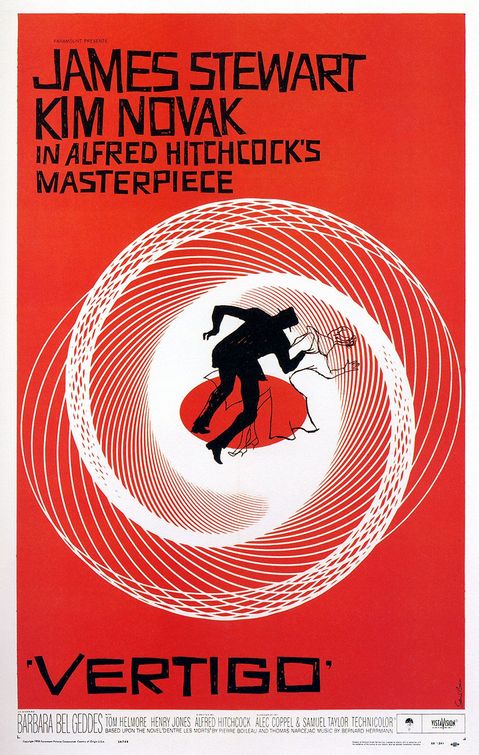
"I Look Up, I Look Down- Hey it's Citizen Kane": What Vertigo's Place On Top of Sight & Sound's Top Ten Greatest Film Poll May Mean

Warning: Spoilers for Citizen Kane and Vertigo Ahead


So, Orson Welles' revolutionary classic Citizen Kane has been dethroned from the top spot of the British film magazine Sight & Sound's Top Ten Greatest Films Poll. It's seat has now been filled by Alfred Hitchcock's Vertigo, the film considered by many to be Hitchcock's masterpiece. And while Citizen Kane still holds the number 2 spot, it's quite a shakeup considering its held the number one position for fifty years.


The first Sight & Sound poll was conducted in 1952. The film that ranked number one on that first poll was Vittorio De Sica's Neorealist Bicycle Thieves. Citizen Kane, released in 1941, was no where to be found. On his commentary for the  DVD, film critic Roger Ebert mentions that the film, due to the controversy surrounding its similarities to the life of William Randolph Hurst, the newspaper baron, Hurst used his powerful influence in order to make theatres limit the number of showings for Citizen Kane, leading to poor box office. Ebert says it was only in the late fifties that many people were able to see the film. The lack of exposure for the film back in 1941 may have a role in keeping it out of the Sight & Sound Top Ten.

It was only ten years later, in 1962, when the film entered the top ten and claimed the number one spot, keeping that spot over the decades, as other films entered or fell out of the top ten. In 1952, Charlie Chaplin held the number 2 and 3 spots with City Lights and The Gold Rush, respectively. Sadly, from 1962 onwards Chaplin is completely absent from the top ten, with City Lights ranking 50th this year. For that devastatingly beautiful last scene, I feel it should be much higher. One film that has slowly crept up the list is Hitchcock's Vertigo. A film that, on its initial release, was met with poor box office and negative reviews, entered the top ten in 1982, tieing with Welles' The Magnificent Ambersons and Michelangelo Antonioni's L'avventura for the seventh spot. In 1992 it climbed to the number 4 spot and in 2002 it was number two right behind Citizen Kane.


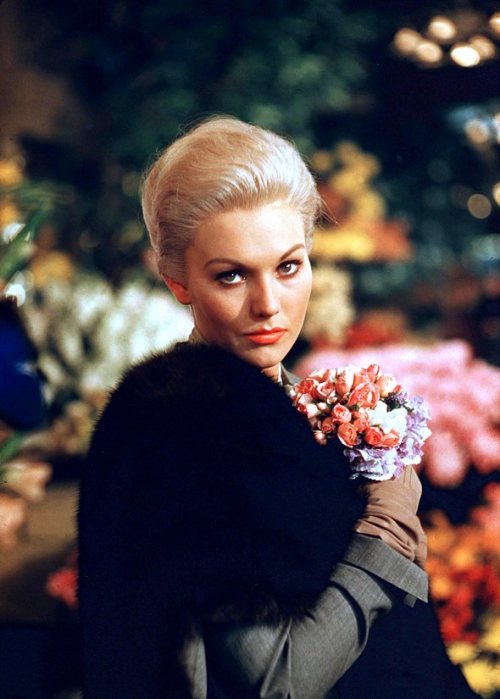
Now Vertigo has claimed the number one spot, edging out Citizen Kane by 34 votes (Vertigo: 191, Citizen Kane: 157). The question remains: does it mean anything that Vertigo is now in the number one position? Many people will still feel Citizen Kane is the greatest film ever made while others will still feel it's "overrated." Some have already argued that Vertigo isn't really Hitchcock's best film (for me, Rear Window is my favourite of his but I feel Vertigo is his greatest film). Ultimately, it comes down to the slow shift of perspective regarding Hitchcock's film. It look a little longer for it enter the top ten and even longer to reach the top spot. It didn't automatically claim the spot as Citizen Kane did. But over time, Vertigo is one of those films that keeps reminding viewers, new and old, how great and timeless it truly is. It's a film that captures the obsessive and twisted forms love can take-especially within the male psyche. It starts out as a mystery about a woman, Madeline (Kim Novak) who may be possessed and the former detective, Scottie Ferguson (James Stewart), assigned to follow her-and becomes the story about a detective being haunted by her spirit, becoming possessed himself by the need to mold another woman, Judy (the same woman in fact), in to Madeline's image. It's essentially a character study that doesn't reveal itself as a character study until the third act.


And like Citizen Kane, it never truly resolves itself. It allows the audience to interpret what they've seen and draw their own conclusions regarding the title characters. Can the loss of his sleigh Rosebud truly define Citizen Kane's titular character, Charles Foster Kane's (Welles) life? Or is it impossible, as the reporter Mr. Thompson says, to define an entire man's life by just one word? In Vertigo, what happens to Scottie after the death of Judy? Is he able to finally move on or will he plunge even deeper in to his obsessive abyss? Both films show men brought down by ambition and obsession. Citizen Kane is about a man who had everything in his life but love. Vertigo is about a man who can only love a woman if she fits the image of his obsession- and the woman who will change herself in order for him to love her.


But, back to the question at hand. What does it mean for Vertigo to be in the number one position. Well, as I said, the perspective regarding the film has changed and evolved slower than Citizen Kane and this year more people felt it was the greatest film ever made. Some have argued that Kim Novak's comment about feeling "raped" when this year's Best Picture winner, The Artist, used Bernard Herrmann's score, brought the film back to some people's minds, which may have led to some viewing it again. While that may sound humorous, it's not too big of a stretch that this comment made people revisit the film.

After 50 years, some voters may have felt it was time for a new film to take the number one spot. Some of these voters may have been new, some may have just come around to Vertigo after years of ranking it lower on their ballots or not ranking it at all. Now that Vertigo has placed number one, the best possible outcome is for more people to discover the film as well as other Hitchcock's films. Whether Vertigo is the greatest film of all time, I feel it's definitely one of the greatest films in cinema history.


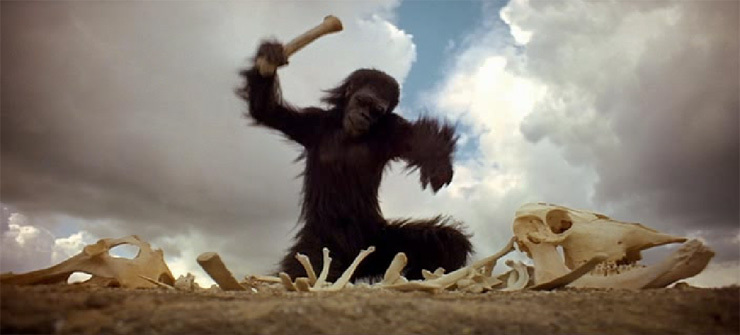
Now, what of the rest of the list? What's fascinating, and maybe a little bit disappointing, is that the youngest film in the top ten is Stanley Kubrick's 2001: A Space Odyssey, released in 1968. So, the most recent film in the top ten came out over forty years ago. Contrast this with the first Sound & Sight Poll in 1952 where Bicycle Thieves, released only four years prior in 1948, topped the list. City Lights (1931, #2) was only 21 years old and The Gold Rush (1925, #3), only 28 years old when they ranked high on the list.

Now, there was "slightly" less film history in 1952 and more room for twenty year old films to appear on the list-but even when you look at the 1962 list, Citizen Kane was only 21 years old when it first claimed the top spot and was still only 31 years old in 1972. L'avventura was only 2 years old when it appeared on the 1962 list. Federico Fellini's 8 1/2 was only 9 years old when it appeared on the 1972 list. Now, in 2012, there are no films from the last five, ten, twenty or even thirty years in the top ten. No Pulp Fiction or Schindler's List. No There Will Be Blood or Fargo. The Godfather and The Godfather Part II, which appeared together on the  2002 list, have now fallen out of the top ten. This may be due to the rule change that wouln't allow them to be counted as one film.. A Martin Scorsese film has also never appeared in the top ten. Taxi Driver is ranked 31 this year, tieing with The Godfather Part IIRaging Bull, and Goodfellas are not ranked within the top 50.

For reference, this is the top ten for 2012:

1. Vertigo (1958, Hitchcock)
2. Citizen Kane (1941, Welles)
3. Tokyo Story (1953, Yasujiro Ozu)
4. The Rules of the Game (1939, Jean Renoir)
5. Sunrise (1927, F.W. Murnau)
6. 2001: A Space Odyssey (1968, Stanley Kubrick)
7. The Searchers (1956, John Ford)
8. Man With a Movie Camera (1928, Dziga Vertov)
9. The Passion of Joan of Arc (1928, Carl Theodor Dreyer)
10. 8/12 (1963, Federico Fellini,)

Now, I've seen eight of the 10 films listed (I still haven't seen Sunrise or Man With a Movie Camera) and while it's a more than respectable list, it does feel a little boxed in. While the voters didn't sit down and decide not to have any post sixties films in the top ten, it's unfortunate that many of the great films from the 70s, 80s, 90s and the last decade are only represented outside of the top ten.


Now, Casablanca is my favourite film and it's not ranked at all. While I understand it's not as revolutionary as Citizen Kane or as psychologically probing or disturbing as Vertigo, its characters are as memorable and enjoyable as the ones in the aforementioned films, and while its filmed in a very classical Hollywood style, its images, the closeups of Bogie and Bergman, among others, really resonate. While I'm not a voter I've decided to throw out a top ten made up of personal favourites and films I just feel are great.

1. Casablanca (1943, Michael Curtiz)
2. Rear Window (1954, Hitchcock)
3. The Apartment (1960, Billy Wilder)
4. 12 Angry Men (1957, Sidney Lumet)
5. Citizen Kane (1941, Welles)
6. The Passion of Joan of Arc (1928, Dreyer)
7. Vertigo (1958, Hitchcock)
8. Taxi Driver (1976, Scorsese)
9. The Godfather (1972, Francis Ford Coppola)
10. Psycho (1960, Hitchcock)

And look, I only have one film from the seventies. Aren't I hypocritical. Pot, Kettle.There's also so many I left out! Singin' in the Rain!, GFII!, Goodfellas! Damn you lists! Anyway, those are some of my thoughts regarding the new Sight & Sound Poll. Whatever meaning lists like S&S have, if they make you want to revisit films you haven't seen for a while or discover one you've never seen, well, I think that's a pretty good thing.

P.S: Here's a piece I wrote on Vertigo's influence on Scorsese's Shutter Island and Christoper Nolan's Inception: http://thenoirzone.blogspot.ca/2012/05/hitch-marty-and-chris-vertigo-and-its.html


Tuesday, 14 February 2012

Top 11 Films For Valentine's Day


This is a little late but here's my movie playlist for Valentine's Day:

1. Casablanca (Michael Curtiz, 1943)
The Rest (Alphabetically)
2. An Affair to Remember ( Leo McCarey, 1957)
3.The Apartment (Billy Wilder, 1960)
4. Brokeback Mountain (Ang Lee, 2005)
5. Casino Royale (Martin Campbell, 2006)
6. City Lights (Charlie Chaplin, 1931)
7. Make Way For Tomorrow ( Leo McCarey, 1937)
8. Romeo + Juliet ( Baz Luhrmann, 1996)
9. Spider-Man and Spider-Man 2 (Sam Raimi, 2002 & 2004)
10. Vertigo (Alfred Hitchcock, 1958)
11. WALL-E (Andrew Stanton)

Wednesday, 11 January 2012

Desert Island DVDs

The volleyball named Wilson by Tom Hanks in 'Castaway'


Recently critc Matt Zoller Seitz asked fellow critics to pick the ten films they'd want to take with them if they were stuck on a desert island. The rules were to pick ten films, one season of television and one short. I posted mine on Jim Emerson's blog, Scanners. I want to post it here as well just for fun.

Films (In no particular order, except for number one)

1. Casablanca- When asked what my favourite film is I pick this one. Roger Ebert said of Carol Reed's The Third Man that it captures the romance of going to the movies for him. I feel that way about this film. Romantic, funny, heroic and ultimately a little tragic, Casablanca has never failed to entertain or move me.

2. Casino Royale (2006)- My favourite Bond film. It may not be a perfect movie but in it's own way it's a perfect Bond film in that it combines fantastical action sequences with a grounded humanity, never escalating in to camp. The romance between Bond and Vesper Lynd is heartbreaking and establishes why Bond is such an emotionally cold bastard sometimes.

3. The Haunting (1963)- A really fun and spooky haunted house film. The fact that you never see a ghost makes it all the more terrifying and surprisingly satisfying.

4. The Apartment (1960)- Billy Wilder's romantic comedy blends humour and tenderness with cynicism and interesting social commentary very well. I think I like this more than Wilder's film before this, Some Like It Hot.

5. Out of the Past- It really encapsulates the film noir genre/style. While romance may not be what one automatically thinks of when they think "film noir" but the doomed romances at the heart of this film are integral to the psychology of the film noir anti-hero.

6. Shutter Island- This may sound blasphemous but this may be my favourite Scorsese film.

7. Hamlet (1996)- I'd need my Shakespeare fix and Kenneth Branagh's epic is my favourite Shakespearean adaptation on film.

8. Rear Window- Hitchcock is my favourite director and it's insanely difficult to pick only one. I think I would go with this one.  It takes something which sounds uncinematic and makes it in to pure cinema.       

9.  The Godfather- Mafia life played at almost Shakespearean heights.

10. The Pink Panther Strikes Back- My favourite of the series

Television: Season Five of The Simpsons
Short: Someone on Emerson's blog picked Geri's Game, which played before Pixar's A Bug's Life. It's the short where the old man plays chess with himself. I think I'd have to pick this one as well.

This is a fun but very difficult game. There are so many more more films I could have swapped with the ones on this list. It would take me too long to list all of them. I encourage everyone to try this exercise. It gives you a sense of the films you really can't live without...and you realize there's a lot!