Showing posts with label Vertigo. Show all posts

Friday, 20 January 2023

11 Great Films That Were Not Nominated For The Best Picture Oscar


Spoilers Below

The history of the Oscars tell their own narrative regarding the greatest films in the history of the medium. While what we consider great is subjective, the Oscars, I would argue, provide a limited view of cinematic greatness. Genre films are often left out, actors of color ignored, great actors and directors never won. But specifically, I wanted to take a moment and look at 11 films that were not nominated for Best Picture, films which have lived on longer some winners. Some may surprise you, but I think it's important to understand why certain films were not appreciated in their moment, that it took time for them to attain classic stature. So, let's get started. These aren't in specific order, but I will be starting with three by a director who never got his due from Oscar.


1. Rear Window  (1954)

Alfred Hitchcock is defined by his dark and twisted portrayals of human nature in the guise of entertaining Hollywood thrillers. One of the most purely entertaining of films, Rear Window isn't just about whether a man has killed his wife, it's about a peeping tom, kind of a pervert, and the human desire to watch. The film is essentially  a meta commentary on cinema in general, on the need for excitement in our ordinary lives. 

We're watching L.B "Jeff" Jefferies, a photographer who's in a cast, stuck in his apartment (after being injured taking a picture of a race car crash) watch his neighbours in the courtyard of apartments, everyone with a story, an entire universe in and of itself. He needs these stories the same way we need films, which give us the ability to view other peoples' lives (albeit fictional). When Jeff suspects businessman Lars Thorwold (Raymond Burr) of killing his invalid wife, his obsession with proving his guilt gives him the ultimate reprieve from boredom, even bringing him closer to his socialite girlfriend Lisa Friedmont (Grace Kelly). But as much as the film deals with the investigation of Thorwold, the other apartment dwellers are just as important. All these people become as familiar to us as they are to Jeff. 

Hitchcock would get a Best Director nomination for the technical brilliance on display ( the whole film is shot on a set, with Hitchcock giving directions via earpiece to his actors), as well as nominations for Best Writing- Screenplay, Color Cinematography, and Best Sound Recording, but oddly not Best Picture. The five nominees were On the Waterfront, The Caine Mutiny, Seven Wives For Seven Brothers, The Country Girl (for which Kelly won Best Actress), and Three Coins in the Fountain. On the Waterfront was the winner, with its director, Elia Kazan, winning Best Director. For me, I would split the two, giving Hitchcock Director and On the Waterfront Picture. 


2. Psycho (1960)

Hitchcock once again received a Best Director nomination (his last) for this proto-slasher film, but without the film getting in to Best Picture. And like Rear Window, it also received four nominations (Hitchcock, Best Supporting Actress for Janet Leigh, B&W Cinematography, and Best Art Direction-Set Decoration (B&W). 

While the film can be argued to be the first modern slasher film, pre-dating Black Christmas and Halloween by nearly 20 years, it starts out as a film noir about real-estate Marion secretary Crane (Janet Leigh) stealing a client's money so she can start a new life with her boyfriend. She winds up at the Bates Motel, where the whole dynamic shifts with the introduction of proprietor Norman Bates (Anthony Perkins). The film seems to have- like Marion- taken a detour as we spend a lengthy conversation between the two over supper. Norman is a sad and lonely man who's only relationship is with his invalid mother. 

When Marion is killed in the infamous shower scene it's the film's first interjection of horror, upsetting the narrative we thought we were watching. The sequence is still startling in its violence and impressive in its filmmaking. George Tomasini's sharp editing reflects the knife going in to Marion's body and Bernard Herrmann's screeching score has become synonymous with 'crazy.' The film has spent so much time with Marion that the sudden burst of violence unsettles. There's only 2 murder scenes in the film- this and the murder of Private Investigator Arboghast (Martin Balsam) bu the film relies more on atmosphere and build-up to create a sense of subtle horror in the audiences' mind. 

It's revealed Norman killed his mother and her lover and took on a split personality- he and his mother. The film was never about the money or Marion, it was about Norman's psychosis, with every thing else being a distraction from the truth about Norman  Perkins' performance is so convincing that he could never escape the role. Perkins is deeply sympathetic as Norman; I never view him as the film's villain but as a tragic character, despite the horrible crimes he commits. 

Hitchcock's direction displays his mastery of visual storytelling and his ability to place us n the minds of both Marion and Norman, two people who are closer in spirit than either of them realizes, two people who are tragically torn apart by "mother."  

The Best Picture Nominees that year were The Apartment, The Alamo, Elmer Gantry, Sons and Lovers, and The Sundowners. The winner was The Apartment, which, like On the Waterfront, is one my favourite Best Picture winners. Again, I would give Hitchcock the directing Oscar (Billy Wilder won), while giving Best Picture to The Apartment.


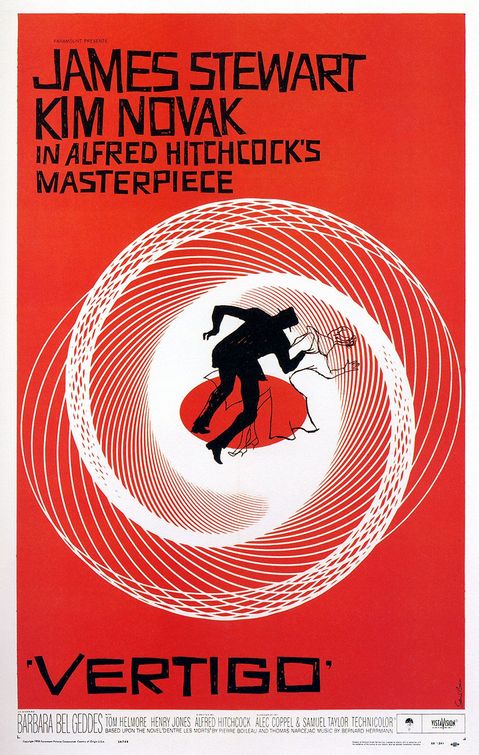
3. Vertigo  

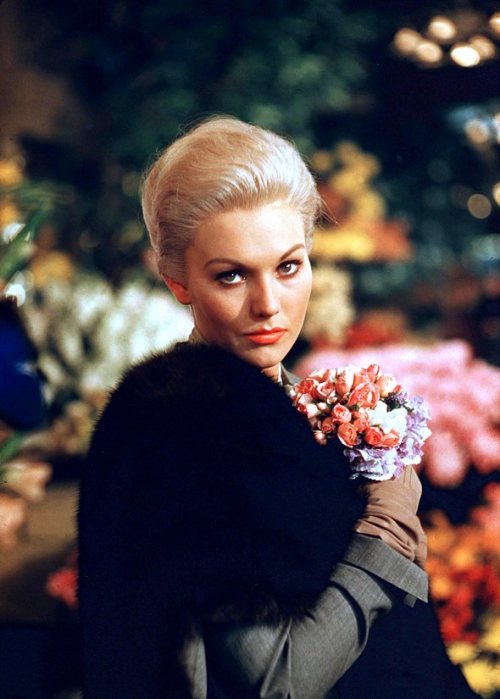
Yes, another Hitchcock, but probably the biggest one to be left out of Best Picture. Not surprisingly, since Vertigo took many years to earn the critical acclaim it now enjoys. The film which was voted the greatest of all time by Sight & Sound back in 2012, and holds at # 2 in 2023, only got two Oscar nominations, for Best Art Direction-Set Decoration and Best Sound. Bernard Herrmann's swooningly melancholic and romantic score, James Stewart and Kim Novak's layered performances, Hitchcock's visionary direction, all ignored. And I get it, I get in 1958 why this was seen as a misfire, why it takes a rewatch or two to really appreciate this film. It took me a second viewing to begin to embrace it. It's probably Hitchcock's most purely artistic and audacious film, one whose D.N.A can be found in other films like David Lynch's Mulholland Drive, George Sluizer's The Vanishing, and Brian De Palma's Obsession. But despite being the influence behind several films, the story remains fresh and unique in the way it moves from ghost story to romance and finally, to obsession. 

It's the story of an acrophobic detective, Scottie Ferguson (Stewart). hired by a old college friend, Gavin Elster, (Tom Helmor)  to follow his wife, Madeleine (Novak), whom he believes has been possessed by the ghost of her great-grandmother. Scottie falls in love with Madeleine but fails to stop his suicide. Afterwards meets another woman named Judy (Novak), who looks like Madeleine, whom he tries to make over in to the image of his dead love. 

Vertigo has an hypnotic power that brings me back time and again, and time is a big theme in the film. Scottie didn't get to Madeleine in time, the past is coming back to haunt Madeleine and then Scottie, near the film's end Scottie says he needs to do one thing to be free of the past.        

The nominees that year were Gigi, Cat on a Hot Tin Roof, Auntie Mame, The Defiant Ones, and Separate Tables, with Gigi being the winner (its director Vincente Minnelli won Best Director), which I've still have yet to see.


4. The Searchers

John Ford had already won 4 Oscars for directing by the time he did the The Searchers, and a fifth one wouldn't have been out of the question, except Ford and the film were completely shut out at the Oscars (Ford did get a DGA nomination, however), which now seems inexplicable considering The Searchers stature as an American classic. It's a difficult film to reconcile, a story dealing with racism that also still has some racist leanings, but it nonetheless a great film, though I still prefer Stagecoach. John Wayne plays Ethan Edwards, a confederate soldier returning to his brothers' home after the Civil War. When his brother Aaron, and Aaron's wife are murdered by Comanche Native Americans,, Edwards, along with his adopted nephew Martin (Jeffrey Hunter) go off in pursuit of Ethan's kidnapped nieces. 

The film, courtesy of Ford cinematographer of Winton C. Hoch, has some of the striking visuals of any western, capturing what director John Milius said felt to him what the real American west was like. And even with the many revisionist westerns that followed, The Searchers still feels like the most realistic western of its time, especially in terms of its violence, which is still unsettling. The most disturbing aspect of the film is the notion that Ethan will kill one of his nieces Debby (Natalie Wood) after she's "gone native" living with the Comanches for several films (the other, Lucy (Pippa Scott) was killed). 

Wayne plays his most complex role in a performance that, as Martin Scorsese said, makes you hate him but still love him when he returns Debbie home by film's end. And of course, there's that great closing shot of him walking away, as a door closes, bookending the opening door at the beginning. It's wistful and, honourable and poetic. 

The nominees that year where Around the World in 80 Days, Giant, Friendly Persuasion, The King & I, and The Ten Commandments. Around the World in 80 Days, directed by Michael Anderson and produced by Elizabeth Taylor's then husband Mike Todd, who would die a year later in a plane crash. The extravagant film is probably one of the weaker Best Picture winners but is still worth seeing for the sheer scale of it, it's a fascinating time capsule. 


5. Days of Heaven

After establishing his esoteric sensibilities in Badlands (1973), Terrence Malick came back with his voice and style fully formed with Days of Heaven, one of the most ravishing films of all time. It won the Oscar for Best Cinematography- given to Nestor Almendros, though Haxell Wexler took over after after Almendros had to fulfill his commitment to shooting Francois Trauffaut's The Man Who Loved Women.

Taking what 20 years earlier what would've been a 3 hour plus epic, Malick strips down the story of a Chicago steelworker, Bill (Richard Gere) on the run after killing his boss, his sister Linda (Linda Manz), his girlfriend Abby (Brooke Adams), and the dying farmer (Sam Shepherd) Abby marries, in a compact 90 minutes, showing us the fragments of a story through an impressionistic visual style that favours mood and setting over complex characterization.  

The nominees that year were The Deer Hunter, Coming Home, Heaven Can Wait, Midnight Express, and An Unmarried Woman. The Deer Hunter won, which I'm ashamed to say I still haven't seen.


6. Alien 

Ridley Scott's Alien has only gotten better in age, a genuine masterpiece of horror sci fi. The story is so simple but what it's doing is difficult, essentially blending the slow pace of 2001, the lived in junky feel of Star Wars, and the grisliness of The Texas Chainsaw Massacre, all while updating a 50s sci-fi creature and placing it in an symbolic haunted house. The alien could've looked goofy, the setting cheap, the pace too slow, but this didn't happen. The pace is slow but with a great sense of dread. The alien is kept in the shadows so we only get glimpses of it and the production design is immaculate, making us believe in the film's unglamorous vision of the future.

A brilliant choice by the film's screenplay- by Dan O'Bannon, with a story by Ronald Shusett-  is conceiving the ensemble of characters as "truckers in space" rather than explorers or scientists.  The characters have a lived-in-ness, a believability as blue collar workers. Them being truckers is also why the Nostromo is so junky- this isn't supposed to be the Enterprise. Michael Seymour's production design and Derek Vanlint's cinematography make the Nostromo one of the most atmospheric settings in horror cinema. 

Like the shower scene in Psycho, the chestburster sequence hasn't lost its shocking impact. Both scenes happen just when things feel like they're getting better, in moments of peace. When Captain Dallas (Tom Skerritt) is killed, it really feels like things are at their worst. And then Ash (Ian Holm) is revealed as an android who has been working against them, leaving only Ripley (Sigourney Weaver), Parker (Yaphet Khotto) and Lambert (Veronica Cartwright), the feeling of claustrophobia is palpable. 

Weaver became a star for her performance as Ripley, giving her assertiveness, sternness but also vulnerability. Her fear during the final stretch of the film feels authentic and her decision to go back and save the cat is a relatable human moment  Her ultimate survival is almost surprising, given this was the decade of the downer ending but it's not completely triumphant either. She's lost her ship and crew, and has found out she was viewed as expendable by the company for which she works. Still, there is a sense of peace for Ripley at the film's end, as she goes back in to cryosleep, going back in to a dream after a nightmare

The nominees that year were Apocalypse Now, Kramer vs. Kramer, All That Jazz, Breaking Away, and Norma Rae. I personally would go with All That Jazz.


7. The Innocents

Completely shut out of the Oscars, though nominated for the Palme d'Or, this is the spookiest film ever made, as well as the best haunted house movie. Governess Miss Giddens? (Deborah Kerr, in a performance that should've earned her an Oscar nomination) is sent to look after two orphaned children , Miles and Flora, whose uncle has no use for them. After learning about the influence of the late Peter Quint and Miss Jessel on the children, Miss Giddens begins to see apparitions that match their descriptions. She soon comes to the conclusion these ghosts are controlling the children. 

The ambiguity surrounding whether Miss Giddens is actually seeing the ghosts or imagining them is what keeps The Innocents so fascinating 60 years after it premiered. Cinematographer Freddie Francis' Widescreen black and white compositions are immaculate and director Jack Clayton captures a certain Victorian-era Britishness in the performances and characters. The film's chilly atmosphere also makes it-like Stanley Kubrick's The Shining- a perfect alternative Christmas film.

The nominees that year were West Side Story, The Hustler, Fanny, The Guns of Navarone, and Judgement at Nuremberg, with West Side Story winning, along with nine other wins. I prefer Spielberg's new West Side Story (My thoughts here :Davies in the Dark: Tonight, Tonight: "West Side Story" (thenoirzone.blogspot.com) and if I were picking from these nominees I would go with The Hustler (which I wrote about here: Davies in the Dark: Search results for the hustler (thenoirzone.blogspot.com)


8. Carrie

Brian De Palma's masterpiece is also the first Stephen King adaptation and one of the best. A hallucinatory film, but one that has moments of sweetness that only make the tragedy of its climax hit even harder.

 Carrie may be the best film about teenage isolation ever made. Despite being incredibly stylized the film finds emotional truth through Sissy Spacek's nominated performance as Carrie White.  What stood out watching it this time is how Spacek makes Carrie both incredibly unusual but also very sweet and nice. We see her coming out of her shell as things being to go- and then when she's humiliated she really comes out of her shell as she unleashes her telekinetic powers against her tormenters. 

The whole prom sequence and how it leads to the pig blood pouring over Carrie is virtuoso filmmaking. In De Palma fashion it feels like he's showing off but you don't mind because it's so impressive. Then there's Carrie's return home and her final confrontation with her religious zealot mother, Margaret (Piper Laurie, in the film's other nominated perfomances), another amazing stretch of filmmaking. This is one of those films you could watch on mute and still understand what's happening.  The emotions and story are all communicated through the visuals. 

Mario Tosi's cinematography gives the film a hazy dreamlike quality that turns in to a nightmare during the prom sequence- and Carrie covered in blood is one cinema's indelible images.  

The nominees that year were Rocky, Taxi Driver, All The President's Men, Network, and Bound For Glory. Bound for Glory is the only one I haven't see but it's a pretty strong line-up overall. 


9. Close Encounters of the Third Kind

My second favourite Spielberg, right behind Jaws. This is also the ultimate Spielberg film, made a couple of years after Jaws, with his voice fully formed. He received his first Best Director nomination (the only time he and pal George Lucas were nominated alongside each other- Lucas was nominated for Star Wars). The film was beat out in most categories by Star Wars, though it won Best Cinematography for Vilmos Zsigmond's stellar work on the film and won a special award for sound effect editing.

It's a darker film then you may remember, with Roy Neary (Richard Dreyfuss) becoming obsessed with U.F.Os after a close encounter with one and alienating his family. But it's also awe-inspiring and wonderous, encapsulating what Spielberg does better than anyone else. It's hard to imagine a blockbuster movie like this getting made now, given it doesn't have a big action climax, but a climax involving the attempt to communicate with an alien mothership. Denis Villenueve's Arrival is the only equivalent I can think of.

Dreyfuss won for The Goodbye Girl (which I haven't seen) but I also would argue he could've been nominated for this instead, making Roy a relatable and likable character even as he becomes more unhinged.

The nominees that year were Annie Hall, Star Wars, The Turning Point, Julia, and The Goodbye Girl. Annie Hall was the winner, with Woody Allen winning for direction and screenplay. The film has plenty of baggage attached to it, but it's a very fine winner overall 


10. 2001: A Space Odyssey

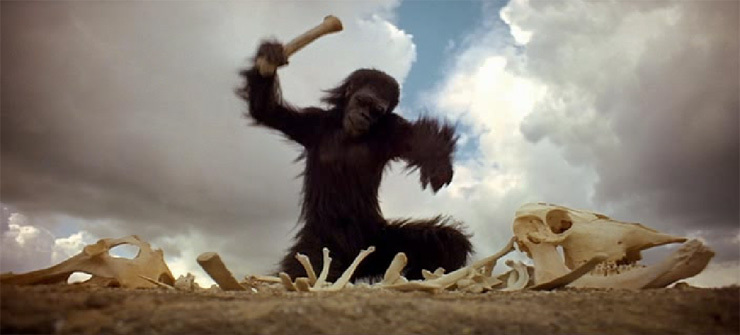
Maybe the greatest film not to be nominated for Best Picture, and the best film about contact with alien beings, mostly because we never see them. Stanley Kubrick (who was nominated for Best Director) keeps them mysterious and kind of spooky. The film is a visual marvel (it won Best Visual Effects and it still feels ahead of its time, even as we've long since passed the year in which it takes place. The nominees that year were Oliver!, The Lion in Winter, Funny Girl, Rachel, Rachel, and Romeo & Juliet. Oliver! was the winner, with Carol Reed winning Best Director. I feel Reed should've won for The Third Man instead. Oliver! is okay but I think I would go with The Lion in Winter or Romeo & Juliet


11. Singin' in the Rain

The greatest movie musical of all, and a great film about Hollywood, Stanley Donen and Gene Kelly's Singin' in the Rain is superior to the previous year's Best Picture winner, another Kelly musical, An American in Paris. The film is about Hollywood's transition from silent films to talkies, with movie star Don Lockwood falling in love with chorus girl Kathy Selden (Debby Reynolds), while his screen partner Lina Lamont (Jean Hagen in an Oscar nominated performance), whose shrill voice doesn't make the cut when it comes to talkies, becomes jealous. Donald O'Connor lends support as Don's friend Cosmo Brown, a performance that also should've garnered a Oscar nomination. 

The dancing is off the charts great, the songs funny and poignant, Kelly is at his most charismatic, Hagen is hilarious, and Reynolds becomes a star right before our eyes. It's a truly joyous film, technically brilliant and with a lot of heart. A great example of Hollywood studio filmmaking done right.

The nominees that year were The Quiet Man, The Greatest Show on Earth, High Noon, Ivanoe, and Moulin Rouge. The Greatest Show on Earth won, with John Ford winning for The Quiet Man (his fourth Oscar). The film is usually considered one of the worst- if not the worst film to win Best Picture, though I haven't seen it. For me, I would go with The Quiet Man, maybe my favourite of Ford's films, along with Stagecoach.


So, what films do you think should've been nominated for Best Picture? Comment and let me know.


Wednesday, 15 August 2012

The Essential Films: "Rear Window" (1954)


The Essential Films: A Series of Writings on Films that I feel are essential viewings for film lovers, coupled with films that are personal to me.

Spoilers Ahead

Rear Window is probably my favourite film of Alfred Hitchcock's. It takes a concept that sounds like it'd be the most uncinematic of movies, a man stuck in his apartment spying on his neighbours, and makes it in to an ultimate cinematic experience- and like Vertigo, it's a perfect metaphor for the way we watch movies, how movies represent a form of voyeurism that is supposed to make us a feel innocent. By calling attention to movies as voyeurism, Hitchcock shows us that we, as we're sitting down in a movie theatre, are not as innocent as we think we are.

In Vertigo, we, just like Scottie Ferguson (James Stewart), become obsessed with the image of Madeline Elster (Kim Novak), and become accomplices in Scottie's makeover of Judy (Novak again) in to his dream image. She represents the  woman we see in a film who we know we can never have but pursue relentlessly, like a lovesick puppy- except that puppy is chasing it's own tail. Not many people can live up that image we have of them on screen. Even Cary Grant once remarked, "Everyone wants to be Cary Grant. Even I want to be Cary Grant." Madeline was always an image, something Scottie couldn't grasp until it was too late, after he was already swallowed up by his obsession.

Rear Window is also about a man obsessed with the images of others. In the film, photographer  L.B. "Jeff " Jeffries (Stewart again) is stuck in his apartment after breaking his leg while taking photographs in the middle of a race track. He has nothing to do but look out his window and spy on his neighbours. He soons becomes suspicious of the salesman Lars Thorwold (Raymond Burr) after seeing him make numerous trips out of the apartment one night. He starts to believe Thorwold murdered his invalid wife. Like Jeff, we too become obsessed with the mystery surrounding the disappearance of Thorwold's wife, as well as with the lives of the other neighbours. The film is not only a metaphor for our fascination with the private lives of people in movies but in ourr fascination in the private lives of people in real life as well- even they're bored and sad people. One of the people Jeff sees in a woman he calls "Miss Lonelyhearts"- a woman who pretends to have dinner with a man. As she raises a glass to her imaginary beau, Jeff raises a glass. It's an achingly poignant scene and one that I relate to on a personal level. I also like how it shows Jeff's compassion towards her, that he does care about these people on some level.

Hitchcock's films, even when they had high concept premises such as this, always were able to ground themselves with nice character relationships that give the characters texture and personality. The emotional centre of this film is probably the relationship between Jeff and his high society girlfriend Lisa Fremont (Grace Kelly). I like that the main conflict in their relationship is Jeff feels she's too perfect for him. As a photographer who travels around the world, Jeff needs someone who can live the kind of life that requires you to get dirty, to live out of a suitcase and, according to Jeff, eat food you wouldn't be able to look at when it was alive. When he looks at Lisa, he sees a woman who belongs at fancy restaurants and parties. We see Jeff's point but also see that Lisa does care about Jeff and is intelligent enough to make her own decisions. We also sense a inner strength, which Hitchcock shows us later on when Lisa starts to believe and support Jeff's suspicions about Thorwold. And when Lisa sneaks in to Thorwold's apartment to leave a note, when she comes back, Jeff's face, full of pride, says it all.

James Stewart was, and I think still is, the quintiessential "everyman" actor, someone who, despite being a movie star, you could relate to and feel represented the values of normal people. That was there in the films he did for Frank Capra, Mr Smith Goes to Washington and It's a Wonderful Life. It's a persona that also fit perfectly in to Hitchcock's universe, which would frequently involve normal people caught up in extraoridinary circumstances. By having Stewart play Jeff, we get involved with his obsession and investigation him because we feel we are him on some level. I think that's one of the keys to Hitchcock's greatness- his films exist in a heightened reality but are populated by characters that feel real. I just rewatched The Birds and that film, while being an almost apocalyptic story about birds waging war on humans, is at its heart a character drama about two women, a mother and the woman her son may love, learning to co-exist. I like Thelma Ritter as Jeff's nurse Stella. She feels like the most wise character in the film and acts as a confidente for Jeff in certain scenes. I also like how she, along with Lisa do come to believe Jeff. Even his detective friend Tom Doyle (Wendell Corey) at first sees some validity in Jeff's suspicions. This is a nice change of pace from
the type of movie where absolutely no one would believe Jeff. Again, this helps make the characters feel more realistic. It's not just a movie one smart man (Jeff) and some not so bright people.
It's really impressive how Hitchcock, like Phillip Seymour Hoffman in Synechode New York, essentially creates an entire universe out of one set- a play with multiple little stories going on at once. Mostly everything is seen from Jeff's perspective, which puts us in his mind and allows us to put our own meaning on what we see- much like he does. In typical Hitchcock fashion, while there's plently of talky scenes, it's also a very visual film- and we get sucked in to the visual rhythms of looking with Jeff outside his apartment.

A nice detail of the film is how Jeff and Lisa want Mrs. Thorwold to be dead so their suspicions can be confirmed. It's a dark moment when Lisa tells Jeff they should be happy she's alive (after Doyle says Mrs. Thorwold picked up her bags at the train station). It's also a very human moment, especially since we realize we'd be giddy too if we stumbled upon a potential murder. Hitchcock actually uses the murder of Mrs. Thorwold to provide some signature macabre humour. Funnily enough we find ourselves sympathizing with the dog Thorwold kills because it almost uncovered something he buried.

For me, the most powerful scene is when the woman who owned the dog cries out in the middle of the night    "You don't know the meaning of the word 'neighbors'. Neighbors like each other, speak to each other, care if anybody lives or dies! But none of you do!" This scene highlights a central theme of the film, which is the disconnection in society between people. Until this scene, everyone in the courtyard is disconnected from each other, only to be finally  united by this woman's grief. The theme of disconnection is also highlighted by the fact that a murder happened right under everyone's noses and only Jeff noticed. Looking back on the film, I started to think about the story of Kitty Geneovese, the woman was murderd in the early sixties outside her apartment, while her neighbours were not quite sure what was happening or if they should help.

The final confrontation of the film occurs when Thorwold comes in to Jeff's apartment. While seemingly a straightforwars climax, what's striking about it is it's the first time someone other than a friend has come in to Jeff's apartment. Thorwold has turned the tables on Jeff, not just spying Jeff spying on him but violating Jeff's space as well. We've seen Thorwold from a distance for so long- now we see him up close.

In the final scene, we see things have changed: new dog, new paint job for Thorwold's apartment, Miss Lonelyhearts meets the musician in the courtyard- but at the same time you feel life goes on-it has to. Some people feel the need to change but for Lisa, after proving herself adventurous- and as she switches from a foreign travel book to Bazaar- she shows she's quite comfortable being herself.

Thursday, 2 August 2012

"I Look Up, I Look Down- Hey it's Citizen Kane": What Vertigo's Place On Top of Sight & Sound's Top Ten Greatest Film Poll May Mean

Warning: Spoilers for Citizen Kane and Vertigo Ahead


So, Orson Welles' revolutionary classic Citizen Kane has been dethroned from the top spot of the British film magazine Sight & Sound's Top Ten Greatest Films Poll. It's seat has now been filled by Alfred Hitchcock's Vertigo, the film considered by many to be Hitchcock's masterpiece. And while Citizen Kane still holds the number 2 spot, it's quite a shakeup considering its held the number one position for fifty years.


The first Sight & Sound poll was conducted in 1952. The film that ranked number one on that first poll was Vittorio De Sica's Neorealist Bicycle Thieves. Citizen Kane, released in 1941, was no where to be found. On his commentary for the  DVD, film critic Roger Ebert mentions that the film, due to the controversy surrounding its similarities to the life of William Randolph Hurst, the newspaper baron, Hurst used his powerful influence in order to make theatres limit the number of showings for Citizen Kane, leading to poor box office. Ebert says it was only in the late fifties that many people were able to see the film. The lack of exposure for the film back in 1941 may have a role in keeping it out of the Sight & Sound Top Ten.

It was only ten years later, in 1962, when the film entered the top ten and claimed the number one spot, keeping that spot over the decades, as other films entered or fell out of the top ten. In 1952, Charlie Chaplin held the number 2 and 3 spots with City Lights and The Gold Rush, respectively. Sadly, from 1962 onwards Chaplin is completely absent from the top ten, with City Lights ranking 50th this year. For that devastatingly beautiful last scene, I feel it should be much higher. One film that has slowly crept up the list is Hitchcock's Vertigo. A film that, on its initial release, was met with poor box office and negative reviews, entered the top ten in 1982, tieing with Welles' The Magnificent Ambersons and Michelangelo Antonioni's L'avventura for the seventh spot. In 1992 it climbed to the number 4 spot and in 2002 it was number two right behind Citizen Kane.


Now Vertigo has claimed the number one spot, edging out Citizen Kane by 34 votes (Vertigo: 191, Citizen Kane: 157). The question remains: does it mean anything that Vertigo is now in the number one position? Many people will still feel Citizen Kane is the greatest film ever made while others will still feel it's "overrated." Some have already argued that Vertigo isn't really Hitchcock's best film (for me, Rear Window is my favourite of his but I feel Vertigo is his greatest film). Ultimately, it comes down to the slow shift of perspective regarding Hitchcock's film. It look a little longer for it enter the top ten and even longer to reach the top spot. It didn't automatically claim the spot as Citizen Kane did. But over time, Vertigo is one of those films that keeps reminding viewers, new and old, how great and timeless it truly is. It's a film that captures the obsessive and twisted forms love can take-especially within the male psyche. It starts out as a mystery about a woman, Madeline (Kim Novak) who may be possessed and the former detective, Scottie Ferguson (James Stewart), assigned to follow her-and becomes the story about a detective being haunted by her spirit, becoming possessed himself by the need to mold another woman, Judy (the same woman in fact), in to Madeline's image. It's essentially a character study that doesn't reveal itself as a character study until the third act.


And like Citizen Kane, it never truly resolves itself. It allows the audience to interpret what they've seen and draw their own conclusions regarding the title characters. Can the loss of his sleigh Rosebud truly define Citizen Kane's titular character, Charles Foster Kane's (Welles) life? Or is it impossible, as the reporter Mr. Thompson says, to define an entire man's life by just one word? In Vertigo, what happens to Scottie after the death of Judy? Is he able to finally move on or will he plunge even deeper in to his obsessive abyss? Both films show men brought down by ambition and obsession. Citizen Kane is about a man who had everything in his life but love. Vertigo is about a man who can only love a woman if she fits the image of his obsession- and the woman who will change herself in order for him to love her.


But, back to the question at hand. What does it mean for Vertigo to be in the number one position. Well, as I said, the perspective regarding the film has changed and evolved slower than Citizen Kane and this year more people felt it was the greatest film ever made. Some have argued that Kim Novak's comment about feeling "raped" when this year's Best Picture winner, The Artist, used Bernard Herrmann's score, brought the film back to some people's minds, which may have led to some viewing it again. While that may sound humorous, it's not too big of a stretch that this comment made people revisit the film.

After 50 years, some voters may have felt it was time for a new film to take the number one spot. Some of these voters may have been new, some may have just come around to Vertigo after years of ranking it lower on their ballots or not ranking it at all. Now that Vertigo has placed number one, the best possible outcome is for more people to discover the film as well as other Hitchcock's films. Whether Vertigo is the greatest film of all time, I feel it's definitely one of the greatest films in cinema history.


Now, what of the rest of the list? What's fascinating, and maybe a little bit disappointing, is that the youngest film in the top ten is Stanley Kubrick's 2001: A Space Odyssey, released in 1968. So, the most recent film in the top ten came out over forty years ago. Contrast this with the first Sound & Sight Poll in 1952 where Bicycle Thieves, released only four years prior in 1948, topped the list. City Lights (1931, #2) was only 21 years old and The Gold Rush (1925, #3), only 28 years old when they ranked high on the list.

Now, there was "slightly" less film history in 1952 and more room for twenty year old films to appear on the list-but even when you look at the 1962 list, Citizen Kane was only 21 years old when it first claimed the top spot and was still only 31 years old in 1972. L'avventura was only 2 years old when it appeared on the 1962 list. Federico Fellini's 8 1/2 was only 9 years old when it appeared on the 1972 list. Now, in 2012, there are no films from the last five, ten, twenty or even thirty years in the top ten. No Pulp Fiction or Schindler's List. No There Will Be Blood or Fargo. The Godfather and The Godfather Part II, which appeared together on the  2002 list, have now fallen out of the top ten. This may be due to the rule change that wouln't allow them to be counted as one film.. A Martin Scorsese film has also never appeared in the top ten. Taxi Driver is ranked 31 this year, tieing with The Godfather Part IIRaging Bull, and Goodfellas are not ranked within the top 50.

For reference, this is the top ten for 2012:

1. Vertigo (1958, Hitchcock)
2. Citizen Kane (1941, Welles)
3. Tokyo Story (1953, Yasujiro Ozu)
4. The Rules of the Game (1939, Jean Renoir)
5. Sunrise (1927, F.W. Murnau)
6. 2001: A Space Odyssey (1968, Stanley Kubrick)
7. The Searchers (1956, John Ford)
8. Man With a Movie Camera (1928, Dziga Vertov)
9. The Passion of Joan of Arc (1928, Carl Theodor Dreyer)
10. 8/12 (1963, Federico Fellini,)

Now, I've seen eight of the 10 films listed (I still haven't seen Sunrise or Man With a Movie Camera) and while it's a more than respectable list, it does feel a little boxed in. While the voters didn't sit down and decide not to have any post sixties films in the top ten, it's unfortunate that many of the great films from the 70s, 80s, 90s and the last decade are only represented outside of the top ten.


Now, Casablanca is my favourite film and it's not ranked at all. While I understand it's not as revolutionary as Citizen Kane or as psychologically probing or disturbing as Vertigo, its characters are as memorable and enjoyable as the ones in the aforementioned films, and while its filmed in a very classical Hollywood style, its images, the closeups of Bogie and Bergman, among others, really resonate. While I'm not a voter I've decided to throw out a top ten made up of personal favourites and films I just feel are great.

1. Casablanca (1943, Michael Curtiz)
2. Rear Window (1954, Hitchcock)
3. The Apartment (1960, Billy Wilder)
4. 12 Angry Men (1957, Sidney Lumet)
5. Citizen Kane (1941, Welles)
6. The Passion of Joan of Arc (1928, Dreyer)
7. Vertigo (1958, Hitchcock)
8. Taxi Driver (1976, Scorsese)
9. The Godfather (1972, Francis Ford Coppola)
10. Psycho (1960, Hitchcock)

And look, I only have one film from the seventies. Aren't I hypocritical. Pot, Kettle.There's also so many I left out! Singin' in the Rain!, GFII!, Goodfellas! Damn you lists! Anyway, those are some of my thoughts regarding the new Sight & Sound Poll. Whatever meaning lists like S&S have, if they make you want to revisit films you haven't seen for a while or discover one you've never seen, well, I think that's a pretty good thing.

P.S: Here's a piece I wrote on Vertigo's influence on Scorsese's Shutter Island and Christoper Nolan's Inception: http://thenoirzone.blogspot.ca/2012/05/hitch-marty-and-chris-vertigo-and-its.html


Sunday, 13 May 2012

Hitch, Marty and Chris: Vertigo and Its Spiritual Descendants


Warning: Spoilers for Vertigo, Shutter Island and Inception Follow

In 2010, Leonardo DiCaprio starred in two films that were linked not just by his presence but by their obsession with reality versus dreams, the deconstruction of professionalism through emotional turmoil, the way romantic desire can be twisted by the mind and...obsession. The two films were Martin Scorsese's Shutter Island and Christopher Nolan's Inception. While Comparing the two of them would be fascinating, I'd like to link them back to Alfred Hitchcock's 1958 film Vertigo. Shutter Island and Inception, arguably moreso than the other genres and films they refrence, contain significent thematic similarities to Hitchcock's film.

All three films are essentially mazes crafted by their respective directors, and also by characters in the films. for their protagonists to travel through, reaching an emotional chararis or realization about themeselves. The catch is the characters don't know they're in a maze or think they know what kind of maze they're in. In Vertigo former detective John 'Scottie" Ferguson (James Stewart) feels he understands what's happenng every step of the way At first, he believes that Gavin Elster (Tom Helmore) just has an active imagination, that his wife Madeline (Kim Novak) couldn't really be possessed by a sprit- but as he learns more about Madeline's great-grandmother Carlotta Valdes, he begins to believe there's something to Elster's story.

Vertigo_0131

What Scottie fails to understand is he's part of  Elster's plan to murder his real wife. The Madeline Scottie follows is just a decoy. Scottie sees what he believes to be Madeline committing suicide from jumpng of the top of a bell tower. What he actually sees is the dead body of the real Madeline Elster. With Scottie a witness, Elster gets away scott free.

Vertigo_0596

Scottie is also part of Hitchcock's maze, which ties the plot and the psychological aspects of the Scottie character together. Htchcock takes Scottie on a journey from a man emotionally detached but curious former detective to a man obsessively in love with Madeline, so in love that he makes over Judy (Novak again), the decoy Madeline, back in to Madeline. Hitchcock eventually leads Scottie to finally overcoming his acrophobia. Hitchcock also brings Scottie to a revelation about his obsessive love for Madeline: it can never be real because Madeline was never real, at least not the one he knew. By makng Judy over all he's done is, like Elster, strip away Judy's identity for a dream. Men, and I speak as one myself, sometimes cling to a fantasy woman rather than something tangiable in front of us. What's disturbing is in Scottie's case the fantasy woman and the real woman are the same. He comes to the realization about his obsession, it's too late to go back- and as Judy falls to her death, for real this time, Scottie loses the real woman he could not love. As Scottie is standing outside the bell tower, he's come out of the maze- what kind of man and what his future holds remains one of the great mysteries of film.

Vertigo_1187

In Vertigo, Scottie is a former detective, spendng most of the film outside of his profession while still taking part in it. In Martin Scorsese's Shutter Island, Teddy Daniels (Leonardo DiCaprio) is a former US Marshall who is a patient at Ashcliffe Hosptal for the Criminally Insane on Shutter Island. His real name is Andrew Laeddis and he went insane after killing his wife Dolores (Michelle Williams) who in turn had murdered their three children.Teddy spends the movie outside of his profession yet taking part in it as well. He has created a reality where he is still a US Marshall and has come to Shutter Island to invetigate the disappearance of a patient named Rachel Solondo (Emily Mortimer).

As with Vertigo, the plot mechanics of Shutter Island are a fabrication. In this case, a fabrication made by Teddy to esccape from his guilt of not helpng his wife who he knew was mentally ill. Dr. Cawley (Ben Kingsley) allows Teddy to play out his fantasy, which also includes Nazi experiements done on the island, so that Teddy can come to realize the truth and come to accept what's he done. Vertgio takes us through what seems like several genres, thriller, mystery, ghot story, gothic romance until it reveals itself to be a character study about obsessive love. Shutter Island travels through film noir, paranoid conspiracy thriller, horror and romance, and, at the top of a lighthouse, reveals itself to be a story about the way film narratives comfort and help us escape from reality. Scorsese creates a tribute to the films he loves and also ties them in to the pyschology of the Teddy character. Teddy has created a world that, uncomforting as it is, is more bearable than the truth.  Horror movies can scare us but they do so in mangeable ways. Film noirs have a cynicism to them but they also have style to burn.


I think the strongest link between Vertigo and Shutter Island are the themes of lost love and trying to reclaim that love through fantasy. Teddy constantly dreams about and imagines Dolores. Part of his illusion is that Dolores died in an apartment fire started by ''Andrew Laeddis," who Teddy is looking for on Shutter Island. Teddy has preserved Dolores the way she was rather than what she became. He preserves her in time like Scottie preserves Madeleine and just as Scottie made over Judy, Teddy has made over his subconscious. Teddy, like Scottie, has to come to the realization, that his love is a fantasy. The real Dolores, and his relationship with her was destroyed when she murdered her children. Teddy has to confront the real woman, not the dream, not the fantasy.


Vertigo and Shutter Island are both about the crumbling of professionalism through romantic desire. Scottie is at first a detached but curious observer but things become more complicated when he falls in love. Teddy's mission, while a fantasy, is complicated by the appearance of Dolores, who feeds in to his paranoia, thus making his fantasy much more dangerous.

A dead wife who appears in the protagonist's dreams is the most humourous connection between Shutter Island and Christopher Nolan's Inception. Nolan has been compared to Stanley Kubrick and drew inspiration from Ridley Scott and Michael Mann for his Batman films. For me, I see him comparisons between him and Hitchcock. Like Hitchcock, Nolan's films exist in a heightened reality. On the surface are films driven by twists and turns, elements that have led Nolan to be labelled a shallow director -"amusing but mechanical"- according to critic Jim Emerson. In his time Hitchcock also seemed to be the victim, I and I think still is, of being labelled shallow.  But, like Hitchcock, beneath Nolan's plot mechanics lie interesting psychological studies of obsession.


I think Inception, out of all Nolan's films, has the strongest thematic links to Hitchcock, which brings me back to the role of the dead wife in the film. Leonardo DiCaprio again has a lost love on his mind. He plays Dom Cobb. He's an extractor, a man who is hired to steal infomation from powerful people. He does this by having an architect build a dream world he and the subject can enter. Once inside Cobb can extract the information needed. Things are complicated by the constant appearance of Cobb's deceased wife Mal (Marion Cotillard).

Cobb and Mal spent 50 years in the dream world known as Limbo. Mal began to lose track of reality, which led Cobb to perform inception on her, convincing her that they needed to kill themselves in order to wake up. Once in the real world Mal still believed she was in a dream world, which led her to suicide. In Vertigo, it was partly Scottie's guilt for what he believed was Madeleine's death that led him to make over Judy in to his lost love. In Inception, it's also guilt that causes Cobb to hold on to the memory of his wife, to create a vision that doesn't blame him for anything, that's preserved in time, even moreso than Madeleine or Dolores. Like Teddy, Cobb has made over his subsconscious, and even stays in it to visit and be with Mal.


Inception is all about mazes. The dream worlds Ariadne (Ellen Page) create for the job to incept Robert Fischer (Cillian Murphy) are all designed to be mazes- and ultimately the film is a maze that not only the Cobb and his team send Fischer through, but that Nolan sends Cobb through as well. The maze in case requires Cobb to downwards, both literally and metaphorically. "Downwards is the only way forwardss" he says- which speaks for his character arc. To let go of his guilt and the fantasy he clings on to, he must go downwards back to Limbo.


All three films end on the top of a building of somesort. In Vertigo, it's the bell tower, In Shutter Island it's the lighthouse and in Inception the film ends on the top floor of a building in Limbo. In in these places where everything is revealed and the characters reach an emotional catharsis of sorts. It's in this building that Cobb tells Mal

"I can't imagine you with all your complexity, all you perfection, all your imperfection. Look at you. You are just a shade of my real wife. You're the best I can do; but I'm sorry, you are just not good enough"

 Cobb realizes he can't bring back Mal back from the dead. Like Scottie, all he can do is create an image, a fantasy. There are echoes of Andrei Tartovsky's Solaris in Shutter Island and Inception, and Solaris may owe much to Vertigo. All four films are about a romantic desire that's can't be completely fullfilled, how you can never really know who the person you love really is.


Vertigo, Shutter Island and Inception all concern the nature of dreams and their relationship to filmmaking. Much has been made of how we never see how Scottie got down from the roof at the beginning of the film. Is everything after the first scene some kind of dream. The film almost moves like a dream, with plot points that don't make sense and several concidences. The scenes of Scottie following Madeleine also have a dreamy quality to them. Shutter Island's dream sequences evoke different genres, from melodrama to horror, relating to the movie Teddy has crafted for himself in the real world. Inception combines several genres, the heist film, the spy thriller, film noir, sci-fi and even a little bit of Fred Astaire. Nolan does this to emphasize how movies themselves are like dreams.

All three films also involve continous loops, relating to the constant loops films are on- when we rewatch them the characters go through the same motions even if we know the story. Scottie ends the movie standing over an abyss, where he began the film. Cawley compares Teddy to a tape that's on a endless loop. Inception begins with Cobb in Limbo and eventually returns to that scene at the end. Teddy breaks this endless loop by pretending to regress again, making the surgeons perform a lobotomy on him. Cobb makes Saito (Ken Watanabe) realize he's in Limbo, making Saito shoot himself and Cobb to wake up.       

The last shot of Inception is Cobb's totem spinning on the table. The film cuts to black before we know if it topples. Cobb, while happier than Scottie is at the end of Vertigo, is suspended between dreams and reality. We're always suspended between not knowing what is real and what isn't. Are we constantly dreaming? We ultimately have to accept what is given to us- if life is a dream, make it a happy one.


Wednesday, 8 February 2012

Why Won't You Talk?: "The Artist"


the-artist-poster.jpg


Warning- Potential Spoilers

Going to see The Artist yesterday, I wasn't sure how I'd react to it. Since it took a while for the film to come to my city, I feel I've been in a tug of war between those that have really responded to it and those who, like Eeyore from Winnie the Pooh, are kind of a buzz-kill, telling audiences to lower the expectations, "It's okay... I guess" etc.

To put it simply, I liked the film, and it's stayed with me, but it's a little different than what I expected, which is probably why I'm still thinking about it. While going in I knew it was a homage to silent films and the stars of that era, it also has it's own vibe. I wouldn't call it modern. I think it's more of a case of the director, Michel Hazanavicious, who wrote the screenplay, both homaging the silent film era but also bringing in some of his own style. More on that later.

What makes the film sparkle are the two performances at the centre: Jean Dujardin, who plays the silent film star George Valentin and Berenice Bejo, as Peppy Miller, who becomes the hot new star on the scene as sound films become the fad. Both actors are going for a similar style, that of silent film acting, but are also on different ends of the spectrum thematically and physically. Dujardin seems to have walked out of the era. He perfectly captures the charisma and suaveness classic movie stars had. Bejo, on the other hand, doesn't look exactly like a silent film ingenue (hate that word), which some have pointed out as a negative. Personally, I think that's what makes her a great choice. Peppy is supposed to be fresh and different from George. Looking back at the film, George does appear old fashioned when compared to Peppy. 

This is emphasized when George writes, directs and produces his own silent film after "talkies" become the rage. Hardly anyone comes to see it and the movie ends with George's character disappearing in to quicksand, symbolizing the death of his character as well as his career. George wanting to keep making silent films reminded me of Charlie Chaplin fidelity to the silent film art form.

I thought the transition from something more lighted to the melodramatic tragedy of George's downfall was handled very well, probably because the film is never so comedic that the darker elements of the story feel like a complete 360. 

My favourite sequence in the film is when George has a nightmare where sound invades his world. The nightmare ends when a feather hits the ground and it sounds like a cannon just went off. It brings me back to the point I made about the Hazanavicious bringing his own style in to the film. In this sequence, Hazanavicious perfectly captures the fear stars probably had around this time of having to adapt to sound. But while the film captures this fear, it also says it's possible for an actor to adapt to a different style.

The one choice that Hazanavicious makes in the film which I don't think works is his use of Bernard Hermann's score for Alfred Hitchcock's Vertigo. You probably already heard about Kim Novak saying she felt raped when she heard the score used in this film. I feel that may have been too dramatic a reaction but I think it's a little distracting to hear the score during what is the dramatic high point of the film. I don't blame Hazanavicious for loving the score but the music is so firmly attached to Hitchcock's images that it's impossible to separate them. It's the one choice Hazanavicious makes in the film which feels off. I hope he pulls George Lucas and changes it later. But of course Lucas always makes changes you don't want!

I wished the film would have explored more of the grey areas, like George's marriage, Peppy's backstory, George's relationship with Al Zimmer (John Goodman) as well as more of the relationship between silent films and sound. Still, this film has a lot of charm and genuinely moved me. What's interesting about it is that while it has a male protagonist, Peppy becomes the hero of the story. She reaches the top but is still able to help give a man a second chance. The message of The Artist seems to be that every performer deserves and needs a second chance. Despite homaging a past era, this message is very modern... and very moving.