Monday, 5 October 2020

On Multiverses and the Return of Jamie Foxx's Electro


This past week it was announced Jamie Foxx was in talks to reprise his role as Max Dillon/Electro in the next Spider-Man film starring Tom Holland. The question I have is whether Foxx will be playing the same Electro seen in  The Amazing Spider-Man 2- since Marvel Studios is establishing a multiverse via the Sam Raimi-directed Doctor Strange in the Multiverse of Madness- or if he'll be playing a completely different version of the character- similar to J.K. Simmons returning as an alternate J. Jonah Jameson in Spider-Man Far From Home (which I still haven't seen). Foxx posted on Instagram, teasing he won't be blue this time, implying this will be an Electro unique to the MCU.

TASM 2 wasn't a beloved film-though it does have its fans-and Foxx's take on Electro was compared to the Joel Schumacher Batman villains. By starting over with the character Marvel doesn't have to worry about bringing in that baggage. They can also give him a different character motivation that doesn't have to revolve around Spider-Man. The film can then focus on Spider-Man rather than the larger universe/multiverse.

I still believe a live action Spider-Verse movie could come to fruition. Tobey Maguire returning would have the nostalgic value Michael Keaton will bring to the upcoming Flash film with Ezra Miller. That film will also bring back Ben Affleck's Batman, making it somewhat of a Bat-Verse film. A Spider-Verse film could also give Andrew Garfield the send-off he never got due to the TASM series being cancelled.


The idea of a multiverse is the next stage in building upon the cinematic universes of DC and Marvel, albeit the DCEU is a more loose continuity than the MCU. Miller has already cameoed on the CW Network's Crisis on Infinite Earths crossover event. Said event established that all the previous versions of the DC universe are part of a larger multiverse. The problem, of bringing a multiverse to the big screen is the risk of these kinds of crossovers becoming too gimmicky, though in fairness gimmickry is ingrained in comic book storytelling. The further the movies go with this conceit the more convoluted and alienating it may get for general audiences who may not want to keep track of everything. By the 80s DC comics' continuity became so complicated they needed to fold in everything in to one universe. This was the basis for  the Crisis on Infinite Earths storyline.

As comic book movies become more like their source material audiences may yearn for the earlier films that didn't require as much homework. Comics can often feel very niche and if these movies still want to be the reigning blockbusters they'll have to keep their audiences engaged rather than confused. The idea of a cinematic universe was a gamble that paid off. The question of when the superhero movie bubble will burst- if ever- has long been pondered. The multiverse will be a test of how far this genre can go in replicating the weirder and convoluted aspects of its source material.

So, how do you feel about Jamie Foxx coming back as Electro? Were you a fan of the TASM series? And what are your thoughts about comic book multiverses being brought to the big screen? Comment and let me know.


Sunday, 30 August 2020

In a Lonely Place: Some brief thoughts on "Beast" (2017)


1280 × 720

Plot details for In a Lonely Place and Beast below


Michael Pearce's 2017 film  Beast struck me as a modern update of Nicholas Ray's noir 1950 classic In a Lonely Place, which starred Humphrey Bogart as Hollywood screenwriter Dixon Steele, a man suspected of murdering a young woman. He is given an alibi by his neighbour Laurel Gray (Gloria Grahame). Dixon and Steele fall love but his violent tendencies lead her to believe he may be guilty. At the end of the movie Dixon is revealed to be innocent, but it's too late for his and Laurel's relationship. The film states even if Dixon is innocent of murder he is still capable of terrible violence. 

Beast also involves a woman in love with a man suspected of murder. Moll (Jessie Buckley) is in her 20s but still lives with her mother. She meets Pascal (Johnny Flynn), who represents an escape from her current life but who may be behind the murders of several women. Moll tells the police she met Pascal night of her birthday, which was when one of the murders occurred. However, Moll suspects  Pascal may be guilty. This is a similar dynamic to In a Lonely Place but Beast inverts Ray's film by having Moll be an unreliable narrator, someone the audience begins to suspect is the murderer.

We learn Moll attacked one of her classmates in supposed self-defense but it's revealed it wasn't. I would argue Moll is the Dixon Steele of Beast rather than Pascal, who is sort of a red herring. The film is about the beast inside Moll.  What makes Buckley's performance marvelous is her ability to imbue Moll with ambiguity while allowing the audience to still sympathize with her.Writer/director Pearce  doesn't want Moll simply to be a caricature of mental illness. 

Beast finally is a film about losing control  to take control of one's life. Moll has to unleash the beast to become what she feels is the hero of her own story. Moll may be completely free at the film's finale, a weird sort of triumph. And Buckley is a triumph as well.  

Sunday, 12 July 2020

On Directors' Cuts and "Zack Snyder's Justice League"

Will We Ever See Zack Snyder's Cut of Justice League? | 411MANIA


The term "auteur theory" was first coined by American film critic Andrew Sarris in the 1960s though the idea of an filmmaker being an auteur originated with the French film critics of the magazine Cahiers du Cinema. The auteur theory believes the director is the author of a film and a director is an auteur if they have a distinguishable visual style and recurring themes throughout their work

I begin with the auteur theory because I believe the term "director's cut" reinforces the idea of director as author. A director's cut of a film suggests validity- this is the true version of the film and what was seen originally was a compromised version of a filmmaker's vision. And I do think that's true in many cases. Films have suffered from being cut down from their intended length and tampered with by studios. One of the best examples is Ridley Scott's Blade Runner. The 1982 theatrical cut had the studio imposed happy ending and Harrison Ford's voice-over narration. The 1992 director's cut and subsequent 2007 Final Cut enhanced the film's standing as a science fiction masterpiece. 

Then there are times where a true director's cut can't exist. For example, the restored version of Orson Welles' Touch of Evil. Welles had died before that version was released so it cannot be called a director's cut. However it is based on Welles' memo to Universal Studios and is the closest thing to Welles' vision for the film. And the Assembly Cut of Alien 3 didn't have David Fincher's involvement but is seen as an improvement over the theatrical release, closer to what Fincher was attempting with the film.

Peter Jackson and James Cameron don't like the label of Director's Cut because it implies dissatisfaction  with the theatrical release. They prefer "Special" or "Extended Edition." The Extended Edition of his Lord of the Rings Trilogy weren't intended by Jackson to replace the theatrical versions. They were for fans who wanted more of Middle-Earth. But there's also the several special editions of the original Star Wars Trilogy. George Lucas feels the special effects at the time of the original trilogy's production didn't allow him to fully realize the Star Wars universe on screen.

As I said earlier the term director's cut relates to the auteur theory. But, as with the auteur theory, it's important not to lose sight of the collaborative process of filmmaking. Many people's work is also compromised. One major case of this is Zack Snyder's Justice League. It was recently announced we are finally getting to see Zack Snyder's version of Justice League in 2021 when it premieres on HBO Max. In this case, this isn't a director's cut since the the theatrical cut was largely Joss Whedon's, with some footage from Snyder. What we have is a completely different film. And it feels like a game-changer. Warner Bros. smuggled in the Whedon--directed film under Snyder's name, hoping to get approval from critics and fans who reacted negatively to Batman v. Superman. The plan backfired when the film bombed and fans felt betrayed. The #Releasethesnydercut movement was born and led to Snyder's gaining the opportunity to show his original vision.

In the wake of the movement there's already been a push to release the late Joel Schumacher's supposed darker and longer cut of Batman Forever. And David Ayer's Suicide Squad may also finally being getting a director's cut as well. Ayer initially said the version released in theatres was his cut but the film received a extended cut on blu ray and he has recently been talking on Twitter about his original vision for the film and scenes which were cut. It's become a meme to say "#releasethe" whatever cut. Studios may engage with the directors they hire differently going forward. In the era of social media people are more aware of what goes on behind the scenes and directors have a platform to talk about their work. 

Now, I want to make clear I don't think studio involvement is always a bad thing. In the case of Howard Hawks' The Big Sleep (1946), the film was improved by additional scenes shot at the behest of producer Jack L. Warner. He encouraged by Lauren Bacall's agent Charles K. Feldman who believed Bacall's career would be over if she received the same negative reviews she did for Confidential Agent (1945), shot after The Big Sleep was released first due to its war-time subject. The additional scenes between her and Bogart, including a discussion about horses which is very sexual in its innuendo, helped make the film a classic.
  
I'm glad Snyder and everyone involved finally sees their work get its due. As a fan of Snyder's first two films in this story it's exciting to see a proper continuation of what he set up.      

So, are you excited for Snyder's Justice League? Do you believe it'll change anything in Hollywood? Comment and let me know.

Tuesday, 23 June 2020

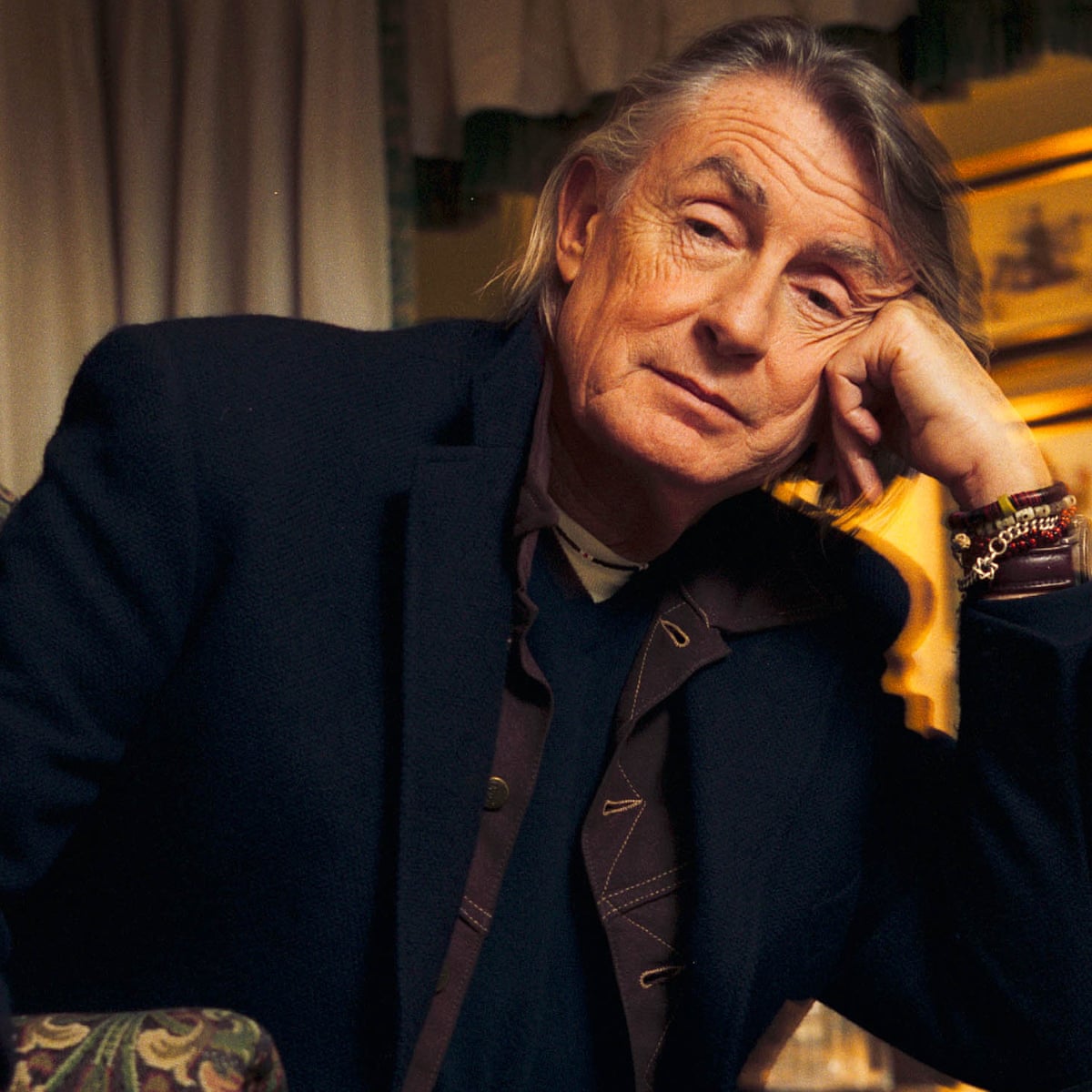
Joel Schumacher (1939-2020)


Joel Schumacher, Batman Forever and The Lost Boys director, dies ...

Joel Schumacher, the director of such films as The Lost Boys, Falling Down, and Flatliners, died yesterday at the age of 80. Schumacher had an eclectic career that began in the fashion industry, where he discovered his passion for filmmaking. His first foray in to movies was as a costume designer for films including Woody Allen's Sleeper (1973) and Interiors (1978). He wrote the screenplay for the film adaptation of the Broadway musical The Wiz (1978) before making his film debut with The Incredible Shrinking Woman (1981), starring Lily Tomlin.   

Schumacher would go on to the direct one of the seminal "Brat Pack" films, St. Elmo's Fire (1985), as well as the provocative Falling Down (1993), featuring one of Michael Douglas' best performances. But Schumacher's career was often overshadowed by his contribution to the Batman franchise. Warner Bros. decided to take the series in a lighter direction after Tim Burton's Batman Returns (1992) was criticized for being too dark and grotesque. Schumacher was brought on as director due to him directing several successful films for the studios. 

Batman Forever (1995) was a commercial success and a sequel was fast-tracked. Batman & Robin (1997) doubled down on the camp and is seen as one of the worst comic-book films ever made. I'll defend Batman Forever as having good elements, including Val Kilmer as Bruce Wayne/Batman and his relationship with Dick Grayson (Chris O'Donnell). It was the ideal Batman film for kids, the one I grew up with and for which I still have a soft spot.

Schumacher's name became synonymous with "campy superhero" films. However, looking at the rest of Schunacher's filmography, it is filled with films about racism, rage against society, snuff films, and the Vietnam War. Schumacher made mid-budget, adult-skewing dramas- the anti-thesis of superhero blockbuster culture, and films are increasingly hard to get made in Hollywood. And his Batman films are amongst the most directorially distinct of the sub-genre.  

Schumacher was also unique in that he was an openly gay man directing major Hollywood films, and his Batman films have been viewed through a Queer lens. His 1999 film Flawless also dealt with homosexuality and transgenderism. In the film Philip Seymour Hoffman plays a gay man helping the homophobic security guard played by Robert De Niro recover from a stroke.  

Schumacher also directed Phone Booth, a very good one-location thriller starring Colin Farrell as man held hostage in one of the last phone booths in New York City.

So, what's your favourite Joel Schumacher film? How do you feel about his Batman films? Comment and let me know.

Monday, 1 June 2020

Performances I Love: Barbara Stanwyck and Henry Fonda in "The Lady Eve" (1941)


A Royal Flush: Close-Up on "The Lady Eve" and "Sullivan's Travels ...

Spoilers for the film  below

Acting is often about having the right balance. Go too far one way, you can become too campy, too far the other way, too serious. And when actors play off each other they have to be in perfect sync with one another- like a duet. Barbara Stanwyck and Henry Fonda perform one of the great romantic comedy duets in Preston Sturges' The Lady Eve, his third film and my favourite of his. In their second pairing- after 1938's The Mad Miss Manton- Stanwyck and Fonda's combination of con-woman and klutz make for an endearing and quite sexy pair.

Stanwyck plays a con artist named Jean Harrignton, partners with her father (Charles Coburn). whose latest target is Charles Pike (Fonda), the heir to a brewery fortune. Jean and Charles ends up falling in love and plan to get married, which complicates the scheme, to say the least. Charles discovers Jean's true identity, calling off their engagement. Jean wants to get back at Charles so she pretends to be the British Lady Eve Sadwich. Charles believes Eve looks too much like Jean to be her, though his valet Muggsy (William Demarest) isn't fooled.

About 10 minutes in to the film, in an unbroken shot, Stanwyck caresses Fonda's face and plays with his hair for several minutes in what I think is one of the sexiest scenes ever put to screen. Fonda never looks at Stanwyck during this. He stares straight ahead, almost lost in another world. He's intoxicated by her/  Before movies could really show sex, the implication of sex was a very powerful thing. The scene exemplifies the film's perfect combination of comedy and sensuality. 

And speaking of comedy, Fonda has to be both the straight man while also performing most of the film's physical comedy. This could result in an inconsistent performance but Fonda deftly never plays Charles' pratfalls too broadly, allowing him still to be the straight man in the centre of this farce. Moreover, Charles is gullible but his reasoning for believing Eve isn't Jean- why wouldn't she disguise herself?- makes sense in the context of this movie's universe.   

Stanwyck plays Jean as mischievous rather than outright cruel. She pretends at wanting vengeance for being scorned by Charles but she really wants him back. In the scene when Charles breaks off the engagement Stanwyck reveals Jean's vulnerability as well as her bitterness at being caught. She jokes about the "rotten likeness" of her picture. Jean then attempts to convince Charles she was going to tell him the truth before they were married. Charles lies and says he knew from the start who she was,  which reveals how bitter he is. Stanwyck and Fonda play this scene beautifully. They know this is the centre of the film, and has to give weight to Jean and Charles' relationship. Without the necessary poignancy, the audience won't desire them getting back together.  

Stanwyck and Fonda didn't receive Oscar nominations for their performances and I'd argue those are two of the biggest acting omissions in the Oscars' history. They would team one more time-the same year- in You Belong To Me but The Lady Eve is their most remembered work together. It's a wonderful duet.

Tuesday, 12 May 2020

The Essential Films: "The Day the Earth Stood Still" (1951)

Michael Rennie, "The Day the Earth Stood Still," 1951 | Flickr

A Series of Writings on Films that I feel are essential for film lovers, coupled with films that are personal to me. Spoilers for those you haven't seen the film.


I'm always interested in how films can act as metaphors for themselves, either by accident or design. Robert Wise's The Day the Earth Stood Still is about an alien sending a message to the human race: do not continue to war amongst yourselves or you will be destroyed. Just as the film is about a messenger, the film is a messenger. In lieu of an actual space emissary the film acts as a cautionary warning. While Wise's film may appear quaint to many modern viewers the film's message was and remains powerful in its bluntness, and its influence on later science fiction films cannot be overlooked. It's also just a very well made film with good performances and tight pacing.

The film begins with a flying saucer landing in Washington. A being in a space-suit (Michael Rennie) emerges, along with a robot named Gort (Lock Martin). After being shot by a soldier, the spaceman is taken to the hospital where it is revealed he is a humanoid named Klaatu. Klaatu tells the President's secretary he  has a message he wishes to communicate to all the world leaders. The secretary tells him it's not possible to arrange a meeting. Later Klaatu escapes from the hospital. He goes to a boarding house under the name of Mr. Carpenter. There Klaatu befriends Bobby (Billy Gray), the son of a war widow, Helen Benson (Patricia Neal). Klaatu asks Bobby who the smartest man is on the planet, to which Bobby answers Professor Jacob Barnhardt (Sam Jaffe).  Klaatu convinces Barnhardt to gather renowned scientists at the spaceship so Klaatu can deliver his message. But first Klaatu must display his power nonviolently.

Spencer Tracy and Claude Rains were considered for the part of Klaatu but producer Julian Blaustein believed a lesser known actor would work better for conveying an alien quality to American audiences. The head of 20th Century Fox, Daryl F. Zanuck, suggested  British actor Rennie, who had gotten his start in an uncredited role in Alfred Hitchcock's Secret Agent (1936) and made his American film debut in The Black Rose (1950) alongside Tyrone Power and Orson Welles. Rennie turned out to be the perfect choice. He brings an amused but slightly sinister quality to the role; but Rennie never plays Klaatu as a hero or villain, just someone with a mission. He's cold and objective about its importance and what he needs to achieve it. But he's also capable of warmth, as in his scenes with Bobby; and he inevitably turns to our other main character, Helen, for help.  

The Day the Earth Stood Still (1951)

While Helen at first doesn't believe Billy when he tells her he saw "Mr. Carpenter" enter the space ship, Klaatu tells her the truth during his nonviolent display of power- switching off the electricity across the world. Klaatu asks for Helen's help and I can see why he trusts her. Neal conveys trustworthiness and maturity. Helen is dating a man named Tom Stevens (Hugh Marlowe) who also discovers Klaatu's identity. Tom only cares about becoming famous by exposing Klaatu, in contrast to Helen who cares about his mission.

Neal started her career on Broadway and won Best Featured Actress in a Play for Another Part of the Forest at the first Tony Awards in 1947. A few years later she would star in the film version of The Fountainhead (1949) with Gary Cooper. After The Day the Earth Stood Still, she would win the Best Actress Oscar for Hud (1963) and co-star in Breakfast at Tiffany's (1961). Neal supposedly thought The Day the Earth Stood Still would just be another flying saucer film and had difficulty keeping a straight face while delivering some of her lines; but she helps ground the film and give it the necessary human element. The scene where Neal delivers the film's iconic phrase- "Klaatu barada nikto"- which stops Gort from destroying humanity- is also the film's most suspenseful moment.  

After Gort has been prevented from causing harm he brings Klaatu back to life via a machine on the ship. When Helen asks if Gort has the power of life and death Klaatu responds that only  "the Almighty Spirit" has this power, meaning his resurrection is only temporary. This reference was at the behest of the censors who didn't like the scientific explanation for resurrection. It's this reference that has led to Klaatu being interpreted as a Christ like figure.

Wise and writer Edmund H. North added this line reluctantly. They believed it under-minded the idea of Klaatu's race being God-like. I understand Wise and North's issue but I'd argue it reinforces the Christ metaphor and adds another layer of mystery to the film. Is this Almighty Spirit the human idea of God or something else entirely? Could this spirit have some basis in science rather than being strictly spiritual? The line is vague enough to allow interpretation.    


Robert Wise 20 greatest films ranked: 'West Side Story' and more ...

Wise described himself as "journeyman director," someone who doesn't a specific directorial style but who acquits themselves to different genres. But despite his modesty Wise's career is very impressive.  After starting out as a sound and music editor at RKO Pictures he would become a film editor. Wise edited what many consider to be the greatest film of all time- Orson Welles' Citizen Kane (1941, for which he received an Oscar nomination. He then directed additional footage for Welles' follow-up The Magnificent Ambersons (1942). Wise's first directorial credit was The Curse of the Cat People (1944), which he finished after it's director Gunther von Fritsch was fired for falling behind schedule. Wise would receive two Best Director Oscars for West Side Story and The Sound of Music (the former he shared with Jerome Robbins). And he directed what I think- along with The Innocents (1961)- is the definitive haunted house movie, The Haunting (1963). His last major film was Star Trek: The Motion Picture (1979), which for its noted problems has some visually stunning moments.

I love how Wise and his cinematographer Leo Tover- who photographed William Wyler's The Heiress- make certain scenes in this film feel like a film-noir, a sci-fi-noir you could say. The scenes I'm thinking of are when Klaatu first returns to the ship and near the end when Helen confronts Gort and then is on the spaceship.  Tover's use of shadows invoke the noir atmosphere. Wise chose Bernard Herrmann to score the film. Herrmann used two theremins to create the film's unusual sound. The film's main theme is ominous, mysterious  and must importantly, other-worldly. I think it  epitomizes what I think of as the sound of 50s  or old school sci-fi.  

The Day the Earth Stood Still is a direct and efficient film. Klaatu delivers his message and leaves. There's no sentimental goodbyes to Helen and Billy. We are simply left to ponder how humanity will respond. I talked at the beginning of how the film is a metaphor for itself. Coming back to that: just like the scientists at the film's end, we the audience is gathered to witness Klaatu's message. The message is terrifying in its implications but sobering as well. The ending doesn't strive for optimism but acts as a precursor to a unseen larger story. Part of me would have loved to see Rennie and Neal back in a sequel but it probably for the best the film stands alone. The ending's chilling ambiguity will forever remain untainted.
  

Monday, 16 March 2020

Total Escapism:"Total Recall" as Metaphor for Movies


Warning: Spoilers for Total Recall, Shutter Island and Inception

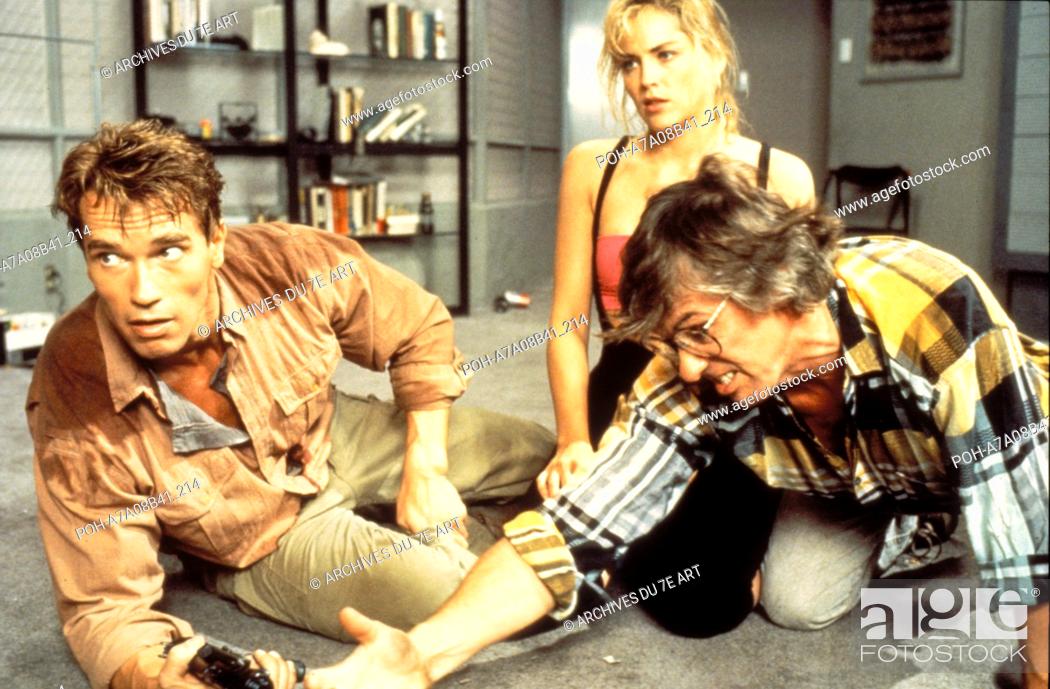
Paul Verhoeven's Total Recall is a movie about movies. It reflects the reason we go to the movies, which is to escape in to a fantasy, where our seemingly lives can become exciting, where we can become heroes. Wouldn't it be great if we were meant for something more? The film takes this archetypal conceit but asks whether the hero is in a dream world, an interactive movie.

Douglas Quaid (Arnold Schwarzenegger) is a construction worker who- despite being married to the beautiful Lori (Sharon Stone) wants something more from life. He has an obsession with Mars- he dreams every night about being there with a mysterious woman (Rachel Ticotin). Mars is now a tourist destination, run by Governor Vilos Cohaagen (Ronny Cox). There's a rebellion uprising by settlers who have become mutated over time and Lori attempts to dissuade Quaid from going. But in the film's universe a company called Rekall can give you the memory of a vacation as real as actual memories; so Quaid opts for that instead. He also decides to go on a "Ego Trip," where he'll be a secret agent. The twist is he actually is a secret agent named Carl Hauser who worked for Cohaagen but switched sides. Quaid's whole life just an implanted memory and Lori is a spy assigned to watch him. Quaid then has to get his ass to Mars" to uncover the secrets of his identity.

We're asked whether Quaid really is a secret agent with implanted memories or experiencing the memory implant he wanted. It being a dream is given credence by the fact Quaid is told what happens in the Ego Trip by the Rekall salesman, which events then occur. Quaid saves Mars and gets the girl,. But it can also be taken as the movie opening acknowledging movie tropes. I'm a James Bond fan and this movie riffs on certain elements of those movies, particularly in the two major female characters. Lori is white, blonde, and a villainess. Melina-a resistance fighter on Mars and the woman Quaid was with in his dream- is brunette, dark-skinned. The Bond films have often had two contrasting women, one sometimes a femme fatale, like Lori. Getting with two beautiful women, even if one ends up trying to kill you, is part of the (male) fantasy of these kind of movies, and yes, Total Recall is more of a male fantasy than a completely universal experience.

Image result for melina total recall 1990


Bond always goes to exotic locations and Mars is our foreign destination. But the movie tweaks this element of the Bond formula by making Mars unglamorous- it's seedy and militaristic. Bond would probably go to Saturn- the place Quaid is told twice would be preferable.

I want to talk a little about Schwarzenegger and his casting in this film. The fact he's so not the every-man makes the cover identity of supposed normal guy Quaid very impractical and funny. He was never a conventional movie star in that he was so exaggerated physically and vocally as to be ridiculous. He comes across as what a little boy would imagine himself as in his own action fantasy. And we wouldn't want to be ourselves in a movie, we would want to be something different. As McClane tells Quaid, you're always the same on a vacation. Rekall gives the option of being someone new. That's what's appealing about movies- we can see idealized versions of ourselves on screen.

Moreover, movies are often about people growing and becoming better people. Total Recall makes this proverbial character arc more cerberal by having Hauser and Quaid be different men in the same body. Total Recall is based on the short story We Can Remember It For You Wholesale  by Philip K. Dick, who also wrote Do Androids Dream of Electric Sheep?, the basis for Ridley Scott's Blade Runner, another film about implanted memories and question of identity. On that note, Who is Quaid? A dream, an implanted memory, an suppressed part of Hauser's identity. Actors take on roles and we're not always certain which ones are most reflective of that person's identity. Is the whole movie is a dream then Hauser is a role Quaid is taking on.

Image result for paul verhoeven total recall

Total Recall was Verhoeven's follow-up to RoboCop. Both films are ultra-violent and pulpy but with real smarts and expertly crafted. Getting away from the metaphor-for-movies topic, Verhoeven satirizes and critiques corporate greed and apathy. Cohaagen would rather Mars' inhabitants die from lack of oxygen than lose control of the planet. While he comes across as a Bond-villain he's just a petty tyrant. And another appealing thing about movies is that we get to see the villains punished. And Coohagen gets one of the most disturbing deaths in film history.

In 2010 two films about movie-making and being lost in the reality of a film were released, both starring Leonardo DiCaprio- Christopher Nolan's Inception and Martin Scorsese's Shutter Island. I won't say they were directly inspired by Total Recall but there are similarities Shutter Island's main character does decide to have a lobotomy rather then face reality, just as Total Recall's ending implies Quaid is being lobotomized as denying reality. I view Shutter Island as a film about Andrew Laeddis creating his own movie in his head where he is the hero. And Inception ends with Cobb questioning if he's awake before embracing his kids, similar to how Quaid questions if the ending in a dream before kissing Melina.

The film's ending is so archetypal that even Quaid doubts it, and it's hard not to question it. We want to believe it's real even if all's fiction. If the fantasy is questioned in the context of the film, we begin to question it. We want to cling on to the happy ending because we want happy endings for ourselves. And Quaid does get a happy ending, even if he lobotomized, as morbid as that sounds. And maybe we can be as happy for him as well.