Friday, 20 January 2023

11 Great Films That Were Not Nominated For The Best Picture Oscar


Spoilers Below

The history of the Oscars tell their own narrative regarding the greatest films in the history of the medium. While what we consider great is subjective, the Oscars, I would argue, provide a limited view of cinematic greatness. Genre films are often left out, actors of color ignored, great actors and directors never won. But specifically, I wanted to take a moment and look at 11 films that were not nominated for Best Picture, films which have lived on longer some winners. Some may surprise you, but I think it's important to understand why certain films were not appreciated in their moment, that it took time for them to attain classic stature. So, let's get started. These aren't in specific order, but I will be starting with three by a director who never got his due from Oscar.


1. Rear Window  (1954)

Alfred Hitchcock is defined by his dark and twisted portrayals of human nature in the guise of entertaining Hollywood thrillers. One of the most purely entertaining of films, Rear Window isn't just about whether a man has killed his wife, it's about a peeping tom, kind of a pervert, and the human desire to watch. The film is essentially  a meta commentary on cinema in general, on the need for excitement in our ordinary lives. 

We're watching L.B "Jeff" Jefferies, a photographer who's in a cast, stuck in his apartment (after being injured taking a picture of a race car crash) watch his neighbours in the courtyard of apartments, everyone with a story, an entire universe in and of itself. He needs these stories the same way we need films, which give us the ability to view other peoples' lives (albeit fictional). When Jeff suspects businessman Lars Thorwold (Raymond Burr) of killing his invalid wife, his obsession with proving his guilt gives him the ultimate reprieve from boredom, even bringing him closer to his socialite girlfriend Lisa Friedmont (Grace Kelly). But as much as the film deals with the investigation of Thorwold, the other apartment dwellers are just as important. All these people become as familiar to us as they are to Jeff. 

Hitchcock would get a Best Director nomination for the technical brilliance on display ( the whole film is shot on a set, with Hitchcock giving directions via earpiece to his actors), as well as nominations for Best Writing- Screenplay, Color Cinematography, and Best Sound Recording, but oddly not Best Picture. The five nominees were On the Waterfront, The Caine Mutiny, Seven Wives For Seven Brothers, The Country Girl (for which Kelly won Best Actress), and Three Coins in the Fountain. On the Waterfront was the winner, with its director, Elia Kazan, winning Best Director. For me, I would split the two, giving Hitchcock Director and On the Waterfront Picture. 


2. Psycho (1960)

Hitchcock once again received a Best Director nomination (his last) for this proto-slasher film, but without the film getting in to Best Picture. And like Rear Window, it also received four nominations (Hitchcock, Best Supporting Actress for Janet Leigh, B&W Cinematography, and Best Art Direction-Set Decoration (B&W). 

While the film can be argued to be the first modern slasher film, pre-dating Black Christmas and Halloween by nearly 20 years, it starts out as a film noir about real-estate Marion secretary Crane (Janet Leigh) stealing a client's money so she can start a new life with her boyfriend. She winds up at the Bates Motel, where the whole dynamic shifts with the introduction of proprietor Norman Bates (Anthony Perkins). The film seems to have- like Marion- taken a detour as we spend a lengthy conversation between the two over supper. Norman is a sad and lonely man who's only relationship is with his invalid mother. 

When Marion is killed in the infamous shower scene it's the film's first interjection of horror, upsetting the narrative we thought we were watching. The sequence is still startling in its violence and impressive in its filmmaking. George Tomasini's sharp editing reflects the knife going in to Marion's body and Bernard Herrmann's screeching score has become synonymous with 'crazy.' The film has spent so much time with Marion that the sudden burst of violence unsettles. There's only 2 murder scenes in the film- this and the murder of Private Investigator Arboghast (Martin Balsam) bu the film relies more on atmosphere and build-up to create a sense of subtle horror in the audiences' mind. 

It's revealed Norman killed his mother and her lover and took on a split personality- he and his mother. The film was never about the money or Marion, it was about Norman's psychosis, with every thing else being a distraction from the truth about Norman  Perkins' performance is so convincing that he could never escape the role. Perkins is deeply sympathetic as Norman; I never view him as the film's villain but as a tragic character, despite the horrible crimes he commits. 

Hitchcock's direction displays his mastery of visual storytelling and his ability to place us n the minds of both Marion and Norman, two people who are closer in spirit than either of them realizes, two people who are tragically torn apart by "mother."  

The Best Picture Nominees that year were The Apartment, The Alamo, Elmer Gantry, Sons and Lovers, and The Sundowners. The winner was The Apartment, which, like On the Waterfront, is one my favourite Best Picture winners. Again, I would give Hitchcock the directing Oscar (Billy Wilder won), while giving Best Picture to The Apartment.


3. Vertigo  

Yes, another Hitchcock, but probably the biggest one to be left out of Best Picture. Not surprisingly, since Vertigo took many years to earn the critical acclaim it now enjoys. The film which was voted the greatest of all time by Sight & Sound back in 2012, and holds at # 2 in 2023, only got two Oscar nominations, for Best Art Direction-Set Decoration and Best Sound. Bernard Herrmann's swooningly melancholic and romantic score, James Stewart and Kim Novak's layered performances, Hitchcock's visionary direction, all ignored. And I get it, I get in 1958 why this was seen as a misfire, why it takes a rewatch or two to really appreciate this film. It took me a second viewing to begin to embrace it. It's probably Hitchcock's most purely artistic and audacious film, one whose D.N.A can be found in other films like David Lynch's Mulholland Drive, George Sluizer's The Vanishing, and Brian De Palma's Obsession. But despite being the influence behind several films, the story remains fresh and unique in the way it moves from ghost story to romance and finally, to obsession. 

It's the story of an acrophobic detective, Scottie Ferguson (Stewart). hired by a old college friend, Gavin Elster, (Tom Helmor)  to follow his wife, Madeleine (Novak), whom he believes has been possessed by the ghost of her great-grandmother. Scottie falls in love with Madeleine but fails to stop his suicide. Afterwards meets another woman named Judy (Novak), who looks like Madeleine, whom he tries to make over in to the image of his dead love. 

Vertigo has an hypnotic power that brings me back time and again, and time is a big theme in the film. Scottie didn't get to Madeleine in time, the past is coming back to haunt Madeleine and then Scottie, near the film's end Scottie says he needs to do one thing to be free of the past.        

The nominees that year were Gigi, Cat on a Hot Tin Roof, Auntie Mame, The Defiant Ones, and Separate Tables, with Gigi being the winner (its director Vincente Minnelli won Best Director), which I've still have yet to see.


4. The Searchers

John Ford had already won 4 Oscars for directing by the time he did the The Searchers, and a fifth one wouldn't have been out of the question, except Ford and the film were completely shut out at the Oscars (Ford did get a DGA nomination, however), which now seems inexplicable considering The Searchers stature as an American classic. It's a difficult film to reconcile, a story dealing with racism that also still has some racist leanings, but it nonetheless a great film, though I still prefer Stagecoach. John Wayne plays Ethan Edwards, a confederate soldier returning to his brothers' home after the Civil War. When his brother Aaron, and Aaron's wife are murdered by Comanche Native Americans,, Edwards, along with his adopted nephew Martin (Jeffrey Hunter) go off in pursuit of Ethan's kidnapped nieces. 

The film, courtesy of Ford cinematographer of Winton C. Hoch, has some of the striking visuals of any western, capturing what director John Milius said felt to him what the real American west was like. And even with the many revisionist westerns that followed, The Searchers still feels like the most realistic western of its time, especially in terms of its violence, which is still unsettling. The most disturbing aspect of the film is the notion that Ethan will kill one of his nieces Debby (Natalie Wood) after she's "gone native" living with the Comanches for several films (the other, Lucy (Pippa Scott) was killed). 

Wayne plays his most complex role in a performance that, as Martin Scorsese said, makes you hate him but still love him when he returns Debbie home by film's end. And of course, there's that great closing shot of him walking away, as a door closes, bookending the opening door at the beginning. It's wistful and, honourable and poetic. 

The nominees that year where Around the World in 80 Days, Giant, Friendly Persuasion, The King & I, and The Ten Commandments. Around the World in 80 Days, directed by Michael Anderson and produced by Elizabeth Taylor's then husband Mike Todd, who would die a year later in a plane crash. The extravagant film is probably one of the weaker Best Picture winners but is still worth seeing for the sheer scale of it, it's a fascinating time capsule. 


5. Days of Heaven

After establishing his esoteric sensibilities in Badlands (1973), Terrence Malick came back with his voice and style fully formed with Days of Heaven, one of the most ravishing films of all time. It won the Oscar for Best Cinematography- given to Nestor Almendros, though Haxell Wexler took over after after Almendros had to fulfill his commitment to shooting Francois Trauffaut's The Man Who Loved Women.

Taking what 20 years earlier what would've been a 3 hour plus epic, Malick strips down the story of a Chicago steelworker, Bill (Richard Gere) on the run after killing his boss, his sister Linda (Linda Manz), his girlfriend Abby (Brooke Adams), and the dying farmer (Sam Shepherd) Abby marries, in a compact 90 minutes, showing us the fragments of a story through an impressionistic visual style that favours mood and setting over complex characterization.  

The nominees that year were The Deer Hunter, Coming Home, Heaven Can Wait, Midnight Express, and An Unmarried Woman. The Deer Hunter won, which I'm ashamed to say I still haven't seen.


6. Alien 

Ridley Scott's Alien has only gotten better in age, a genuine masterpiece of horror sci fi. The story is so simple but what it's doing is difficult, essentially blending the slow pace of 2001, the lived in junky feel of Star Wars, and the grisliness of The Texas Chainsaw Massacre, all while updating a 50s sci-fi creature and placing it in an symbolic haunted house. The alien could've looked goofy, the setting cheap, the pace too slow, but this didn't happen. The pace is slow but with a great sense of dread. The alien is kept in the shadows so we only get glimpses of it and the production design is immaculate, making us believe in the film's unglamorous vision of the future.

A brilliant choice by the film's screenplay- by Dan O'Bannon, with a story by Ronald Shusett-  is conceiving the ensemble of characters as "truckers in space" rather than explorers or scientists.  The characters have a lived-in-ness, a believability as blue collar workers. Them being truckers is also why the Nostromo is so junky- this isn't supposed to be the Enterprise. Michael Seymour's production design and Derek Vanlint's cinematography make the Nostromo one of the most atmospheric settings in horror cinema. 

Like the shower scene in Psycho, the chestburster sequence hasn't lost its shocking impact. Both scenes happen just when things feel like they're getting better, in moments of peace. When Captain Dallas (Tom Skerritt) is killed, it really feels like things are at their worst. And then Ash (Ian Holm) is revealed as an android who has been working against them, leaving only Ripley (Sigourney Weaver), Parker (Yaphet Khotto) and Lambert (Veronica Cartwright), the feeling of claustrophobia is palpable. 

Weaver became a star for her performance as Ripley, giving her assertiveness, sternness but also vulnerability. Her fear during the final stretch of the film feels authentic and her decision to go back and save the cat is a relatable human moment  Her ultimate survival is almost surprising, given this was the decade of the downer ending but it's not completely triumphant either. She's lost her ship and crew, and has found out she was viewed as expendable by the company for which she works. Still, there is a sense of peace for Ripley at the film's end, as she goes back in to cryosleep, going back in to a dream after a nightmare

The nominees that year were Apocalypse Now, Kramer vs. Kramer, All That Jazz, Breaking Away, and Norma Rae. I personally would go with All That Jazz.


7. The Innocents

Completely shut out of the Oscars, though nominated for the Palme d'Or, this is the spookiest film ever made, as well as the best haunted house movie. Governess Miss Giddens? (Deborah Kerr, in a performance that should've earned her an Oscar nomination) is sent to look after two orphaned children , Miles and Flora, whose uncle has no use for them. After learning about the influence of the late Peter Quint and Miss Jessel on the children, Miss Giddens begins to see apparitions that match their descriptions. She soon comes to the conclusion these ghosts are controlling the children. 

The ambiguity surrounding whether Miss Giddens is actually seeing the ghosts or imagining them is what keeps The Innocents so fascinating 60 years after it premiered. Cinematographer Freddie Francis' Widescreen black and white compositions are immaculate and director Jack Clayton captures a certain Victorian-era Britishness in the performances and characters. The film's chilly atmosphere also makes it-like Stanley Kubrick's The Shining- a perfect alternative Christmas film.

The nominees that year were West Side Story, The Hustler, Fanny, The Guns of Navarone, and Judgement at Nuremberg, with West Side Story winning, along with nine other wins. I prefer Spielberg's new West Side Story (My thoughts here :Davies in the Dark: Tonight, Tonight: "West Side Story" (thenoirzone.blogspot.com) and if I were picking from these nominees I would go with The Hustler (which I wrote about here: Davies in the Dark: Search results for the hustler (thenoirzone.blogspot.com)


8. Carrie

Brian De Palma's masterpiece is also the first Stephen King adaptation and one of the best. A hallucinatory film, but one that has moments of sweetness that only make the tragedy of its climax hit even harder.

 Carrie may be the best film about teenage isolation ever made. Despite being incredibly stylized the film finds emotional truth through Sissy Spacek's nominated performance as Carrie White.  What stood out watching it this time is how Spacek makes Carrie both incredibly unusual but also very sweet and nice. We see her coming out of her shell as things being to go- and then when she's humiliated she really comes out of her shell as she unleashes her telekinetic powers against her tormenters. 

The whole prom sequence and how it leads to the pig blood pouring over Carrie is virtuoso filmmaking. In De Palma fashion it feels like he's showing off but you don't mind because it's so impressive. Then there's Carrie's return home and her final confrontation with her religious zealot mother, Margaret (Piper Laurie, in the film's other nominated perfomances), another amazing stretch of filmmaking. This is one of those films you could watch on mute and still understand what's happening.  The emotions and story are all communicated through the visuals. 

Mario Tosi's cinematography gives the film a hazy dreamlike quality that turns in to a nightmare during the prom sequence- and Carrie covered in blood is one cinema's indelible images.  

The nominees that year were Rocky, Taxi Driver, All The President's Men, Network, and Bound For Glory. Bound for Glory is the only one I haven't see but it's a pretty strong line-up overall. 


9. Close Encounters of the Third Kind

My second favourite Spielberg, right behind Jaws. This is also the ultimate Spielberg film, made a couple of years after Jaws, with his voice fully formed. He received his first Best Director nomination (the only time he and pal George Lucas were nominated alongside each other- Lucas was nominated for Star Wars). The film was beat out in most categories by Star Wars, though it won Best Cinematography for Vilmos Zsigmond's stellar work on the film and won a special award for sound effect editing.

It's a darker film then you may remember, with Roy Neary (Richard Dreyfuss) becoming obsessed with U.F.Os after a close encounter with one and alienating his family. But it's also awe-inspiring and wonderous, encapsulating what Spielberg does better than anyone else. It's hard to imagine a blockbuster movie like this getting made now, given it doesn't have a big action climax, but a climax involving the attempt to communicate with an alien mothership. Denis Villenueve's Arrival is the only equivalent I can think of.

Dreyfuss won for The Goodbye Girl (which I haven't seen) but I also would argue he could've been nominated for this instead, making Roy a relatable and likable character even as he becomes more unhinged.

The nominees that year were Annie Hall, Star Wars, The Turning Point, Julia, and The Goodbye Girl. Annie Hall was the winner, with Woody Allen winning for direction and screenplay. The film has plenty of baggage attached to it, but it's a very fine winner overall 


10. 2001: A Space Odyssey

Maybe the greatest film not to be nominated for Best Picture, and the best film about contact with alien beings, mostly because we never see them. Stanley Kubrick (who was nominated for Best Director) keeps them mysterious and kind of spooky. The film is a visual marvel (it won Best Visual Effects and it still feels ahead of its time, even as we've long since passed the year in which it takes place. The nominees that year were Oliver!, The Lion in Winter, Funny Girl, Rachel, Rachel, and Romeo & Juliet. Oliver! was the winner, with Carol Reed winning Best Director. I feel Reed should've won for The Third Man instead. Oliver! is okay but I think I would go with The Lion in Winter or Romeo & Juliet


11. Singin' in the Rain

The greatest movie musical of all, and a great film about Hollywood, Stanley Donen and Gene Kelly's Singin' in the Rain is superior to the previous year's Best Picture winner, another Kelly musical, An American in Paris. The film is about Hollywood's transition from silent films to talkies, with movie star Don Lockwood falling in love with chorus girl Kathy Selden (Debby Reynolds), while his screen partner Lina Lamont (Jean Hagen in an Oscar nominated performance), whose shrill voice doesn't make the cut when it comes to talkies, becomes jealous. Donald O'Connor lends support as Don's friend Cosmo Brown, a performance that also should've garnered a Oscar nomination. 

The dancing is off the charts great, the songs funny and poignant, Kelly is at his most charismatic, Hagen is hilarious, and Reynolds becomes a star right before our eyes. It's a truly joyous film, technically brilliant and with a lot of heart. A great example of Hollywood studio filmmaking done right.

The nominees that year were The Quiet Man, The Greatest Show on Earth, High Noon, Ivanoe, and Moulin Rouge. The Greatest Show on Earth won, with John Ford winning for The Quiet Man (his fourth Oscar). The film is usually considered one of the worst- if not the worst film to win Best Picture, though I haven't seen it. For me, I would go with The Quiet Man, maybe my favourite of Ford's films, along with Stagecoach.


So, what films do you think should've been nominated for Best Picture? Comment and let me know.


Tuesday, 17 January 2023

The Essential Films: The Treasure of the Sierra Madre (1948)


A Series of Writings on Films that I feel are essential for film lovers, coupled with films that are personal to me. Spoilers for those you haven't seen the film

Director John Huston needed Humphrey Bogart, and Humphrey Bogart needed John Huston. By writing High Sierra and The Maltese Falcon (both 1941-he directed the latter, while Raoul Walsh directed the former), Huston took Bogart from supporting player to movie star. And Bogart would provide Huston (who was making his film debut with The Maltese Falcon) provided Huston with the perfect new kind of (anti) hero. Bogart and Huston would collaborate on four more movies, Across the Pacific (1942, directed first by Huston and then Vincent Sherman when Huston joined the United States Army Signal Corps), The Treasure of the Sierra Madre, Key Largo (both 1948), The African Queen (1951, for which Bogart won his Best Actor Oscar) and Beat the Devil (1953). Of these, The Treasure of the Sierra Madre is perhaps their greatest collaboration, and maybe Huston's finest film overall. It won Huston two Oscars for writing and direction- and he directed his father Walter Huston to a Best Supporting Actor Oscar (he also directed Claire Trevor in Key Largo to a Best Supporting Actress Oscar). Bogart was not nominated (Laurence Olivier won Best Actor for Hamlet, which also won Best Picture.) 

The Treasure of the Sierra Madre sets itself up as an adventure film but eventually becomes a cautionary tale, a psychological horror film about the almost supernatural quality gold has to lead men in to madness and violence. This is one of the darkest films to come out of the Hollywood studio system, one that subverted the image of its star and in which he gives his greatest performances. It's also one of the first Hollywood films to shoot outside the USA (in in Tampico and Durango), providing a rugged authenticity to the story. This is the kind of film where you can smell the sweat and feel the dirt. 

The opening shots quickly establish the film's themes of desperation. The first image is that of a poster with winning lottery numbers, the camera panning to a man's hand ripping up a losing ticket. We cut to Fred C. Dobbs' (Bogart) grizzled face.. Dobbs is in Tampico where he meets another American, Bob Curtin (Tim Holt), both of whom are hired by a man named Pat McCormick (Barton MacLane) to do some labor. When the job's done, McCormick flees without paying them. Dobbs and Curtin go to a flophouse for a night, where they meet prospector Howard (Walter Huston). The next day Dobbs and Curtin encounter McCormick, who pretends he's going to pay them later and then tries to escape. Dobbs and Curtin beat him up (in an effectively staged brawl) and they take what's owed them. They get the idea to prospect for gold, so they decide to get Howard to go along with them. At first, they don't have enough money to buy supplies but then Dobbs is told by a child from whom he bought a lottery ticket that he has the winning number. A great example of the script setting up something early and paying it off after you've forgotten about it. When Dobbs and Cody shake hands, solidifying their partnership, the camera shows their hand with Howard in the background, looking unsure, reminding us of what he said in when we first met him: "....the noble brotherhood will last but when the piles of gold begin to grow...that's when the trouble starts." 


Dobbs doesn't believe gold inherently changes a man- he feels it all depends on the man. And he's right. but it will be Curtin who retain his sanity, while Dobbs quickly becomes paranoid and angry towards Curtin and Howard. But even Curtin has to make a hard choice when a fourth man named James Cody (Bruce Bennett) follows Curtin after he came to town for provisions. The other three have to decide whether to kill Cody or let him join. Curtin makes the call, reluctantly, to kill Cody. But all three are going to do it so the other two won'thave anything to use against the third man. Cody then alerts them to Mexican bandits, led by Gold Hat (Alfonso Bendoya) and during a shootout Cody is killed. The three find a letter on Cody from his widow,  and it's the most painful part of the film, re-contexualizing how we may have felt about Cody, and reminding us these guys were going to make his wife a widow. These three men had the capability to kill another because he jeoparized their exploit. Gold can be pure but men can't.

Now, let's talk a little bit more about Bogart. He's one of the greatest of movie stars, one with an incredibly strong filmography. Throw a dart and you'll hit a classic. James Stewart and Cary Grant are the same. All three are in movies I just really like and they're amongst the first classic movie actors to which I was introduced. I'll also say they were underrated as actors. I think in general people underrate and undervalue movie star acting, not considering it "real acting" and an actor "playing themself." What many consider great acting is often the more showy, "give me an Oscar" kind of acting, which has its place, but the more effortless movie star acting that Bogart exemplified is arguably just as, or more effective. Yes, he was always Bogart, with the unmistakable nasally voice and wolfish grin- but watch him in The Maltese Falcon. Watch how he glides through that film, completely in control of what's happening, only pretending to lose his temper, only pretending to be corrupt. Now watch him here, quick to paranoia, desperate, and eventually psychotic. He starts out as Bogart but his image of a cool, collected person who will ultimately do the right thing is subverted. Along with Nicholas Ray's In A Lonely Place, this is the darkest Bogart goes psychologically. 

Of course, it's not just a subversion but coincidentally a return to when Bogart was the villain in films. Bogart was perhaps the first character actor turned movie star, and is the are leading man who can genuinely look sinister. That wolfish grin never looked more, well wolfish, or more terrifying than here, with his dirty beard and face giving him a an animalistic look.  Cinematographer Ted McCord (who also photographed The Sound of Music and East of Eden) makes Bogart look like the Wolf Man in shots that wouldn't be out of place in a horror film. The film does become a psychological horror film in one of the last stretches of the movie where Dobbs and Curtin are alone without Howard, who had previously saved an ill Mexican child and is now being called back to the village to be honored. 


Walter Huston's  Best Actor Supporting Oscar, a deserved win for his portrayal of Howard, giving him a slightly eccentric but wizened quality. He's a little bit weird you can tell he knows what's he doing. Huston was a Canadian actor who started on stage before appearing in movies when "talkies" took over. One of his earliest roles was the sinister, self-righteous missionary in the pre-code film Rain (1932), starring Joan Crawford. The Treasure of Sierra Madre would be one of Huston's final films, with his last being The Furies with Barbara Stanwyck (1950). Huston would die in 1950 at the age of 67, of an aortic aneurysm. 

Tim Holt is the film's unsung performance, probably because Curtin is the blandest of the three main characters. But Holt right kind of likability and sincerity befitting of the character who's the heart of the film. We fear for him when he's alone with Dobbs but we remember how he made the call to kill Cody. Bogart is clearly no longer our hero, and the whole movie has set us up for this confrontation. 

When Dobbs believes he has killed Curtin, he runs off and eventually runs in to the bandits. They kill him and mistake the bag of gold he had for sand. It is scattered, with the bandits taking the burros and s supplies. When Howard and Curtin find the empty bags and the gold scattered, all Howard can do is laugh, with Curtin eventually joining in. The whole movie has been a set up for a punchline to a cosmic joke- but it's not a bleak ending. Curtin sums up the situation pretty nicely when he remarks 

"You know, the worst ain't so bad when it finally happens. Not half as bad as you figure it will be before it's happened. I'm no worse off than I was in Tampico. All I'm out is a couple hundred bucks when you come right down to it. Not very much compared to what Dobbsie lost." 

Howard reminds Curtin of what he mentioned earlier in the film, of buying land and growing fruit. And he also tells Curtin to visit Cody's widow. So there's still a dream, and there's still decency in this world. And for Howard, who is has been invited to stary in the village, there's a home. And getting to live another day, perhaps that it is something, perhaps that's everything. 

Friday, 16 December 2022

The Essential Films: "The Spy Who Came in From the Cold" (1965)


A Series of Writings on Films that I feel are essential for film lovers, coupled with films that are personal to me. Spoilers for people who haven't seen the film.

At the height of the James Bond craze, as well as amongst shows like The Avengers and Get Smart, 1960s audiences were offered a bleaker, chillier alternative: Martin Ritt's The Spy Who Came in From the Cold, based on John Le Carre's third novel, his breakthrough success, which Graham Greene called the best spy story he ever read. Nearly 60 years after the book was published and the film was released the story still holds up- due to the cynical brilliance of its plot. This may be the best representation of the government agent's life- the loneliness, the unglamorous lifestyle, the realization you're a pawn in a larger scheme that you can't help but bitterly admire. The film is ultimately a tragedy, but not of the Shakespearean kind. The tragedy here feels more mundane, but still inevitable. 

At the film's beginning one of British agent Alec Leamas' (Richard Burton) operatives is killed at Checkpoint Charlie in Berlin. Leamas is called back to London by agency chief Control (Cyril Cusack), where he is supposedly dismissed from the service. Leamas gets a job at a library where he meets Nan Perry (Claire Bloom), with whom he begins a relationship. One day Leamas drunkenly assaults a grocer (Bernard Lee, funnily enough the original James Bond "M") and briefly goes to jail. When he is released, he's approached as a possible defector by East Germany. 

It's revealed this is all been set up by control so Leamas can implicate an East German agent- Mundt (Peter van Eyck)- as a British spy and have him killed. That we do not learn of this mission until after spending time establishing Leamas' relationship with Nan and seeing him approached to be a defector, makes the revelation more satisfying. The audience get to say "Oh, I get it," which is always very rewarding. It also establishes that the story requires patience. And by film's end I think everything pays off brilliantly. Paul Dehn and Guy Trosper's screenplay also has these events play out in a naturalistic way, giving you the feeling of a real spy story unfolding before you.

Leamas is no Bond. He's not a fun character to be around and doesn't seem to being having a lot of fun himself, unless he's being sardonic. His relationship with Nan doesn't have the sexual excitement of the Bond films- it feels more paternal Burton was never the warmest of actors, which makes him perfect for the role of a standoffish, burnt-out spy. In a performance that's as bitter as a cyanide pill, Burton makes you feel that weariness from years of service in your own bones, playing a part that's not really much of a part. It feels there's a very thin line between the role Leamas is playing and the man he is. As Michael Sragrow says in his essay for the Criterion Collection release of the film, pertaining to when Leamas is first sent on his mission,

    "...those who haven't read the book must wonder whether Leamas becomes a drunken has-been or             is merely playing one...it's hard to know when Leamas is putting everyone, or where the put-on              ends and the real Leamas begins."

When Leamas tells Fielder, Mundt's second-in-command, and who's suspicious of Mundt, that becoming a spy was just about the money, I don't think Leamas is lying. It's easy to pretend to be a defector when you are genuinely fed up with the job. Fielder stands in contrast to him, he believes in the communist cause, and feels Leamas should believe in something. Leamas says he holds the right to be ignorant, the "Western way of life," as he calls it. 

This isn't the first time in the film Leamas is confronted with a person whose passion clashes with his dispassion. Nan is also a communist, which Leamas takes as Nan being naive. He says that when it comes to things like communism and capitalism, it's the "innocents who get slaughtered. This calls forward to the conversation with Fielder where Fielder states he would kill innocent people to achieve his goals- but that if innocent people are to die, if should be for something.Maybe Leamas did believe in something once- perhaps all cynics are reformed optimists- but even if he did, it wouldn't stop the events of the story. Leamas is ultimately a pawn in a larger game, one in which he unknowingly dooms both Nan and Fielder. 

Fielder puts Mundt on trial for being a double agent, but when Nan is brought to the tribunal and admits to having received payments by British Intelligence, Leamas had to admit he's a British agent. Fielder is arrested and will probably be killed. Mundt frees Leamas and Nan, which leads to Leamas explaining what just happened. Mundt actually is a double agent and Leamas' mission was ultimately to discredit Fielder, with Nan being part of that plot. And it all comes back to philosophy, with Leamas answering Nan's question of who this operation helped, stating

"What the hell do you think spies are? Moral philosophers measuring everything they do against the word of God or Karl Marx? They're not! They're just a bunch of seedy, squalid bastards like me: little men, drunkards, queers, henpecked husbands, civil servants playing cowboys and Indians to brighten their rotten little lives. Do you think they sit like monks in a cell, balancing right against wrong? Yesterday I would have killed Mundt because I thought him evil and an enemy. But not today. Today he is evil and my friend. London needs him. They need him so that the great, moronic masses you admire so much can sleep soundly in their flea-bitten beds again. They need him for the safety of ordinary, crummy people like you and me."

Leamas could have believed in philosophy he wanted throughout this story, but he still would've come to the same conclusion he comes here. All that's changed for Leamas is, as he says, Mundt is now his "friend." 

Leamas is, by design, a difficult character to work with because he's blase about things and not necessary the most exciting guy to be around. He's not traditionally and his lack of belief system (which maybe in itself is a belief system) doesn't really change over the course of the film but is rather confirmed. When Nan gets killed by one of Mundt's henchmen while she and Leamas are attempting to climb the Berlin Wall, it calls back to what Leamas said about innocents get slaughtered. 

If Nan is the innocent victim than Fielder is arguably the closest thing the story has to a hero (though there are no true heroes in this world). He wants to expose a traitor in the Communist party, and Werner makes Fielder surprisingly likable and charming. And the fact that he's right about Mundt means he has to be killed. "London made us kill him, Kill the Jew," Leamas tells Nan. Mundt is a former Hitler Youth, which is a big reason Fielder doesn't like Mundt. This makes Fielder a more sympathetic character than Leamas, whose final statement about him, as complimentary as Leamas gets, is he was a "clever Jew." 

Now, I want to talk a little about the film's director, Martin Ritt. Ritt, like Fielder, was Jewish, born in Manhattan, and who started out as an actor in the theatre, where he eventually met Elia Kazan. Ritt worked as playwright and director of plays before turning to television.  He became a victim of the Hollywood blacklist in 1952, after which he returned to the theatre. When things died down, he made his film debut with Edge of the City (1957), starring Sidney Poiter and John Cassavetes. It based on a true story about corruption on the docks, similar to On the Waterfront. (1954). It was Ritt's experiences playing football in North Carolina, seeing the contrast between the deep south and his Manhattan upbringing that made him to do socially conscious films. He would direct Poitier again, alongside Paul Newman, in Paris Blues (1961) Newman and Ritt would collaborate again on Hud (1963), The Outrage (1964, a remake of Akira Kurosawa's Rashomon) and Hombre (1967). Ritt received a Best Director nomination for Hud. 

He won the BAFTA for Best British Film for Spy but would not receive an Oscar nomination for his elegant direction. Neither did Oswald Morris for his beautifully stark black and white cinematography, which provides much of the film's aptly chilly atmosphere. The film would only receive two Oscar nominations, Burton for Best Actor, and Best Art Direction- Black and White (Hal Periera, Tambi Larsen, Ted Marshall, Josie McAvin). Burton is my pick for Best Actor (though I haven't seen Lee Marvin's winning performance for Cat Ballou). Werner got a Golden Gloe nomination for Best Supporting Actor and I feel he should've been nominated for the Oscar (he actually was up against Burton in Best Actor for Ship of Fools). The Sound of Music was the Best Picture winner that year. That's no doubt a beloved and remembered film, and it's not a surprise the stark reality of Spy wasn't embraced by the academy. However, Spy has only grown in esteem and still feels like an uncommonly austere portrait of a spy's life.

Thursday, 29 September 2022

Some Thoughts on The 2023 Oscars


 I don't want to do too much pre-amble, so let's get to the categories


BEST PICTURE

I've found the last couple of Oscars pretty quiet in terms of the Best Picture line-up. The films nominated- while several of them great- haven't been the films I think general audiences were really interested in. We haven't had a Joker, Black Panther, Once Upon a Time in Hollywood or even Little Women or 1917. West Side Story didn't do well at the box office and Dune isn't really a crowd-pleaser. This year, I think that could change. If I was running the Oscar campaign for Paramount, I'd definitely being pushing Top Gun: Maverick for Best Picture, putting a emphasis on the "Movies are back" narrative and it being the biggest movie of the year. I'm wondering if Wakanda Forever and Avatar: The Way of Water- sequels to Best Picture nominees- could also get in. We usually don't have follow ups to Best Picture nominees but with sequels in general there's always the "Can you do it again?" challenge. If the Academy wants to go for the Indie blockbuster, then Everything, Everywhere, All at Once, is right there. I don't see the older members of the Academy taking to it but with the Oscars trying to be more adventurous in recent years there's a good chance it'll be there.

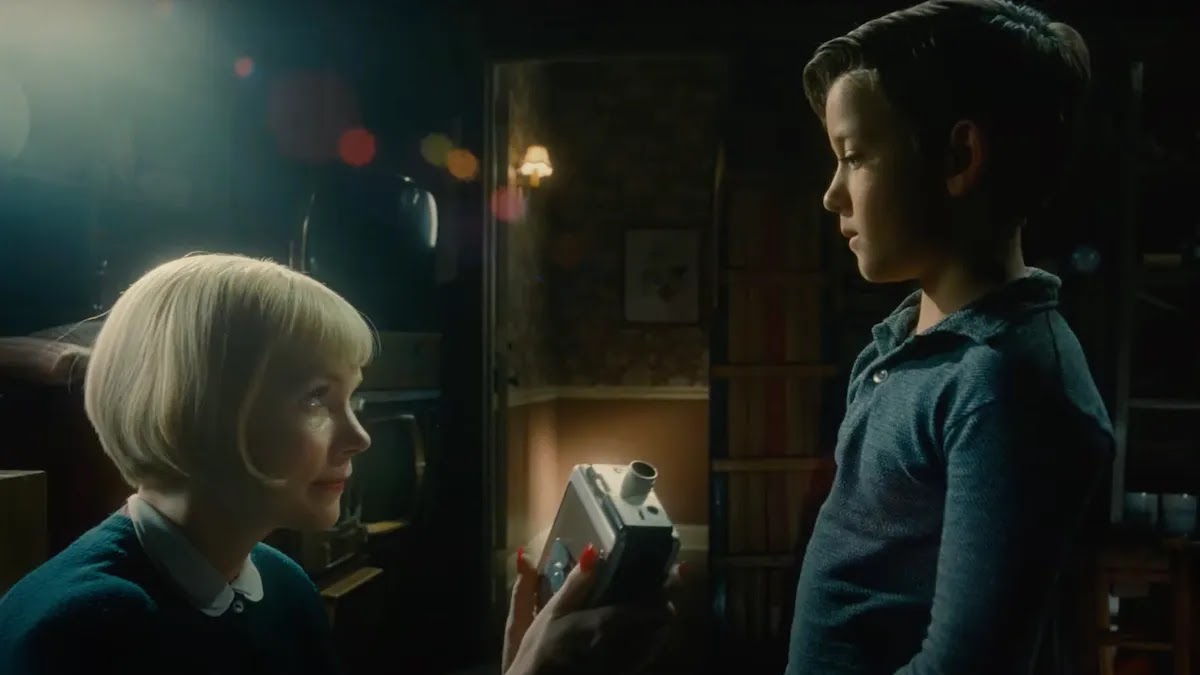
If they want to go safe, then Steven Spielberg's autobiographical The Fabelmans is right there. Sam Mendes' Empire of Light- about a romance taking place in old movie theatre- also seems a like safe choice. That one stars Olivia Coleman and Colin Firth

Darren Aronofsky's The Whale- starring Brendan Fraser and Andrew Dominick's Blonde- with Ana De Armas as Marilyn Monroe could get in but they may be more acting contenders than Best Picture ones. The Wonder (that other Florence Pugh movie), about an 1800s Irish village where a girl has supposedly not eaten for three months without perishing, is maybe taking the prestige period piece spot though that may also only be an acting play. It won't happen but it would be funny if Don't Worry Darling actually got a Best Picture nominee (and become fourth film to win the top five.) My Policeman (Starring Pugh's DWD co-star Harry Styles) has gotten mixed reviews so I'm not feeling it for Best Picture. 

I just saw The Woman King- a historical action film about the all-woman unit of warriors who protected an African Kingdom in the 1800s. It has the right blend of strong story and rousing action- think Gladiator or Braveheart- that could help get in.  

Then there's Elvis, one of the most popular films of the years about one of the 20th Century's most popular entertainments. I think it could be the Bohemian Rhapsody of the year- especially with Austin Butler being a frontrunner for Best Actor. Like Top Gun: Maverick, the "People are going back to the movies" narrative should be pushed. I don't know if Jordan Peele's Nope has much of a chance in Best Picture (I think it's hard to replicate the impact of Get Out) but it could if campaigned right.

The reviews for Alejandro Gonzalez Inarritu's 8 1/2 inspired  Bardo have been mixed but the Academy does like him so I think it could make it, especially since they T do love films about filmmaking. Florian Zeller's The Son is his follow-up to The Father and definitely has the credentials for a Best Picture nominee (a more traditional one compared to Zeller's previous film) though I have a feeling it's a more of a potential acting player.

Knives Out didn't get in for Best Picture but the reviews for its sequel Glass Onion are just as good or better than its predecessor and the good-will towards the original could push it in to the line-up.


BEST DIRECTOR

I already mentioned Spielberg, who may be looking at his third Best Director Oscar. Can you imagine if James Cameron gets in? That'd be quite the battle of titans. If Top Gun: Maverick gets in I don't see its director, Joseph Kosinki gets in. Ryan Coogler is due a nomination one of these days but I don't know if he's getting in either. Sam Mendes has a shot for Empire of Light seems but the reviews have been mixed- this could just end up being a showcase for the actors to get in.Darren Aronofsky hasn't gotten a nomination since Black Swan but I think The Whale has a strong possibility of bringing him his second nomination, though as I said earlier it may just be an acting contender, similar to Andrew Dominick's chances for Blonde. 

Sarah Polley could become only the eighth woman to be nominated for Best Director for Women Talking. Gina Prince-Bythewood could be the ninth if she gets in for The Woman King. It won't happen but Olivia Wilde for DWD would be an exciting inclusion

Previous Best Director winner Damian Chazelle (the youngest winner in history) is in contention for Babylon, which has been compared to The Wolf of Wall Street. Chazelle didn't get in for First Man, but he'll probably be back in the race for this one. The reviews for Glass Onion are looking good so does Rian Johnson (nominated for Best Original Screenplay for the first film) have a shot at it his first Best Director nomination? It definitely would make certain peoples' heads explode. 


BEST ACTRESS

Despite the weak reviews Florence Pugh has been praised for her performance in DWD. However, she probably has a better shot with The Wonder, though DWD seems like the showier role (and Pugh no doubt can be a showy, actorly and gimmicky performer). I did think it was Pugh's year earlier this year but I'm wondering if she gets left out this year. There's a risk of vote if both performances get plenty of votes. 

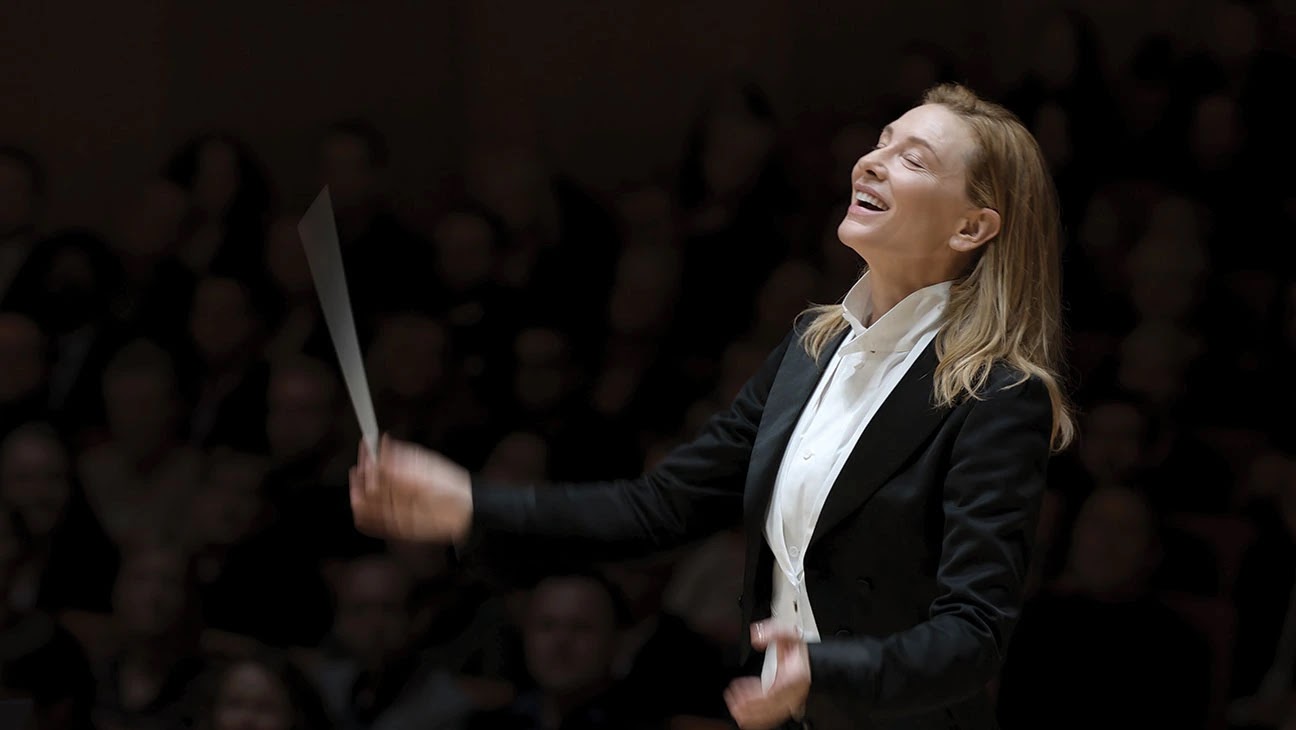
I've read that it's Cate Blanchett's Oscar to lose for Tar- Todd Fields' first film since 2006's Little Children, in which she plays a brilliant music conductor. Even without seeing the film, I get why people are saying that. Like Daniel Day-Lewis, Blanchett is unstoppable when she gets a role like this. However, Blanchett might have a challenger in Michelle Yeoh for EEATO. It'd be such a unique performance and performer to win. 

As I've been working on this piece something major happened, which is Michelle Williams going lead for The Fabelmans. I think she had a pretty easy win in Supporting Actress whereas Best Actress is perhaps too competitive. Katy Rich's article on the switch made a satient point that mom characters often get sidelined in to Supporting Actress and Williams going for Best Actress makes a statement that the mom can be a leading character. Whatever happens Williams going lead makes both Actress categories more interesting now. 

I'm hearing Blonde is a really rough watch, so I wonder if that'll hurt Ana De Armas' chances if academy voters switch it off before finishing it. She is the most consistently praised thing about the film and hopefully for her get in the top 5. 

Olivia Coleman is coming for fourth nomination (third in Best Actress) for Empire of Light. She's becoming a staple of the ceremony and one of our most reliably great actresses.  Amsterdam is getting very negative reviews, so Margot Robbie has a better shot with Babylon. I'm thinking The Woman King gets into Best Picture and if that's true than I have to predict Viola Davis will get in for Best Actress, 

Jennifer Lawrence may also be back in the race for Causeway, in which she plays a soldier with a brain injury attempting to incorporate back into civilian life. The reviews for her and Brian Tyree Henry have been strong, and it sounds like this may be one of Lawrence's more subtle and least affected performances. Then there's Women Talking's Rooney Mara, whom if she gets in, will be the second actor Sarah Polley has directed to an Oscar nomination- after Julie Christie in Away From Her. 


BEST ACTOR

This year definitely feels like it's between Brendan Fraser and Austin Butler for The Whale and Elvis, respectively. This could be Fraser's moment, but it also has the feeling of a Mickey Rourke/Michael Keaton situation where the comeback narrative gets derailed by an actor playing a real person (Sean Penn, Eddie Redmayne).

Colin Farrell is arguably one of our most due actors when it comes to Oscar, and he'll be getting his first nomination for Martin McDonagh's The Banshees of Inisheran. The other Colin, Firth, is also aiming for his third nomination for Empire of Light (he was nominated for A Single Man and The King's Speech back-to-back, winning for the latter.)

What could shake up the race is the inclusion of Tom Cruise for Top Gun: Maverick. Cruise may be the last movie star without an Oscar so, again, if I was running Paramount's Oscar campaign, I'd be pushing that narrative. I'm not certain he's getting in this year, but it'd be one of the year's most significant acting nominations since he hasn't been nominated since Magnolia.

I'm also not certain Hugh Jackman is getting in for The Son. same goes for Daniel Gimenez Cacho for Bardo- due to both films' polarizing reactions, though it's best to remember that the Academy aren't critics. I don't know if Daniel Craig is being pushed for Best Actor for Glass Onion or Supporting. Either way, I'd like to see him get in, Knives Out didn't get in any of the acting categories (though I think Craig was my Best Supporting Actor winner that year) so maybe that can change this time.


BEST SUPPORTING ACTRESS

As I discussed earlier, Michelle Williams is being campaigned for Lead, so it leaves this race open for someone else to win. I assumed Williams was going to do a Patricia Arquette/Laura Dern this year, winning for her career. 

Jessie Buckley will ride her nomination for Maggie Gyllenhaal's The Lost Daughter in to another one for Women Talking. Claire Foy had one of those "supposed to be nominated" performances for First Man). We also have Nina Hoss and Noemie Merlant in Tar

Sadie Sink will get the "Welcome to the club" nomination for playing Brendan Fraser's daughter in The Whale and possibly be the upset winner, as well as one of the youngest winners at 20. I'd love to see Stephanie Hsu in for EEATO, one of the more complicated villain roles in recent memory and arguably the film's heart. Her co-star in the film, Jamie Lee Curtis, is low in the rankings but that'd be an amazing first nomination for the legendary Curtis. 

Jaenelle Monae is said to be the standout in Glass Onion and has already starred in a Best Picture winner and nominee in the same year (Moonlight and Hidden Figures, respectively) so she already has some cred with the Academy. No one from Knives Out made it into the acting categories (though Craig was my supporting actor winner that year I believe) but that could change with its sequel. 

After seeing The Woman King, Viola Davis' co-star Thuso Mbedu is perhaps the film's standout performance. While she arguably belongs in lead, younger and newer actors typically campaign in the supporting categories 

I recently saw Ruben Ostalnd's Triangle of Sadness at The Atlantic Film Festival and Dolly De Leon as the cleaner of a luxury cruise that becomes shipwrecked- giving her the opportunity to become the leader- is a dark horse contender that I also want to happen. 

I'm surprised there isn't more buzz around Kila Lord Cassidy for The Wonder- the story is so much about Pugh's relationship to that girl. If Pugh is getting buzz, so should she. 


BEST SUPPORTING ACTOR

Ke Huy Quan is terrific in EEATO, and I want to see him win. Brendan Gleeseon, like Farrell, is getting his first career nomination for The Banshees of Inisheran. Gleason is a wonderful actor, so it'll be great to see him amongst the nominees. Paul Dano and Tobey Maguire are also possibly in contention for their nominations for The Fablemans and Babylon, respectively.  A Tobey Maguire comeback wouldn't be a surprise now after the latest Spider-Man movie. 

Speaking of The Fablemans, Judd Hirsch is pretty high in the predictions for the film. Hirsch is a beloved icon and was nominated in this category for Ordinary People over forty years ago. He could be the sentimental, career recognition winner this year. Brad Pitt won in this category in the last pre-Covid Oscars for Once Upon a Time in Hollywood could be back here for another Hollywood-themed film in Babylon.  

So, is Tom Hanks getting in for his oddball performance as a real-life oddball, "Colonel" Tom Parker in Elvis? Maybe so. It's one of those "Is this is good or bad" performances where the entertainment factor outweighs whatever actual quality there is to the work.


OTHER CATEGORIES

Original Screenplay- The Fablemans, Triangle of Sadness, Bardo, EEATO, The Banshees of Inisherin, Babylon, Amsterdam, Tar, Elvis 

Adapted Screenplay- Glass Onion, The Son, Blonde, The Whale, The Wonder, My Policeman, White Noise

Cinematography- Bardo, Avatar: The Way of Water, The Fabelmans, Blonde, Babylon, EEATO, The Whale 

Production Design: Wakanda Forever, Babylon, Don't Worry Darling, Elvis, Babylon, The Fabelmans,

Score: Don't Worry Darling, The Fabelmans, The Whale, Blonde, Avatar: The Way of Blonde

Make-Up: The Whale, Blonde, Elvis, EEATO

Editing: Blonde, Top Gun: Maverick, Elvis, The Fabelmans, EEATO 


So, what are your thoughts on this year's Oscar race? Do you even care? Comment and let me know.

Monday, 12 September 2022

The Essential Films: "Jaws" (1975)


A Series of Writings on Films that I feel are essential for film lovers, coupled with films that are personal to me. Spoilers for people who haven't seen the film.

Jaws is a masterclass in filmmaking. It ranks amongst films like Die Hard, The Exorcist, and the original Star Wars, as one of those films which started out as popular entertainment but can be seen as a masterpiece of its genre. This was only Spielberg's third film; he had done the TV movie Duel and then his first theatrically released feature, The Sugarland Express-starring Goldie Hawn. Duel and The Sugarland Express are impressive films bur Jaws was a huge step forward for Spielberg in terms of his filmmaking abilities. While the film was a difficult- to say the least- shoot, Spielberg's filmmaking is so assured that when I'm watching it I'm hardly thinking of the behind the scene issues. Of course, credit has to go to Bill Butler's gorgeous and warm cinematography (he still with us at 101 years old) as well as Verna Fields' Oscar winning editing, which contributes mightily to the film's fluid pacing.  Spielberg took that assuredness in to his next film Close Encounters of the Third Kind and later Raiders of the Lost Ark, becoming the king of blockbuster movie making. Much like Jaws itself, Spielberg has grown in my estimation as a filmmaker over the last several films. I always liked/loved his films but I guess I took him for granted, didn't realize just how good he is. Now I rank him in my top ten filmmakers.

All you need to do is watch the first scene of Jaws, where Chrissie Watkins (Susan Backlinie) is screaming for life before disappearing under water and everything going silent, to know the film still kills. There's a reason this movie still makes people afraid to go in the water. John Williams' theme- which opens the movie, was originally thought by Spielberg to be a joke, and I get why. It's hard not to find it a little amusing, but like Bernard Herrmann's screeching violins from Psycho are synonymous with "psycho killer," Williams "Duh Duh" is inseparable from "a shark is coming to get you."

After the first shark attack we're introduced to the first of the film's main trio, Chief Martin Brody (Roy Scheider) who has moved to Amity Island recently with his family.  I think he's an underrated actor, good at being the lead or supporting player. He was never the intense Pacino/DeNiro kind of actor but he had a physical presence and the ability to be a regular guy, which works well for Brody, who isn't a tough action hero type. 

Brody begins the investigation in to Chrissy's death and has the beaches shut down. However, the Mayor of the town, Larry Vaughn (Murray Hamilton), convinces him to keep them open due to the summer season being the biggest money-earner of the year for the community. Brody reluctantly agrees but then a boy, Alex Kitner (Jeffrey Voorhees), gets eaten and Brody brings in Oceanographer Matt Hooper (Richard Dreyfuss) to investigate. Meanwhile Alex's mother (Lee Fierro) puts out ads promising a reward for killing the shark, bringing in a lot of amateur shark hunters. The only professional on the island, Quint (Robert Shaw), promises to kill the shark for a much larger reward. While at first the shark is thought to be caught, another shark attack brings Brody, Hooper and Quint together to hunt the shark.

Jaws is actually two films in one. The first film is a damning critique of capitalism and political leadership, the second is an almost Moby Dick-esque adventure at sea, with Quint being a kind of Captain Ahab. I know some may find the film too slow and talky getting to the shark-hunting stuff but I believe it's crucial to this movie's success that we spend the time we do on the island and with the community before going off to sea. The transition from island to sea feels more significant and weighty because of what's happened- Alex's death, Brody's guilt, his dynamic with Hooper and the injection of Quint in to that dynamic. Then there's the three shark attacks. The first one is ignored, the second is addressed and supposedly resolved, then the third is the breaking point where we see some humanity from the Vaughn, who mentions his kids were on that beach. We don't like Vaughn anymore than we did before, but Hamilton plays his revelation beautifully. The way Carl Gottlieb and Peter Benchley (who wrote the novel) structure the three shark attacks and Vaughn's arc is the kind of good screenwriting that seems too rare these days.

I do love the subtle bromance between Brody and Hooper.  Instead of the screenplay creating a forced antagonism between them Brody and Hooper are friendly with each other from the outset. However, Hooper gets angry with Brody when he's examining Chrissy and  finds out this was never reported to the coast guard. Brody is a little naive and thinks the captured and killed shark is the shark who who Chrissy and Alex. Hooper calls him out on his naivete but when he comes to Brody's house that night, he shows that he respects Brody's rationality compared to everyone else. He also knows Brody had a rough day after Mrs. Kitner slapped because she found out he didn't close the beaches earlier. Hooper tells Brody he's out to tell his superiors that there's still a shark problem, leading him and Brody to cut open the dead shark to see what it's ate. The dinner scene is the real beginning of Brody and Hooper's partnership. When they're both trying to convince Vaughn to close the beach and talking over each other, Brody is  telling Hooper to tell the mayor about shark stuff, and it's organically funny, indicative of Brody's earnestness as a man. He obviously respects and is excited by Hooper's knowledge and authority.   

The more I've watched Jaws the more apparent it's become how the characters really make the movie. Not just our main trio but all the islanders as well- Vaughn, Bad Hat Harry, Mrs Taft. Similar to Raiders of the Lost Ark or the original Star Wars trilogy, you remember these supporting and minor characters, and they make the world feel lived in. I'd argue the best scene in the film doesn't feature the shark- it's is the scene where Hooper and Quint are bonding over scars, which leads in to one of the great film monologues - Quint talking about the sinking of the USS Annapolis and the death of most the crew from sharks. Shaw's delivery of the monologue and the vivid imagery it creates in the audiences' minds is perhaps more horrifying than anything we see on screen. It tells us so much about Quint and makes his death even more cruelly ironic- it's one of the most painful deaths I've ever seen in a film. Shaw should've gotten an Oscar nomination just for this monologue. 

I also love how each of the three men relate to the other two. Hooper is the nerdy scientist compared to the more masculine cop and hunter. Brody is the one most uncomfortable at sea next to Hooper and Quint, and Quint is the loner figure, the outsider. It creates an uneasy dynamic between the three and the point of the bonding/monologue is that this is first and last time all three will be at peace with each other. It's right before the final stretch of the film, which doesn't let up until that shark is blown up. 

I saw Jaws on IMAX just a few days ago and seeing it with a audience highlights just what a funny film this is, largely due to Dreyfuss, whose laugh alone is hilarious. I think this where Dreyfuss first established his persona as the intellectual smart-aleck. Some of his best lines- "They're all going to die"- after he's been mocked by the fishermen going out to hunt the shark-, referring to the mayor as wanting to be a "hot lunch," and "That makes a lot of sense" when water-fearing Brody says Amityville is only an island if you look at it from the water.   

But it's not that big of a surprise that the film has plenty of humour. It wouldn't have become what many consider the first summer blockbuster if it was without the levity to contrast with the horror. It's an incredibly entertaining film but the fun never undermines the horror of the film, never makes those moments of terror less impactful. While Spielberg went too far with the darkness with Indiana and the Temple of Doom, Jaws perhaps best shows Spielberg managing both the light and dark. Spielberg has often gotten flak for being too sentimental but I feel he's much darker than the image people have. He's capable of  being incredibly nasty and remorseless when he wants to. I don't think anyone forgets seeing those Nazis' faces being burnt off for the first time. 

Spielberg is also able to do some technically impressive stuff without you really thinking about it. The Aforementioned scene with Brody and Hooper attempting to the convince Vaughn to close the beaches is one shot, with Spielberg moving the actors and reframing the shot effortlessly. The first scene between Brody and Vaughn is similarly one shot that has the actors move in a way that changes the focus of the show.. But you're not thinking of these scenes too much on a technical level, you're just watching the story. Spielberg is able to use his technique to draw you in to a scene without noticing the technique -very hard to do. But then he can also emphasize his shots, as with the "vertigo" shot on Brody on the beach. He employs  it better than Hitchcock and there's no doubt Spielberg is a student of Hitchcock. Hitchcock always believed in the concept of "pure cinema," where the visuals did most of the storytelling, and Spielberg takes that approach here, making sure you can understand what's happening, even if the sound was off. 

In a piece on Spielberg's War Horse (2011), critic Michael Phillips recounts Hitchcock's quote on Spielberg: "Young Spielberg is the first one us who doesn't see the proscenium arch." Phillips explains that Hitchcock is describing Spielberg's filmmaking as "fluidity cinematic," adding he has "Old style craftsmanship with a new spontaneity." Hitchcock's last decade of films can seem behind the times, with the possible exception of Frenzy (1972), especially compared with what Spielberg is doing here. . As much as Spielberg, along with George Lucas, are blamed for destroying what many see as the adult driven nature of 70s films, Jaws did raise the bar for filmmakers, and even Spielberg himself had to attempt to top himself. While he arguably did with Close Encounters and even his latest, West Side Story, blows away all modern movie musicals, Jaws may remain as close to perfect as anything Spielberg's done.  Jaws is the first true Spielberg film, where his specific sensibilities feel pretty much fully formed, contradictory as they may seem. He takes the lessons of Hitchcock and perhaps surpasses his master, changing pop culture forever.                                                                                                                                                                                           

Wednesday, 10 August 2022

The Essential Films: "Signs" (2002)


A Series of Writings on Films that I feel are essential for film lovers, coupled with films that are personal to me. Spoilers for those you haven't seen the film

20 years ago the cover of Newsweek proclaimed writer/director M. Night Shyamalan "The Next Spielberg," ahead of his latest film, the alien invasion drama Signs. While many laugh at this proclamation now, considering the rough road Shyamalan's career went down, if you rewind your mind back to 2002 it's not a surprise he gained this moniker. Like Spielberg, Shyamalan was a filmmaker with an seemingly innate understanding of filmmaking language whose made genre films  about ordinary people in extraordinary circumstances, imbued with the kind of sentiment often seen in Spielberg's work. Re-watching Signs, I found it's Shyamalan's most Spielbergian film, the closest to a modern day Close Encounters of the Third Kind in that both are intimate family dramas in disguise as alien arrival stories. While I'd argue Unbreakable is his best film, Signs is the one closest to my heart. This may sound funny but Signs was an important film for me on my journey as a cinephile. I think this was the first film I analyzed on a filmmaking level, where I started to think about shot composition and framing. I know you're laughing but hey, I was 13. 

Signs centers around the Hess family: Graham (Mel Gibson), a former priest who left the church after his wife was killed after being hit by a car, Merrill (Joaquin Phoenix), a failed Minor League baseball player, and Graham's two children, Bo (Abigail Breslin) and Morgan (Rory Culkin). They all live on a farm in Bucks County, Pennsylvania and one morning they wake up to discover a crop circle in their corn field. Things get stranger when an intruder is seen on the property and lights appear in the sky over Mexico. While there are several other characters present in the film, including police officer Caroline Paski (Cherry Jones) and Ray Reddy (Shyamalan), the man who killed Graham's wife Colleen (Patricia Calmeber), the story is told through the eyes of the Hesses. Shyamalan eventually leaves behind the other characters, isolating the Hesses. This is similar to Alfred Hitchcock's The Birds, where Hitchcock also isolates Melanie Daniels and The Brenner family by the film's end. Also, when the Hesses board up their house is a direct reference to The Birds' climax.

As I mentioned earlier, Shyamalan as innate filmmaking sense. There's a preciseness to his compositions and camera movement. There's a Kubrickian feel to this shot:


And the way the camera pans to the knife, foregrounding it, is funny and tense in exactly the right way.


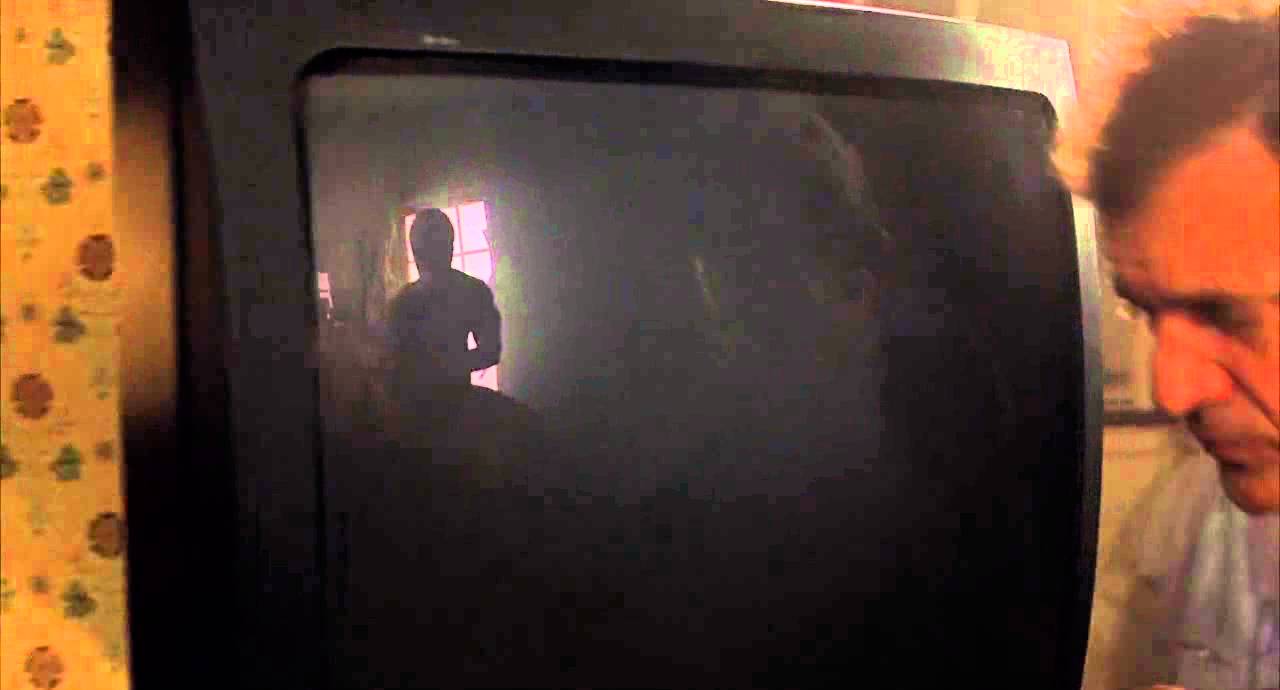
I also love the reveal of the alien still being in the house at the end through the TV screen


Coming back to Spielberg, the scene where the Hesses are using a walkie-talkie to hear the aliens talking is perhaps the most Spielbergian in the film:


The Sixth Sense and Unbreakable were films about coming to accept the incredible, whether it be the ability of a young boy being able to see ghosts, or that you're a superhero. Malcolm Crowe (Bruce Willis), at first doubts that Cole Seer (Haley Joel Osment) can see ghosts, realizes he's telling the truth after discovering his former patient had the same ability. David Dunn (Willis again), comes to accept he has superhuman powers. In Signs, Graham eventually can't deny there are aliens ready to invade. These films are about faith and belief, as well as accepting your purpose- Cole as the helper of the deceased, David as a superhero vigilante. Shyamalan takes these themes further in Signs by having Graham not just realize these aliens are real but there's a greater design to the universe, something he may have once believed in but turned his back on after his wife was killed. In perhaps Signs' best scene, Graham tells Merrill that there are two groups of people: people who see those lights in the sky and think they're seeing a miracle; the other believe that whether good or bad, there's no higher power looking out for them. 

I think Gibson gives what may be the best performance of his career in this film. Like with Willis, Shyamalan casts Gibson against type as a non-confrontational former priest who can't swear convincingly. When Graham and Merrill are attempting to scare off the intruder Graham awkwardly says "I'm losing my mind." It's hard not to imagine Gibson having fun playing a guy *pretending* to lose his mind rather than genuine loose cannons like Martin Riggs and Mad Max. This role also allows Gibson to be the most emotionally vulnerable he's been since the first two Lethal Weapon movies. There's a scene where Graham encounters Ray, whose trapped an alien in his house and leaving for a safer place, in which her tells Graham he's sorry for the pain he caused him. Gibson's reaction to that-the pain, the anger, but the acceptance of Ray's apology, displays how stronh he can be as actor. Overall it's a great movie star performance and perhaps the last time Gibson was without baggage as an actor/star.

Instead of casting another huge movie star as Merrill Shyamalan went for a more offbeat choice with Phoenix. Phoenix was coming off his first Oscar nomination for Gladiator and Walk the Line was a few years down the road. This was the film that turned me in to a Phoenix fan. He's so funny here. His reaction to the alien walking across the TV screen and the image of him sitting with the children, all of them wearing tinfoil hats, is likely the funniest thing Shyamalan has put on screen. Merrill is sort of a loser but he's got a good heart and is pretty endearing. I love that when Graham asks Merrill if he believes in miracles Merrill tells of the time he avoided being vomited on a girl he wanted to kiss because he had to take a piece of gum out. This is the same scene where Graham outlines the two groups of people and Shyamalan really gives us a good sense of how these two guys approach life. Gibson and Phoenix don't look a thing like brothers but I really enjoy their chemistry.

Coming back to the themes of faith and belief, Shyamalan's twist ending her- along with the Village- is his most audacious conceptually and thematically. I remember when I first the saw Signs I was expecting a twist along the lines of The Sixth Sense or Unbreakable, more of an "Oh my God!" than a slow realization of what has been set up over the course of the film. Shyamalan is going less for shock than for quiet realization. Bo's leaving glasses of water around for various reasons (supposed contamination, tastes funny), Morgan's asthma, Merrill's bat hanging in the living room, and Colleen's final words to Graham about telling Merrill to swing away, are all part of a grand design, calling back to Graham's question, "What if there are no coincidences?" Morgan's asthma protects him from the aliens' poisons and the glasses of water kill the aliens. Graham's faith is restored and the final shot shows him months later getting ready to go to church. He's found his purpose again. I find the ending I find little too pat. If Shyamalan had made things more ambiguous regarding whether certain things were coincidental or not it would've provided some great discussion. Instead, there's not much room for questioning these things. If we're going to continue the Spielberg comparisons, it's the kind of  easy ending for which, Spielberg often gets criticized. 

Ultimately, I don't think Signs is a particularly deep movie but I still think the movie overall works on an emotional and technical level. After using Eduardo Serra on Unbreakable as his cinematographer, Shyamalan brought back his The Sixth Sense cinematographer Tak Fujimoto (who photographed no less than Terrence Malick's debut feature Badlands as well as The Silence of the Lambs) for Signs. Fujimoto bring an eerily cozy feel to the film, the same way he did with The Sixth Sense. There's a paradoxical cold and warmth to these early Shyamalan films. James Newton Howard's elegant and elegiac scores also bring a beautiful autumnal melancholy this film and Shyamalan's other work. There's a little bit of Danny Elfman too in Howard's main theme for Signs. If not for Shyamalan's name you'd be forgiven if you thought maybe you were about to watch a Tim Burton alien invasion film. 

Like H.G.Wells' War of the Worlds and its cinematic interpretations, the aliens are defeated pretty easily at the end of story, which I'm okay with because the story isn't really about a war against aliens. It's a home invasion thriller which just happens to be set against a backdrop of a world invasion. The Birds, which I referenced earlier is also a smaller, almost apocalyptic story that's focused on this small town and its inhabitants. Shyamalan goes even smaller than Hitchcock, creating an almost chamber drama feel to the certain parts of the film. I almost wish there no other characters in the film other than the Hesses. 

The next Spielberg moniker obviously didn't stick, with The Village getting mostly negative reviews and Shyamalan getting worse and worse reviews over the next several films, though he's made a comeback or the last several years. However,  I don't think Shyamalan has ever recaptured what made people deem him the heir to Spielberg. The specific atmosphere of his early work has never completely returned for me unfortunately. Still, Shyamalan has always stayed true to his own particular sensibilities, similar to George Lucas, who's also gone through a reappraisal regarding his specific quirks. Maybe because we're at a place where pop culture lacks vision and spark it's easier to appreciate people like Shyamalan more now. Signs, along with The Sixth Sense, Unbreakable and yes, The Village, represent a filmmaker unafraid of being laughed at for his earnestness, whose pretentiousness oddly feels like genuine sincerity. 

It's weird to think of Signs as a 20 year old film but it makes sense- it does feel like a film from another era, a star and director driven blockbuster, the kind that would feel like a throwback if released now. I never know how to end these things so I'll say that despite it losing some of its luster for me over the years, I still think Signs is a beautiful, if somewhat reductive, film, which represents a filmmaker who at the time seemed unstoppable as a pop culture force, even if calling him the next Spielberg ended up being a curse. So, what are your thoughts on Signs and M. Night Shyamalan's career. Comment and let me know.